|
The first 20th century census was taken in 1900. As always, the questions changed a little with each decade and in 1900 mothers were asked how many children they had, and how many of those children were still living. Madonna Hatch and her daughter-in-law, Agnes Hatch, each had five children but only three survived to 1900. Infant mortality was high but started to go down from 165 per 1,000 that year to 7 per 1,000 in 1997. Diseases that killed thousands of children in 1900 were practically eliminated by 2000: diphtheria, pertussis, and measles. But still, the “occupation” question was counted for each person TEN years of age and over. Soon a shift in thinking would start a national child labor reform movement in 1904.
The 1910 census dropped the age part of the occupation question and more pointedly asked what particular kind of work was done, “spinner, salesman, laborer, etc.”, and the industry, “cotton mill, dry goods store, farm, etc.” Frank Schumacher, who ran the general store in town, had seven children. His 15 year old son, Anton, had his occupation listed as farm laborer that year. A new question was added in 1910: “Whether survivor of the Union or Confederate Army or Navy”; 45 years after the Civil War ended.
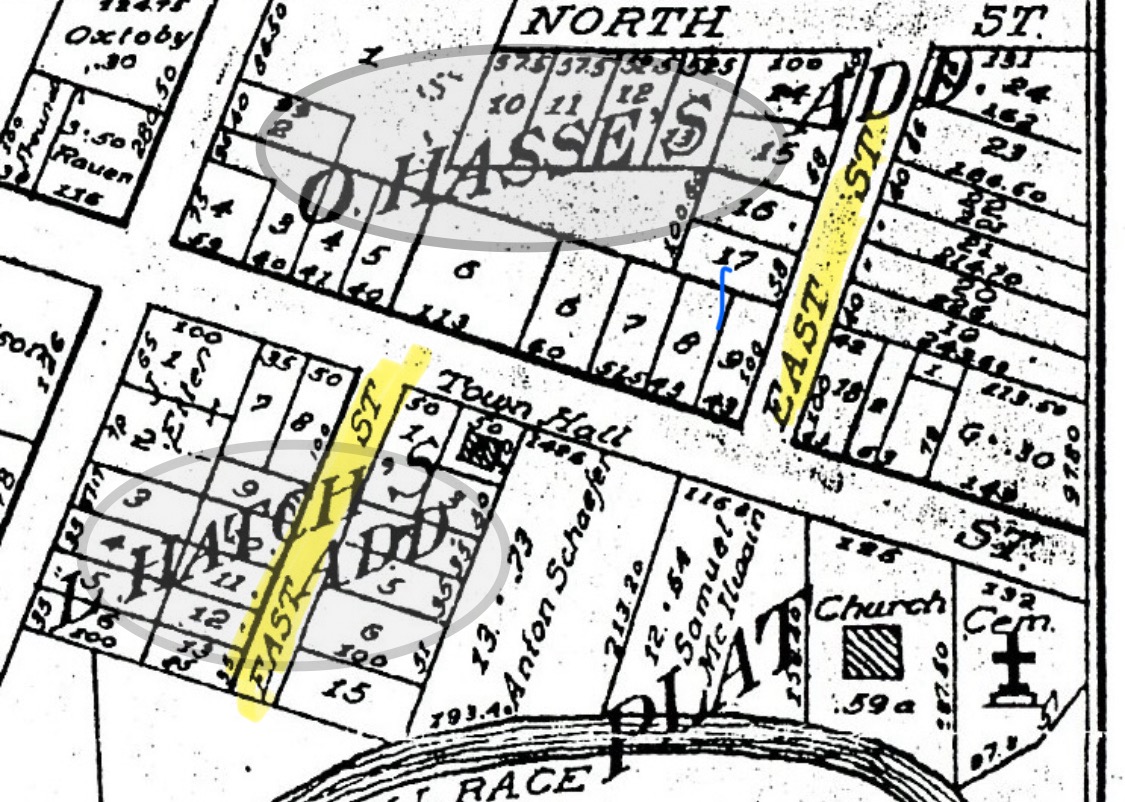
In 1920, veteran status, either for the Civil War or the just-ended WWI, wasn’t asked. But in 1920, for the first time, the enumerator, young Mr. Vyvian Esh added the names of streets on the Burton Township census form! In the “location” column, he wrote: East Main Street, Hatch Street, (which was named after Lewis Hatch and is today’s East Court), Hasse Street, (which was named after Otto Hasse and is today’s East Street), and South Blivin Street, (named after the Bliven family). (Interestingly, Richardson Road wasn’t named for the Richardson family until around 1960. The family was surprised, and said, “Hey look at that!”, according to Robert Richardson. No one recalls what the road was called before that.)
The 1930 Burton Township Census had their first woman enumerator, Mrs. Joy P. Marzahl (there was a Marzahl family in Richmond). Veterans were once again asked if they were in the military or naval forces and “What war or expedition?”. She left off the street names again and no one ever logged house numbers.
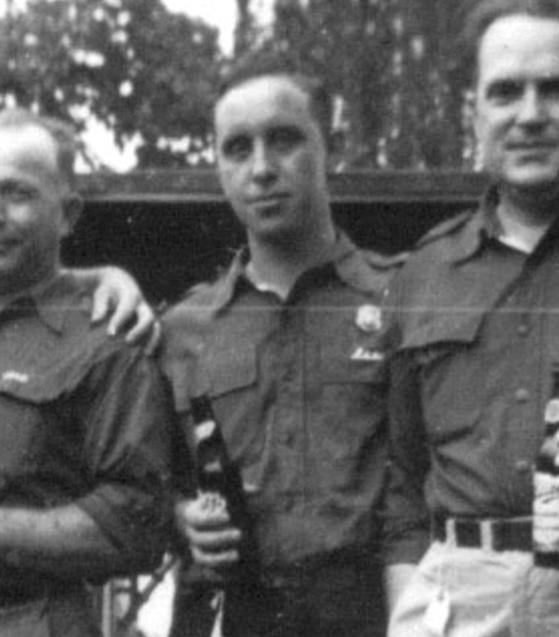
In 1940, 23-year old Leander Lay held the enumerator post and had the neatest handwriting - no scribbles, nothing crossed out, and (surprisingly) everyone’s name spelled correctly. “Explanatory Notes” helped enumerators fill in the columns correctly. For the column on “Race or Color”, these entries were allowed: “White-W, Negro-Neg, Indian-In, Chinese-Ch, Japanese-JP, Filipino-Fil, Hindu-Hin, and Korean-Kor, with all others to be spelled out in full.” Leander was a member of the Spring Grove Fire Department in the 1940s and the Village Clerk of Spring Grove from 1957-1963
The 1950 census was the seventeenth one taken since 1790 (during the first term of George Washington) and the last released census in the 20th century. The records were released in 2022 after the normal 72-year restriction on access was over. From 1900 to 2000, the U.S. population more than tripled from 76 million to 281 million. Spring Grove’s population went from 325 in 1902 to 5,480 in 2020.
Story by Laura Frumet
|