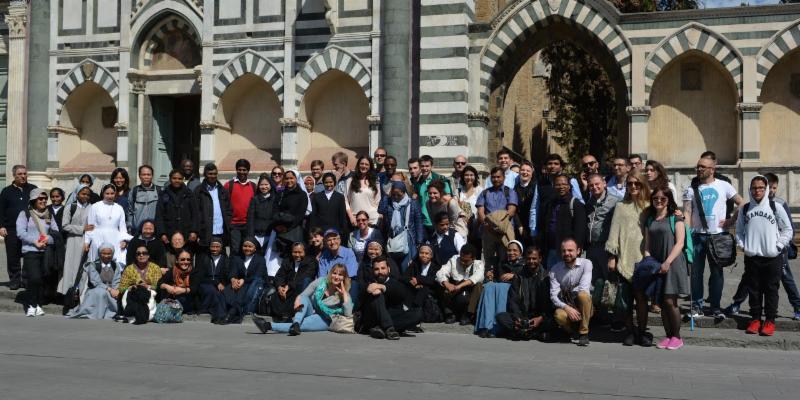
"Russell Berrie Fellows are the next generation of religious leaders, whose task is to build bridges of interreligious dialogue, based on spiritual dignity, respect for all cultures and love for whole humankind"
-
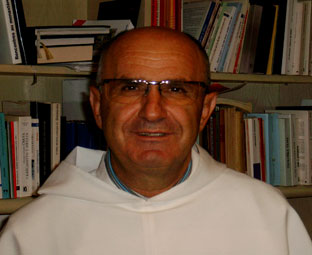
Fr.
Stipe
Juric, the Dean of the
Faculty of Theology and full professor of Biblical studies
at the Pontifical University of St. Thomas Aquinas
("Angelicum").
*****************************************************
St. Thomas Aquinas once said: "There is nothing on this earth more to be prized than true friendship." Our interview with Fr. Stipe
Juric
is about friendship that is at the heart of interreligious dialogue and also it is
about the importance of religious education in the time of growing secularization. After receiving a Baccalaureate in Philosophy and in Sacred Theology, and a Licentiate in Sacred Scripture, Fr. Stipe continued his Biblical Studies at École Biblique et Archéologique Française in Jerusalem. Later he completed his doctoral studies in Sacred Theology at the "Angelicum." Fr. Juric has also authored several books, among them: "The Word of God Supports the Vital Force"; "1260 Days in the Shelter: Test and Salvation of the Church in the Book of Revelation"; and the "Apocalypse of John: The Book Which Concludes God's Dialogue With Men."
*****************************************************
-
Fr. Stipe, first of all, I would like to ask you, what is the mission and the main goals of the Faculty of Theology of St. Thomas Aquinas University in these difficult times of XXI century, when we struggle with the problem of secularization, religious misunderstandings, interreligious conflicts etc. ?
-
The study at our Pontifical University of Saint Thomas Aquinas in Urbe ("Angelicum"), especially at the Faculty of Theology which is the heart of the University, has three primary goals. Its first aim is the promotion of the religious formation of the seminarians (future priests)
,
of those in consecrated life (
sisters
), as well as of laity in order that they might better participate in the task of evangelization of the secular world in which they live. Its second goal is to prepare candidates for many diverse lay ministries and services to the Church. And its third goal is to prepare teachers of religion for all school levels below the university level, as well as to prepare professors for the universities.
-
It's very interesting and important for future students to know more about all academic degrees that Faculty of Theology can offer to them. For example, what are the conditions of studying process and who can apply to the Baccalaureate, the Licentiate or the Doctorate?
-
The Faculty of Theology offers three successive cycles of studies, each one terminating with the conferment of an academic degree
: the Baccalaureate (STB)
,
the Licentiate (STL)
and the Doctorate (
STD
)
.
Moreover, the Diploma in Pastoral Theology
and Diploma in Interreligious Studies can also be obtained in the Second Cycle. The First Cycle, three years, ordered to the attainment of the Baccalaureate in Theology, offers a synthetic presentation of all fundamental theological questions, together with an introduction to the scientific method of the various theological disciplines. The Second Cycle, ordered at the acquisition of the Diploma in Pastoral
 |
|
Theology and of the Diploma in Interreligious Studies
(in one year) or the Licentiate in Theology
(in two years),
provides the possibility of the specializing in particular sector of the theological sciences. There are six areas of specialization at our Faculty of Theology: Scripture, Thomism, Dogma, Ecumenism, Moral Theology and Spiritual Theology. The Third Cycle, two years, ordered to the attainment of Doctorate in Theology, enables the student to reach a certain theological maturity by means especially of the preparation of a doctoral dissertation which will contribute to the progress of the theological science. What are the conditions of studying process and of the attainment of the academic degrees? The requirements for admission to the First Cycle are: (a) A
secondary-school ("high school") diploma which would qualify
the applicant for admission to a college or university in his or her own country; (b) Successful completion of two years of university-level study in philosophy; (c) A knowledge of the elements of form and syntax of Latin; (d) Sufficient knowledge of English and Italian. In order to register for the Second Cycle a student must be qualified for admission, i. e., he or she must be in possession of a STB degree. In order to register for the Third Cycle a student must be qualified, i.e. in possession of STL degree.
- One of the most important question for foreign students is the language problem. So is the Italian language obligatory for all students, or they can always choose English like an alternative in their studies at the "Angelicum"?
-
With the regard to the foreign students and so called language problem, I don't altogether see it as a problem. The Italian language is not obligatory for all students, only for the students of Italian section. It is the same to be said for the English language. Only for those who are registered for the English section the requirement is a
sufficient knowledge of English.
But, of course, it's a great privilege for our students to know two languages - Italian and English.
-
What is the role of lay people who are studying at the Faculty of Theology - in the spiritual, ecumenical, educational and social progress of the Faculty and the "Angelicum" University as a whole? Because we have the stereotype that religious, theological and spiritual education is more connected with Church's clergy.
-
The lay people at the Pontifical University, as in the Church, are a great source of riches. Today about one third
of students in our University are lay people.
If only the whole people of God
(Christians) were students of theology and theologians! It is true
that five decades ago or so the religious, theological, and spiritual education was connected with Church's clergy. Ever since the Second Vatican Council, the Christians
- lay and religious - have demonstrated their ever increasing interest in the study of theology and other sacred sciences. With the post-conciliar period the Church understands the increasing necessity of a full formation specific the needs of the lay faithful.
-
What future prospects can lay students
have
after they'll finish their studies at St. Thomas Aquinas University?
-
The lay students with the academic degrees, especially with the Doctorate in Theology,
can have good future prospects and get a job as teachers in the schools and as professors at the universities. For example,
at our University
one third of professors are lay people, some of them are former students of the
"
Angelicum." And in the Administration 90% are lay people.
Also these students can work in some bishop's Curia etc
. It depends on the mentality of their country...
-
As a Dean of the Faculty of Theology, can you tell in more details about different educational programs, other Universities all around the world and also foundations, e
specially about the Russell Berrie Foundation, w
ith which our Faculty cooperates nowadays?
-
Our Faculty of Theology is connected with all continents thanks to about twenty Institutes which are aggregated, affiliated and sponsored with our Faculty of Theology. One of this is ISSR
"St. Thomas College of Catholic Theology" (Kyiv-Ukraine).
And, of course we cooperate with the Russell Berrie Foundation. First of all, in the field of interreligious dialogue.
-
But what is the specific connection with the Russell Berrie students in "Angelicum"?
-
Earlier I have mentioned about the academic title Diploma in Interreligious Studies.This Diploma is made possible through the support and collaboration of the Russell Berrie Foundation. The norms for admission to the Diploma Program is determined by the Dean's office based on the student having demonstrated that they have either some academic experience at the level of university or personal experience in working with other religions. The goal of the Russell Berrie Fellowship is to build bridges between Christians, Jews and other religious traditions by providing the next generation of religious leaders with a comprehensive understanding of and dedication to interfaith issues.
-
Every year a lot of people apply to the Berrie Program. In your personal opinion, what human, spiritual and scientific qualities these persons should have to become part of the Russell Berrie Family and of St. Thomas Aquinas University?
-
In order to be eligible for the Russell Berrie Fellowship there are some requirements. First of all, a sufficient knowledge of English is necessary because the Program language is English. The ideal candidates are well
-rounded individuals, with good academic results, a variety of other achievements and extracurricular activities, as well as an active interest in interreligious studies. They must have some definite future plans
.
-
Our University, especially the Faculty of Theology promotes an ecumenical and interreligious dialogue in a very active way. In your opinion, what are the main obstacles for realization all these good ideas of friendship and respect in practice? And how can the work of our professors and students help develop this dialogue?
-
The Pontifical University of St. Thomas Aquinas in Urbe responds to the desire of the Church to join the already existing ecumenical movement, whose aim continues to be the restoration of unity among Christian Churches and communities, as well as the development of dialogue and collaboration with the followers of other religions. This is precisely the context of the studies at the Angelicum of the Russell Berrie Fellows of the John Paul II Centre for Interreligious Dialogue. Honestly, I have a very good personal experience of interreligious dialogue as the Dean of the Faculty of Theology at the
"
Angelicum," especially connected with Russell Berrie Program. This dialogue is based on a real friendship between representatives of different religious and cultural traditions, on human relationships, respect of each other dignity, and our common love to God.
*****************************************************
This Interview was conducted on February 20th, 2016 by Lidiia Batig, Russell Berrie Fellow (Cohort VIII, Ukraine).
Lidiia works as a journalist at the press office at the "Spiritual greatness of Lviv" website (http://velychlviv.com/) and also cooperates with Lviv City Council as well as the Libertas Center for Interreligious Dialogue in Ukraine. Partly due to her own religion, family history and the current situation in Ukraine made religious journalism her calling. She understands that in the difficult circumstances of the time and society in which we now live we should not oppose each other's differences but we should seek ways to find compromise. After completing her studies in Italy, Lidiia plans to write a book. She also has a strong desire to work actively with Libertas, which is a Center for inter-confessional and interreligious dialogue, and to organize various Christian-Judeo-Muslim round tables.