|
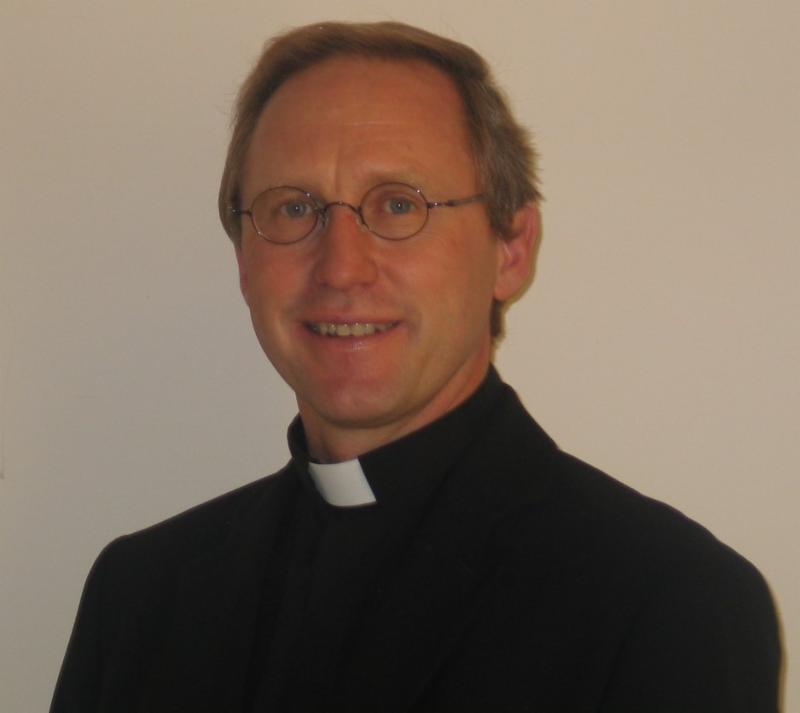
"I'm sure that the future of interreligious dialogue is in the hands of young people - that's why I appreciate very much the inspired work of the Russell Berrie Foundation in the field of religious education."
--
Father Norbert Hofmann, Secretary of the Holy See's Commission for Religious Relations with the Jews.
In his "Message for the World Day of Peace" (2014), Pope Francis said: "Give up the way of arms and go out to meet the other in dialogue, pardon and reconciliation, in order to rebuild justice, trust, and hope around you!" In this interview with Father Norbert Hofmann, the Secretary of the Holy See's Commission for Religious Relations with the Jews, we talk about the post-modern interreligious dialogue between Catholics and Jews, the question
of mutual understanding, about the role of young lay people in this new kind of the spiritual communication, and about the importance of religious education.
-
Fr. Hofmann, what is the main goal of the Pontifical Commission for Religious Relations with the Jews in the 21st century, when we not only have a lot of social and economic problems, but also armed conflicts and the spiritual crisis in society?
-
The goal of the work of the Pontifical Commission on Religious Relations with the Jews is mainly to implement the Second Vatican Council's Declaration "Nostra Aetate" (No. 4) - this is our mandate. This mandate isn't only for the 21st century, but it was also for the previous century, because, as we know, "Nostra Aetate" was promulgated just over fifty years ago. Our main goal is to foster and promote the dialogue between the Catholic Church and the Jewish people on the worldwide level. And this includes, of course, the organization of conferences, publication of theological documents, such as last year's document entitled "The Gifts and Calling of God are irrevocable" (10 December 2015). Our work covers a very wide-ranging span of initiatives, including the visit of Jewish people who come to the Vatican to see the Holy Father. As we enter into the 21st century, I think Jews and Catholics have become increasingly aware of some of the common challenges they face like secularization, Islam, terrorist attacks of Islamist groups - these are very serious problems we have to confront. And we can't forget economic problems, of course, in different parts of the world. Jews and Catholics can say something together about these questions, because they share a common heritage. Our Commission has organized many conferences where we have also spoken about the economic crisis, and about what Jewish and Catholic people can say from their beliefs and traditions. But, of course, our Commission is called the Commission on Religious Relations with the Jews, so mainly we are fostering the religious dialogue. But for the Jewish people political, social, cultural and religious affairs are often one thing. So we can't exclude other aspects of the problems we're discussing.
-
In your opinion, can we expect in the coming years that we will have another declaration on interreligious dialogue like "Nostra Aetate"?
-
It must be borne in mind that important documents are usually produced by the Catholic Church during the Councils. The Second Vatican Council ended in 1965 - just over fifty years ago. So we can't expect another Council in the next few years. To date, "Nostra Aetate" remains the "Magna Carta" of the Jewish-Catholic dialogue, and we cannot anticipate that another document of this sort will be issued soon. What can certainly be undertaken is further reflection on how the ground-breaking insights of "Nostra Aetate" can be implemented in the modern world and can be further explored on the theological level. This dimension is evident in last year's document "The Gifts and Calling of God Are Irrevocable," which deals with theological questions. Thus, follow-up documents to "Nostra Aetate"are always possible, but not a magisterial declaration that you speak of. In this context, I would also mention that there will be further conferences aimed at ways to implement "Nostra Aetate" nowadays - that's very clear.
- Can you also speak in more detail about the new document "The Gifts and Calling of God Are Irrevocable," exploring the unresolved theological questions at the heart of Jewish-Catholic dialogue. What is the main purpose of this document?
-
The first purpose was to publish a new document for the 50th anniversary of "Nostra Aetate," to inform people about the "status quo" of the Jewish-Catholic dialogue. The text deals with a range of theological questions that have arisen over the last five decades, for example, revelation, a stewardship of God for the Jewish people and for the Catholic people, and the salvation issue. Briefly, the latter question involves the fundamental difference between Christians, who believe that the Universal Savior of mankind is Christ Himself, and Jews, who cannot recognize Jesus as the Messiah of Israel and as the Messiah of the whole world, as the Son of God, as the Redeemer of the World. Such a divergence leads to questions such as: "How can Jewish people be saved without believing that Jesus is the Messiah?", among many others. Then we have the issue of evangelization towards the Jewish people - is it allowed or not, what are the conditions for that? So "The Gifts and Calling of God Are Irrevocable" is a theological document that deals with the theological issues that have arisen over the last decades. And it's important for us, Catholics, to have a clear opinion about how we should enter into dialogue with the Jewish people.
- In your opinion, what are the main obstacles in promoting Jewish-Catholic dialogue nowadays, and can we say that enough efforts have been made by Catholics and Jews in the development of interreligious dialogue and the new kind of religious communication?
-
There is no doubt that from the both sides - Jewish and Catholic - there is the desire to intensify the Jewish-Catholic dialogue, and we achieved a lot during the last five decades. Of course, there are a lot of problems also to deal with. Despite this, we're in continuous dialogue, undertaken in an atmosphere of mutual understanding and friendship. That's why I'm very optimistic regarding the future of the Jewish-Catholic dialogue. Because when we're meeting with Jewish people, we're meeting as friends.
- Are the main obstacles for dialogue between Catholics and Jews connected only with theological questions? How can we overcome these obstacles for continuation of living in the religious environment, based on common respect, friendship and love?
-
Of course, there are theological problems. But these are not the only issues. For example, Jewish people have questioned the figure of Pope Pius XII, asking what he did against the deportation of the Jewish people in Rome, and why he didn't say something publically regarding the Shoah. These sorts of issues can create problems, but, honestly, they created more problems, for example, 15 years ago, than nowadays. The Vatican has committed itself to opening its archives pertaining to this period. I think that scholars should also study the figure of Pope Pius XII more intensely, with a view to gaining insight and to evaluating this figure in a more methodical way, and not according to polemics that arose in the past.
- Is it possible for Jewish-Catholic dialogue to become one of the ways of confrontation with the process of secularization in post-modern times?
-
I think that religious people should share a common stance. Jewish people and Christian people can discover the same moral values in their respective traditions. For example, the 10 Commandments are inherited by the Christian world from the Jewish people, and we should stress our common spiritual basis for confronting the process of modern secularization. The process of secularization poses a great danger for all religious people - for Jews, Muslims, Christians, etc., because an aggressive secularization doesn't recognize the religious or moral values that can be found within our religious traditions.
- Fr. Hofmann, today a lot of young people can't find their personal spiritual way and they consider themselves individuals who don't belong to a concrete religious tradition. From this point of view, can we suppose that the interreligious dialogue is a new danger in a sense of losing our own religious identity?
-
The condition for entering into interreligious dialogue is to know our own religious tradition. Christians can't enter into interreligious dialogue without knowing their own Christian traditions, but once a solid understanding is gained, they can be enriched by the religious experience of others. But they can't find their own identity as Catholic Christians by entering into interreligious dialogue-that's not possible. So the goal of interreligious dialogue isn't syncretism and the mixing up of every religious tradition. The goal of interreligious dialogue, for example, for Catholics, is to discover more and more their own Catholic identity in the encounter with other religious traditions.
- It's obvious that Pope Francis makes many steps in the development of ecumenical and interreligious dialogue like also previous St. Pope John Paul II and Pope Benedict XVI. What is his greatest important contribution in the modern Jewish-Catholic dialogue? Which of his concepts can be considered to be the heart of this dialogue today?
-
Let's say that St. Pope John Paul II was an icebreaker regarding the Jewish-Catholic dialogue. He was the first Pope to visit a synagogue, the first Pope to visit Israel, the first Pope to visit Auschwitz and so on. Pope Benedict XVI and Pope Francis continued this interreligious mission. Pope Francis has accomplished much in the three years of his Pontificate: he has visited the synagogue in Rome, he went to the Holy Land. And he very much promotes the Jewish-Catholic dialogue on both the personal and institutional levels. His own experience as the Archbishop of Buenos Aires (Argentina), where he was very active in promoting Catholic-Jews relations, has been invaluable in furthering the dialogue with the Jewish people in a very intense way. So Pope Francis knows what he is doing, he loves the Jewish people, and he is always very welcoming to Jewish people in the Vatican. He is one of the greatest promoters of the Jewish-Catholic dialogue in the Catholic Church. I think that every Pope has his own style of promoting this dialogue. In my mind, St. Pope John Paul II was the Pope of great gestures; Pope Benedict XVI was the Pope of the intellectual word. And Pope Francis is the Pope of "embracing gestures". He's embracing the Jewish people, he loves them. And they feel that they're loved by him. It's fostering our friendship on a human level.
- What do you think about the contribution of the Russell Berrie Foundation (Russell Berrie Fellowship in Interreligious Studies) and especially its President Angelica Berrie in the development of Jewish-Catholic Dialogue?
-
I think, it's clear, that the future of interreligious dialogue is in the hands of young people, the students. And I appreciate very much that the Russell Berrie Foundation is educating young people regarding interreligious dialogue. The new generation of religious leaders will be very important in promoting the interreligious dialogue in the future. Therefore, I'm very grateful to what the Russell Berrie Foundation is doing, and for the Program in Interreligious Studies at the Angelicum University. I hope that this Program will be continued, and also that it will be intensified, and maybe also that other universities here in Rome will start such a Program because it's a great experience. We always work and cooperate with the alumni of the Russell Berrie Program.
- Can you also tell us more about the Emerging Leaders Conference on Jewish-Christian dialogue, which will take place in Jerusalem (Israel, 26-30 June 2016), organized by the Holy See's Commission on Religious Relations with the Jews and also the International Jewish Committee for Interreligious Consultations. What is the purpose of this conference and what is the role of Catholic young people and Jewish young people during this conference?
-
As I mentioned, we need the spiritual contribution of young people. This new generation must also enter into interreligious dialogue. The goal of the conference in Jerusalem in June is concerned with the theme of how to confront religious extremism, and in particular how to face this challenge together, in dialogue with one another. The conference aims at inspiring young people with fresh enthusiasm, new impulses and motivating courage to enter into interreligious dialogue. I'm sure that the contribution of young lay people in the Jewish-Catholic dialogue and in interreligious dialogue in general can be significant indeed. This dialogue isn't only a matter to be left to the sphere of priests and nuns, it's a matter pertaining to everybody. Lay people are the majority in every society, not priests and nuns. That's why the Jewish people aren't only contacted by the Church's clergy, but mainly by lay people. Yet, it is very important at the same time for lay people to have a religious education, which also can help them to understand all the processes, possibilities and perspectives in the current interreligious dialogue.
- How do you consider the role of the religious media today in the promotion of interreligious dialogue?
-
As we know, all media in general have a very important impact on public awareness, and also the religious media have a decisive role in society. As you mentioned before, in your country, like many others, the concept of "religious journalism" is not very popular in a time of growing secularization. But I need to say that in Italy we have a positive experience of work with the religious media. Of course, it depends on the Catholic tradition of the country, but obviously it also depends on the financial question. If you can raise enough money within the Catholic Church, you can establish your own TV and radio stations. But some Catholic countries are so poor that they can't effort to create Catholic media like these. So the question of the role of religious media depends on the religious tradition as well as on the financial resources, among other aspects.
By Lidiia Batig, Cohort VIII, Ukraine.
March 15, 2016.
The Vatican City State.
|