|
|
|
|
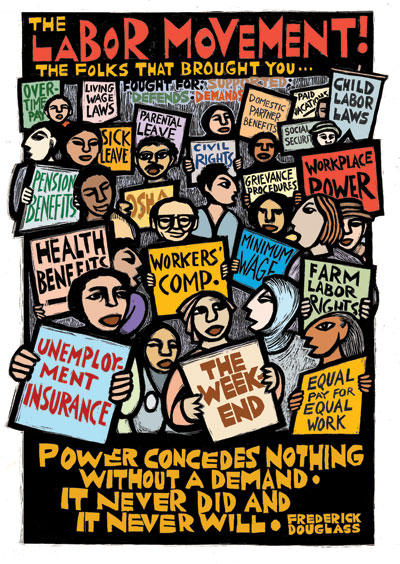
Ricardo Levins Morales |
Has there ever been a time when we have seen more clearly that life goes on because of workers? Delivery drivers, nurses, letter carriers, warehouse workers, teachers, farmworkers, grocery clerks. And so many more.
Workers work, and people survive. Our ability to create the world
---- and recreate the world
---- stems from our power as workers. As the song "
Solidarity Forever" reminds us, "In our hands is placed a power greater than their hoarded gold... we can bring to birth a new world from the ashes of the old."
On this
International Workers' Day
---- May 1st
---- let's remind ourselves of the importance of teaching our students about workers' struggles for better lives. For dignity. For equality. For bread
---- and for roses.
What could be more important than for our students to learn that progress toward greater justice in the world has occurred only when people have organized together and fought for it.
|
|
Students Uncover
"The Power in Our Hands"
|
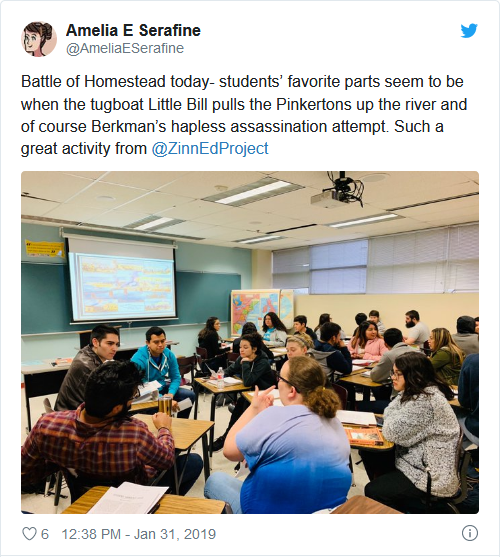
The Zinn Education Project offers a collection of free lessons on labor history from the teaching guide by Bill Bigelow and Norm Diamond, The Power in Our Hands.
This curriculum introduces students to the Homestead Strike, Union Maids, Southern Tenant Farmers Union, "scientific management," the impact of racism on labor organizing, and more ---- with complete lesson instructions and handouts.
|
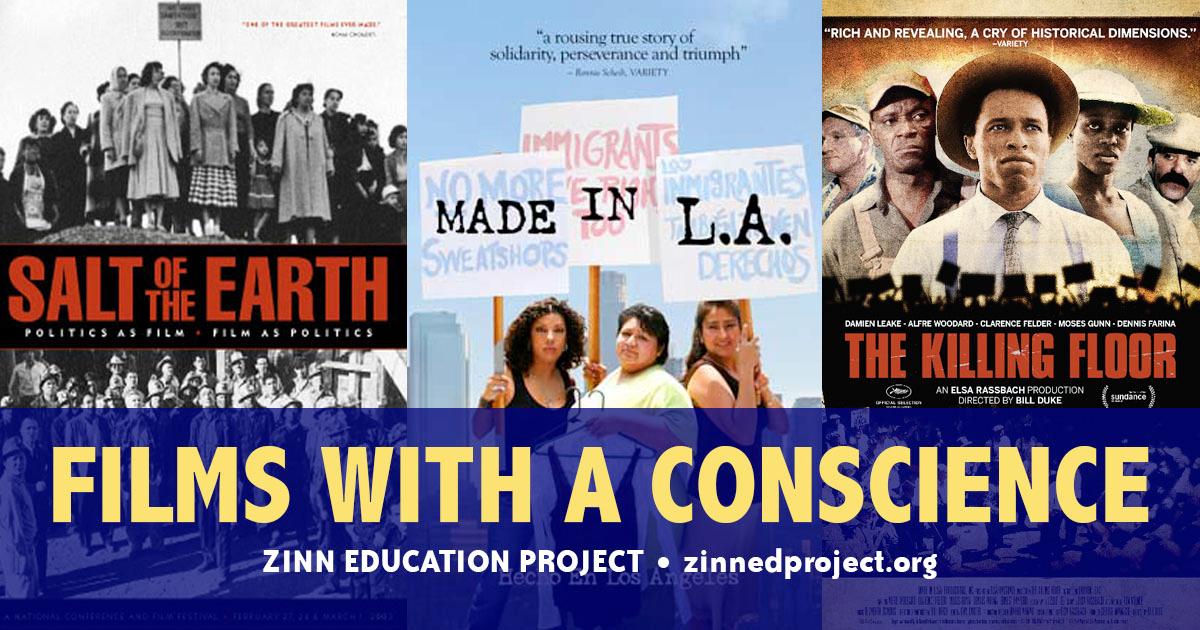
During the COVID-19 crisis, we share this annotated list of more than 100 films. It has always been a good idea to use "films with a conscience," but films may now be an even more accessible "text" we can use to help young people think deeply about the world. Many of these films alert students to how individuals and social movements have tried to make life better.
The list includes 11 films about labor history and organizing. Many are available to stream online for little or no cost.
|
|
Deportations on Trial: Mexican Americans During the Great Depression
|
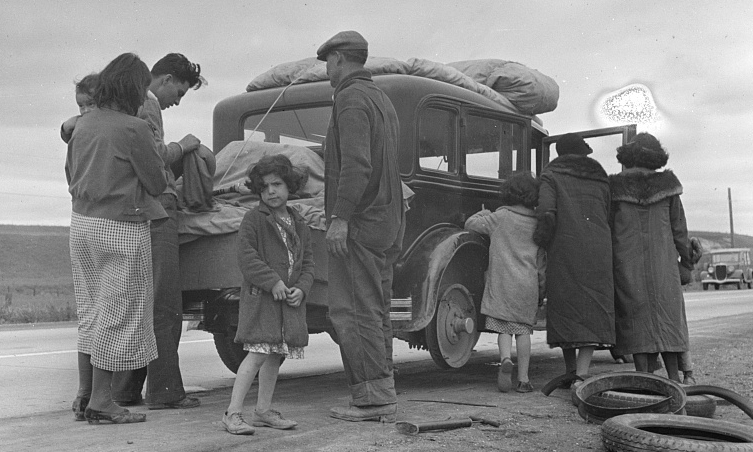
From the late 1920s to the late 1930s, adults and children, immigrant and U.S.- born, citizen and noncitizen, longtime residents and temporary workers all became the targets of a massive campaign of forced relocation, based solely on their perceived status as "Mexican."
Today, during a similar economic collapse compounded by a racialized pandemic, we see the Trump administration halt immigration, ban asylum seekers, and postpone hearings for migrants waiting in Mexico for their chance to enter the United States.
In the role play, Deportations on Trial: Mexican Americans During the Great Depression by Ursula Wolfe-Rocca, students analyze who is to blame for the illegal, mass deportations during the Great Depression. This lesson is available for free download.
|
|
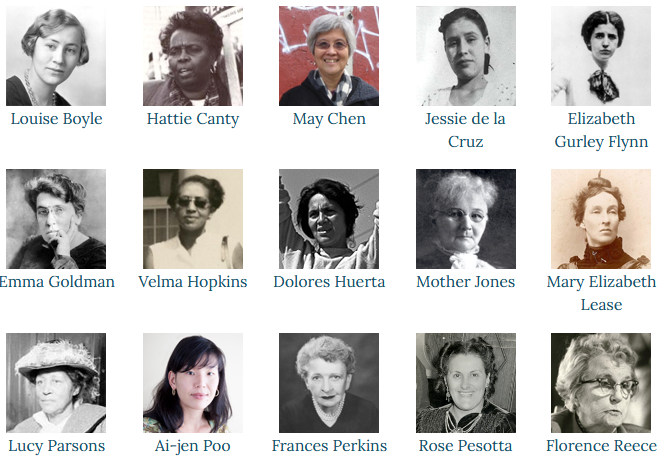
Women's activism in labor history is often missing from textbooks and media, despite the many roles women have played to organize, unionize, rally, document, and inspire workers.
From championing better workplace conditions to cutting back the 12-hour day to demanding equal pay across racial lines, these are just a few of the women who have contributed to the labor movement.
Learn more.
|
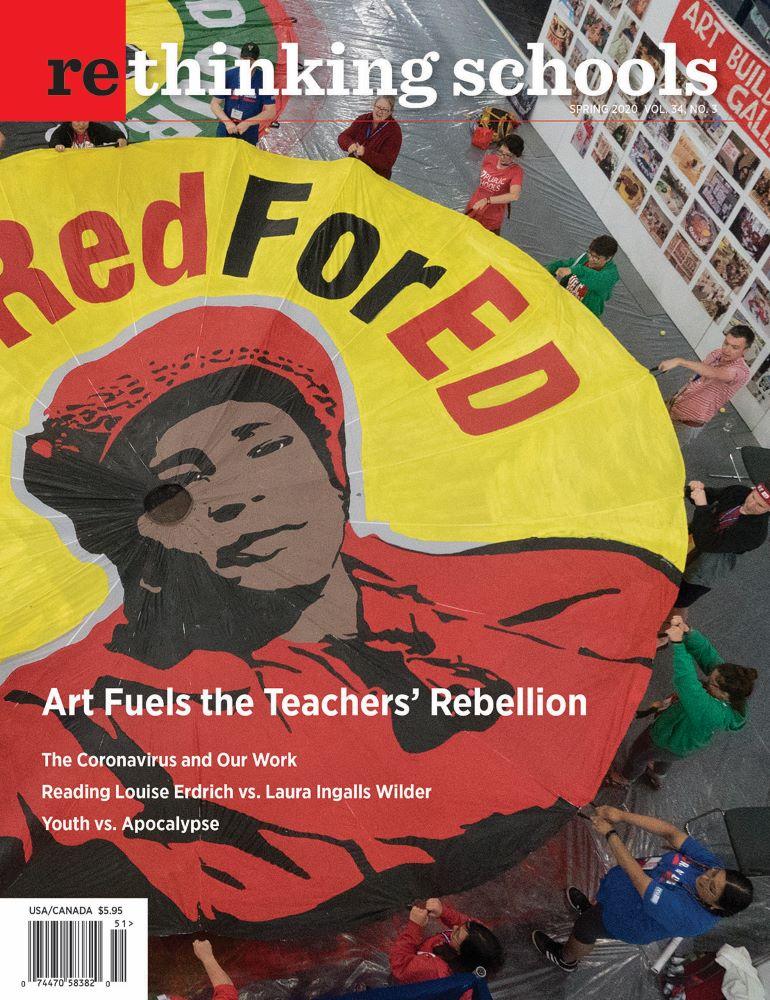
Rethinking Schools Magazine
VOLUME 34, NO. 3 - Spring 2020
The editorial, on "The Coronavirus and Our Work," concludes, "
So yes, please wash your hands, and then raise them, to continue to fight for equality and justice."
|
|
|
|
May 8: Women in the Black Panther Party
|
|
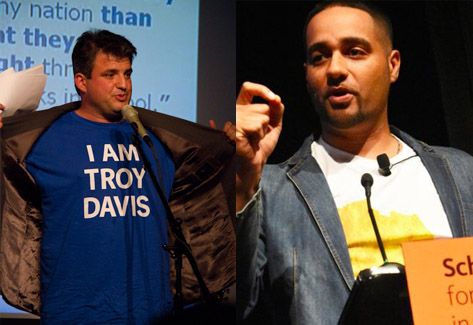
May 15: Black Athletes and the Black Freedom Struggle
Dave Zirin, sports editor for
The Nation and author of several books, speaks with Jesse Hagopian, high school teacher and the co-editor of
Teaching for Black Lives, about sports and social justice.
|
Additional presenters include:
May 22: Robin Kelley | May 29: Barbara Ransby | June 5: Manisha Sinha | June 12: Martha Jones | June 19: Greg Carr | June 26: Jeanne Theoharis
|
|
|
|
|
&
|
|
PO BOX 73038, WASHINGTON, D.C. 20056
|
|
|
|
|
|
|