|
|
Lessons from the Student Nonviolent Coordinating Committee
|
|
|
|
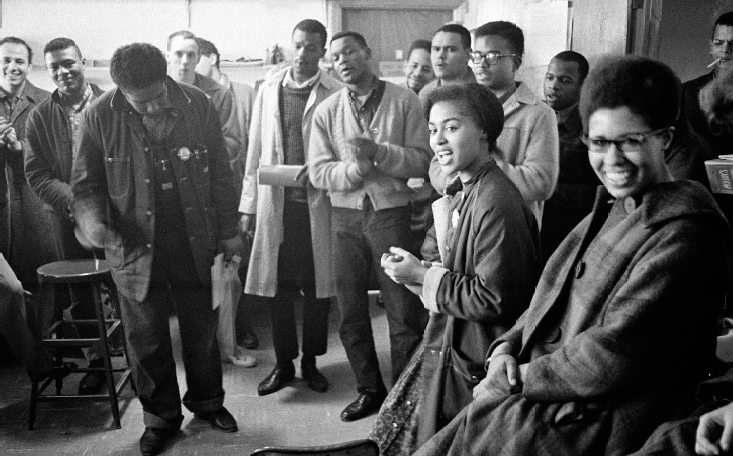
SNCC organizers sing at a meeting in Atlanta, 1964. Danny Lyon/Magnum Photos.
|
On this 60th anniversary of SNCC's founding, the Zinn Education Project offers resources to teach about one of the most significant organizations for social change in U.S. history.
|
|
People's Historians Online:
A Conversation with SNCC Veterans
|
|
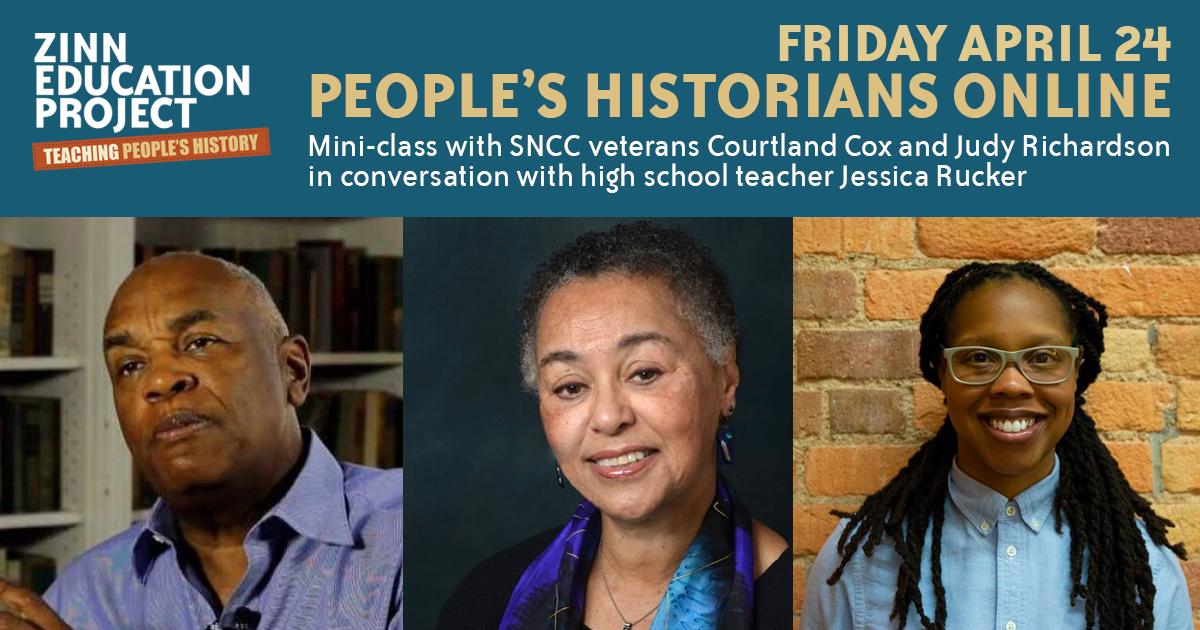
On April 24, in honor of the 60th anniversary of SNCC, the Zinn Education Project is hosting an online mini-class with SNCC veterans Courtland Cox and Judy Richardson, in conversation with high school teacher Jessica Rucker.
This is part of our Zinn Education Project People's Historians Online series launched in March with Jeanne Theoharis and Jesse Hagopian.
|
|
Teaching SNCC: The Organization at the Heart of the Civil Rights Revolution
|
|
|
|
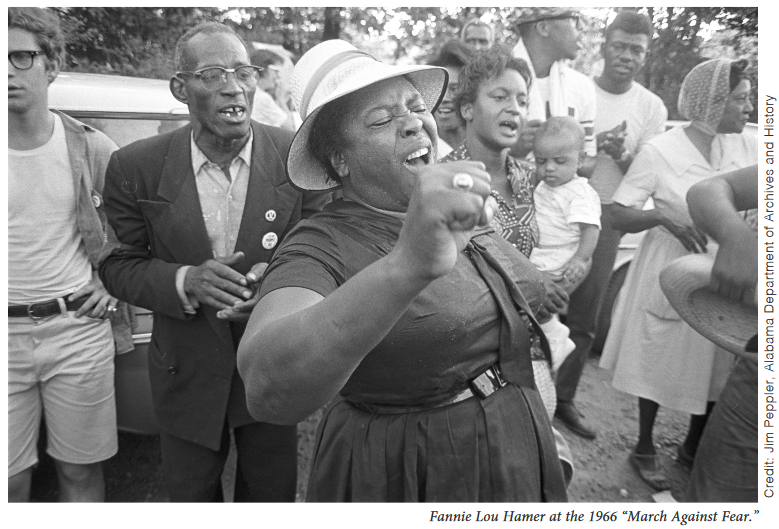
Credit: Jim Peppler
/
Alabama
Department of Archives and History
|
"Has anyone ever heard of the Student Nonviolent Coordinating Committee?"
High school history teacher Adam Sanchez asked his students while
writing the acronym on the board.
"S-N-C-C?" students sounded out, as his
black Expo marker moved across the whiteboard. They weren't sure.
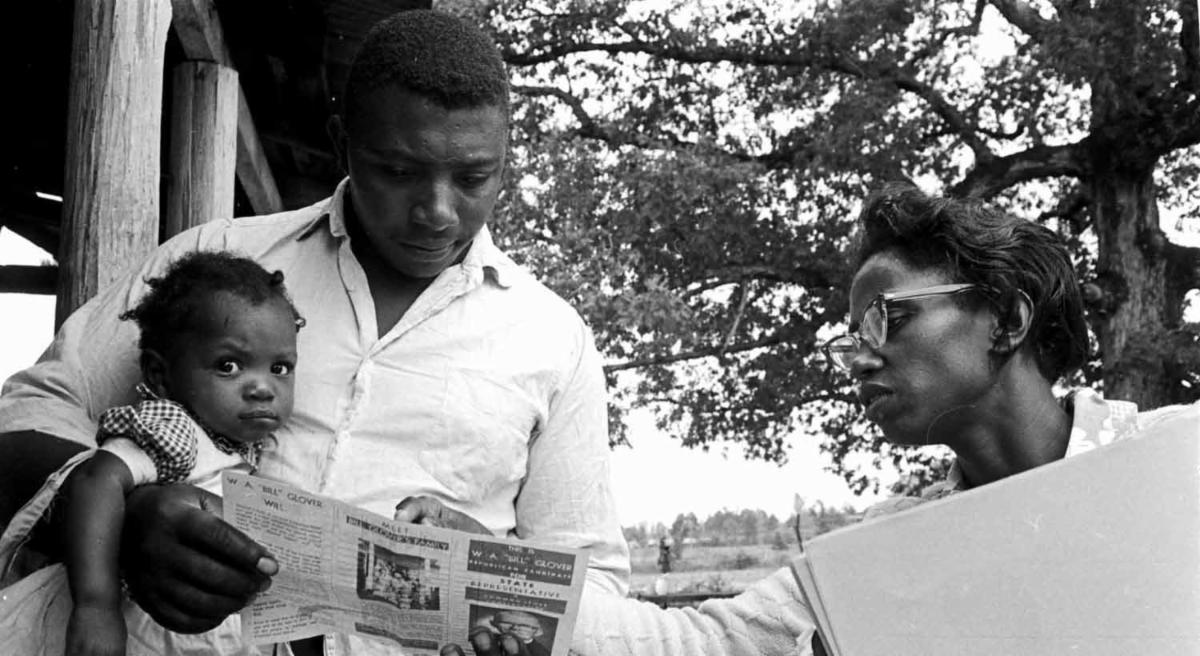
As Sanchez demonstrates in his teaching story and lesson, without the history of SNCC, students think of the Civil Rights Movement as one dominated by charismatic leaders and not one that involved thousands of young people like themselves.
This lesson offers a series of activities that explore the history and evolution of SNCC, including freedom rides and voter registration.
|
|
Explore the SNCC Digital Gateway
|
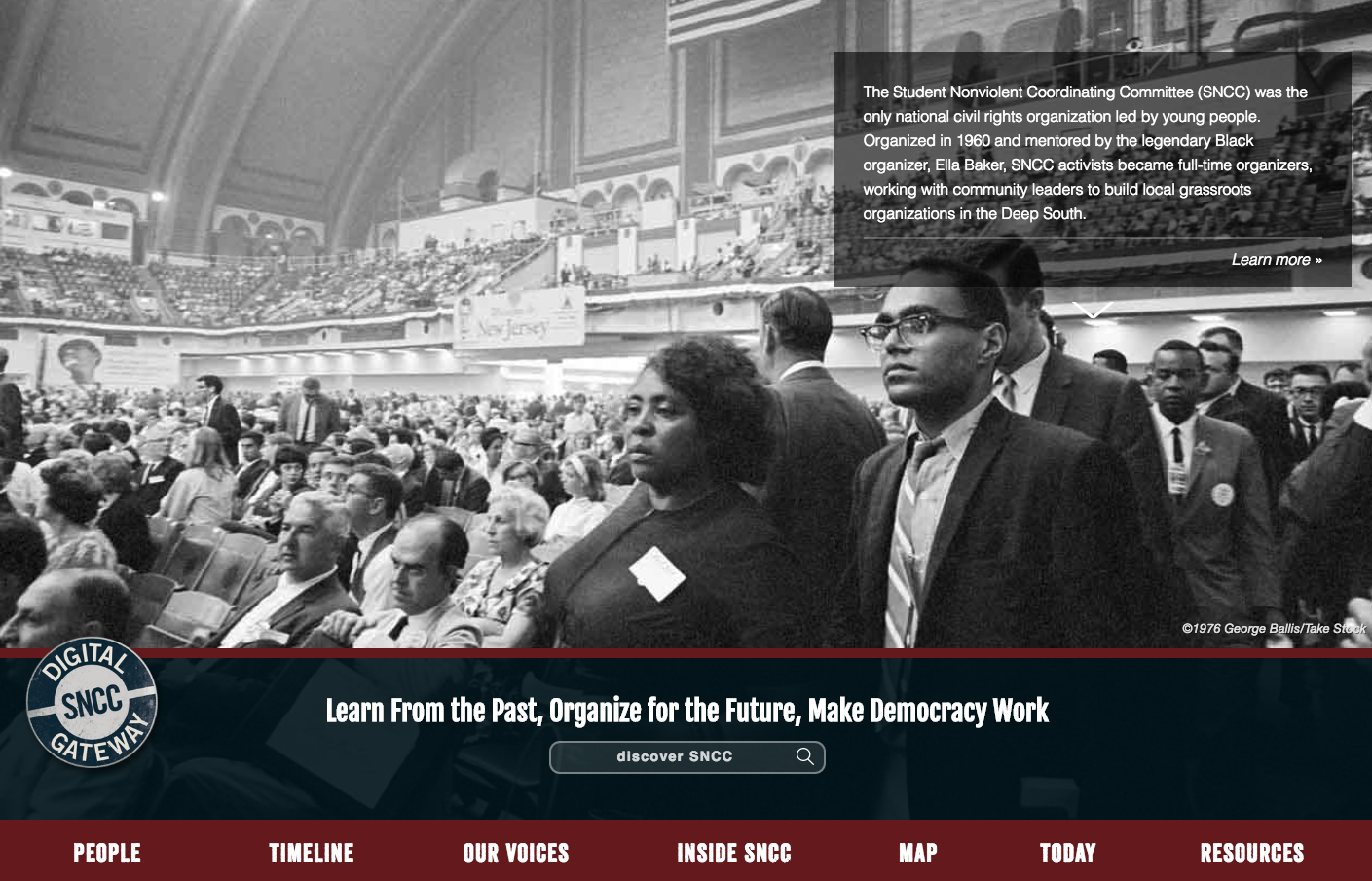
The SNCC Digital Gateway is a student-friendly digital collection with profiles of key people and events, primary documents, film clips, and oral histories.
The
SNCC Digital Gateway is a kaleidoscopic resource for students and teachers. The website is not only easy to navigate, but it offers a rich introduction to the people, places, and events of the
Student Nonviolent Coordinating Committee (SNCC)
------- the only national civil rights organization led by youth.
-------- Jessica Rucker, High School U.S. History Teacher, Washington, D.C.
|
What We Owe to the Black Women of this Powerful Civil Rights Group
|
|
By Melinda D. Anderson
|
|
|
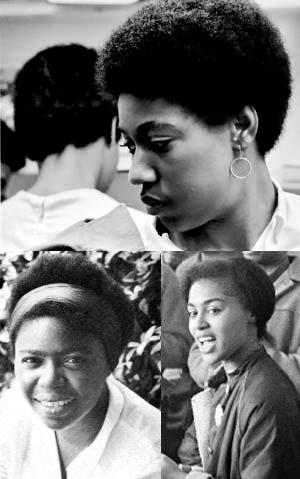
Jennifer Lawson (top), Gwendolyn Simmons, and Judy Richardson.
|
The courage of Black women is embedded in SNCC's DNA, spearheading
the group's evolution into an organizing juggernaut with its imprint on notable events of the civil rights era:
the 1961 Freedom Rides, opposing racial segregation on interstate buses; the 1964 Freedom Schools, coupling reading and writing with political advocacy; and the 1965 "Bloody Sunday" march in Selma, Alabama, in support of voting rights.
In
Zora magazine, journalist Melinda D. Anderson describes the central role of Black women in the Student Nonviolent Coordinating Committee (SNCC) and features interviews with the three women pictured to the right.
|
SNCC and Healthcare:
Medical Committee for Human Rights
|
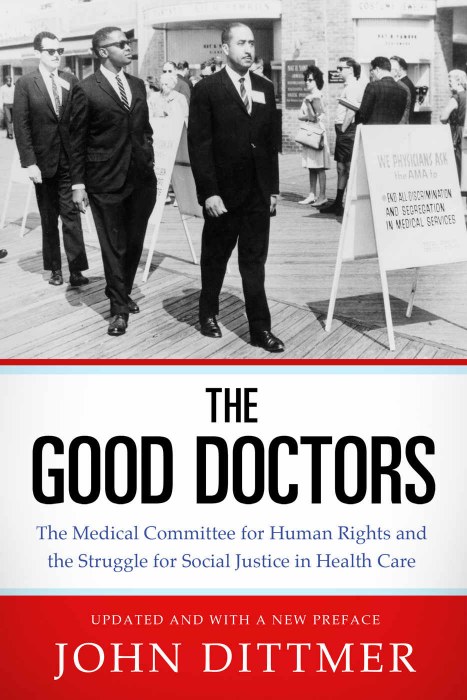
Although we often hear about the Student Nonviolent Coordinating Committee's work in voting rights and education, SNCC also challenged the denial of adequate health care for African Americans. They formed a Medical Committee for Human Rights.
|
|
Who Gets to Vote? Teaching About the Struggle for Voting Rights in the United States
This
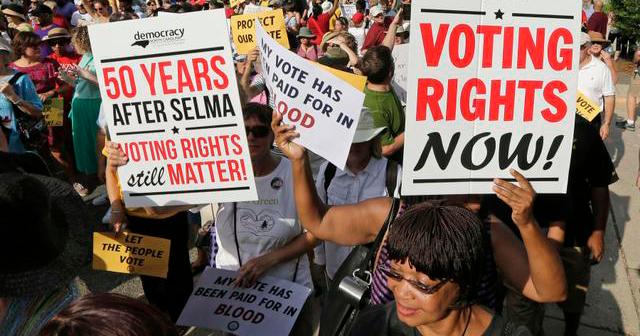
unit with three lessons by Ursula Wolfe-Rocca provides essential historical context for the contemporary struggle against voter suppression and for voting rights in the United States.
|
What Our Students Should Know About the Struggle for the Ballot ---- but Won't Learn from Their Textbook
|
By Ursula Wolfe-Rocca
The Washington Post, April 2020
This year marks the
150th anniversary of the ratification of the 15th Amendment.
Given the dizzying array of disruptions to our lives during the pandemic, one could be forgiven for failing to register this anniversary. But the fight for voting rights enshrined in the 15th Amendment is still alive, and more urgent than ever.
|
|
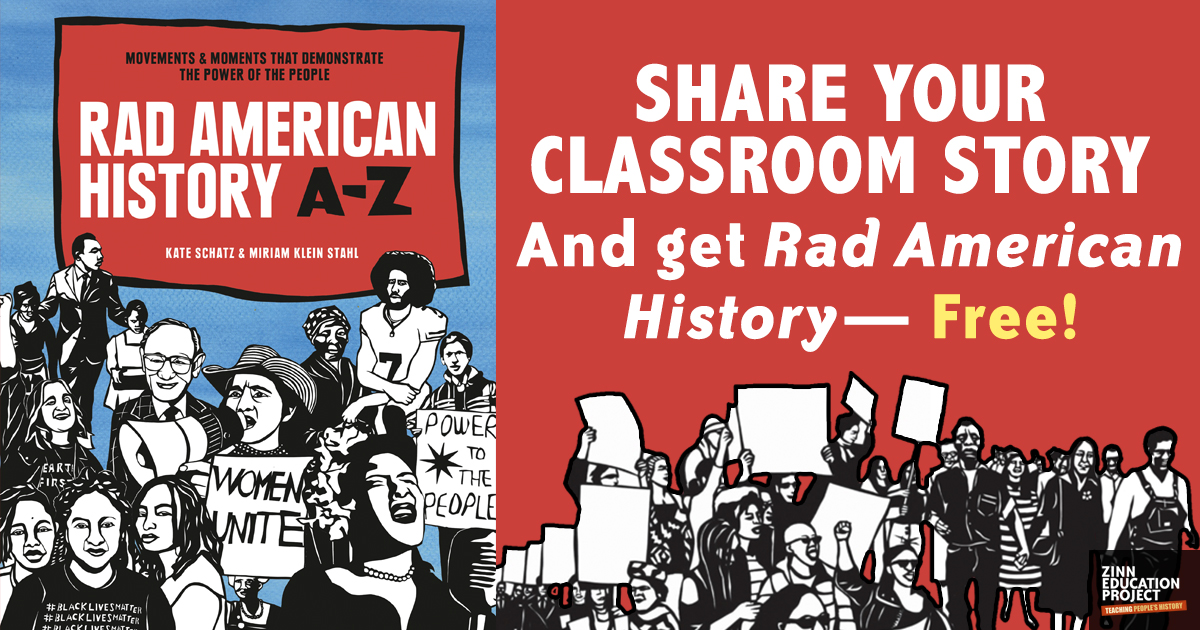
Share Your Story, Get a Free Book!
|
As teachers across the country face the daunting challenge of emergency online instruction,
we want to hear your stories. Are you finding ways to bring interactive, people's history lessons to online platforms? What about the schools where not all students have online access? How do you continue to build the community necessary for these lessons to be successful? How are you teaching about the coronavirus
with a focus on equity and climate science?
In appreciation for your time, we will send you a copy of the new book
Rad American History A-Z.
|
|
|
|
|
&
|
|
PO BOX 73038, WASHINGTON, D.C. 20056
|
|
|
|
|
|
|