|
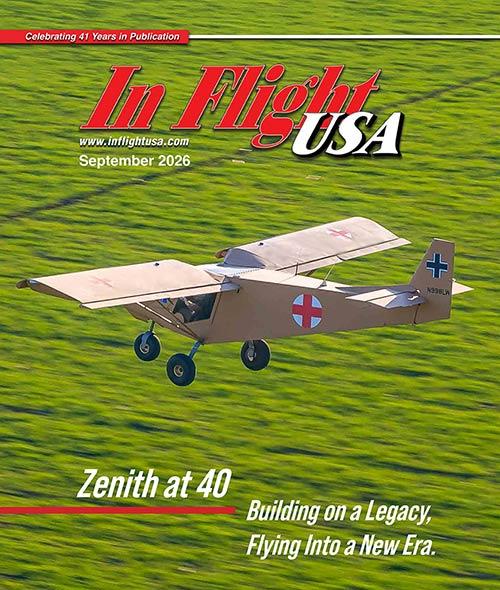
Zenith STOL at 40: Building on a Legacy, Flying Into a New Era, by Annamarie Buonocore, on the cover of In Flight USA, September 2026.
"From the legendary STOL CH 701 to the new CH 750 Super Cruzer, a 35th annual Homecoming, hands-on workshops and a return to EAA’s One Week Wonder, Zenith Aircraft is connecting four decades of homebuilt aviation with a new generation of pilots and builders."
Following is the text from the September 2026 feature:
| In 1986, GPS navigation was not yet a fixture in general aviation cockpits. Glass panels belonged more to science fiction than sport aircraft. The Light-Sport Aircraft category did not exist, much less MOSAIC. And the idea that thousands of pilots might someday watch spectacular short-field takeoffs from their phones was decades away. | |
But in that year, aeronautical engineer Chris Heintz introduced an airplane with an unmistakable silhouette and a remarkably straightforward mission.
The Zenith STOL CH 701 was built to fly slowly, operate from short and unimproved fields, remain relatively simple to construct and give ordinary pilots access to a remarkably capable utility airplane.
Four decades later, the “Sky Jeep” is still here.
And Zenith Aircraft Company is not spending the CH 701’s 40th anniversary simply looking backward. The company is entering one of the more interesting periods in its history: introducing the new CH 750 Super Cruzer, preparing for its 35th annual Zenith Homecoming in Missouri, expanding hands-on builder education, bringing a workshop back to Michigan, supporting renewed float options and preparing for another highly visible aircraft-building demonstration at EAA AirVenture Oshkosh in 2027.
The common thread running through all of it is something Chris Heintz established decades ago: airplanes should be designed not only to fly, but to be built, understood and enjoyed by the people who own them.
| A New Zenith Takes Flight: One of the biggest Zenith announcements of 2026 came on the opening day of EAA AirVenture Oshkosh, when the company unveiled the Zenith CH 750 Super Cruzer. | |
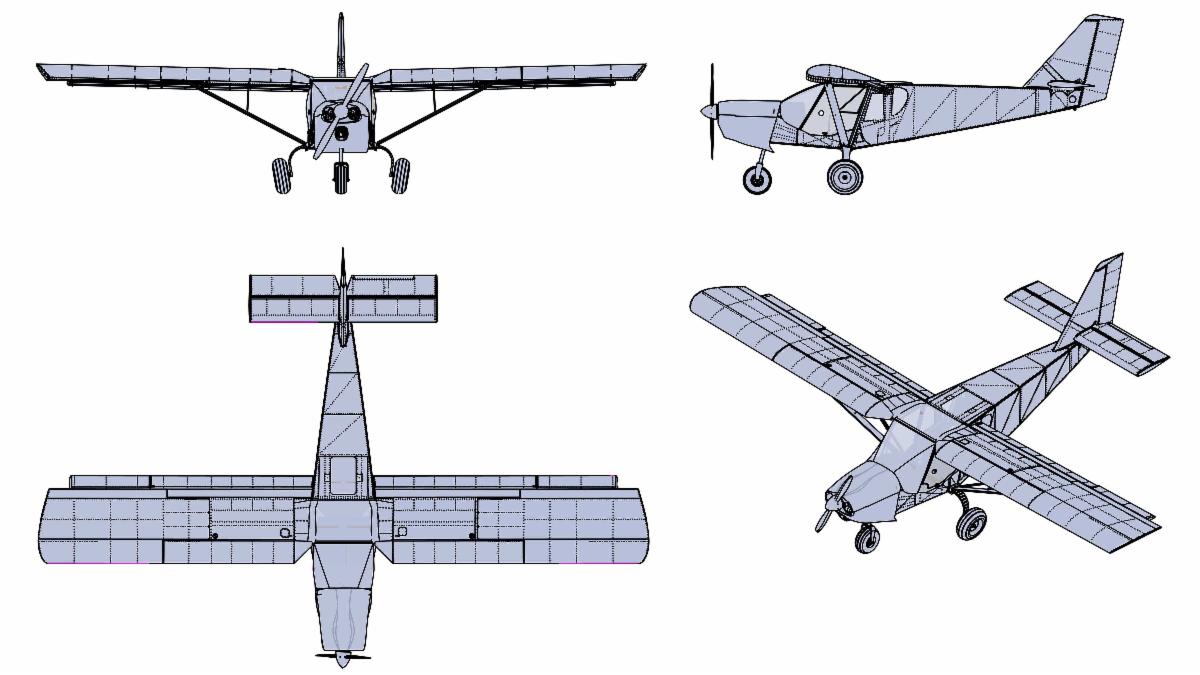
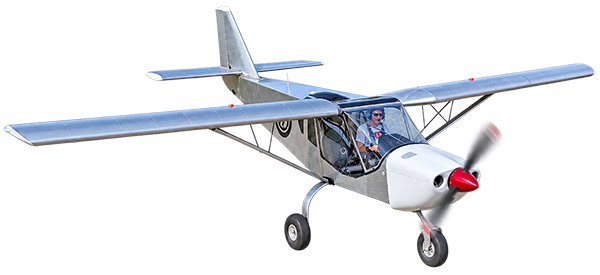
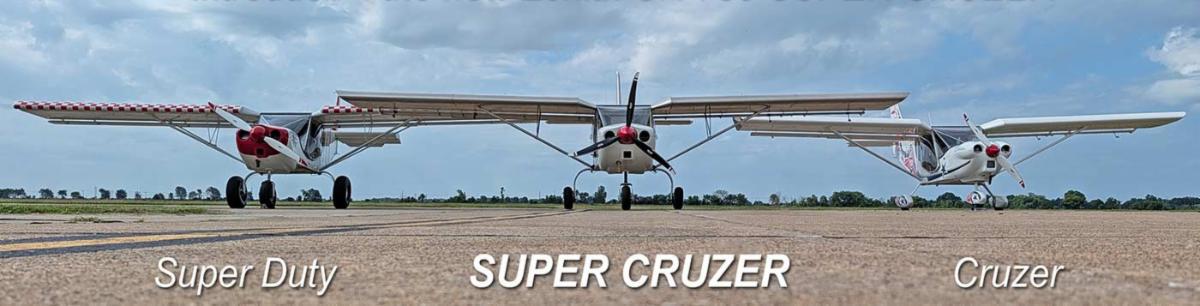
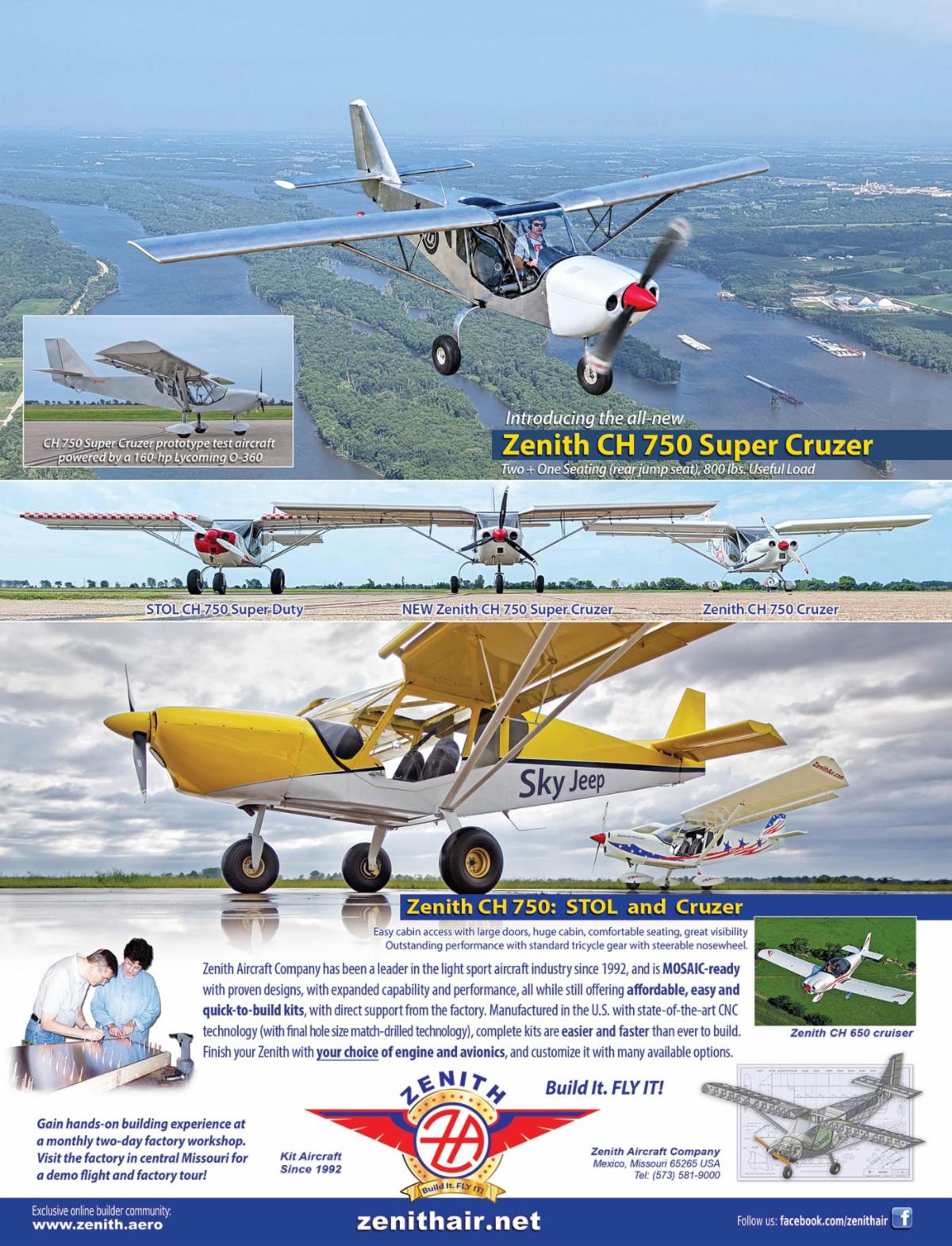
The new all-metal, high-wing airplane combines characteristics of two established members of the CH 750 family: the load-carrying utility of the STOL CH 750 Super Duty and the higher cruise performance of the CH 750 Cruzer.
The result is a 2+1 aircraft — two side-by-side seats plus a rear jump seat — intended to give recreational pilots an airplane capable of genuine cross-country traveling without abandoning the short-field versatility associated with the Zenith name.
That distinction is important. The Super Cruzer is not intended as a replacement for Zenith’s existing airplanes. Rather, it extends the family in a different direction. Zenith says it plans to continue offering its earlier models while positioning the Super Cruzer for pilots who want increased cruise performance while retaining useful load, cabin room, visibility and short-field capability.
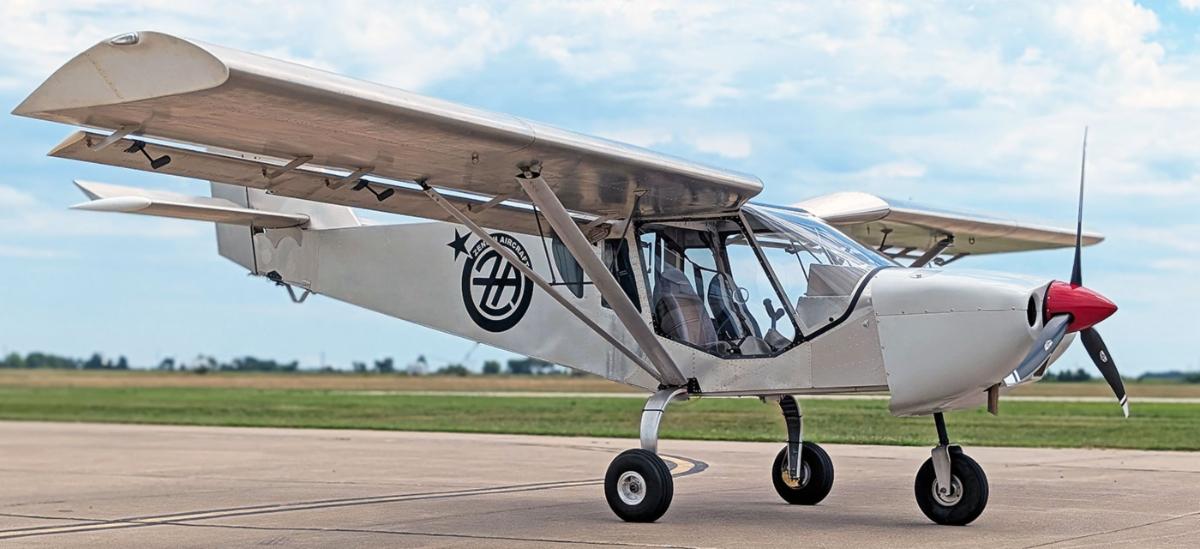
The prototype that arrived at Oshkosh was powered by a stock 180-hp Lycoming O-360 turning a three-blade, ground-adjustable Sensenich propeller. Initial testing produced cruise speeds above 120 mph, while VNE is listed at 160 mph. The airplane also features a 50-inch-wide cabin with large bubble doors and a center-mounted Garmin G3X display console.
| |
For builders, another number may be equally significant: Zenith estimates typical kit assembly at less than 400 hours. Final-hole-size, match-drilled components and extensive use of blind rivets continue Zenith’s emphasis on making aircraft construction approachable rather than mysterious. Much of the Super Cruzer airframe is shared with the STOL CH 750 Super Duty, allowing Zenith to put an advanced kit into production quickly. Kits are already being offered, with support planned for engines ranging from approximately 140 to 230 hp.
There is also a larger regulatory story behind the airplane. Zenith President Sebastien Heintz describes the Super Cruzer as a natural evolution of the Super Duty and Cruzer, combining payload and utility with greater cross-country capability while taking advantage of the expanded possibilities created by MOSAIC. Zenith also sees potential for the design eventually to be offered factory-built under the new Light-Sport framework.
That makes the Super Cruzer more than another variation on a successful airframe. It is an example of how a longtime kit manufacturer can respond to a changing regulatory environment without abandoning the design philosophy that built its reputation.
| |
It Started With a “Sky Jeep”
To understand the new airplane, however, it helps to go back 40 years.
| |
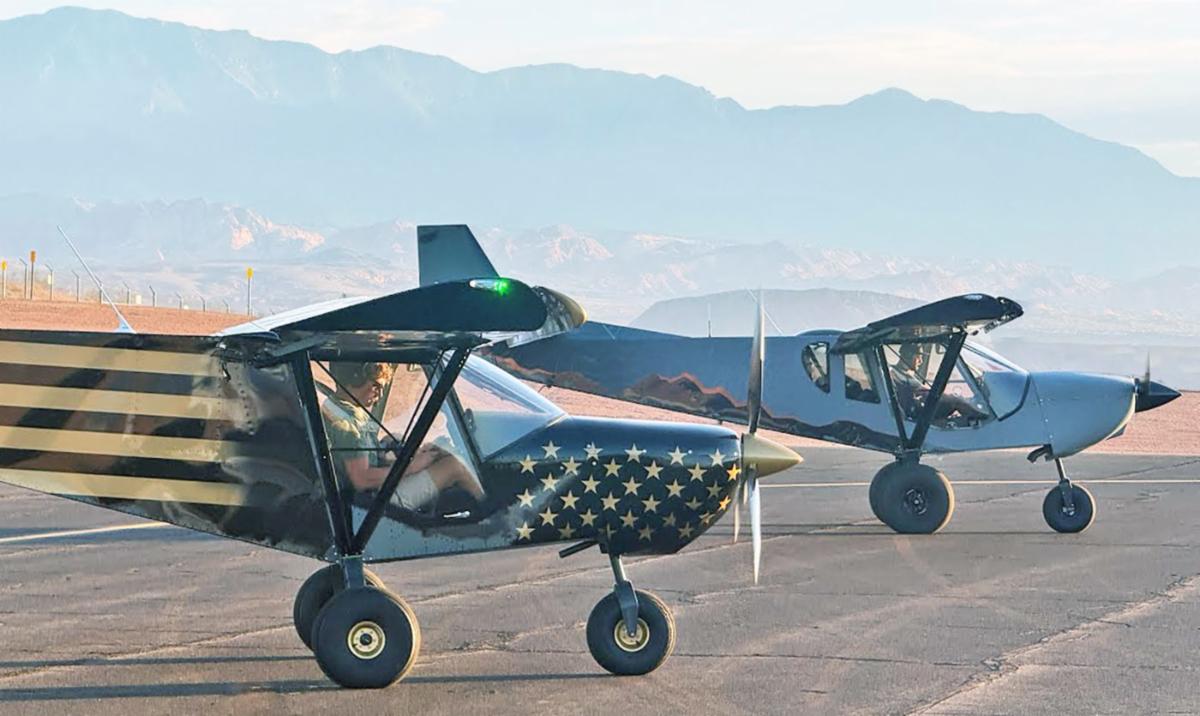
The STOL CH 701 first flew in 1986, initially powered by a 50-hp Rotax 503. Its appearance was unapologetically functional: high wing, fixed leading-edge slats, full-span flaperons and a structure engineered around low-speed handling and short-field performance.
Today, it is difficult to separate that design from the modern homebuilt STOL movement.
KITPLANES, marking the aircraft’s 40th anniversary this year, noted that the CH 701 remains in production and that the basic design has survived while the manufacturing process around it has evolved. Modern kits now benefit from match-drilled, final-hole-size components, substantially reducing the fabrication burden on today’s builder.
More importantly, the CH 701 became the foundation for an entire family.
| |
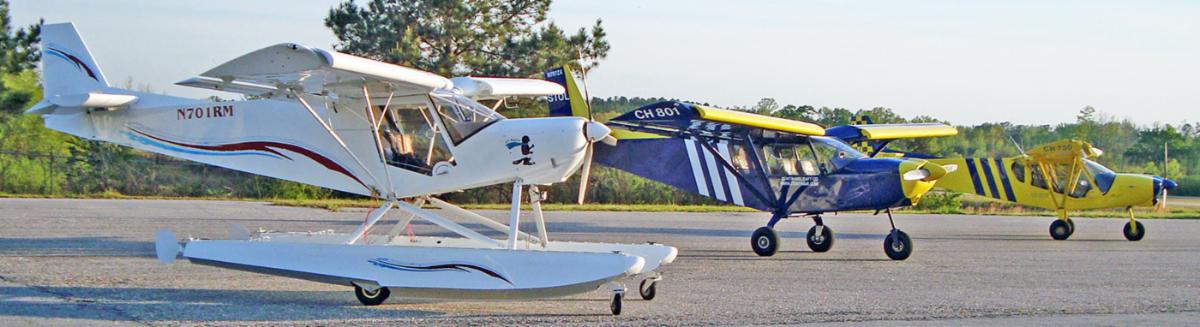
The larger CH 801 followed its utility philosophy. The STOL CH 750 expanded the concept for the Light-Sport era, eventually spawning the Cruzer and Super Duty. Forty years after the original airplane’s first flight, much of the design vocabulary Chris Heintz established remains visible throughout Zenith’s lineup.
The CH 701 also belongs to an unusually important graduating class.
As KITPLANES recently observed in its retrospective on the “Class of ’86,” 1986 brought several influential experimental designs, including the Zenith CH 701, Glasair II and RANS S-7. The fact that the CH 701 remains relevant four decades later says something important about successful aircraft design: longevity does not necessarily come from continually reinventing an airplane. Sometimes it comes from understanding the mission correctly in the first place.
And that may be the most appropriate way to view Zenith’s newest aircraft. The Super Cruzer does not reject the CH 701 philosophy. It stretches it.
| |
Homecoming: Where the Airplanes Come Back
The past, present and future of Zenith will come together Sept. 18 and 19, when the company hosts its 35th annual Zenith Homecoming, Open Hangar Days and Fly-In at its factory at Mexico Memorial Airport in Mexico, Missouri.
For Zenith owners, the annual gathering is part fly-in, part technical conference, part factory open house and part family reunion.
Aircraft built in garages and workshops around the country make their way back to the factory where their kits originated. For prospective builders, that creates something no brochure can duplicate: the chance to see completed airplanes, meet the people who built them and talk candidly about the experience.
This year’s two-day gathering is expected to include educational seminars and workshops, an aircraft show, contests and social activities, along with a Friday evening banquet. Factory tours, aircraft-building demonstrations and flying demonstrations are also planned.
Technical sessions are expected to cover airframes, engines and avionics as well as subjects such as STOL flying, transition training and engine and avionics installation.
| |
Building the Builder
There is another reason Zenith’s factory gatherings matter.
The company has long recognized that selling an airplane kit requires more than manufacturing airplane parts. It requires creating aircraft builders.
Zenith’s hands-on workshops are designed around that premise. Participants do not simply sit through presentations about aircraft construction. They work with sheet metal, drawings, drills and rivets and can construct an actual rudder assembly.
The workshops introduce blueprint reading, sheet-metal construction, measuring, drilling, riveting, aircraft maintenance and corrosion protection, along with the tools and techniques involved in assembling an all-metal aircraft. Zenith says participants need no previous building experience, specialized skills or tools.
That approach helps remove one of the largest psychological obstacles to homebuilding.
For someone who has never built an airplane, the idea of constructing an aircraft in a garage can sound almost absurdly ambitious.
Building one rudder changes the equation.
Suddenly, an airplane is no longer one impossibly complicated object. It is a collection of manageable assemblies.
The next factory workshop is scheduled for September 16 and 17 in Mexico, Missouri — immediately before Homecoming — giving participants the unusual opportunity to complete a workshop and then step directly into one of the largest annual gatherings of Zenith builders and aircraft.
| |
Taking the Workshop on the Road
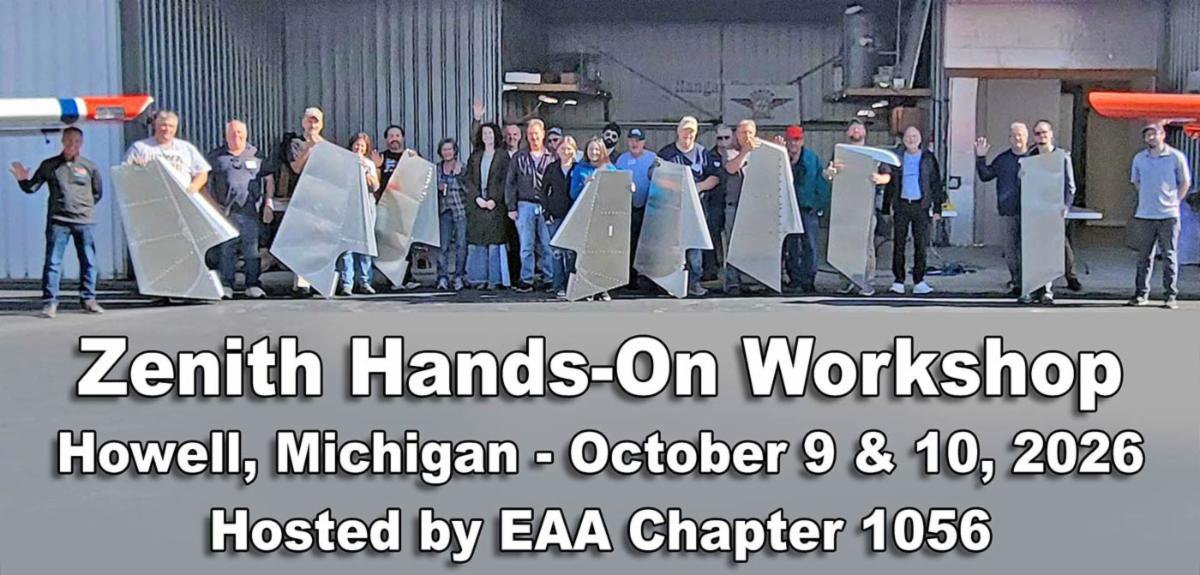
Zenith is also bringing that philosophy beyond Missouri. On October 9 and 10, the company will return to Howell, Michigan, for its second consecutive year of offering a two-day kit-building workshop there. The program is aimed particularly at first-time builders and people considering an aircraft project but unsure whether they possess the necessary skills.
Participants will build a complete rudder tail section from a standard Zenith kit while learning skills including reading drawings, drilling and blind riveting. The Michigan event is being organized with local builder and EAA Chapter 1056 member Steve Aupperle, with support from Martina and Oliver Reik of Midwest Flying Machines. A Zenith fly-in at Livingston County Airport is planned following the workshop.
There is something fitting about Zenith taking its workshops on the road during the CH 701’s 40th year. The original airplane was conceived around accessibility.
Four decades later, Zenith is still trying to convince would-be aircraft builders of essentially the same thing: You may be more capable of building an airplane than you think.
| |
Back to the Water
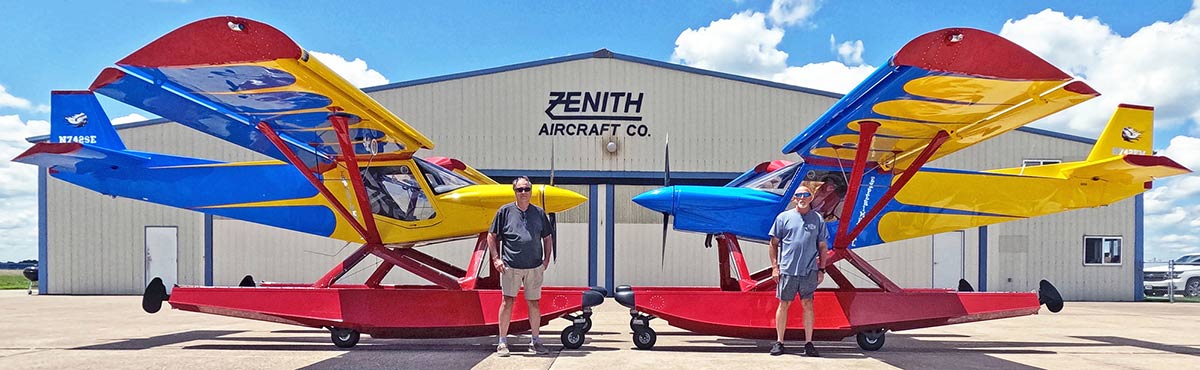
That versatility is also showing up in renewed attention to floats. Float flying has long been part of the Zenith world, particularly because aircraft designed for short-field utility naturally lend themselves to pilots interested in operating beyond conventional paved airports.
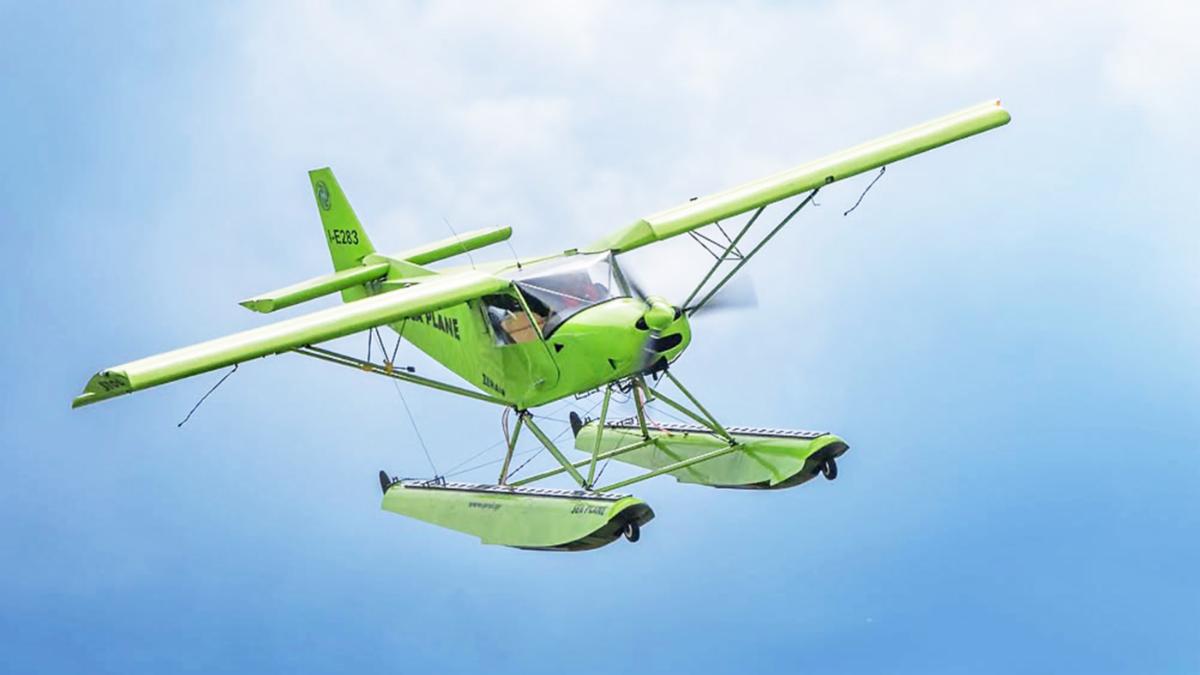
Zenair all-metal floats have historically been offered in straight and amphibious configurations, including kit and assembled options for compatible Zenith aircraft. Zenith’s current Super Cruzer announcement takes that relationship a step further: the company says amphibious floats will be offered for the CH 750 Super Cruzer, with a gross weight increase to 2,200 pounds while maintaining an approximately 800-pound useful load.
The return of float options is another reminder that “utility” in the Zenith vocabulary has never meant merely carrying baggage. It means expanding the number of places an owner can consider an airport.
| |
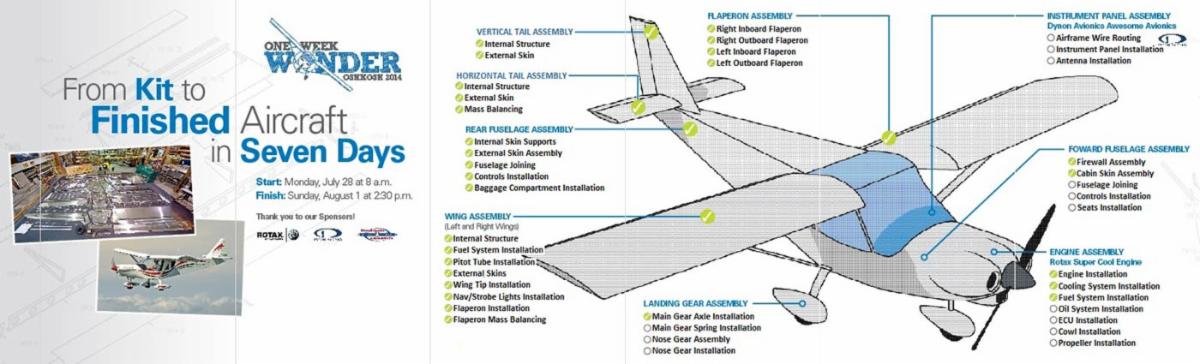
At EAA AirVenture Oshkosh 2027, EAA’s popular “One Week Wonder” project will return.
And the airplane selected for the challenge is the Zenith CH 750 Super Cruzer.
| |
Beginning Monday, July 26, AirVenture attendees will be invited to help transform a newly delivered Zenith kit into a completed airplane by Sunday, Aug. 1.
Visitors will be able to participate in airframe riveting and have their names become part of the official builders’ log. Educational activities will also introduce participants to areas including weight and balance, propeller installation and fuel-flow testing. Attendees will even be able to participate in choosing the airplane’s paint scheme.
The finished aircraft is being constructed with and for the Aspiring Aviators Aero Club of Winter Haven, Florida, which will operate it following completion.
It will be the fourth “One Week Wonder” project conducted at AirVenture in the past 15 years, following projects in 2014, 2018 and 2022.
| And the project will demonstrate one of the central claims behind Zenith’s aircraft: modern kit-building does not have to be reserved for master machinists or lifelong aircraft mechanics. Many hands, good engineering and a kit designed with the builder in mind can turn sheets and boxes of aluminum into an airplane. | |
Forty Years — and Still Building the Zenith STOL CH 701
Perhaps that is the real Zenith story in 2026. The airplanes have changed. Manufacturing has changed dramatically. CNC routers now cut and drill parts with precision that early homebuilders could scarcely have imagined. Instrument panels have evolved from round gauges to sophisticated glass displays. Engines, avionics and regulations have moved forward.
The pilots have changed, too. But the fundamental idea behind the company remains remarkably recognizable.
Chris Heintz designed the CH 701 around a mission and around the person who would eventually build and fly it.
| |
Forty years later, the original airplane remains in production. Its descendants have become a family of their own. A new CH 750 Super Cruzer is pushing that family toward faster cross-country flying and the possibilities of MOSAIC. Workshops continue teaching first-timers how to drill and rivet aircraft aluminum. Homecoming continues bringing finished airplanes back to Mexico, Missouri.
And next summer, thousands of people walking through EAA AirVenture will have the opportunity to pick up a tool, place a rivet and leave a tiny piece of themselves in an airplane destined to fly.
For Zenith, that may be the most meaningful way to celebrate. Not simply by preserving the airplane that started the story. But by handing the tools to the next builder.
| | Above reprinted from In Flight USA, September 2026 issue. "Zenith STOL at 40: Building on a Legacy, Flying Into A New Era," by Annamarie Buonocore. Pages 4, 38-40. | | | | |