|
Today, we feature five stories you won’t want to miss, highlighting both impact and opportunity across CSCR’s growing work.
- students at Zosterapalooza, the region's preeminent eelgrass confererce;
- CSCR's signature event, State of the Harbor, April 9
- a new GIS partnership with Boston College strengthening our dune grass research;
- Marine Debris mini grants for educators & college students
- a survey for you to shape our new Fellows program.
We also invite students and families to register for summer 2026 Varsity Research and spring Middle School Wednesdays.
| Zosterapalooza & State of the Harbor | | |
CSCR’s growing role in the regional eelgrass restoration network continues to deepen our connections across science, education, and community.
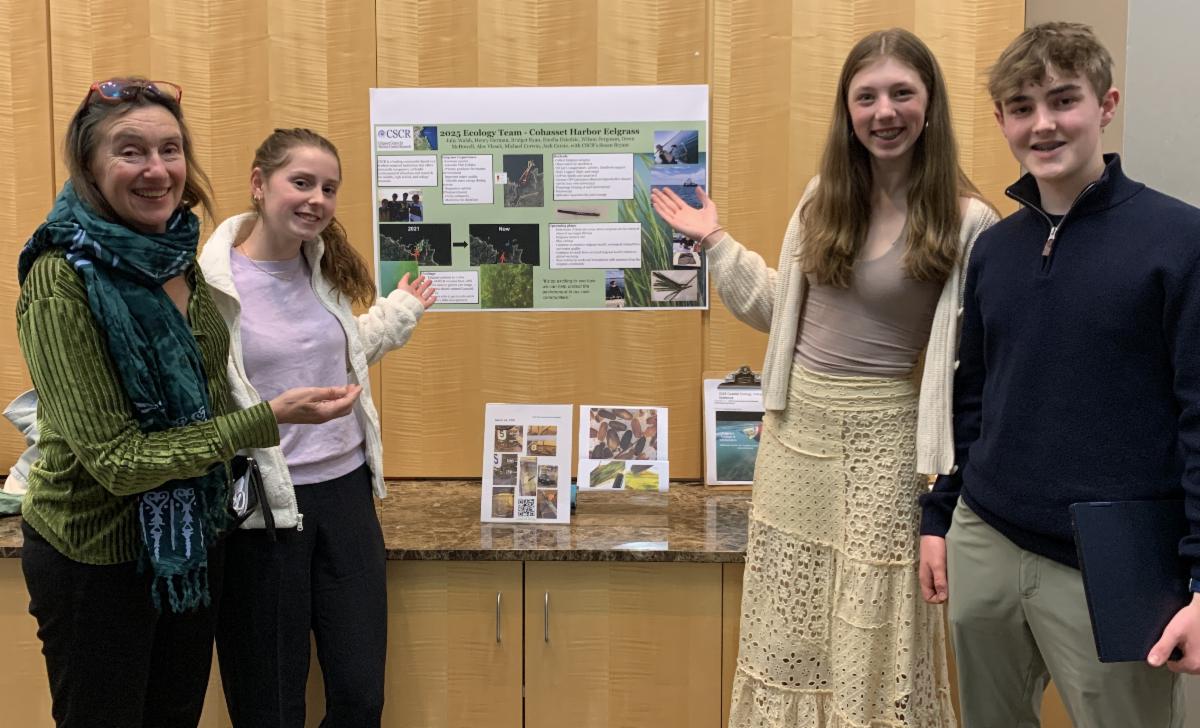
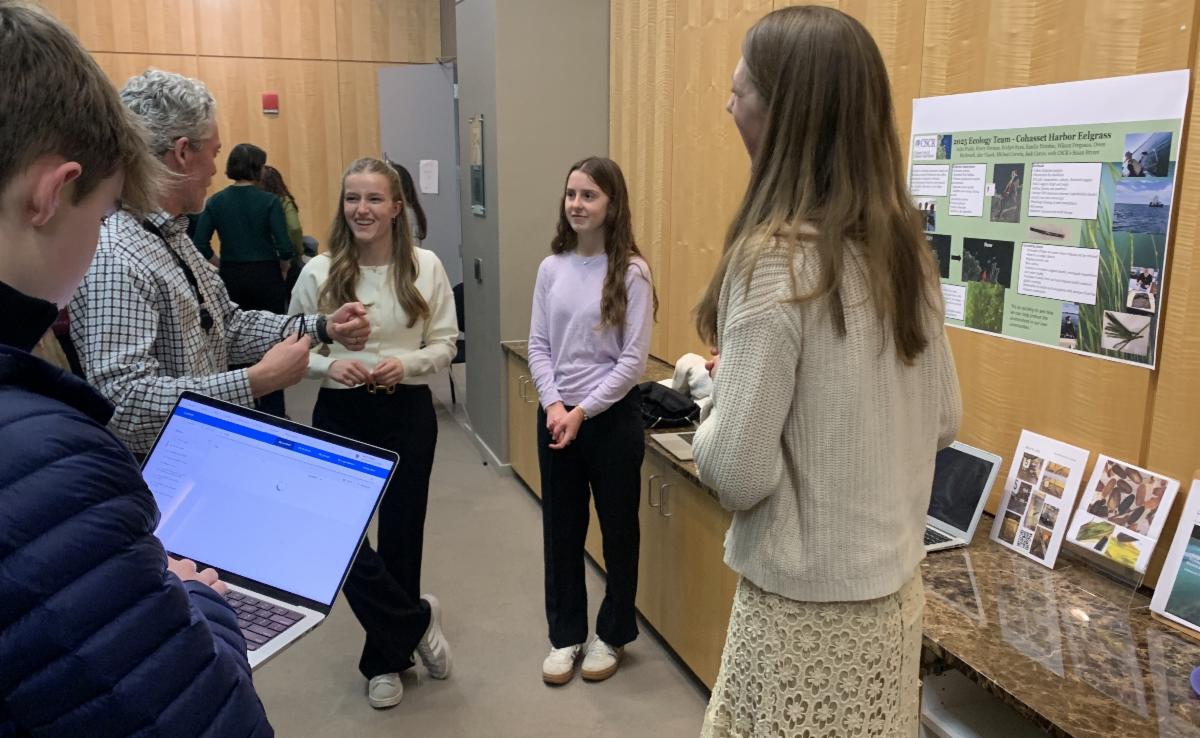
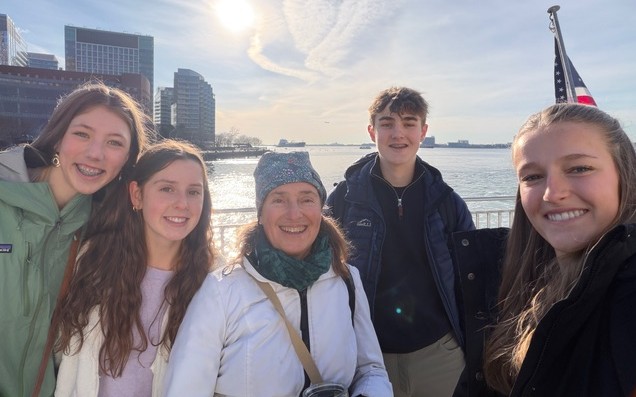
On Wednesday, March 25, high school students Bridget Ryan, Henry Herman, Emelia Dziedzic, and Julia Walsh attended Zosterapalooza, an annual conference focused on eelgrass research and restoration. Convened by Dr. Phil Colarusso of EPA Region 1, the gathering brings together professional scientists, practitioners, and policymakers from across the region.
With Susan Bryant's leadership, CSCR’s intrepid research team engaged with professional scientists, attended professional talks spanning multiple disciplines, and shared their own research during the conference’s engaging poster session.
“It was so interesting to take a deeper dive into plans to restore eelgrass,” noted Julia. “It’s exciting to think about what this will mean for our research team this summer!”
Come hear more from Julia, Emelia, Bridget, and Henry as they talk about the eelgrass team's work on Thursday, April 9. Join us for CSCR's annual State of the Harbor Community Forum (Wilcutt Commons, 7pm).
Please let us know you'll be attending the State of the Harbor. Register here.
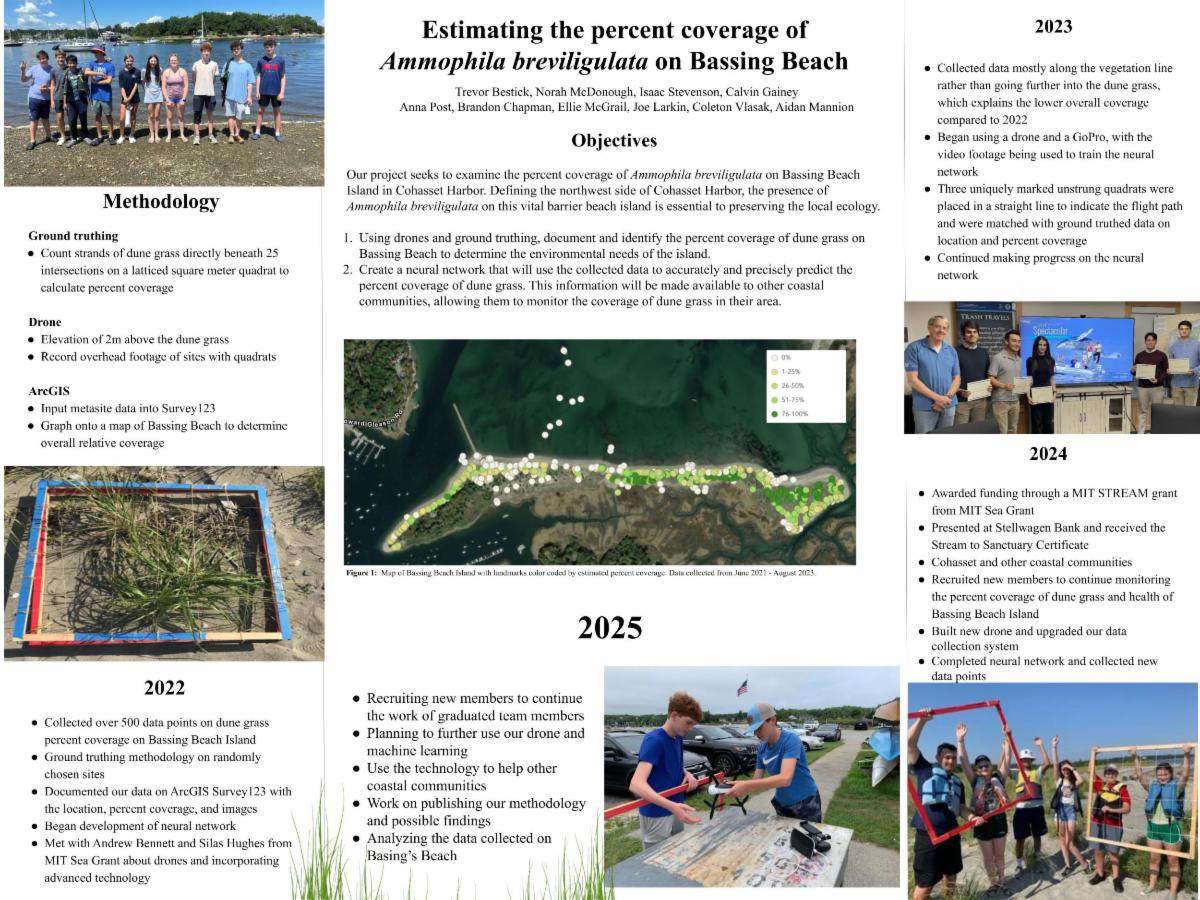
| | Dune Grass Drones & Boston College | CSCR’s Dune Grass Project enters 2026 with extraordinary momentum, building on four years of rigorous, student-driven research on Bassing Beach. Since 2022, students have designed and refined a sophisticated workflow that integrates quadrat-based field sampling, ArcGIS mapping, and early-stage machine learning to estimate percent coverage of Ammophila breviligulata (American beachgrass). Now... | | |
... Now, the project takes a significant step forward with the addition of Dr. Kate Willis, a GIS professor who leads the Data Visualization Lab at Boston College. Dr. Willis will work directly with students each week to help the team expand its use of drone mapping at Bassing Beach—flying missions over the dunes to capture high-resolution imagery and build detailed maps of dune grass distribution and the shape of the barrier beach.
With Dr Willis' guidance, students will learn how to turn that imagery into usable data—mapping where beachgrass is thriving, where it’s thinning, and how the dunes themselves are shifting over time.
The goal is straightforward but powerful: to build the capacity, year after year, to measure geomorphic change—erosion and accretion—and better understand how Bassing Beach functions as a natural protective system.
This work matters! By tracking how the dunes grow or recede, students are helping answer bigger questions: how well can this barrier system continue to protect Cohasset and Scituate’s salt marshes and the critical role they play in the region’s resilience to a changing climate? What can we do to steward this resource so that it thrives as an ecosystem and protects our shoreline assets?
| | Green Fund $$ for Marine Debris Teams | |
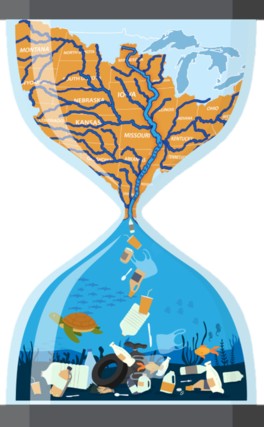
As the image above indicates, most marine debris originates as mismanaged solid waste on land. Our litter, traveling the waterways of the watershed, litters the ocean! True, maritime industries from the independent fisher to the transnational shipper contribute significantly to the problem. But, the vast majority of the coastal debris we see is ours-- the trash we "carried in," but failed to "carry out."
Mismanaged solid waste typically ends up in the ocean. Therefore, inland community cleanups —even in cities and towns far from the coast— are practical, upstream interventions that reduce the flow of debris into rivers, harbors, and ultimately the ocean.
We are pleased to announce that we have some modest funding for marine debris teams. The Green Fund, supported by NOAA's Marine Debris program, is a new mini-grant opportunity developed in collaboration with Stonehill College and MIT Sea Grant. It's part of a broader marine debris education initiative that equips teachers and community educators with a suite of tools to study marine debris “from Source to Sanctuary.”
No matter where you live, your "place" is a source of marine debris. So, apply for a Green Team Marine Debris mini grant today! See more below.
| |
Through the Green Fund, CSCR will award up to $1,500 per team—funding a dozen “Green Teams” of 4–6 students, guided by a teacher or community educator and anchored by a college-level student leader (who may earn a scholarship stipend).
Click here to access the flyer.
| Varsity Research Info & Registration | |
Varsity Research Information Session Updates: For students and families in need of information, the very best way to learn about who we are and what we do is to attend our State of the Harbor event (register here).
Additionally, we will hold three info sessions on Wednesdays in April (April 15, April 22, and April 29) from 4pm – 6pm. Please complete this short contact info form.
If you're ready to register for our Varsity Research program, click the button below!
| |
The work of CSCR continues to grow, and with that growth comes an opportunity. We are launching a CSCR Fellowship, an early-career workforce development initiative designed for rising college seniors, GAP semester or GAP year students, and newly minted college graduates who seek authentic professional experience while contributing to building the Common Good at the local level.
Help us build this program. Take our Survey, please.
| | Middle School Spring is Back! | |
Middle School program starts up again, April 1, Wednesdays 3:30-5:30 for students in 6-8th grades. We will be exploring wave action, coastal erosion, and how we can harness or redirect wave energy.
Register here.
For more program information, visit our middle school page.
| | | |
Cohasset Center for Student Coastal Research
40 Parker Ave
Cohasset, Massachusetts 02025
(781) 383-0129
| |
| | | |