Winter Newsletter 2021
Our Mission: Friends School of Portland challenges and empowers students to develop their intellectual,
physical, emotional, creative and spiritual potential. We honor our students’ natural gifts as they
learn to enter the world with confidence, competence, joy and a sense of purpose.
We are guided by the Quaker values of simplicity, peace, integrity, community, equality, stewardship, and truth.
|
|
Welcoming Our New Head of School |
|
Dear friends and Friends,
On behalf of the Board of Trustees and the search committee, I am very pleased to announce that Sara Primo will be the next Head of Friends School of Portland. She will begin on July 1st, with some overlap with Jenny to help with a smooth transition.
I want to thank everyone who took part in this process, from being part of surveys, meetings, in-classroom interactions, virtual community sessions, and individually reaching out to us. The search committee came to unity around Sara because she articulated a profound vision for Friends School of Portland, which has emerged from her deep Quaker practice and is rooted in a fearless commitment to truth-seeking. During her time with our community, Sara shared reflections and questions that expanded our hearts and minds. She asked questions and shared ideas with our administrative staff that demonstrated understanding of what she will need to learn and a commitment to a "sleeves-rolled-up" approach to the school's long-term sustainability. Students reflected on how Sara connected with them intimately during her brief classroom visits.
She impressed us with her life-long passion for social justice and outdoor education from having first experienced transformational Quaker values at Vermont's Farm and Wilderness Camp and continuing her development by becoming a trained Quaker clerk and facilitator through course work at Pendle Hill. Her tenure as a teacher, leader, poet, and anti-racism educator at Germantown Friends School (Philadelphia) over the past decade will help her grow FSP's strong roots - grounding and deepening who we already are.
Her commitment to the work of anti-racism and her clear and impressive ability to engage fellow teachers and administrators promise a future for the school that is transformational. She has sought out and led working groups on confronting racism, attended and participated in workshops that have deepened her Quaker commitment to social justice, and worked purposefully on curriculum that seeks to address systemic inequities. The race facilitation training that she has done through Penn's Race Institute will help lead us with deep listening, collaboration, and careful questioning, as we move toward becoming an anti-racist school.
We look forward to Sara and her husband, Mike, along with their two children, daughter Logan (7) and son Julian (almost 4), joining us this summer.
|
|
|
Shared Meeting for Worship on Sunday, Feb. 28 at 10:00am |
|
|
|
Portland Friends Meeting and Friends School of Portland in a typical school year share Meeting for Worship a few times in the year.
This year, Friends School of Portland will be offering a special Meeting for Worship by zoom held on Sunday, February 28 from 10:00am-10:20am.
|
|
Letting our Lives Speak: Moving Toward Antiracist Pedagogy and Practice |
|
This is the first in a series of updates in response to parents asking for more information on what is happening around the building as we work toward antiracism. Since antiracism work is pervasive, ever-evolving, and at least partly internal, it’s difficult to chronicle everything that’s happening, so my plan is to share periodic updates that offer snapshots of some of the work going on in different corners.
As always, please reach out with any questions. Thank you for supporting us and pushing us as we do this critical work.
Warmly,
Nell
|
|
Black history is American history
During Black History Month, we recommit to the work of including Black, Brown, and Asian voices and perspectives in all of what we teach, all year long. Without those voices, we will not have a full understanding of our history or our present-day.
Here are a few examples from around the building:
- Over the last several weeks, and 8th graders have found plenty of scope for study in working to understand current events and historical antecedents. In early February, students looked at the rise of modern U.S. political parties. As Pete Nowak mentioned in his weekly email home to parents, “Like basically all of American history, race plays an important role in this story.”
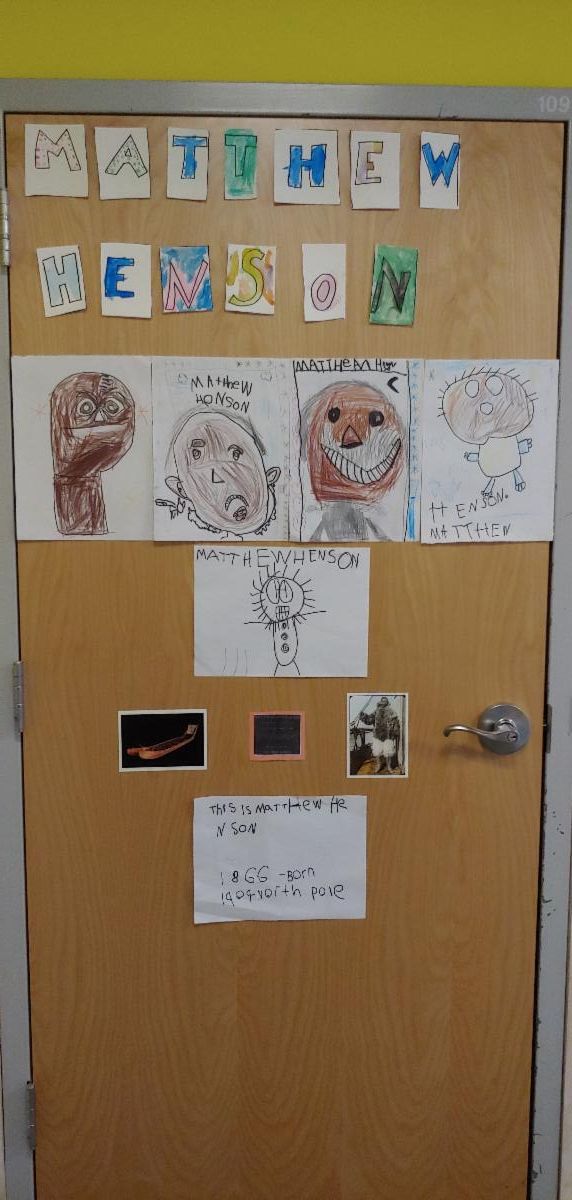
- A common emergent theme in Kindergarten in the winter begins with ice and snow. As an extension to their studies, Kindergarteners studied Matthew Henson, an African American explorer of the North Pole whose story has often been overlooked.
- As part of their yearlong look at the question “What does it mean to be an American?” fifth and sixth graders completed a unit of study around the question “Who is counted in the United States?” Beginning with article I, section 2 of the Constitution, students looked at the history of the ⅗ compromise and of the census, and they went on to look in-depth at the effects of undercounting, especially in Native American communities and among undocumented immigrants.
Ongoing Professional Development
In February, teachers began work in small, cross-grade groups to deepen our understanding of Glenn Singleton’s framework as laid out in his book Courageous Conversations about Race: a Field Guide for Achieving Equity in Schools. We reviewed and discussed the four agreements and six conditions that allow for courageous conversations. These groups will meet periodically and will provide a place of both support and challenge as we deepen our antiracism work.
Four Agreements:
- Stay Engaged
- Experience Discomfort
- Speak your truth
- Expect and accept non-disclosure
Six Conditions:
- Focus on personal, local, immediate
- Isolate race
- Normalize social construction and engage multiple racial perspectives
- Monitor agreements, conditions, and establish parameters
- Use a working definition of race
- Examine the presence and role of whiteness
|
|
Reflections on Educators New to Quakerism |
|
Several of Friends School of Portland’s new staff members took part in Friends Council of Education’s virtual workshop series, Educators New to Quakerism (ENTQ), in the fall of 2020. A generous grant from the Sue Thomas Turner Fund of Philadelphia Yearly Meeting and the ability of our teachers to attend remotely made accessing these sessions easy.
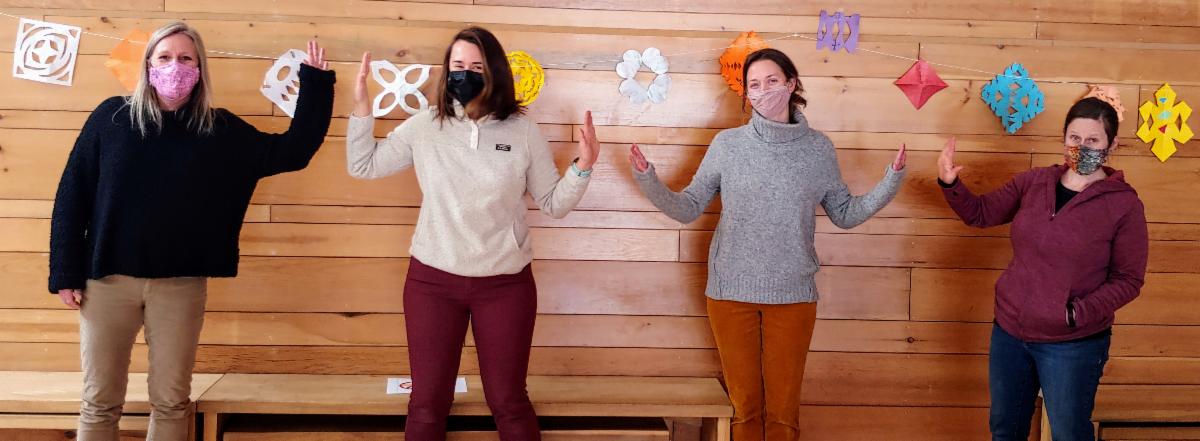
Jenny Rowe (Head of School) asked Carie (Kindergarten lead instructor), Sally (1-2 lead instructor), Anna (Admissions Director), and Allie (5-6 lead instructor) about their experiences of the workshop.
What is something you learned that you didn’t know about Quakerism?
While I was aware of the Quaker SPICES ahead of this training I had not had much of a chance to read in depth about them or discuss them to any extent with colleagues. Reading about them through this training and talking about them with other educators new to Quakerism helped me frame the SPICES, which made each mean more than just the word in the acronym. I feel like as a result of this work I have grown in my understanding of what teaching these SPICES might look like.
That it was George Fox's wife, Margaret Fell, who was one of the leading founders of Quakerism. I also learned how the Quaker faith lends itself so well to pedagogy. It differs from an educational philosophy as it is a faith, but the pillars of Quakerism can really also be seen as an educational philosophy.
Something that I learned was that the use of consensus by Quakers is actually a common misconception! Rather, Quaker decision making is often done based on gauging a "sense of the meeting.”
The history of Quakerism was completely new to me. I learned that the original Quakers came out of “thousands of seekers who wandered over England looking for something that they could believe in, that would give meaning to their lives.” Also, learning that it was George Fox’s epiphany that individuals know directly the will of God, without the need of any intermediary, that built much of the Society of Friends.
What was the experience like of meeting with other Friends School educators and administrators?
Hearing from people from near and far about their experiences teaching in Friends Schools was a great way to see how our experiences, thoughts and questions are so similar!
It was extremely comforting to develop a sense of connection with other educators. In particular, I enjoyed connecting with another middle school teacher from Friends School of Atlanta. We were in breakout rooms together during both sessions and swapped ideas and experiences about running meetings for worship.
It was great to learn that almost everyone in my group was as clueless as I was about Quakerism.
I was humbled by the large network nationwide of Friends School educators. It felt empowering to know that I am part of something so much bigger than myself and our FSP community. I really enjoyed hearing their stories. Most of the teachers were still working remotely for various reasons, and I was reminded again of the incredible challenge of creating meaningful connection when we’re not in person. It made me wonder if there is a way to connect for a meeting for worship with the greater Quaker community once a week, either as a staff or as schools nationwide.
What is a new practice or way of thinking you'll bring to your work at FSP?
A new practice or way of thinking: I loved learning about the clearness questions, in which you don't try to learn more about a problem/situation or give advice about it, but seek to help the person dive more deeply into a question and be able to think more objectively about it. I would like to bring this kind of questioning into my discussions with friends, families, and myself!
Deborra, one of the facilitators, helped me better understand how to implement structures around meeting for worship that will allow students to deepen their individual experiences.
One of the most impactful things for me in this training was participating in the Clearness Protocol. Seeing it in action and participating with others in it particularly helped me to think about having conversations with colleagues and children that are more open and information seeking. Since the ENTQ training, I have been working to incorporate this openness and information-seeking approach in my interactions with others.
I appreciated the strong emphasis that was placed on deep listening. Allowing teachers to wait and listen before we act honors the spiritual and practical skills in everyday life. It was an important reminder of the interconnectedness of Quakerism.
Is there anything else you want to say?
Everyone I spoke with over Zoom has been in remote learning or hybrid since September. It was incredibly humbling to be the only school in the session that was in-person fully.
Thank you for the opportunity to attend this workshop. It felt extremely valuable to develop a frame of history and reference to the broader Quaker family.
Thank you, Sue Thomas Turner Fund!
|
|
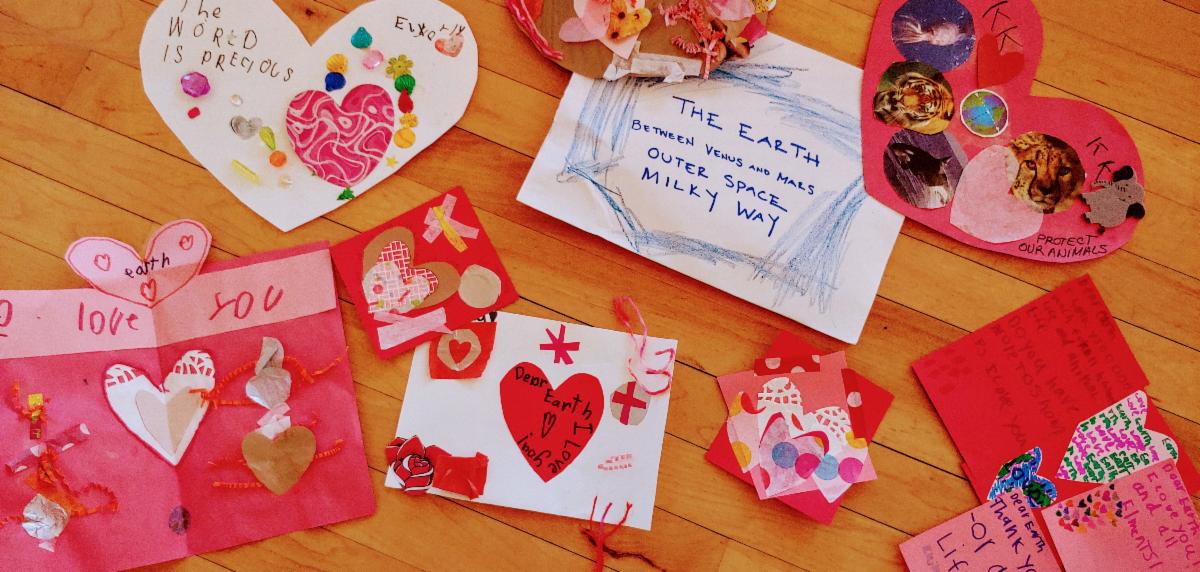
In January, each class created their own imagery reflecting their hopes and dreams for the new year. Watch a short process video created in the 7-8th grade art class of their collaborative approach. |
|
What Does It Mean to Be Counted?: 5-6 Class Census Study |
|
|
|
Who is counted in the US Census?
Who is undercounted in the US Census?
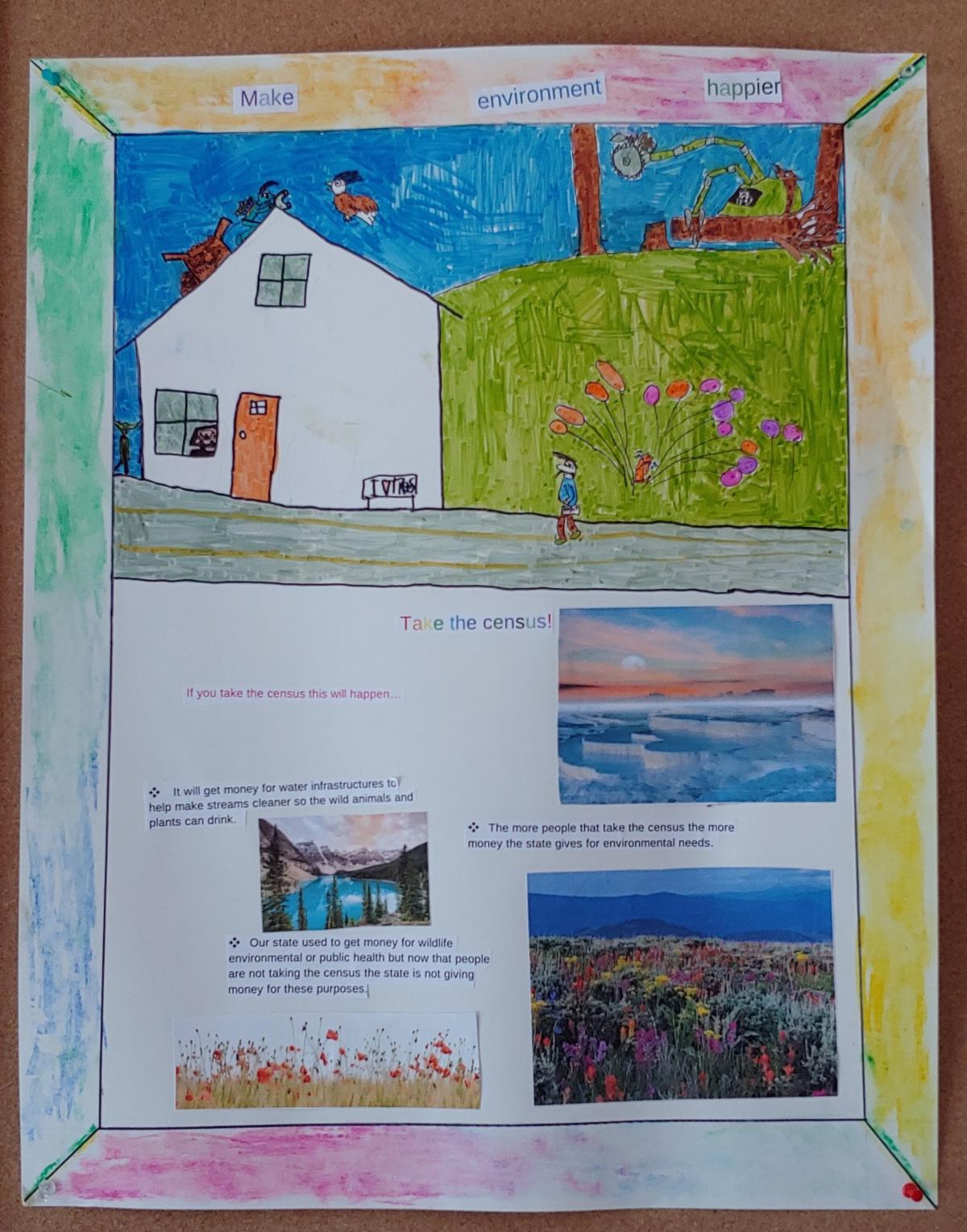
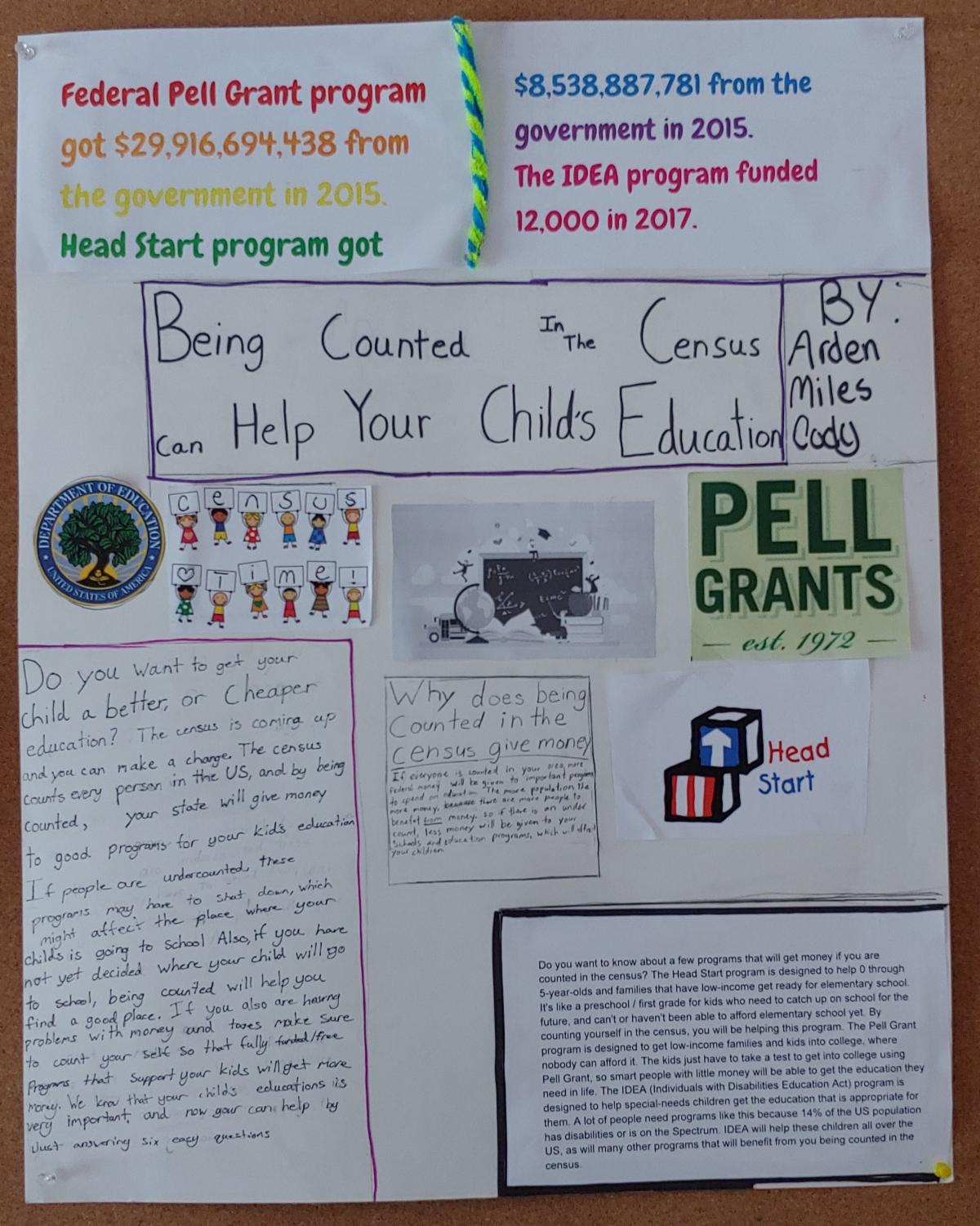
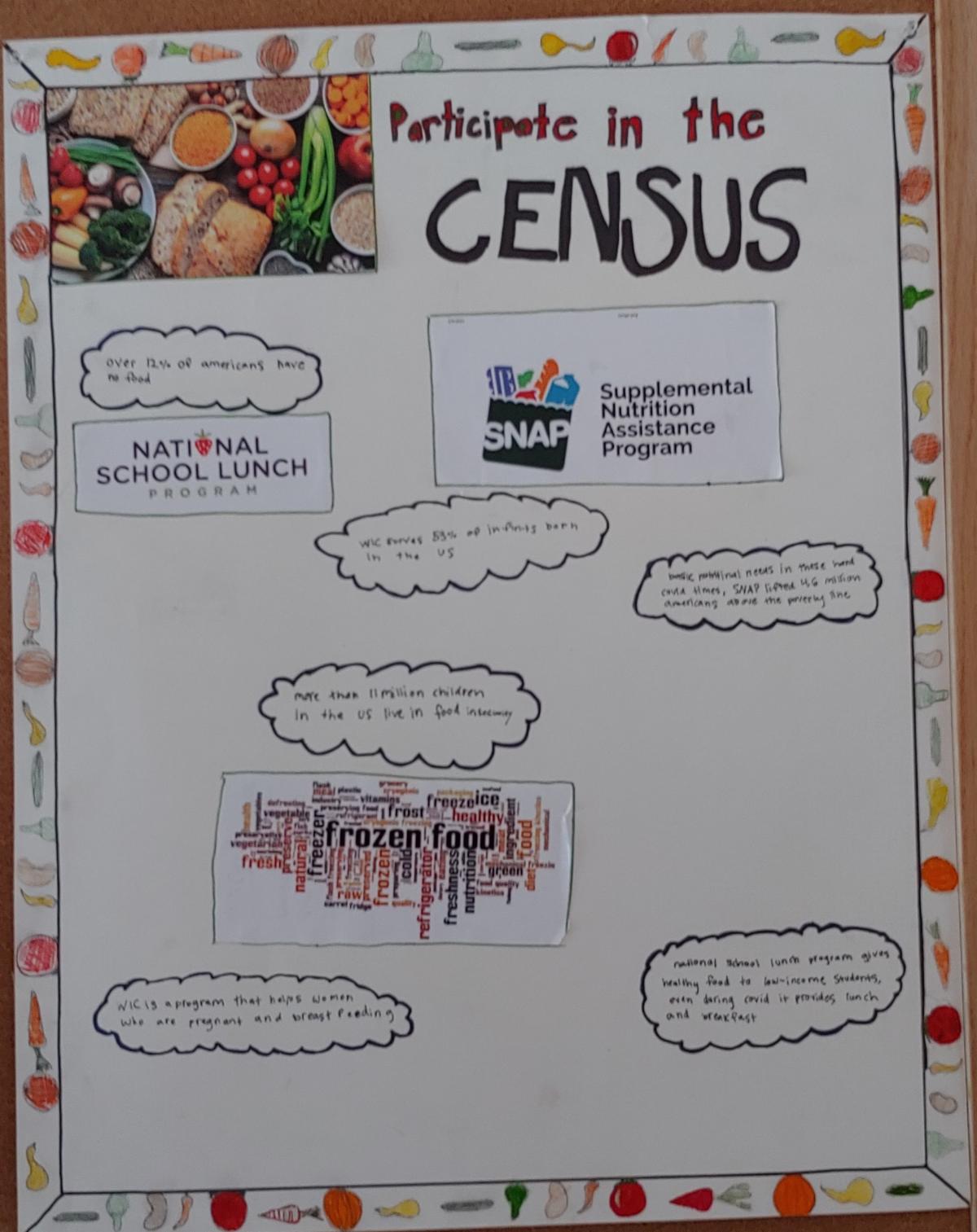
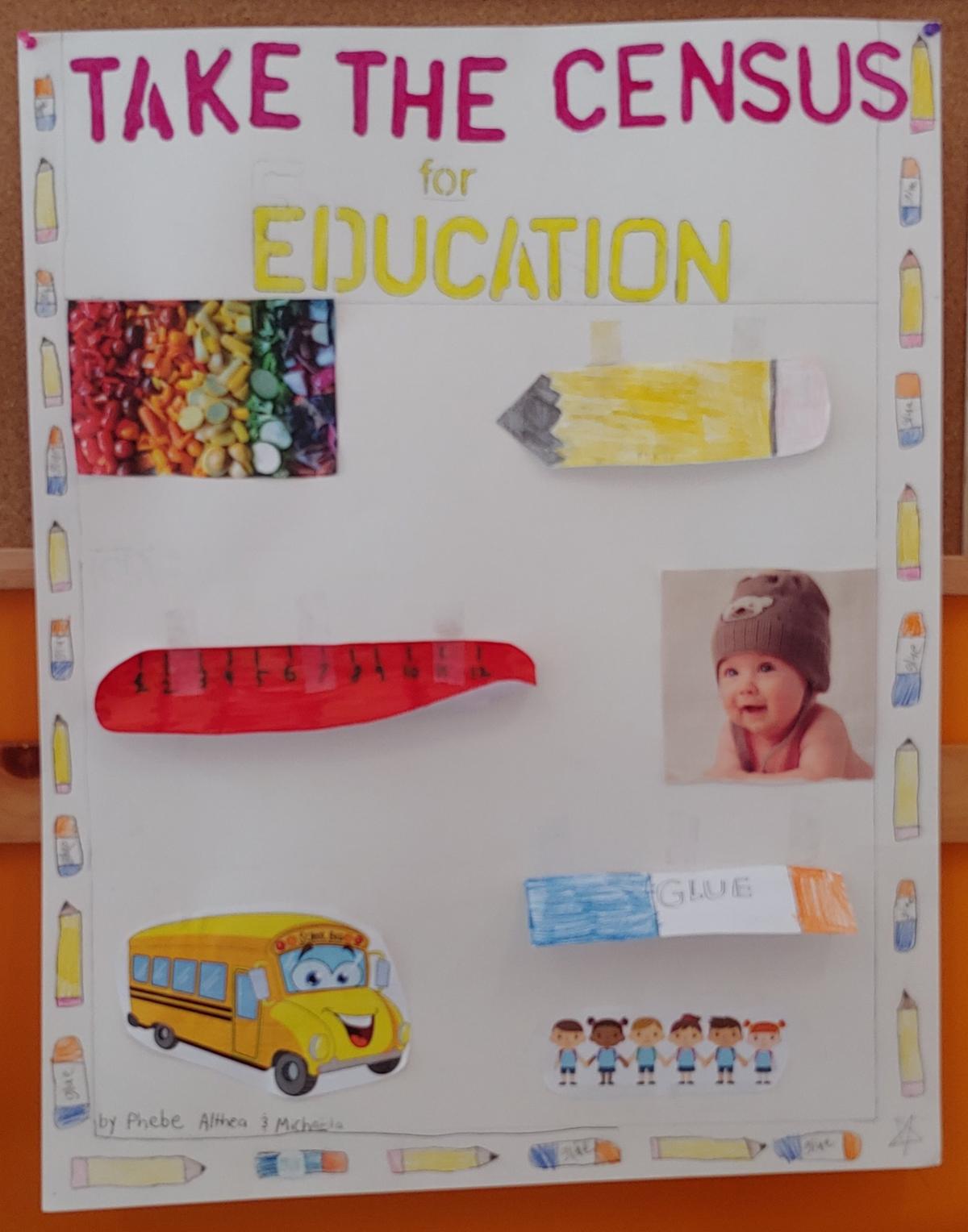
The 5-6 classes took an in-depth look at the US 2020 Census and began by looking through lists of federal programs impacted by census data.
Students color-coded their lists focusing on environmental, hunger, and education programs. Students were able to see how much money each program was allocated and surprised to learn how much and how little some sectors receive.
After reviewing Public Service Announcements from the 2020 Census, students considered the target audience(s) and what made each PSA persuasive. In small groups, they then began working on their own PSAs. They learned about different programs that may interest their target audiences like Head Start, SNAP, and the Weatherization Assistance Program. Students created posters and podcasts reflecting their research.
Take a look at the posters and listen to one of the finished podcasts here.
|
|
Mapping Our Maine Voices with the 3-4 Class |
|
|
|
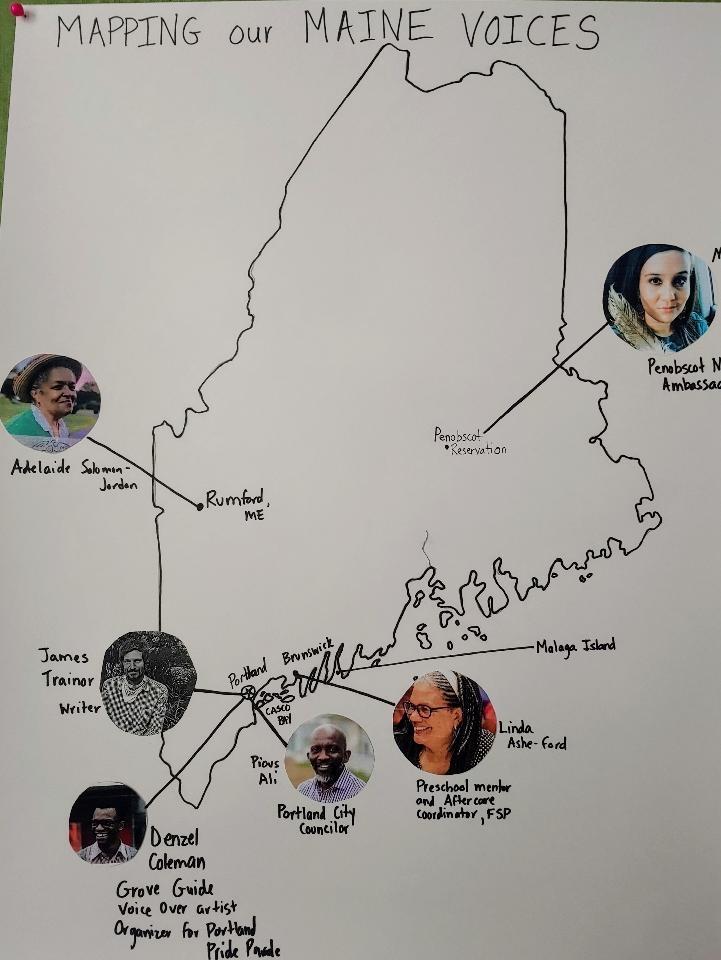
Nicole and Lindsay's 3-4 classes' social studies unit has centered around an essential question: What is the power of a story?
3-4 students learned about different types of maps: political maps of the world, including oceans, countries, and continents. Questions arose about what types of stories maps tell.
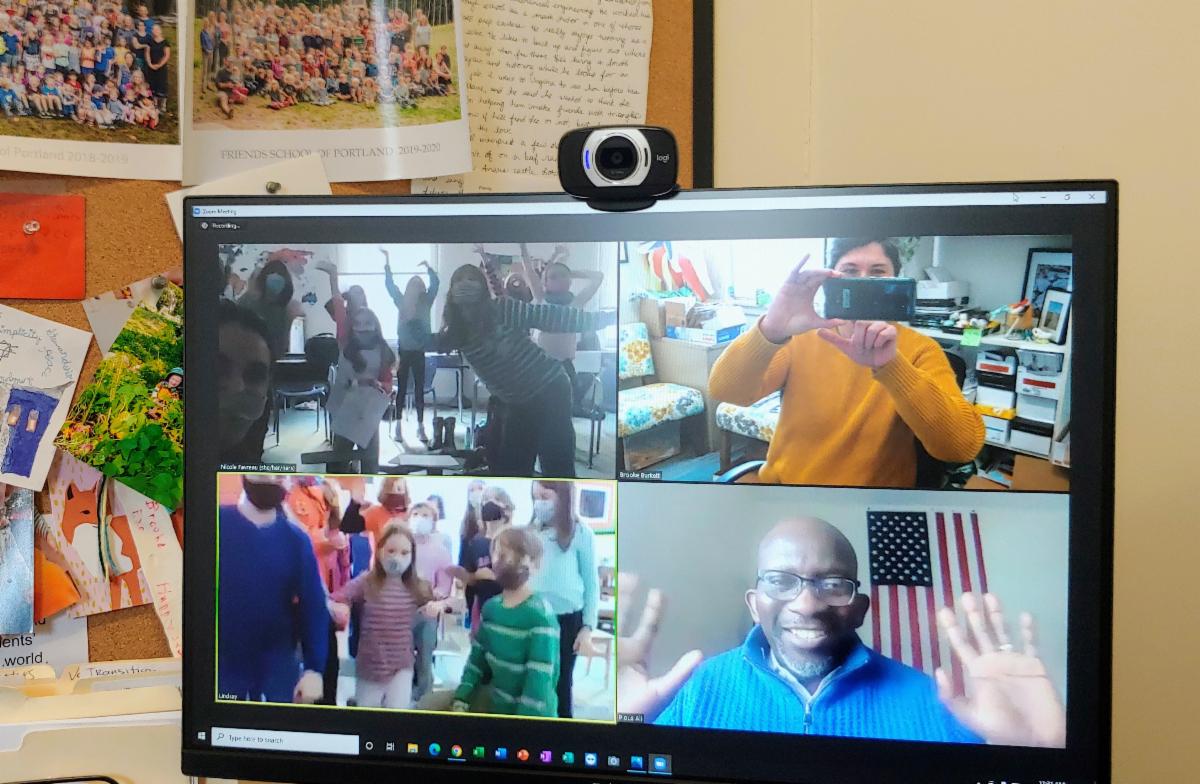
Their Maine Map Project began when students invited guests into their classrooms via zoom as they "Map our Maine Voices."
Portland City Council member Pious Ali joined by zoom to share his story and the passion he has for hearing people's stories, a necessary and joyful part of his work. A few thoughts from 3-4 students from his presentation included:
"Everyone has a story to share."
"He uses maps to understand people's neighborhoods before he visits."
Denzel Coleman, a Portland-based activist and New Leader Community alum who works with Grove and Portland Pride, also spent some time with the classes. Denzel, who previously worked a CIEE, shared his experiences with high school and college students of color abroad and in Maine.
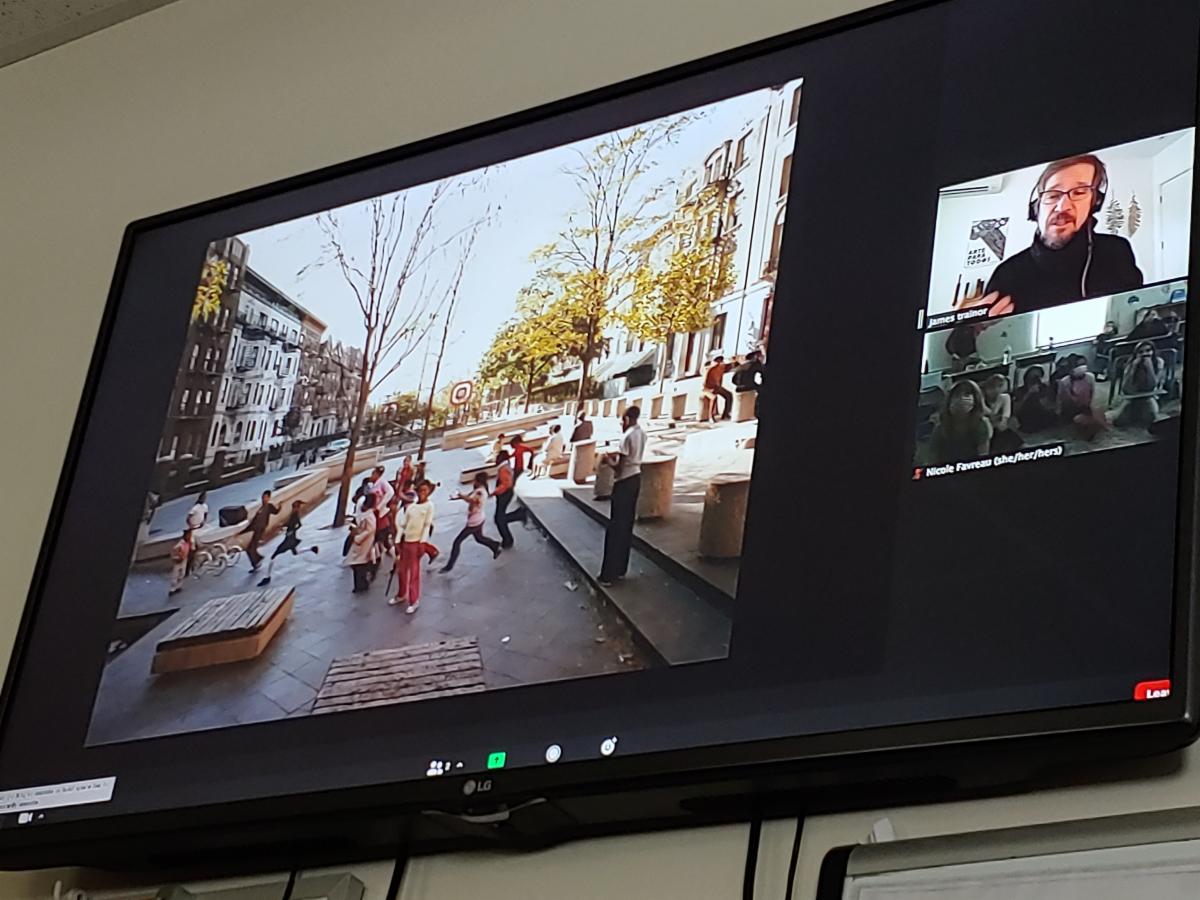
Author and parent, James Trainor, shared some of his research about the experimental playground movement inspired by Shirley Chisholm in Brooklyn, NY. A few thoughts from 3-4 students from his presentation included:
"Playgrounds are a sign of justice, so no one feels left and an equal opportunity to play."
"You should be inspired to share your excitement."
Adelaide Solomon-Jordan, an educator, board member for the Holocaust and Human Rights Center of Maine, a Quaker, and FSP Advisory Committee member will be joining us next. She will shed a light on African American history in Maine, especially the history of Malaga Island. The 3-4 class has been reading Lizzy Bright and the Buckminster Boy in class as a read-aloud to prepare for their talks about Malaga Island.
|
|
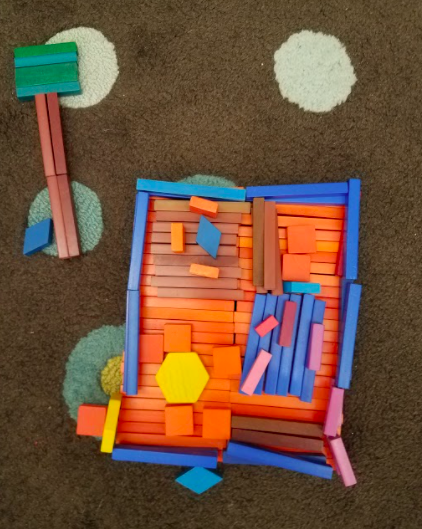
Preschoolers on the International Space Station |
|
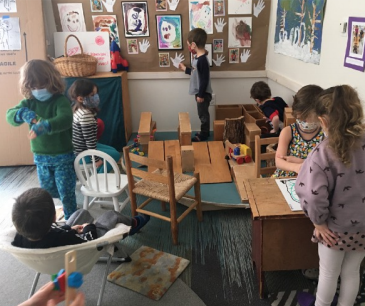
Pictured above: Preschool students building and playing in their space station |
|
The international space station has engaged the entire preschool class. The theme has sparked negotiation, planning, sharing ideas, and communication.
Children created their own layout of the space station, exploring math concepts of size, shape, weight, area, and length. They are in constant motion, changing the environment and structure, and conversation flows freely.
"We have to go through the windstorm because of magma."
"Magma is part of a volcano."
"When lava is underground it’s called magma and when it erupts from a volcano it’s called lava."
"Can we have another energy source?"
|
|
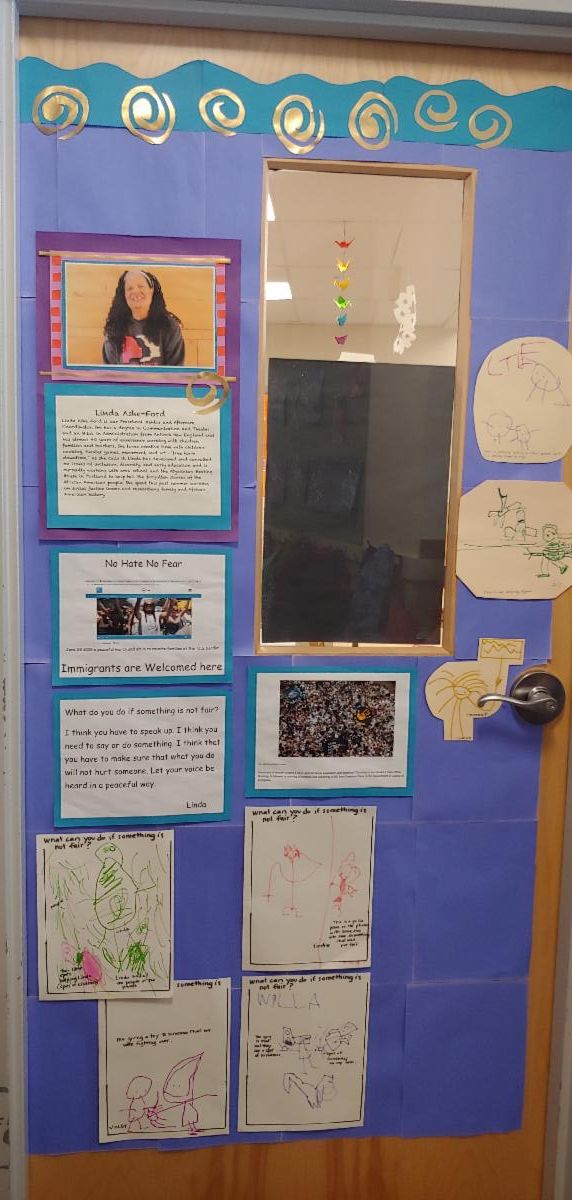
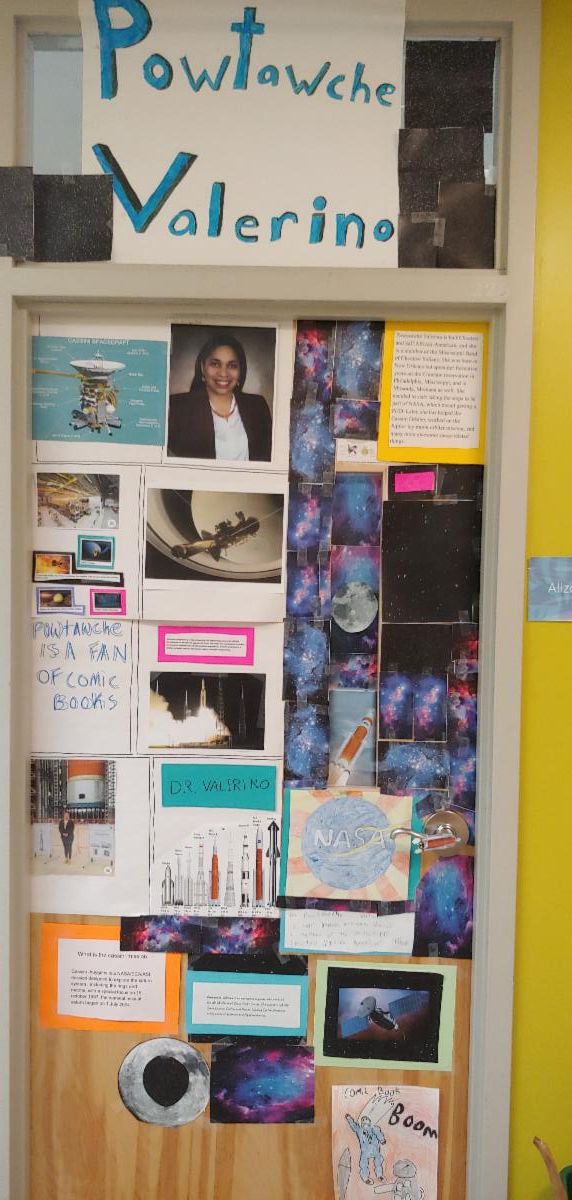
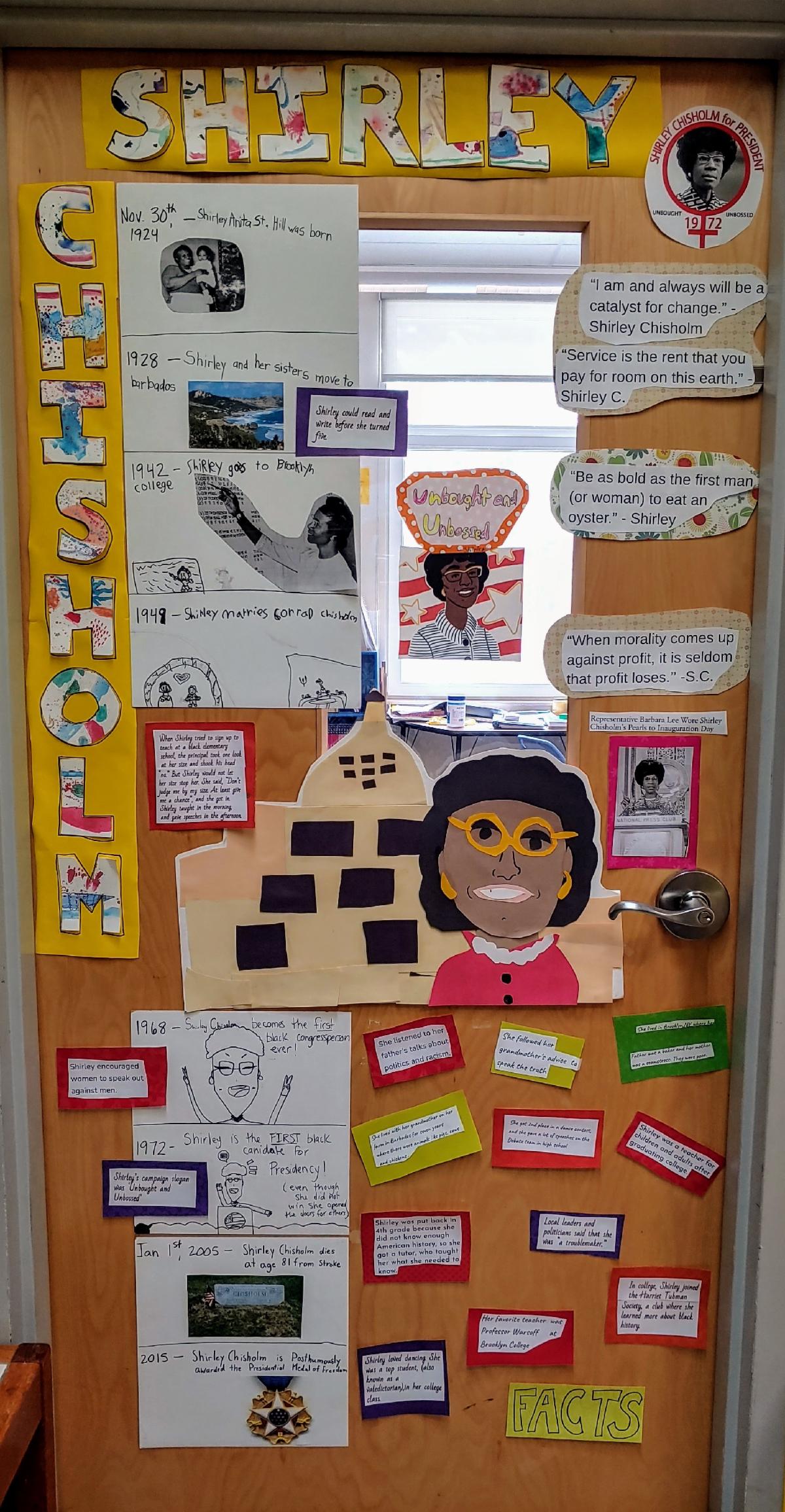
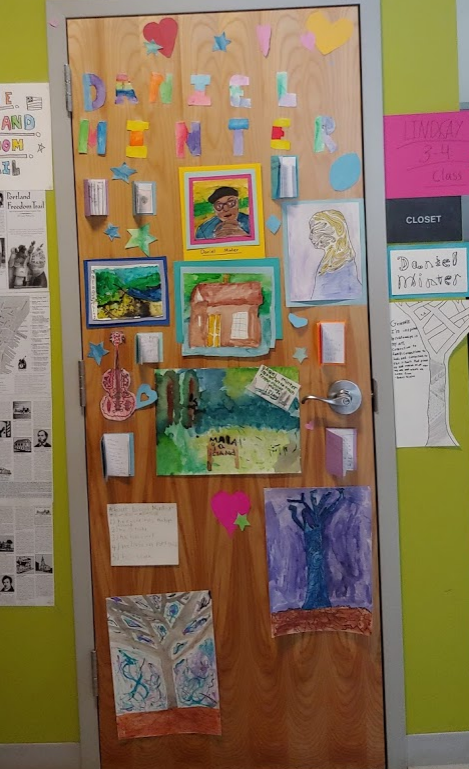
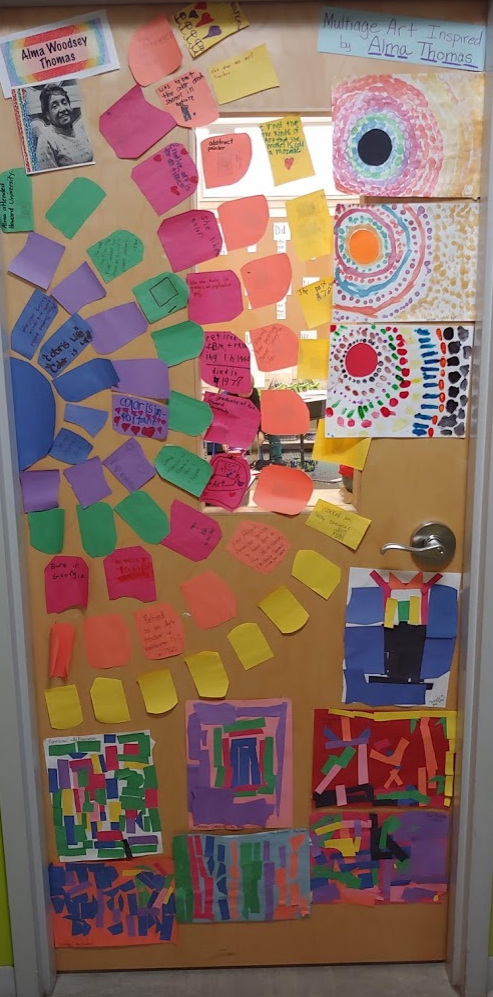
"People of Inspiration" Door Decorating |
|
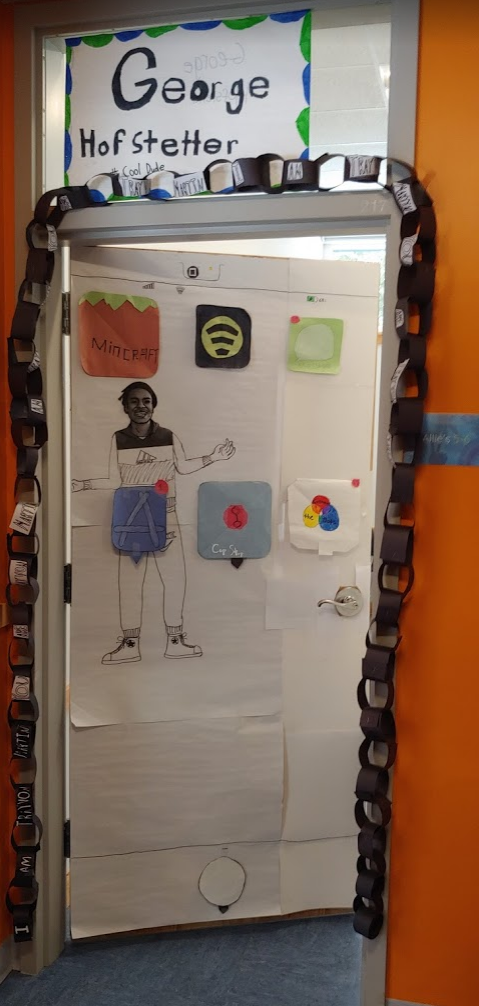
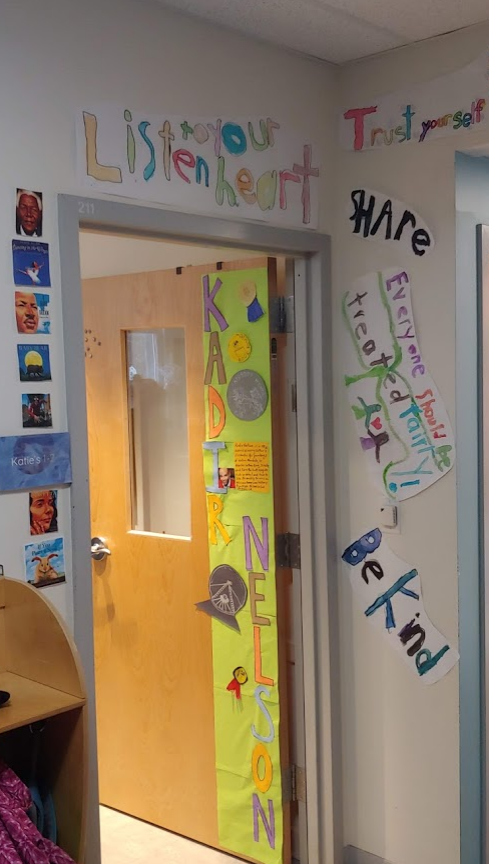
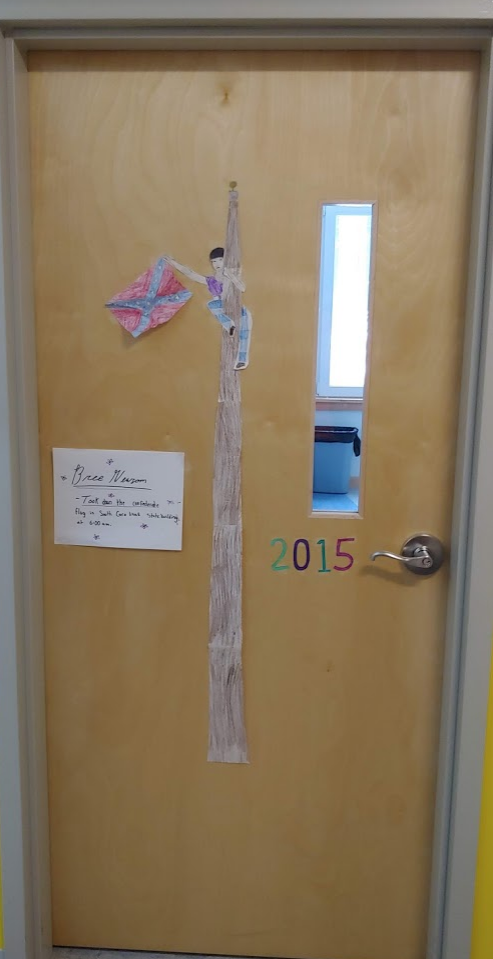
For part of January, each class took time to research a a person of color to share with the school community. While FSP strives to include voices of color in all work throughout the year, we joined with efforts across the country again this year to decorate doors for Black History Month. Take a look at these inspiring doors! |
|
Reimagining Admissions with Anna Child |
|
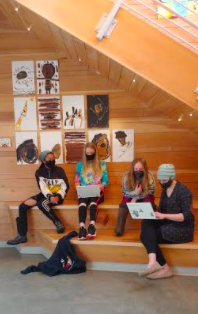
Pictured above: A group of 7-8 students working with music teacher, Kristen, to create a band name, album cover, and record a cover song and an original composition |
|
From virtual information sessions to masked and distanced open houses, getting to know FSP as a prospective family has looked very different this year.
This month we have been holding brief applicant visits following established COVID safety protocols that we practice daily. Children and their parents have been visibly excited as they arrive at FSP. It's been a delight to hear what they enjoy about their time spent here.
FSP students, from Kindergarten up to 8th grade, have been incredibly welcoming. One Kindergartener shared with me how in anticipation of the visits their class talked about "how to welcome someone" and "how their small actions are a big part of the testimony of community."
This year moved our application online and have been excited and humbled by the high volume we have received for the 2021-22 school year. Though the priority application deadline has passed, we are still accepting applications on a space-available basis for grades 3, 5, 7 and 8.
|
|
Summer Camp at FSP: Sign up to be Notified in 2022! |
|
|
|
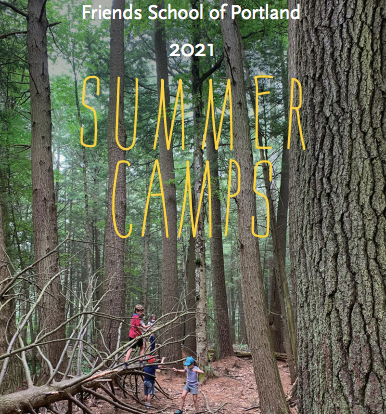
Summer Camp at FSP filled an hour after it was posted online--a first for FSP!
We apologize that we are no longer accepting waitlist campers either.
Next year, we plan to announce a specific time for the camp registration to open online. If you would like to be put on the email notification list for the next summer please use the link below.
|
|
|
|
Gratitude for Your Support of Friends School of Portland |
|
|
|
Thank you for your kind gifts and tending to Friends School of Portland this year. Our new middle school wing has provided us with the confidence we needed to reopen school this year.
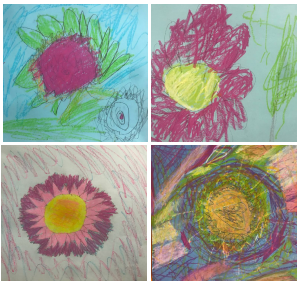
Family and friends have nurtured our community without physically stepping indoors. One family grew strawflowers of all colors over summer for art classes to draw in the fall. We are grateful for the thoughtful ways we tend to one another.
Thank you for your support of FSP this year.
|
|
|
|
|
|
|