-
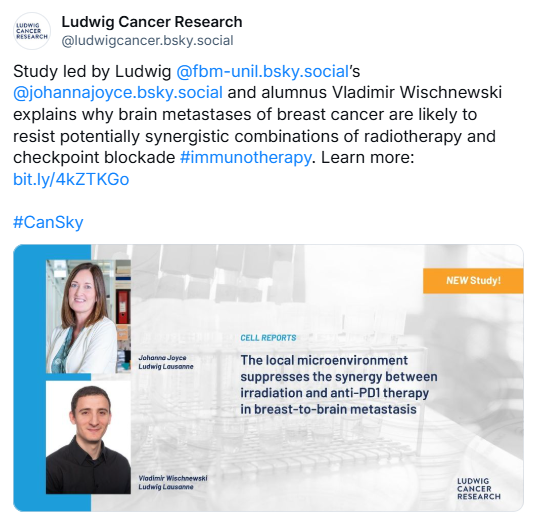
Study in Cell Reports led by Ludwig Lausanne’s Johanna Joyce and alumnus Vladimir Wischnewski explains why brain metastases of breast cancer are likely to resist potentially synergistic combinations of radiotherapy and immunotherapy.
-
Researchers led by Ludwig Lausanne’s Michal Bassani-Sternberg and Ilja Shapiro present in Molecular & Cellular Proteomics a comprehensive analysis of how disruption of distinct elements of peptide processing, loading and presentation by HLA-I molecules alter the immunopeptidome.
-
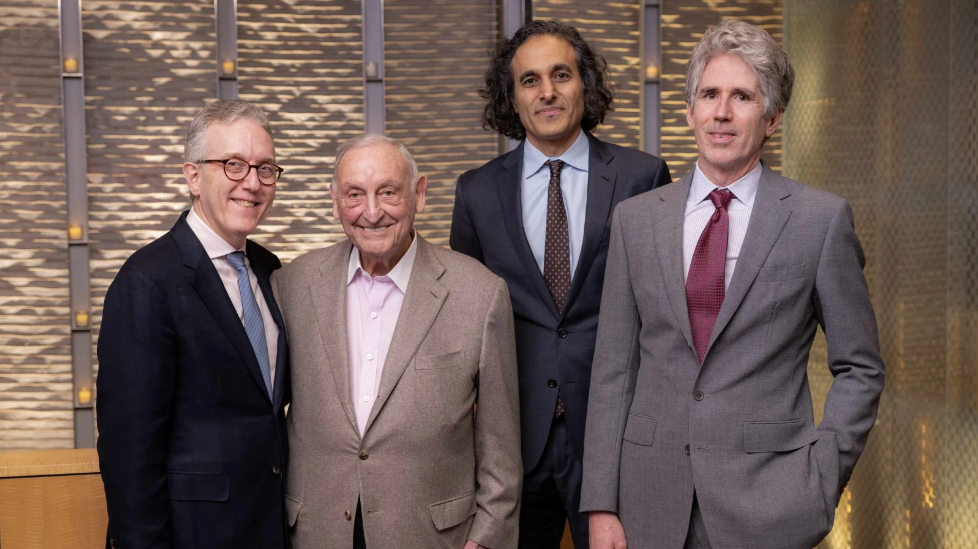
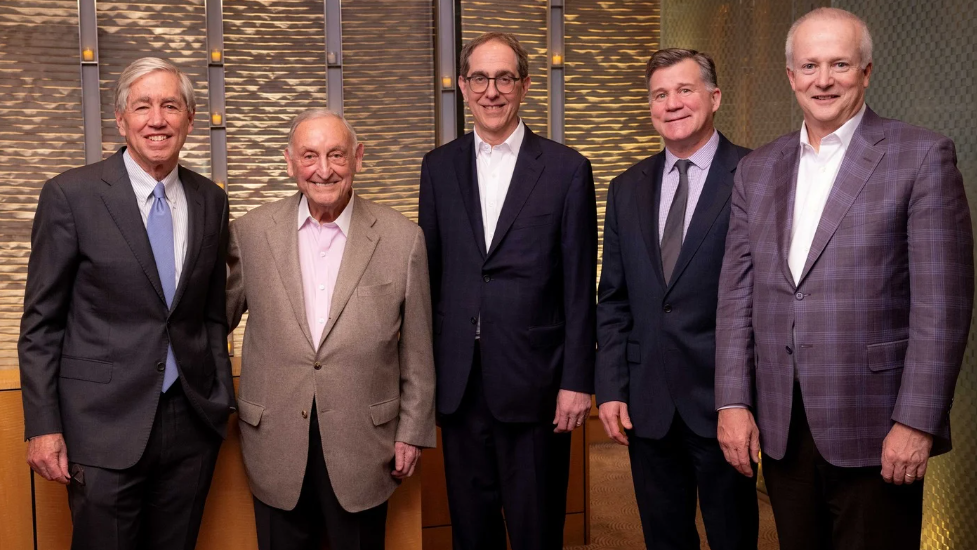
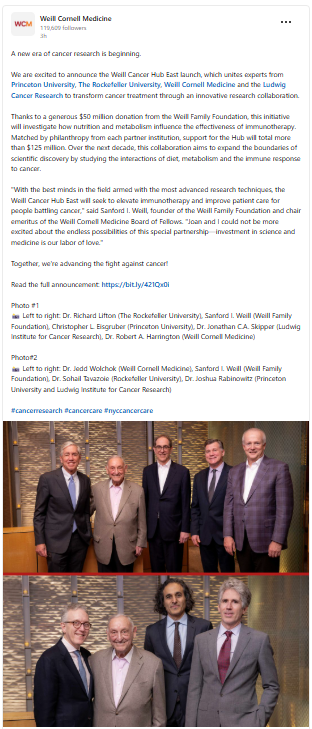
The Ludwig Institute for Cancer Research has joined Princeton University, The Rockefeller University and Weill Cornell Medicine to establish the Weill Cancer Hub East, a $125 million initiative to advance cancer therapy seeded by a $50 million gift from the Weill Family Foundation.
| |
| |  | The activation of CD8+ T cells begins with their recognition of epitopes presented on class I major histocompatibility complex (MHC-I) molecules. Identifying which peptide ligands will bind particular MHC-I alleles is important for the design of personalized cancer vaccines. Large datasets of such ligands are available for a few hundred HLA-I alleles, and machine learning algorithms trained on them are pretty accurate in predicting the ligands these HLA-I molecules will bind. This study, led by Ludwig Lausanne’s David Gfeller, examines the extent to which predictions of MHC-I ligands made by an MHC-I ligand predictor (MixMHCpred3.0) can be applied to the vast majority of MHC-I alleles whose ligand binding preferences are unknown. They report a high prediction accuracy for most MHC-I alleles in humans and in laboratory mouse strains and describe some of the molecular determinants of prediction accuracy across alleles and species. Their analysis suggests the freely available MixMHCpred3.0 is a reliable tool for predicting CD8+ T cell epitopes.
| |
| | | This phase II clinical trial, led by Ludwig Lausanne Director George Coukos and Susana Banerjee of the Royal Marsden NHS Foundation Trust in London—with lab analysis conducted by the Lausanne Branch’s Denarda Dangaj Laniti and Eleonora Ghisoni—examined the use of an anti-PD-L1 immunotherapy in combination with VEGF inhibitor bevacizumab and aspirin as a treatment for platinum-resistant ovarian cancer. Aspirin inhibits production of prostaglandin E2, which suppresses anti-tumor immune responses. The treatment was well tolerated but its primary efficacy endpoints were not met. Biomarker analysis revealed that patients whose tumors are well infiltrated with T cells and whose cancer cells express PD-L1 at high levels at baseline might still derive clinical benefit from this combination therapy. Analysis of trial samples provided valuable insights on the immune landscape of these advanced tumors. The authors suggest alternative strategies to overcome the immune suppression induced by prostaglandin E2 in the tumor microenvironment could be of benefit to patients.
| | |
Researchers led by Ludwig Lausanne’s Leire Bejarano and Johanna Joyce report here a searching, comparative analysis of individual cells—focusing on endothelial and mural cells—that compose the blood-brain barrier across healthy brain tissue, IDH-mutant low grade gliomas, high-grade glioblastomas (GBMs) and brain metastases of various cancers. They report that alterations in tumor-feeding blood vessels are far more pronounced in metastatic brain tumors than in gliomas, with the former showing higher permeability and interactions with distinct immune cell populations. Within primary brain tumors, GBMs show more pathological alterations in their vasculature than do low-grade gliomas. The high-resolution vascular atlas generated by this study lays a foundation for the development of novel vascular- and immune-targeting therapies for brain tumors.
| |
| | | Patrolling CD8+ T cells recognize cancer cells by the mutated peptide antigens they present on HLA-I molecules on their surface. Cancer cells can escape such recognition—and so compromise immunotherapies—when some component of the complex biochemical machinery behind this peptide presentation is compromised or disabled. To study how deficiencies in distinct components of this machinery alter the spectrum of presented peptides, or “immunopeptidome”, researchers led by Ludwig Lausanne’s Michal Bassani-Sternberg and Ilja Shapiro used haploid cell lines to individually delete each of eleven distinct genes whose products play critical roles in antigen processing, loading and presentation by HLA-I molecules. They present here the first systematic analysis of how the absence of individual components of that machinery affects the immunopeptidome. The findings should be of great value to the creation of predictive tools to prioritize the selection of antigens for the development of personalized immunotherapies.
| | |
This study, led by Ludwig Lausanne’s Johanna Joyce and alumnus Vladimir Wischnewski, explains why brain metastases of breast cancer are likely to resist potentially synergistic combinations of radiotherapy and checkpoint blockade immunotherapy. The researchers show that intracranial metastases cultivate a highly immunosuppressive microenvironment. A subset of myeloid immune cells—neutrophils and macrophages expressing particular genes—suppresses the anti-tumor activity of T cells that are activated by both types of therapy. This occurs even when the combination therapy destroys primary tumors. The study opens the door to developing targeted treatments to overcome this resistance and address a major unmet need of breast cancer care.
Additional coverage: Ludwig Cancer Research | UNIL
| | |
The cell surface protein mesothelin (MSLN) is expressed at high levels in many malignancies and is a target for antibody-directed therapeutic strategies. Researchers led by Ludwig Lausanne’s Steven Dunn, Paris Kosti and Evripidis Lanitis describe here their design of a novel T cell-directed bispecific engager (BiTE) targeted at MSLN. BiTEs bind both T cells and target antigens to bring the two together and induce destruction of cellular targets. The researchers engineered T cells to produce the BiTE, which was constructed using an scFv fragment (the business end) of a human antibody. They show that these engineered T cells exhibited strong anti-tumor activity in ovarian and mesothelioma MSLN+ tumor cell lines in immunocompromised NSG mice and encouraging activity against a particularly recalcitrant pancreatic tumor model. The cells could be engineered for added safety with an off switch for BiTE production.
| | |
CRISPR-Cas9 gene engineering allows scientists to swiftly and precisely add, modify or replace DNA sequences and entire genes for research or, increasingly, cutting-edge therapies—including cancer immunotherapy. A team led by Ludwig Lausanne’s Melita Irving and Bernhard Gentner reports here a protocol to more precisely engineer the receptors expressed by T cells to target specific cancer antigens for therapy. Their method relies on suppressing a dominant type of DNA repair mechanism to force T cells to favor another type—the more unusual mechanism required for the targeted insertion of a therapeutic gene into the appropriate (TRAC) locus in the genome. Their method, they show in preclinical studies, generates stable and apparently potent T cells directed against a cancer antigen. Their methods meet the stringent (Good Manufacturing Practices) manufacturing standards required of products destined for clinical use.
| | |
Four leading research institutions have united under the Weill Cancer Hub East, an innovative partnership that aims to transform cancer treatment. The initiative connects world-class experts from Princeton University, The Rockefeller University, Weill Cornell Medicine and the Ludwig Institute for Cancer Research. Along with a $50 million gift from the Weill Family Foundation, the Hub has received philanthropy from each of the partner institutions to bring the total contributed to more than $125 million. Over the next decade, the Weill Cancer Hub East will marshal multidisciplinary teams to explore the complex relationship between solid tumors and the environment in which they form and grow. Their investigations will illuminate how the food we eat and the microbes that help metabolize that food influence the effectiveness of cancer treatments such as immunotherapy. The hub will also evaluate how emerging therapeutics, including a class of diabetes and anti-obesity drugs called GLP-1 agonists, might impact cancer progression and treatment.
Additional coverage: Weill Cornell Medicine | CNBC | Crain's New York Business | Lifestyles
| |
ICYMI: In case you missed it... | | |
Cancer research needs neuroscience and neuroscientists
Nature Neuroscience – March 20, 2025
In this Comment article, Ludwig Stanford's Michelle Monje and a colleague in Germany share their personal views on the burgeoning field of cancer neuroscience and highlight the need to approach cancer research from a neuroscience perspective—together with neuroscientists. Monje’s work has contributed enormously to a growing appreciation of how much neural activity and factors affect cancer initiation and progression.
| | |
Get involved
Events, careers and collaboration opportunities
| | Do you know of any news, studies or events that would be relevant to the Ludwig community? Please contact us! | | Ludwig Cancer Research | www.ludwigcancerresearch.org | |
Please note these clips are not intended to be a comprehensive overview of the news, but a compilation of Ludwig coverage, as well as topics and issues considered to be most relevant to our scientific community. Any views or opinions presented in the news clips are solely those of the cited news sources. When available, a link to the original study is provided. *Asterisk indicates a subscription or login may be required.
| | | | |