-
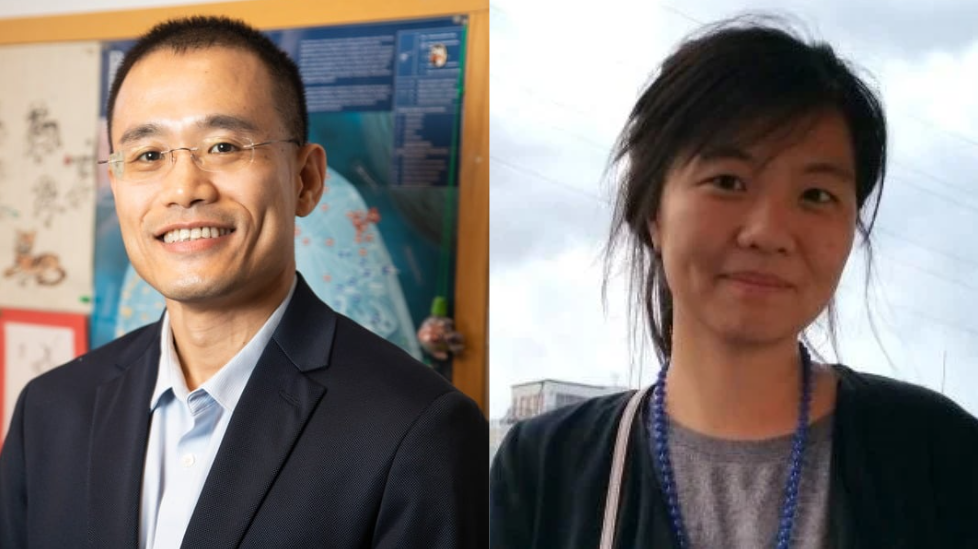
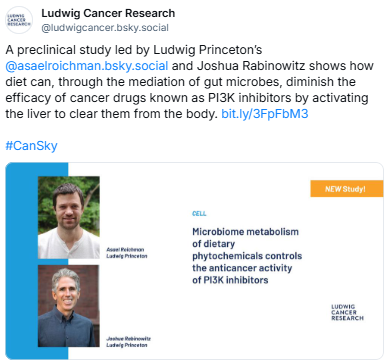
Researchers led by Ludwig Princeton’s Asael Roichman and Branch Director Joshua Rabinowitz describe in Cell how the keto diet enhances responses to PI3K inhibitors in mice—and it has less to do with carbs, fat, blood sugar and insulin than with the molecular complexity of the chow.
-
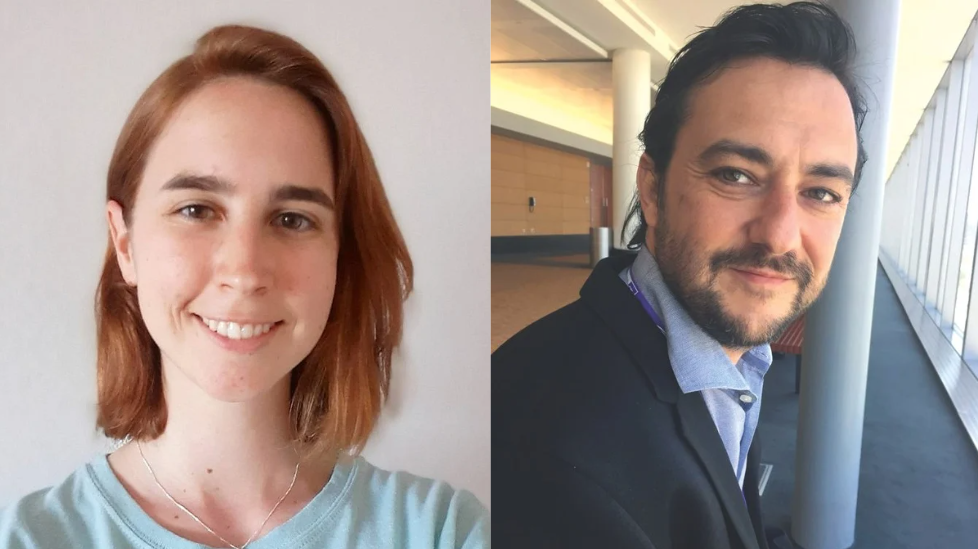
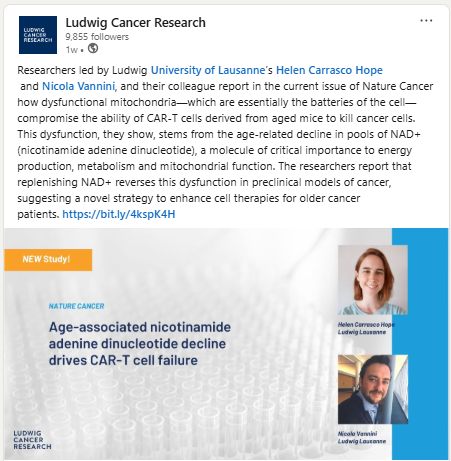
Researchers co-led by Ludwig Lausanne’s Helen Carrasco Hope and Nicola Vannini report in Nature Cancer how the metabolic decline that accompanies aging promotes mitochondrial dysfunction that impairs the efficacy of CAR-T cells—and how this might be reversed to improve CAR-T therapy.
-
A study led by Ludwig Princeton’s Yibin Kang and Eunmi Lee identifies a mammary stem cell niche population of CXCR4+ macrophages that serve as regulators of tumor initiation in various breast cancer subtypes through their enhancement of cancer stem cell survival, tumor-forming capacity and early immune evasion.
| |
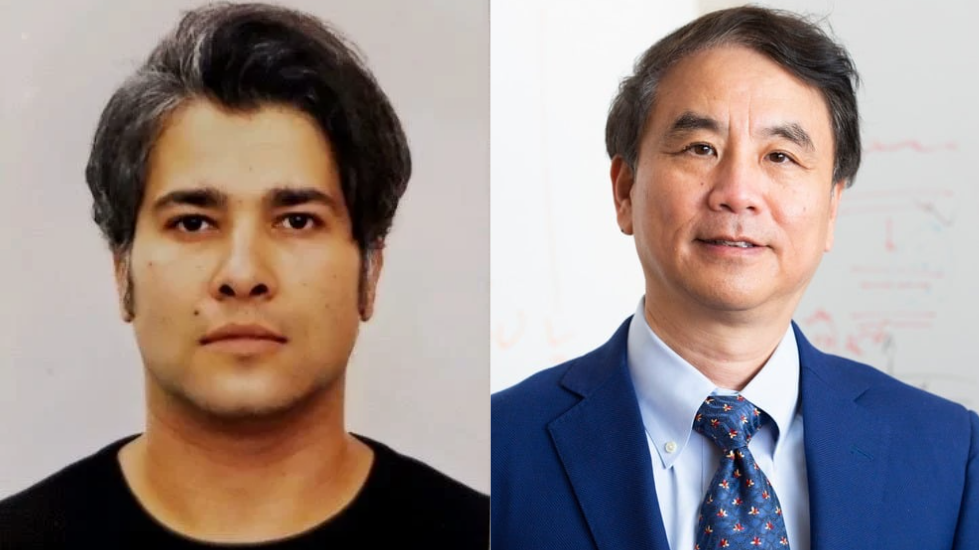
| |  | Mild periodic acid Schiff staining (mPAS) selectively exposes O-acetylated sialic acids—which it does not stain—on glycoproteins and glycolipids in cells. It is used in all sorts of biological studies, including investigations of signaling, cell adhesion, immunology and cancer biology. Yet relatively little is known about the specific genes involved in modifying “sialoglycans”. Researchers led by Ludwig Johns Hopkins’ Kenneth Kinzler and Nicolas Wyhs show here that a haplotype—a stretch of DNA inherited intact from a single parent—on chromosome 11 contributes to differences in mPAS staining seen in colorectal tissue. They report that NXPE1 is the gene within this haplotype responsible for the observed variations: altering a single nucleotide polymorphism in its promoter influences its expression and changes modified sialic acid levels. They also show that the recombinant product of NXPE1 is able to acetylate sialic acids in vitro. The researchers suggest that NXPE1 is the long-sought gene responsible for differences in colon mPAS staining and may be the prototype of a new family of sialic acid O-acetylation-modifying genes.
| |
| | | Relatively little is known about the microenvironmental factors that regulate mammary stem cells (MaSCs) and cancer stem cells in the breast, which share many characteristics. Recent studies have identified mammary gland-resident macrophages as important components of the MaSC niche and regulators of mammary duct morphology. This study, led by Ludwig Princeton’s Yibin Kang and Eunmi Lee, identifies CXCR4+ ductal macrophages as a key niche population enriched in normal mammary ducts, where the immune cells promote the regenerative activity of the breast’s basal cells in response to the chemotactic factor CXCL12 produced by its luminal cells. The researchers report that these same CXCR4+ niche macrophages regulate the tumor-initiating activity of various breast cancer subtypes by enhancing cancer stem cell survival and tumor-forming capacity while promoting early immune evasion through the induction of regulatory T cells, which suppress immune responses. They also show that a CXCR4+ niche macrophage gene signature correlates with poor prognosis in human breast cancer.
| |
| | | TP53 mutations occur in approximately 10% of myeloid cancers and are associated with poor outcomes. Their early detection is generally considered useful to the management of these cancers, but the immunohistochemistry (IHC) methods used to detect these mutations have proved to be of variable accuracy. Researchers led by Ludwig Harvard’s Ashwini Jambhekar examined the reliability of IHC by comparing its sensitivity and specificity against results from DNA sequencing—which is less commonly employed for this purpose—using 134 bone marrow samples from patients with acute myeloid leukemia. They report here that, in line with previous findings, p53 IHC is very specific and modestly sensitive for missense mutations and that overall performance improves with dedicated hematopathology training. But IHC performs poorly in detecting inactivating mutations and the status of second allele and variant allele frequency affects its accuracy. They conclude that multiple confounding factors compromise the utility of IHC for capturing TP53 mutational status.
| |
| | | Researchers led by Ludwig Harvard’s Rakesh Jain used a model of pancreatic cancer in obese mice to explore immune-related adverse events (irAEs) stemming from immune checkpoint blockade therapy (ICB), among which is cardiac toxicity. Obesity is a risk factor for pancreatic ductal adenocarcinoma (PDAC) and the cancer is generally resistant to ICB, though the potential link between these phenomena is controversial. Jain and colleagues (including Ludwig Lausanne’s Mikael Pittet) report here that obese mice developed cardiac irAEs after chemoimmunotherapy. They found that the mice had elevated serum interleukin (IL)-1β levels after treatment, and IL-1β blockade prevented myocarditis and reduced cardiac fibrosis. It also enhanced the antitumor efficacy of chemotherapy plus dual ICB therapy with anti-CTLA-4 and anti-PD1 antibodies—significantly improving the overall survival of PDAC-bearing obese mice. They suggest their findings support clinical evaluation of the combination therapy for PDAC.
| | |
Cancer cells express the enzyme telomerase reverse transcriptase (TERT) to maintain their telomeres and so sustain their replicative immortality, which is a hallmark of malignancy. But TERT itself has both enzymatic and nonenzymatic functions in carcinogenesis—including enhanced DNA repair—so its inhibition alone does not suffice to treat cancer. Researchers co-led by Ludwig Chicago’s Stephen Kron report here their structure-based design of a molecule and a possible strategy to address this issue: a proteolysis targeting chimera (PROTAC), which targets TERT for degradation by the cell’s proteolysis machinery. They show that the molecule, named NU-PRO-1, induced transient VHL- and proteasome-dependent degradation of TERT in cancer cells and further delayed DNA repair after irradiation compared to the TERT inhibitor NU1. Aside from its implications for cancer drug development, the molecule is a useful probe for the study of TERT’s non-enzymatic functions in cells.
| |
| | | This study, led by Ludwig Johns Hopkins’ Yuxuan Wang, Nickolas Papadopoulos and Co-director Bert Vogelstein with a Johns Hopkins colleague, examined how early cancers could be detected prior to the emergence of clinical signs or symptoms. The researchers collected serial plasma samples from the Atherosclerosis Risk in Communities (ARIC) study, including 26 participants diagnosed with cancer and 26 matched controls. Eight of these 52 participants scored positively with a multicancer early detection (MCED) test at a selected “index” time point and were diagnosed with cancer within 4 months of that blood draw. In six of these eight participants, the researchers were able to analyze plasma samples collected 3.1 to 3.5 years prior to clinical diagnosis. In four of them, the same mutations detected by the MCED test could be identified, but at about 8 to 80-fold lower levels relative to the unmutated DNA. The findings suggest circulating tumor DNA can be detected more than three years before cancer diagnosis and describe how sensitive a liquid biopsy needs to be to detect it.
| | |
Recent studies have revealed that macrophages can transfer their own calreticulin (CAL) proteins to sick, unwanted or dying cells to direct their removal by phagocytosis, a process known as programmed cell removal (PrCR). Researchers co-led by Ludwig Stanford’s Irving Weissman explored the mechanisms by which PrCR occurs. They report here that upon secretion, CALR is cleaved—likely by cathepsins—at one end (the carboxy-terminal) and that this truncated CALR decorates the surface of target cells, serving as an “eat me” signal for macrophage phagocytosis. They also show that macrophages secrete neuraminidases, which clip off sialic acid residues on the cell surface and so prime their targets for binding by the cleaved CALR. The authors note that while their study describes how macrophages paint their targets for destruction, how they recognize which cells to target remains a mystery.
| | |
Researchers co-led by Ludwig Lausanne’s Helen Carrasco Hope and Nicola Vannini, report here that the metabolic decline that accompanies aging promotes mitochondrial dysfunction and impairs the efficacy of CAR-T cell therapy. That dysfunction, they show, stems from the age-related decline in pools of NAD+ (nicotinamide adenine dinucleotide), a molecule of critical importance to energy production, metabolism and mitochondrial function. They report that CAR-T cells produced from the T cells of aged mice tend to lack “stemness”—the capacity to expand rapidly and efficiently kill their cellular targets. These capabilities are restored by NAD+-boosting compounds currently under clinical investigation for other conditions—demonstrating that the strategy may be readily translated for clinical evaluation. Notably, parallel analyses of clinical datasets by the researchers confirmed that both chronological age and NAD⁺-related gene expression correlate with outcomes of CAR-T therapy in patients.
Additional coverage: Ludwig Cancer Research
| |
| | | Ketogenic diets—which are rich in fat and very low in carbohydrates—dramatically enhance effects of cancer drugs in preclinical mouse models of cancer. Researchers led by Ludwig Princeton’s Asael Roichman and Branch Director Joshua Rabinowitz report here that the keto diet’s enhancement of responses to PI3K inhibitors has less to do with changes in carbs, fat, blood sugar or insulin associated with the diet than with the molecular complexity of the diet. The ketogenic food consumed by mice lacks the complex mix of phytochemicals that are present in standard chow. It turns out that gut microbes break down phytochemicals, namely soyasaponins derived from soybeans, into molecules that induce the expression of the detoxifying liver enzyme cytochrome P450. Elevated production of these enzymes in chow-fed mice drives rapid clearance of PI3K inhibitors. The researchers also show that a high-carbohydrate but low-phytochemical diet—as well as antibiotics that suppress the gut microbiome—enhance PI3K inhibitor activity in the mice. The findings highlight interactions between diet and the microbiome as important factors in the efficacy of cancer therapies.
Additional coverage: Ludwig Cancer Research
| |
Researchers led by Ludwig Princeton’s Zheng Sun and Yibin Kang conducted a genome-wide CRISPR knockout screen in three-dimensional (3D) tumor spheroid and two-dimensional cell culture models to identify regulators of triple-negative breast cancer (TNBC). The chromatin remodeling SWI/SNF complex, which directly alters DNA accessibility to regulate gene expression, emerged as a potent growth suppressor in the tumor spheroid model. Loss of SMARCA4, the ATPase subunit of this complex, promoted spheroid growth and enhanced primary tumor growth and metastasis across several mouse models of TNBC. The researchers show here that SMARCA4 increases DNA accessibility by directly binding the promoter for Rho GTPase factor ARHGAP29. Its loss therefore depresses ARHGAP29 expression and leads to hyperactive RHOA signaling—which enhances TNBC growth and metastasis in preclinical animal models.
|
| | | The histone demethylating enzyme LSD1 plays an important role in the progression of many cancers, including acute myeloid leukemia (AML), and various inhibitors of the enzyme are in clinical development for cancer therapy. But recent studies have found that LSD1’s epigenetic function is only one aspect of its part in AML oncogenesis, in which it also serves as a scaffolding protein that stabilizes protein complexes central to AML pathology. In this paper, a team led by Ludwig Oxford’s Amir Hosseini and Yang Shi and a colleague in New York report their development of an alternative way to target LSD1 for cancer therapy—a small molecule, MS9117, that binds LSD1 and targets it for destruction by the cell’s protein-degrading machinery (a.k.a. a PROTAC degrader). They show that MS9117, the first LSD1 inhibitor of this kind, effectively degrades LSD1 and suppresses AML cell proliferation more effectively than pharmacological inhibitors. They also show that it sensitizes non-acute promyelocytic leukemia (APL) AML cells to treatment with all-trans retinoic acid (ATRA), part of an existing two-drug treatment for this AML subtype.
| |
| | | A team led by Ludwig Stanford’s Ash Alizadeh and Maximilian Diehn describe in this publication a method for the analysis of cell-free (cf) RNA for liquid biopsies named RARE-seq (random priming and affinity capture of cell-free RNA fragments for enrichment analysis by sequencing). They show that their technique overcomes technical challenges that confound cfRNA analysis and is 50-fold more sensitive in detecting tumor-derived cfRNA than the sequencing of whole transcriptomes (RNA-seq). The researchers evaluated its clinical utility using plasma samples from 369 individuals with disease and controls, and report that the sensitivity of RARE-seq’s detection of non-small-cell lung cancer (NSCLC) expression signatures in cfRNA increased with stage (30% for stage I; 63% for stage II; 67% for stage III; and 83% in stage IV at 95% specificity). RARE-seq could also detect mutation-based mechanisms of resistance to tyrosine kinase inhibitors in patients with EGFR-mutant NSCLC. They also demonstrate the use of RARE-seq for determining tissue of origin of cancer, assessing benign pulmonary conditions and tracking response to mRNA vaccines.
| | |
T cell functionality is shaped significantly by epigenetic regulation, in which DNA and its histone protein packaging is chemically tagged to control gene expression. As we age, epigenetic changes profoundly alter patterns of gene expression, influencing the plasticity, activation and differentiation of T cells, increasing our susceptibility to infections, cancer and autoimmune diseases. Metabolic dysfunctions, such as mitochondrial deficiency and oxidative stress, dovetail with epigenetic effects to further impair T cell adaptability and resilience in the elderly. Unraveling these interactions is critical to enhancing immune function in aging populations. This review, co-authored by Ludwig Lausanne’s Lorène Rousseau, Karina Hajdu and Ping-Chih Ho, explores the interplay of epigenetics—including DNA methylation and histone alterations—and metabolic changes that underlie T cell aging.
| |
ICYMI: In case you missed it... | | |
Get involved
Events, careers and collaboration opportunities
| | Do you know of any news, studies or events that would be relevant to the Ludwig community? Please contact us! | | Ludwig Cancer Research | www.ludwigcancerresearch.org | |
Please note these clips are not intended to be a comprehensive overview of the news, but a compilation of Ludwig coverage, as well as topics and issues considered to be most relevant to our scientific community. Any views or opinions presented in the news clips are solely those of the cited news sources. When available, a link to the original study is provided. *Asterisk indicates a subscription or login may be required.
| | | | |