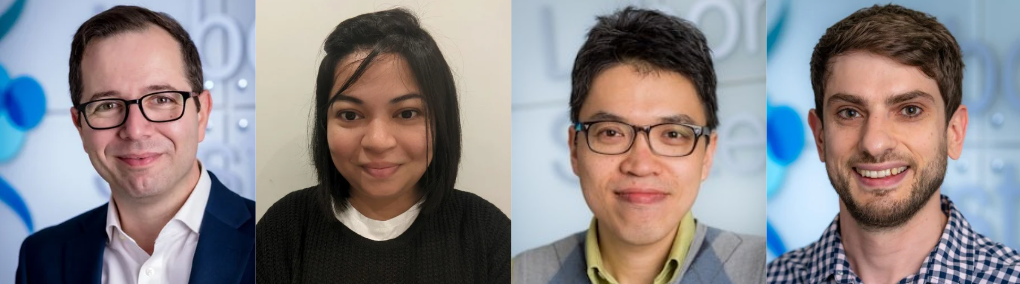
|
The eLudwigNews crew sends its best wishes to you all for a happy and productive year ahead!
-
Get your scientific engines humming with the latest issue of the Ludwig Link!
-
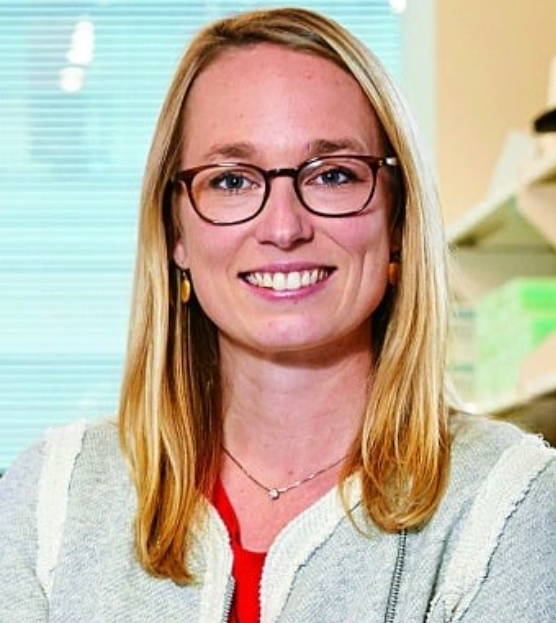
Ludwig MIT’s Stefani Spranger and colleagues report in Cancer Immunology Research that SOX2 expression by NSCLC cells alters the tumor vasculature to boost recruitment of regulatory T cells and exclude CD8+ T cells from the tumor core, promoting resistance to checkpoint blockade immunotherapy.
-
Researchers led by Ludwig Harvard’s Sandro Santagata, Tanjina Kader, Jia-Ren Lin and Clemens Hug describe in Cancer Discovery the molecular alterations that coincide with progressive shifts in the tumor microenvironment during different stages in the development of high-grade serous ovarian cancer.
| |
|
Combination checkpoint blockade therapy (CBT) employing anti-CTLA-4 and anti-PD-1 antibodies has been shown to significantly improve overall survival of patients with non-small cell lung cancer (NSCLC). But the treatment only benefits about a third of all patients. Researchers led by Ludwig MIT’s Stefani Spranger report here that expression of the developmental transcription factor SOX2 by NSCLC cells induces expression of the chemotactic factor CCL2 and boosts recruitment of regulatory T cells (Tregs) that express the regulatory protein GITR at high levels on their surface. These Tregs alter the tumor vasculature to exclude CD8+ T cells from the tumor core, promoting resistance to CBT. Depleting GITR+ Tregs in mouse models improved CD8+ T cell infiltration of the tumor core and sensitized tumors to CBT, suggesting a strategy to improve NSCLC responses to immunotherapy.
| |
|
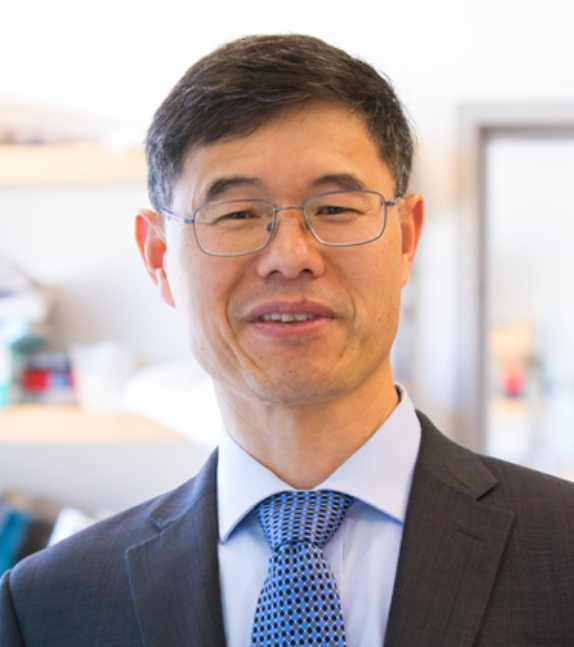
Hafnium (Hf)-based nanoscale metal-organic layers (MOLs) enhance the therapeutic effects of tissue-penetrating X-rays through the efficient generation of hydroxyl radical and singlet oxygen species, which further damage DNA and induce cell death. But their efficacy is compromised by low oxygen levels in tumors and the short half-lives of reactive oxygen species. Ludwig Chicago’s Wenbin Lin and colleagues report here a MOL that generates superoxide anion (O2−) and releases nitrogen oxide (NO) in response to low-dose radiation. Sustained release of NO not only relieves hypoxia to reduce resistance to radiotherapy but also reacts with O2− to form long-lived and highly cytotoxic peroxynitrite, which causes double-strand breaks in nuclear DNA. The researchers show that this MOL (named SNAP-MOL), when combined with irradiation, inhibits tumor growth in mouse models of colorectal and triple-negative breast cancer.
| |
|
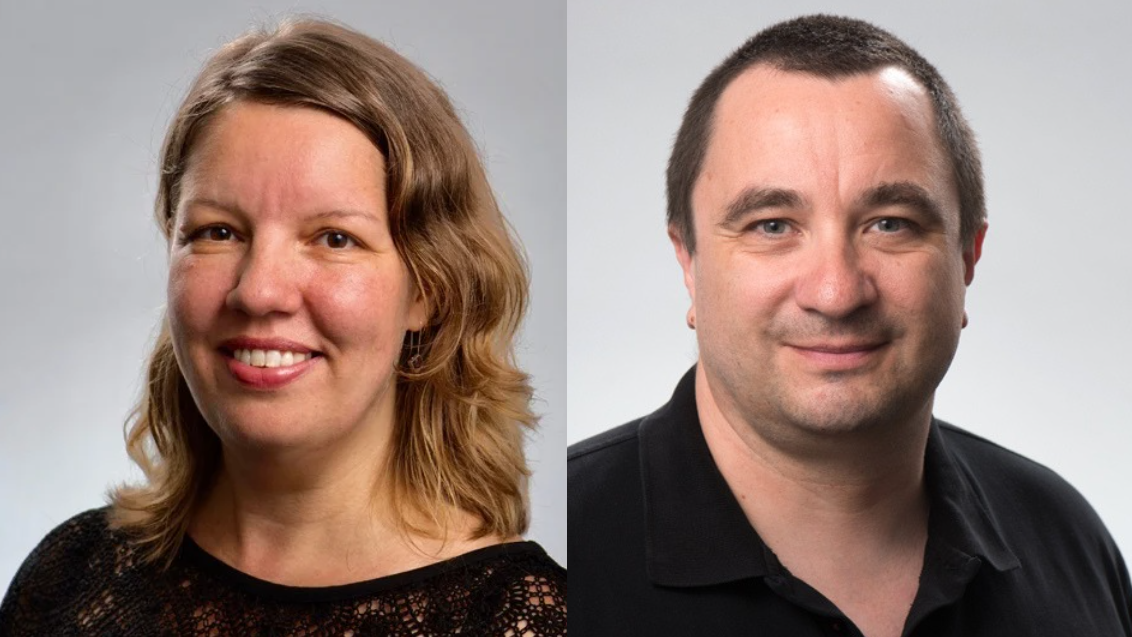
Most studies that evaluate human T cell receptors (TCRs) for use in adoptive cell therapies are conducted in immunocompromised mice bearing implanted human tumors. These models enable the engraftment of human T cells but do not recapitulate the complex interactions of transferred T cells with other immune cells and factors—which can make or break such therapeutic strategies. Researchers partly led by Ludwig Lausanne’s Melita Irving and Vincent Zoete report here a hybrid model system that addresses those limitations. In this model, human TCRs are engineered into mouse T cells and then transferred into immune-competent, transgenic mice expressing human HLA-A2, a cell-surface protein that displays antigens to T cells. The mice are also engrafted with tumors that express a human tumor antigen displayed by HLA-A2. The researchers evaluated their model using engineered TCRs targeting a peptide from the NY-ESO-1 cancer antigen in complex with HLA-A2.
| |
|
The molecular changes that occur as precancerous lesions progress to high-grade serous ovarian cancer (HGSOC) have not been well characterized. Researchers led by Ludwig Harvard’s Sandro Santagata, Tanjina Kader, Jia-Ren Lin and Clemens Hug integrated high-plex imaging and spatial transcriptomics to analyze human tissue samples at progressive stages of HGSOC development, including serous tubal intraepithelial carcinomas (STIC) and progression to invasive disease. They describe here the molecular alterations that coincide with progressive shifts in the tumor microenvironment, transitioning from immune surveillance in early STICs to immune suppression in advanced STICs and cancer. Their findings identify potential molecular markers for HGSOC diagnostics and clues to the development of new therapies.
| |
|
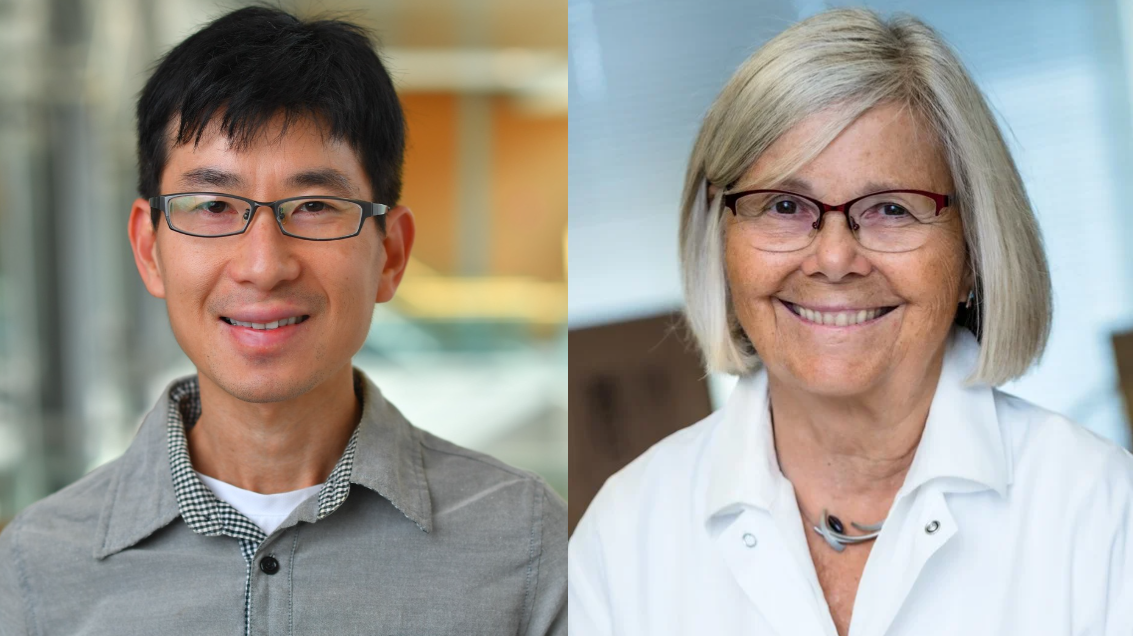
Existing organoid culture methods preserve the epithelial lineages and architecture of normal breast tissue, but are tedious, difficult to scale and do not robustly retain estrogen receptor (ER) expression and responsiveness in long-term culture. Researchers led by Ludwig Harvard’s Kung-Chi Chang and Co-director Joan Brugge report here a modified culture method to generate and maintain organoids as suspension cultures in reconstituted basement membrane. Their method, they show, improves organoid growth and uniformity while maintaining the fidelity of the three major epithelial lineages and sustains ER responsiveness of passaged hormone-sensitive cells in long-term cultures.
| |
|
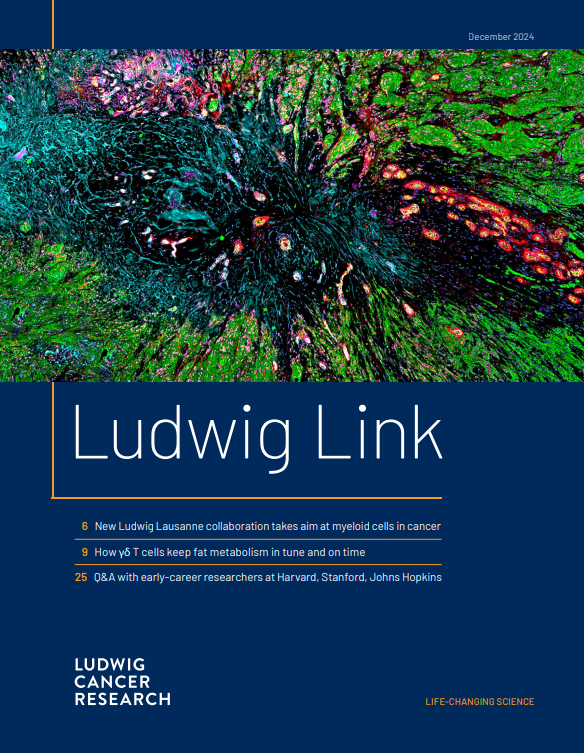
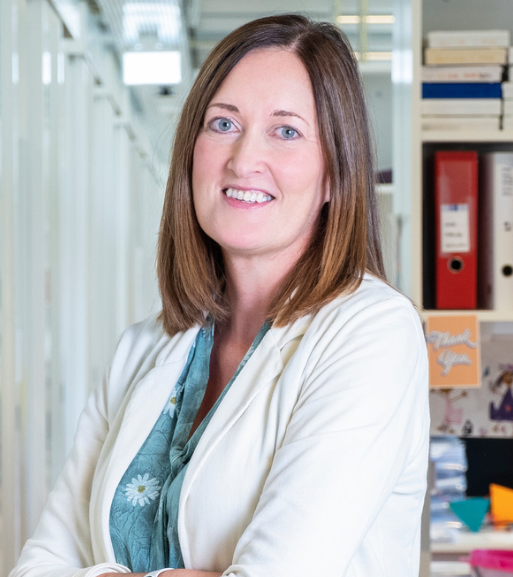
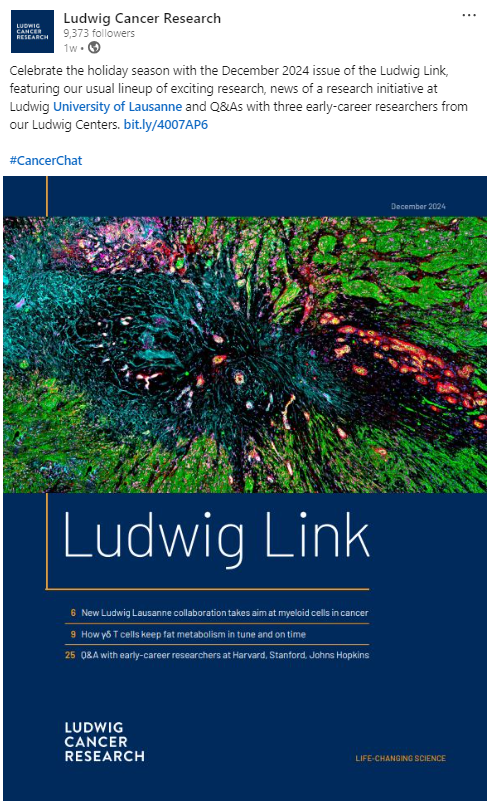
Check out the December 2024 issue of the Ludwig Link! We have for you the usual banquet of research briefs from across the Ludwig community and news of an initiative exploring myeloid cells in cancer. We also have interviews with early-career scientists at Ludwig Centers—one each from Ludwig Harvard, Johns Hopkins and Stanford—and introduce you to Ludwig Oxford’s Bethan Psaila, who officially joined the Ludwig Institute last fall. Finally, we have an ask: if any of you have pretty micrographs you’d like to show off to the world, the Link would be happy to help. Please send them our way and, with your permission, we’ll post them as appropriate on our website, social media and perhaps even randomly in the Link whenever we feel like the magazine could do with a little extra color.
| |
|
Ludwig Lausanne’s Johanna Joyce is one of a handful of scientists invited by the journal Immunity to share their take on the concept of service in a life of science for this Voices article. Joyce discusses, among other things, the meaning and value of service in her experience, especially its role in nurturing a culture of mutual support and collaboration. “When we all engage in service,” she writes, “we foster a more resilient, interconnected, and vibrant academic community.”
| |
|
Researchers are developing multiple strategies to broaden the reach and improve the efficacy of checkpoint blockade therapies. One approach involves the use of living bacteria to inflame the tumor microenvironment, elicit potent immune responses and even deliver additional therapeutic payloads to destroy tumors. This review, co-authored by Ludwig Johns Hopkins’ Shibin Zhou, covers the various strategies employing therapeutic bacteria that are now in preclinical and clinical development.
| |
|
Membraneless organelles known as biomolecular condensates, which enable local concentration of protein, RNA and DNA molecules with shared functions, are emerging as an important means by which cells compartmentalize and organize critical processes. The aberrant formation of condensates is also associated with various diseases, including cancers. This review, co-authored by Ludwig Princeton’s Yibin Kang, discusses how condensates mechanistically contribute to malignancy, including their role in genomic instability, epigenetic rewiring, oncogenic transcriptional activation and signaling. It also highlights challenges in the study of molecular condensates and suggests approaches to better integrate condensates into cancer research.
| |
|
The Research Parasite Award was established in 2016 in reaction to a New England Journal of Medicine editorial critical of data sharing that sought to stick that appellation on scientists who conduct secondary analyses of publicly available data. As the recipient of the 2023 Junior Research Parasite Award, Ludwig Princeton’s Michael Skinnider was asked by GigaScience, a sponsor of that award, to comment on the role he and his fellow “parasites” play in the ecosystem of secondary data analysis. In this essay, he discusses the “mechanisms by which the reanalysis of published datasets can catalyze biological discoveries, produce resources that would be impossible to generate within a single laboratory and drive the refinement of computational methods.”
| |
ICYMI: In case you missed it... | |
|
Get involved
Events, careers and collaboration opportunities
| |
|
Keystone Symposia has asked us to share their upcoming cancer meetings with our community. Check out these upcoming January meetings on emerging technologies in precision oncology, tumor microenvironment and metastasis, and the neural influence on cancer. Meetings later this year will cover tumor metabolism and its vulnerabilities, clinical lessons of cancer immunotherapy, immune cell therapies, DNA replication gaps and stress in cancer and its treatment, the intrinsic properties and vulnerabilities of the cancer cell, targeting basic mechanisms of resistance to cancer immunotherapy, and identifying drivers of progression and resistance in the tumor microenvironment and new frontiers in the study of tumor metabolism.
Assistant, Associate or Full Professor
Princeton University seeks applications for an assistant, associate or full professor to contribute to a major new initiative at the interface between cancer, immunity, and metabolism (Ludwig Princeton Branch). We welcome applications from candidates using biological, chemical, physical, engineering and/or computational approaches to tackle questions at this interface.
Postdoctoral Research Associate - AI/Machine Learning for Mass Spectrometry
The Skinnider Lab at Princeton University aims to recruit between 1 to 2 postdoctoral or more senior research positions to work on projects related to machine-learning for mass spectrometry-based metabolomics data.
| |
Do you know of any news, studies or events that would be relevant to the Ludwig community? Please contact us! | |
Ludwig Cancer Research | www.ludwigcancerresearch.org | |
Please note these clips are not intended to be a comprehensive overview of the news, but a compilation of Ludwig coverage, as well as topics and issues considered to be most relevant to our scientific community. Any views or opinions presented in the news clips are solely those of the cited news sources. When available, a link to the original study is provided. *Asterisk indicates a subscription or login may be required.
| | | | |