NACD invites you to join us in San Antonio, Texas, for the 2026 Annual Meeting! Hosted in partnership with the Association of Texas Soil and Water Conservation Districts, our 80th meeting will take place on February 15-19, 2026, at the San Antonio Marriott Rivercenter. | |
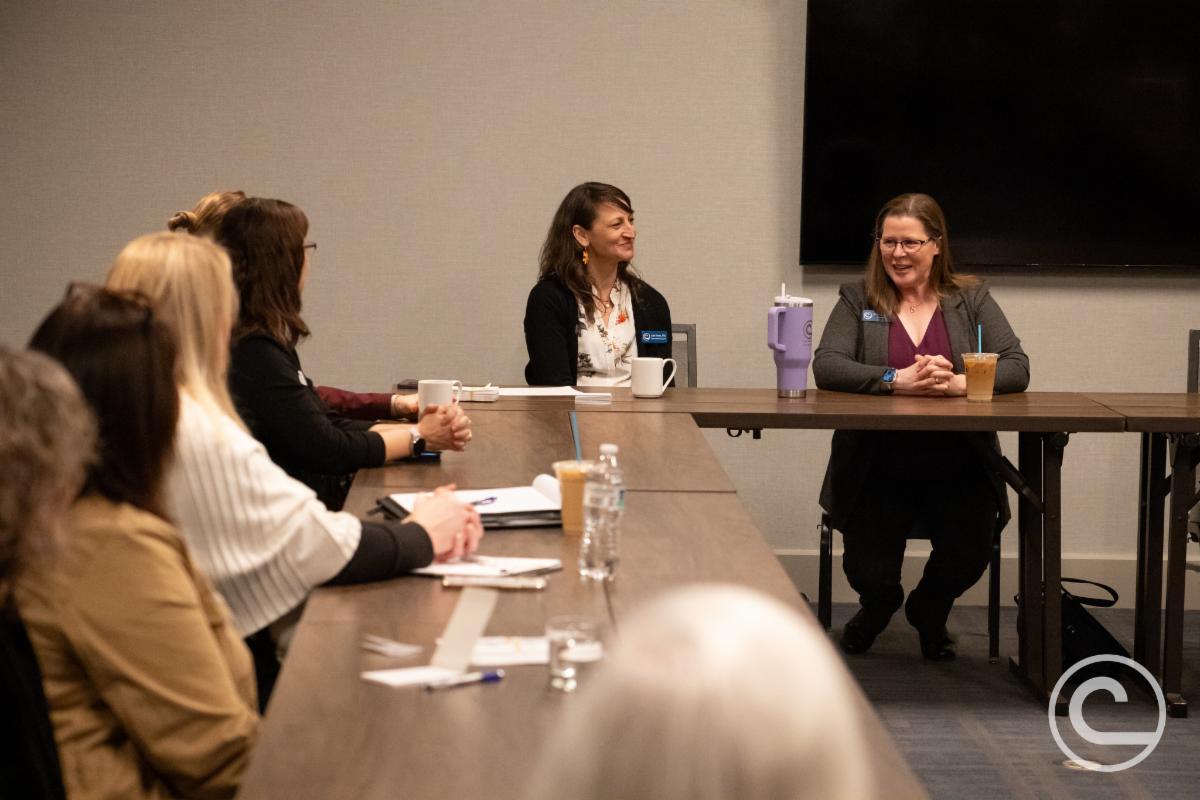
NACD will host close to 60 breakout sessions this year, providing all attendees opportunities to learn and network across a wide variety of themes: Building and Expanding Your Skillset, Conservation Innovation, District Management: Embracing Change, and Partnerships for Impact. Attending breakout sessions will allow you to hear and learn from conservation district leaders, partner organization professionals, and natural resource experts from across the country. A few exciting sessions to note are:
-
Community Connection and Your Conservation District, led by Vicki Carter, Director at the Spokane Conservation District in Washington. This session will lay out the who, what, where, and when of securing nearly $5M to bring a new community resource to Spokane.
-
Grow the Partnership: Using History to Tell the Conservation Story - Hear from leaders of the Oklahoma Conservation Historical Society on how they built a successful state-level history non-profit organization, working with diverse partners to collect, preserve, and share the conservation story in their state.
-
Farm Force: A Scalable Model for Conservation Career Development highlights an innovative workforce development model created by the White River Natural Resources Conservation District in Vermont and the Virgin Islands Women in Agriculture Association. Participants will learn how to structure conservation workforce boot camps that combine online learning with immersive, field-based training.
Explore even more sessions offered, including ones to earn continuing education credits, on the meeting agenda. Secure your spot by registering for Annual Meeting. Act now and save up to $130 per registrant with our early bird offers, only through December 19!
| |
LAST CALL TO SUBMIT NOMINATIONS FOR NACD'S
HALL OF DISTINCTION
| |
NACD is proud to celebrate our members and their contributions to conservation, and one of the ways we do that is through our Hall of Distinction. Through NACD’s Hall of Distinction, state and territory associations can recognize current and past conservation leaders for their extraordinary work to advance conservation at the national level. States and territories may induct one person to the Hall of Distinction every year. Inductees are reviewed by NACD’s District & Partner Relations Committee and will be announced at the 2026 NACD Annual Meeting in San Antonio.
To make an induction, state and territory associations are asked to send NACD information via this online form by December 19. Learn more about the Hall of Distinction, including eligibility criteria, here.
| |
INTRODUCING NCF'S
2026 NGLI COHORT
| |
The National Conservation Foundation (NCF) has announced the members of the 2026 cohort of the Next Generation Leadership Institute (NGLI), a yearlong program designed to equip conservation district leaders with the skills and vision to meet the future needs of natural resource management.
-
Travis Entenman – Minnehaha Conservation District, SD
-
Steven Gilje – Rolette County Soil Conservation District, ND
-
Sharon Luna – Sierra Soil & Water Conservation District, NM
-
Andy Payne – Lower Chattahoochee River Conservation District, GA
-
Blaise Pezold – Crescent Soil & Water Conservation District, LA
-
Abby Shuler – Powell Clarks Fork Conservation District, WY
-
Rosalind Streeter – Oldham County Conservation District, KY
-
Arnold Weatherman – Davie Soil & Water Conservation District, NC
Launched in 2019, NGLI provides participants with advanced training in advocacy, public policy, communication, leadership, media engagement, conflict management, and team building. The program strengthens the capacity of conservation district officials to navigate complex challenges and lead collaborative, locally led conservation efforts across the nation.
NACD offers congratulations to the new cohort members and well wishes as they embark on this leadership journey!
| WHAT'S UP IN WASHINGTON? GOVERNMENT AFFAIRS UPDATE | |
On Wednesday, December 10, USDA Secretary Rollins alongside HHS Secretary Kennedy announced a Regenerative Pilot Program to encourage farmers to adopt practices to improve soil health, enhance water quality, and boost long-term productivity, in line with the Make Our Children Healthy Again Strategy released earlier this year. The pilot program will utilize $400 million from EQIP and $300 million from CSP to fund regenerative agriculture practices. The pilot program intends to streamline the application process and increase flexibility by requiring only one application per producer. In addition, NRCS is establishing the Chief’s Regenerative Agriculture Advisory Council to meet quarterly and advise the NRCS Chief to review progress and help guide data and reporting improvements. NACD published a press release applauding the program announcement, highlighting the opportunities for stronger private-public partnerships with conservation districts.
The confirmation of Julie Callahan to be chief agricultural negotiator at the Office of the U.S. Trade Representative is set to receive a Senate vote this week. Also included in the upcoming package of nominations is John Walk for USDA inspector general and Mindy Brashears for USDA undersecretary of food safety.
| |
MICHIGAN DISTRICT
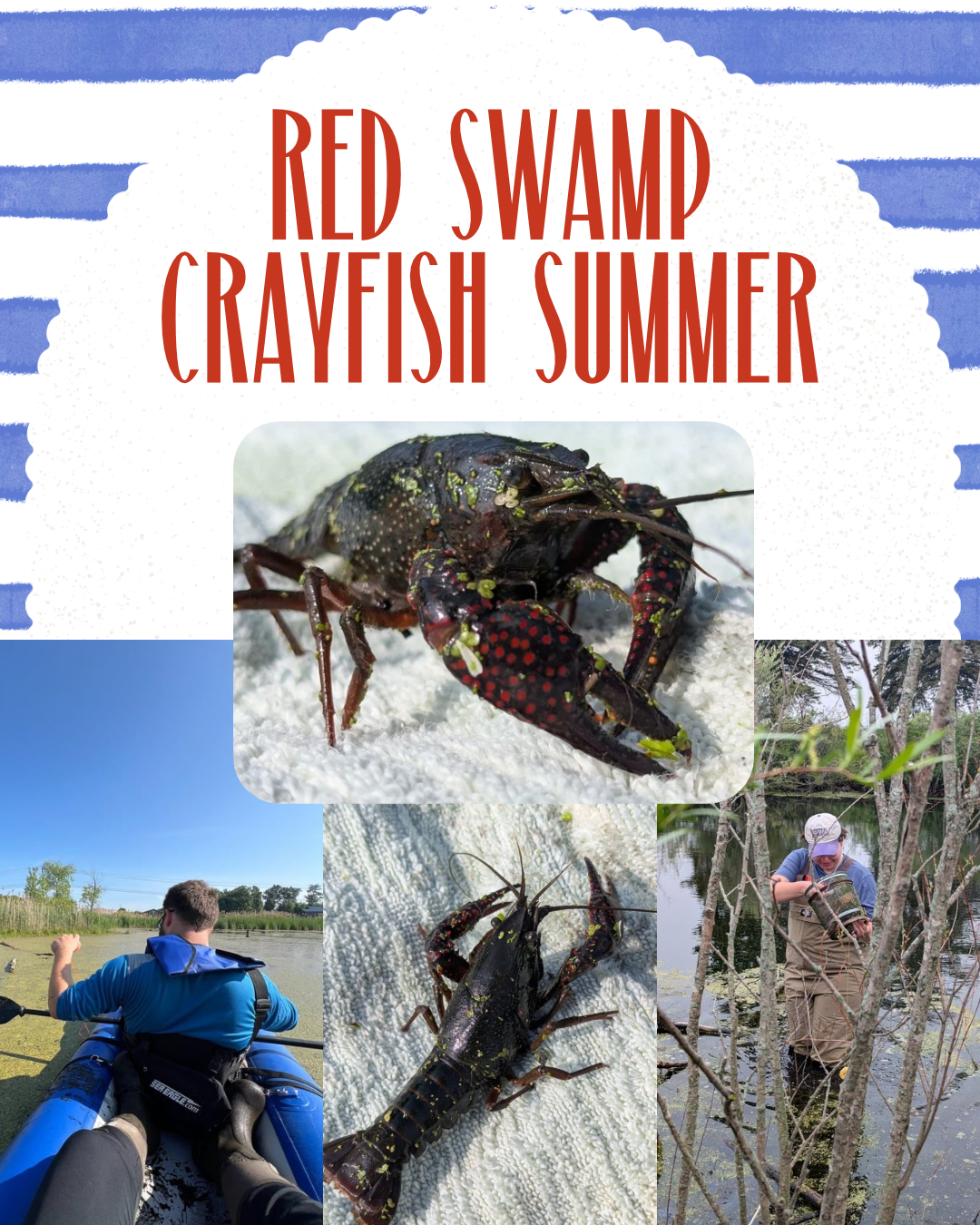
ADDRESSES THE SPREAD OF INVASIVE RED SWAMP CRAYFISH
| |
By Wesley Gibson, NACD South Central Region Representative and Molly Wozniak, Genesee CD Invasive Species Coordinator
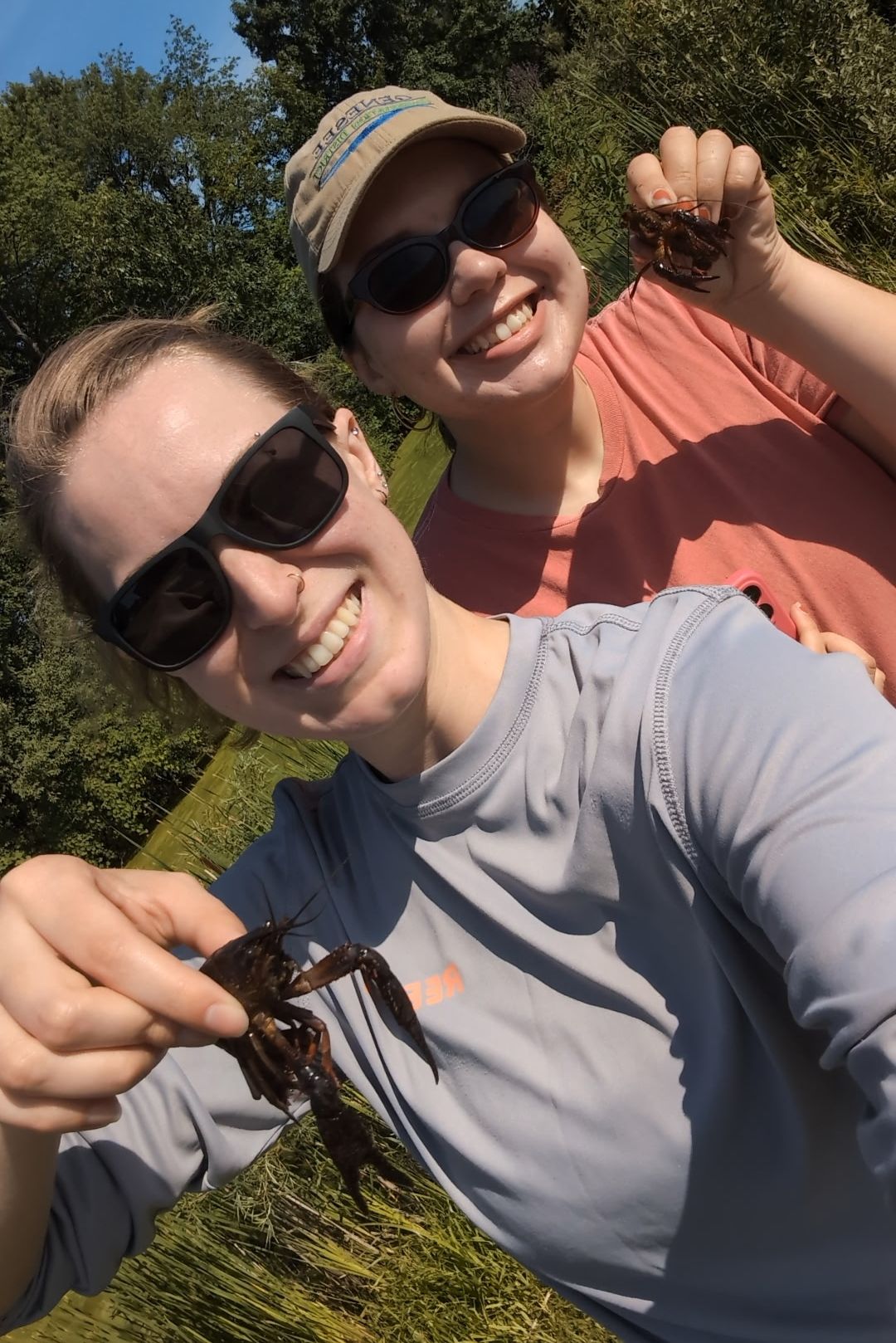
For the past year and a half, the Genesee Conservation District’s invasive species program—the Genesee Lapeer Livingston and Shiawassee Counties Cooperative Invasive Species Management Area (GiLLS CISMA)—has been working to get a handle on the red swamp crayfish showing up in the area. What started as a few calls from concerned citizens near the first detection site turned into a long stretch of trapping, surveying, and mapping to understand how far the crayfish had spread and what kind of damage it was causing. That’s where the expertise of Molly Wozniak, who serves as the Genesee Conservation District’s Invasive Species Coordinator, really came through.
| |
The CISMA’s four-county partnership in Michigan, supported by the Michigan Department of Natural Resources’ Invasive Species Grant Program, has been key in keeping her work moving. Woznik has been one of the consistent faces of the effort, spending months checking traps, walking ditches, visiting with landowners, and even setting up a table at the local farmers market to answer questions. Each round of surveys has helped the team learn more about the crayfish’s behavior and how quickly it can expand if it’s left alone.
For many producers and citizens calling in, this was their first time working with the conservation district. They were seeing collapsing banks, strange burrows, and sudden changes in their ponds and didn’t know what they were dealing with. Door hangers, social media posts, and word-of-mouth helped point them in the right direction, and once they called, the conservation district could explain what the CISMA was finding and what it meant for their local ecosystem if left unmanaged. Wozniak often ended up being the one to walk land stewards through what was happening on their land.
| |
Those conversations often grew into something bigger. Once people understood the crayfish issue, they started asking about other challenges—drainage, soil concerns, habitat projects, and long-term plans they’d been wanting to tackle. The conservation district was able to walk them through options and connect them with programs that fit their goals .
After a year and a half of fieldwork and steady community outreach, the effort has done more than track an invasive species. It’s built stronger relationships with landowners and reminded everyone how important it is to have a conservation district that can respond quickly, share good information, and help people take care of the land they rely on.
Read the full story on NACD's blog.
| | Join NACD's Next Conservation Coffee for Leadership Tips and Tricks | |
On January 15, at 3:00 p.m. ET, join NACD’s Presidents Association, a group of former NACD and State Association Presidents, for a Conservation Coffee on Leadership Tips and Tricks!
NACD President Association members Karl Jensen (SD) and Dr. Carol Knight (AL) will share information on relationship building at the national level, like how to seek out mentorship from others, supporting the next generation of leaders, opportunities to lead at the national level and how to plan for next steps, and how to manage time as a volunteer board member while staying happy and motivated.
Registration is free online. The session will be recorded and available on NACD's YouTube channel after the event.
| USDA Announces Batch Deadline for NRCS Programs | |
USDA-NRCS recently announced the establishment of a national January 15, 2026, batching deadline for the first funding round of key conservation programs. This national batching date ensures producers have a clear, consistent timeline for participating in the Environmental Quality Incentives Program (EQIP), Conservation Stewardship Program (CSP), Agricultural Conservation Easement Program, and Agricultural Management Assistance. This includes the new NRCS Regenerative Pilot Program, which provides assistance through EQIP and CSP.
NRCS programs are continuous sign-up programs, but due to the government shutdown, the agency is implementing an initial national batching period to ensure producers have access to funding and support. Learn more here.
| Conservation and Pest Management Webinar | |
Learn how to increase resource conservation through the adoption of Integrated Pest Management (IPM) 595 conservation practice systems in a webinar on Wednesday, December 17, at 12:00 p.m. CT.
This webinar explains the basics of IPM that make it useful in resource conservation efforts. Using practical examples based on real world experiences, presenters describe how NRCS and conservation district staff, land grant scientists, Extension agents, and crop consultants can work together in supporting development and use of 595 pest management conservation systems.
Register here.
| Grab A Gift That Supports Conservation! | |
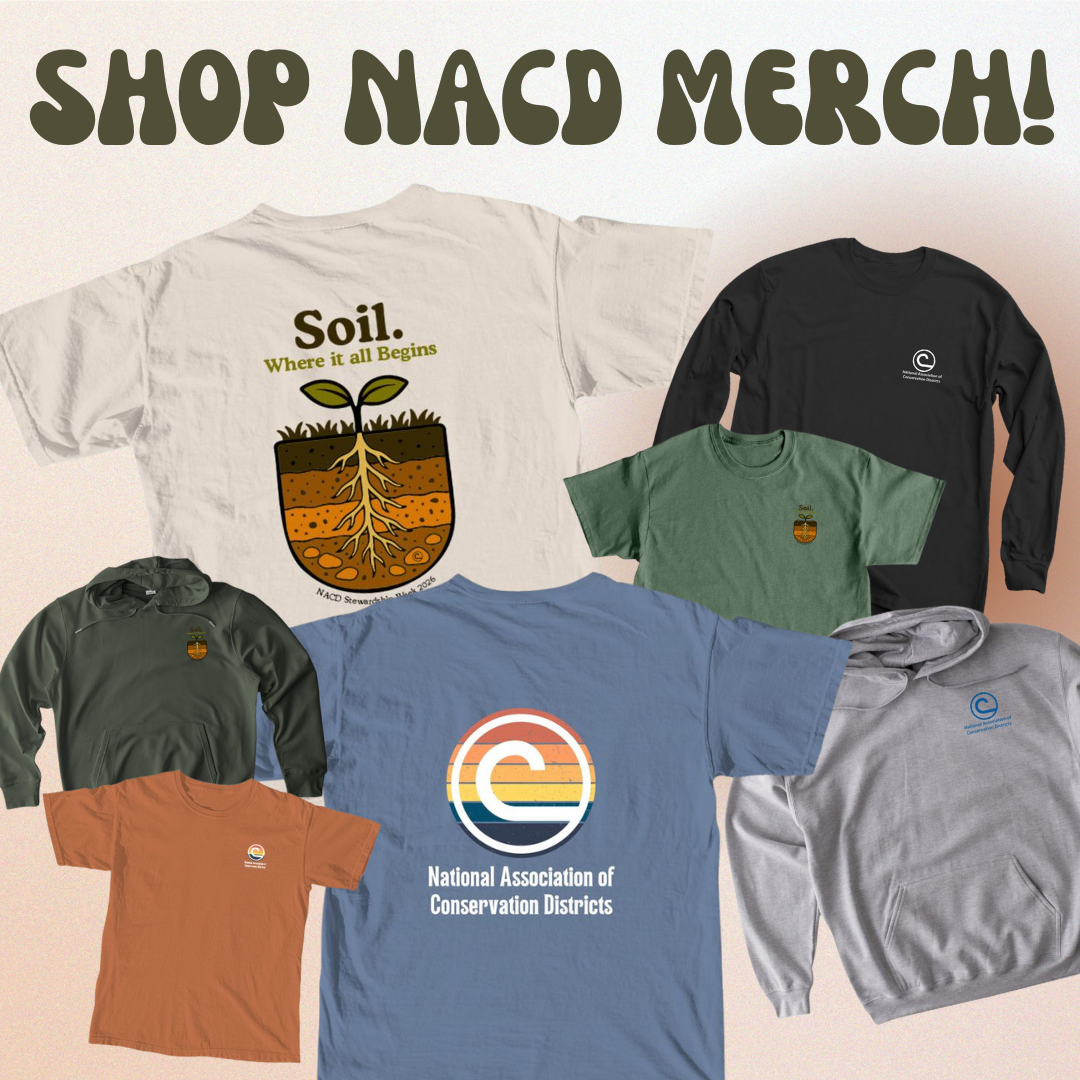
This holiday season, consider giving a gift that shows off your support of conservation! Grab one of our classic logowear items or try the retro sunset design, availble in tee shirts, hoodies, and crewnecks.
Not your style? Check out the limited edition Stewardship 2026 gear, featuring the "Soil. Where it All Begins" design. These are perfect for every soil conservationist and natural resources educator in your life.
Shop now, and stock up for your district board, staff, and family. And feel good knowing your purchase directly supports NACD's education efforts!
| |
Thank you to everyone that applied for a Friends of NACD grant this year! Members of our District and Partner Relations Committee are diligently reviewing and scoring the applications and the selectees will be announced at our 2026 Annual Meeting in San Antonio this coming February. If you want to learn more about our Friends of NACD program and see the big impact these small grants have, visit the program's webpage.
Please consider contributing to the program and becoming a Friend of NACD. Your entire donation will go towards supporting innovative approaches to locally led conservation at districts across the country and in U.S. territories.
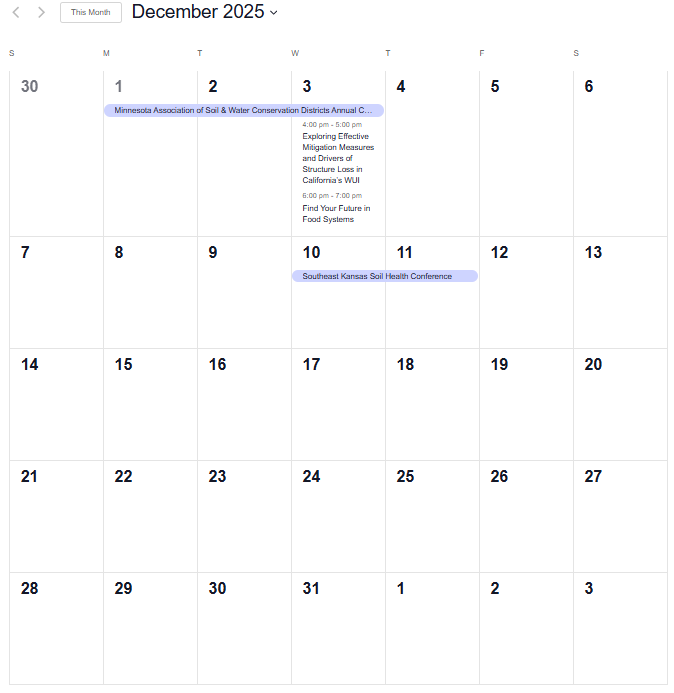
| Promote your conservation district or state association's tree sale, annual meeting, webinar, field day, or other events on NACD's Calendar of Events! | |