|
Join NACD's next Conservation Coffee webinar on "Funding and Tools to Support Conservation Planning on Dairy Farms," on Thursday, May 14, at 3:00 p.m. ET. Register for free here.
Presented by Bridgett Hilshey, Senior Director of Sustainability Projects at Dairy Management Inc., hear about their Dairy Conservation Navigator (DCN). The DCN is an online platform with science-based information on dairy conservation topics, practices, and technologies. This webinar will introduce several key DCN resources. These include the Learning Hub, which offers webinars, slide decks, handouts, and web-based materials for learning, training, and outreach.
The webinar will also cover the Practice and Technology Library, a searchable database with more than 80 practices and technologies, including information on implementation, economics, and environmental impacts. In addition, the webinar will highlight DCN’s new free Funding Opportunities Database, which includes more than 170 programs–many for dairy and beyond–and can be filtered by eligibility, funding status, farm focus, and funding objective.
| CONSERVATION PLANNING TRAINING PILOT TO BE HELD AT NACD'S SUMMER MEETING | |
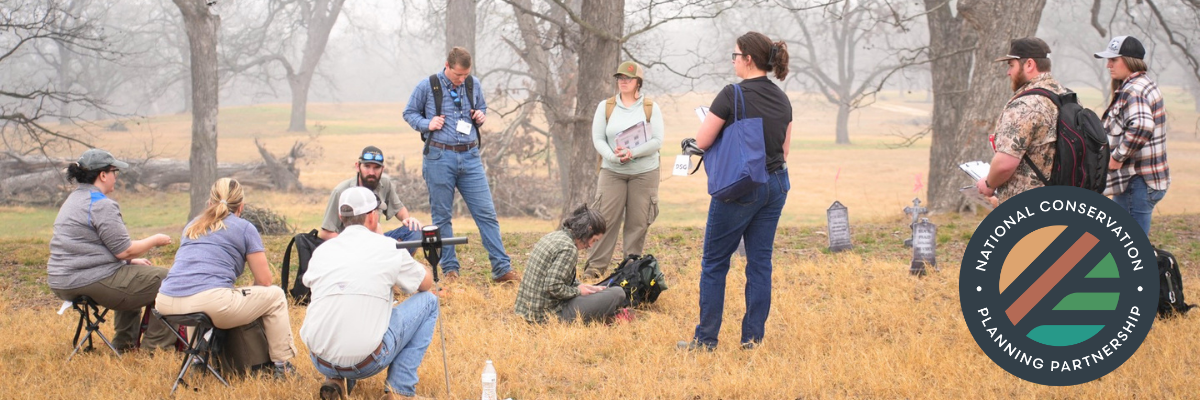
Applications are now being accepted for the next Conservation Planning Training Pilot. Brought to you by the National Conservation Districts Employee Association (NCDEA), the training pilot will be hosted July 20-23 in Grand Rapids, Michigan, in conjunction with NACD's Summer Meeting.
This streamlined, hybrid training experience is designed to help participants reach certification faster and receive step-by-step support along the way. Attendees will complete two required courses in one coordinated experience:
- Conservation Planning, Part 2 (CP2)
- Soil Health & Sustainability
“You hear trainings and typically your mind goes to paperwork and to documents and to filling things out. But this training is really focused on hands-on work and getting your boots on the ground," said Kaylee Smith, Natural Resources Specialist, and previous program participant.
Because this is a pilot, space is limited. Priority will be given to those who:
- Are actively pursuing NRCS Level 3 Conservation Planner Certification
- Need to complete CP2 and Soil Health & Sustainability
- Have organizational support to pursue certification
If this sounds like you, apply before the May 29 deadline! Learn more and apply here. Stay tuned for more information on registering for NACD's Summer Meeting coming soon.
| |
WHAT'S UP IN WASHINGTON?
GOVERNMENT AFFAIRS UPDATES
| |
On Thursday April 30, after much debate and some concessions, the House passed a Farm Bill 224-200 with 14 Democrats and one Independent voting yes and three Republicans voting no. The final bill retains key conservation programs and expands the easements program to include forested lands. The bill will now go to the Senate where lawmakers are working on a Senate version of the Farm Bill that is purported to include updates to the Conservation Reserve Program and other programs. When and if the Senate is able to pass its version, it will return to the House to ensure that a final bill is consistent with the priorities of both bodies.
NACD applauded the passage of the bill in this press release and urged the Senate to also pass a bipartisan Farm Bill this year.
“Long-term authorization is critical to provide the certainty and continuity our nation’s producers need to protect our natural resources and keep working lands productive,” said NACD Chief Executive Officer Jeremy Peters.
Congress is in recess this week so NACD’s Government Affairs team is meeting with various congressional staff to discuss appropriations and the need for a final Farm Bill.
| HOLDING THE LINE AGAINST HEMLOCK WOOLY ADELGID | |
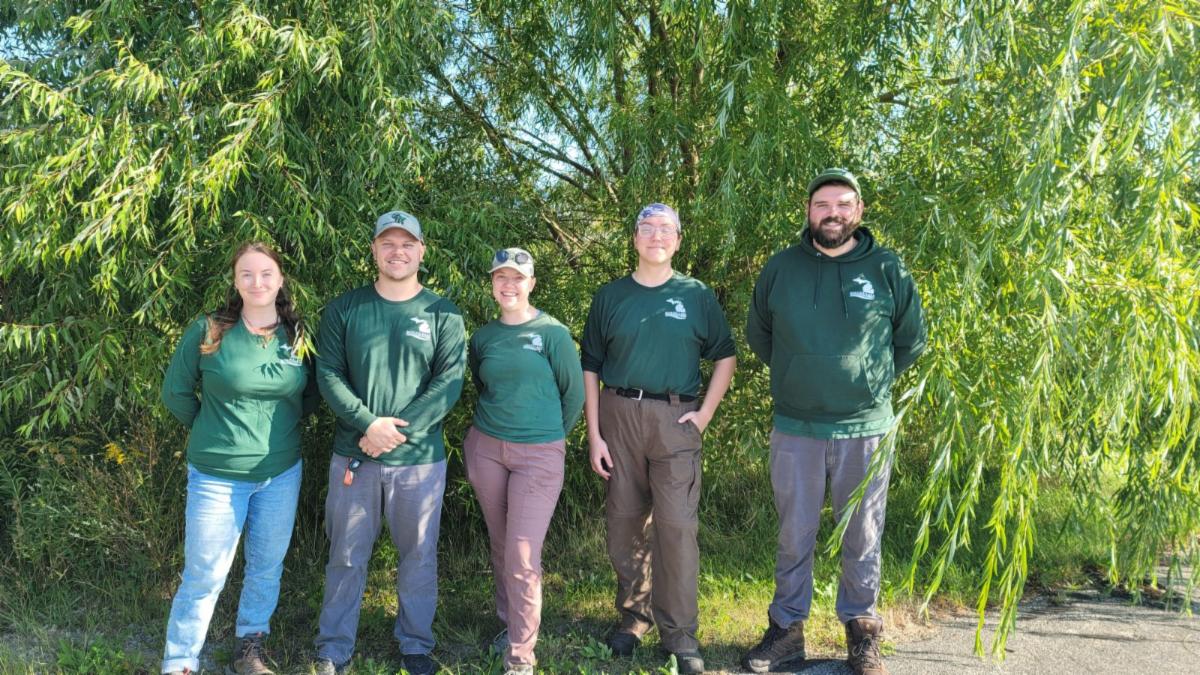
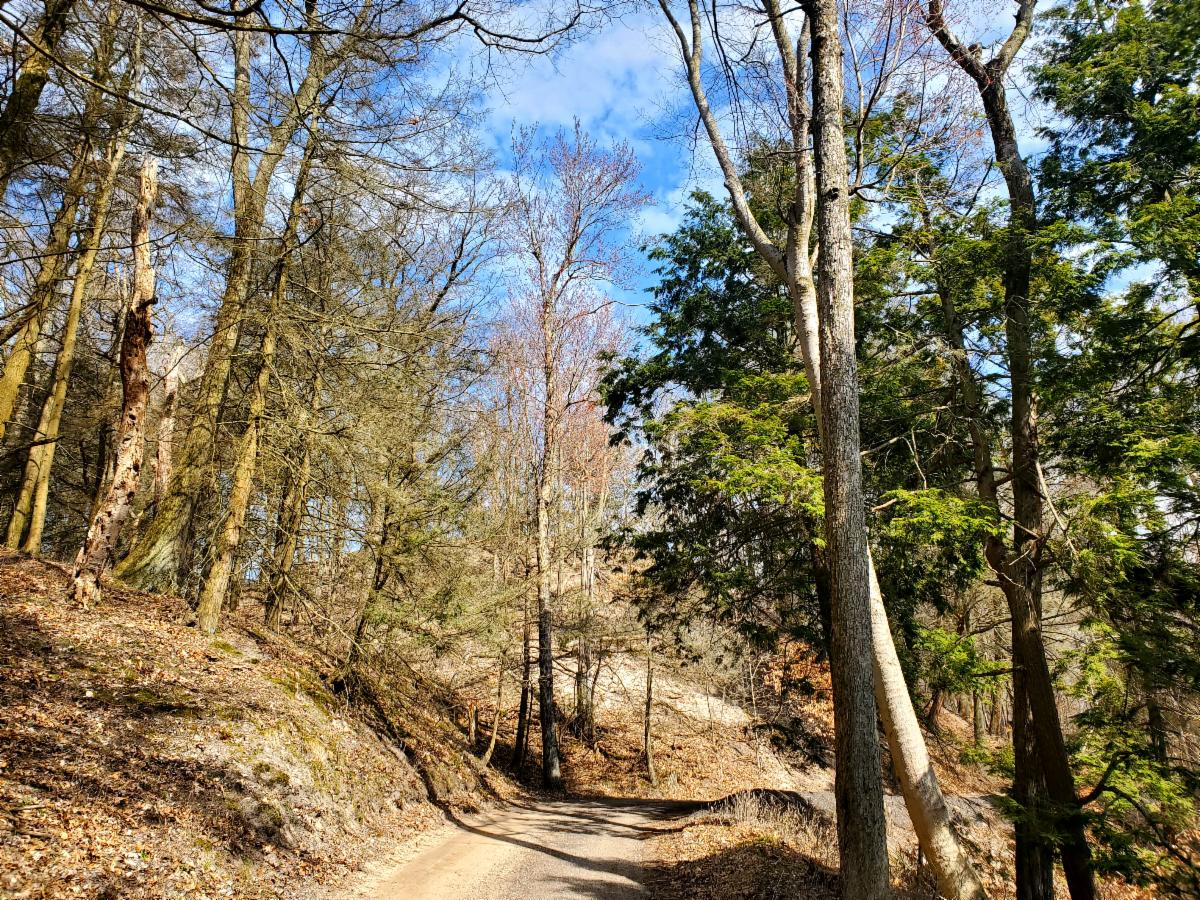
Western Michigan’s coldwater streams rely on eastern hemlock, a keystone species that cools water, stabilizes banks, and provides vital habitat. That makes the spread of hemlock woolly adelgid (HWA), a pinhead-sized insect that threatens these trees, especially concerning. Julia Place, Project Manager of the Hemlock Woolly Adelgid Crew for the Mason-Lake Conservation District, leads a team working urgently to slow the infestation and protect local forests.
“Once HWA infests a tree, it’s pretty much 100% lethal without treatment,” explained Place. “It can kill them within about four to ten years.”
| |
Using Good Neighbor Authority (GNA) funding with the U.S. Forest Service and the Michigan Invasive Species Grant Program (MISGP), the district surveys, tags, and treats hemlocks across Mason and Lake counties. Crews prioritize riparian corridors, wetlands, and recreation sites—areas where HWA spreads easily through wind, wildlife, and human activity.
Treatments are delivered through trunk injections or targeted sprays. It takes about a year for the chemical to reach the canopy, with improvement often seen within one to two years. Their treatment concentration provides roughly five to seven years of protection.
Each winter, crews tag hemlocks and record diameter at breast height (DBH), GPS location, and field notes. In summer, they return to those exact trees to treat them. This process has helped Mason-Lake significantly exceed project goals.
A recent MISGP award aimed for the treatment of 10,000 hemlocks and 90,000 DBH inches; the district treated about 15,000 trees and more than 119,000 inches. Another grant, targeting 45,000 inches reached 92,000 this summer. Under GNA, crews approached 100,000 inches, more than double their goal.
These results stem from strong collaboration with Ottawa and Muskegon Conservation Districts, the Northwest Invasive Species Network, the Michigan DNR, and the U.S. Forest Service.
Meeting Landowners Where They Are
| |
The district blends digital outreach with neighbor-to-neighbor communication. Social media updates, buffer-zone mailers, and postcards with QR codes help residents request assistance quickly.
Once a landowner reaches out, the process is simple: an initial site visit, a quote, a one-page agreement, winter tagging, and summer treatment. Early confusion around paperwork led the team to overhaul their forms.
“We did a complete 180,” said Place. “We cut out the jargon and made it easier for people to understand.”
The Front Line Moves North
When HWA was first detected in western Michigan, Mason and Lake counties sat near the leading edge. Today, the infestation has spread into at least 13 counties, shifting the priority zone north toward the Traverse City and Leelanau region. Crews are working to prevent HWA from reaching Michigan’s Upper Peninsula (U.P.).
With funding priorities moving north, Mason-Lake is transitioning from grant-funded work to more fee-for-service contracts. Still, Place emphasized the long-term need: “Our goal is to slow the spread and keep it out of the U.P. as much as possible because it would just decimate those hemlocks. Even though we may not be a priority area anymore, we’re not done. Once HWA is in an area, there’s always going to be work to do.”
Read the full story on NACD's blog and get stories like these directly in your inbox with our monthly Forestry Notes newsletter.
| | NACD Welcomes Government Affairs Specialist | |
NACD welcomes Hannah Peyton to the team as our new Government Affairs Specialist.
Hannah comes to NACD from Monument Advocacy where she served as a Manager of Government Relations and executed bipartisan advocacy strategies for conservation and agriculture clients.
Prior to her service at Monument Advocacy, Hannah also provided strategic counsel, advanced strategic initiatives, and supported the implementation of NRCS conservation program funding at USDA.
Hannah is originally from Ohio and holds a Bachelor of Arts in Political Science from Miami University in Oxford, Ohio. She will be based in NACD’s Washington, D.C., office and can be reached at hannah-peyton@nacdnet.org.
| Assistance Available for Cover Crops | |
Farmers for Soil Health (FSH) is open for enrollment! The program provides technical and financial assistance to farmers in exchange for planting cover crops.
Corn, soybean, wheat, grain sorghum, and cotton farmers in the following 20 states are eligible to participate: Delaware, Illinois, Indiana, Iowa, Kansas, Kentucky, Maryland, Michigan, Minnesota, Missouri, Nebraska, New York, North Carolina, North Dakota, Ohio, Pennsylvania, South Dakota, Tennessee, Virginia, and Wisconsin.
Participating farmers can plant cover crops for one-year contracts that can be renewed for the duration of the FSH program. The FSH program is supported by a USDA Advancing Markets for Producers award.
Learn more and enroll here.
| NRCS Announces Sign-ups for Ag Land Easements | |
USDA recently announced a second national deadline for agricultural producers and landowners to apply for fiscal year 2026 assistance in the Agricultural Conservation Easement Program through NRCS.
The new deadline for entities to apply is May 29. NRCS is providing up to $200 million in funding for the application period for agricultural land easements. Learn more.
| Less Lawn, More Life Challenge | |
The Less Lawn, More Life challenge is a free 12-week habitat restoration challenge that guides homeowners through transforming their yards -- native plants, reduced lawn, pollinators, wildlife, and water management.
Conservation districts already know that what homeowners do with their yards has a direct impact on soil health and water quality. This challenge teaches them to do the right things, for free, for 12 weeks, with expert guidance.
Kicking off on May 7, conservation districts are invited to partner on the challenge. As a partner, simply share the challenge with your community however works best -- newsletter, social, website. The host organiztion, Wildr, offers a ready-to-use and customizable toolkit with copy, graphics, and everyhting else needed.
Sign up to get the partner toolkit here.
| |
Have you visited our YouTube channel yet? If not, you’re missing out on a range of resources and webinars created with our members in mind! Everyone will find something useful in our library of Conservation Coffee webinars. These sessions happen every other month, but we add the recordings to YouTube so anyone can access them later.
Additionally, we have general sessions from past annual meetings, training webinars for our grant programs, and more. If you have any questions about our YouTube content or ideas for future webinar topics reach out to us!
| Promote your conservation district or state association's tree sale, annual meeting, webinar, field day, or other events on NACD's Calendar of Events! | |