|
The 2027 Cohort application period for the National Conservation Foundation’s (NCF) Next Generation Leadership Institute (NGLI) is now open! NCF developed NGLI as a comprehensive leadership development program to meet the needs and challenges facing conservation district leaders.
“There has never been a more important time to invest in the future of conservation through the education and development of our district’s leaders. NGLI is ready to take applicants to the next level through leadership development that helps individuals rise to the challenge of local, state, and national leadership responsibilities,” said Brent Van Dyke, Chair of the NCF Board of Trustees.
The goals of NGLI are to equip conservation district leaders with a skill set that includes personal, civic, and organizational leadership development to meet the future needs of natural resources management. By increasing a district official’s capacity to navigate and manage conservation challenges at the national level, this opens opportunities for conservation districts at the local level.
| |
NGLI was officially launched by the NCF in 2019 and provides conservation district leaders with the tools to become national leaders through a year-long leadership development experience.
The NGLI program's learning objectives include advocacy and public policy, effective communication, leadership styles, conflict management, and many other skills that set NGLI Alunni apart in state and national conservation partnerships.
Eligible applicants for the program are appointed or elected conservation district officials serving in the United States or its territories. The application process is competitive and requires several components:
- Fully completed online application submitted before the deadline of 11:59 p.m. ET on October 31, 2026
- Letter of support from a state or territory association
- Letter of support from the individual’s conservation district
- $50 application fee
For more information on the 2026 NGLI open application process or to apply for a place in the 2027 NGLI Cohort, visit NCF's website or contact Keith Owen, NACD Director of Education.
| JOIN CONSERVATION COFFEE ON USFWS PROGRAMS | |
Join NACD's upcoming Conservation Coffee webinar on September 10 at 3:00 p.m. ET to hear about the U.S. Fish and Wildlife Service’s (USFWS) Farm Bill programs and what USFWS can do for conservation districts and producers.
The USFWS's Partners for Fish and Wildlife Program and Coastal Program work with willing partners to conserve habitats that benefit fish, wildlife, and people. These programs also provide technical and financial assistance to landowners and agricultural producers and help them access resources available through the Farm Bill conservation programs.
Presented by Elizabeth Freiday from USFWS's Farm Conservation Program, join to learn about opportunities that you or your conservation district customers may be missing out on.
Learn more and register here.
| |
WHAT'S UP IN WASHINGTON?
GOVERNMENT AFFAIRS UPDATE
| |
Funding at Top of Agenda
On August 31, the House returned from its August recess and is expected to consider the Senate-passed continuing resolution (CR) on September 1. The measure would fund the federal government through December 11, extending funding beyond the September 30 end of the fiscal year. The Senate passed the measure 90-6 on August 8. If enacted, the CR would provide additional time for Congress to negotiate FY2027 appropriations.
USDA Announces Ranchers First Initiative
On August 31, USDA Secretary Brooke Rollins announced the Ranchers First Initiative, a package of actions intended to support cattle producers and rebuild the U.S. beef herd. The initiative includes a new Livestock Risk Protection endorsement for heifer retention, expanded use of the Emergency Conservation Program on Grassland Conservation Reserve Program (CRP) acres following wildfires and other natural disasters, support for regional meat processing, and efforts to prioritize American beef in federal procurement.
EPA Announces $11.75 Million for Drinking Water Resilience
On August 31, EPA announced $11.75 million in grant funding for 10 drinking water systems to strengthen resilience against cybersecurity threats and extreme weather. Projects will address risks, including wildfires, drought, flooding, hurricanes, and cybersecurity vulnerabilities. One award of $1.125 million will support Denver Water with dam infrastructure upgrades to reduce flood risk and improve operational reliability.
NRCS Announces FY2027 Conservation Program Application Deadline
On August 27, USDA’s Natural Resources Conservation Service announced September 29 as the FY2027 application deadline for EQIP, CSP, ACEP, and RCPP. Applications are accepted throughout the year, but applications must be signed by September 29 to be considered for FY2027 funding.
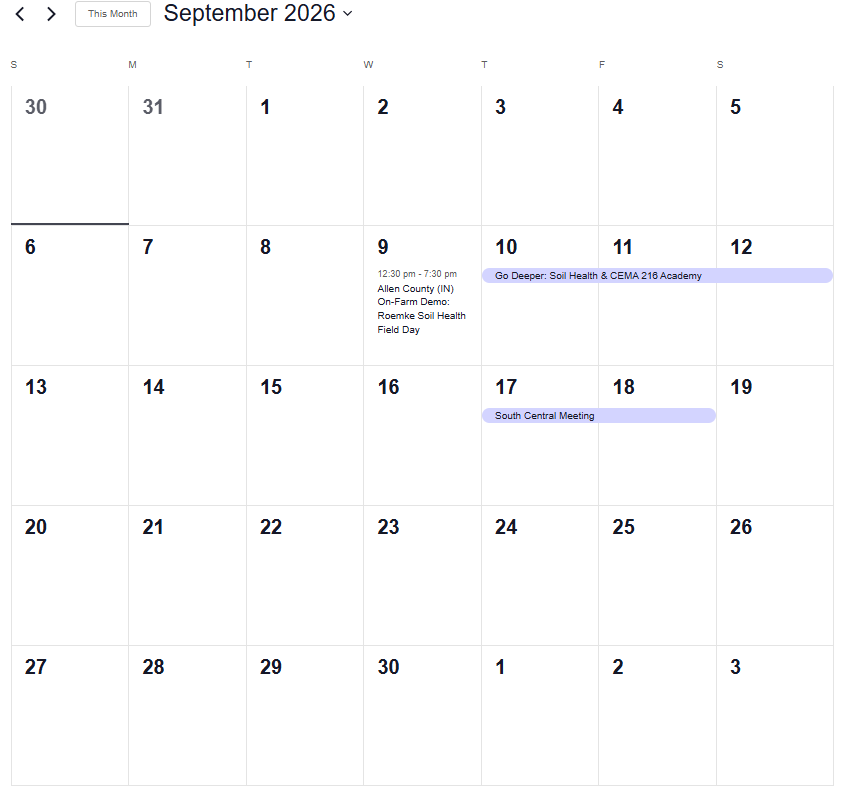
Upcoming Important Dates
| WILDFIRE RESILIENCE IN ACTION IN WASHINGTON | |
By the Okanogan Conservation District
The Okanogan Conservation District in Washington State has served Okanogan County landowners and residents since 1940, offering free, voluntary conservation assistance across agriculture, forests and wildfire, water resources, habitat, education, and community outreach. The district works closely with private landowners, local partners, and agencies such as the Washington Department of Natural Resources (DNR) to develop practical, locally driven projects that improve forest health, strengthen wildfire resilience, protect working lands, and support the rural way of life that depends on them.
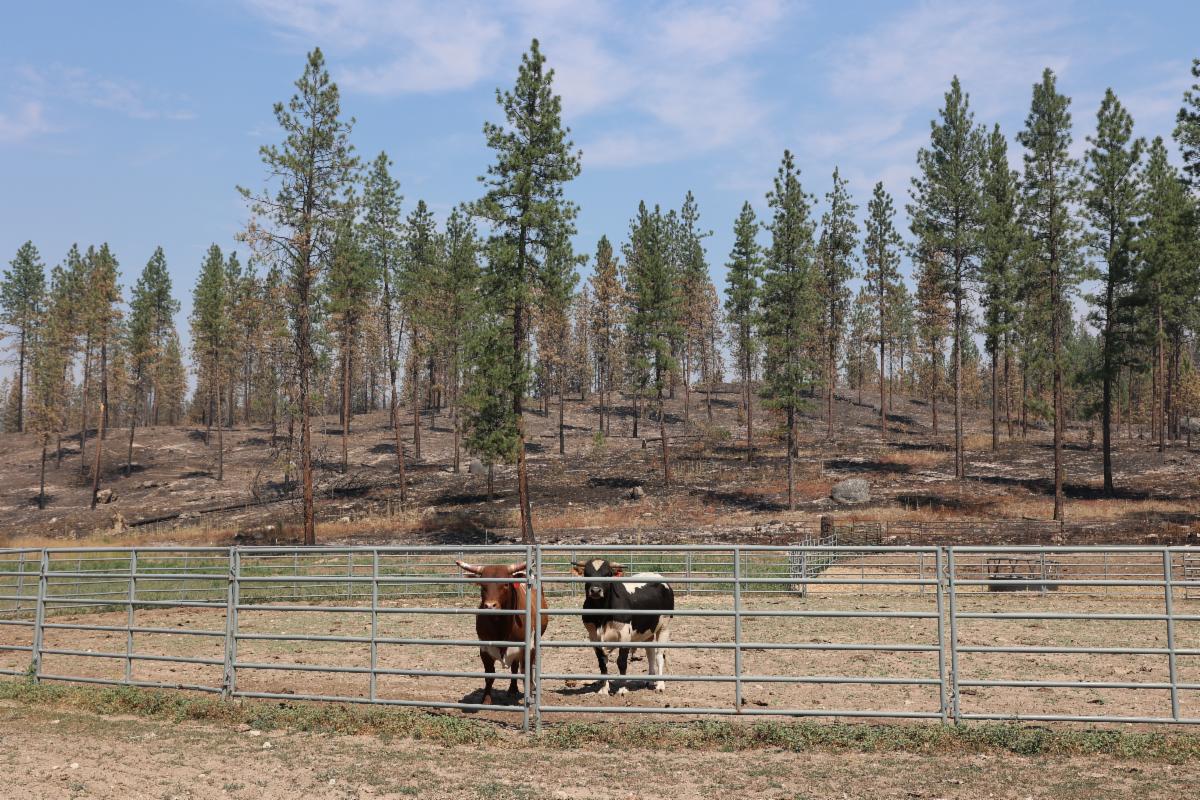
The story below, shared by the Okanogan Conservation District, shows exactly why that work matters. During the Kaiser Canyon Fire, fuels-reduction treatments on Jackson Ranch helped change the way the fire moved through the landscape, keeping flames lower to the ground, giving firefighters and neighbors a better chance to defend homes and structures, and allowing a neighboring landowner’s cattle to walk out unharmed. It is an impressive reminder that conservation district projects are not abstract investments; they can directly protect livestock, property, livelihoods, and communities when wildfire arrives.
| |
Jackson Ranch is located roughly 2.5 miles northwest of Nespelem, Washington, on the Colville Reservation in Okanogan County. The property straddles Highway 155 and is bordered by private lands as well as tribal trust lands managed by the Confederated Tribes of the Colville Reservation. With support from the Washington DNR Service Forestry and the Okanogan Conservation District, the Jacksons treated their property to improve forest health, wildlife habitat, and wildfire resilience.
DNR first treated 80 acres as a pilot effort through the Commercially Marginal Timber Program, followed by another 9.4 acres through a standard forest health cost-share between DNR and the Jacksons. In December 2024, Sam Halvorsen, the DNR Service Forester working on the project, contacted the Okanogan Conservation District's Forests and Wildfire Lead, Eli Loftis, to explore whether additional work could be completed on the property using cost-share funds from the Washington State Conservation Commission’s Forest Health and Community Wildfire Resilience Program. Working with the Jacksons and their contractor, Knowlton Forestry, Loftis and Halvorsen developed prescriptions for another 182.2 acres of mastication work, split between two contracts with the district for a total project cost of $187,115.
Altogether, the combined projects treated 271.6 acres of dry conifer forest on the ranch and connected with treatments completed by the Colville Tribe on neighboring parcels. The wildlife benefits were visible almost immediately: a large herd of elk began using the site before the mastication project was even fully complete, taking advantage of the more open conditions and improved forage. Increased numbers of white-tailed deer and songbirds were observed as well.
Just a few months later, in July 2026, the Kaiser Canyon Fire burned across the entire Jackson Ranch. The prescriptions developed by DNR and Okanogan Conservation District were designed to keep fire on the ground, or force it back to the ground in the event of a running crown fire. While the Jacksons were away from home during the fire, neighbors fighting the fire reported a clear change in fire behavior as it reached the ranch, the flames dropped back to the ground and stayed there. Although the fire came within feet of the Jacksons’ home, the moderated fire behavior and the quick actions of their neighbors meant they did not lose any structures, and all of their livestock survived.
Read more on NACD's blog and have stories like these delivered to your inbox monthly by susbscribing to the Forestry Notes newsletter.
| | |
NACD Closed
for Labor Day
| |
NACD will be closed Monday, September 7, in observance of Labor Day.
On this day, we want to thank all those who work hard to ensure that conservation practices are implemented nationwide.
| Propose Breakout Session for NACD Annual Meeting | |
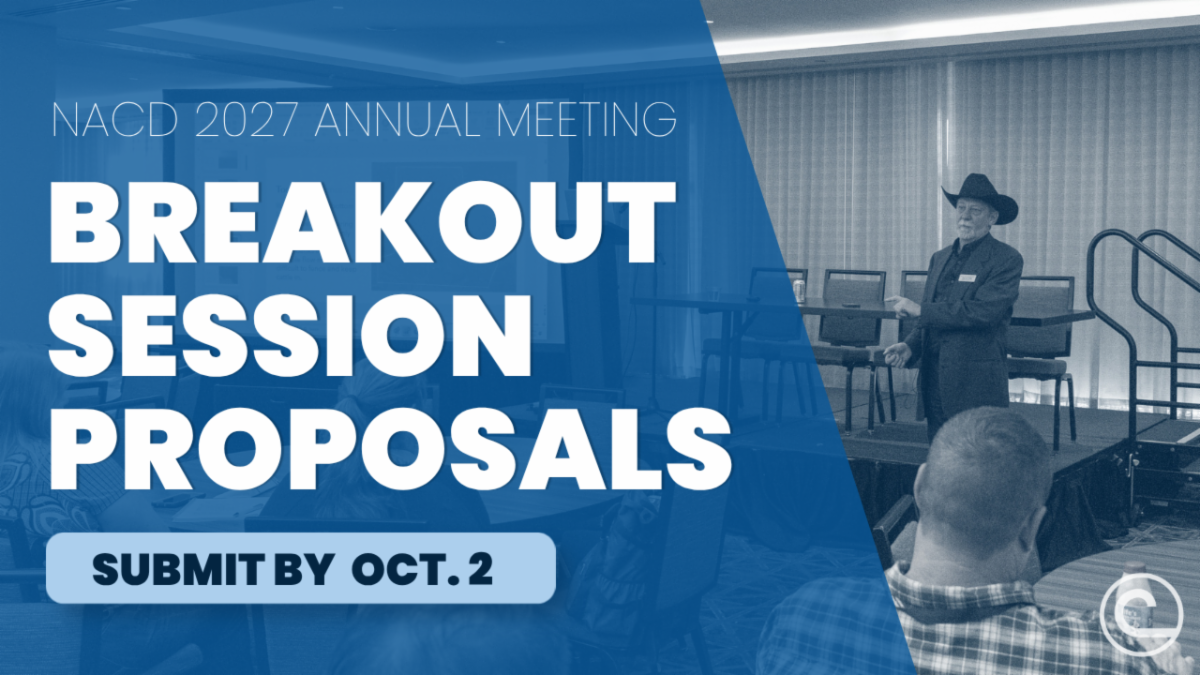
NACD is now accepting breakout and training session proposals for the upcoming 2027 Annual Meeting to be held in Las Vegas, NV, on February 6-10, 2027!
Breakout sessions spotlight the work of conservation districts and partners across the country. We are also accepting proposals for training sessions to help conservation district board members and employees build their skillsets. Sessions typically last an hour and often showcase several speakers.
NACD's breakout and training sessions are some of the most popular activities among meeting attendees and provide a platform for districts to share their initiatives with one another. Spread the word about this opportunity and consider submitting a proposal by October 2!
If you have any questions, or would like to discuss your proposal before submitting, please reach out to the NACD Membership Team.
| PACD Hosts CPESC Review Course | |
Join the Pennsylvania Association of Conservation Districts (PACD) and the Pennsylvania Society of Professional Engineers for a virtual Certified Professional in Erosion and Sediment Control (CPESC) Review Course!
The CPESC certification is a professional designation for erosion and sedimentation technicians, engineers, and other specialists involved in design, construction, inspection, or other aspects of erosion and sedimentation control.
The virtual review course will ensure CPESC applicants understand which concepts will be covered by the exam and will act as a review for most of those concepts. Applicants for the exam should have a sufficient combination of education and experience to be able to independently study the materials identified in the Review Manual.
The review course is open to anyone, including conservation district staff, professional engineers, agency staff, or private company staff, who are actively pursuing a CPESC certification.
Learn more and register for the course here.
| Attend NASCA's Annual Meeting | |
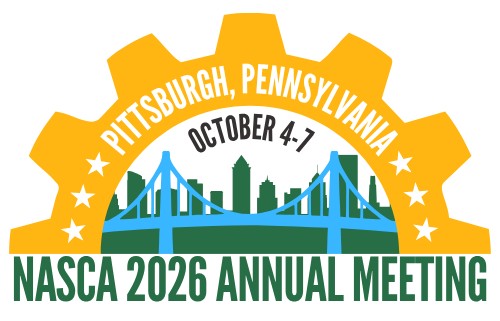
Registration is open for the 2026 National Association of State Conservation Agencies (NASCA) Annual Meeting. The meeting will be held October 4-7 in Pittsburgh, PA.
The meeting provides state conservation agency leaders an opportunity to share ideas with their peers, learn about Pennsylvania’s many outstanding programs, and enjoy beautiful downtown Pittsburgh. Some things to look forward to are the first timers and state ideas sharing sessions led by Ray Ledgerwood, as well as the Monday half-day field tour, which will highlight Pennsylvania's dirt and gravel roads program and their Agriculture Conservation Assistance Program.
Register by September 18 on NASCA's website.
| Access TOPP Resources for Organic Transition | |
September is Organic Month, making it a timely opportunity for farmers to explore resources from the Transition to Organic Partnership Program (TOPP), a 5-year, $100 million federal initiative created to help farmers navigate the transition to certified organic production.
Farmers exploring organic certification or already in transition can access TOPP resources and support here.
TOPP resources include guidance on certification, production, recordkeeping, markets, and more, along with opportunities to learn from experienced organic farmers and technical experts.
| Join Webinar on Floodplain Restoration | |
On Thursday, September 17, 2026, at 1:00 pm ET, the Arkansas Forests and Drinking Water Collaborative will host a webinar about the Arkansas CommuniTree Project to help drinking water utilities meet source water protection goals.
This is the first community supported tree bank in Arkansas where partners are working together to grow high quality potted trees from bare root seedlings. These ‘communitrees’ are then donated to reforestation projects around the state focused on stream and lake side corridors or “forested riparian buffers” in watersheds that provide drinking water to Arkansans. Three of the state’s largest water utilities are partnering to provide “grow sites” for seedlings to be used to buffer the sources of water we use for drinking.
Register here.
| Promote your conservation district or state association's tree sale, annual meeting, webinar, field day, or other events on NACD's Calendar of Events! | |