 | |
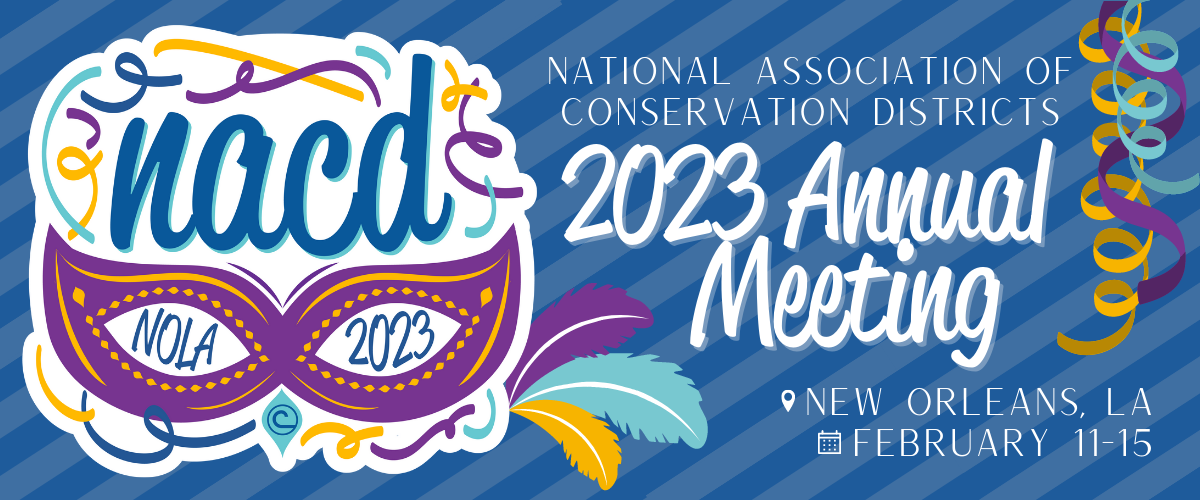
The 77th NACD Annual Meeting will focus on a theme of "Local Resiliency, National Community." Through networking opportunities, guest speakers, interactive sessions, and thought provoking panels, we will explore how conservation is built by local resiliency and locally-led initiatives, and strengthened through national community with partnerships and collaboration.
Hosted in partnership with the Louisiana Association of Conservation Districts, the 2023 Annual Meeting will take place in New Orleans, Louisiana from February 11-15 at the New Orleans Marriott. The deadline to reserve a room in the discounted room block is Friday, January 20. Registration will also be open online through January 20, 2023.
NACD's Annual Meeting is the biggest event of the year and brings hundreds of conservation leaders from across the nation together. The Annual Meeting agenda includes a full NACD board meeting and is packed with opportunities for attendees to network and hear from a variety of conservation speakers. Visit NACD's Annual Meeting webpage to learn more about some of the exciting breakout sessions and speakers that will be featured at the upcoming meeting!
| USDA ASKS FOR FARMER FEEDBACK IN SURVEY | |
As a farmer, rancher or forest manager, your on-the-ground contribution to American agriculture is vitally important. Your efforts are key to the Nation’s production of food, fuel and fiber, and your feedback is essential in helping the U.S. Department of Agriculture (USDA), a vital partner of NACD, to improve government programs and services to support you.
USDA has released a nationwide survey asking for feedback from all farmers, ranchers, and forest managers. USDA would like to hear from existing customers, and they hope to also reach a new audience of prospective customers, specifically those that don’t know about USDA, have yet to work with USDA, and those who were unable to participate in the past.
Please visit here by March 31, 2023, to access the survey online in multiple languages! The survey will take approximately 10 minutes to complete, and responses are anonymous.
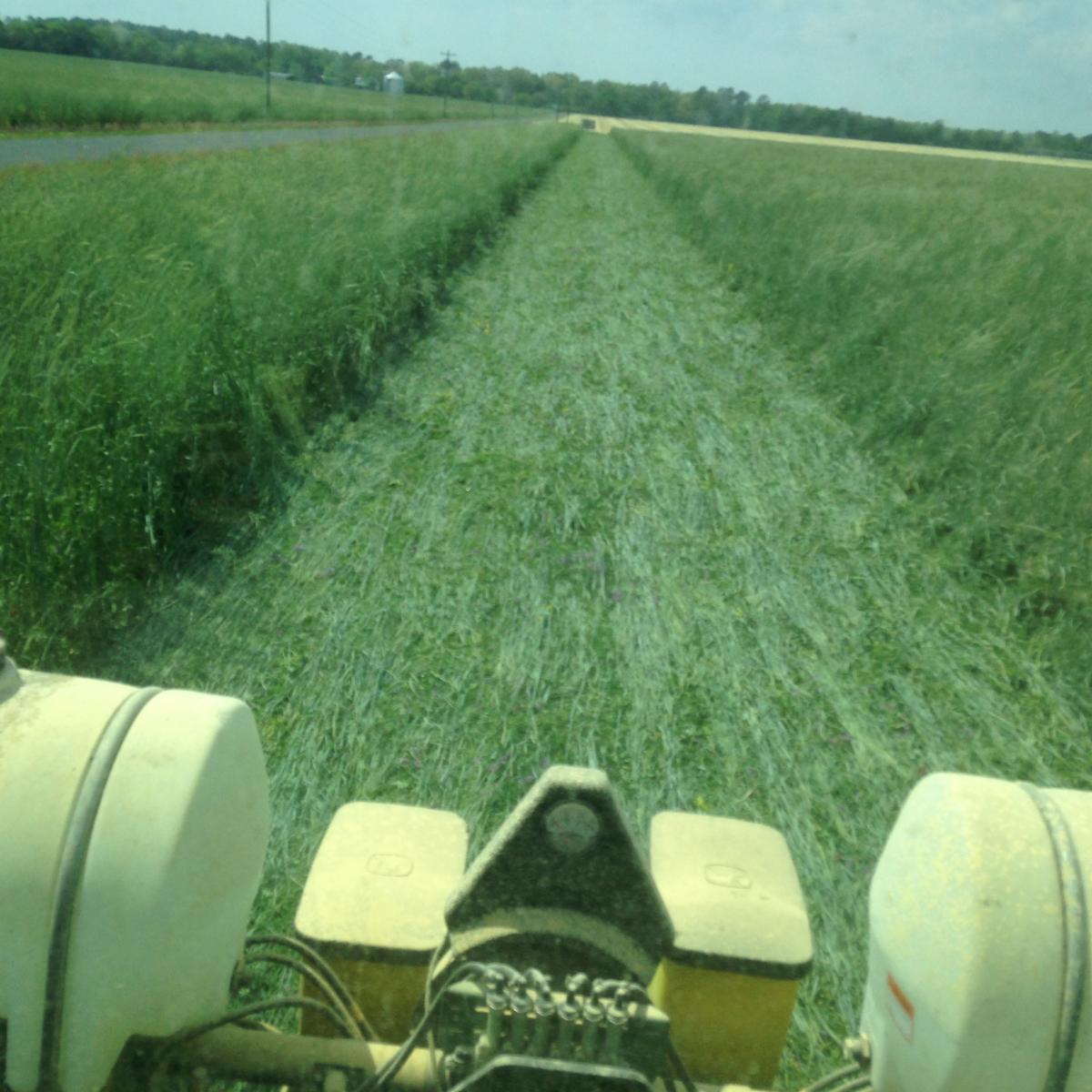
| Jason Carter has been farming for 27 years, and currently, he farms 1,000 acres of corn, wheat, and soybean in Eastover, South Carolina. For the past 10 years, Carter has planted cover crops on 100 percent of his acres. Many would be surprised to find that Carter didn’t begin by experimenting on some of his smaller fields. Instead, he jumped in with both feet and planted cover crops on all his fields. He made this change after coming to the realization that he couldn’t increase his organic matter without the use of cover crops. The results of this kind of commitment have produced an interesting soil health journey with great results. | 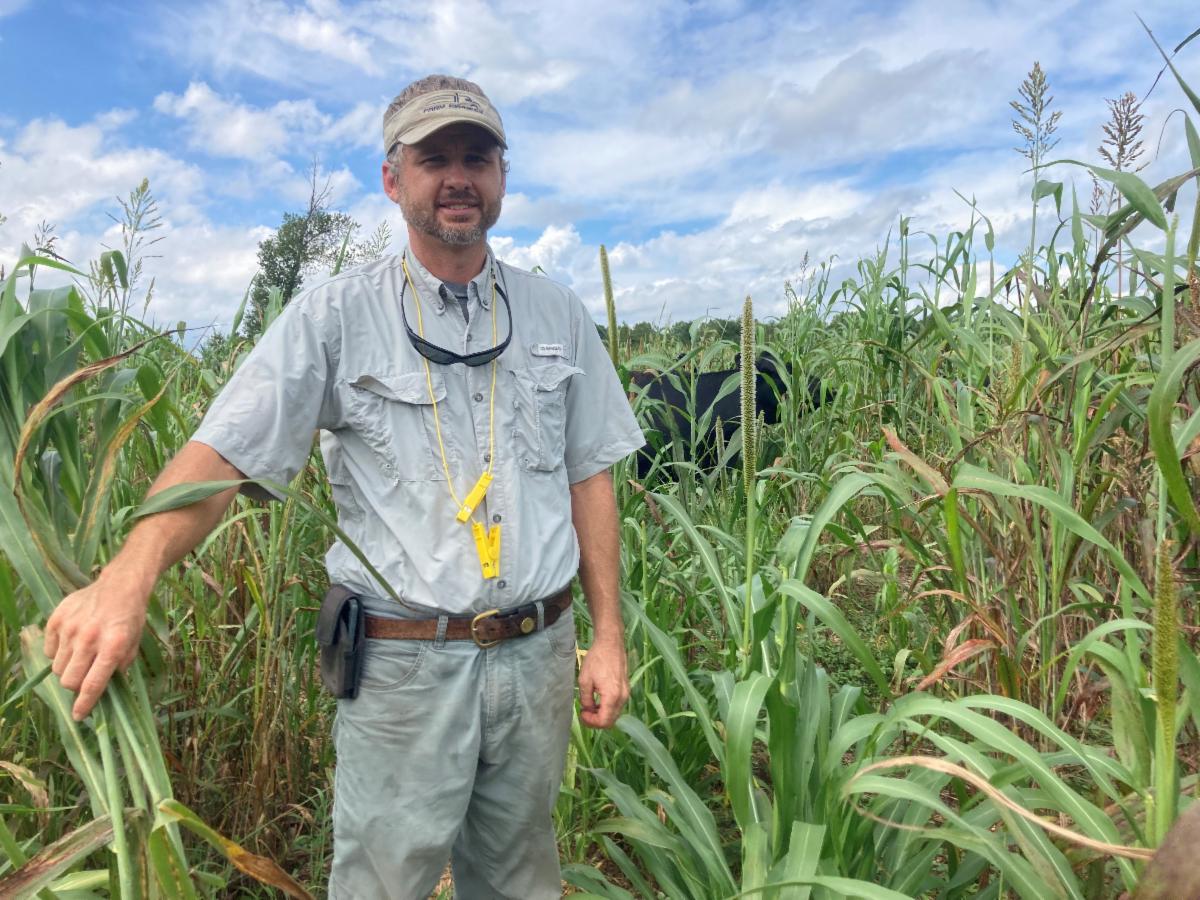 | In 2013, a year after first planting cover crops, Carter was one of five farmers in South Carolina that worked with Dr. Robin “Buz” Kloot, a Research Associate Professor at the University of South Carolina Arnold School of Public Health, to participate in a three-year USDA Natural Resources Conservation Service (NRCS) Conservation Innovation Grant (CIG). Each farmer sought to quantify the potential benefits of conservation practices like no-till adoption and planting diverse cover crops. With one year of cover crops under his belt, this research opportunity was well-timed for Carter as he explored cover crops further, considering factors like crop rotation, crop diversity, as well as timing and method of planting and termination. Throughout this research, one thing Carter noted was that although additional inputs (such as commercial fertilizer) might return higher yields, the financial “break-even point” was a lot higher than those who reduce their inputs and have slightly lower yields. Their journey and the results of this CIG were documented through interviews in the video Farmer Scientists: Five Trials in Managing for Soil Health. | |
Using cover crops, Carter found his organic matter had increased from .6 to 1.8, which meant he experienced an increase in soil biology as well. The benefits of cover crops also meant that Carter could reduce his use of commercial fertilizer and pesticides, which created an environment for his soil biology to thrive. Some additional markers of improvement Carter notes include:
- No Glyphosate use for the past two years
- No fungicide application for the past seven years
- No commercial phosphorus, potassium, or lime use for the past eight years
- Chicken litter rates reduced by 50 percent
- Herbicide usage reduced by 50 percent
- Insecticide application reduced by 75 percent
- Synthetic nitrogen reduced by 75 percent
In 2020 and 2021, Carter also participated in the Soil Health Institute (SHI) campaign “Healthy Soils for Sustainable Cotton.” During the two years prior to this project, Carter farmed cotton, and with his experience in cover crops, he was showcased in a series of Virtual Field Days along with David Lam, SHI Project Manager. That series of videos can be viewed on the program website.
As part of the “Healthy Soils for Sustainable Cotton” program, Carter also participated in the Farmer Showcase, presenting along with two additional South Carolina farmers for a webinar entitled “Soil Health in South Carolina: Lessons Learned from 8 years of Regenerative Agriculture.” In this webinar, Carter shares lessons learned while implementing cover crops, no-till, and nutrient management on his farm and the benefits he has experienced, which include increased soil organic matter, reduced weed pressure, and a robust nutrient cycle that has allowed him to reduce fertilizer use.
For more about Jason Carter and his soil health journey, please visit the NACD website to read his Soil Health Champion profile. If you or someone you know would like to become a Soil Health Champion, please contact Beth Mason at beth-mason@nacdnet.org or visit the NACD website for more information.
| |
WLFW Great Plains Grassland Initiative Feature | |
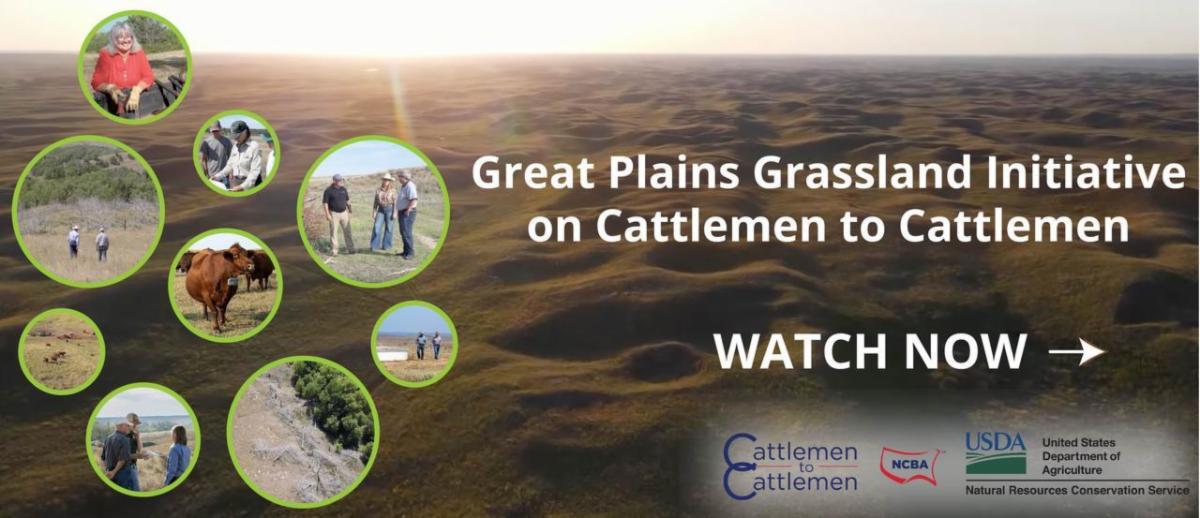
Working Lands for Wildlife (WLFW) and the Natural Resource Conservation Services' (NRCS) Great Plains Grassland Initiative was recently featured on an episode of Cattlemen to Cattlemen, the leading television program of the National Cattlemen's Beef Association. Watch the full episode on Cattlemen to Cattlemen's YouTube channel.
The show is packed with great interviews from ranchers, NRCS and WLFW staff, and conservation partners. In a fast-paced hour, the show explains why woody encroachment is such a detriment to grasslands, what ranchers and the NRCS are doing to combat this major threat, and why fighting back against invading trees is important to ranchers, wildlife, and anyone who appreciates the Great Plains grasslands - one of the most imperiled and important biomes on earth.
| Attend the Conservation Drainage Network's Annual Meeting | |
The Conservation Drainage Network's (CDN) 2023 Annual Meeting brings international experts together to learn about the latest in water management research and implementation. The meeting will be located on the Eastern Shore at the historic Tidewater Inn in Easton, Maryland. The meeting will be held from April 4 - 6, 2023.
The annual meeting is a result of the volunteered work of the CDN members serving on subcommittees to drive the network forward and is being administered by the Agricultural Drainage Management Coalition (ADMC). The CDN is an international partnership with the goal of improving drainage practices to meet future demands of crop production while reducing adverse environmental impacts. The CDN meeting brings together a diverse set of stakeholders to learn about the latest in conservation drainage and implementation strategies while providing networking opportunities for future collaborations.
Learn more and register for the meeting here.
| Donate to NACD's Pack-A-Book | |
The 2023 Annual Meeting will mark the 14th year for NACD’s community outreach program, “Pack-A-Book.” This year’s donations will be received by the Capital Soil and Water Conservation District, who will share donations with schools around the New Orleans area.
Be a part of this project by packing one or more natural resource, environmental, or conservation-related books for your trip to New Orleans. Simply drop them off at Registration during the meeting or contact wesley-gibson@nacdnet.org for shipping instructions.
For a wide selection of books with conservation themes, consult this list of suggested titles or visit Amazon or your favorite book retailer.
A label with your name and conservation district affiliation will be placed in the inside cover of each book you donate.
|
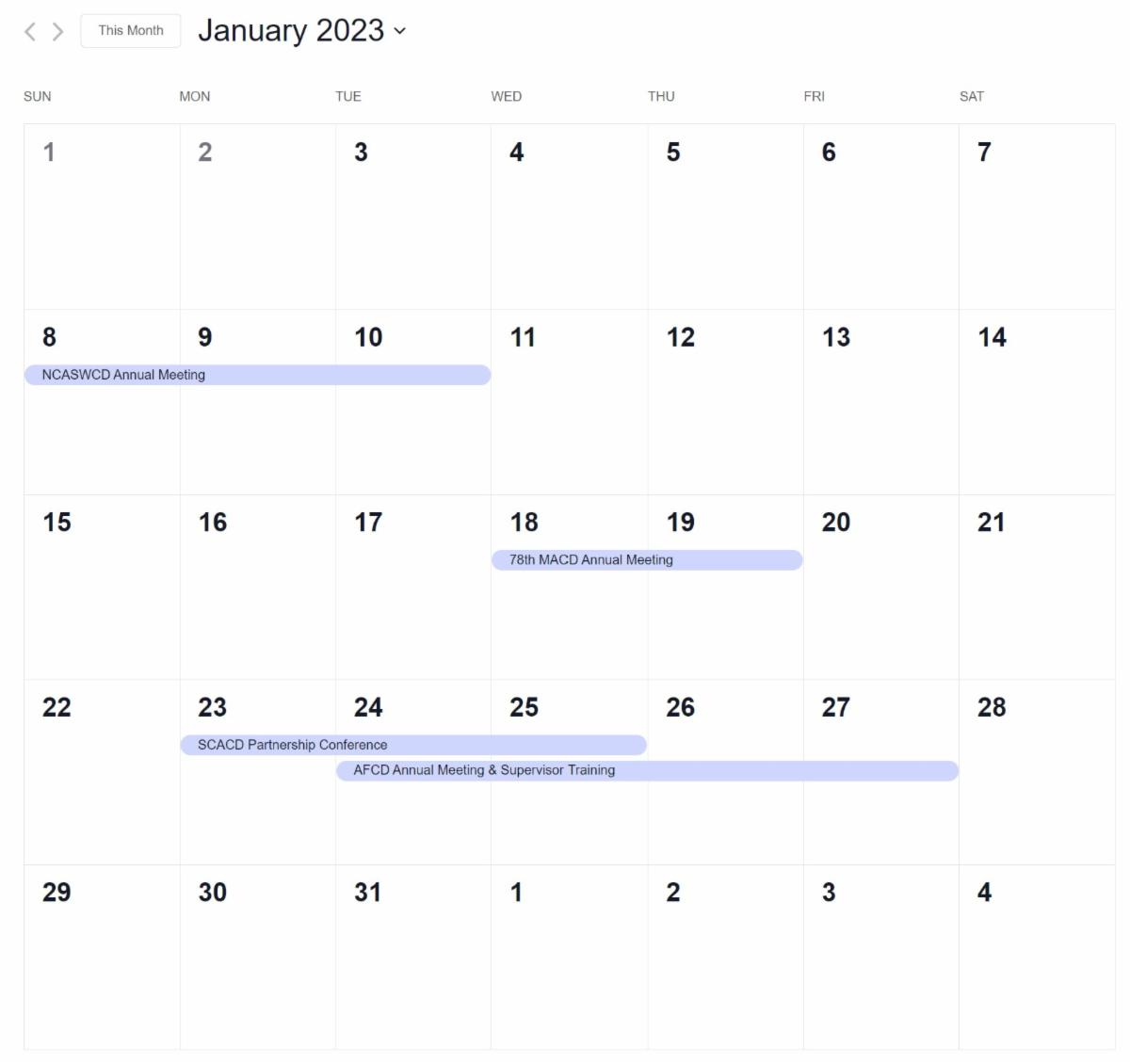
Promote your conservation district or state association's tree sale, annual meeting, webinar, field day, or other events on NACD's Calendar of Events!
| |