|
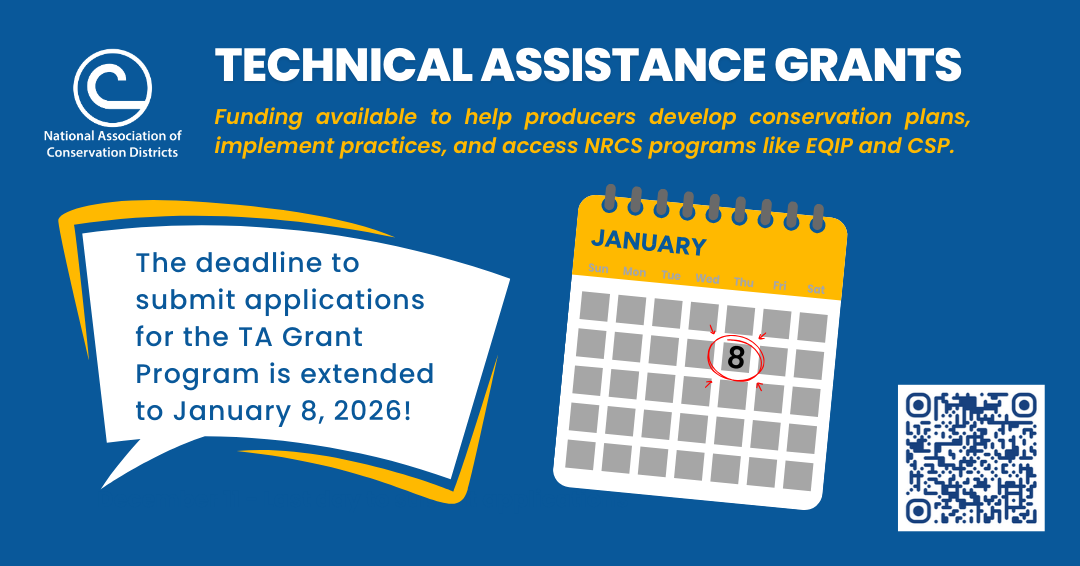
Last fall, NACD, in partnership with NRCS, issued a request for proposals for Technical Assistance (TA) Grants. The anticipated $27 million in funding will support technical positions in high-need areas, strengthening conservation delivery across the U.S. and territories.
The TA Grants program provides resources to conservation districts to address the growing demand for voluntary working lands conservation. The funding supports boots-on-the-ground assistance to help producers develop conservation plans, implement practices, and access programs like EQIP and CSP. To date, NACD’s Technical Assistance grantees have supported over 108,000 producers and improved conservation outcomes on more than 6.8 million acres nationwide.
To ensure conservation districts have adequate time to coordinate with their NRCS partners, NACD extended the TA Grants program application deadline to this Thursday, January 8, 2026.
Eligible applicants include conservation districts, state or territory associations of conservation districts, conservation state or territory agencies, Resource Conservation & Development Councils, and Indian Tribal governments or intertribal consortia.
Learn more and submit your application here.
| EXPERIENCE TEXAS ON TOURS AT ANNUAL MEETING | |
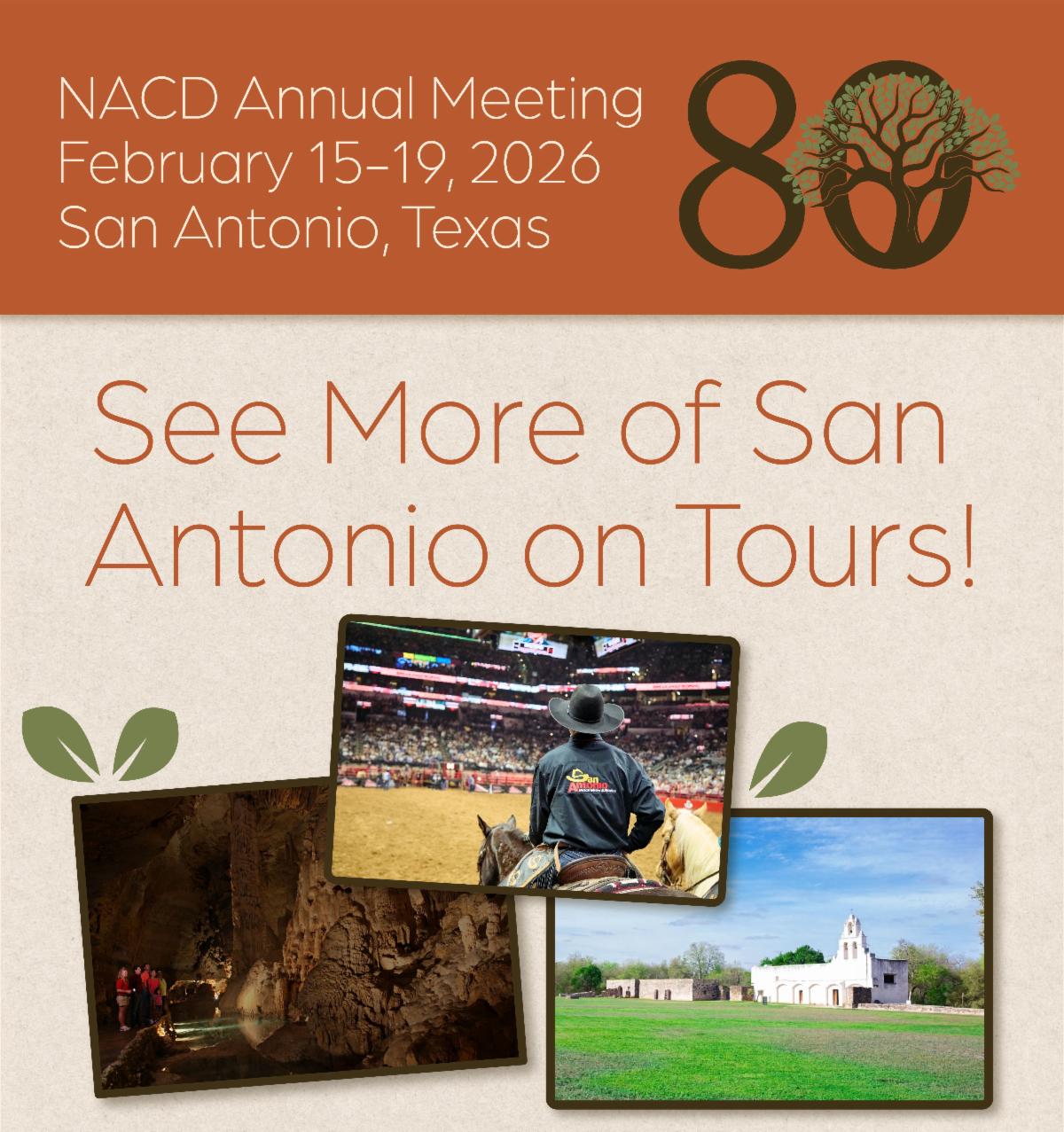
NACD invites you to join us in San Antonio, Texas, for the 2026 Annual Meeting! Hosted in partnership with the Association of Texas Soil and Water Conservation Districts, our 80th meeting will take place on February 15-19, 2026, at the San Antonio Marriott Rivercenter.
Experience even more of what San Antonio has to offer by attending our tours and events during the meeting! Come with us to the following locations to see the culture and conservation of Texas up close.
San Antonio Stock Show & Rodeo - Put on your boots, hats, and shiniest belt buckles for an evening at the San Antonio Stock Show & Rodeo! This event is one of the largest and most famous events held annually in San Antonio since 1949, attracting 1.5 million visitors each year! Tickets for the event are $75/person.
Tour to San Antonio Food Bank's Farms - Tour the San Antonio Food Bank’s farms: their urban farm at their warehouse facility in San Antonio and their Mission San Juan farm, where they cultivate 50 acres in a unique partnership with the National Park Service. Crops are grown organically at both sites, and participants will see a steerable cultivator used as a weed suppression strategy and learn how the farms practice cover cropping and crop rotation. Tickets are $75/person.
Tour to the Natural Bridge Caverns and Historic Wimberly, Texas - Join the NACD Auxiliary/Partner group to explore the famous Hill Country! See firsthand the Natural Bridge Caverns, one of the world’s premier show caverns. Journey through the caverns and see spectacular formations and state-of-the-art lighting. Then, travel to the vibrant and charming historic town of Wimberly, Texas, to check out five artistic wonders. Attendees will spend time strolling through the art scene, shopping in unique galleries and boutiques, and experiencing the music. Tickets are $115/person.
Grab your tour tickets when registering for Annual Meeting. Spots are limited, so act now! Save up to $80 when you register online by January 26.
| WHAT'S UP IN WASHINGTON? GOVERNMENT AFFAIRS UPDATE | |
Both chambers of Congress return to the Hill this week as the end-of-month deadline for funding the federal government approaches. While certain departments (including USDA) were funded until September through the shutdown-ending package passed in November, the risk of a partial shutdown remains if an agreement is not reached on remaining bills by January 30.
Recently, appropriators in both the House and Senate released a package of three spending packages, referred to as a “minibus”, which would set funding for the Department of the Interior, the Environmental Protection Agency, the Department of Energy and Water Development, and the Departments of Commerce and Justice. The released packages reject many cuts proposed by the Trump Administration and prohibits agencies from using congressional funds to conduct most reorganization procedures until advanced notice is provided to Congress. Language is also included, which would ensure that the Environmental Protection Agency, Fish and Wildlife Service, Forest Service, and Bureau of Land Management maintain staffing levels that allow them to carry out statutory obligations.
NACD extends our condolences to the family and friends of Representative Doug LaMalfa, who unexpectedly passed away this morning. Mr. LaMalfa was a source of knowledge and support in the worlds of water and forestry and will be missed by conservationists across the country. He represented California’s 1st Congressional District since 2013 and chaired the Congressional Western Caucus.
| KEEPING MINNESOTA'S NORTHWOODS RESILIENT | |
By Lake County SWCD
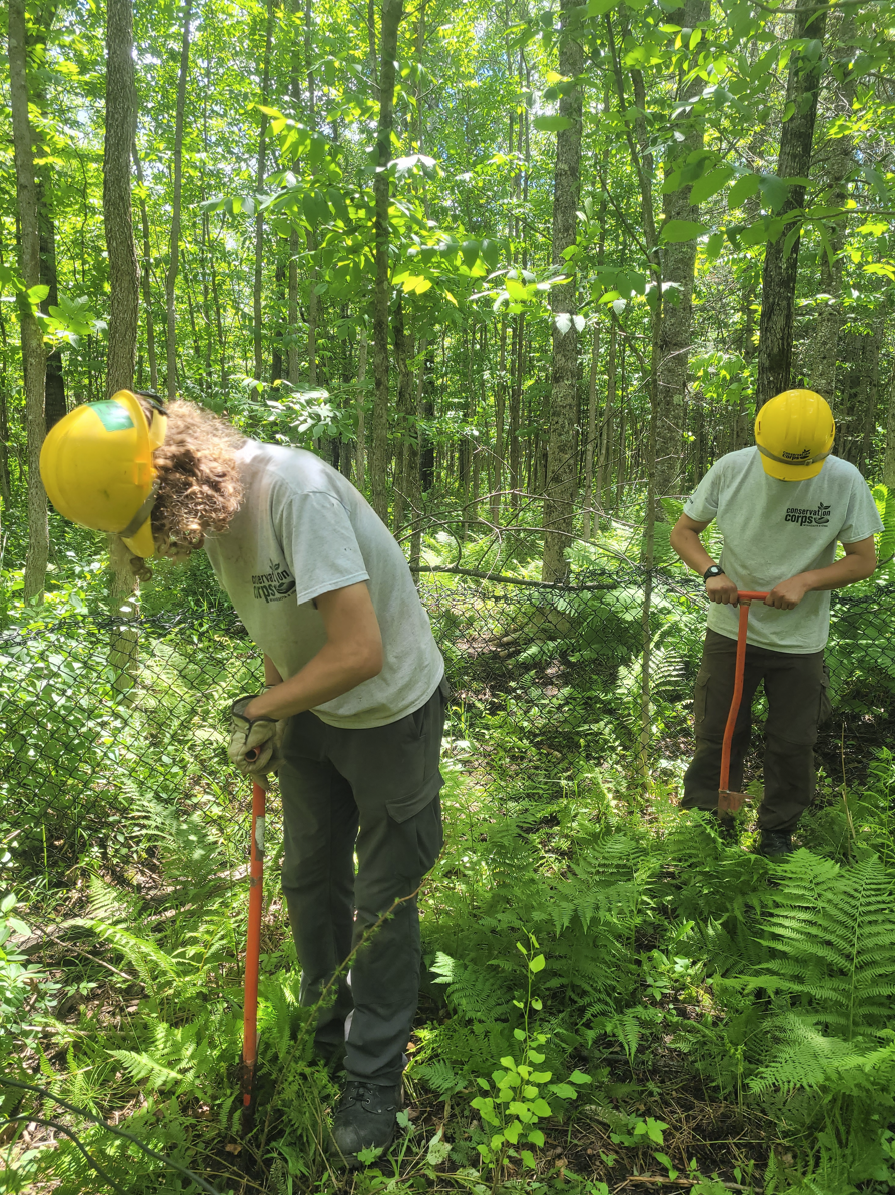
Lake County, Minnesota, bordered by Lake Superior, the Superior National Forest, and the Boundary Waters, is a landscape where forests dominate and clean water is abundant. With less than a quarter of the county in private ownership, each private acre plays a crucial role in maintaining the region’s ecological health. District Forester Jenna Kaiser and Conservation Specialist Nate Quadhamer of the Lake County Soil & Water Conservation District (SWCD) help landowners address forest health threats, reduce wildfire risk, and keep forested watersheds intact.
The most urgent concern across Lake County is spruce budworm, a native insect experiencing a significant outbreak. “Right now, I’d say 90% of my site visits are about spruce budworm and wildfire risk,” explained Kaiser. Dense balsam fir understories—made more abundant by historic fire suppression—allow the insect to cause widespread mortality within just a few years.
| |
To reduce these risks, Lake County SWCD links landowners with funding and technical support. The Environmental Quality Incentives Program (EQIP) through USDA–NRCS is the primary tool for fuels reduction and forest stand improvement. “The most used practice right now is removing dead balsam fir and spruce,” said Kaiser.
Between July and September alone, Jenna and Nate planned or certified treatments on 267 acres. “That’s a pretty large amount for essentially two people,” noted Quadhamer. For 2025, Lake County leads the Arrowhead region in EQIP-approved acres.
Lake County SWCD also works closely with neighboring districts, state and federal agencies, and partners like the North Shore Forest Collaborative. Minnesota’s One Watershed, One Plan framework provides stable funding and prioritizes maintaining forest cover for clean water. In 2024, the district developed over 600 acres of forest stewardship plans. Together, they help ensure Minnesota’s Northwoods remain healthy, resilient, and vibrant for generations to come.
Read the full story on NACD's blog. See more stories like this one in the monthly Forestry Notes newsletter.
| | Reminder: USDA Batch Deadlines for NRCS Programs | |
USDA-NRCS recently announced the establishment of a national January 15, 2026, batching deadline for the first funding round of key conservation programs. This national batching date ensures producers have a clear, consistent timeline for participating in the Environmental Quality Incentives Program (EQIP), Conservation Stewardship Program (CSP), Agricultural Conservation Easement Program, and Agricultural Management Assistance. This includes the new NRCS Regenerative Pilot Program, which provides assistance through EQIP and CSP.
NRCS programs are continuous sign-up programs, but due to the government shutdown, the agency is implementing an initial national batching period to ensure producers have access to funding and support. Learn more here.
| Learn What it Takes to Enroll a Farmer in Conservation | |
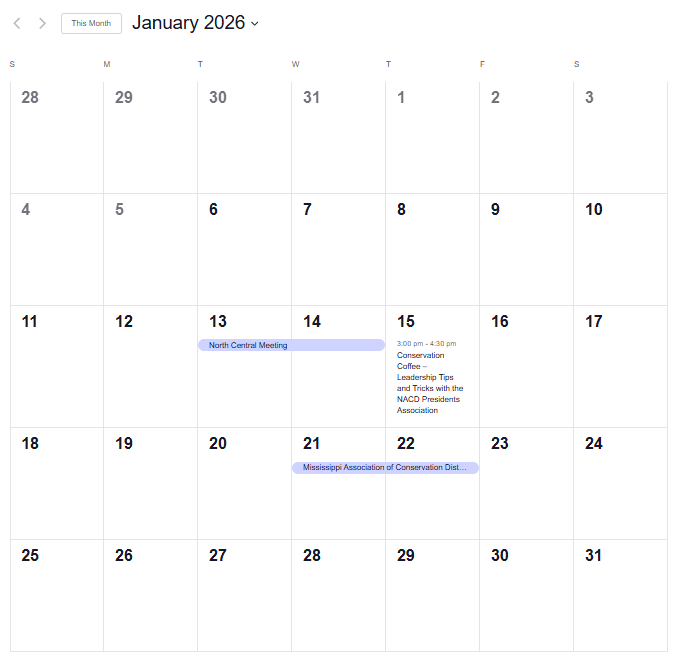
On January 15, 2026, at 3:00 p.m. CT, join NACD partners, Trust In Food and Environmental Initiative, for a webinar titled "What It Takes to Enroll a Farmer in Conservation."
The webinar will share the nation’s first benchmark of the true cost, time, and effort required to recruit farmers and ranchers into conservation programs. Many conservation districts participated in the research process and NACD served on the initiative's advisory committee.
During the webinar, learn:
• How much time and how many touchpoints it takes to enroll one farmer
• Where hidden costs and internal barriers slow progress
• What funders and implementers can do to accelerate enrollment
If you fund, design, or deliver conservation agriculture, this session will help you better understand the work behind every enrolled acre.
Register here. If you can't make it to the live conversation, still register to have the recording sent to you.
| Webinar on Strengthening Weed Control Programs | |
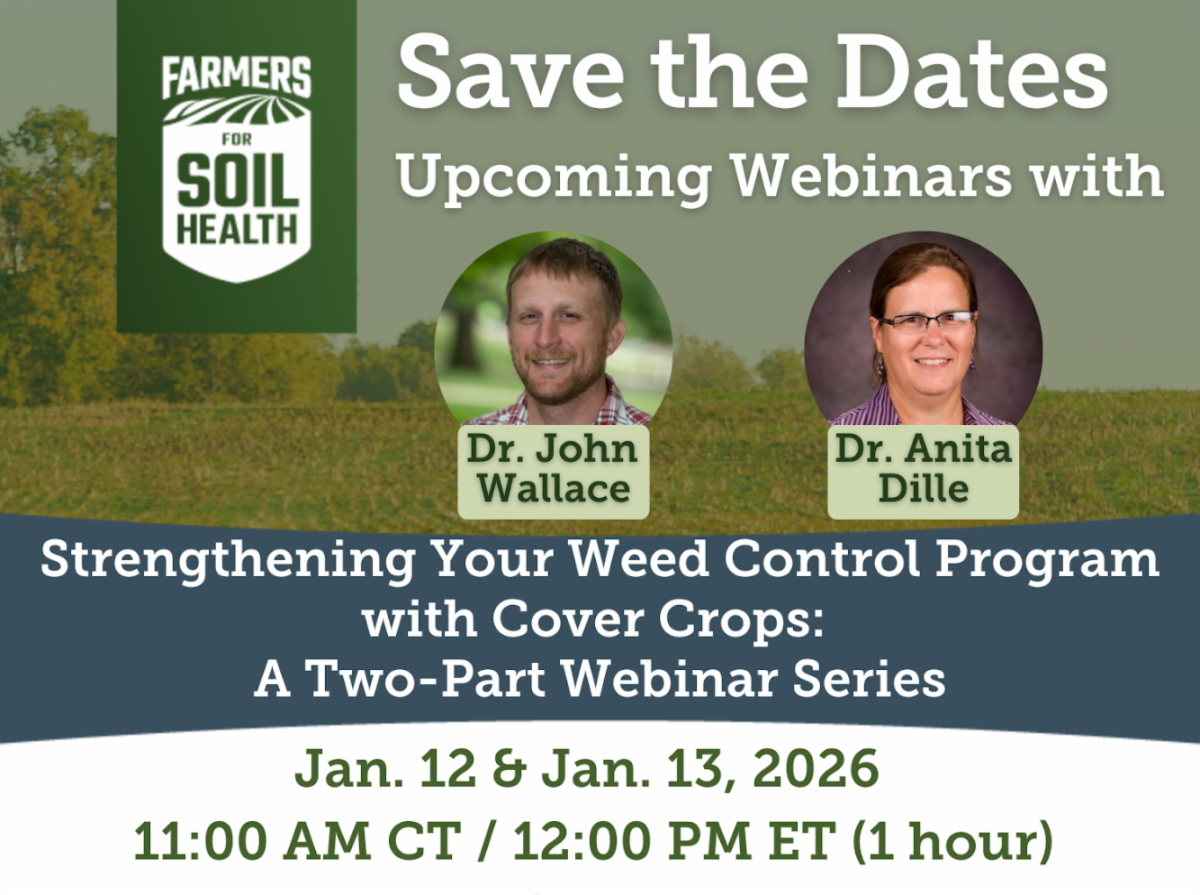
Join Farmers for Soil Health's upcoming webinar series, Strengthening Your Weed Control Program with Cover Crops, to learn how cover crops can be effectively integrated into weed management strategies. The two-part series will be hosted on January 12 & 13 at 12:00 p.m. ET for one hour each.
Hear from Dr. John Wallace and Dr. Anita Dille, who will share practical, research-based strategies farmers and conservation professionals can use to reduce weed pressure and improve system resilience.
Learn more and register here.
| |
Thank you to everyone that has already paid membership dues for FY26! We rely heavily on your contributions to support our advocacy, education, and partnership activities. Soon, we will be sending out Q2 dues invoices along with the latest copy of The Resource to districts that have not yet paid FY26 dues.
If you are interested in contributing, we can accept payments via check or online by credit card or bank draft. Please reach out to us if you have questions about the best way to pay your dues. In addition to supporting NACD, your dues enable you to access the tools on our Members Only webpage and apply for our Friends of NACD grants!
| Promote your conservation district or state association's tree sale, annual meeting, webinar, field day, or other events on NACD's Calendar of Events! | |