|
Applications are now being accepted through October 31, 2025, for the National Conservation Foundation's (NCF) 2026 Next Generation Leadership Institute (NGLI) Cohort!
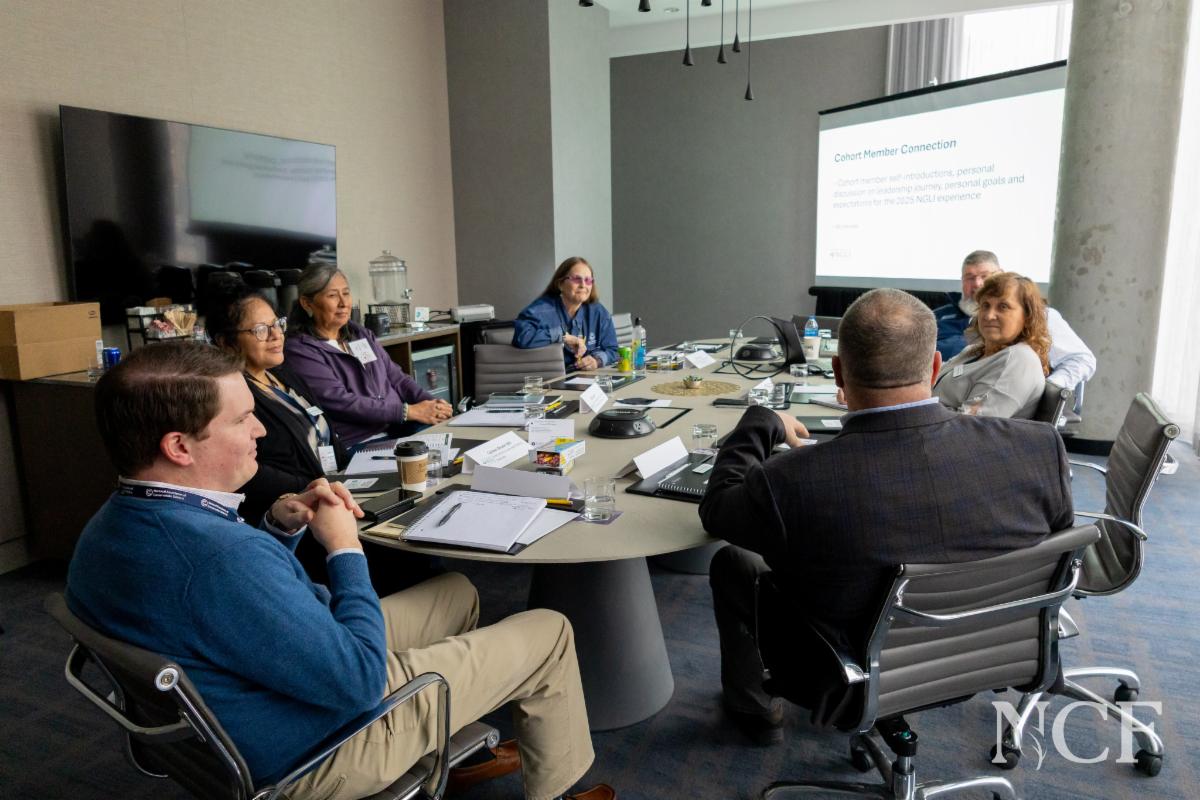
NGLI is a year-long training program that equips cohort members with the skills needed to build a better tomorrow. Ideal candidates are elected or appointed district officials currently serving a conservation district who have exhibited strong leadership and would like to carry that leadership further into service of conservation districts. In these changing times, we need strong leaders that can adapt and carry us through change to help conservation districts emerge stronger on the other side.
| |
The program includes a gathering at the NACD Annual Meeting, a six-day, mid-year session, and virtual learning sessions throughout the year. If you have identified a candidate, or think you may be one yourself, check out the NCF website to see if NGLI might be the next step in your leadership journey!
Contact Keith Owen, NACD Director of Education, at keith-owen@nacdnet.org with any questions.
| JOIN NACD'S URBAN WEBINAR: FROM SERVICE TO SOIL | |
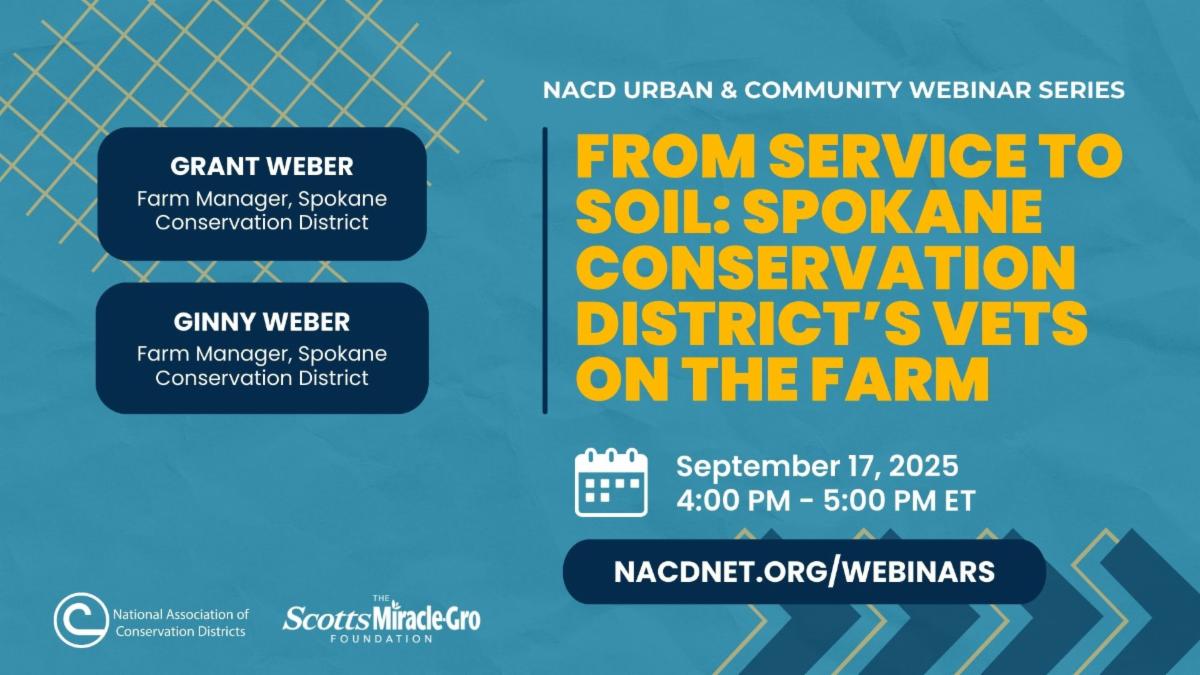
Join NACD on September 17 at 4:00 p.m. ET to learn about Vets on the Farm, a Spokane Conservation District program that empowers military veterans through agriculture and conservation.
Since 2015, the initiative has provided training, hands-on farming experience, and career pathways in agribusiness—helping veterans rediscover purpose, build community, and transition into civilian careers. Discover how this award-winning program blends education, mentorship, and land stewardship to transform lives—and why it recently celebrated a decade of impact across seven Washington counties. Register for the webinar here.
| WHAT'S UP IN WASHINGTON? GOVERNMENT AFFAIRS UPDATE | |
Members of Congress return to Capitol Hill today with growing concerns over a potential government shutdown. The 2026 fiscal year begins on October 1, but Congress remains far from passing all the necessary funding packages. This has heightened expectations that a Continuing Resolution (CR) will be required to keep the federal government operational. Complicating matters further is a recent “pocket rescission” proposed by the Trump White House, which is expected to add friction to the already tense appropriations negotiations.
Meanwhile, the nominations process is facing its own gridlock. Key USDA posts remain unfilled, and the backlog has grown so severe that Senate Republicans have publicly challenged the process, while Democrats argue that many nominees are unqualified. With the Senate returning from recess, pressure is mounting to resolve the impasse and move forward on these critical appointments.
Congress will also have to pass an extension of the 2018 Farm Bill that contains provisions for programs left unaddressed by budget reconciliation (including the Conservation Reserve Program). While Ag leaders on both sides of the aisle have indicated their willingness to negotiate, other matters may take precedence.
On August 29, the Forest Service announced its intention to develop an Environmental Impact Statement and rulemaking regarding rescission of the 2001 “Roadless Rule,” which limits or prohibits the development of roads in nearly 45 million acres of designated forest land. The stated intent is to “return decision making to local officials in conjunction with Forest-level land management planning.” The EIS will evaluate the impacts of the proposed rescission. USFS has requested comment on alternatives or effects and relevant information, studies, or analyses with respect to the proposal. The deadline to submit comments is September 19.
| FOREST SERVICE INVESTS IN DISTRICT FOREST PROJECTS | |
The U.S. Forest Service has announced nearly $500,000 in funding for two projects in the Pacific Southwest Region through its Landscape Scale Restoration program. Humboldt County Resource Conservation District (RCD) will receive $299,380 to expand prescribed fire work and reduce wildfire risk in southern Humboldt.
The district’s project will treat 235 acres for hazardous fuels, control invasive plants across more than 100 acres, and develop forest stewardship plans for more than 3,000 acres. By combining on-the-ground treatment with planning, Humboldt RCD is working to lower fire risk while increasing the pace and scale of local forest stewardship.
Humboldt County RCD’s forestry work is part of a larger cadre of programs the district operates with landowners and partners. Recent efforts have included supporting ranchers in developing carbon farm plans, experimenting with regenerative practices, such as riparian fencing and cover cropping, and working closely with NRCS and neighboring districts to bring technical assistance into the community.
This is an example of the important landscape-scale efforts being achieved with Landscape Scale Restoration program funds. Projects like those in Humboldt County tie into a broader network of ongoing work led by conservation districts and their partners demonstrating the range of approaches being used to reduce wildfire risk and strengthen forest stewardship across the country.
Read more stories like this in NACD's latest Forestry Notes newsletter.
| | Head Back to School with New NACD Education Materials | |
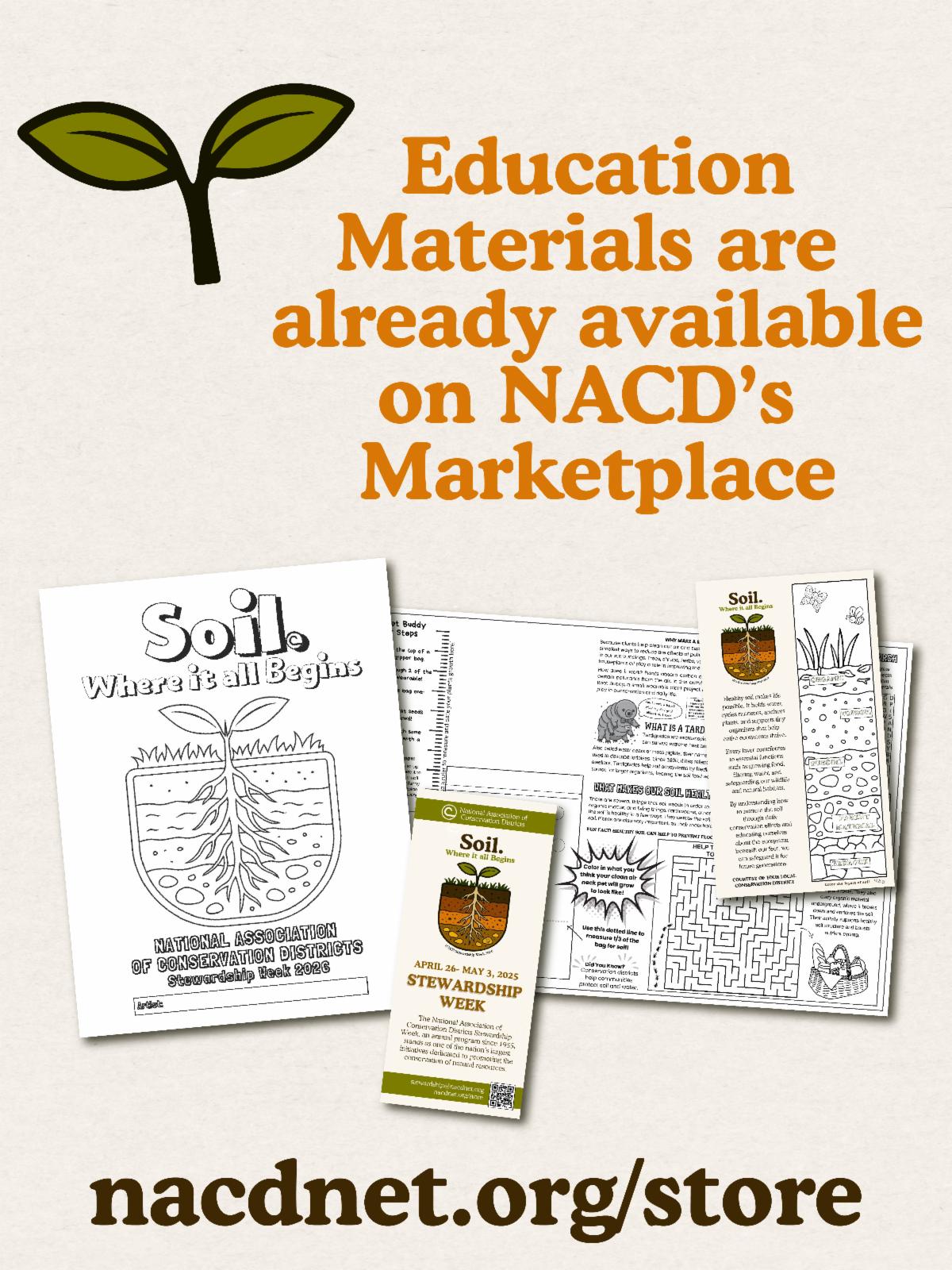
Get ready for back-to-school season with the brand new 2026 NACD Stewardship Week "Soil. Where It All Begins" education materials.
Throughout the fall, NACD will be releasing the 2026 Education Materials — all available for free download on the NACD Marketplace. Some materials, including activity pages, a rack card, and bookmarks are already available for download!
| Journal of Soil and Water Conservation Calls for Papers | |
The Soil and Water Conservation Society's (SWCS) Journal of Soil and Water Conservation is seeking submissions for their upcoming Special Issue: Conservation Management of Legacy Sediment and Nutrients in Agricultural Watersheds.
This special issue of the Journal will highlight research on the quantification of legacy nutrient and sediment sources as well as management strategies to address legacies and mitigate impacts for improved agronomic systems and regional water quality. Papers on the measurement of legacy sources, assessment of conservation practices, and modeling improvements to assess legacy contributions, among other topics, are welcome.
Submissions for the Journal are being accepted through January 31, 2026.
| |
Looking to jumpstart your fall programs? Take a look at our Members Only section! This hub of district resources is bound to have something to help any district. We have this webpage split into four sections; each designed around a specific use case.
In our Learn More about NACD and Our Advocacy section, you’ll find our current policy book and resources to help you become a better advocate for conservation at the local level.
Under the Grow Your District section, we have guides to assist you in building partnerships with local organizations and how to raise more funds for your district!
The Optimize Your Outreach and Communication Skills tab will set you up with tips for working with local media and a series of outreach training sessions, purpose-built for conservation districts.
And, lastly, in the Improve Your District’s Programs and Operations section, you’ll find tools to make your board more efficient and effective and a check sheet for evaluating the performance of your district’s programs.
If you have any questions about this webpage or need help accessing it, please reach out to us!
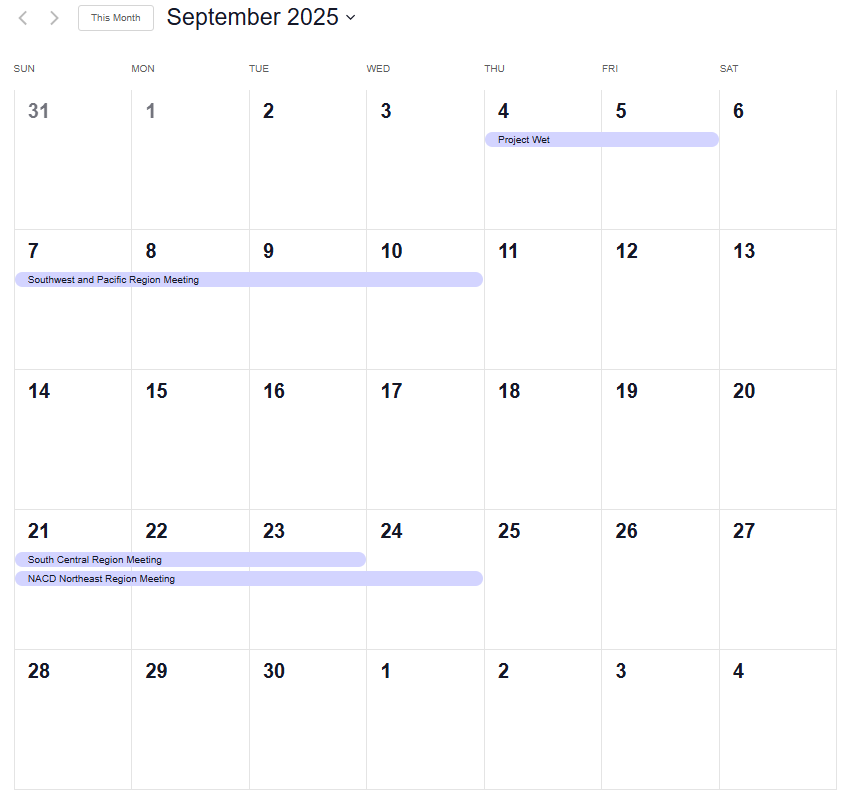
| Promote your conservation district or state association's tree sale, annual meeting, webinar, field day, or other events on NACD's Calendar of Events! | |