|
Feel the heat with a guitar hero turned producer, in our video spotlight. Meet another producer re-imagining your catalogs in immersive. We listen to his mixes in a different kind of studio. A historic studio in Hollywood gets an
ol' guard turned new. A girl quartet is making headlines with raw road energy. An award-winning film composer releases his solo album. You'll dance watching this award-winning story-teller's film. Fall brings us back to school with weekly tips from credited creators. We got industry promotions and more...Grab an espresso & enjoy this month's serving!
| | Artist's Gateway To The World's Top Music Makers | | | | | |
Artists' Choice Production Community
Click here to renew!
| | |
New Album From Guitar Hero Billy Strings
Co-Produced by Oscar & Grammy-Winning T Bone Burnett
| | |
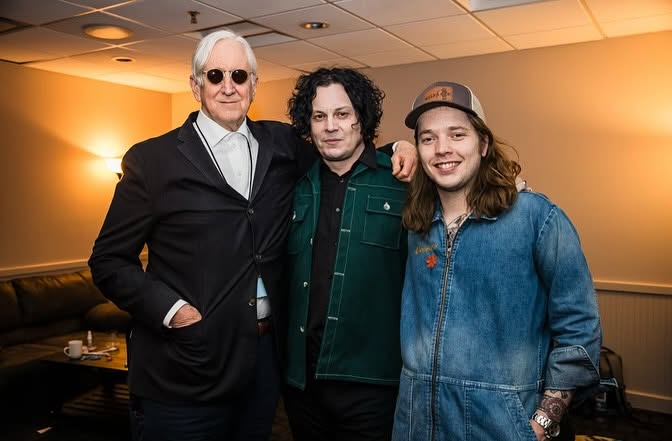
Billy Strings is the new guitar hero on the blue grass and Americana block. Strings co-produced his fifth album So Much For Goodbyes of sixteen (16) songs with Oscar and Grammy winning producer T Bone Burnett whose credits include: Bob Dylan, Elvis Costello, Ringo Starr.
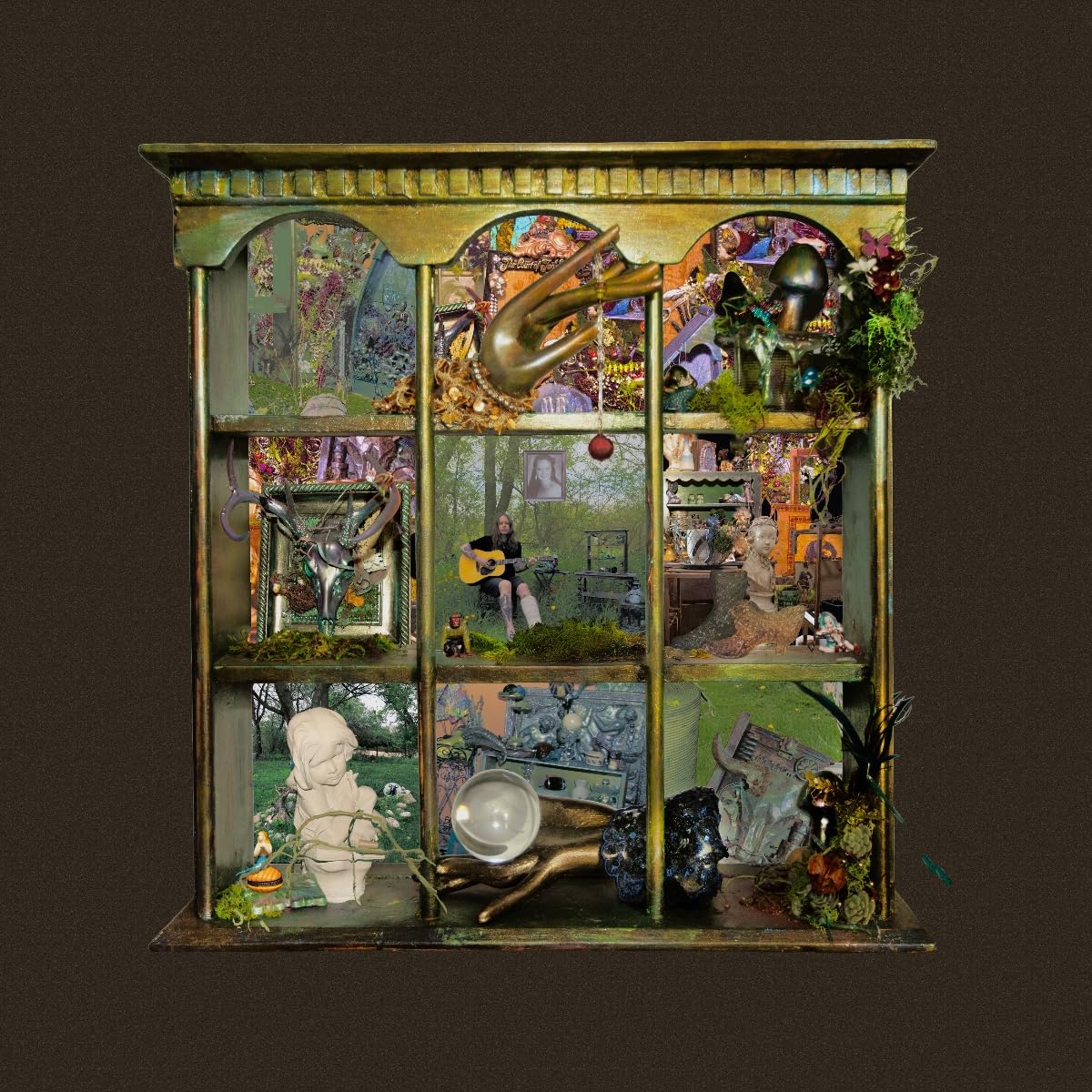
Released via Reprise Records on August 28, Strings' album is dedicated to his late mother, Debra Apostol (Debra’s Waltz closes the album). She died in 2025 of methamphetamine intoxication.
Her artwork also graces the new album cover. The double album, offered on vinyl, was mixed by Mike Piersante at Village Recording studios.
Strings tells American stories of veterans' dark days, family loss and heartbreaks and weaves his expressions together against the backdrop of his virtuous musicianship. Songs on the album include:
Lay Me Down, Lucid Daydream, Mill Town Flood, Live to Tell, Bluewater Breakdown, Light the Wall, 10,000 Miles From a Friend, Still I Crash, Remember to Cry, Wrestling an Angel.
| | studioexpresso Video Spotlight | | |
Artist: Billy Strings
Song: Burn The Other End
A Wombat Fire Production
The video for the song Burn The Other End by Billy Strings from his new album So Much For Goodbyes is in studioexpresso's video spotlight.
Musicians on the song are: Billy Strings on lead vocals, and guitar; Billy Failing, Banjo; Royal Masat, bass; Jarrod Walker, Mandolin; Alex Hargreaves, Fiddle.
Jack White III and co-producer T-Bone Burnett join the band on gang vocals.
| | |
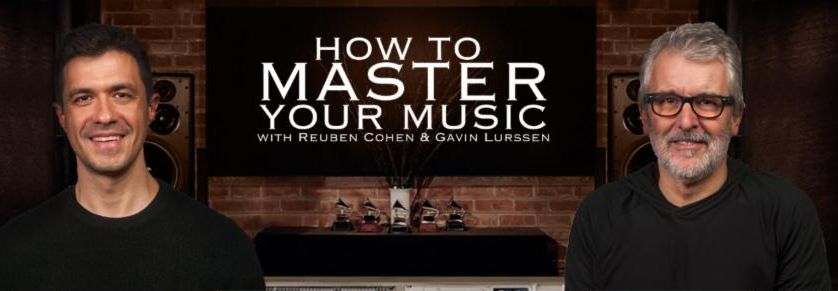
L-R: Reuben Cohen and Gavin Lurssen In front of their Grammy Awards & ATC speakers at Lurssen Mastering
Finishing Your Mixes in Mastering
After spending hours on a mix, the creator or mixing engineer loses perspective. Pro engineers test audio across multiple setups—from high-end studio monitors to cheap earbuds and car speakers—preventing muddy bass or harsh highs. Experienced engineers work in calibrated rooms that reveal the true sound. Then there's preparing precise files for your streaming services, vinyl, and CDs, managing loudness penalties and technical limits without ruining dynamic range. Above all, pros catch digital artifacts, clicks, or pops and embed crucial metadata like ISRC codes for correct royalty tracking. Watch pros' take on mastering on our home page.
| |
Ghosts Gold Records & The Next For East West
Meet Studio Manager Keith Munson
| | |
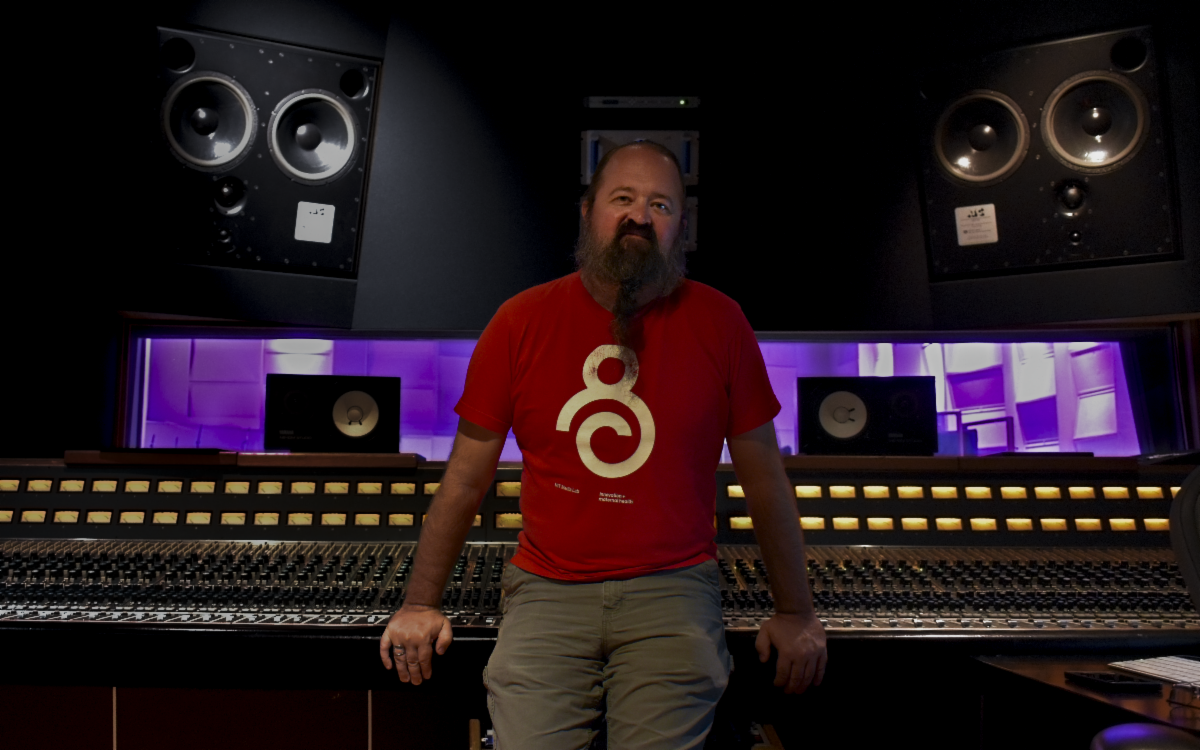
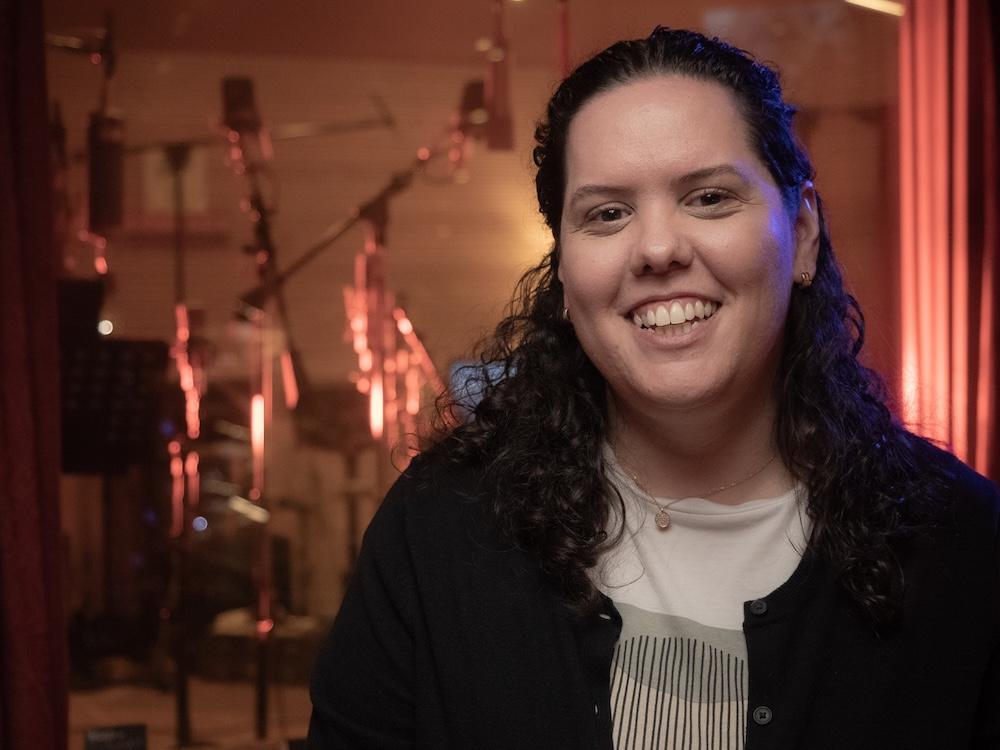
Studio Manager Keith Munson at East West Studio One Photo: Julia Lunde
For studioexpresso
By Julia Lunde
After fifteen (15) years at EastWest Studios, Keith Munson steps into the manager’s chair with no interest in reinventing the place—only in protecting what always made it matter.
The first time I opened my camera in years, it thought it was New Year’s Eve 2017. I had pulled it out of the camera bag stuffed behind my couch to take a portrait of Keith Munson, in commemoration of him becoming East West Studios’ newest Studio Manager following Candice Stewart’s retirement.
Though “new” is technically correct, it doesn’t quite fit. Keith has been here a long time. And honestly, the transition feels like the obvious next step rather than a grand changing of the guard. Anyone familiar with East West was well aware Keith was the heir to the position, not because he was loud about it. Quite the
opposite. Instead, Keith was a quiet, warm, sturdy presence here, and you got the feeling that he was integral to making this place run well before he inherited the title.
As we stood in the control room of Studio One, one of the young techs said Keith “has been here since it opened”. The room was silent for a moment, then we burst into laughter because that would make Keith, roughly, 100 years old. The tech went on to clarify that he meant since the building opened under the name “East West”, but the earlier sentiment still lands somehow- It does feel as though Keith has been in this building all along. Like he comes with the place somehow. This, naturally, led to joking that Keith is the ghost that rattles the baffle in Studio Two. Keith jovially responded- “Well, no one has spent
more all-nighters in here than me.”
| |
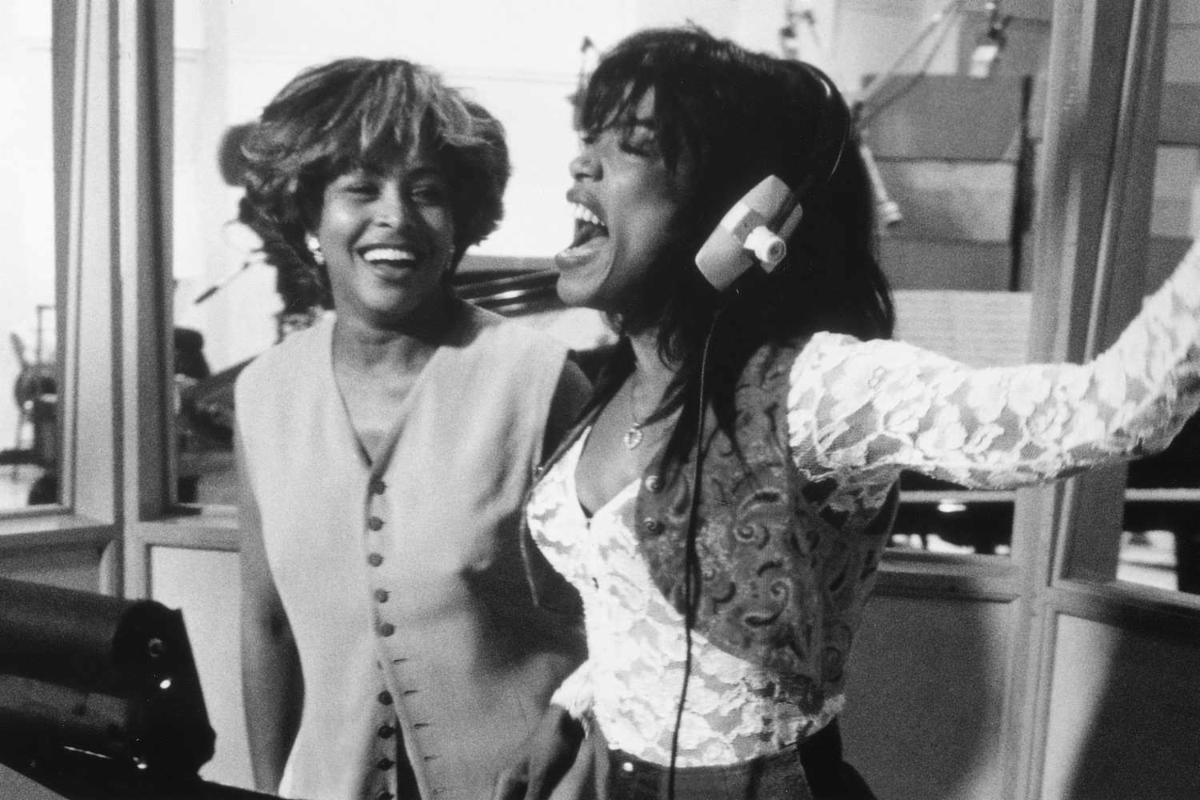
Above: Tina Turner and Angela Bassett on the recording studio set for “What's Love Got to Do With It” ©Buena Vista Pictures/Courtesy Everett Collection from Ocean Way Years in the 90s.
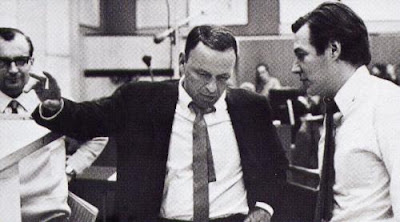
Left: Arranger Claus Ogerman with Sinatra-Jobim sesssion from Western days circa 1967.
HISTORY
With the way Keith is integrated into the fabric of this place, and as its longest tenured employee, it’s no surprise that I would learn more about the building's history than I have ever before, as I'm adjusting the lighting for his picture in Studio One.
He walked me back in time- Western Recorders opening in the late ’50s, then being bought by Bill Putnam, Frank Sinatra’s famed engineer, marking the start of the building’s legendary recording history. Then there was the Ocean Way years (combined with United building at 6050 and Record One, Sherman Oaks) in the 80s and 90s where The Rolling Stones, Bonnie Raitt, Madonna, Michael Jackson, Elton John, System of A Down, Dr Dre, R.E.M., Green Day generated an astonishing number of hits.
Before all of that, a 50s stint as a radio broadcast facility, in which Studio One was the main stage. Then back to its seedy life as a casino/hotel through the 40s, featuring gambling and burlesque shows for World War II soldiers. It lived under many names to avoid the law. Perhaps the most famous was its first- Madame Zucca’s. Keith painted it as a glamorous spot, surrounded by orange groves, like something out of a vampy, high-budget Western.
It certainly lends itself to the imagination, which is probably why it was the personal favorite of everyone in the room. The building’s first life began in 1933, as an oversized supermarket- Cash is King. It was either famous enough, or resourceful enough, to survive the entirety of the Great Depression. Probably a combination of the two. And looking at every incarnation of this building after that, you can see the same DNA running through it. Actually, literally- the old meat locker doors are still there. Keith told me it was a happy accident, or a gift of fate, that those doors were soundproof. In true Munsonian fashion, one of the words in the actual quote was an expletive. I replaced it for the purposes of print.
LUNCH BREAK
It’s easy to get lost in the sheer grandeur of the place’s history. Its reputation precedes it. And yet Keith himself seems remarkably normal about the whole thing. We walked a block to the Thai place we always eat at when I visit. It was there that we realized we hadn’t seen each other in quite some time, so the beginning of our lunch was spent catching up on eight months of life. And then, once I had him trapped over a lunch special, I wanted to know how this very normal guy wound up responsible for this very abnormal place. The answer, naturally, begins with his mother refusing to let him play trumpet. “My
older brother played trumpet… and my mom told me we didn’t need another thing to fight about.” So he picked trombone. And, as Keith said, “And because I’m stubborn, I sorta just stuck with it. Which seems to be a recurring theme in my life.”
Once again, buried under self-deprecating humor and quintessential American experiences, lies an impressive feat. His playing led him to a scholarship to CU Boulder, where he completed his undergrad. Then to Arizona State for graduate school. The revelation sent us on a whole other tangent- as I went to Arizona State for my own undergraduate degree. I will spare you from our in-depth discussion of Tempe through the years, but a highlight for both of us was discovering that we both spent time haunting
Casey Moore’s, a strange little Irish pub tucked into a residential neighborhood, away from all the usual ASU chaos, and home to birthday Irish car bombs and ridiculously good oysters. Our shared Tempe nostalgia aside, Keith’s years at ASU also produced one of the stranger entries on his resume: Sewing-machine repair. He shared with me that back in his hometown, after some of the boys left the house,
his mother decided to open up a sewing shop as a way to keep busy. Purely out of practical
necessity, Keith learned how to repair the machines. It’s one of those skills that seems incidental until, suddenly, it isn’t. As luck, or life, would have it, he found that the greater Phoenix metro area had many sewing shops, with virtually no techs. So, this oddly specific skill that Keith had learned to help out his mother became the way he supported himself through graduate school. Later, on our walk back to the studio, he mentioned “I always seem to land on my feet.”
HANDS-ON LEARNING
I might argue the statement simplifies him. Or rather, takes away from Keith’s own accomplishments. I get the sense that’s why he frames it as such, but the reality is that nearly every seemingly unrelated turn in his life has left him with something useful for the next one. That pattern becomes especially apparent when he talks about East West. “At some point, I have done every job in the building,” he tells me- experience that gives him not only an appreciation for every person working alongside him, but a rare understanding of how the entire machine moves. Getting into the building at all, however, required one
more turn. After he moved to LA to do the “typical musician thing,” we joked, Keith decided to change direction. He went back to Tempe to attend CRAS (the Conservatory of Recording Arts and Sciences), and there he learned the other side of the industry. The technical side. And that decision would ultimately bring him back to Los Angeles and through the doors of East West 15 years ago- as an intern. And, as Keith puts it, he’s “been there ever since.”
By this point, Keith’s habit of “landing on his feet” starts to look a lot less like luck and much more like accumulation. All his years as a musician, particularly at a high level, still matter here. Studio One’s size makes orchestral and scoring sessions a major part of the studio’s business, and Keith can speak to those musicians as someone who has actually sat on their side of the room. CRAS gave him the technical fluency to meet the techs and engineers on theirs. And sewing machine repair, well, that gave him
resourcefulness.
| |
PRIVACY
But still, the most valuable skill Keith has is his ability to meet people as people.
When I asked Keith what he might change now that he’s in charge, his answer was, essentially, not much. Deliberately. And really, that says a lot about what he values most about East West and its role in the creation of music. There is something to be said for his reverence for the rooms, the gear inside them, and even the practical economics of renting a studio versus piecing together the same setup elsewhere. But ultimately, what Keith values most is the privacy East West gives its clients. “The only other place you would run into the caliber and density of people we have here on a daily basis would be, like, backstage at the Grammys,” Keith told me, “but there they have to be ‘on’, because there’s fans and cameras and the press… here, they can be their authentic selves.”
A PLACE FOR MUSIC COMMUNITY
That distinction seems central to Keith’s philosophy of the place. East West is not valuable simply because of what is inside the rooms, or what has happened in those rooms before, but because of what those rooms allow people to do once the door closes. He talked about the “water cooler effect” of having everyone share the same kitchen, the chance encounters and conversations that simply do not happen when everyone is recording alone at home. The studio, in his view, is not just a collection of gear or vibes; though it has both. It is an environment- one where artists can be left alone when they need privacy, and run into exactly the right person when they don’t.
Maybe that is why Keith does not seem particularly interested in reinventing East West. His job, as he sees it, is to protect the conditions that have allowed the place to matter for so long: the rooms, the people, the trust, the possibility of something unexpected happening there. When I asked what he most wanted people to know as he takes over, his answer was characteristically simple, “East West is still open for business, and clients can expect the same quality they always have.”.
I would add one more thing — something he never said outright, but that came through every time he spoke about East West: When you walk through those doors, Keith wants you to know you will be taken care of.
HISTORY CONTINUES
Later, I was headed home, still thinking about the strange weight of the place and the history packed into a block of Los Angeles. When I reached Vine, I had the sudden urge to turn. Sunset and Vine is one of those intersections whose name has somehow become larger than the actual place, and I wanted to see if there was anything actually iconic there. On the four corners, respectively, there was a bank, another bank, a Chipotle, and a shuttered Burlington. Then, as if to punctuate the experience, I watched three cars turn left on a red light in front of me.
And maybe that is part of the peculiar magic of Los Angeles. The mythology never quite disappears, nor does the mundane stop happening on top of it. A famous intersection is, ultimately, still an intersection.
A legendary recording studio still has desks that collect clutter, a manager hoping for one uninterrupted gremlin day, and, apparently, a ghost whose greatest contribution to the supernatural seems to be rattling a baffle at two in the morning.
East West, at least for now, is one of the places where that history is still being put to work. The rooms are still rooms. The gear still works. People still gather in the kitchen. Sessions still start. Keith’s job is not to turn the place into something new so much as to make sure it remains so the next thing can happen there.
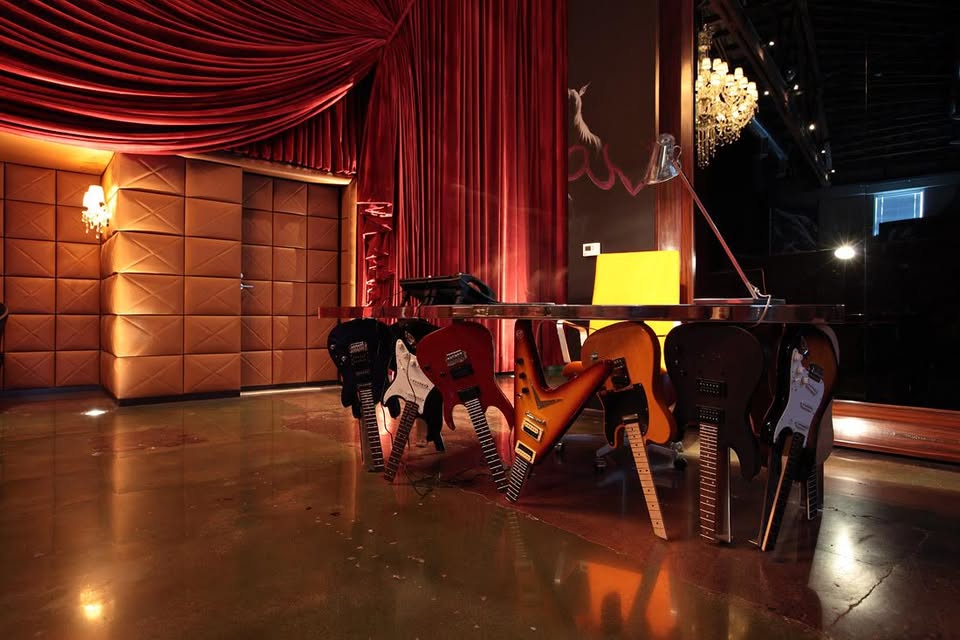
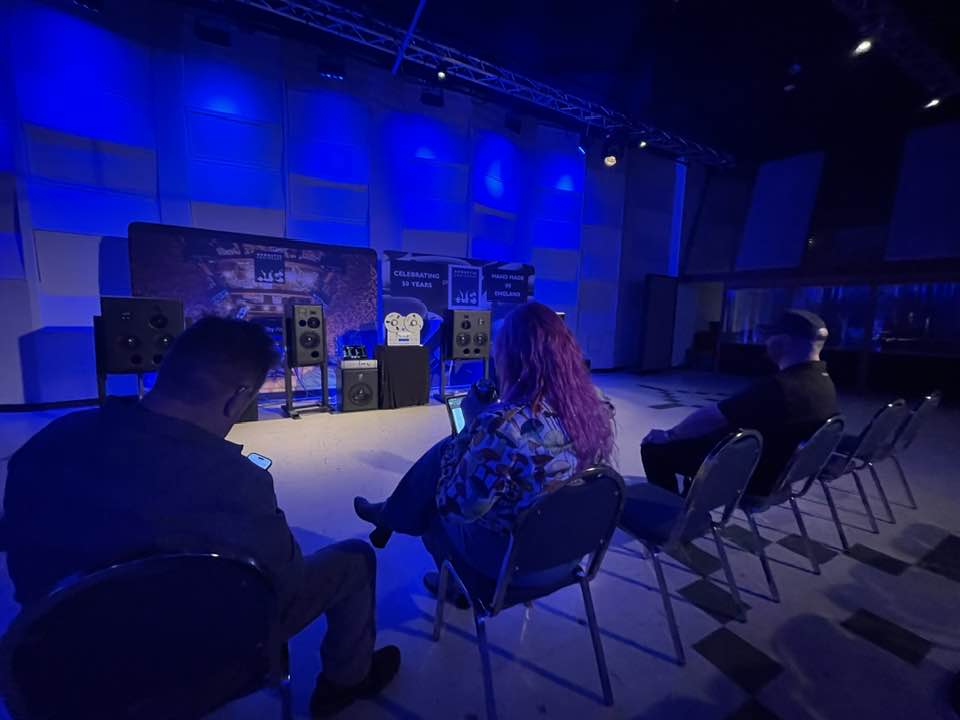
| | Above: East West Kitchen and lounges designed by Philippe Starck. Below: ATC speaker subs playback with SonoruS Tapes and Analog Tape Player at East West Studios on January 16. Trans Audio Group's pre-NAMM preview for select production community and guests. Below Brad Lunde with guests, and host Candace Stewart of East West and Claris Dodge of studioexpresso. Photos: studioexpresso | | |
Roy Ayers Jazz Project Re-Imagined
Dennis ROC.AM Jones & Universal Music Group
ASG & Avid Host A Playback Session At NuStudio Burbank
| | |
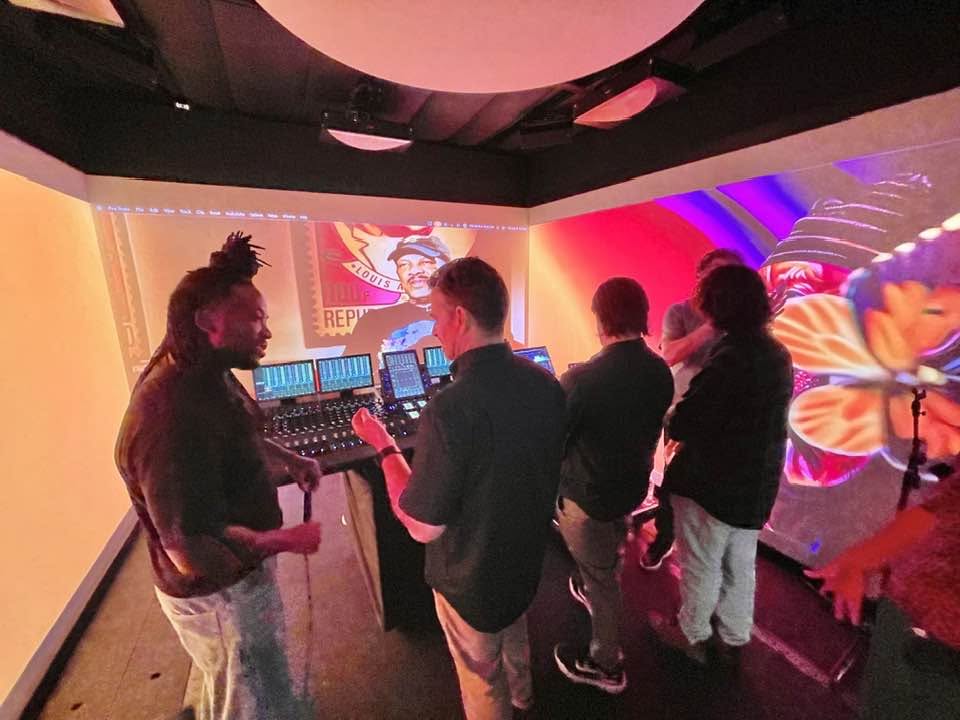
Above: ROC:am with guests listening to Roy Ayres Jazz Project playback hosted by ASG & Avid at NuStudio Burbank on August 11, 2026 photo: studioexpresso
On Tuesday August 11, studio professionals, engineers, producers, and creatives gathered for an evening of music, food, drinks, and conversation at Burbank's Nu•Studio Innovation Center.
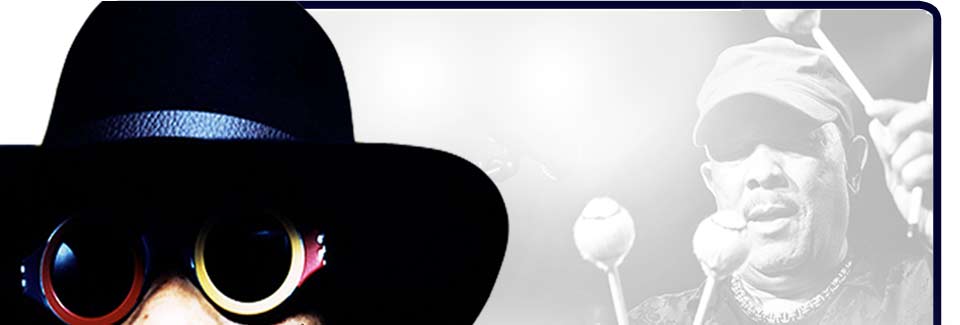
Guests heard Dennis "ROC.am" Jones' mixes of "Godfather of Neo-Soul" Roy Ayers whose pioneering jazz-funk and R&B collective blends post-bop jazz with soulful grooves. ROC re-produced and re-imagined Ayers' previously unreleased music. His expertise also extend into TV and film, where he has contributed to soundtracks for productions like Pitch Perfect and the original immersive soundtrack for Wicked.
Dennis “ROC.am” Jones is a Grammy Nominated engineer, producer, and artist with a deep passion for sound and creativity. ROC is also known for his work in immersive audio and legacy catalog mixing, with credits spanning legendary artists like James Brown and Frank Sinatra, global icons such as Rihanna, Mariah Carey, and rising stars including Ice Spice and H.E.R.
Alongside his passion for software-based technology, Jones has also worked for major companies like Apple in his early years of music and tech. This experience expanded to include R&D consulting roles for audio/tech companies such as SONOS, SALXCO, and Lipinski Sound, where he focused on developing innovations that bridge the gap between professional audio and lifestyle products, emphasizing design, functionality, and sonic excellence.
Driven by a strong passion for music and technology, ROC has always prioritized giving back to artists through music production, in-studio sessions, and engineering. This commitment led him to establish his 501(c)(3) nonprofit organization, The Never Give Up Organization. Through this initiative, ROC plans to redesign the music industry as a silent artist development company, helping artists and creatives achieve their goals through services such as mixing, mastering, writing, distribution, and production.
ROC continues to explore making music for himself as an artist and for others and is on the journey of becoming a reliable asset in today's music and tech industry.
Nu.Studio can be relocated, expanded, or reconfigured as production needs change, making it ideal for music, post-production, broadcast, gaming, and immersive media environments. Nu.Studio is the first modular, portable immersive studio system, now available through Advanced Systems Group (ASG).
| |
"I think Music All The Time"
--Roy Ayres, Godfather of Neo Soul
"Immersive mixing is really a blank canvas. I don’t think there are any rules on how it should be done. It’s a new creative experience, and what’s important is that you create a new way to express yourself through sound and space."
--ROC.am
| | |
We met up with ROC : am for this interview. Enjoy!
SE:Talk about your re-imagining "King of neo-soul" Roy Ayers' Jazz project. How many songs, where was it recorded, produced and mixed?
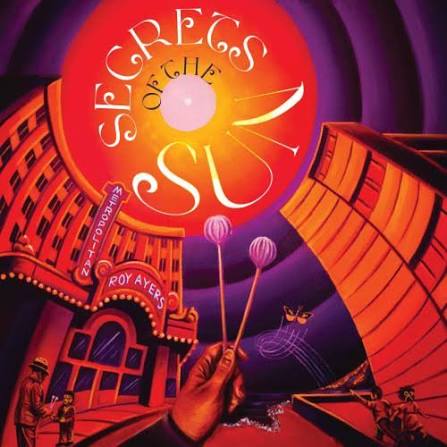
ROC: This project was a defining moment in my career. It took about 7 years total to finish as it was a conceptual idea by UMG A&R Maxwell Dartey. At first it was supposed to just be a mixing project so my job was to gather sources and make them sound great but then we realized some of the music was released previously - Maxwell then had the idea to re-imagine the 4 songs which were , Moving & Grooving , You came into my life , Tarzan, & Don't Let Your Love Sleep Away. Along with that the rest of the album was unreleased music by Roy, a total of 8 songs. All of the reproduced songs were done at Moosecat Studios LA, all produced by myself and my good friend Mike Post from Moosecat Studios. We also had some great collaborators. This project is currently available on all streaming platforms and can be heard here. It was released on Nov 14, 2025.
SE: You're in-house producer at UMG. Tell us a bit about your job
ROC: I have a really cool niche relationship with UMG , you can call it in-house but at the same time it’s not. I’ve just done so much work for them in the span of 6-7 years that I’ve built a household name internally and become someone they can solely depend on for anything.
SE: Tell us where your career started and how you progressed to where you are today?
ROC: I was always an Artist/Producer/engineer my entire life but I started mixing ATMOS projects in early 2020 -2021 in NY @ Republic Studios. I was one of the early adopters of ATMOS once it transitioned into music , so I became a little popular under the labels scope. I went to the first NAMM after COVID which I believe was 2022 and met the West Coast UMG team , they made a joke about me coming to LA , I was told David Foster’s old room was available for use with a brand new ATMOS setup , maybe the best in the world and still to this day. I was asked to come work there in a very passive / joke way but I took it seriously and came to LA the following week and never looked back. That’s where it all started taking off.
SE: Loved the visuals you brought to Nu.Studio @ ASG. Introduce the creator and concept?
ROC: The visuals were just a side quest my visual director Zach Huber and I created because the release event of the project was played in ATMOS at the Dolby Theater. Since we were at a theater, I felt everyone listening also needed something to watch and connect to the music.
SE: You have a method to catalog mixing - describe it.
ROC: Catalog mixing is all about understating why decisions were made during specific times in the past and what I would do to future-proof those decisions without tarnishing the music. It’s a magical art form that’s really hard to explain, and it’s not for everyone. I think you just need to have a huge respect for how music was in the past to understand how to keep it preserved and passed down to generations. That’s the point of catalogs.
SE: Your take and tips on immersive mixing?
ROC: Immersive mixing is really a blank canvas. I don’t think there are any rules on how it should be done. It’s a new creative experience, and what’s important is that you create a new way to express yourself through sound and space. Every record is mixed differently, and there are different intentions set. You need to master that, and the skills will come accordingly.
SE: Best work-related memory you can share?
ROC: Mixing Rihanna’s catalog - It was during the holiday season right before the Super Bowl, and I was one of the few engineers available but didn’t know this was the project. I received an email from one of the executives that there may be some potential projects up for mixing but had no idea what it would be. Next thing you know, Rihanna’s catalog is in my email, and I’m working with her, Apple Music, and Jay Brown to deliver a catalog of music within a short time span. It pushed me way over my threshold and showed me how effective I am under pressure.
SE: You re-mixed Marvin Gaye's immersive/spatial audio release for "I Want You (Remixed)" via Motown/UMG released on March 27, 2026. You're credited as Recording arranger, Additional producer, and Mixing Engineer- what was your goal with this project and what's next?
ROC: My goal was to bring listeners into the studio, as if it was the same exact moment Marvin Gaye was creating this record. When I received the tape transfers from the vault to reference, I listened to everything and crafted one lead vocal that stood out. The vocal was so raw and natural , like a demo take of the original song in which I’m sure it was. As I was producing in the studio I thought what would make this interesting, and the idea of a ballad came to my mind , rich grand piano with violins and a few bass notes. The moment came together as my pianist played along the vocal track live. Everyone in the studio had goosebumps because it sounded like Marvin Gaye was actually there recording the song. At that moment my idea came full circle and drove the rest of my decision-making for the final results. There’s so much more to come , I’ve been working a lot with some very familiar names and plan to push boundaries above and beyond.
Favorite drink
ROC: Coconut water from Harney & Sons
Listen to Roy Ayres' Secret of the Sun mixed by ROC:am here
| |
Unguarded Unscripted Music From Mark Isham
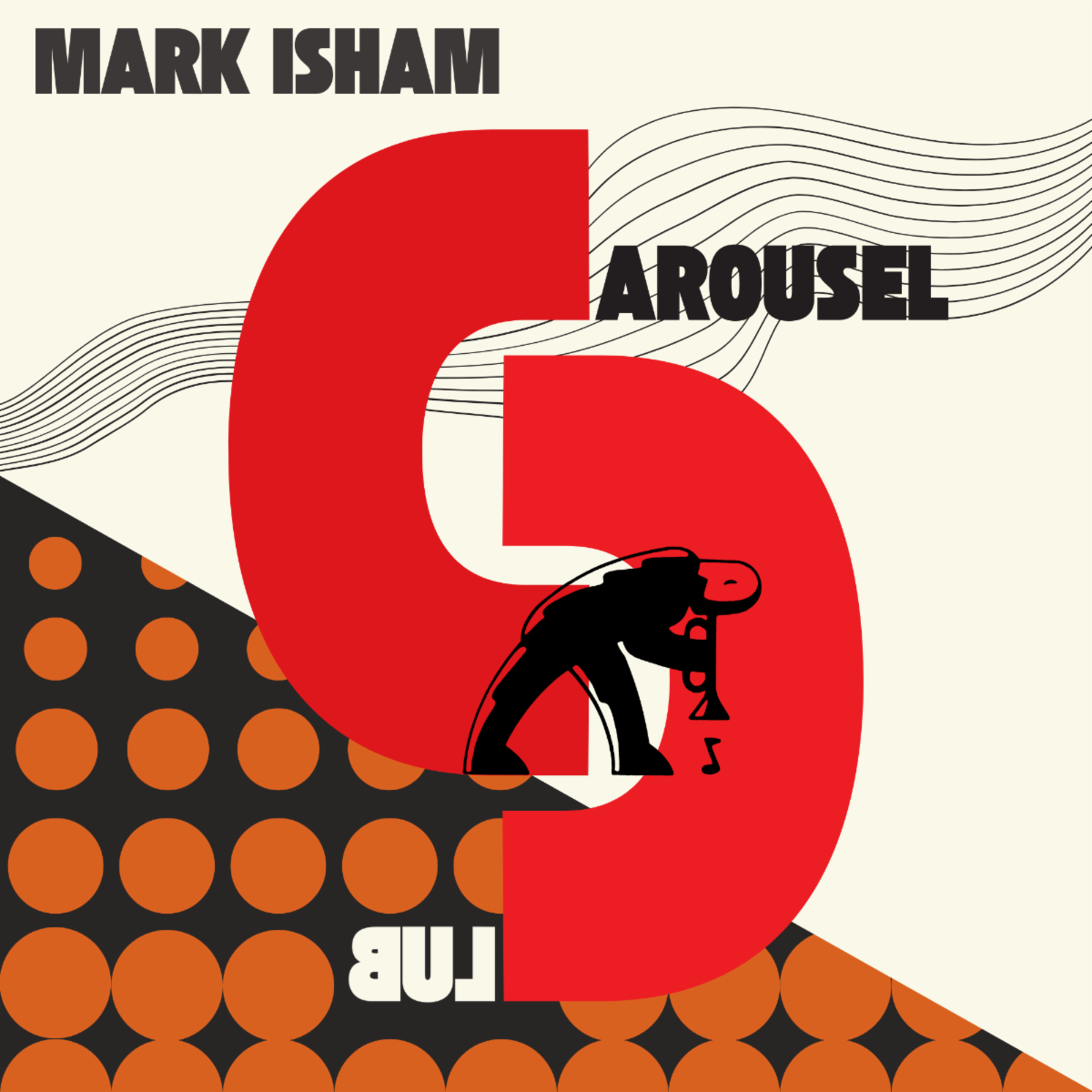
New Album: Carousel Club
| | |
The GRAMMY and Emmy Award-winning Mark Isham is best known for scoring features like River Runs Through It and Crash. He won a Golden Globe for the music of The Black Dahlia. Isham has performed with Joni Mitchell, Van Morrison and Stanley Clarke, to name a few.
Isham’s inimitable musical voice is evident in his meditative music in A Beautiful Question, the last song on his new album Carousel Club out this month. Another contemplative song, City Lore, is juxtaposed to the fast-flowing grooves in Number Theory.
Produced by Isham, Carousel Club offers six instrumental tracks. "It's my first non-soundtrack solo record in 15 years, and it's been a long time coming," says Isham who has moved between jazz, electronic sound, orchestral writing, and cinema. "This record brings those worlds together in a single musical statement — six audio vignettes that play like scores for imaginary movies, recorded at my own Wet Dog Studios and the late Chick Corea's Mad Hatter in L.A. The journey began with my collection of vintage analog synthesizers, then layering in a rhythm section, strings, and voice, I got to explore the duality that has shaped my whole career: Discipline and danger, composition and improvisation, machinery and breath," says Isham whose trumpet runs through the whole record alongside an incredible group of musicians: Vinnie Colaiuta (drums), Kaveh Rastegar (bass), Nels Cline (guitar), Ayo Awosika (vocals), and the Orchid String Quartet (string section). Here you'll hear echoes from his early days of jazz-rock-electronic fusion in Group 87, some Philip Glass/Steve Reich-style ambience, a little film noir, and even a matador's entrance into the bullring!
"It's the most unguarded, unscripted thing I've released in years," says Isham.
Listen to Carousel Club streaming now on Spotify, Apple Music, Amazon Music, and YouTube. Enjoy!
1. At the Carousel Club
2. Tales of the Street Piano
3. City Lore
4. Number Theory
5. My Night In An Iberian Post Office
6. A More Beautiful Question
| |
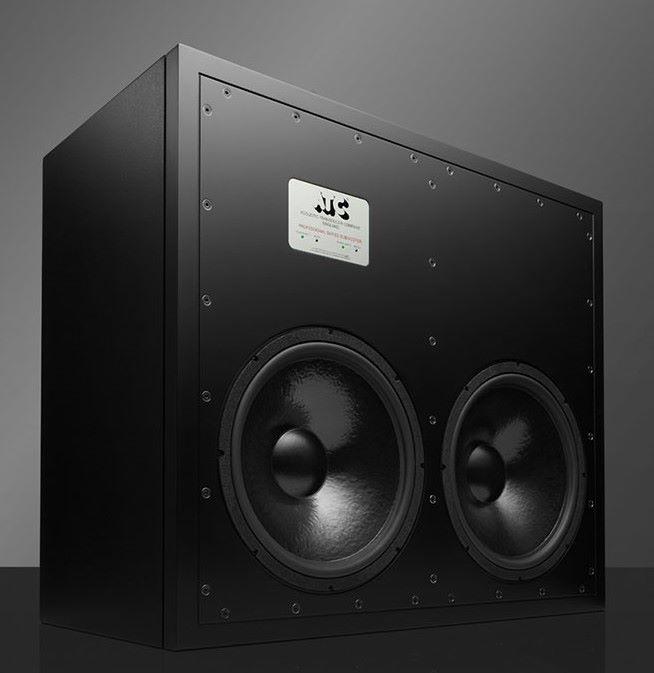
New ATC High-Output In-Wall Subwoofers
SCS140iW PRO 2”x12” AND SCS240iW PRO 2”x15”
| | |
Building on ATC’s acclaimed SCS70iW Pro and SCS120iW Pro designs, the new dual-driver models deliver significantly higher output and performance for today’s stereo, surround, and immersive studio environments.
Powerful Performance for Professional Studios
The SCS240iW Pro is designed for larger control rooms and immersive setups, engineered to pair seamlessly with ATC’s SCM300A main monitors. The SCS140iW Pro, meanwhile, matches the SCM200A and excels as a dedicated low-frequency effects (LFE) solution for formats such as Dolby Atmos®. Both models deliver extended low-frequency response, exceptional headroom, and accurate monitoring for demanding professional spaces.
Each subwoofer is powered by a pair of R1-300 Pro 300 W Class A-B amplifiers in a remote-mount 7U-rack format. The amplifiers provide flexible installation, multiple crossover options (including 80 Hz and bypass), polarity and phase adjustments, and mute control with daisy-chaining capability.
“These powerful in-wall subs are now available via your ATC dealer," noted Brad Lunde founder and president of TransAudio Group. “ATC continues to meet and exceed market demands for power, pure sound and flexibility.”
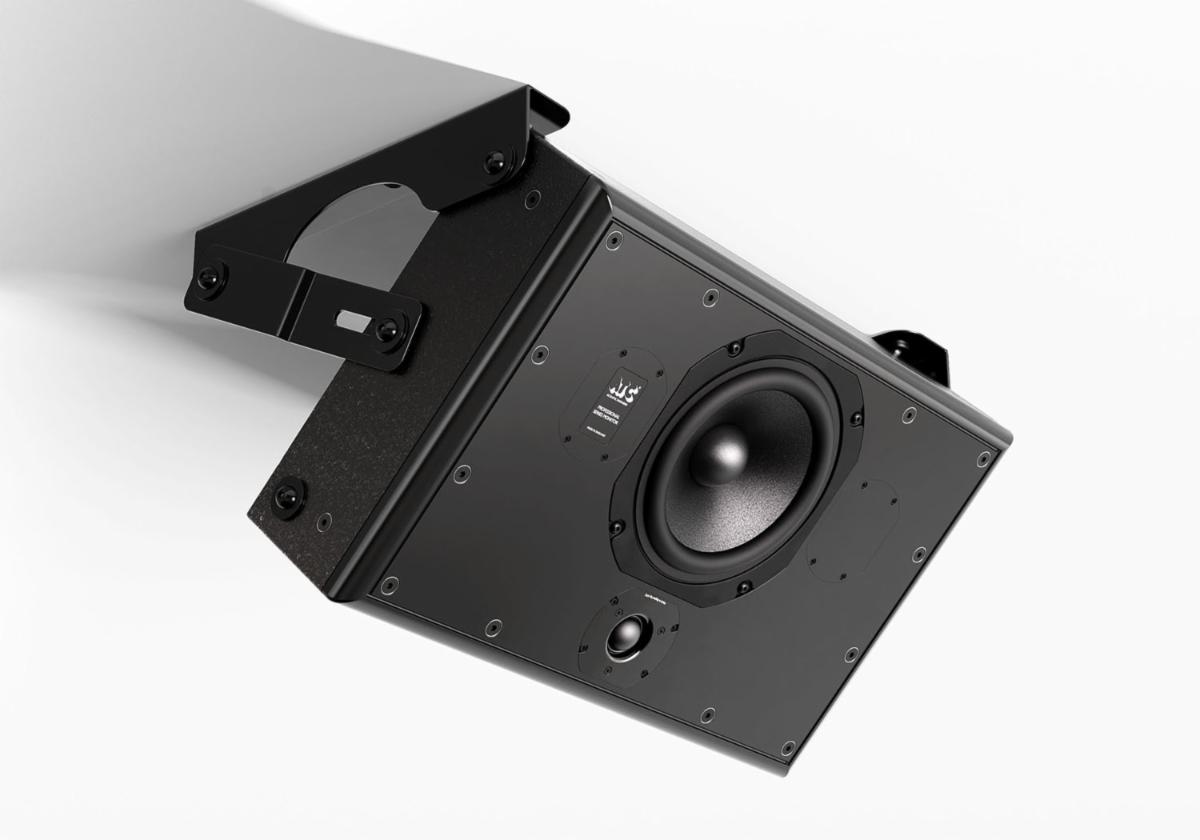
| | ATC’S NEW SSM WALL/CEILING MONITORS AND R4-150 PRO AMPLIFIER studio Monitors
| | |
ATC has introduced the new SSM Series, a line of slim, wall- and ceiling-mount passive studio monitors designed for modern control rooms and immersive audio setups. The launch includes two models – SSM12i Pro and SSM25i Pro – along with the new R4-150 Pro, a four-channel power amplifier built to pair perfectly with the SSM speakers. The SSM Series is designed for studios where space is limited. Both models feature very shallow cabinets that mount flat to walls or ceilings and can be installed vertically or horizontally. A pivoting mount allows precise aiming toward the listening position for accurate imaging.
The enclosures are reinforced for safe professional installation and include safety tether points, making them suitable for overhead mounting. “ATC keeps examining the market, evaluating trends in studio design, and then creating products to meet those needs. The speaker lineup is beyond compare,” says Brad Lunde, president and founder of TransAudio Group
| | |
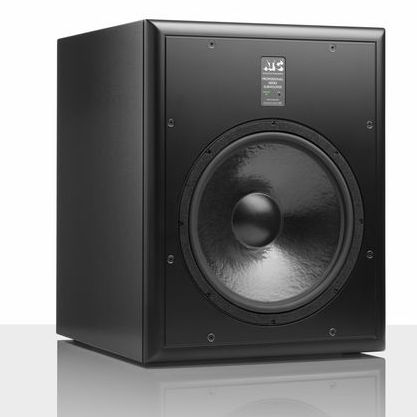
The ATC SCS120 PRO
EXCEPTIONAL LOW-FREQUENCY DETAIL AND SUITABLE FOR IMMERSIVE AUDIO
| | |
The SCS120 Pro uses ATC’s newly developed 15-inch carbon-paper composite driver, hand-built in the UK. The driver combines a short-coil/long-gap motor system with optimized airflow for low distortion, extended response below 20Hz, and improved cooling. The subs achieve deep, accurate bass through high-quality drive-unit engineering and a slightly larger cabinet. The subwoofer is powered by ATC’s hand-built 300W Class AB amplifier, featuring balanced inputs and output for pass through, analogue 4th-order Linkwitz-Riley low-pass filtering (including an 80Hz option and bypass), adjustable phase and polarity, and precise level control. A footswitch-operated mute circuit allows multiple subs to be muted together.
The SCS120 Pro pairs naturally with ATC SCM100/110/150A Pro monitors, and multiple units can be used for larger rooms or with main monitors like the SCM200/300A Pro. The increased dynamic capability makes it particularly suitable for immersive audio and post-production environments with demanding LFE content. ATC recommends using the Dolby Audio Room Design Tool (DARDT) for Atmos room system design. Noted Brad Lunde, president and founder of TransAudio Group, “Rarely do you find a company that values creativity, musicality, and performance with precision engineering."
The SCS120 Pro is available now. For more details visit here
TAG is founded by industry veteran Brad Lunde, has quickly become the premier U.S. importer/distributor and/or U.S. sales and marketing representative for high-end audio. TransAudio’s skilled team of in-house and field representatives provide dealers and end users with product expertise and support far beyond the norm).
| |
Die Spitz On The Road
Heavy Riffs, Raw Energy, and Explosive Live Performances
| | |
For studioepresso
By London Robinson
London Robinson is a Loyola Marymount University graduate whose passion lies in songwriting, singing and producing. His style ranges from The Beatles to Kid Cudi to Lana Del Rey. For the last year, London has been working as an agent assistant at High Road Touring. Photos: Die Spitz Official
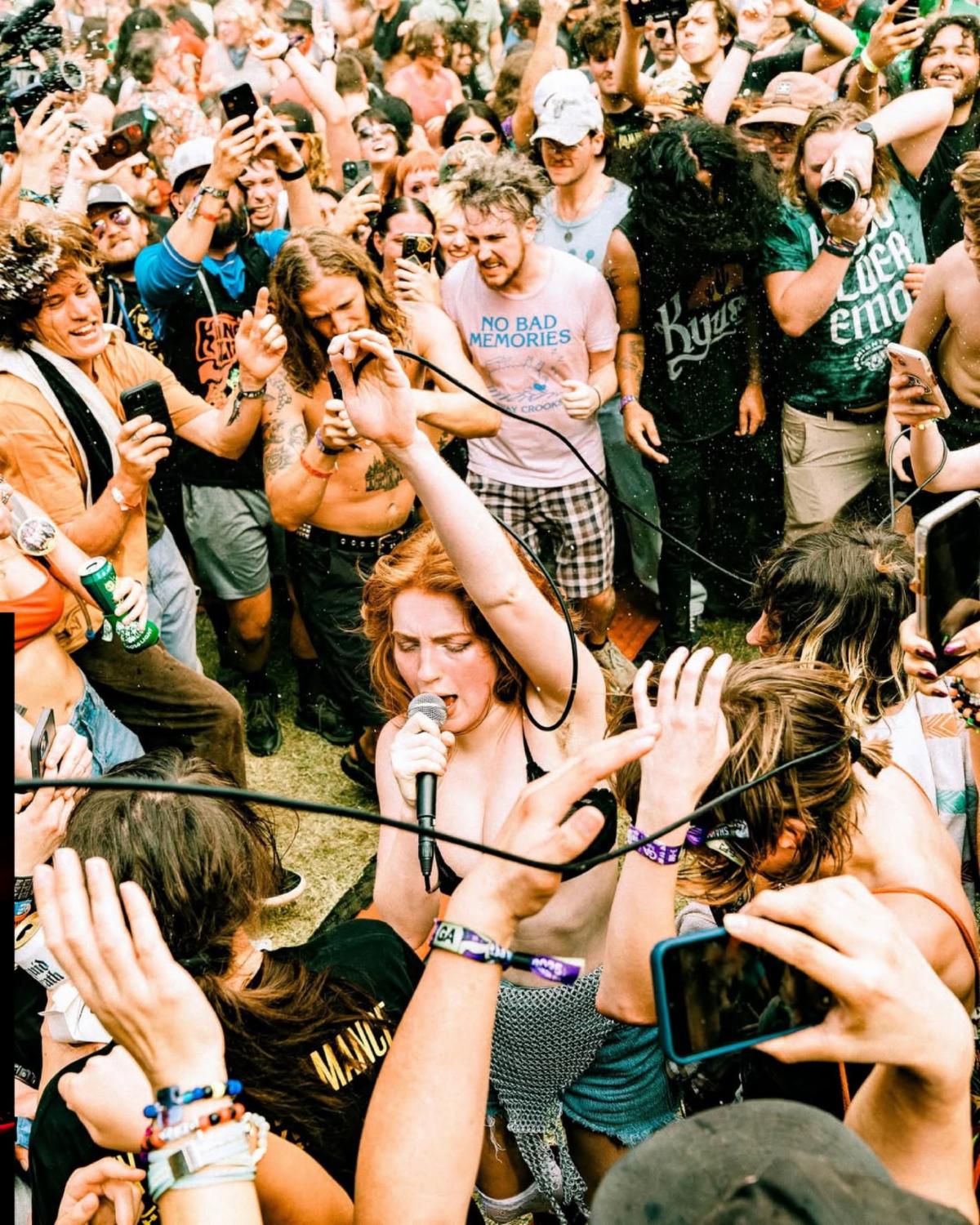
Die Spitz is a rock quartet based in Austin, Texas, who are known for their heavy riffs, chaotic energy, and especially their explosive live performances. While the band formed as recently as 2022, they have already performed at major festivals such as Coachella and most recently, Outside Lands, and opened for major acts including The Strokes and Foo Fighters. The band consists of guitarists and vocalists Ava Schrobilgen and Ellie Livingston, bassist Kate Halter, and drummer Chloe de St. Aubin. Their influences range from other all-female guitar bands such as Bikini Kill and Babes in Toyland to heavier influences like Black Sabbath and Nirvana.
Die Spitz have created something original and groundbreaking. What truly makes Die Spitz excel is the strong chemistry between its four members. Rather than only performing one role, the band members will often trade instruments, vocals, and songwriting duties, allowing each of them to contribute to different aspects of the group’s sound. The band is also known for climbing, cartwheeling, crowd-surfing, and swapping instruments during their shows while moving through the audience. This spontaneity has helped them develop a reputation as one of the most exciting up-and-coming rock bands today. “We depend on our freedom—freedom to do what we want, present the ideas we want, make the music we want,” says Livingston.
Last year, the band released their well-received debut full-length album, Something to Consume, and they are currently touring in support of the album. After finishing a festival run across the United States, the band is returning to the road for a North American tour that you won’t want to miss. With their growing audience and reputation as a must-see live act, Die Spitz are entering the next stage of their career with plenty of momentum behind them.
Upcoming Tour Dates:
| | |
2026
August 29 - Daisy Chain Fields Music Festival in Irvine, CA
Sept 3 - Gothic Theatre in Englewood, CO
Sept 5 - Bumbershoot Music & Arts Festival in Seattle, WA
Sept 11 - Levitation in Austin, TX
Sept 19 - Iron Blossom Festival in Richmond, VA
Sept 20 - Sea Hear Now in Asbury Park, NJ
Oct 3 - Zoo Amphitheatre in Oklahoma City, OK
Oct 6 - The University of Kansas on The Hill in Lawrence, KS
Oct 7 - Arsenal BG Ballpark in Sauget, IL
Oct 12 - Soundwell in Salt Lake City, UT
Oct 14 - Ventura County Fairgrounds Ventura, CA
| | |
Nov 5 - Majestic Theatre in Madison, WI
Nov 6 - First Avenue in Minneapolis, MN
Nov 7 - Metro in Chicago, IL
Nov 9 - Danforth Music Hall in Toronto, ON
Nov 10 - Town Ballroom in Buffalo, NY
Nov 12 - Paradise Rock Club in Boston, MA
Nov 13 - Warsaw in Brooklyn, NY
Nov 14 - Warsaw in Brooklyn, NY
Nov 16 - Union Transfer in Philadelphia, PA
Nov 17 - 9:30 Club in Washington, DC
Nov 19 - Cat's Cradle in Carrboro, NC
Nov 20 - The Orange Peel in Asheville, NC
Nov 21 - Brooklyn Bowl Nashville in Nashville, TN
2027:
February 19 - Brooklyn Steel in Brooklyn, NY
| |
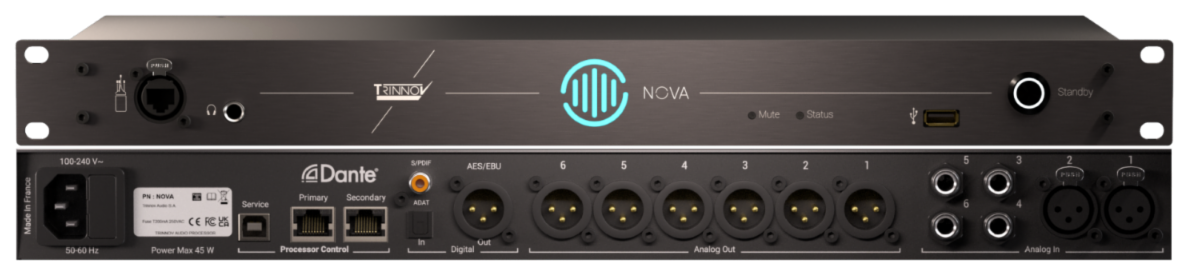
TRINNOV Audio Comes To US
Trans Audio Group To Distribute The Advanced Studio Processor & Room Optimizer
| |
“NOVA provides world-class acoustic optimization technology to music makers while maintaining the performance and reliability of Trinnov products,” said Brad Lunde, president and founder of TransAudio Group.
Designed to fit seamlessly into any professional workflow, NOVA also offers a streamlined setup experience with the new Trinnov App, which simplifies device discovery, firmware updates, and license activation for users of all experience levels.
NOVA is backed by Trinnov’s industry-leading warranty and support.
| |
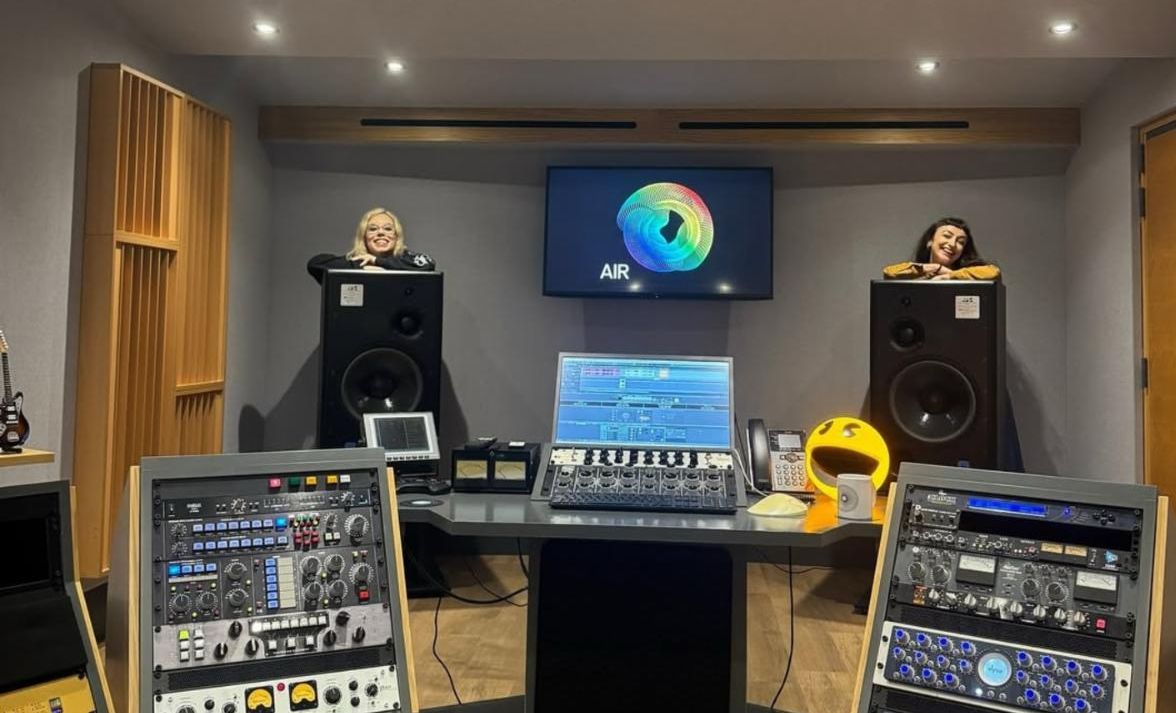
Air Mastering (UK), East West (1,2,3), Evergreen Enterprise Experience (EEE), and The Village (A, B, D) in LA Choose
ATC 300 Mains and SCM25 Pro Mk2 Monitors
| | |
East West's legendary Studio One (Sinatra, Elvis Presley, Rolling Stones) is booked for variety of sessions from single voice to 70-piece symphonic orchestra. Brent Fischer Orchestra recorded in one with a 56-piece ensemble.
Spanning over 61,000 cubic feet with a vibrant sound, the iconic studio comes complete with a spacious isolation booth and a beautiful Bechstein D-280 Concert Grand Piano. The control room features an 80-channel Neve 8078 Console, the largest in the world (originally commissioned for Michael Jackson's best-selling album, Thriller). Each room at East West is equipped with a DB Technologies db4496 A/D-D/A Converter and ATC SCM25 Pro Mk2 house monitors along with NS10/ProAc speakers and are set up with Pro tools HD.
Right: Grammy-winner producers Brent Fischer and Dave Reitzas in studio one control room during a VIP event hosted by Source Connect
Below: Evergreen studios Hall of Fame. photos: by the C
| | The Village (all three studios) Feature the New ATC SCM25A Pro Mk2s | | |
Top Left: Jeff Greenberg, owner and CEO with Snoop Dogg at The Village
Housed in 1920s Medinah Temple, the historic landmark studios, for almost six decades, The Village has recorded hundreds of legendary Grammy Award-winning albums and Academy Award-winning movie soundtracks. One of the studio's Grammy-winning, staff engineers, Alex Williams, used ATC 25s on the Jon Batiste We Are sessions, as well as the award-winning Odessa sessions. He also worked with Lukas Nelson & Promise of the Real, Regina Spektor, Perry Farrell and many more. Noted Williams, “The quality of ATC’s design and construction is apparent upon opening the box. From recording to mixing, the ATCs perform flawlessly on rock, pop, hip-hop, jazz, or orchestral. I know what I’m hearing is what I’m getting. I’m thrilled that The Village is outfitting three studios with the new ATC SCM25A Pro Mk2s.”
“Choosing ATC SCM25A Pro Mk2s for Village's main studios is an incredible validation of this product’s excellence,” says Brad Lunde, president and founder of TransAudio Group.
| |
Left: Mastering engineer Natalie Bibby at Air with ATCs
In 2018 the studios started by Beatles producing genius George Martin added a full-range of speaker monitoring system with two ATC P2 PRO Dual Mono Power Amplifier additions.
| |
Nashville’s Blackbird Studio C Offers ATC 9.1.6 Dolby Atmos System
| | |
Invest in Good Speaker Stands. Why? While looks can be deceiving, you must have seen concrete blocks and other DIY configurations used in some project studios. Watch this 19-minute video by Colt Capperrune @ColtCapperrune where he compares $20 block stands with professional stands ranging from $140 Gators to $1,200 Sound Anchor stands. Can you guess which one performs the best? check it out here
Sound Anchor adjustable monitor stands allow you to adjust the position of the monitors (height, angle and tilt) so you can place the monitors where they need to be for the highest quality sound.
Sound Anchors and Redmount products are designed and manufactured in Palm Bay, Florida U.S.A. using American parts and skilled American labor. click here for Sound Anchor dealers in USA
| |
Starbucks on Music Row Chooses ATC 7.1.4 Dolby Atmos Configuration
| | |
Starstruck Entertainment, the parent company of Starstruck Studios was founded in 1988 by Narvel Blackstock. Located on Music Row, Starstruck Studios is considered one of the top iconic Nashville recording facilities, and recently chose an ATC 7.1.4 Dolby Atmos configuration and paired it with their SSL System TS-500 console for their Dolby Atmos room.
"ATC 7.1.4 Dolby Atmos system is cited as the speaker system of choice for the growing number of multichannel immersive sound studios.
Manufactured and designed in the UK to the highest engineering standards, it was only natural ATC could develop this solid niche," says Brad Lunde of Trans Audio Group.
| | |
ATC CM25 PRO MK2
Featuring Upgraded, Handcrafted, ATC Dual-Suspension Tweeter
| | "Like the original SCM25A, the new upgraded Mk2 is a compact 3-way high-performance active studio monitor loudspeaker, based around the hand made proprietary ATC 3”/75mm soft mid-dome driver and 6.5”/164mm bass driver loaded in a 25-litre vented cabinet," says Brad Lunde, President of Trans Audio Group. Models range from $5,000 to $50,000 per pair and all share a very similar sound. For larger rooms and midfield, applications check out the SEM45 with dual 6.5-inch drivers and the fantastic SEM150 with a 15-inch woofer and 350 Watts of power. More info here | |
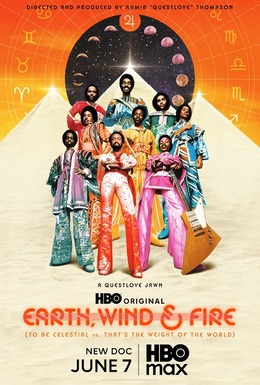
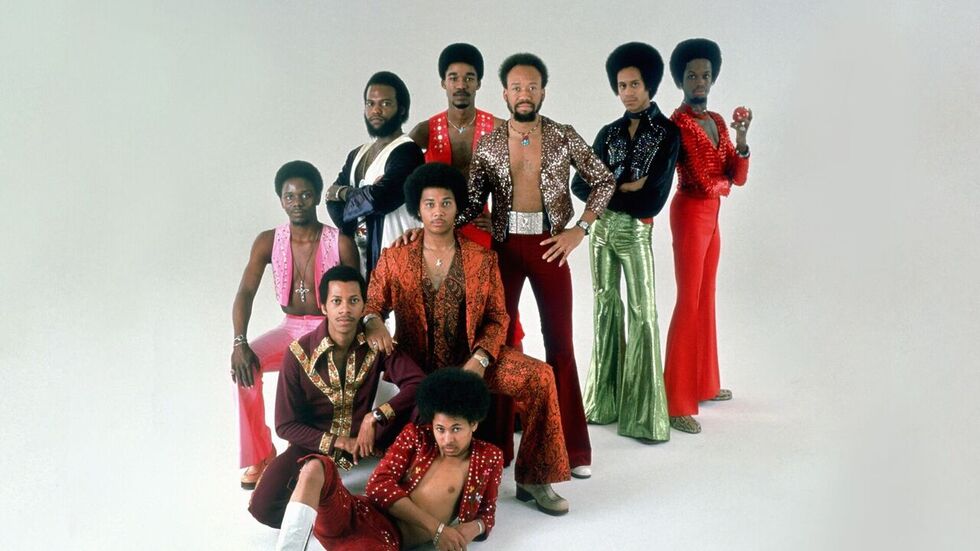
Earth Wind & Fire (To Be Celestial vs
That's the Weight of the World)
New Questlove-Directed Documentary Streaming On hulu/Disney+
| |
Photos: Courtesy of the Film
For studioexpesso
By Janice Lee
Janice Lee began her studio career at The Automatt in San Francisco. She went on to manage producer Narada Michael Walden's Tarpan Studios into the late 90s. She has since worked with other recording & mastering studios, independent labels, and also contributes to SF NPR-affiliate radio station KALW. Her son is composer/keyboardist Matthew Wong.
Presenting! Earth! Wind! And Fire!
The documentary Earth, Wind & Fire (To Be Celestial vs. That’s the Weight of the World) had its world premiere at the Tribeca Festival on June 3, 2026, and marks Academy Award-winning Ahmir Questlove Thompson's latest film as director.
The Philly native, musician, producer, author, music director/curator is known for bridging generations by documenting and preserving black music history with his in-depth research and ease. In the film, Questlove brings to the screen the attitude and spirit of the Soul Train generation.
In 2021, Thompson entered the documentary-verse by directing Summer of Soul (…Or, When the Revolution Could Not Be Televised). It was a sonic curation of live footage of the 1969 Harlem Cultural Festival – a black music festival in the form of a series of six Sunday concerts at Mount Morris Park (current name Marcus Garvey Park). Hours of vintage live film that apparently went forgotten or lost, or both. Tasked with the exhilarating and possibly daunting process of culling and selecting the most meaningful performances and updated interviews with artists, Thompson careful choice of footage and interviews very simply gives the viewer the experience, the emotions and maybe most importantly the social consciousness, climate and complexities of that time through the music, artists and people of that time. Any statements made were visual and musical, and in many ways spoke louder than any speech or protest. There was a quiet beauty to the film, all against the back beat of a generation ready to grow, move on, and move up (Kudos also to the engineers for minimal mic placement and the old school analog board mix).
Summer of Soul and Thompson won the 2022 Oscar for Best Documentary Feature.
Fast forward to 2026. Thompson continued to deep-dive into the life and music of Sly Stone, guests and continued presenting his podcasts The Questlove Show and Questlove Supreme, at once preserving and presenting music, art, individuals to be known and remembered. Add into this mix, he also co-directed the documentary Ladies & Gentlemen…50 Years of SNL Music, which presents and preserves SNL’s place in the music and artists of the times. So important is the musical guest on SNL, that many, many performances can become indelible in viewers’ memories, while the show continues to be the pinnacle of artist appearances and live music performances on television. Questlove continues as the long-running Music Director for The Tonight Show with Jimmy Fallon, as well as for projects and events seemingly everywhere. Then word got around – he’s working on an Earth Wind & Fire (EW&F) documentary.
EW&F hold a special place for many music fans, with the group’s music loved the world, decades, and generations over.
More specifically, the group and their music hold an extra-special place for musicians, making the prospect of Thompson to direct the film all the more poignant.
“Child is born with a heart of gold. Way of the world makes his heart grow cold...That’s the Way of the World....
--Maurice White, Charles Stepney, Verdine White
| |
“So of course what I really wanted to know is, hey, George Massenburg, did you use vacuum compressions when you did See the Light? How much cutting and pasting did you do on Larry Dunn’s solo on this particular song?
How many takes did it take for the horns to learn Magic Mind?”
--Questlove (Quote from his 2026 Essence Interview)
| |
The film Earth, Wind & Fire (To Be Celestial vs. That's the Weight of the World) was released on June 7, 2026. It focuses on founder Maurice White’s upbringing, familial happiness and struggles, and his grand vision of what a musical group could/should be. Through a period of hits and misses (more misses), what resulted was Earth, Wind & Fire, and could be described as a rare combination of musical and sonic excellence lifted by a sense of higher “evolved consciousness, music for a universal audience, to change the world” (Maurice White).
There were many stand-out elements in the film, one being the choice of interview subjects. Current interviews with EW&F members include Verdine White, Philip Bailey, Ralph Johnson, Don Whitehead, and Larry Dunn. With additional featured interviews with Michelle and Barack Obama, Stevie Wonder, Lionel Richie, Booker T. Jones (White’s childhood friend), H.E.R., Jimmy Jam, Flea, Anderson .Paak (catch his intro of “September” as only musicians can do so musically and charismatic-ally). Each interview is joy, a verbal smile. The Obamas bringing their special style with calming, down-to-earth, joyful presence while describing how much EW&F mean to them throughout their lives and especially during the White House years. Check out the Obamas reminiscing about the song “Reasons” and the school dances of their younger years. “Reasons” is one of the ultimate slow jams of all time. While they’re reflecting, keep in mind that this was a time when AM radio ruled and kept songs at a crisp 3:00 or less, and FM was the radio rebel playing albums versions (at least 4:00-5:00 in length), and (gasp!) playing entire album sides. EW&F’s original album version of “Reasons” is 4:53, while the subsequent version from their live Gratitude album clocks in at an impressive 8:27. Choose your dance partner wisely.
Thompson was also wise to include others in the EW&F universe who were essential to the sound, look and image of the band, and also already at the top of their game in the 1970’s. Included are legendary engineer and sonic hardware inventor/designer George Massenberg (GMLs anyone?), and photographers Norman Seeff and Bruce Talamon (the latter also serves as the film’s co-executive producer).
And then there’s the music. EW&F albums had the hits, though when the needle dropped, listening to one side and then the other – there was a stream of consciousness element to those album sides. Sides that included interludes, kalimba breaks, synth intros, spoken word. For the film, Thompson used the big hits and also skillfully stitched together these album elements to create a score, and an aural accompaniment to the words and interviews on the screen. The music runs wall-to-wall, while also serving to open the consciousness up to the sky while keeping everything still down to earth.
The film has its share of priceless moments, information and insights on some things which turned out to not be as simple as they seem. To not give away the film, there are definitely some quiet jaw-dropping moments.
EW&F floated above it all – musically and cosmically. However, this being the music business, it is not without a darker cautionary tale. The film is careful and respectful to tell these truths, including admissions that perhaps some bitterness still lingers. The film states and informs, presenting the facts and feelings as is, without leaning into justification-explanation-reconciliation. For all the success, higher consciousness, and all those brilliant songs, mixes, vocal harmonies, horn arrangements, mix of sounds and new rhythms - there was a price to pay, sacrifices were made, and people's dignity and sense of loyalty and worth were hurt.
It could be surmised that the film reaches and illustrates musically and visually the full frame of the visions that Maurice White was seeking to fulfill. The film covers much of White’s life journey (both physical and metaphysical), though there’s a sense of even more – much more.
“Our hearts were ringin’ - In the key that our souls were singin’ Do you remember?”
--- “September” (Maurice White, Allee Willis, Al McKay)
EWF has sold over 90 million albums, had 16 Top 40 singles, and won six Grammys. Yet the one song which arguably can be considered their most known is “September”. From the first few bars, to the first three words “Do you remember?” – it could probably be considered one of the most danceable, singable, happy songs ever – across all generations, cultures, borders, and time. In the film “September” serves as a closing piece, akin to the outro of a song. No matter the placement, the song never fails to bring people to their feet and a smile to their face.
In the end credits (also an encyclopedia on its own of all things EW&F), there’s a blink and you’ll miss it, a very touching inclusion in Thompson’s special thanks: “For Michael D’Angelo Archer”.
As the film ends, and revisiting the film title Earth, Wind & Fire (To Be Celestial vs. That's the Weight of the World) – it makes sense. It’s cosmic while reminding us of the earthly realities.
Whether one is a long-time, die-hard fan/musician, or someone who has only heard the music in a commercial/sample/game, or someone who is hearing the name Earth, Wind & Fire for the first time – everyone will find something that resonates from the extraordinary life of Maurice White, the brilliant musicians and technical excellence he filled his life with, and the overall art that was created for the universe, and will continue to inspire us all.
The film is currently streaming on hulu/Disney+
Visit studioexpresso's home page to watch the official trailer here
...evolved consciousness, music for a universal audience, to change the world"
--Maurice White
| |
Send Your Music and Audio Event For studioexpresso's Calendar
| | Above: studioexpresso and Trans Audio Group presented "Atmos-ize Your Music" at NAMM on Thursday January 23, 2025. Below: Speakers for the session: l-r: Cam O'Bi, Brad Lunde of Trans Audio Group, Ryan Ulyate, Eva Reistad, Brent Fischer, Harry Weinger of UMG, and Claris Sayadian Dodge of studioexpresso. | | |
studioexpresso and Trans Audio Group have featured many producers, and musicians over the past ten years of TEC Track's history at NAMM
Curt Bisquera (Sarah McLachlan, Elton John), Kenny Aronoff (Smashing Pumpkins, John Mellencamp, Sting), Greg Penny (Elton John, KD Lang), Cam 'Obi (J Cole, Chance the Rapper), Niko Bolas (Neil Young, LeAnn Rimes), Eddie Kramer (Jimi Hedrix, Kiss), Matt Wallace (Maroon 5, Faith No More), Cheche Alara (Christina Aguilera), Kim Bullard (Elton John, Kelly Clarkson), Cristina Abaroa (Celine Dion, Enrique Iglasias), Brady Leffler (Hot Chelle Rae, Justin Beieber), Al Schmitt (Diana Krall, Paul McCartney), Alex Acuna (LA Phil, Beck), Teddy Campbell (American idol, The Tonight Show w Leno), Ellis Hall (Ray Charles, Tower of Power), Jacob Armen (Prince), Peter Asher (James Taylor, Linda Ronstadt), Larry Klein (Joni Mitchell, Melody Gardot), Manny Marroquin (Bruno Mars, Alicia Keys), Dave Schiffman (Adele, Limp Bizkit), Gregg Field (Sinatra, Pharell), Sylvia Massy (Tool, Johnny Cash), CJ Vanston (Toto, spinal Tap), Dame Gail Dorsey (David Bowie, Gwen Stefani), Jenny Mason (The Mrs), Neal Pogue (Outkast, Andre 3000), Eva Reistad (Dune 1,2, Alien, Sherlock Holmes), Leland Sklar (Phil Collins, James Taylor), Moogie Canazio (Sergio Mendes, Sarah Vaughan), Rafa Sardina (Lady Gaga, John Legend), Daniel Seeff (KJazz, Herbie Hancock Institute of Jazz), James Torme, Zev Feldman of Resonance Records (Sarah Vaughan, Bill Evans, Nat King Cole), John Wooler of Mood Media (Flying Lotus, Elton John, Miles Davis), David Benoit, Harry Weinger (Marvin Gaye, Bob Marley, Frank Sinatra), Matt Wong, Ryan Ulyate (Tom Petty & The Heartbreakers), Ian Charbonneau (Mana, Neil Young, Jake Owen), Steve Genewick (Spinal Tap, Martina McBride, Michael Buble) David Reitzas (Weeknd, Madonna, Luis Miguel), and Grammy®-winning Brent Fischer (Usher, Elvis Costello, Symphonic Prince).
| |
Bettermaker Getting Better All The Time
Introducing the New Bettermaker Valve Stereo Passive Equalizer (VSPE)
| | |
Bettermaker Mastering Limiter 2.0 Convenient, easy-to-use plug-in control and instant recall.
“From Grammy-award winners, to top international recording artists, home and free-standing recording studios, the original Mastering Limiter is that piece of go-to gear that adds that particular dynamic edge and significant touch towards the end of the recording process.
The Bettermaker Mastering Limiter 2.0 has faster release time, a lowered noise floor and the same 100% analog signal path with the ease of digital plug-in control and recall. This one is a superstar product,” adds Brad Lunde, president, and founder of TransAudio Group
Watch Vlog review by DJ, Producer, Jon Sine of the new Bettermaker Mastering 2.0 here
The Bettermaker Mastering Limiter 2.0 is priced at $3,500 in USA and is now available for shipping.
| | Above at 2025 NAMM Bettermaker Booth 10302 in Hall A, is the legendary Stevie Wonder checking out the game-changing accessibility of the new Bettermaker VSPE which allows for seamless control of Bettermaker hardware and plugins using voice commands, using its cutting-edge open source AI technology (created in partnership with The MIDI Association’s Music Accessibility Standard Special Interest Group MASSIG as well as real-time speech feedback for accurate parameter adjustments. | | |
The Daking Mic Pre 4T
Soulful Circuitry Meets Proprietary Problem-Solving
| | "The Daking Mic Pre 4T, nominated for a TEC Award 2023, will elevate any recording offering unique solutions to common problems," say Brad Lunde (click top left image for a video presentation by Brad Lunde). The “low-distortion” Jensen input and output transformers offer more linear low-end performance under super dynamic conditions. Daking’s own variable high-pass filter dials out the low-frequency mud that can be subsonic and will decrease available headroom. Built in the USA, Daking uses only high-end parts like Jensen input and output transformers in a high-end design using all-discrete transistor Class A circuitry. Unusually high 24dB of headroom and easy to read twenty segment meters make proper gain staging easy and forgiving under a wider array of conditions. | | Auratone's 1st Ever Active 5C: The Super Sound Cube | | |
Auratone Celebrates its 50th anniversary, Auratone and its US distributor, TransAudio Group, introduced the first-ever Active 5C, nominated for TEC Awards at NAMM 2023.
A careful R&D process has been implemented to maintain the original characteristics of the 5C, utilizing the same amplifier design from the NAMM TEC Award winning A2-30 amplifier.
“We were happy to get boutique Polish manufacturer Bettermaker together with Alex Jacobsen, owner, and grandson of founder Jack Wilson, for the perfectly matched A2-30 amplifier. Now, the two companies have collaborated to get a mono amplifier that contains the guts and soul of the A2-30 into each chassis for the active version,” says Brad Lunde, founder, and president of TransAudio Group.
| | |
The Auratone Active 5C is now shipping • MAP: $749/pair
Like the other 5C variants, the Auratone ACTIVE 5C is made in the USA.
| | |
Trans Audio Group -- The Recording Studio Equipment Experts. Call to order from their trusted brands:
A-Designs (USA), ATC Loudspeakers (UK), Auratone, Bettermaker, Daking Audio, Drawmer, Hakan, Latch Lake, Mojave Audio, Mutec, Pete's Place Audio, Sabra-Som, Subwoofer Pros, and Tube-Tech
Questions- pricing, availability and dealer locations please email sales@transaudiogroup.com
| |
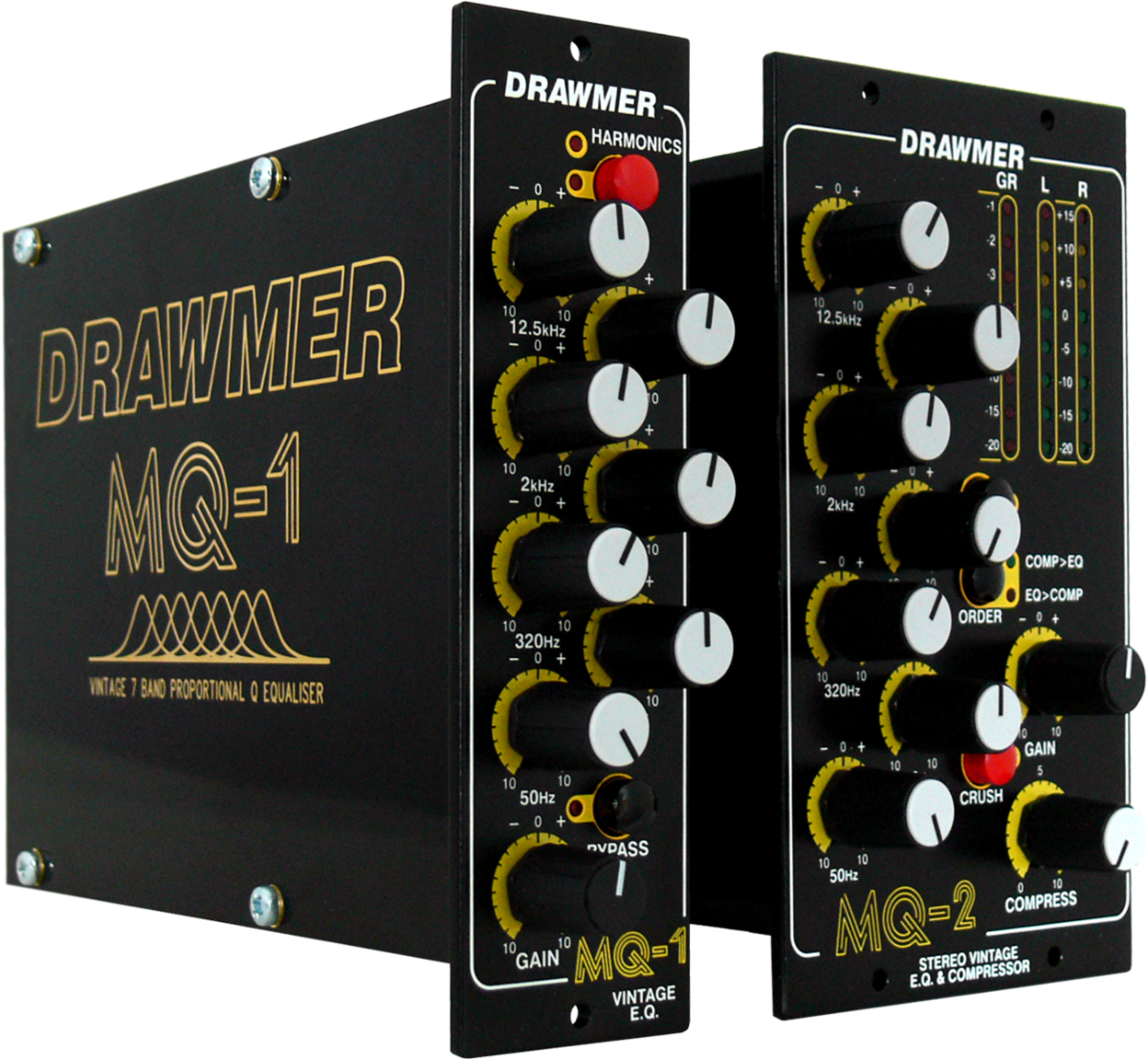
"Motown EQs" + VINTAGE SOUND & FEATURE PACKED 1977 CHANNEL STRIP from DRAWMER
| | |
Inspired by the legendary ‘Motown EQ’ sound, Drawmer created two new 500 series EQs. Each unit offers 7-band proportional Q equalizers with EQ curves akin to the renowned ones used in the illustrious Detroit studios of the 1960s. These 100% analog units feature sevens bell curves, each having a variable cut/boost of ±10dB and set at the beautifully musical frequencies of the original.
The MQ-1 offers a single channel Mono 7-band EQ, with the highly regarded ‘CRUSH’ feature present on the Drawmer 1971 Dual 4-Band Parametric Equalizer rack unit. When you activate the crush circuit, get ready for some pleasing harmonic saturation and that classic analog warmth that adds a ton of character to any signal passing through the unit. CRUSH fattens up the bass, adds presence to the mids, and brings a delightful shimmer to the top end. The harder you drive the EQ the more crush you’ll get! The MQ-1 is a single-slot 500 series module. The MQ-2 offers the same EQ curves, but in full stereo, and is far more than an equalizer. It also incorporates a program-dependent, single-knob compressor that adapts its envelope to the characteristics of the signal. The order of the EQ and Compressor in the signal path can be swapped according to your requirements. The MQ-2 also has the same integrated ‘CRUSH’ feature that warms up your mix with harmonic saturation, and additionally includes comprehensive metering. The MQ-2 is a 2-slot 500 series module.
Visit Drawmer at TransAudio Group for more details.
Pricing: MQ-1 $349.00 • MQ-2 $539.00
| |
Drawmer 70 Series Vibe
Introducing the Drawmer 1971 4-Band Parametric EQ Featuring 'Crush'
| | |
The new Drawmer 1971 4-band parametric EQ, available in the U.S. from TransAudio Group.
Trans Audio Group introduces Drawmer 1971 4-Band Parametric EQ. This new edition to the Drawmer 70s series of FET-based gear offers two channels of fully featured 4-band parametric EQ and a new CRUSH button with the ability to deliver a myriad of unique musical applications on each bandwidth.
Noted Brad Lunde, president and founder of TransAudio Group, “Widely popular, the Drawmer 70’s series has received many industry awards, and this new EQ is sure to follow. The features embodied in the 1971, plus the amazing new CRUSH button, allow for fine-tuned tactile tone sculpting. CRUSH is a dramatic tool. Engineers and producers will love the diverse and subtle creative options. Drawmer gear is designed and handmade by Drawmer in the UK – no small feat for a pro audio manufacturer.”
Now Available. Price: $1799.00 Details here
| |
Back To School At Abbey Road Institute® Los Angeles
Award-Winning Producers Come Together
Fast-Tracking A Diploma Education In Music Production
| |
When it comes to music education, there are many schools and schools of thought. The song Another Brick In The Wall by Pink Floyd "We don't need no education....teacher, leave us alone" may come to mind at first. However when it comes to vocational training in real-world environment and networking with insiders, one school in LA via its renown parent company Abbey Road Institute (London) is receiving attention.
Hollywood and the greater Los Angeles area serve as the undisputed global epicenter for the music, video, and entertainment industries, and are home to massive platforms like YouTube and Spotify alongside legendary recording studios, historic stages, and major record label headquarters.
Last month ARI-LA (short for Abbey Road Institute, LA) announced its Fall Semester launch on October 26 from its flagship venue at the historic Sunset Gower Studios, Hollywood, adjacent to historical United and East West recording studios.
The intensive One-year Certificate program, headed by 19x Grammy-winning Rafa Sardina, feature top- notch instructors from the fertile grounds of LA music, film and gaming scene.
Most of these professionals came up in the old-school tradition of learning hands-on, mastering evolving technologies, working with award-winning producers and engineers.
ARI-LA offers the same hands on approach to learning, leveraging its location and available resources and doing it in just in one year (3 four-month long semesters). "Many prospective students today face time constraints that limit their ability to pursue traditional audio & music degree programs, which often require four years to complete," says Sardina. According to recent data, nearly 40% of learners prioritize accelerated programs to quickly enter the workforce or advance their careers.
ARI-LA courses focus on practical lessons, in addition to meeting academic standards, and placement opportunities.
Below: Award-winning producers Barry Rudolph, Composer Vanessa Garde, and CEO Rafa Sardina
| | |
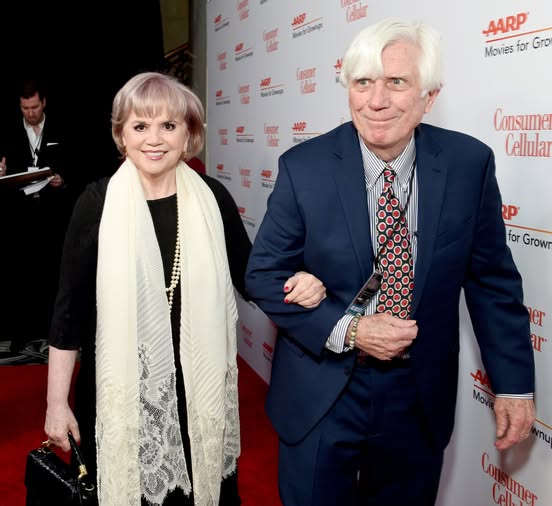
Right: John Boylan with Linda Ronstadt from January 11, 2020 in Beverly Hills, California. (Photo by Kevin Winter/Getty Images)
Producer John Boylan (right on the red carpet with Linda Ronstadt) is among instructors announced. He was inducted into the Musicians Hall of Fame & Museum at Nashville’s Fisher Center for Performing Arts this year on April 28.
Boylan co-produced Boston's 1976 self-titled first album, which remains one of the best-selling debut hard rock albums of all time.
He also was one of the producers of the Urban Cowboy soundtrack, which spurred a country music and line dancing explosion in the early ‘80s mainstream.
As manager of Linda Ronstadt, he put together her first backing band, introducing Glenn Frey and Don Henley to each other. With her blessing, they left to form the Eagle in the early ‘70s.
Boylan has produced and/or co-produced more than 50 albums for acts ranging from Little River Band to Charlie Daniels Band, and Carly Simon. A highly versatile creator, Boylan won a Grammy in 1999 – best musical album for children – for producing Elmopalooza!, which featured artists including Jimmy Buffett, Celine Dion, Gloria Estefan and the Fugees singing with Sesame Street characters.
Boylan also served as a VP of A&R for Epic Records and has worked on a number of film and television projects including Footloose and The Simpsons. He is currently co-producing a biopic on Ronstadt starring Selena Gomez.
"The most important thing for a producer or engineer to learn is that the artist is the most indispensable element of the project and your role is to serve the best interests of the artist."
-John Boylan
Linda Ronstadt, Little River Band, Don Henley. Boylan was inducted into the Musicians Hall of Fame & Museum at Nashville’s Fisher Center in 2026
"Abbey Road Institute® offers an intensive, immersive education for aspiring music producers and engineers in a small, focused learning environment. The program emphasizes hands-on, apprenticeship-style training to equip graduates with the skills necessary to thrive in the fast-paced music industry and forge their own career paths," adds ARI-LA CEO, Rafa Sardina.
The Los Angeles campus will feature Abbey Road Institute®'s renowned curriculum, along with a distinguished faculty comprising top LA-based producers, engineers, and musicians, including Scoring mixer Alan Meyerson (Dune: Part Two, Gladiator II, Dunkirk); recording/mixing engineer and technical writer, Barry Rudolph (Rod Stewart, Pat Benetar) TV composer, and educator, Vanessa Garde (Alberto Iglesias, Placido Domingo) and educator (formerly with Berklee), and many more.
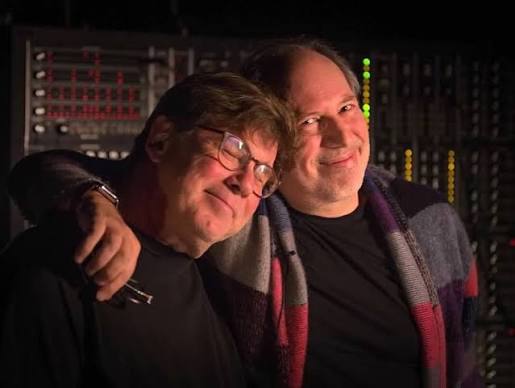
Below Alan Meyerson with composer Hans Zimmer (courtesy of his social post)
| | |
"Discovering and building on your own strengths is one of the most important things you can do to build a lasting career, and that's the core spirit of what we teach at Abbey Road Institute.
--Rafa Sardina, Abbey Road Institute, CEO and Instructor
| | |
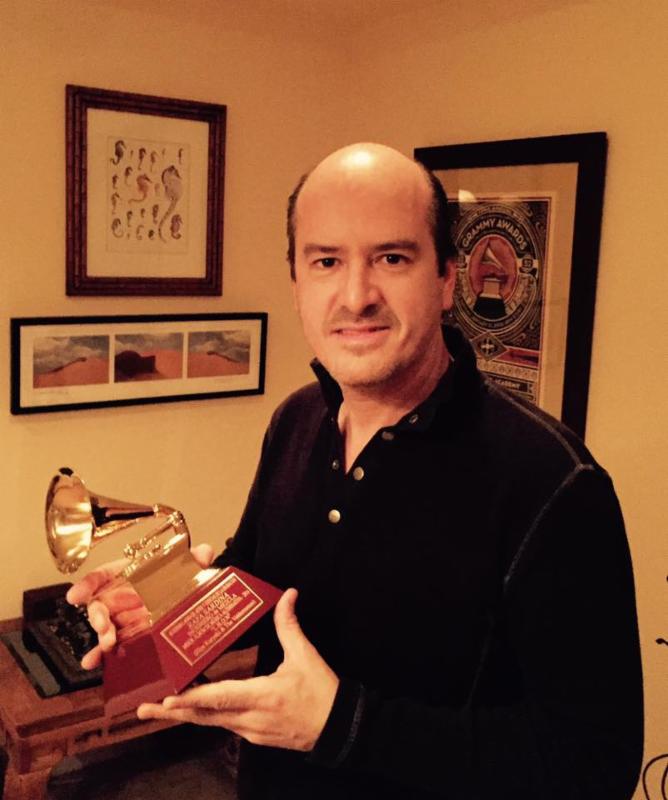
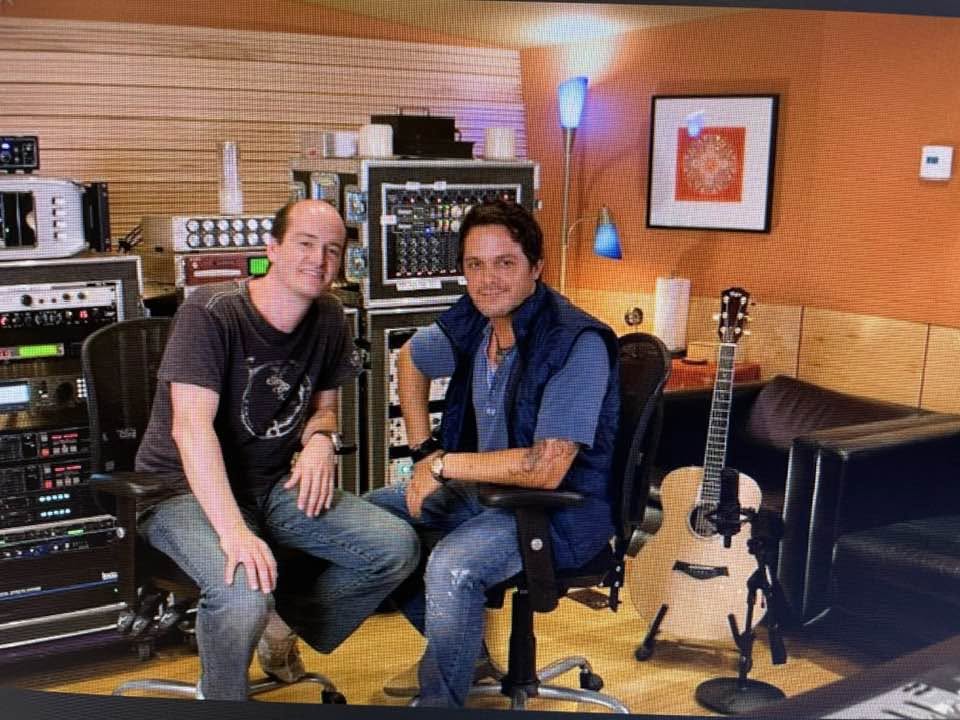
Enjoy this interview with ARI-LA's CEO, Rafa Sardina (left with International superstar and 24x Latin Grammy-winner Alejandro Sanz at Rafa's After Hours studio)
Beginning this Fall, The Abbey Road Institute® Los Angeles Diploma in Music Production and Sound Recording In-person callses provides students the opportunity to learn and practice hands-
on in real-world studio environment at Sunset Gower Studios.
SE: Your school is adjacent to the historic United Recording (formerly Ocean Way where we worked together). Give us a sampling of equipment/gear/rooms available to your students?
RS: It really is a full circle story for me.
I started my career at Ocean Way Recording Studios (now United Recording), and we're presently
building this incredible project right next door to it. Our school features amazing rooms, including a brand
new Dolby Atmos room and a studio classroom built around an SSL Duality console. We also have the most unique collection of gear, including vintage equipment like Neumann U47 and U67 microphones, original Teletronix LA 2A compressors, Urei 1176 compressors, original Pultec EQs, rare historical pieces
and much more including some unique pieces of equipment that once belonged to the legendary Record Plant Studios.
SE: You did your apprenticeship in these rooms during the 90s. Music making has changed over the years. What are the top 3 changes in your craft and how you plan to prepare the new generation for more changes ahead?
RS: Being immersed in music at the biggest stage in the world in LA —every single day, and learning from
peers who are already among the finest in the industry, is incredibly invaluable. Discovering and building
on your own strengths is one of the most important things you can do to build a lasting career, and
that's the core spirit of what we teach at Abbey Road Institute. As for the top changes I've seen since the 90s: first, the evolution of technology and new tools has completely transformed how music is made
production today is faster, more flexible, and more accessible than ever. Second, that accessibility has made the process far more democratic. You no longer need a major studio to make a record that competes on the world stage. And third, we're seeing an incredible rise of new styles, genres, and multicultural influences shaping the sound of modern music. To prepare the next generation, we make sure students aren't just learning today's tools, but developing the adaptability and curiosity to keep evolving as the industry keeps changing.
SE: Your team of educators are all highly credited professionals from music production and post production worlds. Alan Meyerson, John Boylan, Barry Rudolph, yourself. What other disciplines or areas of entertainment will you be covering?
RS: We focus the learning experience on exactly what each student needs for their career. That's the
advantage of working with smaller cohorts. We build a strong core foundation of knowledge, then help
students branch into specialties across the full spectrum of entertainment: film, commercial records,
music business, post production, live sound engineering, artist development, marketing, really, every
discipline within entertainment.
SE: How's Abbey Road different from other prestigious learning institutions. Will you be offering Field trips, and placement opportunities?
RS: Our program is a very hands on experience, focused on truly developing the tools and skills students
need to launch their careers, not just theory. Additionally, thanks to our network of industry collaborators, we're able to help students access internships and unique opportunities they wouldn't find elsewhere. And yes, to the second part of the question, we do organize field trips and special events, including NAMM, the Grammys, the Latin Grammys, and more.
SE: What does the schedule look like for the year-long program and are online classes available?
RS: There are no online classes at the moment. Hands-on practice and real-time collaboration with your
peers are essential to how we teach, and that's something you simply can't replicate remotely. A typical
week runs Monday through Thursday, 10am to 1pm, with mandatory hands-on practice time every
afternoon. Every Friday, we host “Industry Fridays,” where we bring in special guests and do unique events. On weekends, students also have access to the studios and other opportunities to keep working and creating.
SE: Are your student fees compatible with other schools. Do you offer financing?
RS: Yes, we offer a payment plan. Beyond the price point, we believe the real value lies in what students get from the experience: hands-on training, mentorship, and access to an incredible community and network. We're also actively working on securing scholarships and various types of financial assistance to make the program more accessible.
SE: When does ARI-LA classes begin?
RS: Our first term begins on October 26, with a second term starting January 11th. Registration is open now at abbeyroadinstitute.com/losangeles
SE: Best lesson you've learned during your celebrated career?
RS: Trust your instinct.
SE: Where do you keep your 19 Grammy®s?
Most of them are at AfterHours Studios, my personal studio.
SE: Beverage of choice?
RS: Wine—especially Txakoli. Actually, I'm a winemaker myself! My company, Lure Wines, based in Spain, has been getting really great reviews
SE: Thank you (I'm saving my bottle for a special occasion). Wishing you, and your new students and creators a good year!
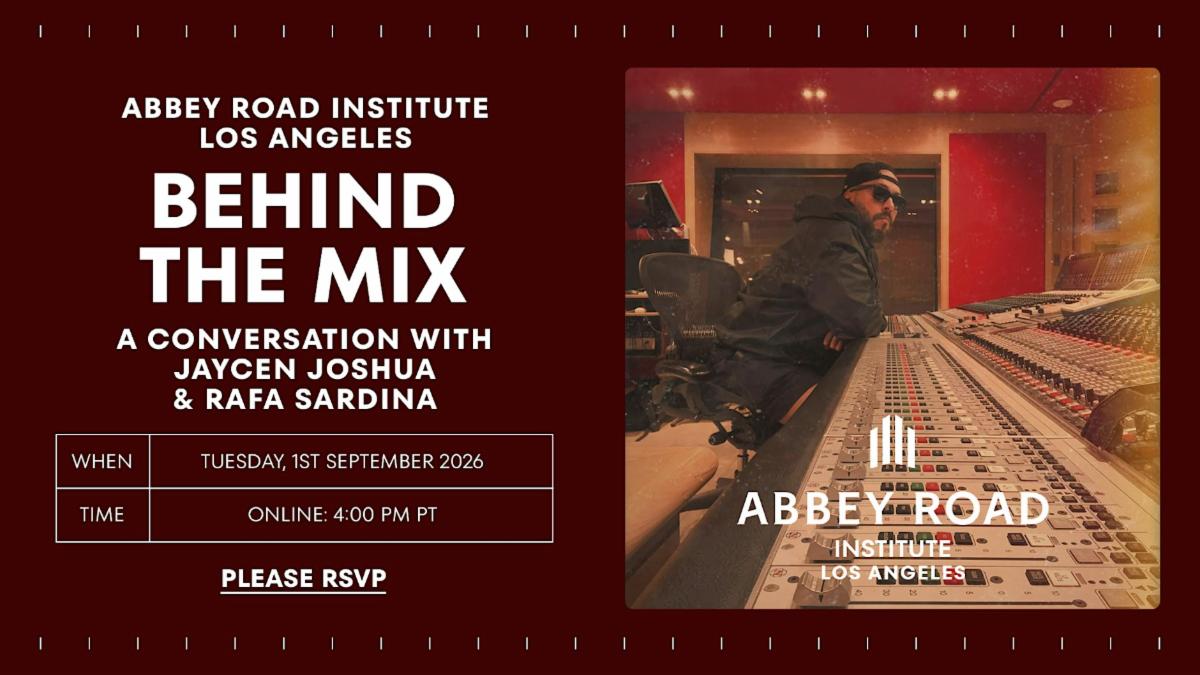
Attend their next ONLINE mixer on Tuesday September 1, with Jaycen Joshua ( Beyoncé, Justin Timberlake, Snoop Dogg, The Weeknd, Maroon 5, Eminem) and Rafa Sardina by registering here
| | |
2026-27 Schedule
First Term Begins: October 26, 2026
Second Term Begins: January 11, 2027
Curriculum
Production and Music Theory:
• Introduction
• History of Production / Abbey Road
• Production Techniques – EQ / Dynamics
• Production Techniques – Effects
• Session Planning / Procedures
Audio Engineering Principles:
• Sound Theory
• Decibels
• Metering
• Basic Electronics
Audio Engineering Tools:
• The Music Production Studio
• EQ
• Dynamic Range Processing
• Effects Processing
• Cabling and Wiring
• Mixing Consoles
Digital Audio Workstations
• Pro Tools
• Logic Pro
Tuition & Fees here
For more information visit ARI-LA and follow them for upcoming virtual events visit Instagram or
Apply to ARI-LA Now!
| | |
Suzanne Ciani With Metropole Orkest
New Immersive Performance Album
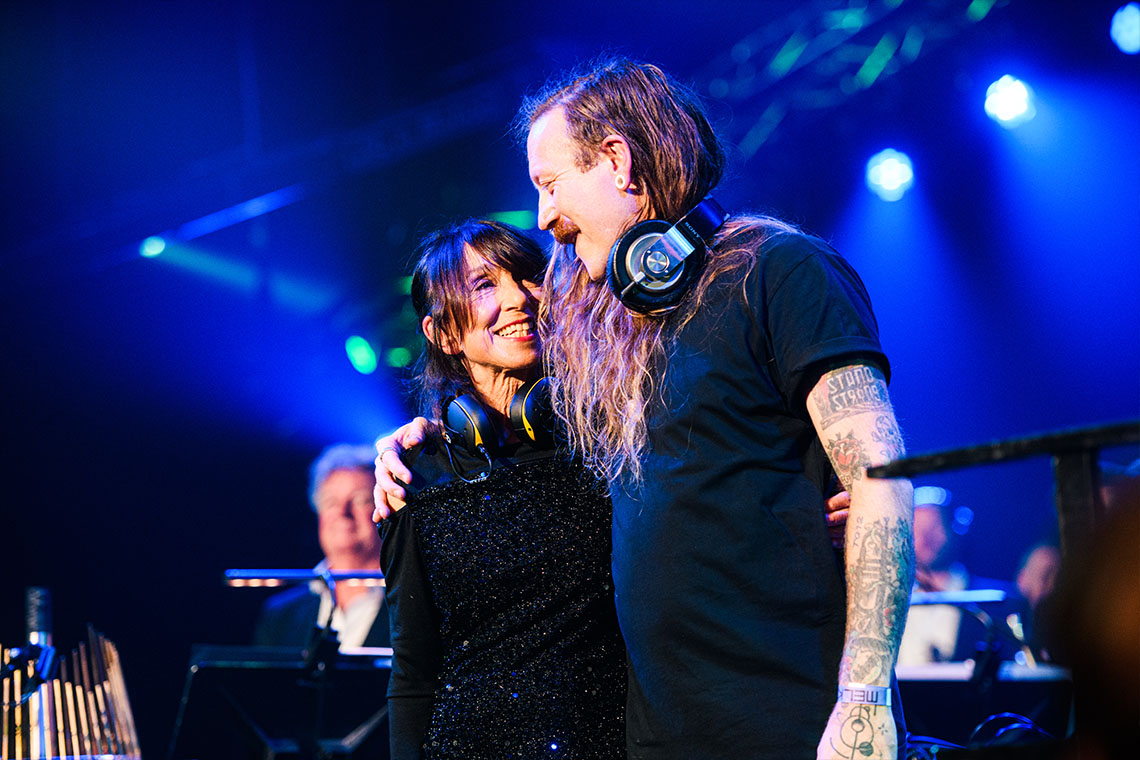
Suzanne Ciani with Metropole orkest's Simon Dobson
| | |
Electronic music pioneer and five-time Grammy nominee Suzanne Ciani joins the internationally acclaimed Metropole Orkest, conducted by Simon Dobson, for the release of CIANI/ORKEST, a landmark live album composed entirely of new work.
Recorded at Amsterdam Dance Event (ADE) before a rapt audience, CIANI/ORKEST is a bold, immersive meeting of the Buchla electronic instrument and 50-piece orchestral sound.
“This project feels like a homecoming,” says Ciani. “The Buchla was always orchestral to me, an instrument capable of infinite color. Hearing those colors unfold through the Metropole Orkest has been profoundly moving.”
At the heart of CIANI/ORKEST lies Ciani’s lifelong commitment to quadraphonic sound. From her early Buchla performances in the late 1960s to her 2018 release LIVE Quadraphonic, Ciani has treated space as a primary compositional parameter. Working alongside immersive producer KamranV,, Ciani continues to explore immersive sound as both artistic and human gesture. "The result is a sweeping sonic landscape, at once intimate and monumental," says Kamran whose decades of work in spatial formats is in service of a singular goal: To let sound behave as it does in the physical world. “For both of us, quad is musical,” Kamran notes. “The way Suzanne works, quadraphonic is nested in — not the technology per se — but the intent you bring to the work.” Listen here
| |
Guitar Center Music Foundation Appoints Valeisha Butterfield CEO & Executive Director
| | |
For some, music may be just a hobby. But for others, music serves as a crucial lifeline – a path to healing, an opportunity to nurture untapped talent, an escape from the grim realities of everyday life, a break from generational trauma, or the start of a social revolution. The Guitar Center Music Foundation (GCMF) is an independent non-profit organization dedicated to the healing, transformative power of music.
An award-winning executive whose career has spanned music, technology and philanthropy, Butterfield will lead the Guitar Center Music Foundation’s next chapter with an eye on expanding access and opportunity to the instruments, tools, education and resources that empower people to discover, create and thrive through music.
Butterfield currently serves on the GRAMMYs Television Committee and previously served as Co-President of the Recording Academy/GRAMMYs and Vice President of Global Partnerships at Google, leading organizations, teams and partnerships through periods of significant growth and transformation. She is also the founder of SEED Media.
“Music is a universal language and the most powerful tool in the world to connect people across generations,” said Ms. Butterfield. “Guitar Center sits at the center of that extraordinary ecosystem, and this is truly a full circle moment as I help lead this next chapter of the Guitar Center Music Foundation and, together, we reimagine its influence, impact and legacy. At its core, this work is about unlocking opportunities, fueling dreams and expanding what music can make possible for the next generation.”
“Valeisha brings the rare combination of nonprofit leadership, music industry experience and operational expertise that GCMF needs for its next stage of growth,” said Curtis Heath, Board President and Chair, Guitar Center Music Foundation.
As CEO & Executive Director, Ms. Butterfield will work closely with GCMF’s Board of Directors, led by Board President and Chair Curtis Heath, to advance the Foundation’s strategic plan, grow fundraising and donor engagement, develop partnerships with schools and community organizations and strengthen the reach and visibility of its programs.
| |
Common Dolby Atmos Mixing Mistakes
| | |
For studioexpresso
By Ralph Sutton
Ralph Sutton (Stevie Wonder, Lionel Richie) is a Recording and Mixing Engineer and Dolby Atmos Specialist with a blog on Recording techniques.
Delivering an Atmos mix that falls flat can cost you repeat clients, referrals, and trust with artists who are counting on you to bring their music alive.
That’s exactly why I take a different approach with my clients. Every Atmos project I deliver starts with planning, mic choice, and mix strategy designed specifically for immersive sound. The result isn’t just a translation of stereo, it’s a true Atmos experience that separates their music from the crowd.
Most failed Dolby Atmos mixes can be traced back to a handful of avoidable mistakes. If you recognize yourself in any of these, you’re not alone; even seasoned engineers stumble here when they treat Atmos like stereo.
1. Treating Atmos likeStereo with More Speakers
The biggest trap is thinking Atmos is just stereo expanded. When you stretch a stereo mindset into immersive space, you end up with “big stereo” — flat, unfocused, and underwhelming.
2. Poor Vocal Placement
In stereo, vocals sit front and center. In Atmos, careless placement makes them sink into the mix. Listeners lose the emotional core of the song — and that kills impact instantly.
3. Ignoring Object-Based Mixing
Stereo is channel-based. Atmos is object-based, which means instruments and effects can move freely in 3D space. Engineers who ignore this treat Atmos like a gimmick instead of the creative revolution it is.
4. Overloading the Mix Bus
Stereo instincts often lead engineers to stack plugins and push everything into one bus. In Atmos, that approach collapses dynamics and creates mud instead of clarity.
5. Skipping Room and Monitoring Calibration
Even the best Atmos mix falls apart if your monitoring environment isn’t tuned. What sounds “right” in your room won’t translate elsewhere, leaving artists disappointed on headphones, soundbars, and theater systems.
| |
Lucas Museum Of Narrative Art Opens in September
Tasty Bites Offered At Skywalker Grill
| | |
Los Angeles celebrates opening of The Lucas Museum of Narrative Art founded by George Lucas and wife Melody Hobson, opening on September 22. Designed by Ma Yansong, founder of MAD architects, the museum explores how images move us and shape our collective memory. From Frida Khan's self-portrait to Norman Rockwell's scenes of everyday life to Charles White's portraits of dignity. Each telling a story.
The rooftop of the New Lucas Museum is covered in trees, plants, and solar arrays. A rain fountain at one end of the museum doubles as a renewable cooling mechanism for the building.
Hobson likens the design of the entire museum complex to her husband’s famously fertile mind. “It feels like the inside of George’s brain—all twists and turns, no right angles, just one idea, one mood, one story flowing into another,” she said in an interview for AD.
Check out the menu at the Skywalker Grill featuring American bistro cuisine with vibrant starters to signature grilled favorites and indulgent Magic Pan crêpes!
| | Supporting Creators & Self-Expression | | |
Until next month,
Stay sweet and remember what Morris White says: "You're a shining star, no matter who you are."
We're here to share your musical expression because your voice moves our world. Tell us about your new release, upcoming event, or reach out for music production services.
Music Lives and Moves!
Claris Sayadian-Dodge, founder/publisher
claris@studioexpresso.com
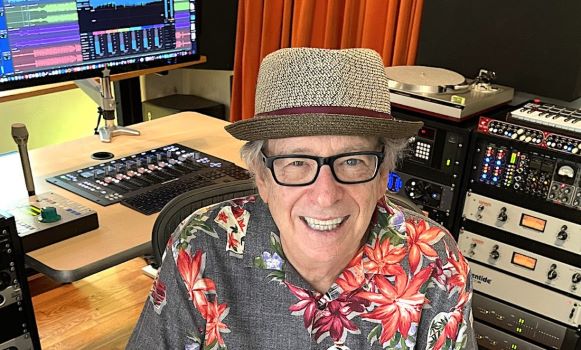
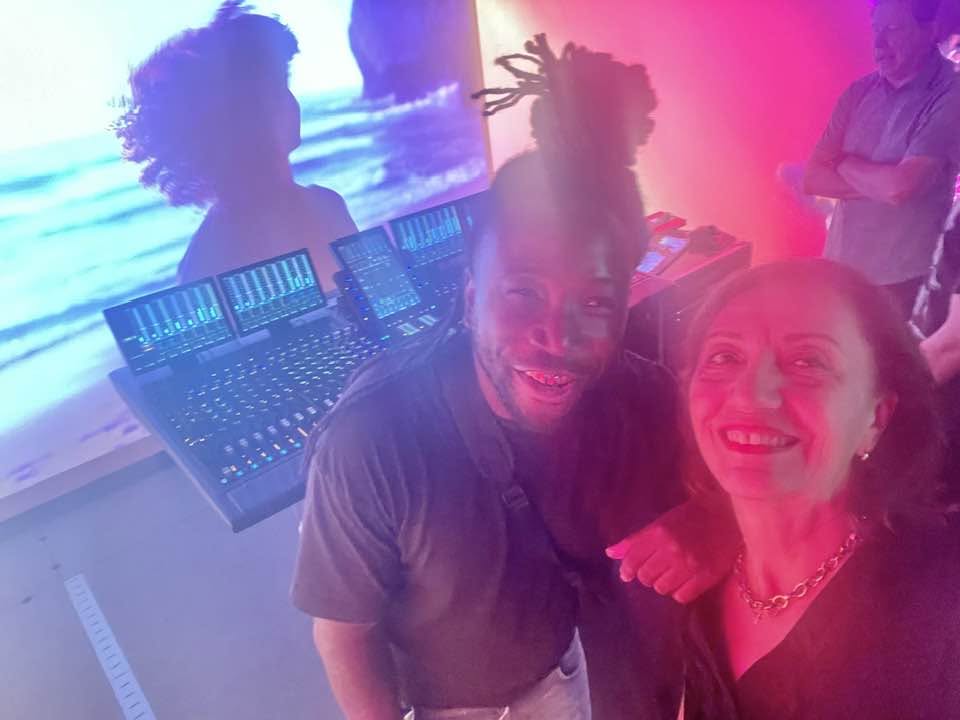
With ROC:am at Roy Ayres Playback event at NuStudio on August 11.
| | | |
818-990-3031 fn
800.717.Keys Toll Free
| | | | |