|
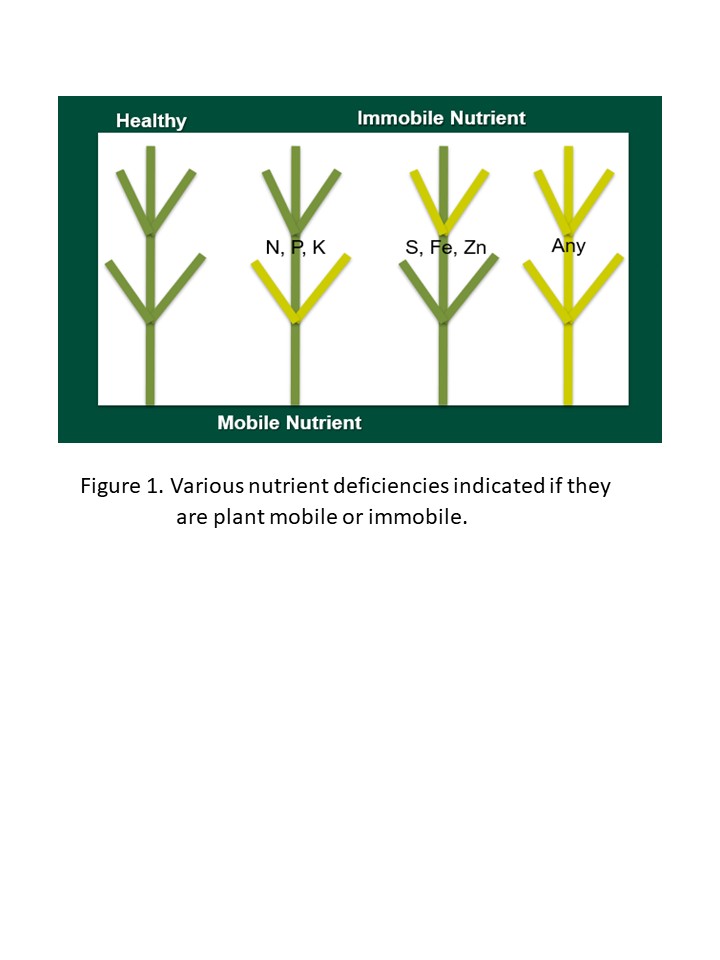
When diagnosing nutrient deficiencies, its important to note where the symptoms are on the plant (figure 1) and how the sick plant appears. Nutrients can be plant mobile (nitrogen, phosphorus, potassium, chloride, magnesium, molybdenum, and nickel) or plant immobile (sulfur, boron, calcium, copper, iron, manganese, and zinc).
Mobile nutrients are able to move from older plant parts to newer plant parts. These deficiencies will be seen on older growth plant parts. Immobile plant nutrients cannot be translocated within the plant. Older leaves will appear healthy and new growth will express the nutrient deficiency.
The main ways that a plant appears sick are:
· Necrotic – death of plant tissue (molybdenum)
· Chlorosis – loss of chlorophyll and yellowing occurs (nitrogen and sulfur)
· Abnormal coloring – dark green/purple leaves (phosphorus), mottling (magnesium)
· Marginal symptoms– on the edge of the leaf (potassium)
· Interveinal symptoms– between the leaf veins (zinc, iron, and magnesium)
When remediating the nutrient deficiency, plant tissues paired with a soil test should be collected and sent to a lab for analysis. Plant tissue sampling is dependent on the plant’s growth stage so be sure you send the proper plant parts to a lab. Plant tissue concentrations are based off of old data and due to crop breeding and other factors, “text book” plant tissue concentrations may not be correct. Because of this, sending separate tissue and soil samples from a good and problematic area are recommended.
Soil testing and applying fertilizer at agronomic rates are the best nutrient management practices. Scouting field regularly and diagnosing issues early can alleviate nutrient issues. Be sure to pair a soil test with a plant tissue test before making a rescue fertilizer application.
|