AUGUST 31, 2026

There is a monthly cost associated with producing and distributing this newsletter. If you value the information being shared, please consider making a contribution to help keep it going. Your support makes it possible to continue bringing this information to our community.

Arizona Free Enterprise Club Wants Regulators Removed From APS Rate Case — But Voters Chose the Regulators


The Arizona Free Enterprise Club is once again inserting itself into the Arizona Corporation Commission — this time asking that two elected commissioners be removed from participating in one of the most consequential utility cases before the Commission.


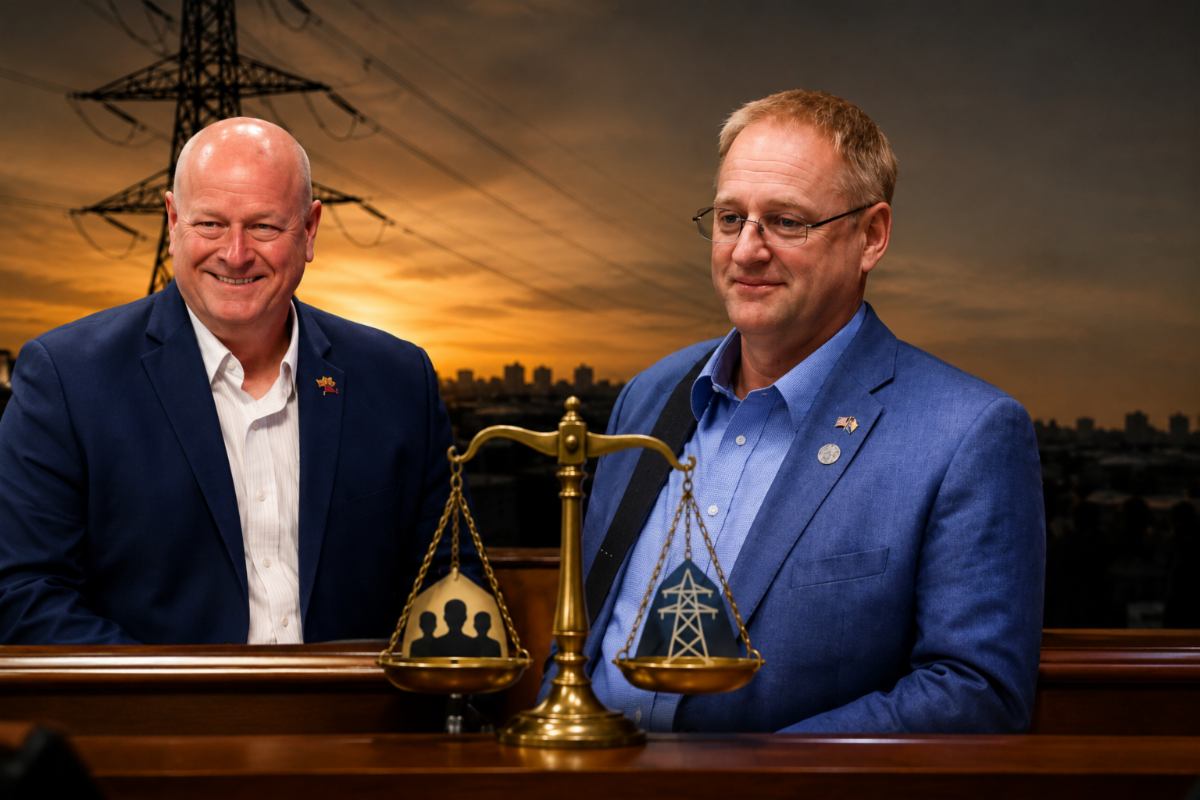
Arizona Public Service is seeking approval for a rate increase that could reach approximately 14%. The Arizona Free Enterprise Club (AZFEC), which intervened in the case to oppose the increase, has now asked that Commission Chairman Nick Myers and Commissioner Kevin Thompson be recused.


Why? Because AZFEC argues the commissioners’ previous public criticism of the organization creates an appearance of bias.


Attorney Brennan Bowen argued in the motion that statements by Myers and Thompson demonstrate “prejudgment, bias, and an appearance of partiality” that should prevent them from considering AZFEC’s evidence in the rate case.


Both commissioners strongly disagree.


Myers said the issues raised in the filing have nothing to do with his ability to evaluate the APS case fairly.


“I stand by what I said, and I've found no basis to recuse myself,” Myers said. “I intend to decide this case based solely on the record before the Commission.”


Thompson was equally clear.


“I’ve always judged every proposal based on its merits,” Thompson said. “I won’t be bullied into staying silent because some partisan activists don’t like their hypocrisy and antics pointed out. I stand by what I said.”


Criticism Is Not Automatically Disqualification

There is an important question here that goes well beyond personalities: When does disagreement with an organization become legitimate grounds for removing an elected regulator from a case?


Commissioners are elected to make difficult decisions. They hear testimony from utilities, consumer advocates, businesses, political organizations and other intervenors. Those parties frequently disagree with commissioners — and commissioners sometimes publicly disagree with them.


That alone should not automatically establish that a commissioner is incapable of reviewing evidence fairly.


AZFEC points to statements Myers made concerning the organization and Republican Corporation Commission candidate Ralph Heap. Myers has alleged that he rejected offers involving AZFEC and Sen. Jake Hoffman that would have helped him circumvent campaign-finance rules during his 2022 campaign. Both AZFEC and Hoffman have denied those allegations.


The organization also cited social-media comments from Thompson, including criticism of witnesses AZFEC presented during the APS proceeding.


Those statements may be controversial. AZFEC has every right to challenge them and argue that they demonstrate bias.


But asking that two of Arizona's five Corporation Commissioners be removed from an APS rate case is a substantial request.


The Voters Elected Commissioners to Make These Decisions

The Corporation Commission is unusual because Arizona voters directly elect its commissioners.


Those commissioners aren't appointed by AZFEC, APS or any other organization appearing before the Commission. They answer ultimately to Arizona voters.


AZFEC has also participated extensively in Corporation Commission elections, including supporting candidates who challenged Myers and Thompson in the 2026 Republican primary. Ralph Heap defeated Myers in that election, ending Myers' reelection campaign.


Political organizations are entitled to support candidates. They are entitled to criticize elected officials. They are entitled to intervene in rate cases when permitted by Commission rules.


But those activities also make the current situation worth scrutinizing.


An organization that actively participated in an election against commissioners is now asking that those commissioners be prohibited from participating in a regulatory proceeding because of statements critical of that same organization.


That raises its own appearance questions.


Let the Case Be Decided on the Evidence

APS's proposed rate increase potentially affects hundreds of thousands of Arizona customers. The public deserves a thorough proceeding in which evidence is questioned, witnesses are challenged and commissioners make decisions based on the official record.


If AZFEC believes APS's requested increase is unjustified, it should present the strongest evidence it can.


If its witnesses have the necessary expertise, establish that through testimony.

If another party challenges that testimony, defend it.


That is how the regulatory process is supposed to work.


Neither Myers nor Thompson has agreed to voluntarily recuse himself. Unless a legitimate legal basis requires their removal, the expectation should be that elected commissioners perform the jobs Arizona voters elected them to do.


Disagreeing with an influential political organization should not, by itself, become grounds for disqualification.


Arizona voters elect Corporation Commissioners to regulate utilities and protect the public interest. Political organizations can participate in that process, but they should not get to decide which duly elected commissioners are permitted to do their jobs simply because those commissioners refuse to remain silent when they disagree.


Arizona Is Suddenly Worried About Flock Cameras. Kevin Payne Tried to Put Guardrails in Place Months Ago


Arizona is having a serious conversation about Flock cameras and automated license plate readers - APLRs.


The question is: Why are we having this conversation now when legislation was introduced months ago to address many of these very concerns?


On August 27, Arizona Attorney General Kris Mayes announced a statewide review of Flock cameras and other automated license plate reader systems, citing concerns about misuse, privacy and potential Fourth Amendment implications. Her announcement followed several Arizona law-enforcement agencies reporting questionable or improper use of the technology.


Chandler decided not to renew its contract after an audit uncovered unexplained use of its system. Other departments have suspended or reconsidered their use of the technology, while Pinal County Sheriff Ross Teeple announced his department would not renew its contract, citing Fourth Amendment concerns.


Those concerns deserve to be taken seriously.


But eliminating a valuable crime-fighting tool altogether isn't necessarily the answer.

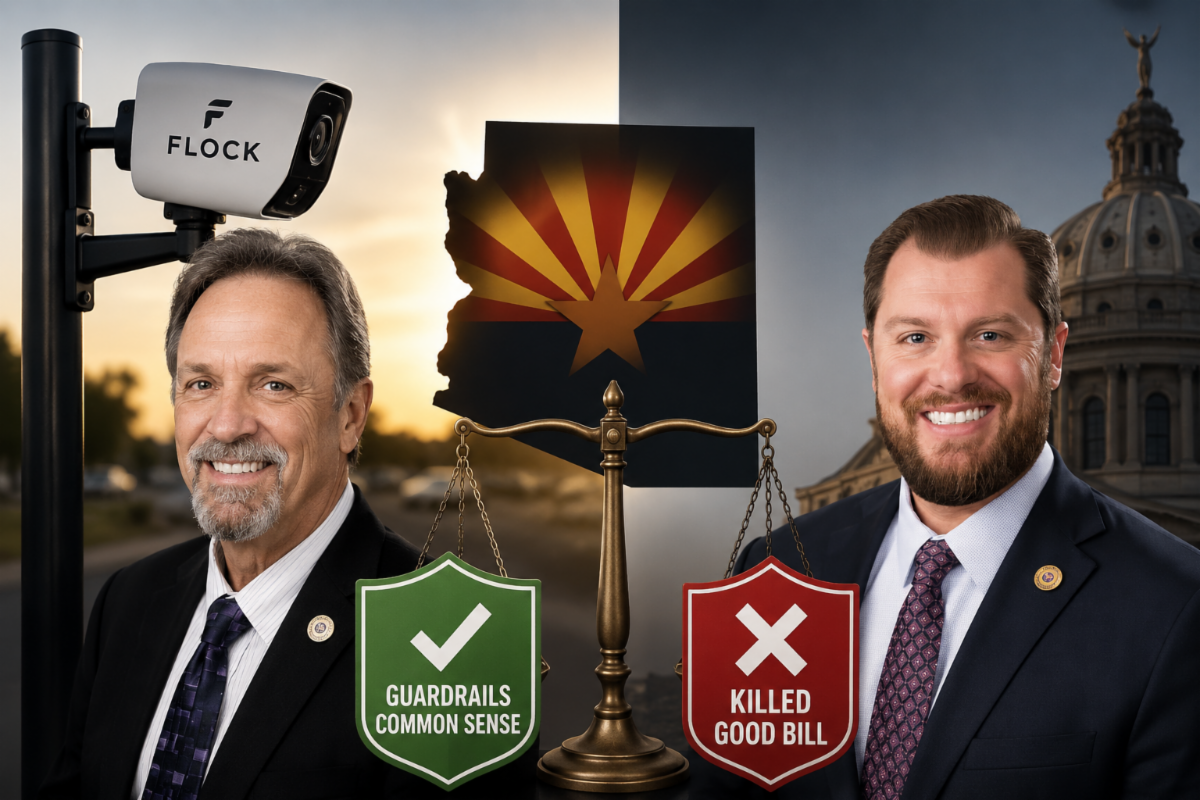
Earlier this year, Republican Sen. Kevin Payne introduced SB 1111, legislation designed to do almost exactly what Arizona is now discussing: establish statewide guardrails for automated license plate readers while preserving their legitimate law-enforcement uses.


Payne Tried to Find the Middle Ground

SB 1111 wasn't a blank check for surveillance.


The legislation would have restricted access to ALPR data to law enforcement and required a trackable criminal case or incident number. Under the version adopted by the Senate Committee of the Whole, access more than 48 hours after an incident or crime generally would have required a warrant or subpoena, with specific exceptions.


It also required password-protected systems that logged who accessed information and when. Agencies would have been required to conduct audits, and unauthorized accessing, using, selling or disseminating ALPR information in violation of the law could have resulted in a Class 6 felony.


Think about that in light of what we're seeing today.


Arizona agencies are discovering questionable searches precisely because audits are uncovering them. Payne's legislation would have made auditing and accountability part of a statewide framework rather than leaving Arizona with a patchwork of individual department policies.


And this wasn't legislation law enforcement was fighting.


The Arizona Association of Chiefs of Police supported Payne's effort, as did the Arizona Police Association. Police representatives argued that license plate readers are valuable for solving serious crimes and finding missing or endangered people while agreeing that clear privacy protections were necessary.


There is evidence that these cameras have saved lives and helped solve crimes. Arizona departments have credited ALPR technology with locating an armed road-rage suspect, finding a homicide suspect's vehicle and helping locate a missing 13-year-old girl.

That is why Payne's approach made sense to me.


Keep the tool. Protect the public. Punish abuse.


Then Came Jake Hoffman

Sen. Jake Hoffman became one of SB 1111's most vocal opponents, calling it one of the worst bills he had seen during his time at the Capitol.


Hoffman attempted to replace Payne's approach with an amendment that would have restricted law enforcement's use of ALPRs essentially to detecting government vehicles on government property. The Senate rejected Hoffman's amendment and adopted Payne's amendment instead.


But Hoffman's opposition helped turn Republican lawmakers against the underlying legislation. The bill never received its expected final Senate vote.


Even Senate President Warren Petersen recognized the consequence at the time: without the legislation, Arizona would be left with no statewide guardrails and without the proposed felony penalty for misuse.


That is essentially where we find ourselves today.


I would characterize Hoffman's role carefully: the public legislative record shows he fought aggressively against SB 1111 and helped build opposition to it, but it does not establish that Hoffman alone had the procedural authority to kill the bill. Other senators also expressed opposition, and the bill apparently lacked enough votes for final passage.


Now Arizona Is Playing Catch-Up

Months later, police departments are investigating misuse, cities are reconsidering contracts and Arizona's Attorney General is launching a statewide review.


Mayes herself says Arizona needs a “statewide approach.”


She's right.


The frustrating part is that Kevin Payne already tried to create one.


No legislation is perfect, and SB 1111 could certainly have been amended further. There were legitimate concerns about its public-records provisions, for example, and lawmakers had every right to debate those issues.


But that's what the legislative process is supposed to accomplish: identify problems, negotiate protections and improve the bill.


Instead, Arizona ended the session without comprehensive statewide standards.

Now we're confronting the exact tension Payne was trying to address: Flock cameras can be an extraordinarily useful law-enforcement tool, but powerful technology without strong safeguards creates opportunities for abuse.


Kevin Payne attempted to find the balance between public safety and individual liberty. Law enforcement supported putting guardrails in place.


Rather than killing good legislation because it isn't perfect, lawmakers should work together to make it better.


Arizona shouldn't have to choose between catching criminals and protecting constitutional rights. We can—and should—do both.

Ralph Heap Clean Elections Case Moves Forward After August 27 Commission Vote


The ongoing Clean Elections case involving Republican Arizona Corporation Commission candidate Dr. Ralph Heap took another step forward on August 27, when the Arizona Citizens Clean Elections Commission considered the next stage of its enforcement process.


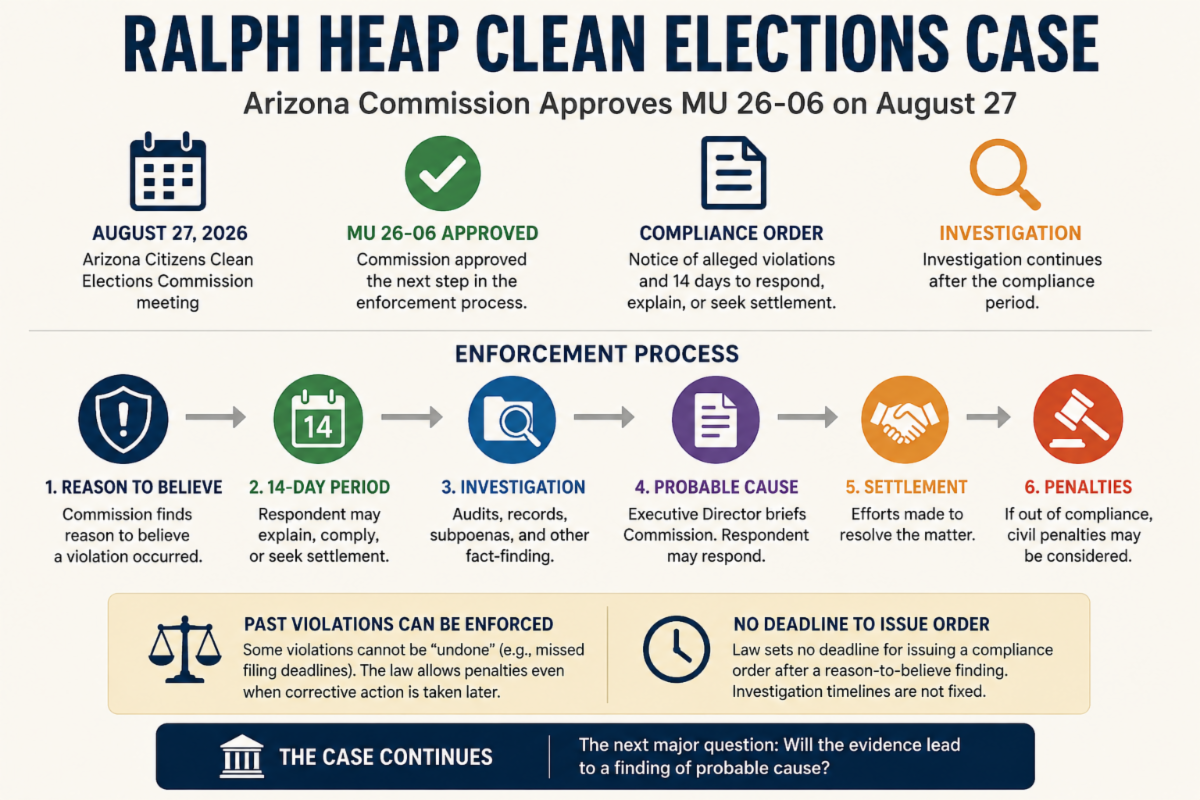
The Commission ultimately voted to approve MU 26-06, advancing the case following its earlier determination that there was reason to believe a violation of Arizona’s Clean Elections rules may have occurred.


That distinction is important. The August 27 action was not a final determination that Heap violated the law, nor was it the imposition of a penalty. Instead, the Commission is following the enforcement process established under Arizona law.


Heap’s attorney, Tim La Sota, had requested that the Commission issue the notice required under A.A.C. R2-20-208(A). That notice, commonly referred to as a compliance order, must identify the statutes or rules allegedly violated, explain the factual basis for the Commission’s reason-to-believe finding, and give the respondent 14 days to respond.


During that 14-day period, Heap may provide an explanation, attempt to comply with the order, or seek a public administrative settlement with the Commission. If the Commission eventually determines that he remains out of compliance, Arizona law allows the Commission to consider civil penalties.

But issuing a compliance order does not end the investigation.


According to the Commission’s explanation of the enforcement process, a reason-to-believe finding also triggers an investigation that can include audits, field work, sworn written responses, subpoenas, testimony and requests for records. Once that investigation is completed, the Executive Director prepares a probable-cause recommendation. The Commission must then separately decide whether probable cause exists to conclude that a violation actually occurred.


In other words, the Ralph Heap case is far from over.


A Violation Cannot Necessarily Be “Undone”

One of the more significant issues addressed in MU 26-06 is whether a candidate can effectively cure a violation after the fact.


The Commission's analysis makes clear that the answer is not necessarily.


The document uses a missed campaign-finance filing deadline as an example. A candidate may eventually file the required report, but that does not change the fact that the report was late. During the time it was missing, the public was deprived of information it was legally entitled to receive.


The same principle applies more broadly to Clean Elections enforcement: some alleged violations involve conduct that has already occurred and simply cannot be reversed.


The Commission's analysis specifically rejects the idea that a compliance order functions as a “get out trouble free card.” It states that completed violations are not automatically exempt from enforcement simply because some corrective action is later taken.


That could become an important issue in the Heap investigation.


The central question is not simply whether Heap can take some action today to bring his campaign into compliance. Investigators may also examine whether a violation already occurred and, if so, whether Arizona law provides consequences for that past conduct.


The Commission's rules specifically direct investigators and commissioners to consider whether a violation “has occurred” and whether a respondent “has violated” the law—not merely whether an ongoing violation can still be stopped.


What Happens Next?

The process outlined by the Commission has several additional steps.


First comes the 14-day compliance period and the continuing investigation. After the investigation, the Executive Director can recommend whether there is probable cause to believe a violation occurred.

Heap will have an opportunity to respond to that recommendation.


The Commission would then vote on probable cause. If probable cause is found, the rules require an effort to resolve the matter through settlement or conciliation. If the matter remains unresolved and Heap is determined to remain out of compliance, the Executive Director may ultimately recommend a civil penalty.


The Commission also retains the ability to reduce or excuse a penalty if it determines there is good cause.


Another issue raised by Heap's attorney involved the timing of the compliance order. The Commission's analysis concluded that Arizona law establishes no specific deadline requiring the Commission to issue that order immediately after making its reason-to-believe determination. According to the document, imposing such a deadline would interfere with the investigative and enforcement process contemplated by the Clean Elections statutes and rules.


The Commission noted that Heap's attorney had already been given opportunities to respond and had also received additional time to provide campaign bank records requested by investigators.

So, while the August 27 vote did not decide the final outcome of the Ralph Heap case, it did make one thing clear:


The investigation continues, and the fact that an alleged violation occurred in the past does not necessarily mean it can simply be cured and forgotten.


The next major question will be what investigators uncover—and whether the evidence ultimately leads the Commission from its current reason-to-believe finding to the much more consequential finding of probable cause.

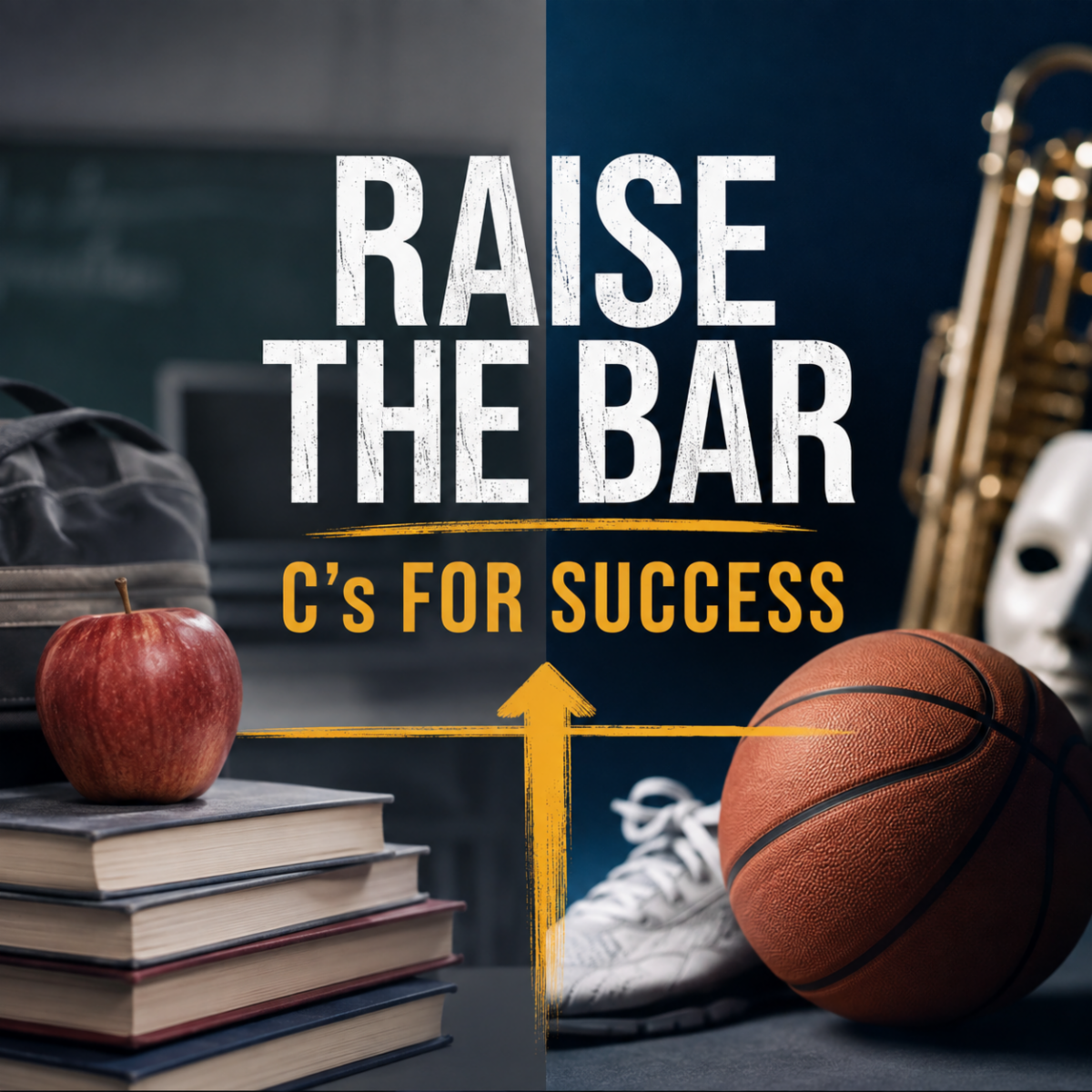
Raise the Bar: A “D” Shouldn't Be Good Enough to Play


Recently, Dysart Unified School District discussed its “Pass to Play” expectations for students participating in athletics and the arts. The numbers presented should start an important conversation about what we expect from our students not only in Dysart but all Arizona schools


Under current expectations, approximately 20% of students participating in athletics and 32% participating in the arts are already academically ineligible. If Dysart raised the standard from a D to a C, those numbers would increase significantly—approximately 43% of athletes and 49% of students in the arts would initially be affected.


Those numbers may sound alarming. I see them differently.


One statement during the presentation caught my attention: “These are the numbers under the current expectations.”


I took that to mean something important: If expectations change, perhaps student performance will change with them.


At the risk of sounding like a boomer, when I was in school, my parents would not accept anything less than a B. I played basketball and volleyball, ran track, and participated in drill team.


Extracurricular activities were a privilege, and academics came first.

Somewhere along the way, we lowered the bar.


Today, a D can be considered a passing grade for purposes of athletic eligibility. Arizona's basic eligibility framework generally focuses on students passing their classes, while districts can establish stronger academic expectations.


I believe Dysart should raise the bar.


If we continually set the bar at the bare minimum, we shouldn't be surprised when some students rise only to the bare minimum. Extracurricular activities can be one of the most powerful incentives schools have. Students want to play football, basketball, volleyball, perform in band, participate in theater, and represent their schools. Why wouldn't we use that motivation to encourage stronger academic performance?


Interestingly, immediately before the Pass to Play presentation, we heard about efforts that could improve students' potential ACT performance. We celebrate academic improvement and encourage students to prepare for college and careers—then turn around and essentially say a D is good enough to participate in extracurricular activities.


There is a disconnect, and I know I'm not the only one seeing it.


The data also showed that academic ineligibility is fairly evenly distributed among all four high-school grade levels. This isn't simply a freshman adjustment problem or a senior-year issue. It deserves attention across the entire high-school experience.


And I don't want to continue blaming COVID.


Students certainly suffered significant learning disruption during the pandemic, but schools have had years to address those losses. At some point, we have to evaluate whether our current strategies and expectations are producing the results we want.


Arizona's academic proficiency numbers should make that conversation even more urgent. When only around 40% of students demonstrate proficiency on state assessments—and English language arts proficiency is roughly one-third of students—we have a problem.


Raising the eligibility standard from a D to a C would undoubtedly create challenges at first. If 43% of athletes and nearly half of arts participants would initially fall below the new standard, we shouldn't ignore that number.


But we also shouldn't use it as a reason to keep expectations low.


Instead, let's ask what tutoring, academic monitoring, study halls, teacher support, parent communication, and intervention programs students need to reach a C.


The goal shouldn't be to remove students from sports or the arts.


The goal should be to help them earn their way onto the field, court, stage, and performance

floor while succeeding in the classroom.


A C is not an unreasonable expectation.


Today, a D can be considered a passing grade for purposes of athletic eligibility.

Beyond the Horse Race: What the Latest Arizona Governor’s Poll Is Really Telling Us


I am, of course, hoping to see Republicans win across the board this November. But I think this poll gives us something even more valuable than a snapshot of who is ahead: it shows us where Republicans may not be connecting with independent voters.


In Arizona, we cannot afford to ignore Independents. They represent a significant portion of the electorate, and in a competitive statewide race, they can ultimately determine the outcome.


Instead of dismissing polling we don't like, Republicans should study it. Where are we losing voters on education, water, housing, the economy and other important issues? More importantly, how do we better communicate Republican solutions to the independent voters who will help decide this election?


Everyone is watching the polls between Democratic Gov. Katie Hobbs and Republican Congressman Andy Biggs, along with the numbers coming out in Arizona’s other statewide races.


But topline numbers only tell us so much.


One reason I appreciate the polling from Noble Predictive Insights is that the firm frequently drills deeper into why voters are answering the way they are. That information can tell us much more about the state of a race than simply knowing who is ahead on a particular day.


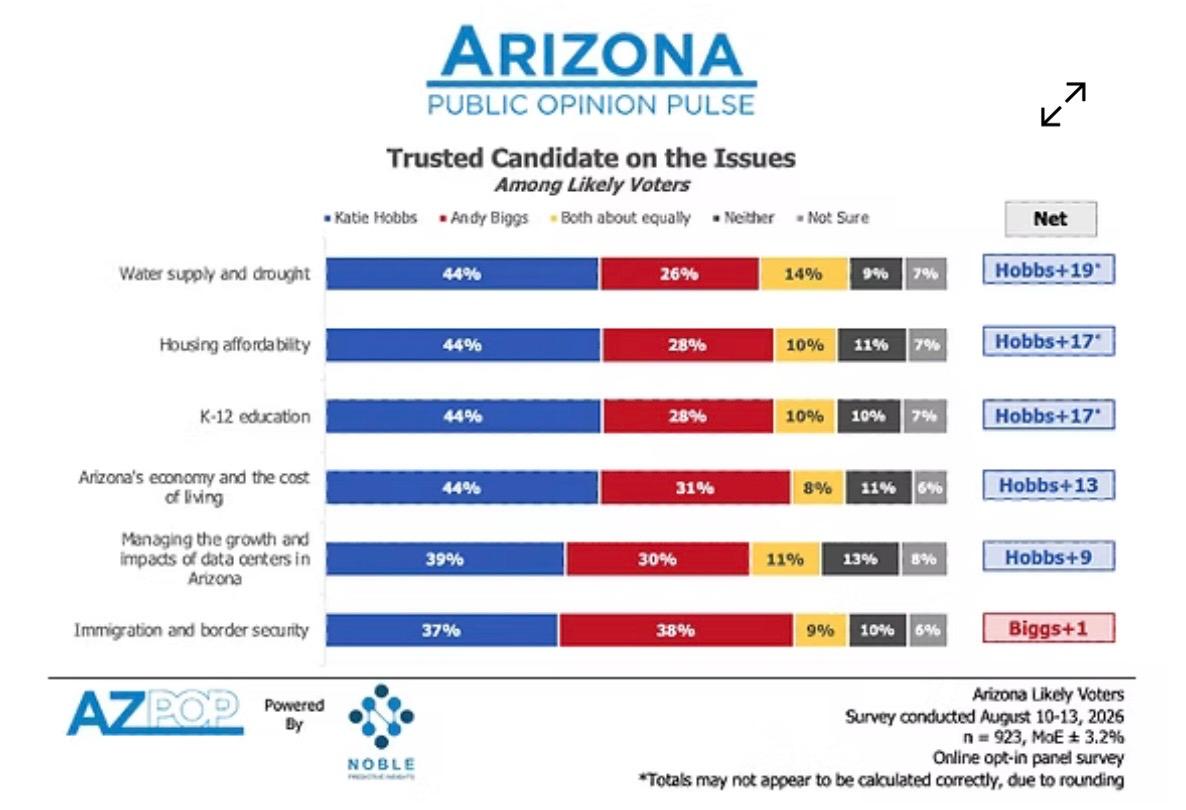
Noble Predictive Insights' August Arizona Public Opinion Pulse surveyed 1,040 registered Arizona voters from August 10–13, including 923 likely voters. The margin of error among likely voters was ±3.2 percentage points.


The headline certainly gets your attention.


Among likely voters, Hobbs leads Biggs 48% to 35%, a 13-point advantage. Another 12% remain undecided, while 4% say they plan to support a third-party candidate.


But neither candidate has reached 50%.


And with more than two months remaining before Election Day, there is plenty of campaigning still ahead.


Look Behind the Numbers

Perhaps more interesting than the horse-race number is what voters told NPI about individual issues.


According to the poll, likely voters currently trust Hobbs over Biggs on several major issues, including water management, education, housing affordability, the economy and the growth of data centers.


Biggs holds an advantage on immigration, although NPI reports that his lead on that issue is within the poll's margin of error.


Those numbers provide a roadmap for understanding what we're likely to hear about during the final stretch of the campaign.


NPI founder Mike Noble made another important point: voter opinions aren't frozen in place.


“Just because they trust Katie Hobbs on an issue now, there is no guarantee that they will after campaigns and independent groups blanket the state with ads over the next 75 days,” Noble said.


That's worth remembering whenever we see a poll.


A poll is a snapshot, not an election result.


Arizona's New Lieutenant Governor

There is another interesting dynamic in this year's gubernatorial election that Arizona voters have never encountered before.


For the first time, candidates for governor will run with a lieutenant governor.


Arizona voters approved Proposition 131 in 2022, creating the office beginning with the 2026 election. But NPI's polling suggests running mates may not be a major factor for most voters.

Only 16% of likely voters said a gubernatorial candidate's choice of running mate would have a “great deal” of impact on their decision.


Meanwhile, 38% said the selection would have either “not much” impact or “none at all.”

That doesn't mean the lieutenant governor candidates won't matter. A running mate can still influence enthusiasm, campaign strategy and how voters perceive the overall ticket. But at least for now, the poll suggests most voters are primarily focused elsewhere.


There Is Still a Lot of Election Left

Arizona is once again shaping up to be one of the country's most closely watched political battlegrounds.


The 13-point advantage for Hobbs in this particular poll is significant. So is the fact that she remains below 50%, with a sizable group of voters still undecided or considering another candidate.


But the most useful information may be found beneath those headline numbers.


What issues are driving voters? Who do they trust to handle those issues? And, most importantly, what could change their minds between now and Election Day?


Those are the numbers I'll be watching.


Polls don't elect anyone. Voters do.


And between now and November, Arizona voters are going to hear an enormous amount from candidates, political parties and outside organizations trying to earn their votes.

When the Elections Officer Doesn’t Follow Election Rules


There is an irony that is difficult to ignore when the person responsible for overseeing elections apparently fails to comply with campaign finance requirements himself.


Maricopa County Recorder Justin Heap’s active candidate committee reportedly failed to file its required annual campaign finance report by the January 15 deadline. The committee’s previous filing was submitted in April 2025 and reported no contributions or expenditures during the first quarter of that year.

Missing a campaign finance deadline isn’t simply an administrative oversight without consequences. Arizona law provides for accumulating late penalties.


According to the reported calculations, Heap’s committee was initially accruing penalties of $15 per day. After January 31, the penalty increased to $25 per day. By late August, those fines would have grown to more than $5,000—and they continue increasing until the filing requirements are satisfied.

For any candidate, that should be concerning. For the Maricopa County Recorder, it raises an even bigger question: How can the person charged with administering election laws fail to comply with campaign finance requirements governing his own committee?


The issue could also have consequences beyond the accumulating fine.


The Maricopa County Elections Campaign Finance Handbook states:

“Filing officers shall not accept the nomination paper of a candidate if the person is liable for an aggregation of $1,000 or more in fines, penalties, late fees, or administrative or civil judgements that have not been fully satisfied at the time of the attempted filing of the nomination paper, except in cases where the liability is being appealed.”

That means unresolved campaign finance penalties could potentially become an issue should Heap seek reelection in 2028. Of course, there is plenty of time between now and then for the report to be filed and any penalties to be resolved.


But that really isn’t the larger point.


Campaign finance laws exist for a reason. Candidates are required to disclose where their money comes from, how much they receive and how they spend it. Those rules promote transparency and give voters an opportunity to see who is financing the people asking for their votes.


The rules should apply equally to everyone.


Maricopa County’s Recorder is not merely another candidate. The Recorder occupies an office with significant responsibilities involving voter registration and elections. That makes following election-related laws and deadlines particularly important.


Public officials routinely expect candidates, political committees and voters to follow election laws precisely. Deadlines matter. Forms matter. Signatures matter. Procedures matter.


They should matter just as much when the person missing the deadline is the county official responsible for administering those rules.


The question now is simple: Why hasn't the report been filed, and when will the outstanding issue be resolved?


Accountability shouldn't depend on whose name is on the paperwork.

Patriot Happy Hour: Where Republicans Come Together as Friends


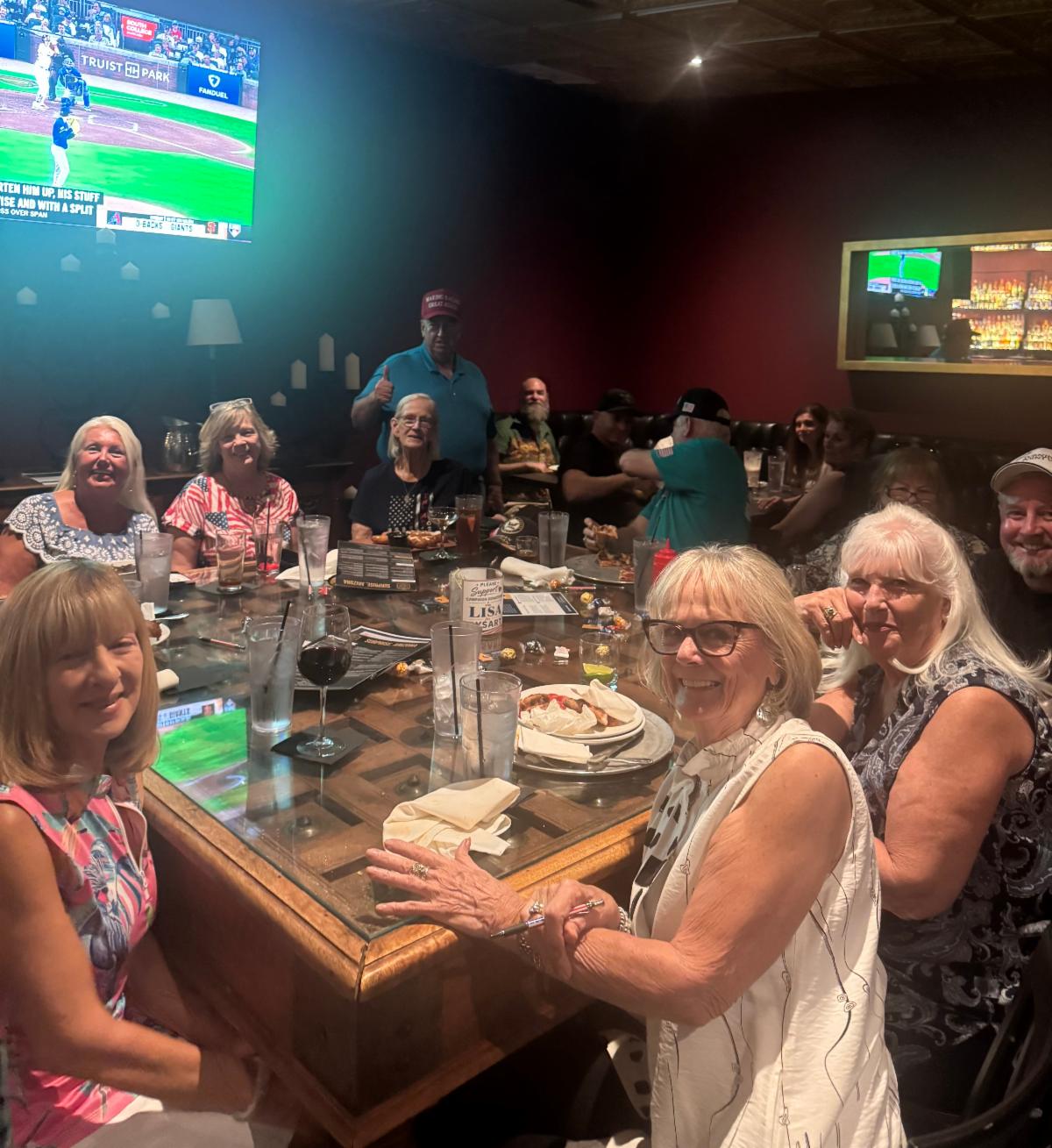
Last Wednesday was another Patriot Happy Hour, and as always, it was a great time filled with conversation, laughter and friendship.


When I started Patriot Happy Hour, the goal was simple: bring Republicans together and give us an opportunity to actually get to know one another.


Spend a few minutes on social media and you will quickly see Republicans treating other Republicans terribly. People argue, attack one another and sometimes say things behind a keyboard they would probably never say face-to-face.


I believe one way we change that is by getting out from behind our screens and sitting down together.


It is much harder to view someone as the enemy once you've shared a table, laughed together and learned a little about each other's lives.


That is what Patriot Happy Hour is about.


Of course we talk about politics. Put a group of Republicans in a room together and politics is going to come up! But politics isn't all we talk about.


We talk about our families. We talk about faith. We talk about our communities and the future. We share stories, exchange ideas and laugh—a lot.


There is no agenda. There are no speeches. You don't have to agree with everyone in the room. You don't even have to know anyone when you arrive.


Just come and meet people.


Republicans are going to disagree sometimes. That's healthy. We can debate candidates, policies and the direction of our party without turning fellow Republicans into enemies.

At the end of the day, we probably have far more in common than social media would lead us to believe.


Patriot Happy Hour gives us a chance to remember that.


If you haven't joined us yet, I hope you'll come to the next one:


Patriot Happy Hour

Wednesday, September 30

4:00–7:00 p.m.

State 48 Brewery in Surprise


Come for a few minutes or stay for the entire evening. Meet someone new, bring a friend and enjoy some good conversation.


Politics may bring us together, but friendship keeps us together.

Thank you,

Lisa Everett


www.patriotnheels.com


Follow me on:

X - @patriotnheels

Facebook - @patriotnheels

Instagram - @patriotnheels