When Unpaid Rent Isn’t Enough to Evict


San Francisco is considering a significant change to one of the most basic rules of rental housing: when unpaid rent can support an eviction.


The proposal would tie nonpayment evictions to HUD’s Fair Market Rent—a federal benchmark that can be far higher than what a tenant actually pays.


The consequences become especially striking in subsidized tenancies. In one two-bedroom example, a tenant responsible for just $500 per month could miss eight monthly payments before the unpaid balance crosses the current San Francisco FMR threshold.


We look at how the proposal would work, why Oakland and Berkeley offer a preview, and whether rising eviction numbers really support the case being made for another layer of regulation.


See why a federal rent number could leave some housing providers waiting months to act →

SECTION 8: KNOW THE RULES BEFORE THEY BECOME A PROBLEM


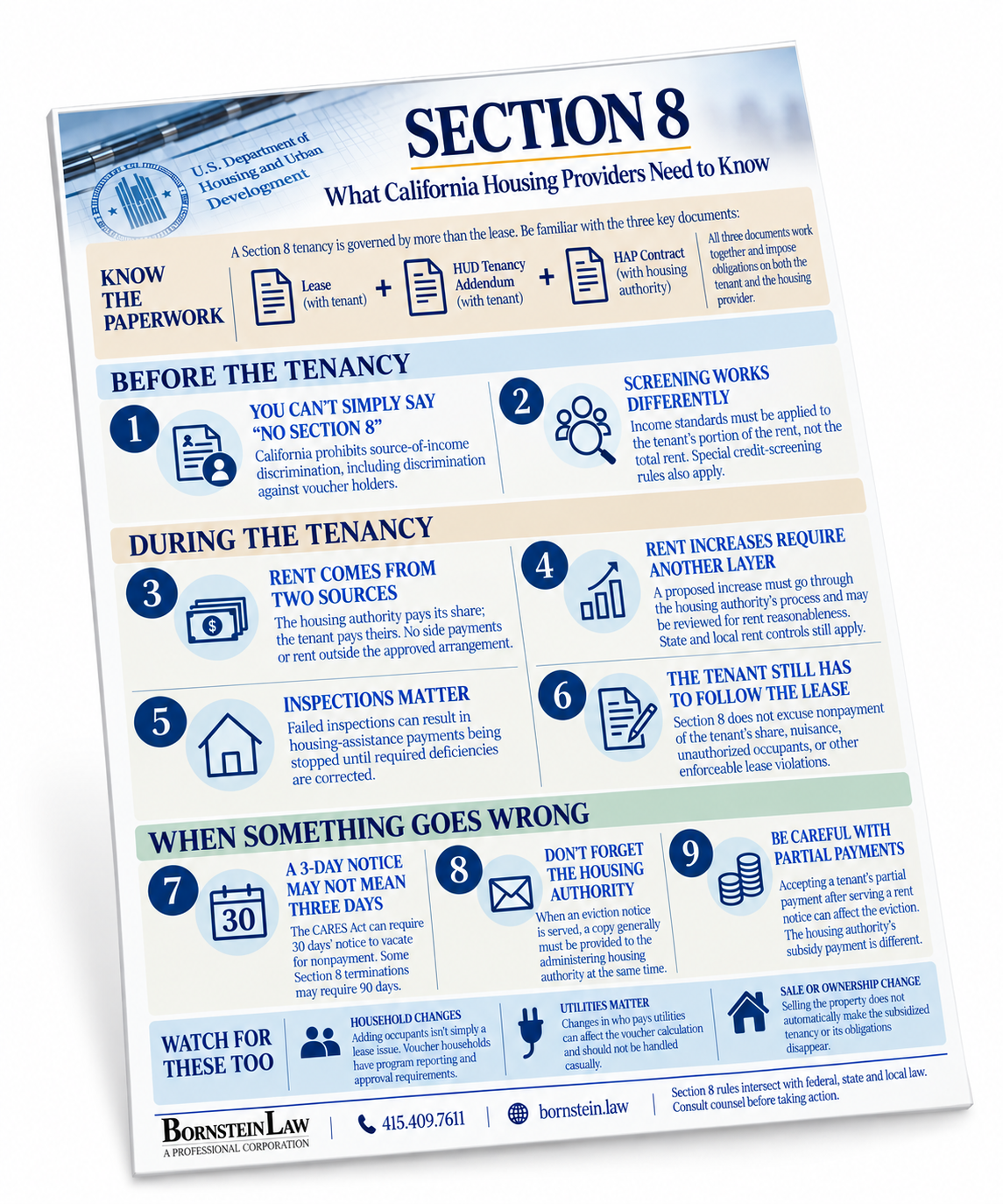
Section 8 tenancies come with an additional layer of rules—from applicant screening and rent increases to inspections, notices, partial payments, and communication with the housing authority.


We've put together a one-page Section 8 cheat sheet for California housing providers, highlighting nine issues owners should have on their radar, along with the key documents and a few easily overlooked trouble spots.


Download the Section 8 Cheat Sheet ›

Section 8: Know the Rules Before You Say No


The growing complexity surrounding subsidized tenancies may leave some housing providers wondering whether they want to participate at all. But California's source-of-income protections put important limits on how owners can respond to applicants who use housing assistance.


In this earlier webinar, Daniel Bornstein walks through the discrimination issues surrounding Section 8 and explains why a blanket “no vouchers” approach can create problems of its own.


Watch on YouTube →


Is there a matter top of mind? Schedule a time to talk. Daniel@bornstein.law.


Help us help others. Share with like-minded owners, property managers, and real estate professionals swimming upstream in a complicated regulatory regime.

X Share This Email
LinkedIn Share This Email