FEBRUARY 3, 2023

Dear Pleasantville Families,

As part of the district’s Strategic Plan, my 22-23 goal is to focus on safety. To that end, I asked for volunteers to join a Reunification Task Force and help refine our plan to reunite students with their parents/guardians in the event of a school emergency. 


The task force, made up of parents, Pleasantville Police Department, Pleasantville Ambulance Corp and Pleasantville Volunteer Fire Department personnel, and school district staff, met several times in January and created a plan that prioritizes student safety. 


The group learned about reunification and identified positives and challenges unique to Pleasantville. We mapped out the process should it need to take place in our schools or at offsite locations. Two important factors for me are redundancy and applicability. Redundancy is essential so that we are not reliant upon any one individual to carry out the process and applicability so that we are able to adapt plans accordingly. The task force also discussed the best way to communicate with parents/guardians about reunification. 


THERE ARE SEVERAL STEPS TO TAKE NOW: 

1. Update your emergency contact information in the parent portal (select the child, select contact verification). Make sure all emergency contacts are up to date and phone numbers for emergency contacts are current.

  • If you can, include someone local as one of your emergency contacts. Proximity counts in an emergency.
  • Use cell phone numbers as your primary numbers. Add any secondary number(s).

2. Sign up for K12 Alerts and make sure your contact information in the system is always up to date. This is the system the district uses to contact you in an emergency.


Here is a description of how communication around an incident will be made:

  • Text may come with limited information and may direct you to an email with more information.
  • Text may also contain a link to a website with more information.
  • To the extent possible, additional information will be sent throughout the duration of the emergency.
  • Do not rely on information on social media or coming from individuals in the situation. Information from the district will be verified and accurate. 


STEPS TO TAKE IN THE EVENT OF AN EMERGENCY:

Do not go to the school or any other location until you are notified to do so.

  • Your vehicle on the road or parking lot will slow the law enforcement and/or other emergency personnel response. 
  • Your presence will interfere with emergency services. 
  • Staff are busy managing the incident and taking care of children. We cannot tend to family members’ needs.
  • Students may be offsite.
  • We will notify you, telling you where to go to pick up your child.
  • If you can, walk to the location -- do not drive, as traffic could slow the process.
  • When you come to be reunified with your child, bring a photo ID.
  • Whoever is coming needs to be a parent or an identified emergency contact on the parent portal. Only parents or individuals authorized on the child’s emergency contacts from the parent portal will be able to pick up your child.


I cannot overstate the value of planning in advance. I want to thank the Reunification Task Force members for helping us all think ahead. 


If you have questions, contact your building’s assistant principal. 


For the youth, 

Dr. Tina DeSa

Superintendent of Schools


The Things They Carried

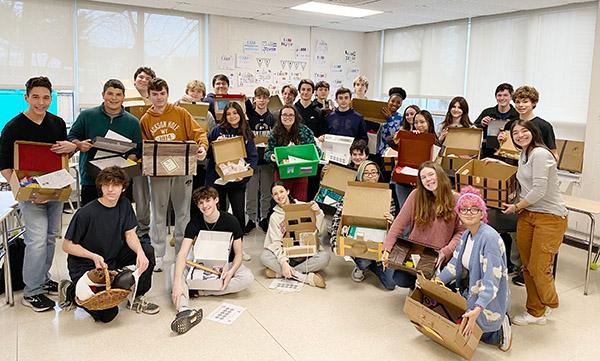
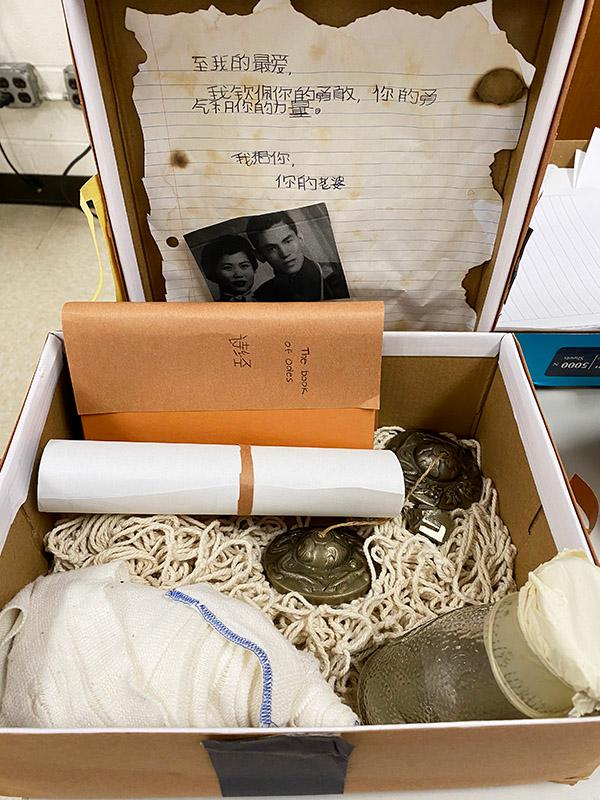
When tenth grader Camilla Zabikhodjaeva packed a trunk that an indentured servant might take from her home in India to a new life in Guyana, she included cinchona bark, an antidote to malaria, a poppy flower to remind her of home and Vishnu’s Mace, which promised spiritual protection to migrants.


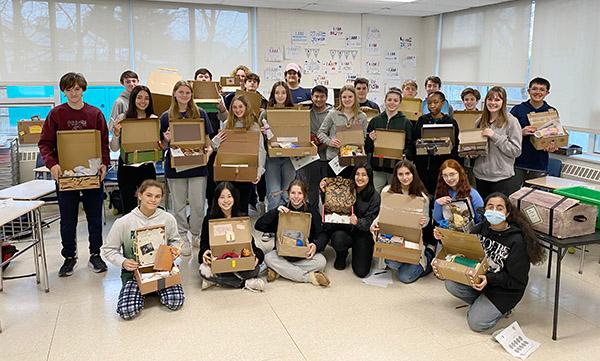
Camilla was just one of many students in Rikki Saperstein’s Advanced Placement World History classes at Pleasantville High School who researched 19th Century migration patterns and created trunks full of objects migrants might carry. 


“We were given a lot of freedom to do individual research and use primary sources before deciding what to put in our trunks,” Camilla said. “When it came time to share with others, it was really interesting to see how everyone else did it, what they thought was important about the migrations.”


Students studied migrations of those seeking a better life, as well as the forced migration of Indian indentured servants to Africa and the Caribbean. 


“The students did a phenomenal job creating and filling these trunks,” Saperstein said. “In the process they learned that many voluntary migrations occurred because of job opportunities in new places and that many migrants, whether voluntary or not, faced discrimination in the new cities that they now called 'home.'”


After researching and creating their trunks, students practiced their communication skills as they all met at different “ports of call,” to share their experiences.


Zach Neilson-Papish took the role of a British murder convict who emigrated to Australia rather than face the death penalty. His trunk included hardtack, a biscuit that would not spoil during the long voyage, some Earl Grey Tea to reflect his British roots and opals, which are mined in Australia. 


“I think we went more in depth on this project because each of us had to explore what it was like for an individual person to migrate,” Zach said. “Plus, the items were so personal it felt like you really got to know something about their lives.”  

Patterned on History

When the Brazilian artist Romero Britto created a pyramid for the opening of a King Tut exhibit in London some years back, he called on 1,500 children to help him paint two sides of the pyramid.

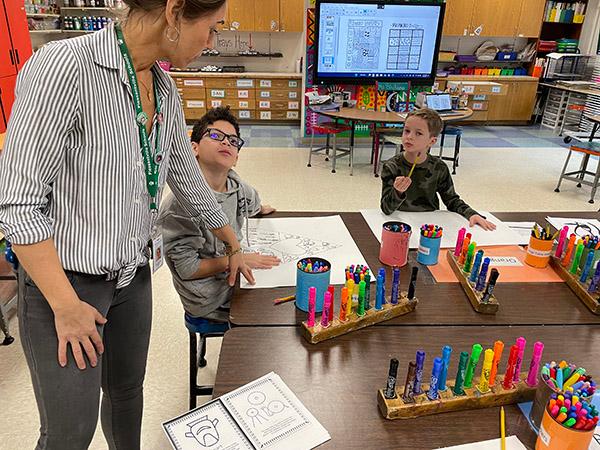
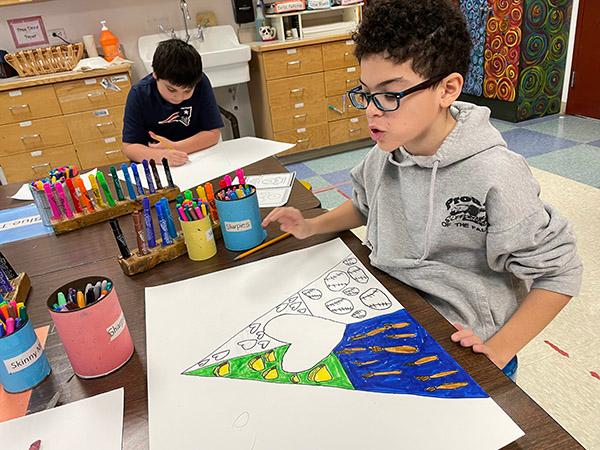
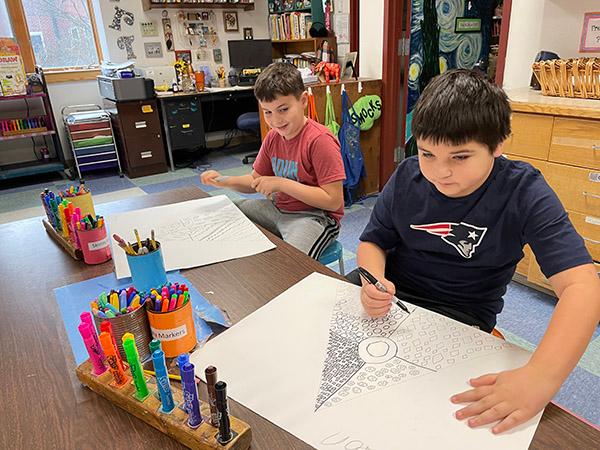
Erica Siciliano, the art teacher at Bedford Road School, was so inspired by Britto’s community art spirit that she decided to have her students work in the Britto style. 


Now some 4th graders are making their own pyramids, decorated in the bold colors and patterns that Britto is known for. 


“While they are making art, the students are also learning about artists and different styles of art through the ages,” Siciliano said. 


With the Britto pyramid project, the students decorated three sides of a pyramid. On two of the sides, they created a central Egyptian symbol surrounded by patterns. Siciliano encouraged the students to make sharp patterns and color them brightly. On the third side of the pyramid, she had them draw something they cared about, that would tell viewers a bit about them.


Several of the children used sports team logos in their patterns. 


One child, Rocco, drew a heart surrounded by tacos and paint brushes.


“I love to eat tacos and painting is my zone,” he said. 


Share the Pville Press with a friend. Forward this email to Pleasantville community members who might like to sign up and learn about all the great things happening in the PUFSD.

Join Our Mailing List
 
 
Web  Facebook  YouTube  Instagram