|
Why the Term Wellness Should Be
Taken With Multiple Grains of Salt
Introduction
A decade ago, a ‘World Happiness Report’ ranked the U.S. a dismal 85th among nations in wellbeing; just two months shy of 2026, we’re doing better now (24th) but feeling worse. Finland, Denmark, Iceland, Sweden and the Netherlands are the top five in terms of the happiness of its population.
Alvin Toffler, famous for the 1970 mega-hit book, "Future Shock" (six million copies sold), wrote: “One of the definitions of sanity is the ability to tell the real from the unreal.”
Soon we’ll need a new element in the definition of sanity—an ability to differentiate between a wellness concept that is but a bloated, jejune and distorted version of wellness from the phrase akin to the original focused wellness. Anyone unable or in denial about the profound distinctions of these two concepts should be under suspicion and closely supervised.
Toffler made a good point about recognizing the real from the unreal. Too bad he’s not around to weigh in on this matter.
What Wellness Was Versus What It Has Become
For the most part, wellness is now a catch-all term for multiple industries selling products, places, beauty, real estate and medical testing. It includes treatment services, luxury spa vacations unlikely to do much for advanced mental and physical wellbeing. The former industries are simply not focused upon promoting lifelong skills or initiatives that promote human functioning.
It was not always this way. The term wellness first appeared in the English language in the late 1950s, thanks to a physician named Halbert L. Dunn. Dr. Dunn was an active member of a Unitarian Universalist church in Bethesda, MD.
At some point in the late 1950s, Dr. Dunn, a prominent Public Health officer, delivered 29 short talks on a healthy living theme that he termed, "High Level Wellness for Man and society." Dunn's description of the concept, which led to a book and some celebrity, influenced other medical doctors, a few of whom seemed quite supportive of his ideas.
Dunn described wellness as a change process wherein one moves forward toward a higher potential of functioning. One physician acolyte, Dr. John Travis, followed Dunn's ideas with a view promoting a wellness energy system from illness toward 12 dimensions of well being.
Probably the most widely adopted model was Dr. Bill Hettler's National Wellness Institute's six dimensions
of wellbeing through conscious evolution along six dimensions--Emotional, Physical, Intellectual, Spiritual, Occupational and Social.
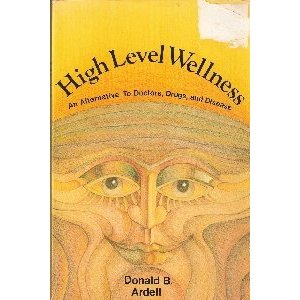
Wellness definitions always varied, but not in the initial decades starting in the 1970s. The first popular book about the term wellness, namely “High Level Wellness: An Alternative to Doctors, Drugs and Disease,” was my own work inspired by Dunn and published by Rodale Press in 1977.
This, of course, was and remains the best, absolutely HUGE and wise description that should have been adopted then and forevermore by everyone. As the author, I can make this claim objectively and without a hint of bias.
While I am opposed to displays of the Decalogue on courthouse steps or other government spaces, I would not complain if secular plaques or monuments quoting my original authentic wellness definitions were to be posted in courtrooms, public squares, government offices--even churches.
Alas, such seems unlikely. Wellness now, half a century since the Rodale book was released, has metastasized into melanoma-like aberrations of the original wellness concept. As a result, the public is confused by diverse promotions, ads, claims and contradictory applications of so-called wellness, few of which have much relevance to the original expressions by the early promoter. The defining idea about this life-enriching approach was originally focused upon what individuals can do for themselves to advance mental and physical levels of wellbeing.
To counter the misrepresentations and return the wellness concept to its origins, I adopted (and protected) the phrase REAL wellness.® This model of the term wellness is addressed in skill sets within four dimensions. The acronym REAL stands for reason, exuberance, athleticism and liberty. Within these dimensions are the five elements of well-being that Gallup measures annually: life purpose, social engagement, financial security, sense of community and physical health. REAL wellness also encompasses other elements that factor into quality of life, particularly respect for science and evidence-based thinking and decision-making, meaning and purpose (rather than vague "spirituality"), the common decencies, love and joy, and more along the lines of personal skills for enhanced effectiveness and life satisfaction.
The Current Situation
Multiple definitions of wellness are out there, authored by nearly everyone who ever attended a National Wellness Conference, wrote or read a book on wellness or sought to promote a product, business, center or treatment of one kind or another using the word. Like myself, most wellness definition writers take a page from the Catholic Church, insisting that theirs is the one true expression. Well, they can’t all be true because they’re different and besides, it’s too early in the game to fix upon any one as being best, other than my own, of course. And besides, it’s not polite.
If I were to channel my inner Trump, I’d say “other models suck. Believe me—total disasters. Sad. Crooked. Pitiful. Not nice. Boring. So unfair.”
Summary
When you hear or read about wellness, look to see if the claims made fit in one or more of the four dimensions listed below that represent REAL wellness. If its about products, services, gadgets, treatments or places for “wellness,” be suspicious.
It may be helpful or enjoyable, and somebody’s idea of wellness, but it’s probably not REAL wellness®.
Have fun, enjoy spas and/or beauty products and all the rest of the foo foo, while taking responsibility for your philosophy and lifestyle that leads to thriving and flourishing by doing things your way. Good luck.
|