News and information to help journalists serve the public and stay safe.
|
|
By
Melissa Lyttle
, an independent visual journalist based in Washington, D.C.
I can count about a dozen friends, all of them photographers, who’ve either tested positive for COVID-19 or had symptoms but were unable to get a test. Several have been in quarantine for weeks. I have friends who have colleagues who’ve been in the hospital hooked to ventilators. And on Easter Sunday, the photo world learned about the death of one of our own —
New York Post photographer Anthony Causi
, a 25-year veteran of the paper, and one hell of a sports shooter.
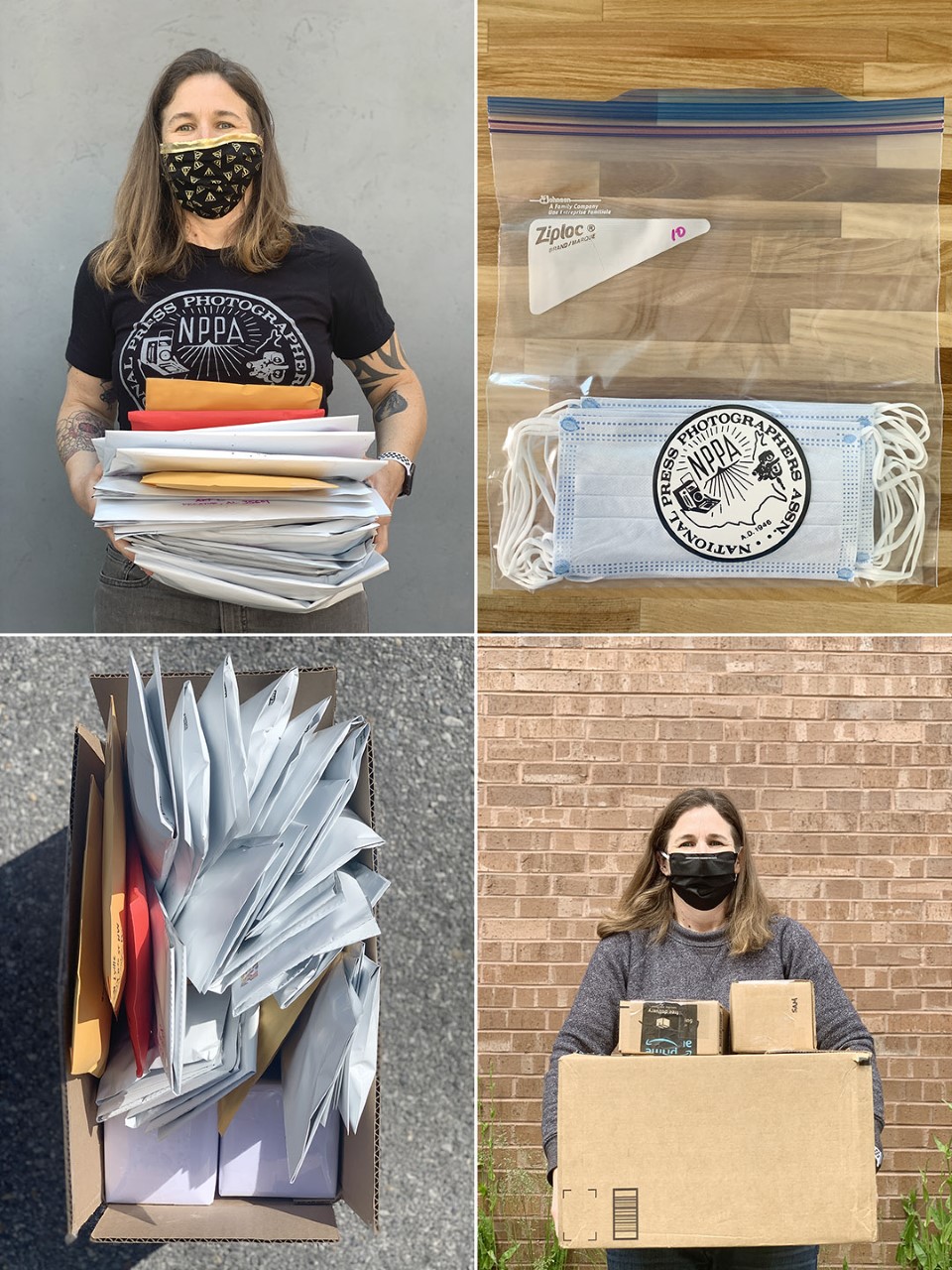
A few weeks ago, I got an email from someone (who wishes to remain anonymous) at an organization I’ve worked with in the past, asking if the
National Press Photographers Association (NPPA)
would have any use for face masks. She and some friends chipped in and ordered as many as possible from a manufacturer in China. She wanted to get them into the hands of visual journalists covering the coronavirus pandemic.
“YES! Let’s do this! Photographers need this more than ever,” I was screaming on the inside. “Sure, I can figure out how to get them out to people,” I replied.
A few days later, a box of 1,000 masks showed up on my front porch.
Read on
to see how Melissa matched the masks with those in need.
|
|
Protests in several state capitals against stay-at-home orders have challenged already-stretched newsrooms to make coverage decisions that
take into account safety
, resources, and news judgment.
John Daniszewski
, Associated Press Vice President and Editor at Large for Standards, described to us by email how one of the largest news organizations in the world is covering the demonstrations:
“
We have not circulated any guidelines, but the editors involved have been discussing best practices on how we ought to cover these.
“In general, we have decided that we have reached a point where we are better off shifting from individual coverage of each rally, many of which are not large, and rather presenting more generally what the events are about and where the organization and impetus for them is coming from. We don’t want to overstate the protests when they occur, and by the same token we do not want to under-cover them either -- they are clues to the policy and political divides that do exist in the country.
“A few examples of our coverage choices:
- We have a poll coming out that shows most Americans actually support the stay at home orders, in contrast to the protest activity.
- Reporters have been careful to note that the number of people who are protesting are the same as any regular Thursday in some cases.
- We transmitted a piece (Tuesday, April 21) looking at the misinformation circulating on the Facebook pages that played a role in recruiting protesters, and the story also looked at some of the individuals and groups circulating that information.
“As with any organized public protests that exist largely to garner attention to a cause, a sense of balance is needed, including fact-based reporting into how large the protest is, is it truly spontaneous and grassroots, who is driving the action and why, how broadly popular the protest aims are and how the protest might affect public debates and health and safety going forward. Given how many of the actions we’ve seen and the varying nature of support in each instance, we think focusing on the drivers of these actions is the more informative way to go.
“Organized protests usually have to be fairly significant in size and impact or else spark some notable public reaction to be newsworthy, especially at a regional or national level.”
|
|
|
The National Press Club Journalism Institute is spotlighting
t
he next generation of journalists,
students graduating from college or Master’s programs this spring into
a challenging job market
, in hopes they’ll meet future bosses and colleagues here, who will reach out and support them in building journalism’s future together.
School
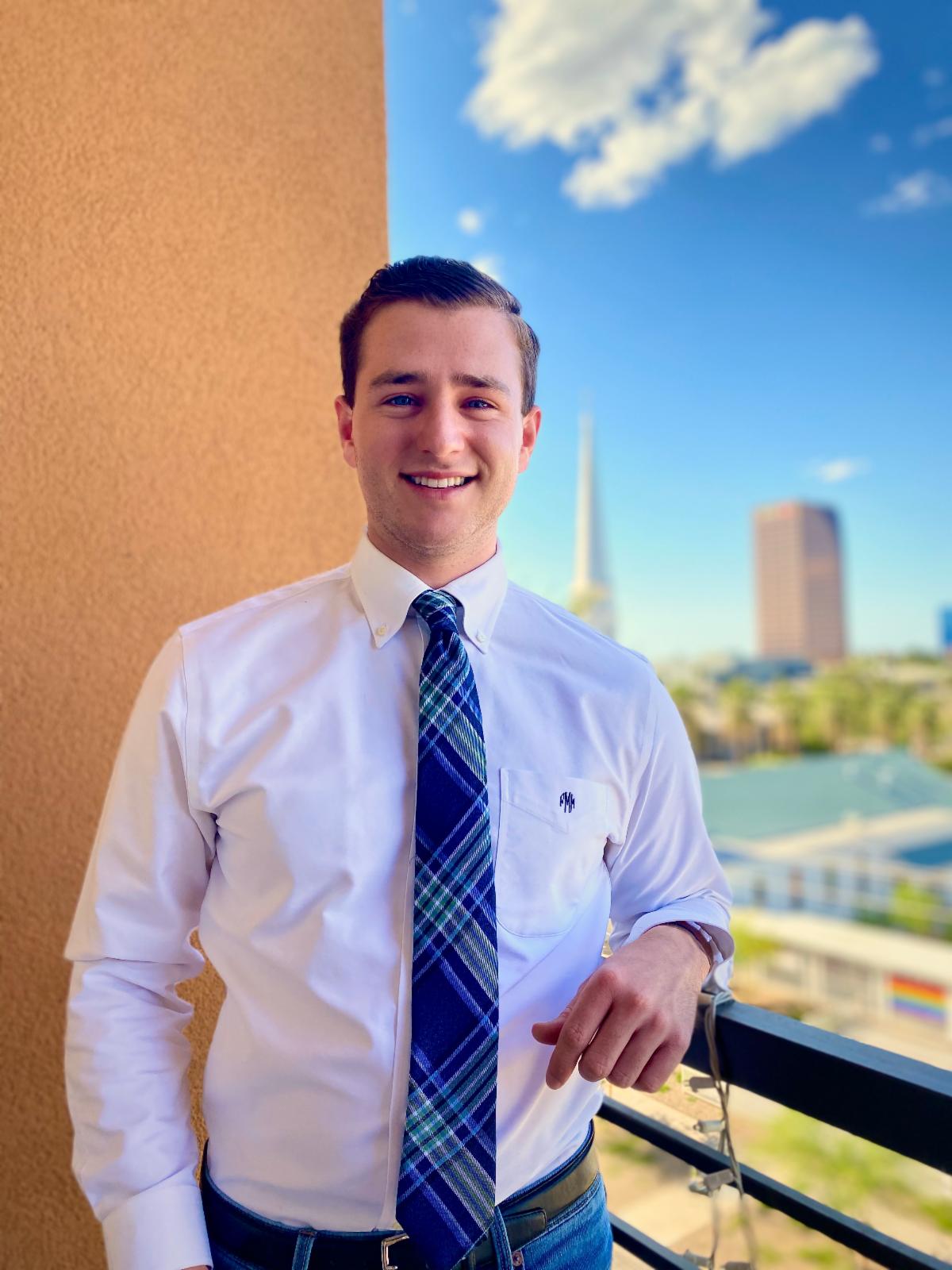
: Arizona State University - Walter Cronkite School of Journalism and Mass Communication
Location
: Phoenix, Arizona
Resume
: Borderlands reporter, Cronkite Noticias contributor, Christine K. Wilkinson Scholar, Co-President Cronkite School's SPJ Chapter
What's been your best moment in journalism?
If you could meet any journalist and ask for her/his advice, who would it be and why?
McLister
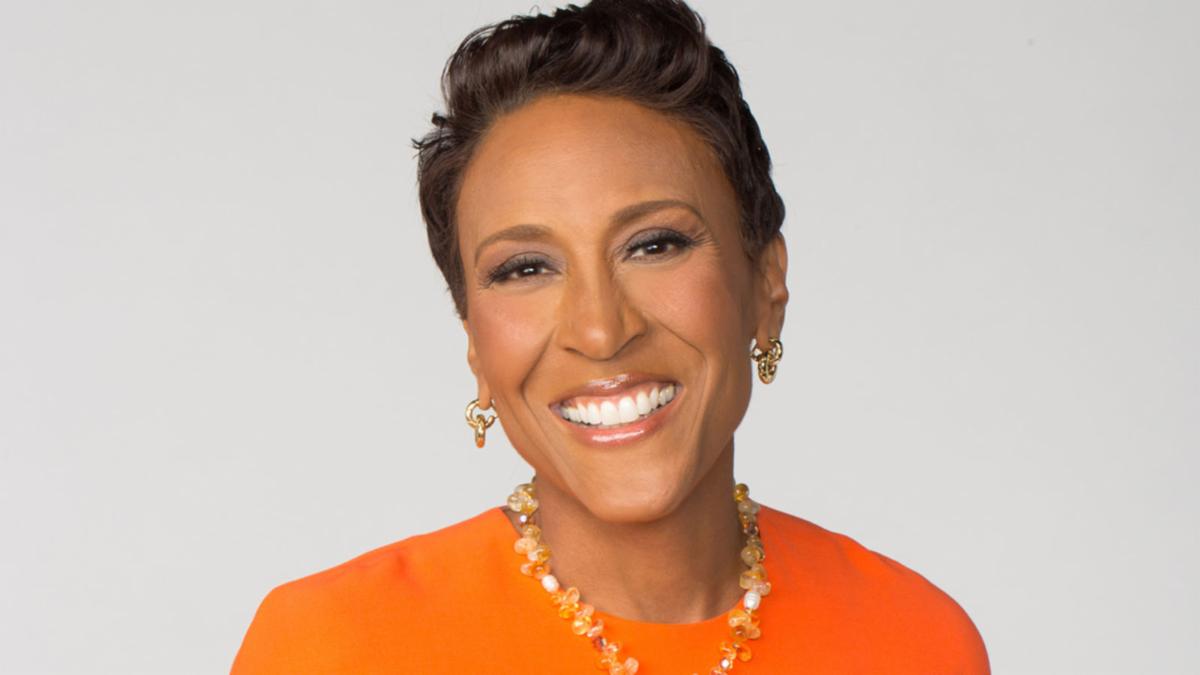
: If I could meet any journalist, I'd love to meet Robin Roberts. She's overcome health issues and still wakes America up with a smile every day. How do you keep going, Robin? How do you come off so "down-to-earth" on air?
Robin Roberts
responds
: How do I keep going? My dear mother taught me that everyone’s got something and not to compare my despair with anyone else’s. Also I learned that optimism is just like a muscle that gets stronger with use. Early in life I made it a habit to be optimistic.
How do I come off so “down-to-earth” on air? First of all thank you! What you see is what you get. I’m no different in person than on the air. Treat people with respect, show a genuine interest in them, be your authentic self and be of service to others.
Blessings, Frankie McLister, I wish you all the best. Remember when fear knocks, let faith answer the door.
|
|
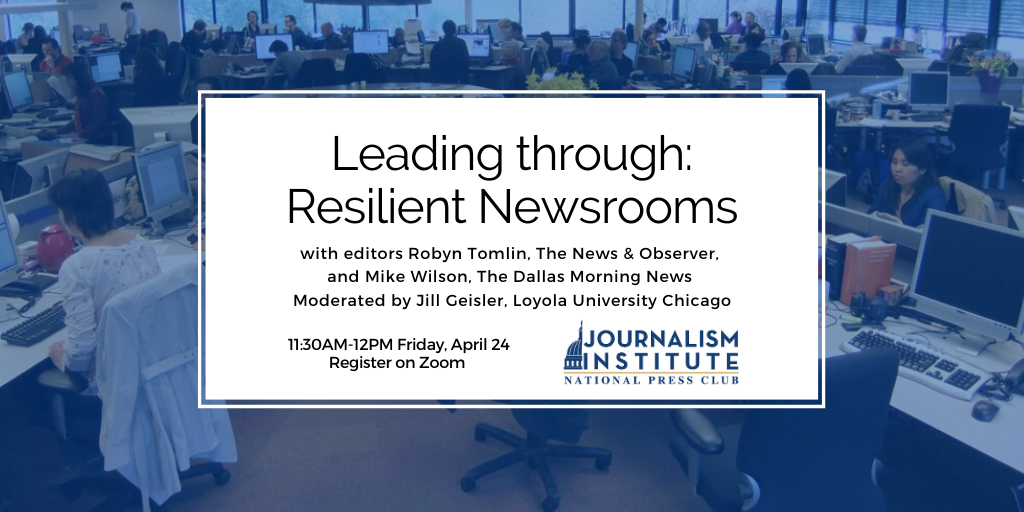
Join two experienced newsroom editors on
Friday, April 24
as they share their perspectives on leading newsrooms through unprecedented challenges caused by the COVID-19 pandemic.
Robyn Tomlin
, southeast regional editor for McClatchy and president and editor of The (Raleigh) News & Observer and The (Durham) Herald-Sun, and
Mike Wilson
, editor of The Dallas Morning News, will discuss how to handle the uncertainties journalists face and the ambitions that inspire us. The conversation will be moderated by
Jill Geisler
, Bill Plante Chair in Leadership & Media Integrity and Loyola University Chicago Freedom Forum Fellow in Women’s Leadership.
|
|
Bill Plante Chair in Leadership & Media Integrity, Loyola University Chicago
Freedom Forum Fellow in Women’s Leadership
This pandemic has produced an abundance of powerful and painful stories. We worry – as we should – about the resilience of the reporters and photographers bearing witness to COVID-19’s impact on human life.
Behind those reporters and photographers are editors who make their stories stronger and clearer, more understandable and relatable. They see every detail – the ones that move us to tears and those that may be too raw or graphic to include.
Editors are immersed in a daily stream of personal tragedies and institutional failures as they attend to story upon story.
Most are doing this work alone, at home. They’re no longer in a newsroom village where they can easily step away from the desk to decompress in the company of colleagues who understand what they’re experiencing.
Take a moment to check in with those who edit your team’s words and images.
Keep asking, “Are you okay?”
, listen carefully, and then act on what you learn.
|
|
|
Self-Care:
Finding peace one piece at a time
|
Are you bored yet? Spending too much time on
Zoom
? Try putting the screens away and digging into a jigsaw puzzle.
Solving puzzles is a creative and safe way to pass the time in quarantine, and there are also a number of health benefits:
|
|
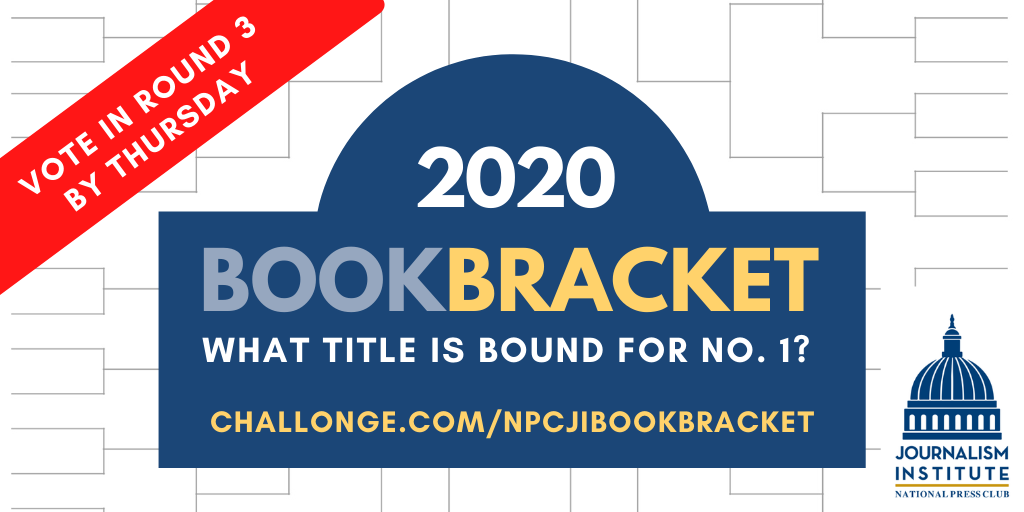
Round 3
voting has begun. Deadline is midnight on Thursday, April 23.
|
|
This newsletter is written & edited by the National Press Club Journalism Institute staff: Beth Francesco, Holly Butcher Grant, Jim Kuhnhenn, and Julie Moos.
Send us your questions and suggestions
for topics to cover.
|
|
The National Press Club Journalism Institute promotes an engaged global citizenry through an independent and free press, and equips journalists with skills and standards to inform the public in ways that inspire civic engagement. Support our important work with a tax-deductible contribution today.
|
|
|
|
|
|
|