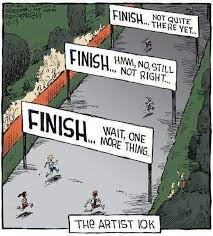
As we near the end of April, it is clear we are in a marathon with Covid-19, not a sprint.
Marathons are hard.
Physically and mentally ... they are really friggin' hard.
It's all in the plan.
It's about the roadmap: training, contingency planning, nutrition & recovery. Having a grasp of the big picture with benchmarks along the way helps you stay committed.
It's a process.
There are highs and lows. The starting line, the mile markers, the finish line. Roadblocks like injuries & weather. Knowing how to set your pace and manage the setbacks or dip in drive is key.
Completion
Physically fatigued. Mentally exhilarated. A sense of accomplishment, pride, joy and gratitude.
Maybe even a sense of agency- How can I do this differently or better next time?
Welcome to the Covid-19 marathon.
It's hard.
Longer work hours or No work
No commuting = no transition between work and home
Anxiety about our own and other's health
Economic distress
Trying to be a good parent or partner AND a good worker all in the same space
Not being able to attend to normal health care needs
Managing your own hair
A state of limbo where you can't really plan
Social disconnect
Ever-changing information
Vigilance Fatigue
Boredom
Feeling stuck, trapped or unsafe
Polarization: Liberate Michigan vs Full On Hazmat suit
Having it hit close to home and not being able to be with a loved one
The list goes on...
It's all in the plan.
AKA, how do we manage our state of mind? The actions we take and results we get, are directly impacted by our thoughts and emotions.
Let's look at a thought model from Katrina Ubell MD (pediatrician & weight loss coach):
Our circumstances are real. But in and of themselves, circumstances are neutral FACTS. Neutral means not having a positive or negative charge.
A simple example would be looking at a thermometer and saying, "It's 42 degrees outside." That is a measured, scientific fact. No one would argue that the thermometer is reading 42. Saying, "It's cold outside, I need to bundle up" is a thought. Someone in a colder climate might say, "Oh it's actually not that cold today." You can see how the meaning you attach to 42 degrees affects your thoughts & then your actions.
It's common for us to think the circumstances are the problem. And certainly, we often wish they would change. What's important to understand is that circumstances trigger our thoughts. It's the thoughts that are usually the problem. We can decide to change what we think about the circumstance.
We have between 40,000-60,000 thoughts per day. Most of these are automatic and travel at lightening speed--which means, sometimes we aren't even aware of the thoughts we're having. Yet the thoughts we have about our circumstances are what create the emotions we feel. We can choose how we want to feel.
Those feelings drive us to action, inaction or reaction, any of which leads to a result. The result may or not be what we're aiming for. Results can be traced back to our thoughts about the circumstance.
It's a process.
Experiment:
I invite you to try this. It's more effective if you write it out rather than just do it in your head. Notice where you resist. Our minds like to keep "our stories" perpetually going. The first step is always awareness. Accepting the thought or emotion as it is and letting it be. Be curious and kind with yourself. Then assess the impact it has on your actions. Are your thoughts and emotions serving you? Are they helping or harming?
Begin with something small:
- Identify the circumstance- Just the neutral facts
- Observe the thoughts and meaning you attach
- Notice the feeling it creates. Where is that in your body?
- What is the action (inaction or reaction) that your thought and feeling evokes?
- What is the result?
If the result is not what you want, try this:
Go in Reverse:
- The circumstance remains the same.
- What is the result you want?
- What action would you need to take?
- What feeling would need to be present?
- What thought would you need to evoke that feeling?
Completion
Like anything, it requires attention and practice. Once you get the hang of it, it actually is straightforward and simple. Sometimes the most effective strategies are. We can't necessarily change the circumstances, but we can decide how we think and feel and thereby focus our actions on obtaining the results we're looking for.