|
Water, Soil, Grasslands and Grazing Focus of National Climate Change Assessment
MFGA, CCA and project partners supported by AAFC for National Scale Assessment of Climate Change Impacts on Grazing Lands Across Eight Canadian Watersheds
Winnipeg, MB- (October 16, 2026)-
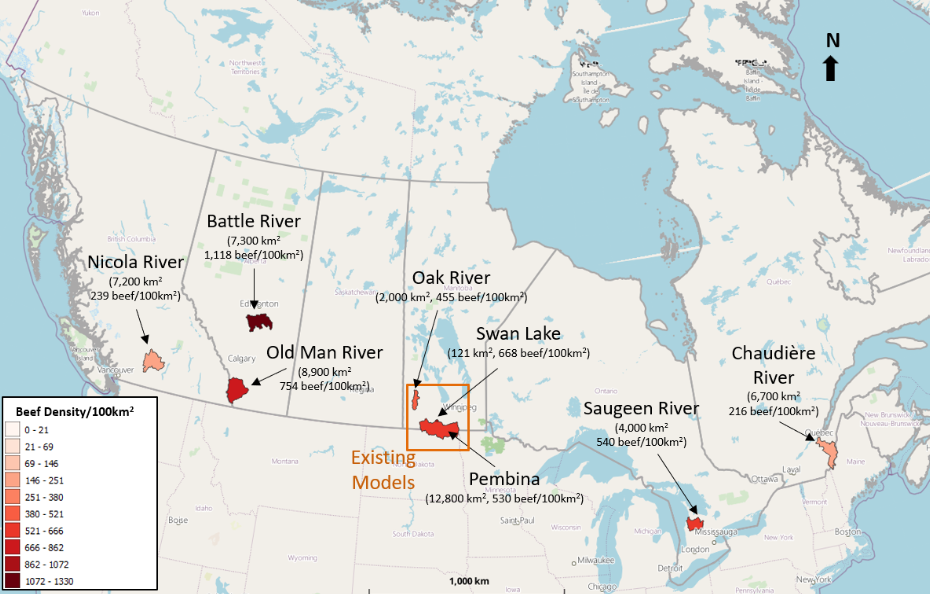
Manitoba Forage and Grassland Association (MFGA) will lead a one-year Agriculture and Agri-Food Canada (AAFC) project to better understand how climate change will impact water, soil and grassland productivity across eight Canadian watersheds, three which have been completed in Manitoba.
AAFC’s Canadian Agricultural Strategic Priorities Program has awarded MFGA with up to $237,347 for the MFGA Aquanty Model to be run across the watersheds using high-resolution climate projections and integrated hydrologic modeling. The project will quantify drought, flood, and water-stress risks and translate results into practical indicators and decision-support tools for producers.
“As cattle producers, we work outdoors every day, we can see our climate is in flux,” said Zack Koscielny, MFGA chair and a mixed farmer from Strathclair, Manitoba. “We seem to see too much water or not enough water. By looking at grasslands and grazing, this project will help producers better prepare for the times ahead especially around water and grasslands.”
"Canadian producers experience the impacts of climate change firsthand, and having tools to navigate risks like drought and excess water is vital to their long-term success," said the Honourable Heath MacDonald, Minister of Agriculture and Agri-Food. "This investment under the Canadian Agricultural Strategic Priorities Program gives our cattle and forage sectors the data needed to improve decision-making and ensure our grazing lands remain sustainable and resilient for years to come."
Alberta’s Old Man River and Battle River watersheds, British Columbia’s Nicola River, Ontario’s Saugeen River and Quebec’s Chaudière River will serve as project watersheds. Manitoba’s Oak River, Swan Lake and Pembina Valley watershed have had the climate change analysis completed and will be added to the project outcomes.
The model results will be supported by a project advisory team that will use the results to inform the Canadian cattle industry and stakeholders on potential risks that climate change imposes on grazing sustainability, through effects on water resource availability and grassland productivity. The project team includes MFGA, the Canadian Cattle Association (CCA), Aquanty, the Centre for Land Conservation and Alberta’s Food Water Wellness Foundation, which has conducted extensive soil and carbon research with the province’s cattle producers.
“Healthy grazing lands, profitable forage crops and the abundance and necessity of water resources are foundational cornerstones of Canada’s beef industry,” said Karla Hicks, Chair of the Canadian Cattle Association Environment Committee. “Understanding how climate change may affect these resources is essential for producers and for the ecosystems they steward. This project will help strengthen the science needed to support a resilient and competitive Canadian beef sector.”
Analysis results will be generated for the key grazing regions across the country and will be summarized into actionable insights for producers and the broader cattle industry.
Communicating potential climate change impacts to the industry is a core component of the project. MFGA will host the project on the existing MFGA Aquanty portal at MFGA.net and the full project will be translated into French and English on the MFGA website.
|