NewsletterHeader5.png

Weekly Analyst Review

04 April 2025


Bottom Line Up Front

Coordinated Assault on Syrian Prisons Highlights Persistent Threat of Islamic State


Taamir Prison Attack – Raqqa, 23 March 2025

On 23 March 2025, unidentified gunmen with suspected links to the Islamic State (IS) attacked Taamir Prison in Raqqa City using machine guns. The facility is known to house a significant number of detainees held on terrorism charges. While details remain sparse, the brazen assault marked the second attempted prison break in Syria in just 48 hours and the third in the past two weeks—indicating a potentially coordinated effort rather than isolated incidents.


Series of Prison Break Attempts

Only days earlier, on 20 March, IS-affiliated insiders reported a breakout attempt at Ar-Rai Prison in northern Aleppo Governorate, allegedly resulting in the escape of multiple prisoners. Another lesser-known but suspected IS-linked prison assault occurred the week prior. These incidents in such close succession suggest more than coincidence: they are likely part of a broader, strategic initiative.

All three targeted prisons are believed to hold individuals affiliated with terrorist groups—especially Islamic State (IS). For IS, prison breaks have long been a core tactic to replenish their ranks with experienced fighters, and this current string of attacks may signal the beginning of a renewed offensive campaign.


Strategic Significance of Taamir Prison

Adding further complexity is the location of Taamir Prison itself. TRAC has been unable to precisely geolocate the facility due to transliteration inconsistencies between Arabic and English sources, raising questions about whether it is an officially recognised site or one of many makeshift detention centres created during Syria’s fragmented conflict.

Raqqa—the site of the attack—also holds deep symbolic significance for IS, having once served as the capital of its so-called caliphate. Even a failed breakout attempt here serves as a message: IS is not only present but capable of conducting operations in cities it once ruled and lost.


The Damascus Factor – Adra Prison Incident

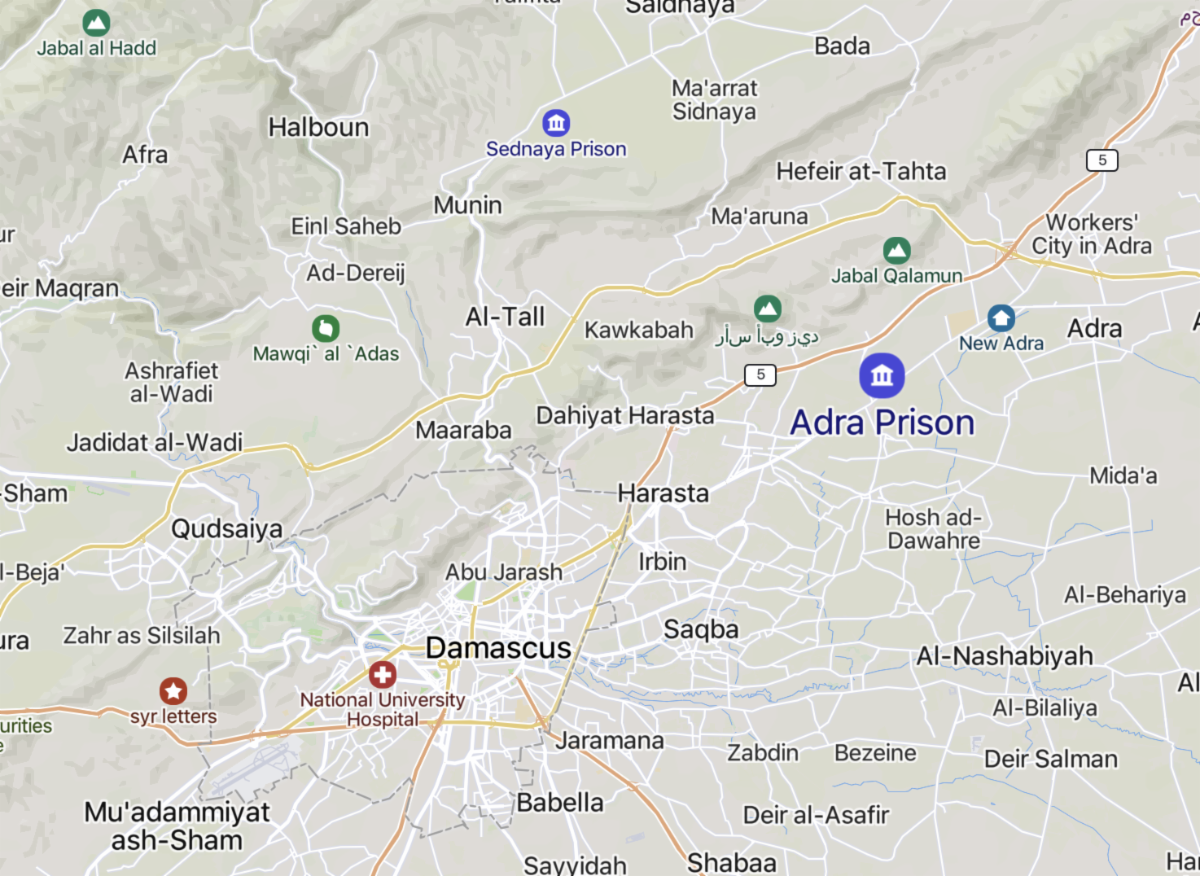
Compounding the concern is the recent incident at Adra Prison near Damascus. Located in the heart of regime-controlled territory, any IS-linked operation here raises alarming questions. How did IS, which has had a limited visible presence in the capital for years, manage to stage a serious assault in such a secure area?

This event aligns with TRAC’s long-standing analysis that IS never entirely withdrew from areas like Damascus or Dara’a. Instead, the group has likely remained dormant, avoiding detection while awaiting opportune moments to strike. These calculated reemergences demonstrate that the regime’s perceived security in core territories may be far more fragile than it appears.


Pattern of Escalation: From Tactical Assaults to Strategic Messaging

The question is whether these prison breaks are isolated raids or the prelude to something much more significant. Historically, IS has used prison operations as a signal of resurgence. The infamous 2022 Ghweran Prison attack in Hasakah was not just an escape attempt—it marked a turning point in IS’ operational strategy, leading to a broader uptick in violence.

If current trends mirror that precedent, Syria may be entering another phase of IS escalation. This could mean an uptick in violence not only in contested territories like Deir Ezzor but even in areas controlled by Hayat Tahrir al-Sham (HTS), the Syrian Democratic Forces (SDF), or the Syrian regime.


A Doctrinal Directive From IS Leadership

These events also reflect the ongoing IS Central strategy. During Ramadan 2024, IS’ official spokesperson issued a directive urging affiliates to free imprisoned members. Since then, TRAC has tracked a steady rise in prison-related operations across multiple regions. These recent Syrian incidents fall in line with that broader campaign, with prison breaks positioned as both strategic operations and symbolic gestures—demonstrating IS’ endurance and ability to strike where it matters most.

Other Developments

TRAC Incident Report: Islamic State (IS) Insiders Circulate Eid al-Fitr Celebration Videos Featuring Abu Faaris Leader Javed Meetoo (Abu Junaya) at Citadel Adelaide [Citadelle de Port-Louis], Port Louis, Mauritius

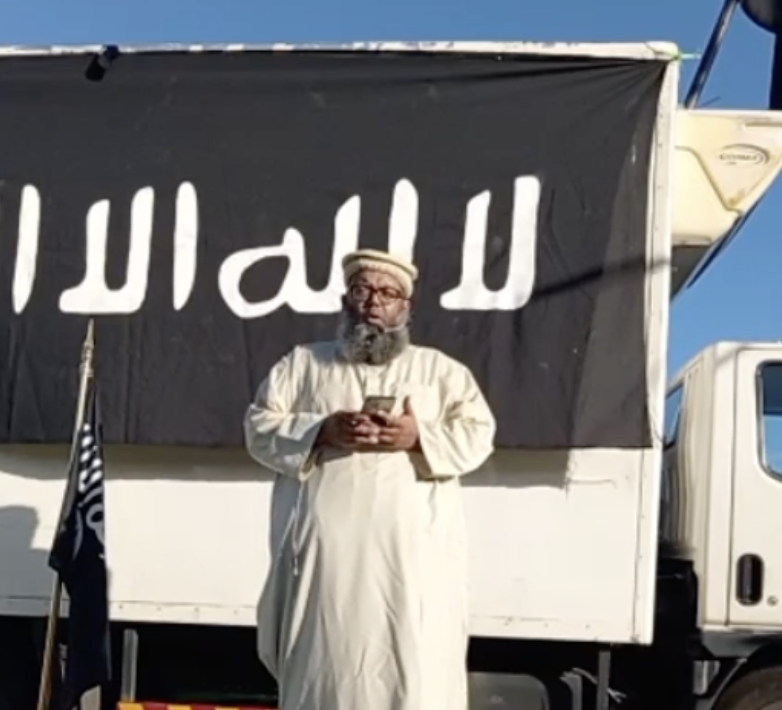
On 1 April 2025, Islamic State (IS) insiders circulated a series of videos depicting Eid al-Fitr celebrations in Mauritius, drawing attention to the continued presence of IS sympathisers on the island. One of the videos prominently features Javed Meetoo (also known as Abu Junaya) leading Eid prayers, while another shows IS flags displayed on both sides of a public road. A third image captures a large IS banner hanging over a street, underscoring the group's visible symbolism during the celebrations.


The circulation of these videos highlights a quiet yet persistent IS support base in Mauritius. While the island nation has not experienced direct IS-related violence, such events suggest active ideological networks and potential sleeper cells operating beneath the surface. The public display of IS insignia during a major religious holiday signals not only ideological allegiance but a growing sense of operational impunity among local sympathisers.


The appearance of Javed Meetoo at the center of the 2025 Eid celebration is especially concerning. Meetoo has long used religious platforms to promote IS ideology. In 2023, similar footage of Meetoo leading Eid prayers was followed by a car rally from Cap Malheureux to Souillac, where participants chanted pro-IS slogans. Despite the presence of law enforcement, no intervention was made, reflecting potential gaps in legal oversight and enforcement.

Meetoo’s radical history includes:

  • Wearing an IS headband during anti-LGBTQ+ protests in 2018.
  • Receiving education in Pakistan and teaching in Taliban-controlled Afghanistan.
  • Being arrested at the Turkey-Syria border in 2015.
  • Detained in 2023 under the Prevention of Terrorism Act (PoTA) in connection to the murder of Manan Fakoo.
  • Involvement in a 2016 gunfire incident at the French Embassy.
  • Arrested again in 2019 for participating in an illegal rally.
  • Cleared of “Harbouring Criminal” charges in January 2025, though he remains an influential radical figure.


Though Mauritius has not seen a violent IS incident, multiple documented cases confirm a local IS support base. The example of Zafirr Golamaully, who left Mauritius to join IS, underscores this threat. Additionally, the island’s proximity to drug trafficking routes linked to South Africa, Mozambique, Zimbabwe, and Nigeria provides a potential infrastructure for recruitment, financing, or logistical support.


Social media continues to play a key role in amplifying radical narratives. A Facebook account under the name "Farsha Reeb" live-streamed Meetoo leading the 2025 Eid prayers. Another user, “Rack Facile,” shared photos of children participating in activities at Markaz Abu Faaris, including one child seen performing the “one ummah” gesture—symbolic of IS solidarity. These posts, coupled with Meetoo’s sermons, suggest a concerted effort to radicalize youth under the guise of religious instruction.


The celebration’s venue further raises concern. While the group is believed to operate out of Rue Alma, Vallée Pitot, Port Louis, TRAC has confirmed that the 2025 Eid sermon was held at Citadel Adelaide on 30 March—a prominent public site. Holding such a high-profile event without interruption speaks volumes about law enforcement’s limited visibility or willingness to act.

TRAC Incident Report: Authorities Arrest a Teenage ‘East Asian Supremacist’ for Plotting Armed Assaults on Mosques, Singapore

On 31 March 2025, new details emerged regarding the arrest of a 17-year-old male suspect at the end of February, accused of plotting violent assaults on Muslim communities in Singapore. The teenager, identified as Nick Lee Xing Qiu, reportedly intended to carry out Molotov cocktail attacks on mosques and target Muslim Malays during religious holidays. His actions were driven by adherence to extreme-right, ethnonationalist ideologies.


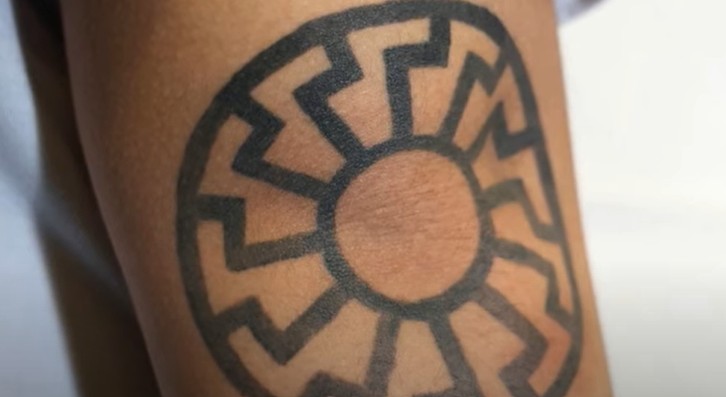
New information revealed that Lee identified as an “East Asian Supremacist”, expressing belief in the racial superiority of Chinese, Japanese, and Korean ethnicities. In addition to this regional supremacism, he also supported broader white supremacist ideologies, drawing inspiration from violent far-right networks. Notably, he attempted—unsuccessfully—to purchase firearms from the United States, Malaysia, and Thailand, highlighting his efforts to acquire the means to carry out a deadly mass shooting. Lees’s arm was tattooed with the Nazi Black Sun symbol, a known insignia of neo-Nazi and occult far-right groups. He also possessed custom-made t-shirts adorned with Nazi symbols, including the Black Sun and skull & crossbones (Totenkopf), indicating a deep commitment to extremist ideology.


Authorities moved to detain Lee before he could obtain a weapon, preventing what could have been one of the most devastating far-right terror attacks in Singapore’s history. It has since been revealed that Lee intended to replicate the 2019 Christchurch mosque shooting, in which white supremacist Brenton Tarrant murdered 51 worshippers at two mosques in New Zealand. The Singaporean teenager reportedly aspired to kill at least 100 Muslim Malays to surpass Tarrant’s body count and gain notoriety among global far-right communities online.


TRAC assesses that Lee was likely planning the attack to coincide with the anniversary of the Christchurch massacre on 14 March, a tactic often employed by extremists to maximise attention and ideological symbolism. His motivations and online activity suggest substantial exposure to and engagement with digital far-right ecosystems, particularly those linked to the Terrorgram Collective, which glorifies mass shooters and propagates accelerationist narratives.


Lee’s deep-rooted hatred extended beyond Muslim communities; He also expressed racist animosity toward Jews, African Americans, Mexicans, and Indians, further underscoring his ideological alignment with violent neo-Nazi and ethnonationalist networks. TRAC concludes that the suspect had reached an advanced stage of radicalisation, likely developed through self-directed online engagement with extremist propaganda. 

(Instruction Manual/ Left Wing Anarchist) The Anarchist Group “Anarchists Against Electric Vehicles, Vehicles and Electricity” Gives Instructions for Tesla Arson Attacks in Online Post

On 21 March 2025, a document was published online by a group identifying as “Anarchists Against Electric Vehicles, Vehicles, and Electricity.” The post calls for the widespread arson of vehicles, with a particular focus on those owned by the wealthy, corporations, and the state. Framing the action as both anti-capitalist and anti-technocratic, the document provides step-by-step instructions, including a list of materials, guidelines for effective placement, and advisories on avoiding detection, such as preventing Tesla’s onboard surveillance cameras, which are known to record activity around the vehicle continuously.


The release of the manual coincides with a recent spike in Tesla arson attacks across Europe, part of a broader trend in which electric vehicles have become symbols of elite privilege and state-sponsored greenwashing. The group rejects electric cars as a genuine solution to the climate crisis, claiming instead that they reinforce capitalist hierarchies and perpetuate environmental exploitation under the guise of sustainability.


Broader political grievances also fuel the movement against Tesla and other green-tech companies. Many environmentalist and anarchist circles across Europe and North America have criticised Elon Musk for allegedly promoting anti-democratic policies and undermining climate science, particularly since his appointment by U.S. President Donald Trump to lead the Department of Government Efficiency (DOGE). Tesla assets have become visible targets of dissent, representing not only ecological hypocrisy but also opposition to U.S. foreign policy, particularly regarding the Russia-Ukraine conflict and Israel’s military actions in the Palestinian territories.

(Video): ‘Los Caballeros Templarios’ Operatives Capture and Burn Alive Jalisco New Generation Cartel (CJNG) Operative in Michoacan, Mexico


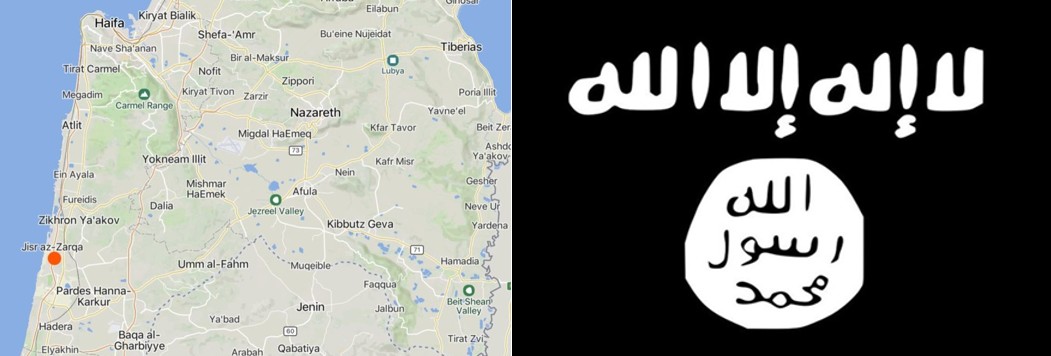
TRAC Incident Report: Arab-Israeli Teenager Arrested Over a Plot to Carry Out an Attack in the Name of the Islamic State (IS), Jisr az-Zarqa, Northern Israel

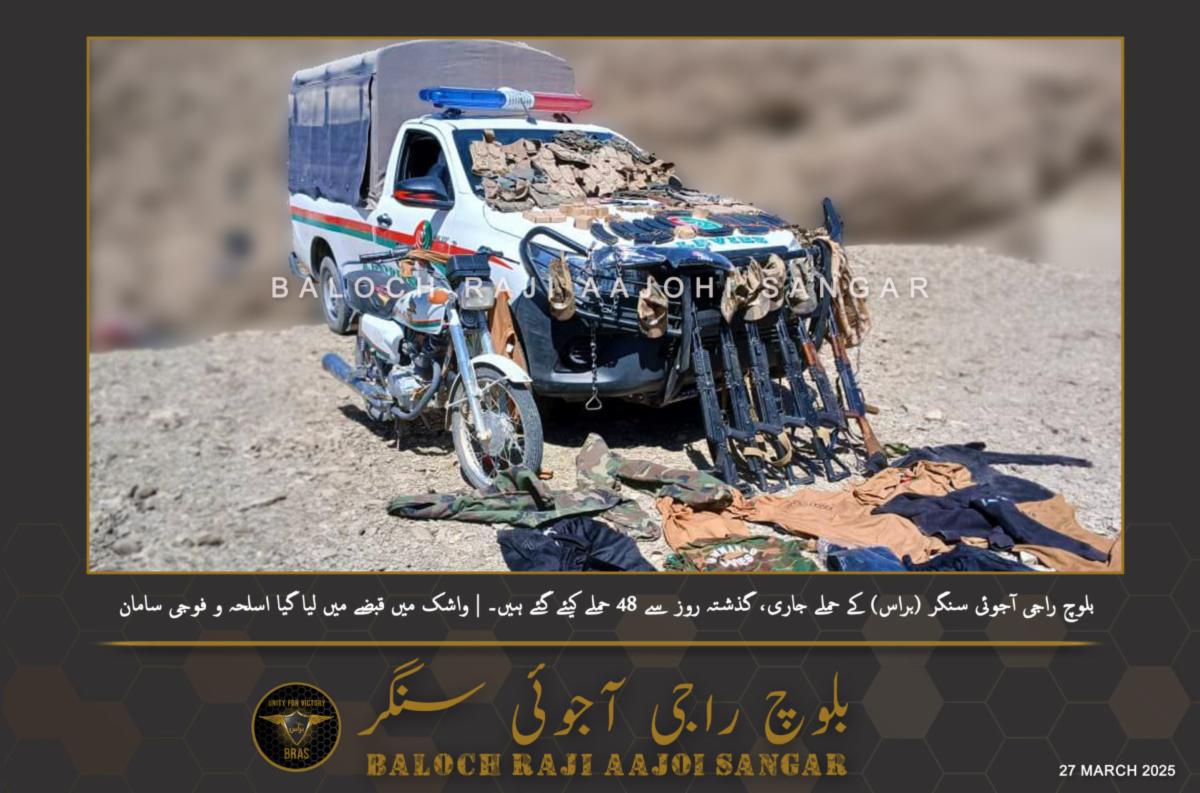
TRAC Incident Report: Baloch Raji Aajoi Sangar (BRAS) Claims Responsibility for 48 Attacks Across Balochistan, Pakistan 

TRACFusion_Newsletter2.png

CLICK HERE FOR PAST WEEKLY BRIEFINGS

TRAC Logo_Primary_TransparentWhite.png
Facebook          X          Instagram