Elmo Peeler Note-for-Note Piano Transcriptions |
|
|
Greetings!
Today is the first day of September and time again for my monthly newsletter, to keep you informed of recent transcriptions and other news of the last month.
|
|
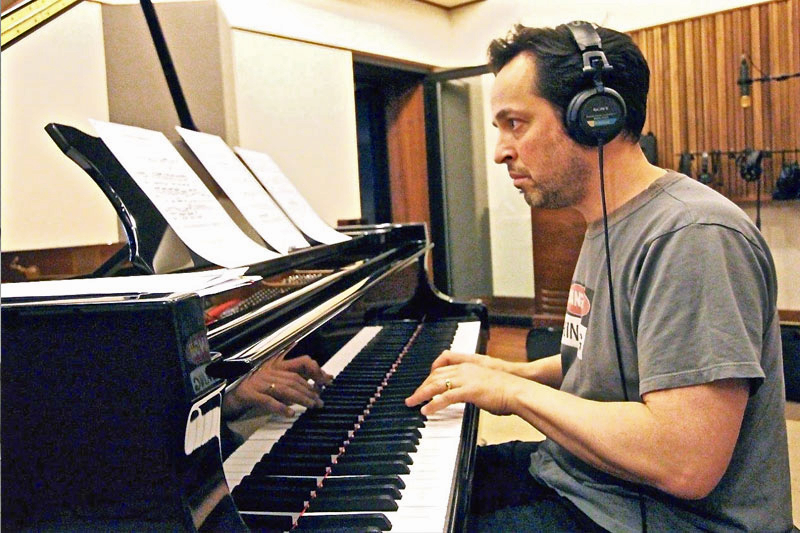
Jason Rebello, Gospel pianist on
Van Morrison's "Benediction"
|
|
Brand-new this month is an excellent piano solo arrangement of "A Whiter Shade of Pale" plus two new transcriptions.
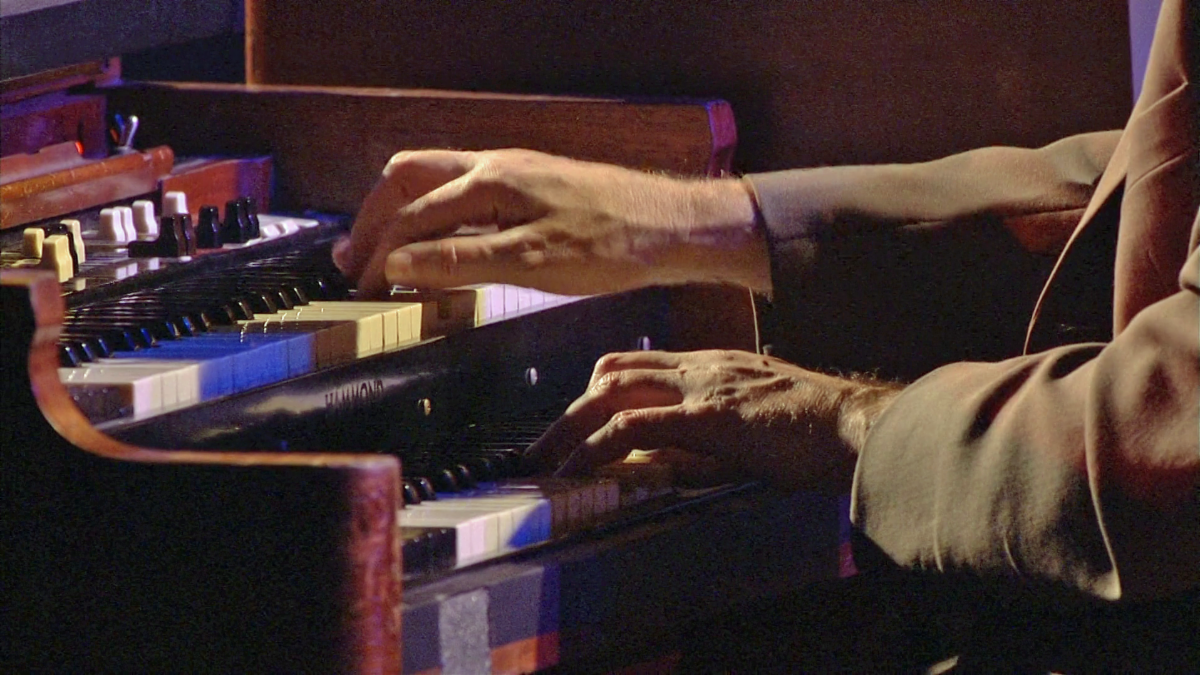
One is of Van Morrison's "Benediction", which has an outstanding gospel-style piano part plus an excellent B-3 organ solo.
And the other new transcription is Art Neville's funky piano part on "Cabbage Alley" by The Meters.
Plus, a new finger exercise to increase articulation, strength and finger independence. It's inspired by a passage in a Bach Invention.
|
|
BTW, to make sure that my email doesn't end up in your Spam folder, please add me to your Contact list and/or mark my email as "Not Spam".
Note that every Title Heading is clickable.
|
|
ALL of the Sheet Music listed on my website has been personally transcribed by me, and guaranteed to be note-for-note perfect.
Whether you:
- have a cover band and want to get your keyboard parts exactly correct,
- are a professional who wants to study the styles of rock's greatest keyboard players, or
- are a hobbyist that wants to learn how to play pop/rock and great piano music,
...these note-for-note transcriptions will prove extremely helpful.
|
|
In the News! - Van Morrison, Art Neville & "A Whiter Shade of Pale"
Gospel + New Orleans Funk + Classical Rock
|
|
Jason Rebello, the pianist on Van Morrison's "Benediction", was born in 1969 in Carshalton, Surrey in South East England and raised in London. His father's family is from India. He was classically trained beginning at the age of 19 at Guildhall School of Music and Drama in London.
He emerged in the late 1980s as a jazz pianist influenced by Herbie Hancock and McCoy Tyner. In his early 20s he recorded three solo albums, beginning in 1990 with his debut album, A Clearer View, which was produced by Wayne Shorter and led to him appearing on the cover of The Wire magazine. He also worked with saxophonists Jean Toussaint, Tommy Smith and Branford Marsalis, and presented Artrageous! on BBC television.
In 1998 Sting invited Rebello to join his band following the death of Kenny Kirkland. He toured with Sting for the next six years and recorded three Sting albums, Brand New Day, ...All This Time, and Sacred Love.
|
|
Jason Rebello, in the studio -
|
|
He then became a member of Jeff Beck's band, touring for six years and recording three albums. During those years with Sting and Beck, Rebello also worked with Chaka Khan, Phil Collins and Peter Gabriel.
In May 2013 Rebello announced that after twelve years of touring and working as a session musician he was re-establishing himself as a solo artist, specifically in jazz. In 2013 he released the album Anything But Look, which features Will Downing, Omar, and Pino Palladino.
Rebello teaches music at his alma mater, Guildhall School of Music and Bath Spa University. Additionally, he composes music for the London-based production music library, Audio Network.
In his mid-20s he took a break from music to pursue interests in Buddhism, entering a Buddhist monastery in 1995. He later stated, "I think this was because I was enjoying a level of success that made me feel increasingly alienated." He is the cousin of Star Trek actress Marina Sirtis.
His 2016 album Held was awarded Album of the Year by British Jazz Awards.
And in 2017 he recorded many of the piano tracks on Van Morrison's Roll with the Punches album, including the wonderful, Gospel-style "Benediction".
My Van Morrison transcriptions:
|
|
Art Neville - New Orleans piano
|
|
Keyboardist/singer Art Neville was born in 1937 in New Orleans.
He started on piano and began performing with his brothers at an early age, influenced by James Booker, Booker T. Jones, and Professor Longhair.
In high school he joined and led The Hawketts, and at 17 recorded "Mardi Gras Mambo", which became a New Orleans carnival anthem.
In the early 1960's Neville formed the Neville Sounds, which evolved into The Meters in 1965.
Allen Toussaint used them as his house band, backing up Lee Dorsey, Betty Harris, The Pointer Sisters, and many others.
Released as a single from their debut album, The Meters, "Cissy Strut" reached #4 on the R&B chart. It has since become a funk/groove classic. |
|
The Meters are considered one of the originators of funk, their work influencing many other bands. The band had a strong sense of tight rhythmic grooves, and over time the band's style came to represent New Orleans funk.
"Cabbage Alley" was inspired by Professor Longhair's "Hey Now Baby", and is titled after a red-light district in New Orleans. As usual, Art Neville laid down a terrific piano track for it.
My transcriptions by The Meters:
|
|
The Meters - "Cabbage Alley"
Note-for-Note Accuracy
|
|
Jason Rebello - Gospel pianist
|
|
There are two brand-new transcriptions available this month, one very 'funky' and the other very 'Gospel'.
Van Morrison's 2017 album, Roll with the Punches, contains a wonderful strongly Gospel-influenced song, "Benediction", which has an excellent church-style piano part plus an excellent B3 organ solo, played by Jason Rebello.
The very first line that Van Morrison sings is "My message this evening..." and the entire song unfolds like a sermon from the pulpit.
It starts with only piano, playing church-style licks in free timing - tremolos & walk-ups in the Left Hand - until the rhythm section kicks in and the first verse begins.
|
|
The piano part contains Gospel-voiced walk-downs, tremolos (Left Hand and Right Hand), and Richard Tee-style Gospel riffs. At the very end it doesn't fade out, but ends with a brief piano Blues-Gospel Coda. |
|
The Meters were one of New Orleans best bands, and are generally considered to be one of the originators of funk. "Cabbage Alley" was inspired in part by Professor Longhair's "Hey Now Baby".
One New Orleans musician described the actual Cabbage Alley as being "around Perdido Street. They had a lot of musicians down there - it was almost like a [red light] district - fast women. Near the battlefield." This is a note-for-note transcription of the Intro and 1st Verse, i.e., the first 1:11 of the recording - 28 bars total. Pianist Art Neville uses some excellent Professor Longhair rhythms plus some complex chromatically-altered chords during the chromatic walk-down from B-flat to F.
If you like New Orleans funk, you'll enjoy playing Art Neville's licks on "Cabbage Alley".
|
|
New this month is my arrangement for solo piano of Procol Harum's "A Whiter Shade of Pale".
It uses the original organ lines from the classic rock recording, and re-voices them to make them more 'pianistic', taking advantage of the greater range of the piano keyboard.
The organ lines are enhanced by sometimes putting them into octaves and chords, and occasionally (in the middle section) adding rock-style 'twangs' (slip-notes).
Also, a nice, flowing Left Hand accompaniment has been added, making it perfect for a pianist to perform solo without needing a rhythm section accompaniment.
|
|
|
However, if you play in a band, this can also be used as a very effective piano solo between the sung verses.
My new arrangement for piano:
|
|
For Super-clean Articulation
|
|
Matthew Fisher's hands -
Classical Rock chops
|
|
Every pianist strives to play cleanly and with precise, clear articulation. In the classical-music world no composer requires crisp articulation more than Johann Sebastian Bach, in whose music the damper pedal is rarely used and where "the fingers do the walking".
This exercise was inspired by a finger pattern Bach used in his Invention No. 8 in F major, of which Ferruccio Busoni, the great Romantic-era pianist, says, "the performance of this little virtuoso piece demands the utmost precision."
There are three sections, all of which are in sixths.
|
|
The first section - using 3/4 meter like the Bach Invention - states the motif that Bach himself used (although in a different key), and ascends step-wise up an octave and then back down.
The second section, in 4/4, is slightly more challenging. Bach's 16th-note figure is played only once, not three times, before immediately beginning its ascent - up an octave and then back down. The third section adds a higher note in the Right Hand and a lower note in the Left Hand, requiring the 5th fingers to become involved - again ascending up and down an octave. These three sections, progressively more difficult, should help improve one's articulation, finger independence, and clarity in 16th-note runs.
This exercise is available as both a sheet-music PDF and as a MIDI file.
BTW, if you need other good, effective technical exercises, please check out the other 90 exercises available.) |
|
(to listen to it, click here) |
|
The Hangout Place for Gospel Classics
|
|
You don't have to be from the Deep South to love Gospel piano, nor do you need to belong to any particular religion. All you have to have is a love for wonderful old-time, swinging, uplifting piano-playing.
Leon Russell, Billy Preston, Richard Tee and Ray Charles, some of the greatest keyboard players ever, loved the style and infused their own performances with Gospel licks and rhythms.
Inspired by the wonderful playing of the portly Associate Pastor/Musical Director of my childhood's Baptist Church deep in the piney woods of Mississippi, in recent years I've transcribed and/or arranged a few Gospel classics.
This little corner of my newsletter is where I'll keep you informed of my latest efforts to share that old-time Gospel sound.
Here are my Gospel transcriptions and/or arrangements, plus some exercises:
Full-blown Gospel:
Heavily Gospel Influenced:
Moderately Gospel Influenced:
Gospel-related Exercises:
|
|
Helpful for Those that Don't Read Sheet Music Well
|
|
Most of my transcriptions have heretofore been available only as sheet music in PDF's. That is gradually changing - some are now also available as MIDI files, which can be especially helpful for those that would prefer to listen to them than to read the sheet-music notation.
This section of my newsletter is where I'll keep you informed of which transcriptions and exercises are available as MIDI files.
BTW, if you'd like my sheet music in a MIDI file, just let me know which one(s).
Here are the currently available MIDI files of my transcriptions, arrangements, and exercises:
MIDI Files of Rock & Pop Transcriptions:
MIDI Files of Exercises:
|
|
If you're using a vintage synthesizer, please check out our synth patches here.
These are the most highly-organized and best-sounding synth patches available anywhere, guaranteed. Get the most out of your vintage hardware with these large patch libraries:
Ensoniq
Kawai
Korg
Roland
Yamaha
Even if you don't use the actual hardware synthesizers, there are software emulations that will allow you to play these patches on your computer, as VSTI's in your sequencer. These include:
Korg Legacy Digital Edition (for M1 & T1 synths)
Native Instruments FM8 (for DX7 synths)
Aurora FM (for DX7 & TX81Z synths)
SQ8L (for ESQ-1 synths)
|
|
I've had the good fortune to have taught some of the biggest names in the entertainment industry, and if you're serious about learning, I'll be happy to help you, too.
By means of Skype lessons (or in-person if you're in L.A.), I can coach you and help you to improve your technique, your rhythm, your ability to improvise, your knowledge of music theory, your sight-reading, and to develop relative pitch.
|
|
- The Beach Boys
- Rod Stewart - All 'Unplugged' Concerts
- Ricky Nelson - Stone Canyon Band
And I've also won classical piano competitions performing Beethoven, Rubinstein and Saint-Saens' Piano Concerti. See me playing here. "Josie's Boogie" is quite the virtuoso dramatic minor-key showpiece; check out the ascending double-octave run at the ending... :)
Thanks to the internet, I can help you play piano better - rock or classical, by ear or by note.
Or if you live near the Hollywood Hills and are willing to wear a mask, I'll teach you in my home.
1) Your musical background
2) Where you are currently, musically-speaking
3) Your musical goals
|
|
|
My students include members of:
- Weezer (Rivers & Brian)
-
Vampire Weekend (Ezra & newest addition, Greta)
- Incubus (Mike)
- The Strokes (Nick)
- Rooney (Robert)
-
Jason Schwartzman (Mozart in the Jungle)
- Courteney Cox
- Pablo Dylan
|
|
Franz Liszt - preaching Piano Gospel
|
|
|
|
"I love your work, and it has really helped me develop as a keyboard player, especially the amazing transcription of Jessica. My band plays this as our opening tune and after hours of practice it is 'nailed'.
I notice that you are now doing midi files for your transcriptions... I always put the transcriptions I have bought from you to Midi note by note which is fun to do, and a great way to learn...
All the very best. Thanks for the inspiration."
- Rich P.
|
|
|
Los Angeles, CA
323-650-6602
|
|
|
|
|
|
|
|