|
Congratulations! We survived the summer! I think this has been the most difficult gardening year I have ever experienced. The high temperatures, long-term drought, and water curtailment in Conway have really taken a toll on our gardens and on gardeners. Gardening just has not been as enjoyable as usual and watching so many plants suffer and die is discouraging. I do think there are lessons to be learned from this summer, though, that could make our landscapes more resilient in the future.
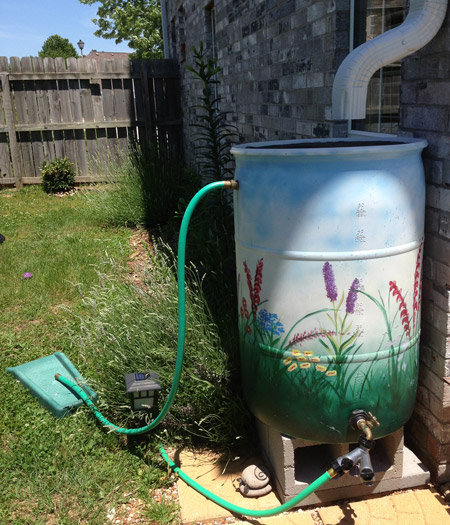
Many gardeners are now considering installing water catchment systems to collect rainwater for use in the garden. This can be helpful if we have water curtailment requirements again, but it can also reduce irrigation costs and conserve water under normal circumstances. Rain barrels are relatively easy to install and work well for collecting rainwater. Unfortunately, a single rain barrel holds only about 55 gallons on average which you will use up quickly when the weather is hot. You may need to consider installing several barrels which can be linked together or look into a larger system such as a cistern or waterwall catchment system. Collected rainwater is great to use for lawns and ornamental plants. However, due to contamination concerns, take precautions if using rain barrel water for produce. You should not use collected rainwater on fruits or vegetables that grow directly on the ground or produce that is eaten raw.
I have also been paying attention to which plants are still doing well despite the heat and drought. We might want to try planting more of these hardy “garden survivors” and fewer of the sensitive plants that have struggled or died this summer (arborvitaes, I’m talking about you). Some perennials I have noticed doing well are muhly grass, butterfly weed, asters, autumn joy sedum, Mexican petunias, dittany, mountain mint, and Turk’s cap. I have also seen sun coleus, lantana, wax begonias, and annual vinca looking good around town. Chaste trees, rose of Sharon, roses, coralberry, and many hollies also seem to be dealing with the heat and drought just fine. I would love to know what has done well in your landscape this year. Feel free to email photos to klquinn@uada.edu.
We survived a difficult summer, but hopefully we can learn from our challenges to make landscaping a little easier in the future.
Krista Quinn
Faulkner County Extension Agent- Horticulture
|