Weekly Newsletter

Friday, Feb. 20, 2026

Thank you for subscribing to Suncoast Searchlight's newsletter.

We’re here to keep you informed on the local issues that matter most. Each week, we share our latest in-depth reporting, along with the most important stories from around the region, so you stay connected and up to date with what’s happening in your community.


Enjoying this newsletter thanks to a friend? Subscribe here to get it in your inbox. 📬

NEW FROM SUNCOAST SEARCHLIGHT:

HOW NEW COLLEGE TURNED HOUSING DOLLARS INTO A FUND FOR ATHLETICS


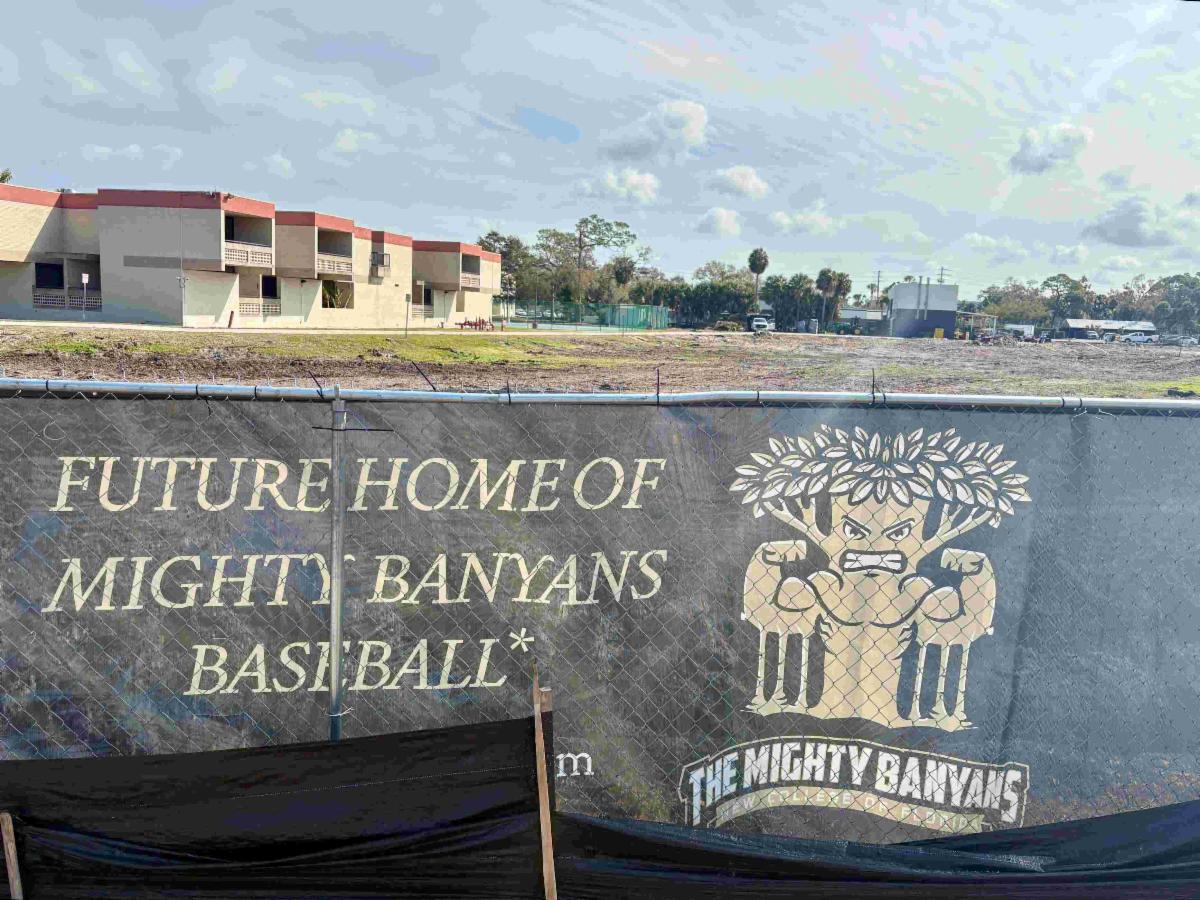
At a time when New College of Florida faces a longstanding housing shortage for students, the school is planning to shift $2.5 million earmarked for dorms to instead fund a baseball field.


The move stems from a landmark National Collegiate Athletic Association settlement this summer allowing universities to pay student athletes.


After the NCAA settlement in June cleared the way for schools to begin sharing revenue directly with college athletes, universities across the country faced a new financial challenge: how to pay for it. In response, the Florida Board of Governors moved to temporarily allow universities to transfer “auxiliary” funds — money generated by student fees for operations like campus bookstores, dining and housing — into athletics. 


The rule change was designed to give schools with major athletic programs like the University of Florida, the University of South Florida and Florida State more flexibility to cover those new costs and remain nationally competitive in recruiting and retaining athletes.


Now, New College is invoking the rule change to divert money from its auxiliary housing fund to break ground on a baseball field as it seeks to build its athletics program. 


The move reflects New College’s push to foreground athletics in its student offerings, launching a push to recruit student athletes and creating new sports teams. At the same time, the school has sought to reshape itself as a conservative institution, cutting diversity and inclusion programming and removing gender studies from its curriculum.


It also comes as the school faces an ongoing housing shortage after a 2023 mold outbreak in New College’s historic I.M. Pei dormitories forced students into hotels, dorms on the nearby University of South Florida Sarasota-Manatee campus and even briefly, portable trailers. 

NEW FROM SUNCOAST SEARCHLIGHT:

JUDGE REJECTS CHALLENGE TO CONTROVERSIAL SIESTA KEY LAND SWAP


A judge this week rejected a last-ditch effort to unwind a controversial Siesta Key land deal, clearing the way for a home to be built on property the county once bought to preserve.


The legal challenge, filed in December by Lourdes Ramirez of the nonprofit Protect Siesta Key, sought to block a key provision in a settlement between Sarasota County and Siesta Key businessman Michael Holderness. 


Under that agreement, the county would trade its preservation parcel at 162 Beach Road — valued at $2.8 million — for Holderness’ four beachfront lots valued at less than $100,000 combined. The deal also would let Holderness build a 5,000-square-foot house on the county-owned lot despite the county having denied similar requests when the land was privately owned; that’s because it sits behind a coastal setback line. 


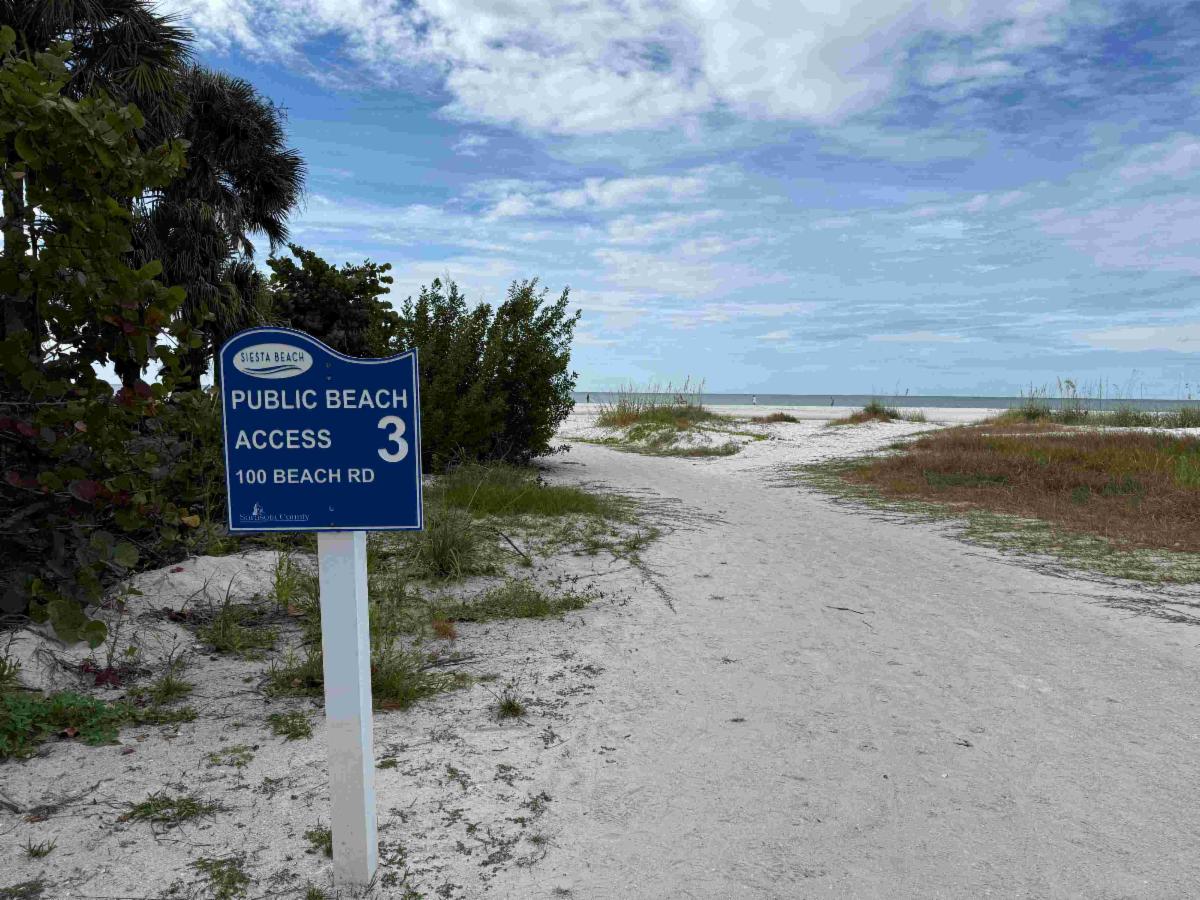
The agreement was made to end a federal lawsuit Holderness had filed against the county over property rights tied to his four beachfront parcels near Beach Access 3. In that case, he argued that public beach access signage near his property invited trespassers and that the county infringed on his rights as a waterfront land owner. 


By trading those parcels to the county, he said, they would become a part of the public beach. In exchange, he would get a lot on which he could build a house.


But Ramirez and other petitioners argued the county had no legal authority to give up land it bought for preservation and allow a house to be built. 


Circuit Judge Hunter Carroll ruled Tuesday that Ramirez and the other plaintiffs did not have legal standing to challenge the county’s decision.

Suncoast Searchlight partners with Gigafact to produce weekly fact briefs — concise, 150-word news stories that take real claims circulating online and fact check them. Each brief offers a direct “yes” or “no” answer to the question or claim, followed by a clear explanation backed up by credible, high-quality sources.


THIS WEEK'S FACT BRIEFS:


HERE'S WHAT ELSE WE RECOMMEND READING THIS WEEK


'THAT HAPPENED TO A FRIEND OF MINE WHO LIVES IN YOUR NEIGHBORHOOD.' LAKEWOOD RANCH RESIDENT DISCOVERS CHECK THEFT WIDESPREAD

FROM TK

Checks are disappearing in Lakewood Ranch, residents tell ABC 7 payments they mailed never made it to their destination. What looks like a normal neighborhood mailbox is now at the center of concern. Residents say checks dropped off there didn’t just get delayed — they were stolen. For Meagan Milne, it started with a routine payment to her HOA. She didn’t think twice when she mailed it, until something unusual showed up in her bank account. “They did not change the amount, which is why I didn’t initially see it in my online banking was because I saw that amount got cashed and I thought well of course then you know the HOA got it and so they cashed it. It wasn’t until the second one went through when I was thinking what in the world,” Milne said.

READ/VIEW THE STORY HERE


COULD THIS FLORIDA LAWMAKER UNDERCUT THE PROPOSED MANATEE CRUISE PORT?

FROM TAMPA BAY TIMES

A Florida lawmaker filed a legislative proposal Wednesday he said would broaden protections for the waters around the Manatee County property where a leading cruise company wants to build a new cruise port. In what appears to be an attempt to stifle the port proposal’s chances and solidify his opposition, State Sen. Jim Boyd, R-Bradenton, filed an amendment to a coastal resiliency bill that would clarify restrictions on dredging in the Terra Ceia Aquatic Preserve. The measure details limits on dredging in the vibrant coastal preserve, bustling with horseshoe crabs and wading birds, that sits beside the 328-acre private property that landowners and a leading cruise company, SSA Marine, have said they are eyeing for a new cruise port.

READ THE STORY HERE


A DO-OVER FOR THE SARASOTA PERFORMING ARTS CENTER

FROM ARTSBEAT

It has been just under a year since members of the Sarasota Performing Arts Foundation brought their plan for a new performing arts center within The Bay Park to the Sarasota City Commission, hoping to move the public/private partnership forward toward implementation and a final design. What they got instead was an earful of critiques and a charge to return to the drawing board prior to any vote on a controversial project that’s been part of Sarasota’s bayfront revision plan since its start in 2018. The Foundation took the directive to heart. On March 2, leaders will return to City Hall with “Concept 2.0,” a revised design that responds to a multitude of raised concerns, from the site location to the parking needs to the overall cost.

READ THE STORY HERE


IMG ACADEMY FINED AFTER ALLOWING STUDENTS WITH MEXICAN CARTEL TIES, FEDS SAY

FROM BRADENTON HERALD

Bradenton’s IMG Academy agreed to pay $1.7 million to settle a potential liability suit after allowing two students with ties to the Mexican cartel to attend the school. The U.S. Department of the Treasury’s Office of Foreign Assets Control (OFAC) announced in a news release Thursday that IMG Academy’s continued tuition transactions for the two students racked up nearly 90 violations of counternarcotics sanctions over the span of four years.

READ THE STORY HERE


FINDING MORE ROOM FOR NEW COLLEGE IS A STATE PRIORITY, USF BOARD CHAIR SAYS

FROM BRADENTON JOURNAL

The University of South Florida on Monday made its most extensive comments to date about Gov. Ron DeSantis’s proposal to transfer the campus of USF Sarasota-Manatee to New College of Florida. Board of Trustees Chairman Will Weatherford’s letter to the USF community offered much less than a full-throated endorsement of the Sarasota-Manatee campus, but it did express displeasure with a provision of a House bill that would require USF to transfer $22.7 million of its state funding to New College.

READ THE STORY HERE


USF FACULTY OPPOSE SARASOTA-MANATEE HANDOVER AS LIMAYEM PLEDGES TRANSPARENCY

FROM WUSF

The University of South Florida Faculty Senate on Wednesday endorsed a student resolution opposing any handover of the Sarasota-Manatee campus to New College of Florida, as outlined in Gov. Ron DeSantis’ budget proposal and a House bill. “I know our campus in Sarasota-Manatee is on everyone's mind, and it is on my mind,” USF’s new president, Moez Limayem, told faculty leaders who gathered in Tampa — and online from campuses in St. Petersburg and Sarasota-Manatee — for a meeting. Limayem’s comments were similar to those made by university Board of Trustees chair Will Weatherford, who has said discussions are happening in Tallahassee and USF doesn’t control the outcome.

READ/HEAR THE STORY HERE


WILL USF SARASOTA-MANATEE DISAPPEAR?

FROM SARASOTA MAGAZINE

Sarasota Magazine sat down with Dr. Laurey Stryker, former president of USF-SM, and Dr. Anila Jain, current vice chair of the campus board, to discuss the ongoing efforts in advance of a Feb. 25 community meeting from 4:30 p.m. to 6 p.m. at the campus’ Student Center Ballroom.

READ THE STORY HERE


TRUMP ADMINISTRATION PLAN TO GUT WETLAND PROTECTIONS RAISE CONCERN IN SARASOTA

FROM WSLR

Sarasota’s unique watershed fosters diverse ecosystems. But it’s that very same hydrology that has put the area in the center of a fierce debate over federal rules that protect waterways. The conflict stems from the Clean Water Act, a 1972 law that regulates discharge of pollutants into waterways. It also protects surrounding wetlands that filter pollution. Presidential administrations’ interpretations of the Clean Water Act have been an exercise in regulatory whiplash for years, with Democrats expanding protections and Republicans shrinking them. Now, President Trump’s Environmental Protection Agency, or EPA, wants to gut them.

READ/HEAR THE STORY HERE


BALD EAGLE RECOVERING AFTER BRADENTON POLICE RESCUE ON PRESIDENT'S DAY

FROM BRADENTON HERALD

The Bradenton Police Department made a fitting animal rescue on Presidents Day. A bald eagle, now named Freedom, was rescued by Bradenton police officers with the aid of the Wildlife Education and Rehabilitation Center Inc. and two “eagle-eyed” individuals, according to the police department. On Monday, BPD posted on Facebook that a bald eagle in distress was found near Eighth Street West and Manatee Avenue.

READ THE STORY HERE


SARASOTA SEEKS TO RAISE $3.5 MILLION FOR BOBBY JONES NATURE PARK

Sarasota and the Big Waters Land Trust are seeking $3.5 million in funding to put the finishing touches on improvements to the Bobby Jones Nature Park. The Nature Park at Bobby Jones encompasses 110 acres north of the city’s public golf course and features walking and biking trails. A recent effort to improve the park has seen the city partner with the Big Waters Land Trust, Christine Johnson, the group's president, joined Jerry Fogle, the city’s Parks and Recreation Director, to present the fundraising effort to the City Commission on Tuesday.

READ THE STORY HERE


GOP LAWMAKERS PUSH TO BAN CLIMATE ACTIONS IN FL CITIES; DEMS FIGHT TO PRESERVE THEM

FROM FLORIDA TRIDENT

Should local governments in Florida be free to pursue local net-zero goals that fight climate change, sea-level rise, extreme heat and worsening weather plaguing their residents? Republicans in the state Legislature are saying no. Three Republican lawmakers sponsored bills this legislative session to outlaw local net-zero efforts, citing business and tax motives but not addressing climate change. The bills have been approved in all three of the GOP-controlled legislative committees that reviewed them in public hearings.

READ THE STORY HERE


DID YOU MISS OUR PREVIOUS NEWSLETTER?

HERE'S WHAT WE SHARED:

COLD SNAP REVEALS GENEROSITY — AND GAPS — IN SARASOTA'S HOMELESSNESS SERVICES


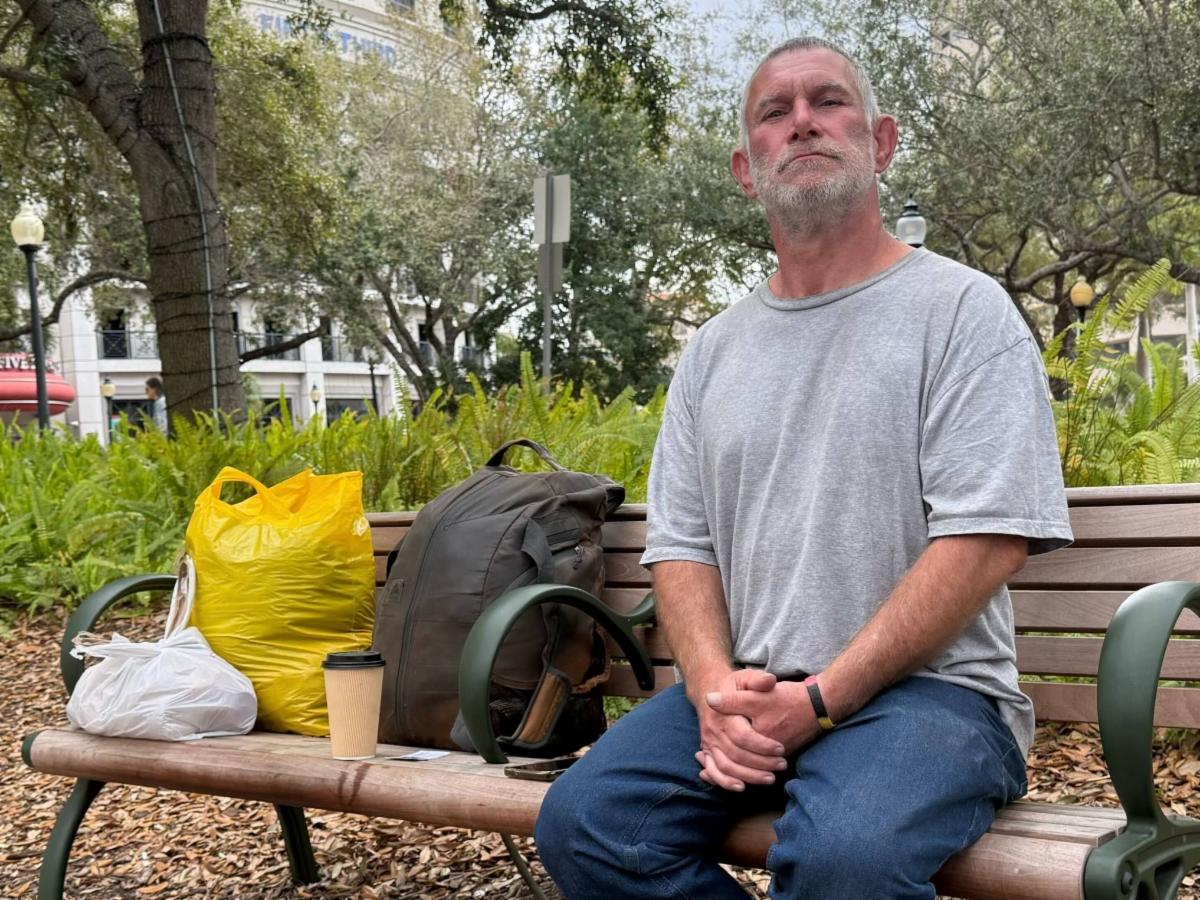
During a recent record-breaking cold snap that saw temperatures plummet below freezing on some nights, Sarasota’s homeless population faced life-or-death decisions unheard of this far south in the Sunshine State.


Joe Reuth, executive director of local nonprofit Resurrection House, was there at 5 a.m. on those cold mornings, opening over three hours earlier than usual to ensure people were showered, fed and dressed for the cold.


“Compassion and caring is essential, especially in the cold weather,” Reuth said. “It’s the difference between life or death. When they come into our day center, they're literally cold to the bones, shaking, definitely in need of warmth and a hot beverage, and that's what we provide.”


The dangerously cold weather began in January when an Arctic air mass pushed deep into Florida, sending overnight temperatures across the Suncoast into the low 30s. Wind chills made it feel even colder — in the 20s at times — and scattered snow flurries were reported in parts of the region. 


In a place where average January and February lows hover in the mid-50s and freeze warnings are uncommon, multiple nights near or below freezing marked one of the most unusual stretches of winter in recent memory and posed acute danger for people living outdoors.


Those bone-chilling temperatures may be waning, but the struggles faced by people experiencing homelessness won’t melt away with them. 

A BOLD AFFORDABLE HOUSING PLAN SPUTTERED. NOW SARASOTA IS TRYING AGAIN


Nearly two years ago, Sarasota’s then-City Manager Marlon Brown had an ambitious idea to purchase downtown property near City Hall and turn it into large-scale affordable housing.


In an effort that would become the first-of-its-kind across Florida, Brown secured millions of dollars in pledges from the area’s largest philanthropic foundations and millions more earmarked from the Florida Legislature. 


With the support of city commissioners, Brown’s plan would see the city take direct control over the development, own the property and supply nearly 200 units of attainable housing in two high-rise buildings on First Street, with a groundbreaking anticipated in mid-2025.


It was uncharted territory in Sarasota. Development of affordable housing is typically done on less expensive land facilitated with complicated financing that often requires tax credits. Instead of high-rise development, these projects are typically not more than three or four stories — an exception being Lofts on Lemon, which is five stories — and involve partnerships with developers that have decades of experience in the highly regulated industry. 


Even then, deals can take years to go from plans on paper to shovels in the ground. What Brown proposed would speed up the timeline, deliver more units and keep the city in full control along the way.


Sarasota spent more than $7 million on two parcels in September 2024.


A month later, Brown resigned. The anticipated groundbreaking never happened. Promised foundation dollars never materialized. And the project seemingly languished as Sarasota cycled through two interim city managers.


But it is now stirring again.

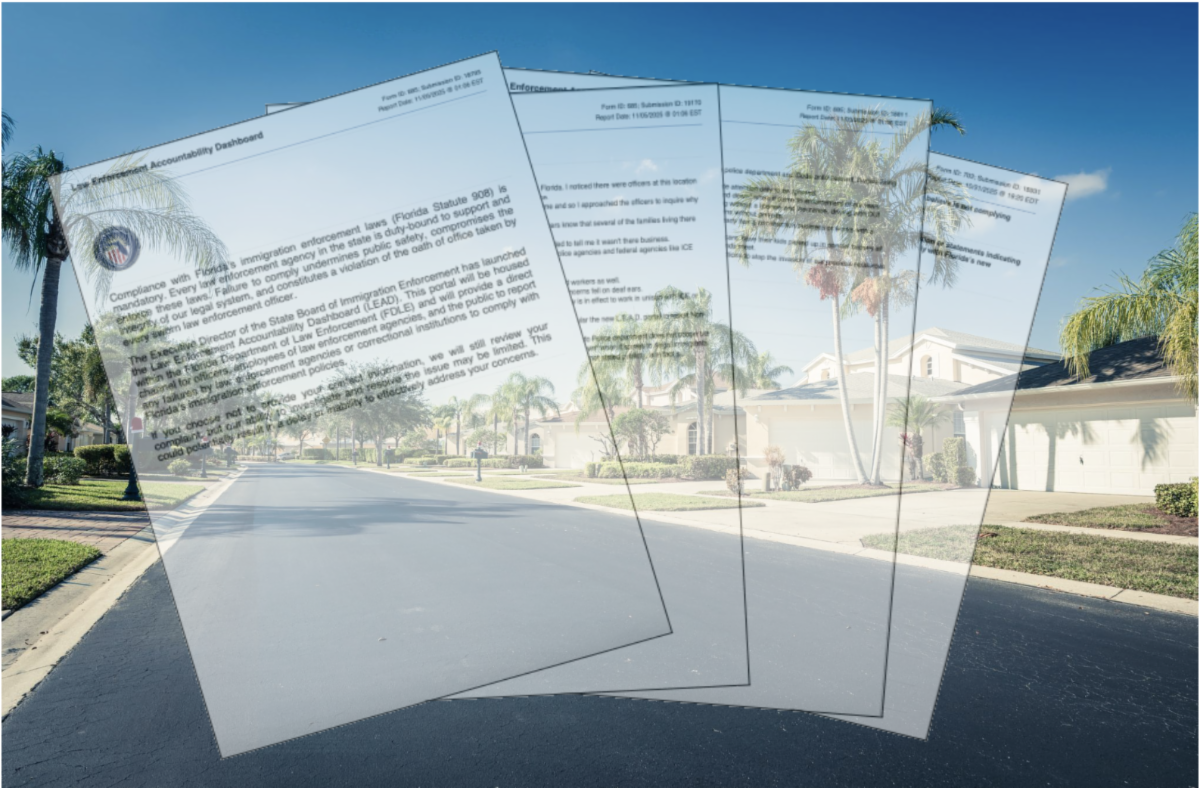
FLORIDA RESIDENTS USE FDLE TIP LINE TO REPORT NEIGHBORS, ACQUAINTANCES


In the first months after the Florida Department of Law Enforcement set up a tip line for people to report agencies for not complying with the state’s immigration laws, only a trickle of responses flowed in — and many of them focused less on police than on the people next door.


The “Law Enforcement Accountability Dashboard” asks tipsters to identify non-compliant law enforcement agencies, but records obtained by Suncoast Searchlight show many submissions hinge on allegations about neighbors and community members suspected of being undocumented. Often embedded in those complaints are accusations that local agencies are not doing enough about it. 


One informant complained about his son’s bus driver being “foreign.” Three tipsters seemingly focused on individuals with whom they had personal quarrels. Two others complained of loud parties. 


“These Haitian residents throw extremely loud parties 2 to 3 nights per week,” wrote a Lake Worth Beach resident. “The primary resident may be here legally, but we feel their party goers may not be.”


The tool was created in March to “provide a direct channel for officers and employees to report any failure by their agency to comply with Florida’s immigration enforcement policies” — though the portal also welcomes tips from the public.


FLORIDA BILL WOULD LET HOMEOWNERS RECALL COMMUNITY DEVELOPMENT DISTRICT BOARDS


A new bill in the Florida Senate would add more homeowner protections and oversight to the boards that control governing decisions within community development districts across the state.


The proposed reform would add provisions that allow homeowners living in these districts to organize recall elections to remove members of the governing bodies over grounds like malfeasance, neglect, incompetence, a felony conviction or the inability to perform official duties. 


But the bill does not allow these communities to recall the initial board members appointed by the real estate developer, who often maintain control over spending decisions and district governance for decades with little oversight and no homeowner input.


“I would have probably had a hard time moving it forward if we started messing around with that,” said Sen. Kristen Arrington (D-Kissimmee), who sponsored the measure.


The legislation comes in response to a group of residents upset with how their CDD has been run in Osceola County – and no current resource to oust the board members they believe are responsible for a series of alleged misdeeds, including embezzlement and public records violations.


It also follows months of ongoing reporting by Suncoast Searchlight, which published the “Power and Profit” series last year exposing how real estate developers are reshaping Florida’s housing market through the unchecked proliferation of these independent special districts.

SUNCOAST SEARCHLIGHT WINS FLORIDA PRESS CLUB HONORS


Journalists at Suncoast Searchlight were honored with six awards from the Florida Press Club for education, business, environmental coverage and in-depth reporting.


The statewide awards were presented Saturday evening during a ceremony in West Palm Beach. They are the first media honors for Suncoast Searchlight since the nonprofit newsroom’s official launch in February 2025. The awards honored work produced in Florida and published between June 1, 2024 and May 31, 2025.


Suncoast Searchlight investigative reporter Alice Herman took first place in the Class B education category for stories that focused on New College of Florida, including an article about a Chinese professor fired under a controversial state law that limits public universities from employing people from so-called “countries of concern.”


Investigative Editor Josh Salman and former data reporter Kara Newhouse also won first place in the Class B business journalism category for their stories on Florida’s greenbelt law.


The series revealed how the state loophole is costing Sarasota and Manatee counties millions in lost revenue by allowing developers to tap a decades-old law meant to preserve agriculture and shrink the taxes on pastures they intend to pave over.


“I’m incredibly proud of the work produced by our team,” said Emily Le Coz, Suncoast Searchlight’s executive editor-in-chief. “What makes these honors especially meaningful is that all of this work was done within our first few months of publishing. It reinforces why we launched Suncoast Searchlight — to deliver ambitious, deeply-reported journalism on the issues shaping people’s lives across our region.”


Suncoast Searchlight also was awarded second and third-place honors in the annual competition for work on environmental coverage, general news, in-depth reporting and public service journalism.

CURIOSITY IN CHAOS: HOW LOCAL NONPROFIT TAKES ON HOSTILE POLITICAL DIVISION


Don’t say the word “debate” around Bill Woodson.


He’ll politely clarify that a debate implies two sides disagreeing. At Woodson’s Sarasota-based nonprofit, Conversations Across the Aisle (CATA), there aren’t any winners or losers –– just a group of people from varying ends of the political spectrum trying to understand one another.


“People who are curious are not the mainstream,” Woodson said. “If we gave value and valence to getting both sides of an argument, I think it would lead to better policies and better quality of life for everybody.”


Woodson founded CATA about three years ago as a deeply personal response to a question that has come to define modern political life: What happens when people stop listening to one another? 


Through a series of facilitated dinners, CATA seeks to “rehumanize” people on all sides of the political spectrum, bringing together those with different political beliefs not to debate or persuade, but to sit at the same table, share a meal and try to understand how a reasonable person could see the world so differently.


The first such dinner took place in October 2023, and the organization has held six more since then — one each quarter, tackling topics like “the evolving relationship between church and state,” “the war on woke” and “what is due process; is it a universal right?”

GOT A TIP OR STORY IDEA?


Share your tips and story ideas using our online form. Your name and contact info will be kept confidential.

Suncoast Searchlight is a 501c3 nonprofit news organization whose mission is to produce investigative and explanatory journalism that serves and empowers the residents of Florida’s Suncoast region (Sarasota, Manatee, and DeSoto counties). We shine a light on critical issues affecting our community. Through independent reporting and collaboration with diverse media partners, we foster transparency, accountability and an informed citizenry, ensuring that all voices are heard and that the public has access to the information they need to drive meaningful change.


CONTACT US:

Suncoast Searchlight

PO Box 99 Sarasota, FL 34230

(941) 724-4450