We have created a petition for you, your staff, and patients to sign.
We will compile the signatures and send the letter to all Medicare Directors. Make your voice heard! Click the button below to sign the petition.
| | |
On October 23, ASIPP held a “Town Hall Meeting” for members who wanted more information on the proposed LCD for peripheral nerve blocks and pain procedures. Please click on the following link to view the presentation.
The news isn’t good folks! ASIPP has sent our comment letter on behalf of the society and our members. It is critical that you take the time to send a comment letter to your respective Medicare Administrator. We cannot stress strongly enough the importance of your action on this matter. Our specialty and patient care is at stake. The deadline to comment is November 8.
For your convenience, we are providing the email address and LCD number for each Medicare Administrator Contractor (MAC). Feel free to write your own comment letter; however, if you would prefer, you can use the sample letter we have provided you. If you are unsure of which MAC covers your region/state, click here for a list.
| |
In the process, CMS throws shade on AMA system for price-setting, alleges "conflicts of interest"
The Centers for Medicare & Medicaid Services (CMS) on October 31st finalized its annual physician fee schedule for 2026, giving doctors treating Medicare patients a 3.77% pay bump if participating in alternative payment models (APMs) and a 3.26% increase for those not participating in APMs.
The bulk of those percentages comes from a 2.5% 1-year increase Congress passed in its One Big Beautiful Bill Act in July, as well as a 0.49% adjustment CMS said was necessary to account for proposed changes in work relative value units (RVUs) for certain services. Without those additions, the conversion factor increases would be 0.75% for physicians participating in APMs and 0.25% for those not participating in them.
But the agency also imposed a 2.5% cut for clinical services that are not time-based to reflect its opposition to the American Medical Association's (AMA) long-standing method for evaluating RVU schedules that set forth clinical service costs for CPT code billing. Many of the AMA's codes are "very likely overinflated," CMS said. The AMA said this so-called "efficiency adjustment" would reduce payment for 7,000 physician services, amounting to some 95% of all those provided by physicians.
ASIPP will update you in the near future on the rule descending the fee schedule for certain interventional pain management (IPM) techniques and other non-time-based services in 2026 is the efficiency adjustment finalized by the Centers for Medicare & Medicaid Services (CMS) in the Calendar Year (CY) 2026 Medicare Physician Fee Schedule (MPFS) final rule.
Click here to read the full article.
| |
Upcoming ASIPP Webinars
Register today!
| | |
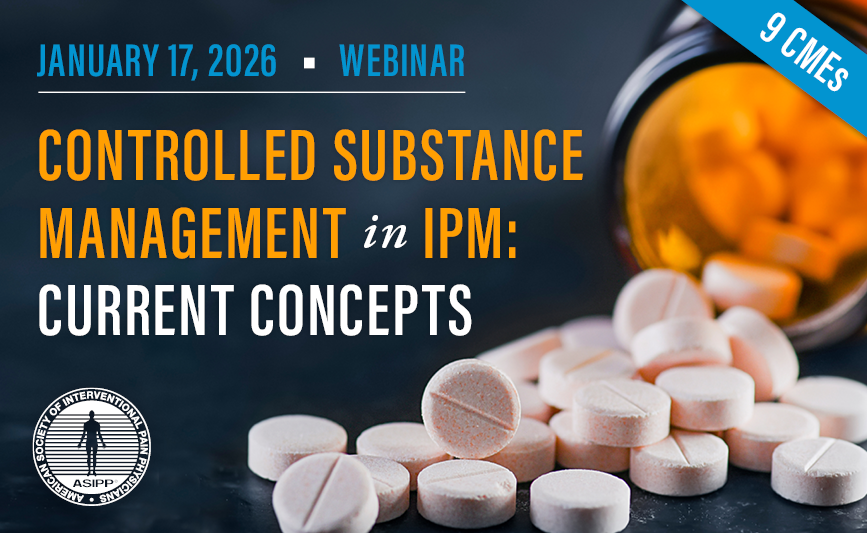
Join ASIPP on January 17, 2026, for an important webinar: Unveiling the Complexities of Controlled Substance Management in Interventional Pain Management (IPM).
Controlled substance management continues to present challenges for pain physicians, from evolving regulations and compliance requirements to balancing patient care with risk mitigation. This webinar will provide expert guidance to help you navigate these complexities and strengthen your practice.
| | |
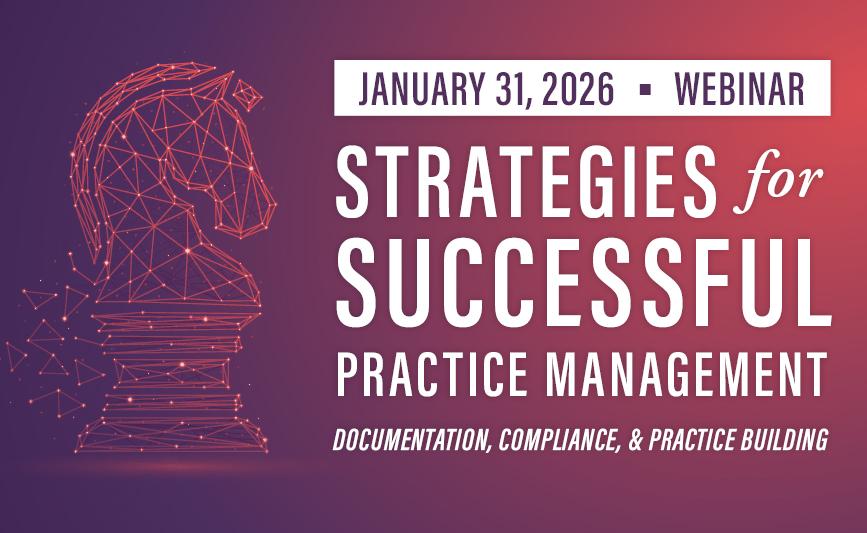
Join ASIPP on January 31, 2026, for our webinar Strategies for Successful Practice Management. This program will focus on practical approaches to strengthen your practice through improved documentation, compliance strategies, and effective practice-building techniques.
Whether you are looking to optimize workflows, ensure regulatory readiness, or position your practice for long-term growth, this webinar will provide valuable insights to support your success.
| | |
Gastroenterologists want more training in how to safely deliver moderate sedation during endoscopic procedures, and a majority would be interested in providing physician-directed propofol sedation, especially after in-person or online training, according to results from an ongoing survey presented at the American College of Gastroenterology (ACG) 2025 Annual Scientific Meeting.
The dwindling supply of anesthesiology professionals in the US puts pressure on endoscopists, Dayna S. Early, MD, professor of medicine in the Gastroenterology Division at the Washington University, director of endoscopy at Barnes-Jewish Hospital, both in St. Louis, and chair of an ACG task force on anesthesia issues, told meeting attendees. However, preliminary results from the survey found that only about 4% of respondents said they used solely endoscopist-directed moderate sedation.
This could be because — as the survey also showed — GI fellows are not receiving adequate training in moderate sedation, which requires no interventions to maintain a patient airway, she reported. About 80% of program directors and 75% of senior fellows responding to the survey said they received training in moderate/conscious sedation during their fellowship.
Click here to read the full article.
| | |
ASIPP is proud to launch our Resident and Fellow Mentorship program. This initiative is designed to connect trainees with experienced pain physicians to foster professional growth, provide guidance, and strengthen the future of our specialty.
Each mentor would be paired with one to two trainees, but can take more if interested. Trainees will be responsible for initiating introductions and arranging at least one to two video calls per year. These sessions will provide opportunities for mentees to seek advice on clinical decision-making, career planning, research opportunities, and professional development.
We believe that your experience, expertise, and insight can have a lasting impact on the next generation of pain physicians. By volunteering as a mentor, you will play a critical role in shaping the future of our field and ensuring that ASIPP continues to cultivate excellence in interventional pain medicine.
If you are interested in serving as a mentor, please confirm your participation by filling out the appropriate form below.
| | |
How SNAP cuts threaten future physicians
Last week, the Department of Agriculture announced that Supplemental Nutrition Assistance Program (SNAP) benefits would not be distributed as planned during the government shutdown, meaning families across the country -- from small rural towns where access to healthcare, physicians, and grocery stores is already scarce, to residents of major urban centers where redlining has left entire neighborhoods as food and health deserts -- would be cut off from the assistance they depend on to buy food.
Then, on October 31, judges in Rhode Island and Massachusetts ruled that the Trump administration must continue paying for SNAP using contingency funds, though they allowed the administration discretion over whether to fund the program partially or in full.
The administration responded to the order on Monday, indicating it will restart SNAP benefits but will pay out only half the amount people normally get.
In a nation where one in eight Americans relies on SNAP, the mere possibility of suspension or decrease in benefits reveals just how fragile our social safety net has become.
Click here to read the full article.
| |
Join Us in New Orleans for ASIPP 2026
Earn CMEs, Expand Networks, and Explore the Future of Pain Management
| | |
It is our pleasure to invite you to the American Society of Interventional Pain Physicians’ 2026 Annual Meeting, where we will continue to shape the future of Interventional Pain Management.
This 28th Annual Meeting will take place Thursday, March 19 through Saturday, March 21, 2026, at the Hilton New Orleans Riverside in New Orleans, Louisiana.
The 2026 Annual Meeting will provide the tools, knowledge, and connections you need to thrive in the evolving field of interventional pain management.
| | JOIN or RENEW your ASIPP Membership for the best registration rates. | | |
Regional anesthesia did not impair functional recovery in adolescents who underwent anterior cruciate ligament reconstruction surgery, with most patients achieving good functional outcomes by 6 months. Younger age, female sex, and negative temperament were linked to poorer recovery at week 6 and month 6.
METHODOLOGY:
- Researchers conducted a prospective observational study to assess the impact of peripheral nerve blocks on functional recovery in adolescents aged 12-17.5 years who underwent anterior cruciate ligament reconstruction.
- Functional recovery was assessed at various postoperative intervals using the Lysholm score — a patient-reported measure for functional recovery after knee surgeries — and the limb symmetry index, assessed using the single hop test. Data collection included preoperative psychological assessments using standardized tools such as the Revised Children’s Anxiety and Depression Scale and postoperative pain scores, use of opioids or analgesics, and leg neurologic symptoms.
- A total of 519 patients were enrolled from 15 sites. Self-reported Lysholm scores were provided by 253 patients on postoperative day 1, 274 on day 3, 285 at 6 weeks, and 196 at 6 months. The single hop test score was available for 125 patients (62.9% girls) at 6-9 months.
Click here to read the full article.
| | |
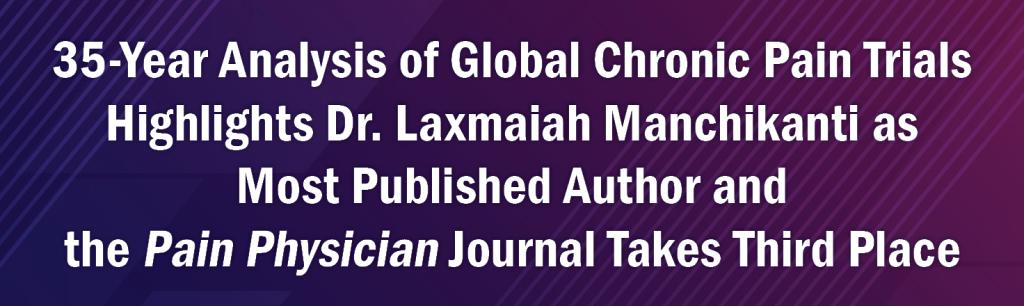
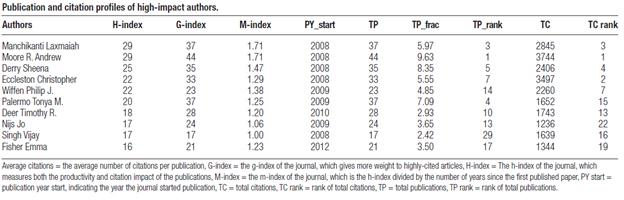
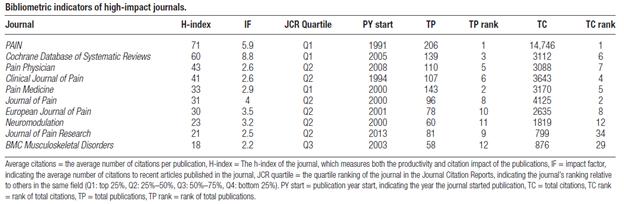
A 35-year bibliometric analysis of global trends in randomized controlled trials for chronic pain therapy (1989-2024) highlights Laxmaiah Manchikanti, MD, as a prominent author with the highest publication counts, while Pain Physician ranks as the third highest ranked journal.
The study, conducted by Yang et al., analyzed 4,206 publications from 939 journals, authored by 20,068 individuals across 86 countries. The most cited article was “Clinical Importance of Changes in Chronic Pain Intensity Measured on an 11-Point Numeric Pain Rating Scale” (Pain. 2001 Nov;94(2):149-158).
Most Published and Cited Authors:
- Laxmaiah Manchikanti, MD
- Andrew R. Moore, DSc
- Sheena Derry, MA
- Christopher Eccleston, PhD
- Philip J. Wiffen
- Tonya M. Palermo, PhD
- Timothy R. Deer, MD
Top cited high-impact journals include:
- Pain
- Cochrane Database of Systematic Reviews
- Pain Physician
The tables below summarize:
- Publication and citation profiles of high-impact authors
| | - Bibliometric indicators of high-impact journals
| |
It "feels like you're taking a step back," says one patient
Bill Swick has a rare degenerative brain disease that inhibits his mobility and speech. Instead of the hassle of traveling an hour to a clinic in downtown Chicago to visit a speech therapist, he has benefited from virtual appointments from the comfort of his home.
But Swick, 53, hasn't had access to those appointments for the last month.
The federal government shutdown, now in its fifth week, halted funding for the Medicare telehealth program that pays his provider. So, Swick and his wife are practicing old strategies rather than learning new skills to manage his growing difficulties with processing language, connecting words, and pacing himself while speaking.
"It's frustrating because we want to continue with his journey, with his progress," said 45-year-old Martha Swick, a caregiver for her husband since his diagnosis 3 years ago, during an interview at their home in Minooka, Illinois. "I try to have all his therapy and everything organized for him, to make his day easier and smoother, and then everything has a hitch, and we have to stop and wait."
Click here to read the full article.
| | |
Only two test dates left this year - Apply now!
November 15 & December 13
Four (4) hour virtual exam
- ABIPP Path – Combined CCPM/ CSM Exam
For those with subspecialty in Pain Medicine
Two (2) hour virtual exam
- ABIPP Competency Exam in IPM
For those without primary board certification
Two (2) hour virtual exam
- ABIPP Competency Exam in Regenerative Medicine
Two (2) hour virtual exam
- Controlled Substance Management Competency Exam
Two (2) hour virtual exam
- Documentation, Coding, Compliance, Practice Management Competency Exam
Two (2) hour virtual exam
| | |
A group of Montana healthcare workers says the state-mandated monitoring program designed to help them recover from addiction instead subjects them to “punitive, expensive, and clinically unwarranted” practices, according to a class-action lawsuit filed in federal court on October 28.
These programs were first developed as physician health programs (PHPs) for doctors struggling with substance use and mental health disorders. Over time, states and licensing boards expanded them to nurses, pharmacists, and other clinicians to help them recover and ensure safe practice.
The lawsuit reflects broader concerns from healthcare workers who say that seeking this type of help is prohibitively costly and threatens their professional reputations.
Click here to read the full article.
| | | |
We're excited to let you know that the new ASIPP Community, hosted by DocMatter, is now live!
The ASIPP Community on DocMatter will serve as a place for members to collaborate around clinical and research topics to advance the care of their interventional pain patients.
Click here to be a part of the conversation!
| | |
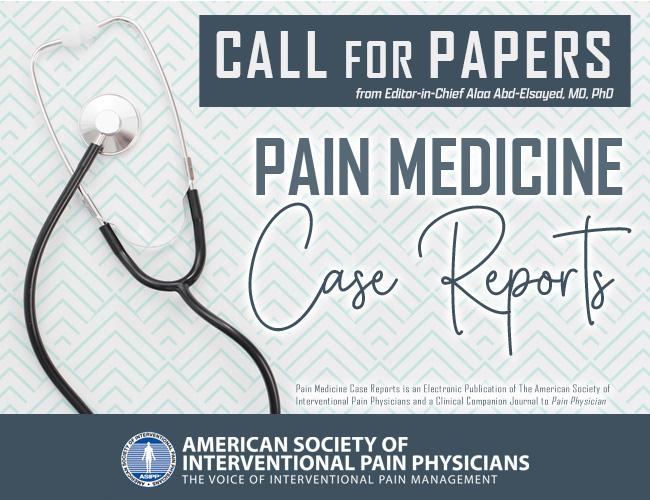
Pain Medicine Case Reports (PMCR) and Editor-in-Chief Alaa Abd-Elsayed, MD, PhD would like to invite you to submit case reports and case series to the PMCR journal. Your article will be published free of charge.
Open access journals are freely available online for immediate worldwide open access to the full text of published articles. There is no subscription fee for open access journals. Open access journals are no different from traditional subscription-based journals: they undergo the same peer review and quality control as any other scholarly journal.
Interested in becoming a member of the PMCR Editorial Board?
Editorial board members are asked to review 2-6 manuscripts per year. Please submit your most up-to-date CV to sgold@asipp.org for consideration.
For more information or to submit your articles, click here.
| | |
We are excited to announce that Pain Medicine Case Reports (PMCR) journal (eISSN 2768-5152) has been accepted for inclusion in MEDLINE and PubMed, the prestigious bibliographic database of the U.S. National Library of Medicine. PMCR, a companion publication to the prestigious Pain Physician journal by ASIPP, joins its counterpart in achieving indexing in both MEDLINE and PubMed, marking ASIPP’s dual presence in these renowned databases.
The inclusion of PMCR journal in MEDLINE signifies a higher level of selectivity, as MEDLINE consists of the top 5,200 biomedical journals. This indexing also means that articles from PMCR will be searchable using NLM Medical Subject Headings (MeSH terms) and other metadata.
The selection for MEDLINE follows a rigorous evaluation process by reviewers from the Literature Selection Technical Review Committee (LSTRC). According to their criteria, the scientific quality of a journal’s content is the primary factor considered for indexing.
We extend our congratulations to the Pain Medicine Case Reports Editor-in-Chief, Deputy Editor-in-Chief, Journal Team, and Editorial Board for this achievement, which underscores the significance and excellence of this esteemed journal.
| | | | |