Love Stories that Shaped the Art World | |
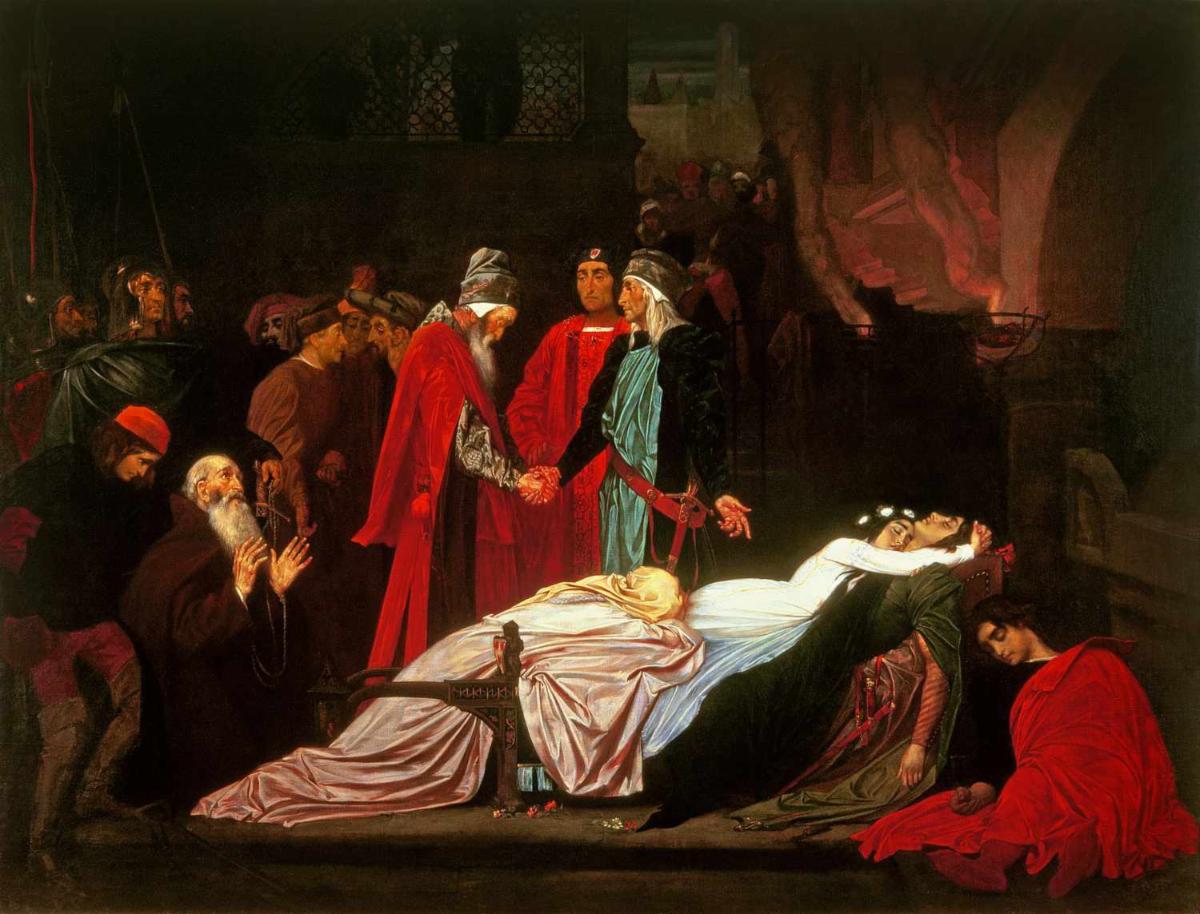
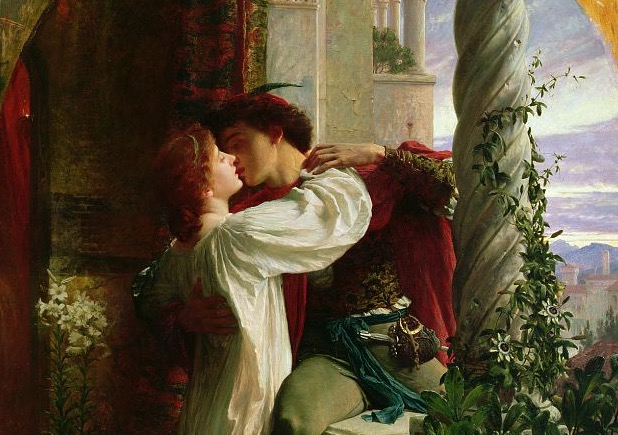
Fredrick Lord Leighton, "The Reconciliation of the Montagues and the Capulets" | |
|
“A muse is anything but a paid model. The muse in her purest aspect is the feminine part of the male artist, with which he must have intercourse if he is to bring into being a new work. She is the anima to his animus, the yin to his yang, except that, in a reversal of gender roles, she penetrates or inspires him and he gestates and brings forth, from the womb of the mind.” - Germaine Greer
| |
|
When you think of tragic love stories, who comes to mind? Romeo and Juliet? Or perhaps Bonnie and Clyde?
In the world of art, there are heartbreaking real-life romances that rival even the greatest of fictional tales. Artists are notorious for tempestuous relationships that often end badly. Throughout history, countless artists have played one side or another of the melodrama of tragic muse, so much so that it has become an archetype in discussions about art history. This passionate merging of two identities into an inseparable, codependent whole often inflames and inspires the art while leaving the lives of one or both participants in ashes.
Last year, in my February Newsletter, "Steamy, Sensual, Scandalous," I recounted some beautiful love stories from the art world. If you didn’t get the chance to read it or if you’d like to re-visit these romances, please follow this link:
https://conta.cc/49bIoZ0
| |
|
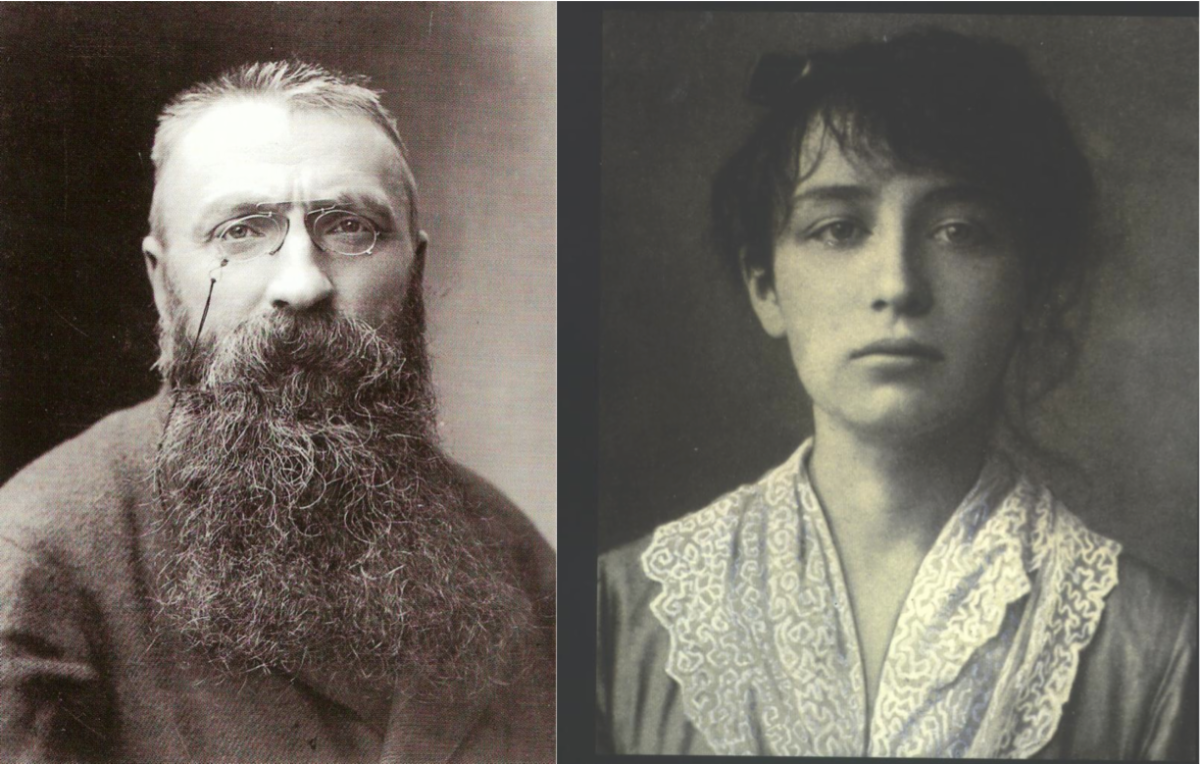
Auguste Rodin & Camille Claudel
Camille Claudel came to Paris to study art at a time when the prestigious École des Beaux-Arts was open only to men. Undeterred, she joined studios that welcomed women. In 1882, Auguste Rodin hired the 19-year-old sculptor Camille as a studio assistant. From the very beginning, the romance between Auguste Rodin and Camille Claudel was on unequal footing. He was in his mid-40s with a career on the rise and in a more than 20-year relationship with another woman.
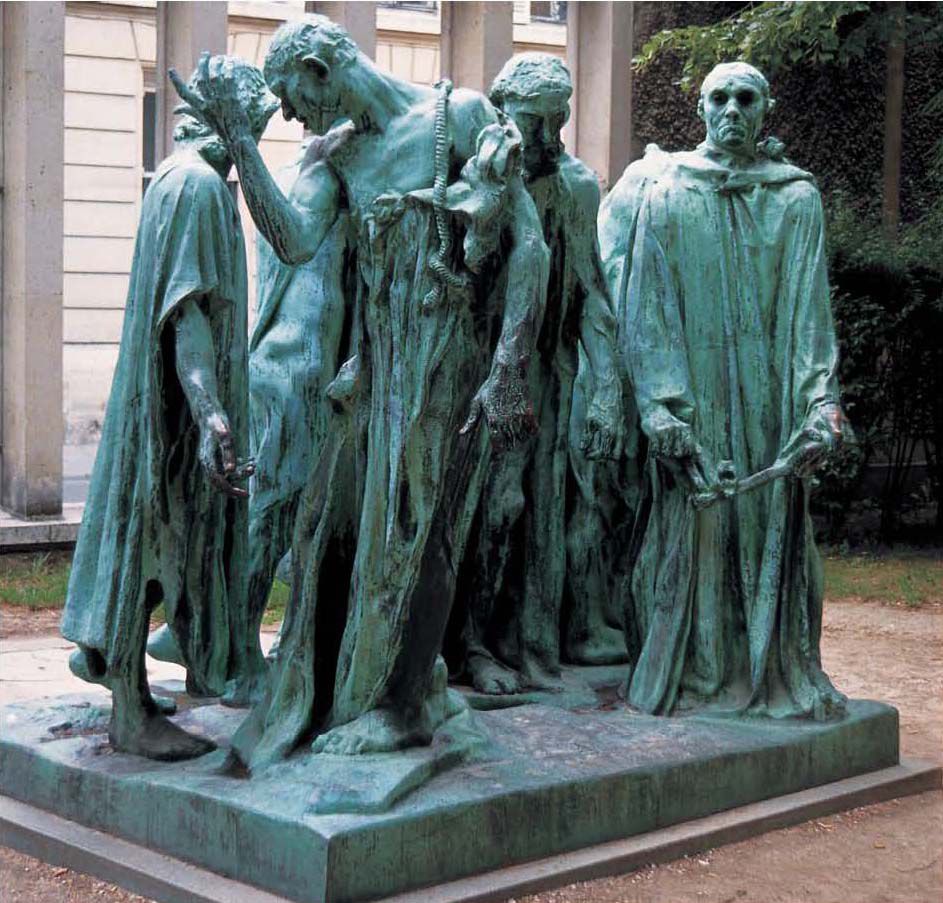
Impressed by her talent, Rodin entrusted her with complex tasks such as the hands and feet of his monumental figures. Claudel was given many of the most difficult jobs, and she had an influential role in completing two of Rodin’s most famous works, “The Burghers of Calais” and “The Gates of Hell”. (Unsurprisingly, she received no credit.)
| |
Auguste Rodin "The Burghers of Calais". (Claudel did most of the hands and feet) | |
|
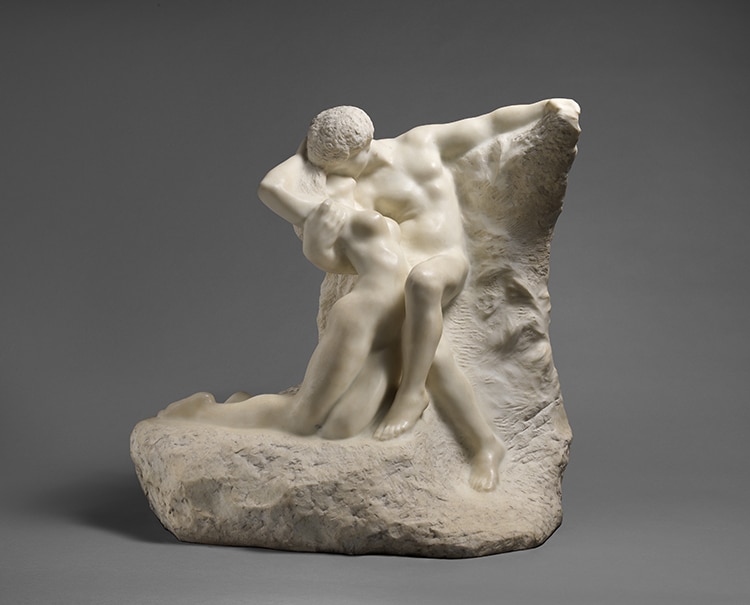
The two began a passionate and turbulent affair during which they influenced each other’s styles, with their works serving as declarations, criticisms or echoes of one another. Rodin, for his part, was enamored of both Claudel’s talent and her beauty, making several portraits of her. Rodin created some of his most desperately passionate sculptures, including both The Kiss (1882) and The Eternal Idol (1890–93), during their romance.
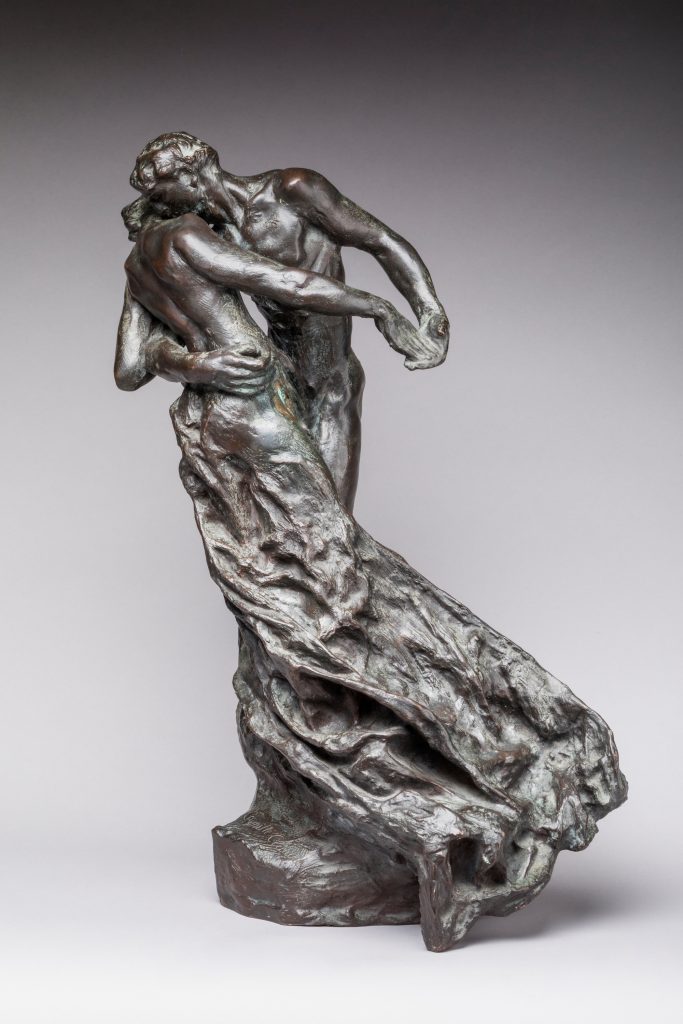
She sought, mostly unsuccessfully in her lifetime, to be recognized as an independent artist at the Salon. Between 1882 and 1889, Claudel regularly exhibited busts and portraits of people close to her. For a time both enjoyed critical success: Claudel’s La Valse and Rodin’s Eternel Printemps and Baiser are among the celebrated works that date from the peak of these years of passion and shared creation. “I showed her where she would find gold,” Rodin once said of Claudel’s talent, “but the gold she found is all hers.”
Their relationship was one of fiery passion and shared artistry—they created side by side, their collaborative genius preserved in works housed today in the Rodin Museum and Musée d’Orsay.
| |
Above: Auguste Rodin "Eternal Spring", Below: Camille Claudel "The Waltz" | |
|
Auguste couldn’t bear it when an argument temporarily ruptured his romantic relationship with Camille. “In a single instant I feel your terrible force,” he wrote to her in a passionate 1883 letter. “Atrocious madness, it’s the end. I won’t be able to work anymore…yet I love you furiously.”
From the start, their romance was overshadowed by Rodin’s partnership with Rose Beuret, a working-class seamstress with whom he had been in a relationship for decades. (They would eventually marry after 53 years, two weeks before Beuret’s death.) In 1892, after 10 years of emotional distress, Claudel put an end to her sexual relationship with Rodin, although they saw each other regularly until 1898, with Rodin offering her a modicum of financial support.
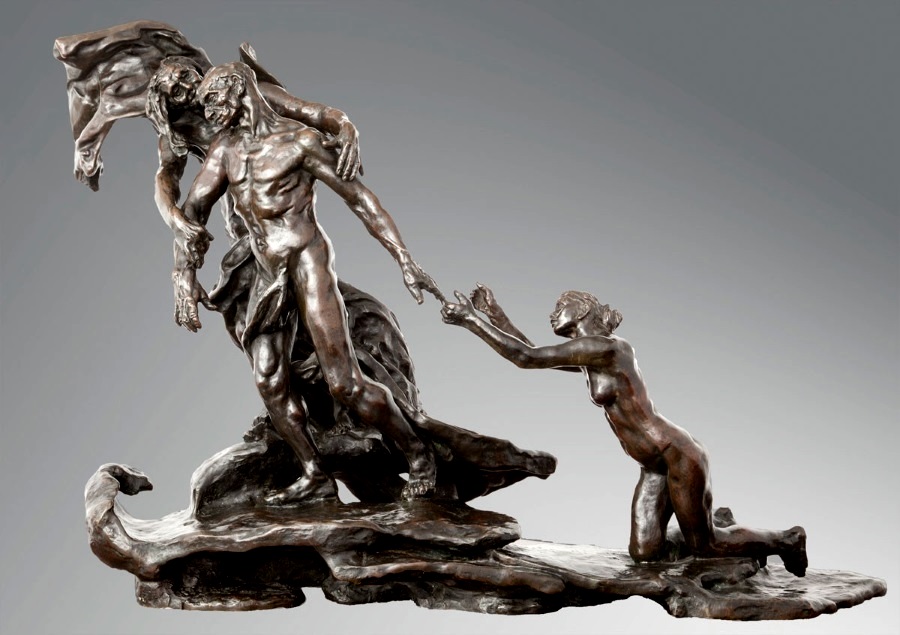
Alongside her work with Rodin, Claudel sought recognition as an independent artist, accepting commissions and exhibiting busts and portraits at the Salon. Their ultimate rupture would come in when Claudel debuted her sculpture The Mature Age. It shows a young female figure kneeling behind and clinging to an older male, who is walking ahead with an older female figure. While the sculpture was ostensibly a depiction of someone leaving behind youth for a mature stage of life, it was impossible not to see the parallels to the pair’s relationship. When he saw the sculpture, Rodin was appalled and immediately cut off his support of Claudel. He also might have had something to do with the cancellation of the commission for the sculpture.
| |
Camille Claudel "The Mature Age" | |
|
As his reputation soared, hers plummeted. She was scorned, shunned, and dismissed—not just as a lover but as an artist. Alone, distrusting, and out of favor, she struggled to sell her works.
Adding to her isolation, her brother, the renowned poet and diplomat Paul Claudel, played a pivotal role in her downfall. Camille, seen as "too modern" and a source of familial shame, was forcibly institutionalized by her family.
In 1913 she was committed to an asylum, remaining until she died in 1943. “It is terrible to be so abandoned,” she wrote in 1915. “I can’t help but succumb to the grief that overwhelms me.”.
For 30 years, she fought to explain the injustice of her confinement, writing anguished letters to friends and family, pleading for release. Her clarity and heartbreak resonate in these preserved writings.
On October 19, 1943, Camille Claudel died of malnutrition still imprisoned in a French mental hospital. No family members attended her funeral, and her body was buried in a common grave.
After her death, Claudel and her work slipped into relative obscurity, only emerging from her lover’s shadow in the late 20th century. Her legacy has been restored: her sculptures now stand proudly beside Rodin’s, and a museum near Paris is dedicated entirely to her work.
| |
|
Salvador and Gala Dali
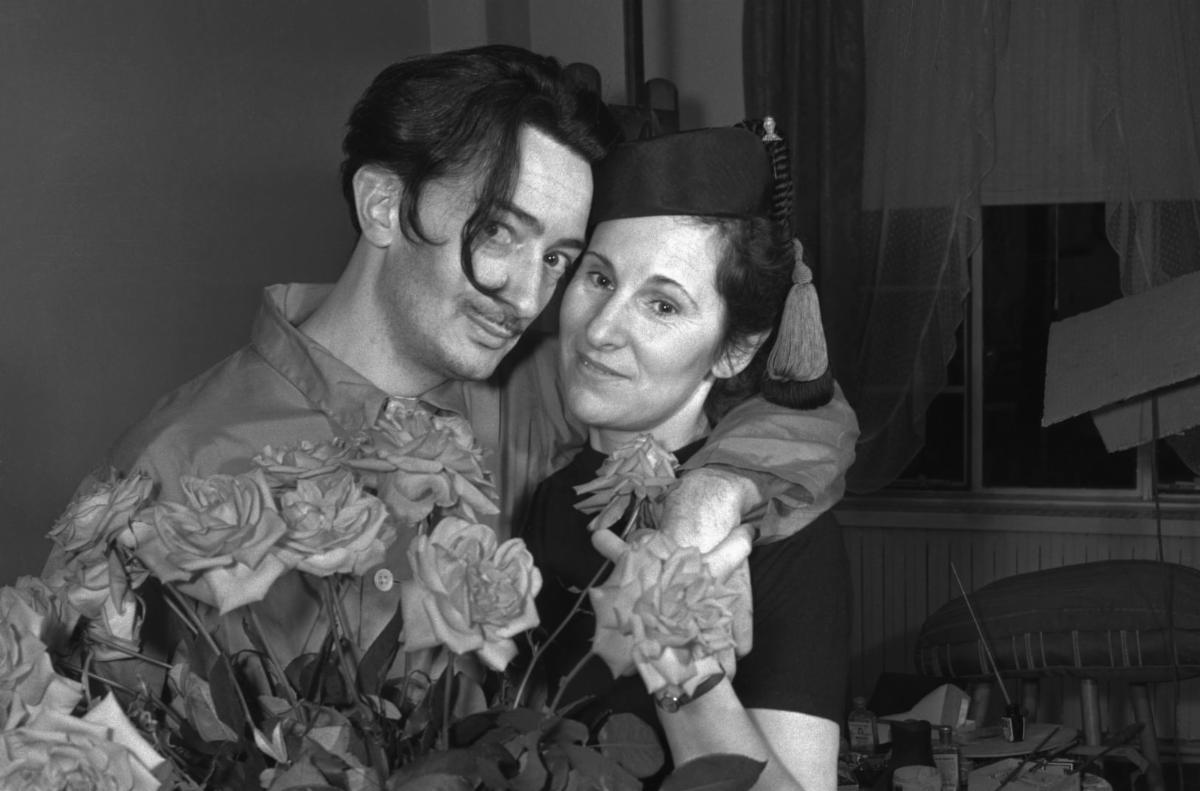
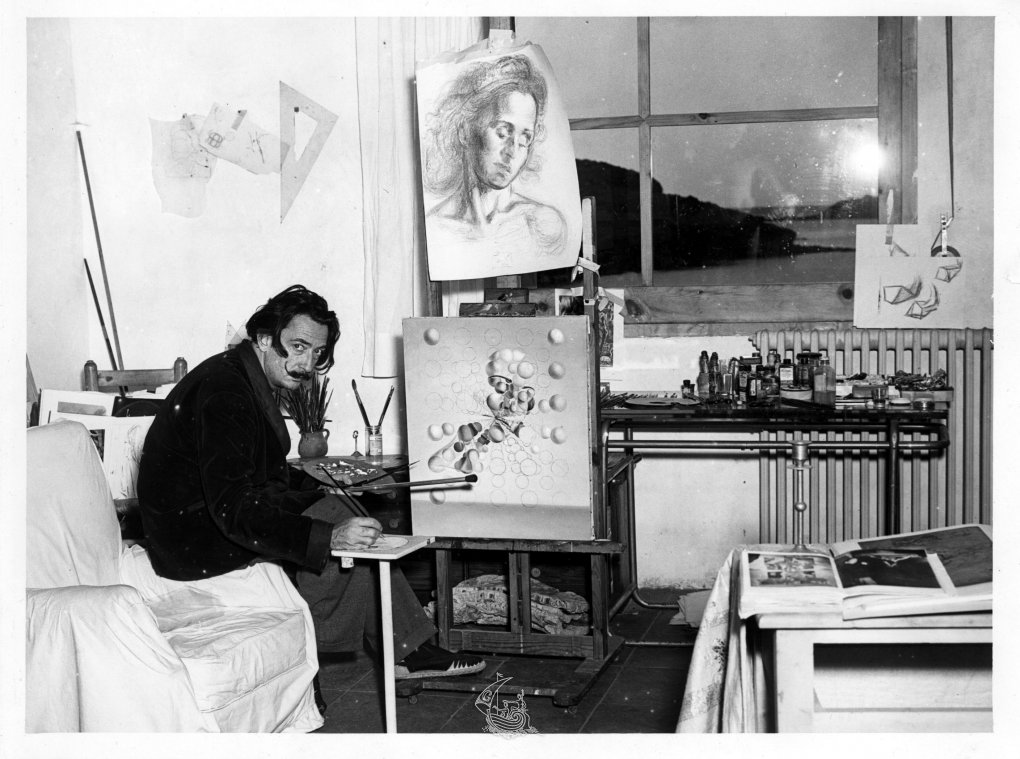
In 1929 when Gala (born Elena Ivanovna Diakonova) and the young Salvador Dalí met in Cadaqués, his hometown on Costa Brava, Gala was already thirty-four years old and the wife of the celebrated surrealist poet Paul Éluard. The Éluards were bohemian, part of café society, and at the center of artistic Paris. Their marriage was a liberal one; each party encouraged the other in affairs. For a time, Gala and Paul even lived in a ménage à trois with the painter Max Ernst. But despite her freedoms, both sexual and financial (Paul Éluard had been left a sizable inheritance by his father), Gala was beginning to feel bored.
Having already played muse to her poet husband and his friends and mixed with their intellectual milieu, she had an understanding and an eye for art. She was doubtless looking for fulfillment, but she was also genuinely struck by Dalí’s talent. The trip to Cadaqués had been a sort of holiday-cum-intervention, organized by her husband, who dragged her along with the fellow surrealists René and Georgette Magritte and Camille Goemans.
Dalí’s friends in Paris and his gallerist were awaiting works from him, but Dalí seemed to be in the midst of a nervous breakdown, a “lunacy” that led him to dissolve into fits of hysterical laughter whenever he tried to speak. His friends and agents were becoming desperate; they needed him lucid. With Gala’s arrival, the group noticed a change in Dalí, and as Gala’s biographer Tim McGirk writes, they decided that “if Dalí was so besotted by Gala, perhaps she alone could help him.” Their little conspiratorial plot was to send her on a “psychic rescue mission to pull him out of his madness.” Miraculously, she was able to stabilize his mood. Dalí finished the paintings necessary for his exhibition, and from then on, they barely left each other’s side.
| |
|
Do not underestimate the sacrifices Gala made to be with Dalí. Despite her love of money, she left her wealthy family in Paris, swapping a luxury apartment for a shack on the beach. They had no running water, no electricity, no heat, and no stove. It was Gala’s job to maintain Dalí’s morale, to pose for him, to dress him, to soothe him and comfort him, and to barter for bruised fruit at the market, making their few pennies stretch. If she was his muse, she was also his mother, a symbolic role that she made real by adding a sinister dimension: Gala abandoned her own child to take care of Dalí instead.
Finally, it was Gala who peddled his canvases from gallery to gallery, who convinced a wealthy art patron to subsidize the lease on their shack, and who, in the wake of Europe’s bankruptcy at the end of World War I, conjured up the scheme of defecting to wealthy America and selling his work there. In one particularly ingenious move, she persuaded a group of aristocrats led by Prince de Faucigny-Lucinge to “toss a yearly sum of 2500 francs into the pot for Dalí, and over a sumptuous dinner they would hold a draw, with the winner getting Dali’s newest work.” The plan was machinated to appeal to the dissolute, gambling young nobles, and of course, it did.
Their love was as collaborative as it was unconventional. Gala was the managerial mind behind his success, handling his sales, exhibitions, and finances. She never had any artistic pretensions of her own, and she never spoke about herself or her past, lest it should take away from the Dalí aura.
Without Gala, the great artist might never have been. Dalí’s imagination is often seen as a force of its own, but in reality, it was a fragile construct, unable to flourish without Gala, whom he used as a shield. Behind her, he was safe to create; without her, he could be swept away. Dalí honored this coauthorship of his life. As early as the thirties, he began to sign his canvases with both their names even though she’d never so much as lifted a brush. “It is mostly with your blood, Gala, that I paint my pictures,” he told her.
| |
|
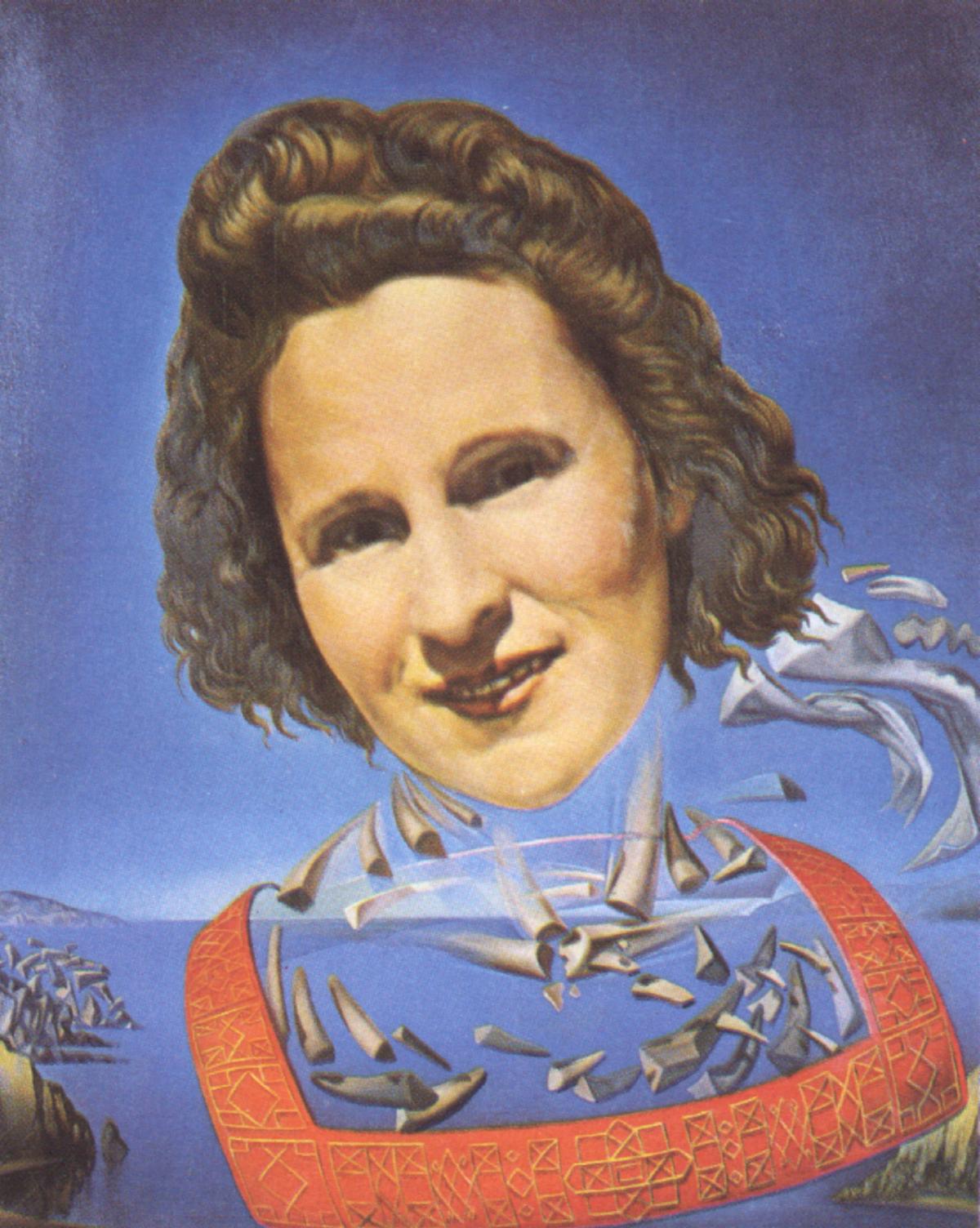
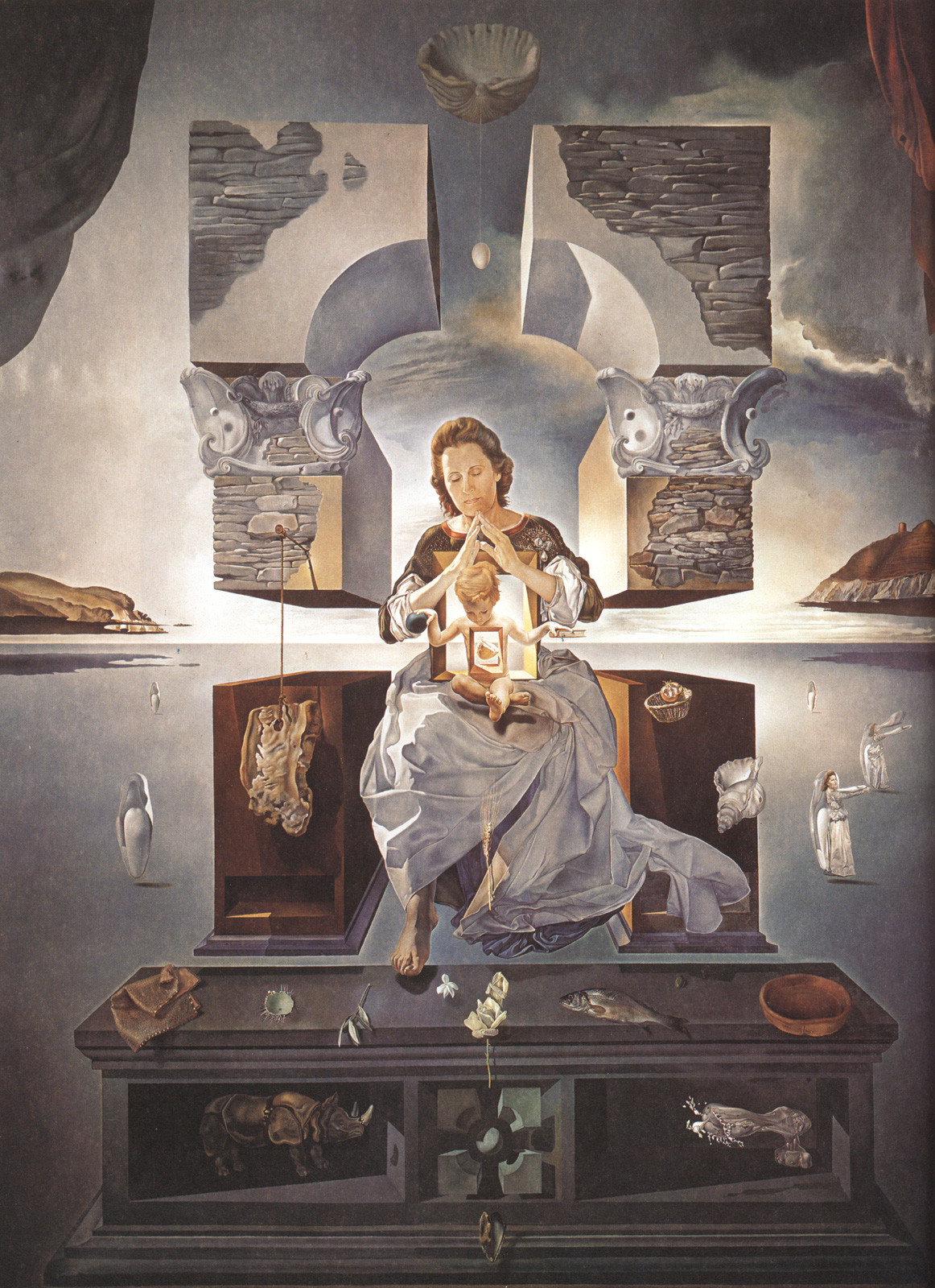
He painted her as a Madonna twice, as Leda with the swan, as a nude. He produced countless portraits. When she had a hysterectomy, he painted The Bleeding Roses, which shows Gala’s familiar blonde hair and her figure with a bushel of crimson roses across her stomach, the petals of which turn into drops of blood. The Madonna of Port Lligat (1949) is a painting made amid Dalí’s return to Catholicism (he even requested a papal blessing, which he wasn’t granted). Though the painting’s religious attributes are evident, the various floating emblems of the ocean (the sea urchin and shell) may harken back to the artist’s early years with Gala, when the couple lived in a Spanish seaside shack.
Dalí epitomized the idea that life is the greatest form of art and he mined his with such relentless passion, purity of mission, and diehard commitment to exploring and honing his various interests and crafts that it is impossible to ignore his groundbreaking impact on the art world. Dalí was renowned for his flamboyant personality and role of mischievous provocateur as much as for his undeniable technical virtuosity. Obsessive themes of eroticism, death, and decay permeate Dalí's work, reflecting his familiarity with and synthesis of the psychoanalytical theories of his time. Drawing on blatantly autobiographical material and childhood memories, Dalí's work is filled with often ready-interpreted symbolism, ranging from fetishes and animal imagery to religious symbols.
In 1940, after the devastation of the Second World War in Europe, Dalí and Gala moved to the United States, where they would remain for eight years, splitting time between New York and California. During this period, Dalí became highly productive, expanding his practice beyond the visual arts into a wide array of other creative interests. He designed jewelry, clothing, furniture, sets for plays and ballets, and even display windows for retail stores. Dalí (and Gala) wanted to become stars and make a large amount of money, so Hollywood was a natural destination for the couple. They did not succeed in their quest for cinematic celebrity, but Dalí was asked by the famous director Alfred Hitchcock to create the dream sequence in his thriller Spellbound (1945). Walt Disney cooperated with Dalí to create the animated cartoon Destino, but the project was suspended due to financial difficulties following World War II and not completed until much later (2003)
| |
|
Gala and Dalí moved back to Port Lligat in 1948, making it their home base for the next three decades. There Dalí started using optical illusions, negative space, visual puns, and trompe l'oeil in his work. Starting in 1948 he would make approximately one monumental painting per year, measuring at least 5 feet in one direction.
In 1968, the painter bought Gala a castle in Púbol, Girona. As he writes in The Unspeakable Confessions in 1973, the castle itself was a testament to his love:
Everything celebrates the cult of Gala, even the round room, with its perfect echo that crowns the building as a whole and which is like a dome of this Galactic cathedral. When I walk around this house, I look at myself, and I see my concentricity. I like its Moorish rigor. I needed to offer Gala a case more solemnly worthy of our love. That is why I gave her a mansion built on the remains of a 12th-century castle: the old castle of Púbol in La Bisbal, where she would reign like an absolute sovereign, right up to the point that I could visit her only by hand-written invitation from her. I limited myself to the pleasure of decorating her ceilings so that when she raised her eyes, she would always find me in her sky.
Toward the end of her life, already addicted to Dalí’s money, Gala gambled away huge sums in the underground casinos of New York. She maintained something of a male harem, a perpetual parade of young lovers, when she herself was well into her eighties. In the late seventies, she became besotted with Jeff Fenholt, who had played the title character in the Broadway production of Jesus Christ Superstar, and during their affair, she gifted him several Dalí canvases and bought him a house on Long Island valued at $1.25 million. Dalí himself found out only when he saw Fenholt had put his artworks up for auction at Christie’s.
Gala profited from her ferocious championing of Dalí. Eager to keep money coming in when her husband could no longer paint, she forced him to sign blank canvases and commissioned forgers to complete the paintings, selling them at sky-high original-Dalí prices. Consequently, dealers are often suspicious of any of the artist’s works created from the mid-sixties onward. She is blamed for corrupting and commercializing his art. She’s judged for being promiscuous, aggressive, single-minded, and ambitious (qualities for which men are often celebrated). More often still, she is not remembered at all.
| |
The finished piece. What would you have done? | |
|
Toward the very end, when Gala was almost certainly senile, she was medicating Dalí with concoctions of unidentified drugs that may well have been the cause of a nervous disorder that brought on Parkinson’s disease and definitively terminated his painting career.
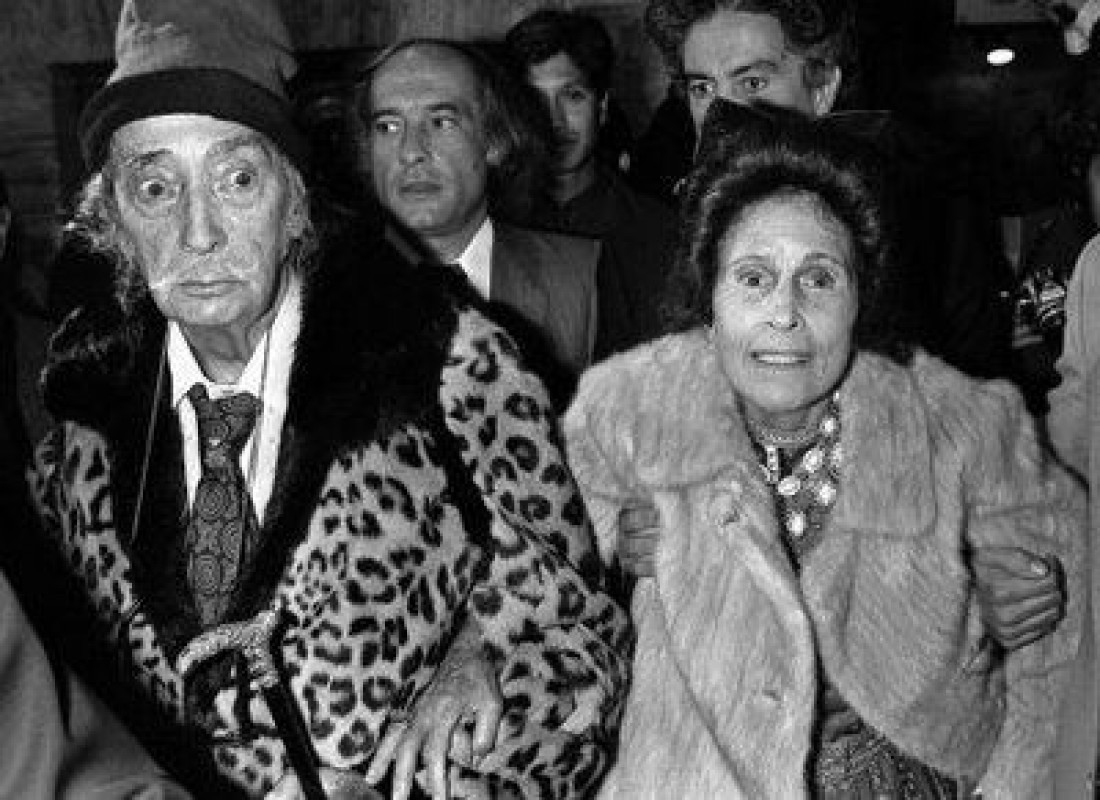
Gala Dalí died on June 10, 1982, at the age of 88, following a severe case of the flu. She is buried in Púbol, Spain, on the grounds of the castle gifted by her husband. Gala and Dali were together for 53 tumultuous years.
Following her funeral, Dalí moved into her castle in Pubol, the site of her death, and remained there the rest of his life, drew the curtains, and refused to eat or drink. He denied entry to his friends and aides and forbade anyone to speak Gala’s name. After Gala’s death, Dali lost the will to live or create. He experienced a further bout of depression and is believed to have attempted suicide by fire. Dali outlived Gala by 7 years.
| |
|
Lee Krasner and Jackson Pollock
Lee Krasner was already a prominent Abstract Expressionist in the ‘30s. She was a key transitional figure within abstraction, who connected early-20th-century art with the new ideas of postwar America. Inspired by artist Piet Mondrian's "grid," She was intimately involved in the synthesis of abstract form and psychological content, which announced the advent of Abstract Expressionism. The great teacher Hans Hofmann once offered her the backhanded compliment that her work was so good "you would not know it was made by a woman artist." Krasner helped devise the "all-over" technique, which in turn influenced her husband Jackson Pollock's revolutionary "drip paintings."
Lee Krasner’s importance as an artist in her own right has been overshadowed by her role as supportive wife to Jackson Pollock, arguably the most significant postwar American painter, and by the male-dominated art world.
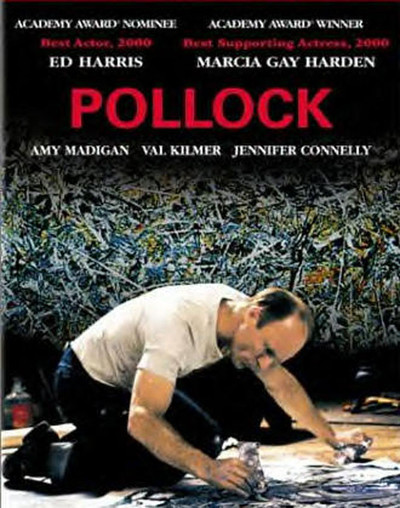
In 1991, the story of the tumultuous and fruitful marriage between these two powerful artists earned the Pulitzer Prize for writers Steven Naifeh and Gregory White Smith for their book "Jackson Pollock: An American Saga." In 2000, based on the book, actor Ed Harris directed the feature film "Pollock" with himself in the lead role.
| |
|
In 1933, Lee Krasner was lucky to obtain full-time work as an artist through the Works Progress Administration of the Federal Art Project (WPA/FAP). While supervising the production of twenty shop window displays in New York to promote the war effort and advertise training courses, she met Jackson Pollock, Willem de Koonin,g and William Baziotes, and together they formed the cutting edge of a new art movement.
Krasner moved in with Jackson Pollock in 1941. The pair married in 1945, and the duties of promoting and managing the practical aspects of Pollock's career fell to her.
While Krasner generously embraced her new responsibilities, her career took a back seat to the increasingly famous Pollock. Lee became Jackson’s main driving force, the locomotive, driving him into motion even in the darkest periods of creative and life stagnation. She unconditionally believed in Pollock’s art and talent, reminding him when the artist began to doubt himself after another failed attempt to sell at least some of his paintings.
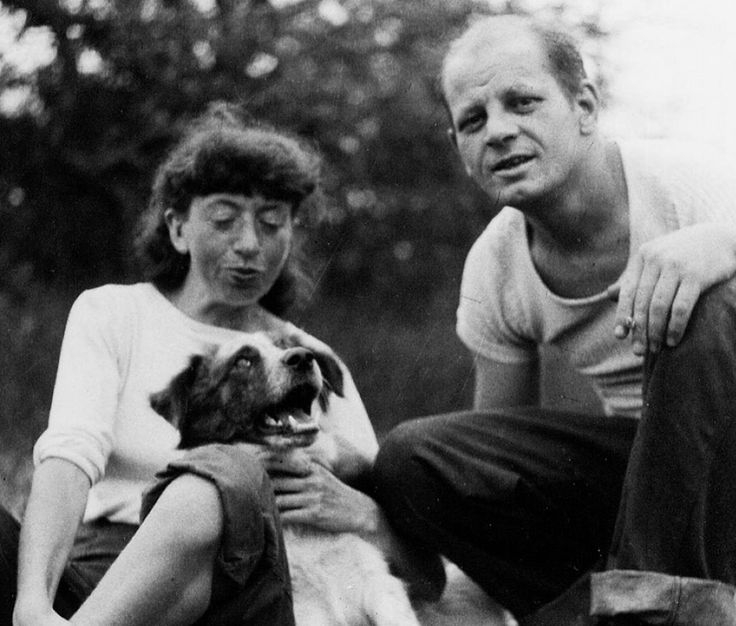
Pollock was already struggling with alcoholism when they met, and Krasner thought it would do him good to get him away from the city. She encouraged Jackson to buy an old farmhouse on the very edge of Long Island, where they rarely had guests with temptations in the form of alcoholic presents. Thanks to Krasner’s efforts, Pollock managed to refrain from drinking for quite impressive periods, giving him space for creativity.
| |
Their company on their secluded farm was a beloved dog and rare visitors from New York. Among them Peggy Guggenheim herself — an influential patron of art, who Krasner convinced to help finance the purchase of the farm.
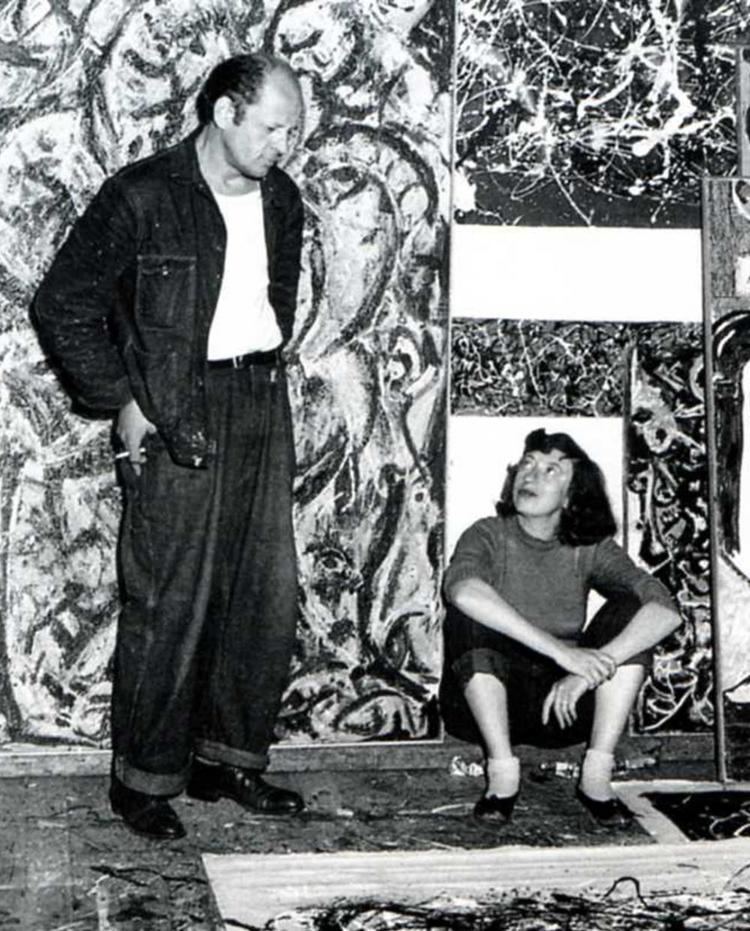
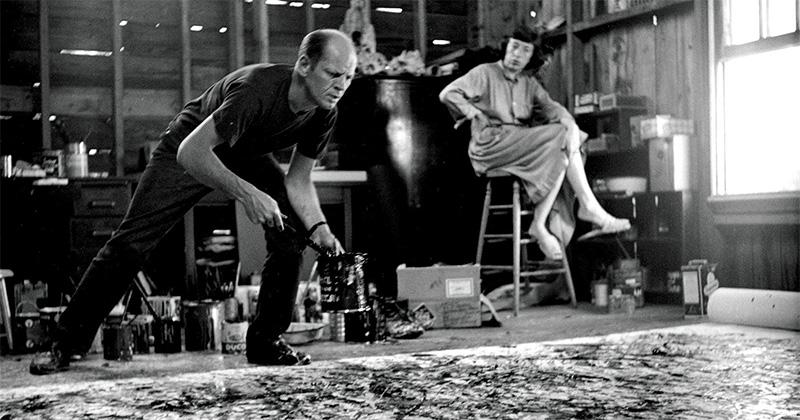
With barely enough money to heat their converted farmhouse (now a museum, open to the public), the pair painted voraciously, Pollock in the barn and Krasner in the bedroom.
Krasner'd role as muse.... According to art historian Barbara Rose, they absolutely influenced each other. She stated that Pollock inspired Krasner to be free and spontaneous in her painting, whereas Krasner helped him be organised and refined.
Peggy Guggenheim was fascinated by Jackson’s paintings and even assigned the artist a scholarship, which allowed the young family to stay afloat. Despite three solo exhibitions organized by Peggy from 1943 to 1947 and good reviews of the critics, Pollock’s paintings stubbornly did not sell, undermining the confidence of the artist, already prone to depression.
Things began to improve in 1947, when Pollock, experimenting for a long time in his barn workshop near the house, invented a new artistic formula — drip painting, which became his signature style. Everyone wanted to know about the new artist: "The Times" published an article about him, and a whole documentary film about his revolutionary technique of controlled pour painting on canvas was filmed. Art critic Clement Greenberg declared Pollock the greatest painter the US had produced.
| |
Pollock couldn’t handle the success. As his career took off, he again plunged into the depths of alcohol after two years of artistically creative abstinence. This not only influenced his productivity — during periods of binge Jackson almost never picked up a brush — but also turned him into an aggressive monster whom Lee feared like the plague.
The last straw for her was Pollock’s affair with 26-year-old artist Ruth Kligman. Their marriage crashed. Pollock abandoned his former muse and guardian angel, and only a couple of months after their separation in 1956, his car flew off the road, killing himself and two of his passengers.
After Pollock’s death, Krasner decided to return to their once happy home to manage the estate and his posthumous art sales.
Krasner never stopped creating during her 11-year marriage to Pollock. Following Pollock’s death, Krasner, for the first time, was afforded the literal and metaphorical space she had been denied for so long. Not only did she move into the studio barn previously occupied by Pollock, she was able to work on a scale never previously explored.
Krasner never remarried. She never stopped innovating or pushing the boundaries of her work. As she once famously remarked, “I painted before Pollock, during Pollock, after Pollock”.
| |
Amedeo Modigliani and Jeanne Hebuterne
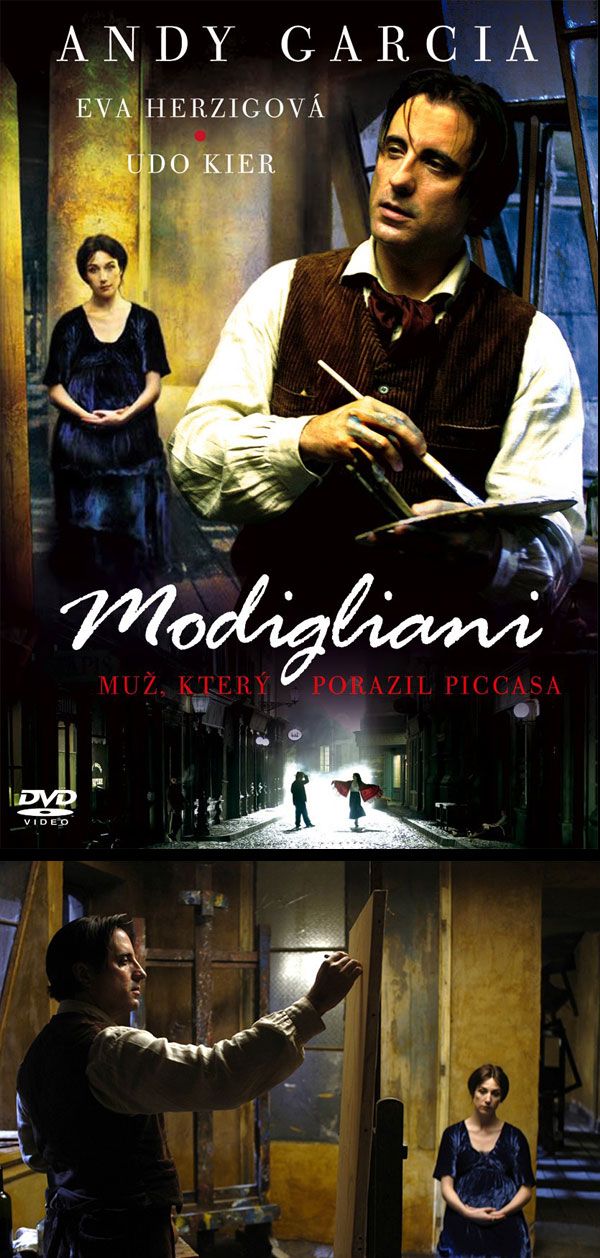
The love story of Amedeo Modigliani and Jeanne Hébuterne has been immortalized not only in their respective artworks but also in literature, film, and popular culture. Numerous books have been written about the couple, each exploring their lives from different angles. Modigliani’s bohemian lifestyle and tragic end was depicted in the 2004 biopic Modigliani, starring Andy Garcia as the tortured artist. Though the film takes some creative liberties, it brings the emotional intensity of their relationship to the forefront, shedding light on how their love both inspired and consumed them.
Beyond films, their love has been referenced in art exhibitions and historical retrospectives that aim to capture the passion and despair of their short time together. Curators and historians often look to their relationship as a lens through which to explore the wider bohemian culture of early 20th-century Paris, a world where art, love, and poverty often collide in explosive ways.
| |
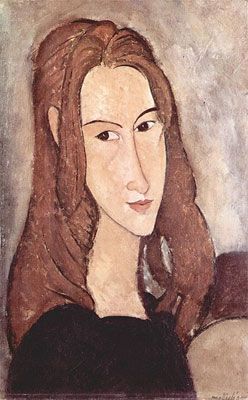
Amedeo Modigliani modernized two of the enduring themes of art history: the portrait and the nude. Characterized by a sense of melancholy, elongated proportions, and mask-like faces influenced by African art, Modigliani's portraits are both specific and highly stylized, each uniquely revealing its sitter's inner life. His work was often met with resistance; in 1917, police shut down an exhibition of his nudes for being too scandalous.
Modigliani's legacy is inextricably bound up with his tragic and bohemian life: his fragile health, which plagued him since childhood; his perpetual pennilessness; and - most famously - his over-the-top, self-destructive lifestyle, which included sexual debauchery and overuse of drugs and alcohol.
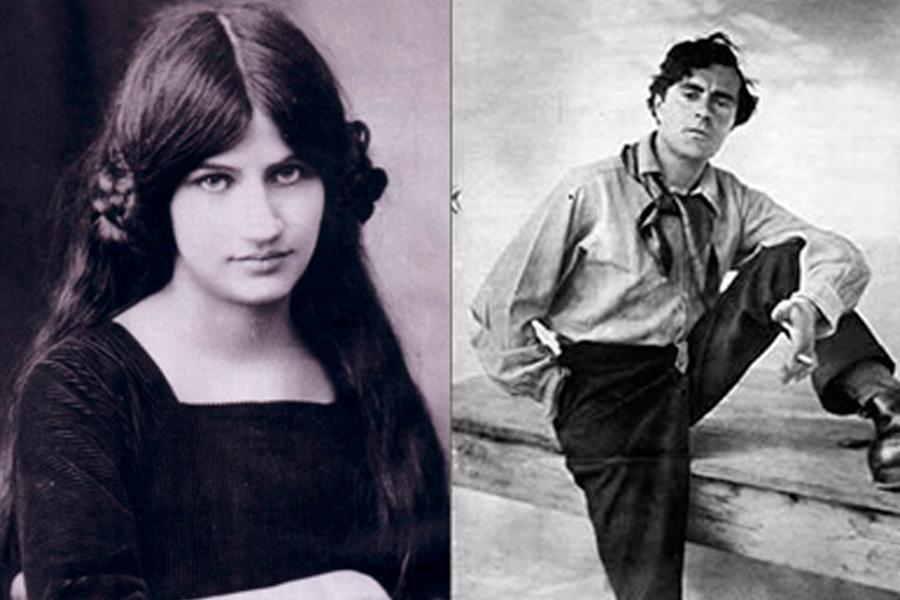
In 1917 when 33-year-old Modigliani entered into a relationship with the aspiring artist, nineteen-year-old Jeanne Hebuterne, his close friends hoped that the serious young woman would inspire Modigliani to curb his excesses. Hebuterne, however, loved the artist with a blind adoration that made no demands. Although there were no fundamental changes in his behavior, Modigliani's portraits of his young lover suggest the artist's newfound sense of peace and serenity. Less stylized than those in the artist's earlier works, the sitter's features, especially the sly, sideways gaze, suggest a psychological clarity that communicates Hebuterne's inner character.
| |
Hébuterne, was born in 1898 to a conservative Catholic family in Paris, She pursued her own artistic dreams by enrolling in the prestigious Académie Colarossi, where she honed her skills as a painter. It was through the art world that she met Modigliani in 1917, and their connection was instant. She moved in with Modigliani, despite her family’s strong disapproval.
Their relationship was intense, but also marked by the hardships of poverty and illness. They lived in cramped, modest accommodations, and Modigliani’s poor health continued to decline as tuberculosis ravaged his body.
They lived hand to mouth, surviving on the sale of Modigliani’s paintings, which were often undervalued. His work, although recognized for its brilliance today, did not fetch high prices during his lifetime. Hébuterne, meanwhile, sacrificed her artistic ambitions to support Modigliani. She took care of him as his illness worsened, and when they had a daughter together in 1918, Jeanne became even more dedicated to their family.
In a letter to a friend, Modigliani described the relentless pain he experienced due to tuberculosis: “I’m at the end of my rope. If it weren’t for Jeanne, I wouldn’t still be here.” His words, though laced with his usual dramatic flair, reflect the depth of his dependence on Hébuterne, not just as a muse but as an emotional anchor in a life filled with turmoil.
| |
By the winter of 1919, Modigliani’s health was rapidly deteriorating. He was emaciated, struggling to breathe, and barely able to continue working. On January 24, 1920, at the age of 35, Modigliani died of tubercular meningitis.
Jeanne, who was nine months pregnant with their second child, was inconsolable. Her grief was so overwhelming that just two days after Modigliani’s death, she threw herself from a fifth-floor window, taking her own life and the life of their unborn child. Jeanne was only 21 years old.
This devastating act of love and despair shocked the art world and has since become one of the most tragic episodes in art history.
Modigliani passed away just three years after they met. The funeral for Modigliani was attended by many of his contemporaries, including Picasso and Brâncuși, but Jeanne’s family did not allow her to be buried beside him. Instead, she was buried in the cemetery of Bagneux, far from the Père Lachaise Cemetary where Modigliani lay. It wasn’t until 1930, after years of protest from friends and admirers of the couple, that Jeanne was finally reinterred next to her beloved Amedeo.
| |
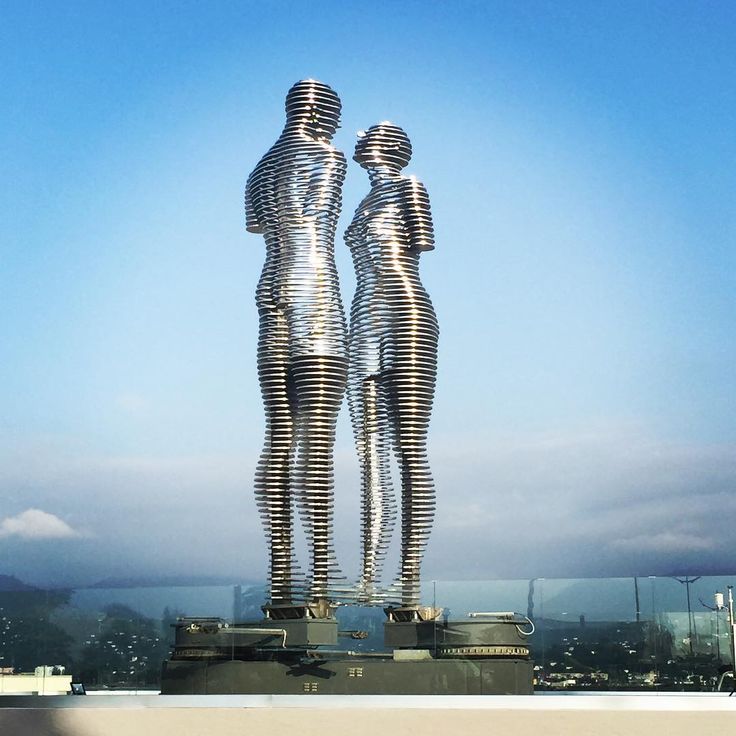
Tamara Kvesitadze "Ali and Nino" Batumi, Georgia
This sculpture tells the story of a Muslim man and a Christian woman in the city of Baku who falls in love. Their cultures will not tolerate such a relationship, and they are torn asunder. Every evening at 7 o'clock, the two lovers approach, kiss, then pass right through each other.
| |
The tragedies of these lovers resonates with us because it taps into universal themes—love, loss, and the inescapable tension between passion and pain. The timeless nature of these romances continues to capture the imagination of art enthusiasts and romantics alike. It’s not just the art that makes them fascinating, but the very human experience that accompanies it. Their lives are a reminder that behind every great artist, there is often a love that was as inspiring as it was devastating.
These stories remain so compelling today in the way they challenge conventional narratives about love and sacrifice. Jeanne’s unwavering devotion to Modigliani, even at the cost of her own life, raises difficult questions about the boundaries of love and personal identity. Was her suicide an ultimate act of love or a tragic loss of self? It’s this complexity that continues to draw people in.
In today’s world, where self-fulfillment often takes precedence over romantic sacrifice, these stories seem almost melodramatic. Yet, the intensity of love—the kind that consumes everything in its path—still strikes a chord. It’s a stark reminder of how love can elevate but also destroy the lives of those caught in its web.
Many of history’s greatest artists have been driven by their romantic relationships—whether those relationships were supportive or destructive. For Dali, his love for Gala seemed to provide a grounding force. Similarly, Camille’s devotion to Rodin, while deeply romantic, ultimately consumed her.
| |
Artists from Frida Kahlo and Diego Rivera to Jackson Pollock and Lee Krasner have experienced the intense highs and lows that come with loving another creative soul. These relationships are often filled with passion, but they can also bring out the vulnerabilities and insecurities that many artists struggle with.
In a world where we often seek out happy endings, the story of Modigliani and Hébuterne stands as a reminder that life doesn’t always work that way. Love, as they experienced it, can be both uplifting and destructive. Their lives, though short, were filled with the kinds of highs and lows that many of us will never know. Yet, through their art, they have left behind a lasting legacy that continues to speak to us.
These love stories endure because it is not just about two people—it’s about the human condition. It’s about how we seek connection, even when it hurts us. It’s about the sacrifices we make for the people we love and how those sacrifices can either elevate or consume us. And perhaps most of all, it’s about the desire to create something meaningful, even in the face of overwhelming obstacles.
| |
Whether you’re an established artist seeking new horizons or a budding creative looking to elevate your work, I hope I have given you some inspiration on how the flames of love can inspire your art. When you paint your passion you ignite your own flames and inspire others to do the same.
Perhaps I can invite you to join my artistic “family,” where I can support your artistic development. Don't hesitate to get in touch with me if you would like my mentorship, guidance, and advice in exploring your artistic path. It makes me happy to share my insights and my knowledge with you.
| |
If someone shared this newsletter with you and you'd like to subscribe, please reach out to me below with your email address. I promise, no spam, no overloading your inbox, just the good stuff.
I welcome the opportunity for connection, conversation, cooperation, collaboration, and commissions.
With Light and Delight
| |
P.S. If you didn't get the chance to download your free gift from me: Here is my "Inner Artist Inspiration Package" - a series of illustrated quotes in watercolor based on flower photos taken by family and friends.
| | | |
|
Members Love Watercolor Show
Fluid Expressions
Gold Coast Watercolor Society
Studio 16
Island City Cultural Center
600 NE 21st Court
Wilton Manors, FL
January 11 - February 8, 2025
Reception Saturday, January 28 6-8pm
This painting "From My Heart to Yours" received a Merit/Memorial Award from Judge Sue Archer
| | | |
|
Sue Archer
Commanding Color
January 21-23, 2025
A course designed to inspire your creativity by learning to “see” and experience some of the different aspects of color theory and painting light on objects. Color is one of the elements of design, and knowledge of this element is necessary for successful paintings!
This course was designed to inspire adv. beginners and provide a review and challenge for the advanced student.
Gold Coast Watercolor Society Website
| | |
This is Coming Up in February | | |
|
Gold Coast Watercolor Society
Demo Daze
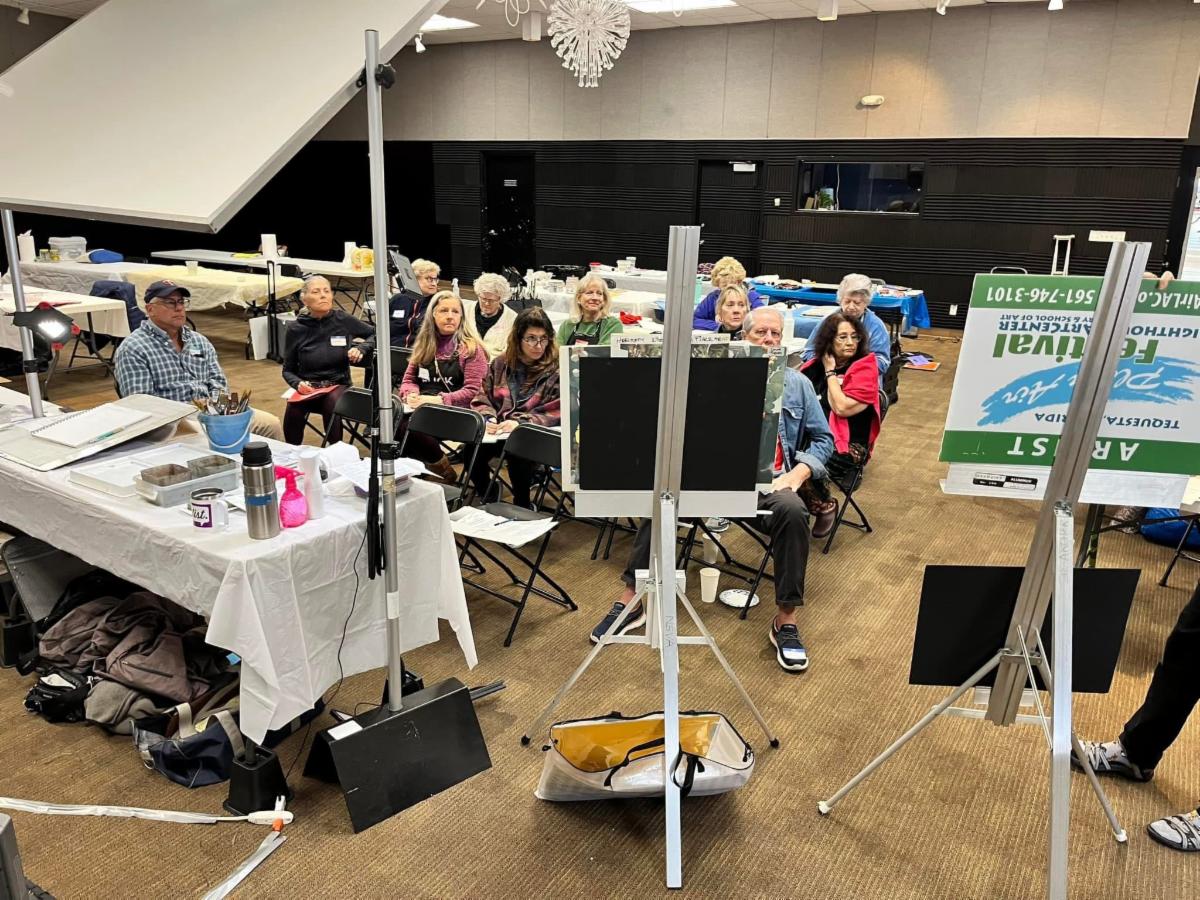
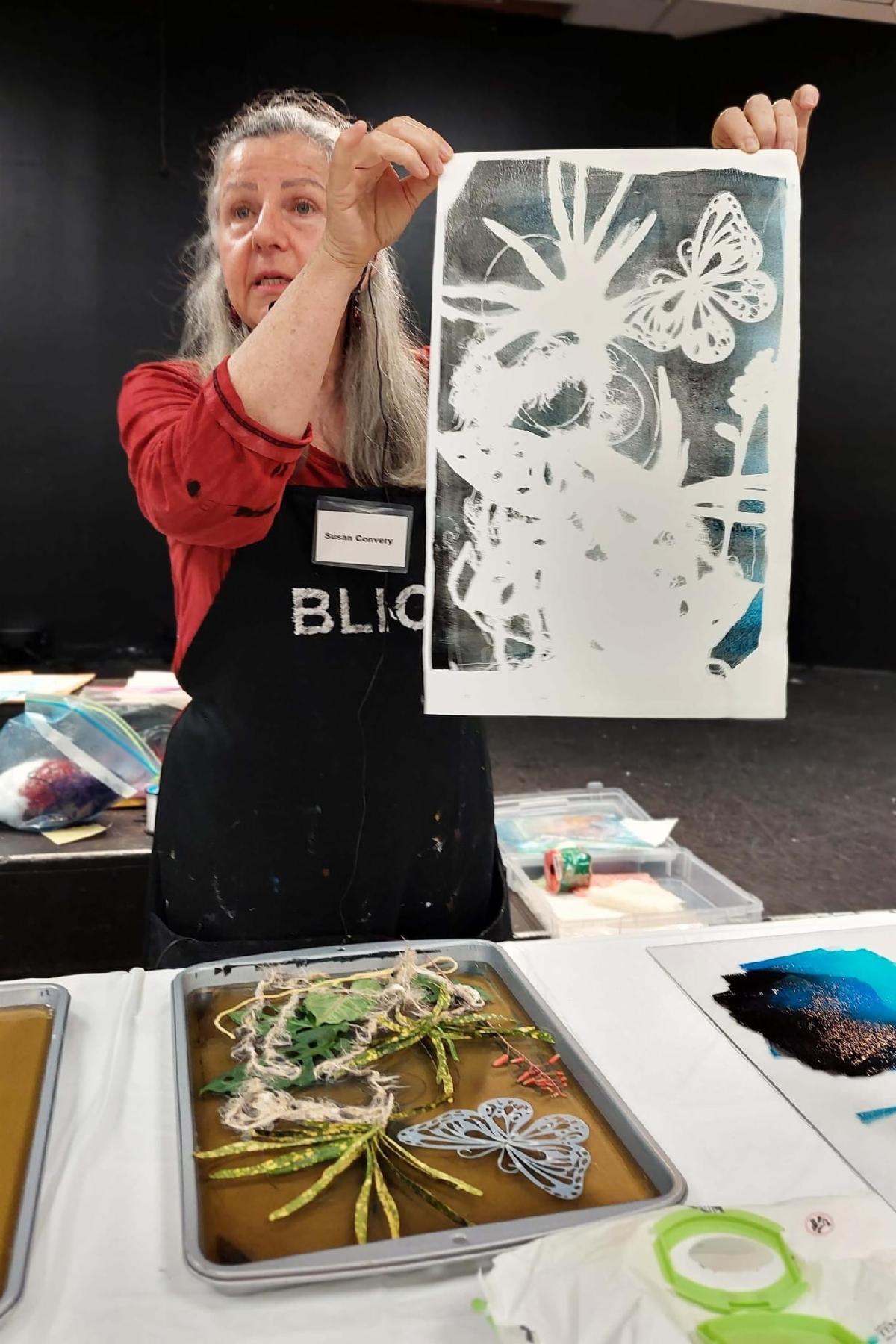
Gelatin Plate Printing
Tuesday, February 18, 2025
We want to help you grow, become a better artist, and learn new ideas and techniques, all while introducing you to a community that will support you!
Cost: GCWS Member – 1 Day: $50 | GCWS Member – 3 Day: $125
Sign up here:
Gold Coast Watercolor Society Website
| | |
National League of American Pen Women - Fort Lauderdale Branch
ALL MEDIA & FINE ARTS JURIED EXHIBITION
February 3 to March 4, 2025
Herb Skolnick Community Center
800 SW 36 Ave.
Pompano Beach, FL 33069
Judge: Laura Atria
NLAPW-Fort Lauderdale
| |
|
Private Art Retreats
A personalized experience, full of art and discovery, for those who….
- are traveling alone, or with a couple of friends
- would like a much more flexible, and free experience, and lots of fun, too, tailored exactly to your needs, interests, and experience level
- may want to combine painting with organized discovery trips and tours and really get to know the ‘real’ South Florida
- would like to book in for a shorter or longer time than most workshops
- don’t want to have to bring a mountain of supplies in their luggage
| |
Painting Joy
Created especially for artistic women in the third stage of life who are dissatisfied with their artwork and want to have more fun connecting with themselves and others. In this three-day watercolor workshop, we experiment with visual cues that inspire joy, discover personal symbols that resonate, and provide ways to bring more effervescence into our lives and art.
Please recommend any venues you know that might be interested in hosting this workshop in 2025.
I am also happy to teach this as a private retreat or for a small group in my studio.
I would very much appreciate your help in getting the next booking.
| | | |
Private Lessons and Events | | |
|
Master Classes for High School Students |
Private, highly personalized classes in mastery for artistically-minded US & international students virtually on Zoom or in person at my home.
If you have a student who is a visual thinker, willing to push the boundaries of their own work, and serious about improving their options for college, I want to hear from you! Schedule a time to discuss how I can collaborate with you to build a portfolio that will give your student the greatest chance for success.
| | |
|
Art Workshops, Critiques & Presentations |
Invite me to present or lead a workshop for your school, club, or guild.
I can customize a program for your event or present my skills programs on composition, color theory, drawing faces, coordinating light/shadow or understanding the cues for depth. I am available for judging, confidence-building critiques and recorded tutorials.
| | |
|
Improve Your Artist Statement | |
If you would like to delve more deeply into your own inner questions and clarify your thoughts as you create an artist statement for your website, a gallery show, a sponsor, or another project, please reach out, and let’s talk. I have helped many students write compelling statements for AP Art, college applications, and competitions.
Find out More:
| |
|
Sketchbook Prompt:
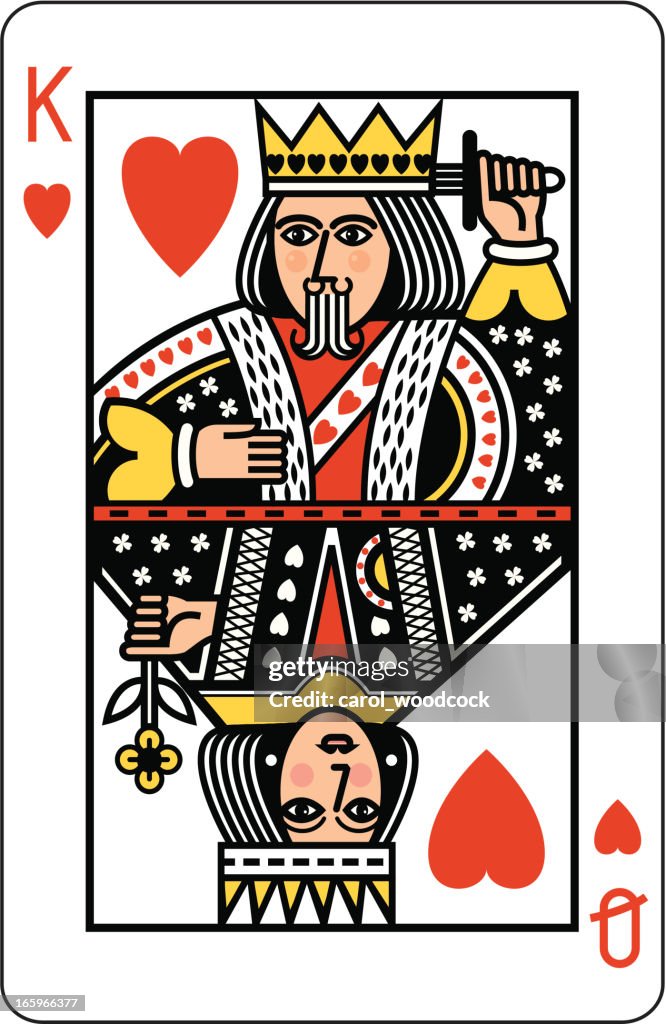
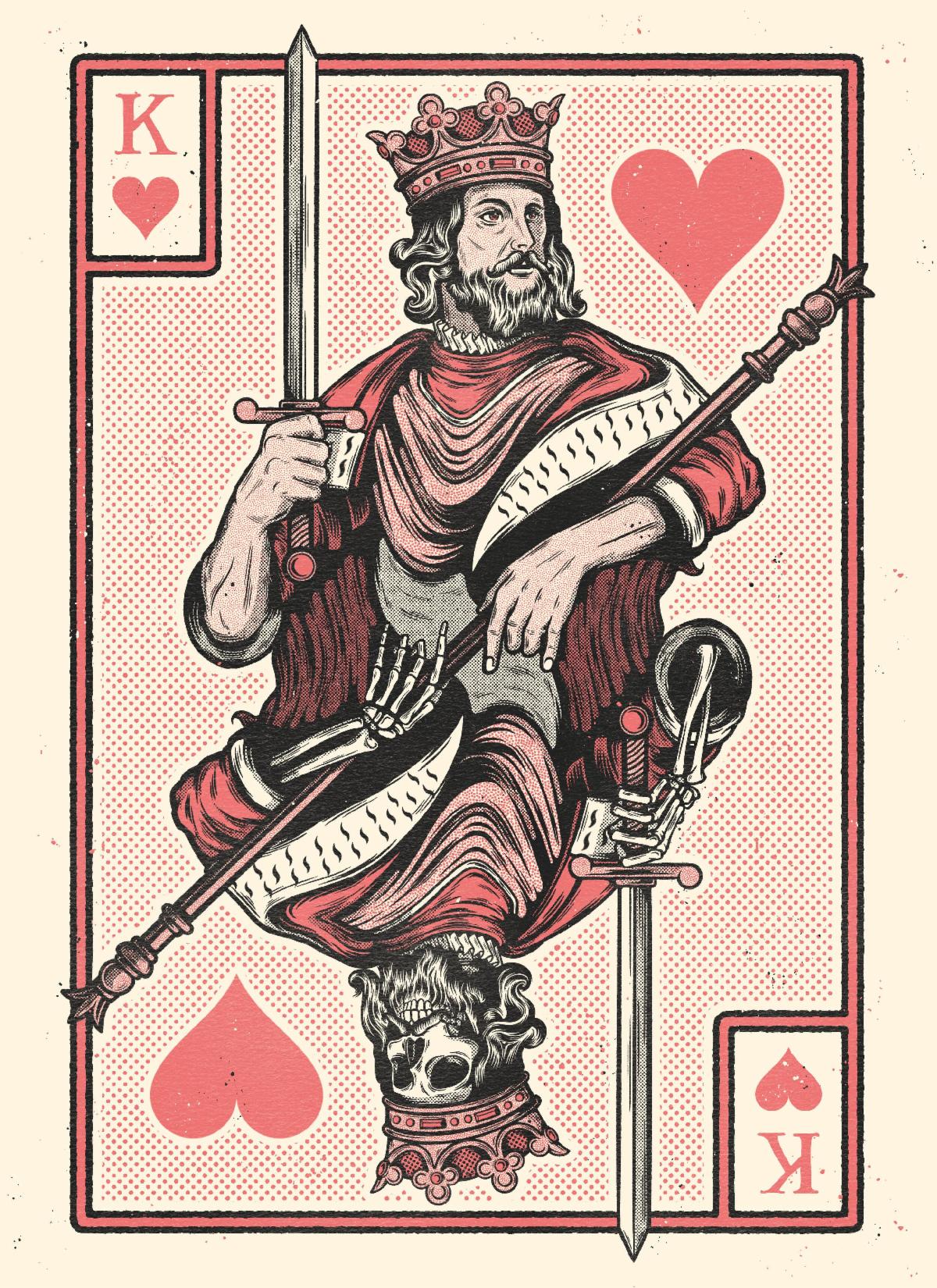
Create a playing card with the king and queen on the same playing card, or two aspects of the Muse/Artist relationship
| |
Please contact me if you are interested in adding any of the paintings below to your collection.
I will deliver if you live within a 2-hour drive and if you live further away, I will give you a reasonable price for shipping.
Venmo, CashApp, PayPal and Zelle are welcomed.
| |
|
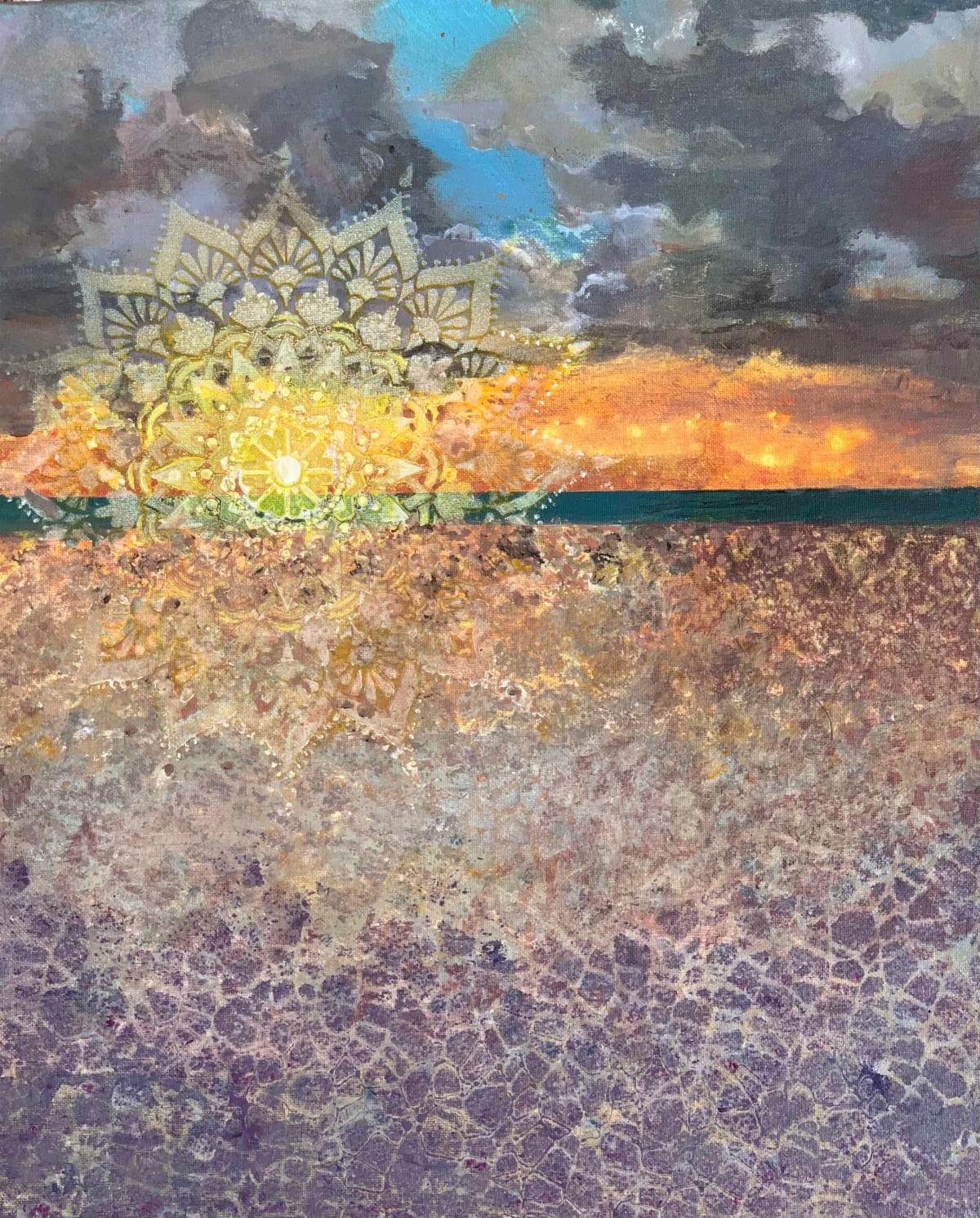
Title: A New Dawn, A New Day
Media: Acrylic
Size: 16" x 20"
Price: $444
Frame: Float Frame
| |
|
|
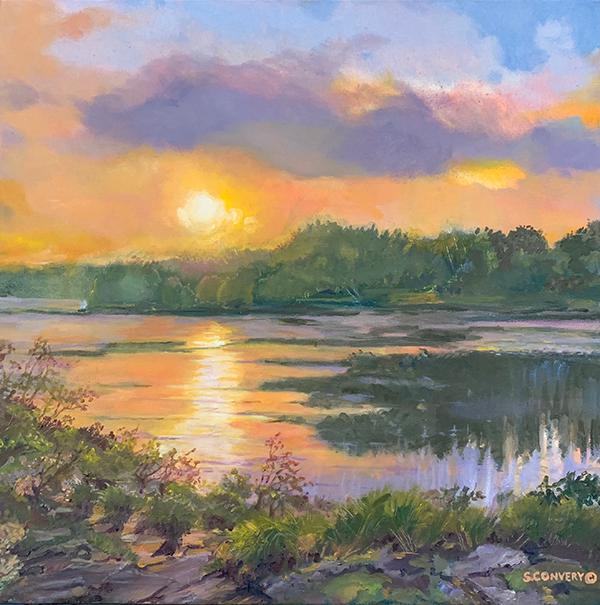
Title: SunGlow
Media: Oil on Canvas
Size: 20"x 20"
Frame: Gallery Wrap
Price:$666
.
| |
|
|
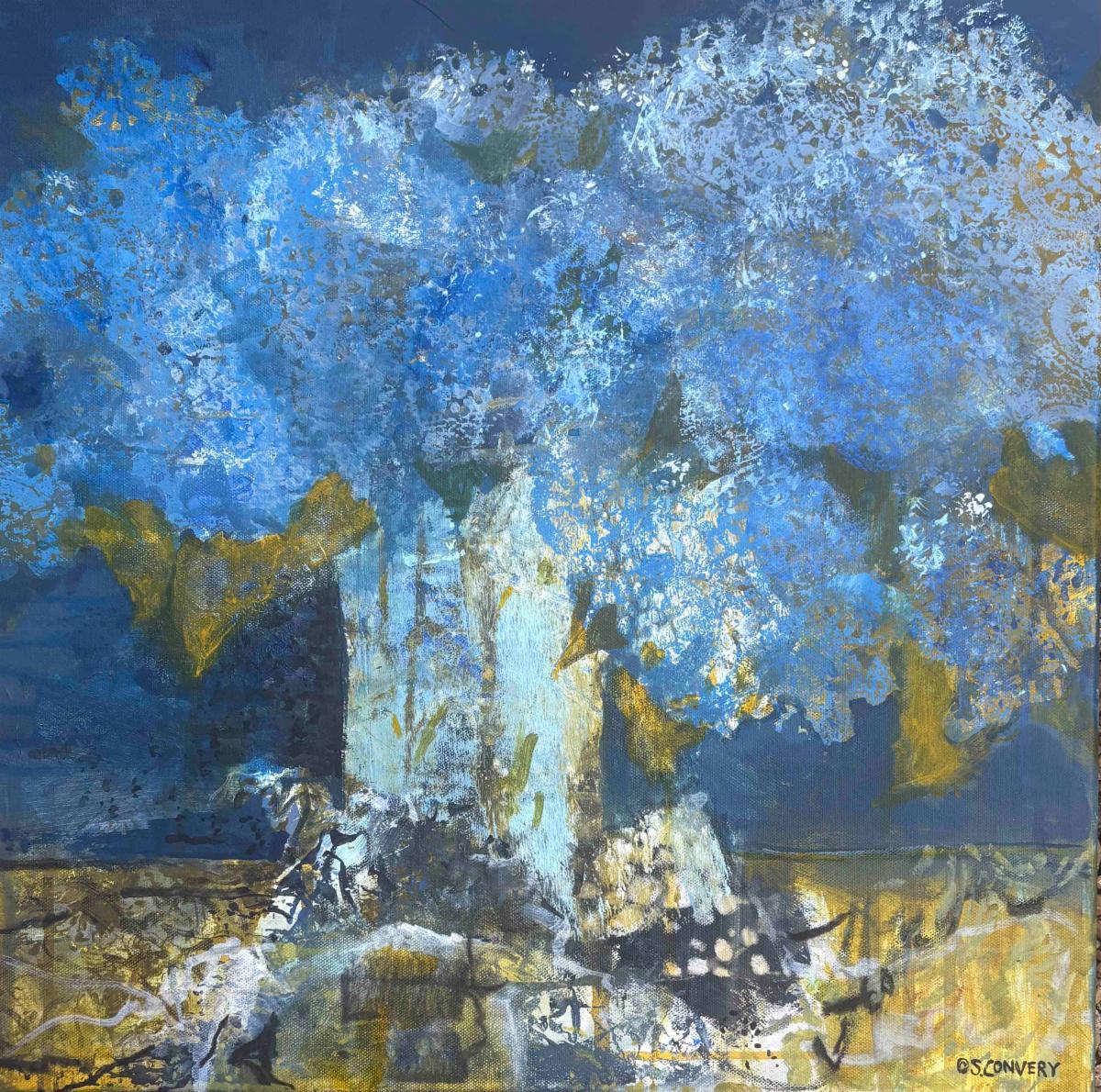
Title: Hydrangea Haze
Media: Acrylic Mixed Media
Size: 20" x 20"
Price: $555
Frame: Wood Float Frame
| |
|
|
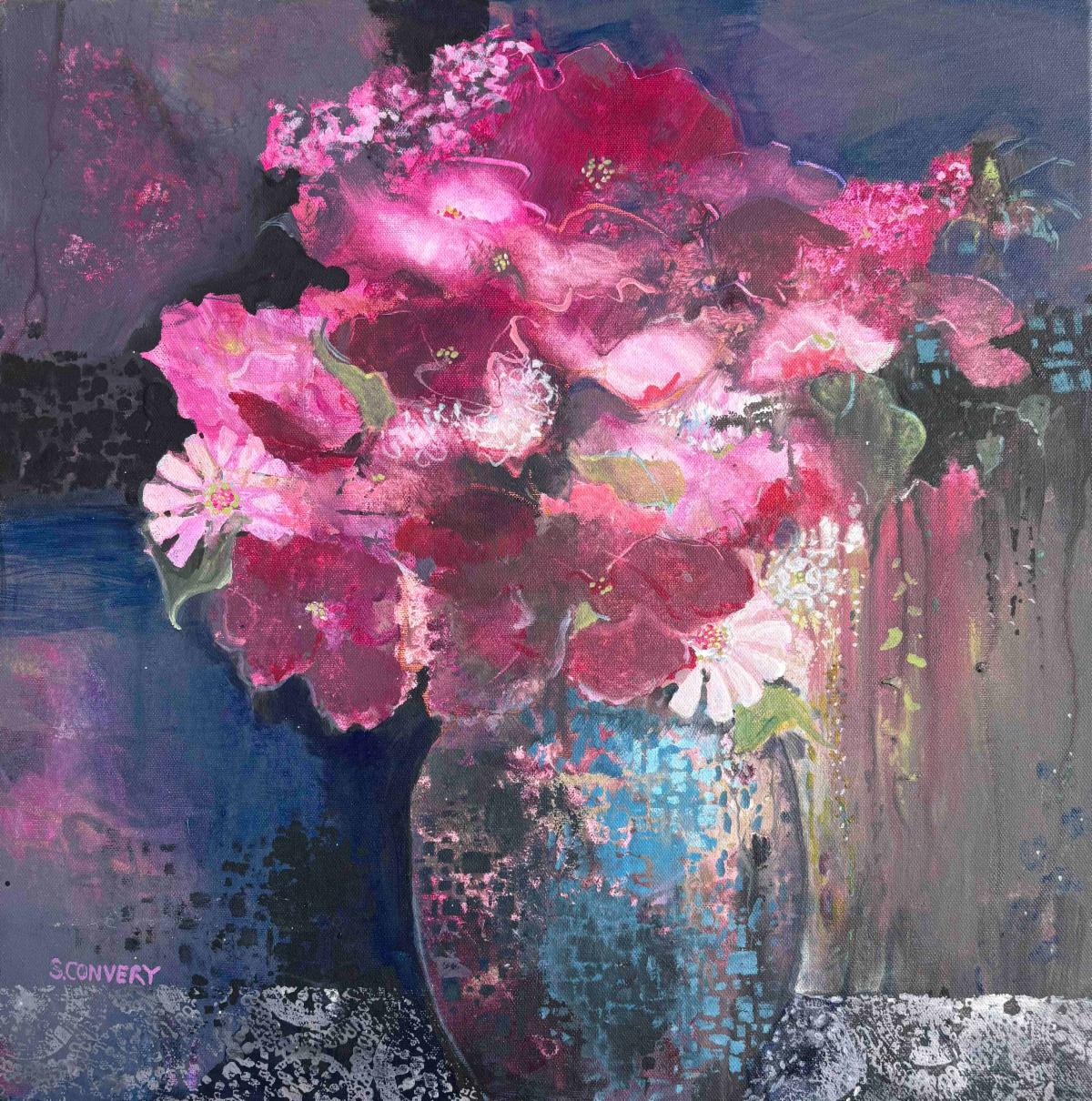
Title: From My Heart To Yours
Media: Acrylic Mixed Media
Size: 20" x 20"
Price: $555
Frame: Wood Float Frame
| |
|
|
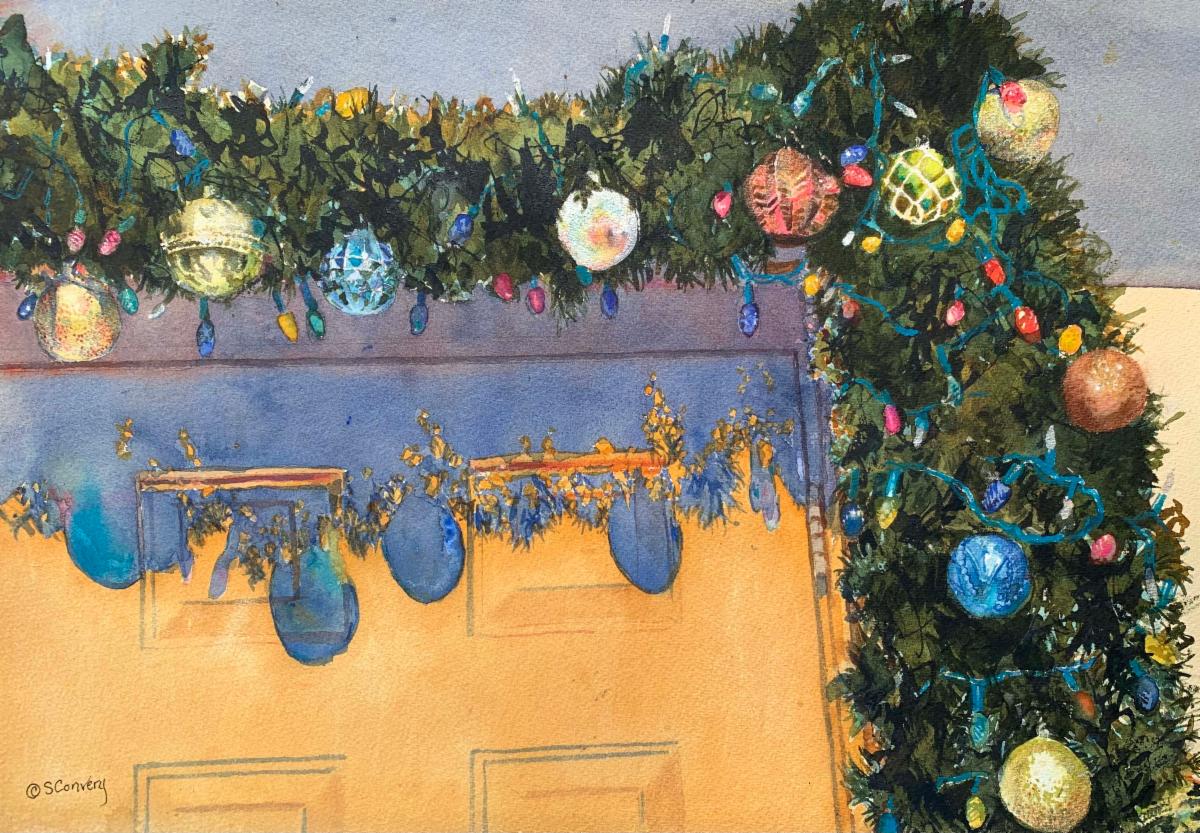
Title: Florida Christmas
Media: Watercolor and ink
Size: 28" x 22 framed
Price: $1111
Frame: White
| |
|
|
Title: Something to Crow About
Media: Mixed Media on Arches
Size: 15" x 22" framed 22" x 28"
Price: $555
Frame: Gold
Watercolor, ink, gouache, stencils, so many marks and so much fun! A celebration of the Chinese year of the Rooster.
| |
Want to see past issues of my newsletters? Visit this link on my website. | |
Subscription Information: You are receiving this email because you subscribed to my mailing list, downloaded a resource, purchased one of my products/programs, or opt-ed in some other way.
Thank you for being part of the Cr8V Soul Arts Tribe!
NOTE: Unsubscribing means you won't receive any more emails from me including information about your paid products and programs.
| | | | |