Elmo Peeler Note-for-Note Piano Transcriptions
|
|
|
Today is the first day of October and time again for my monthly newsletter to keep you informed of recent transcriptions and other news of the last month.
|
|
 |
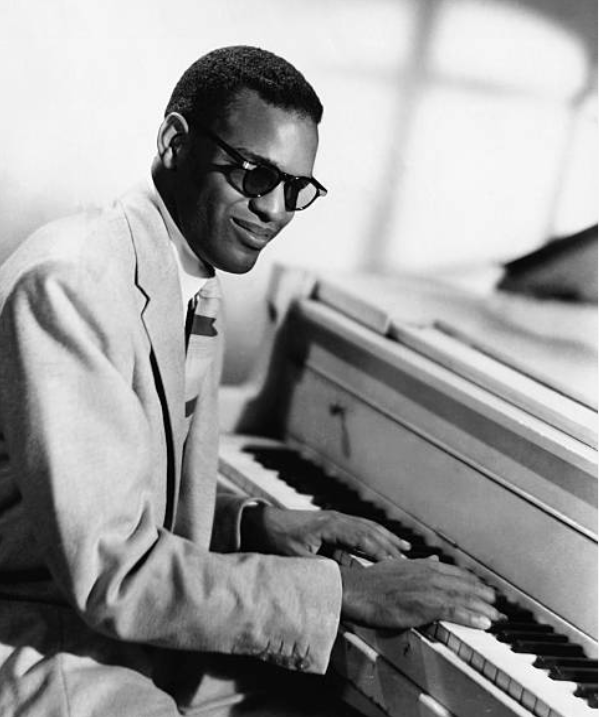
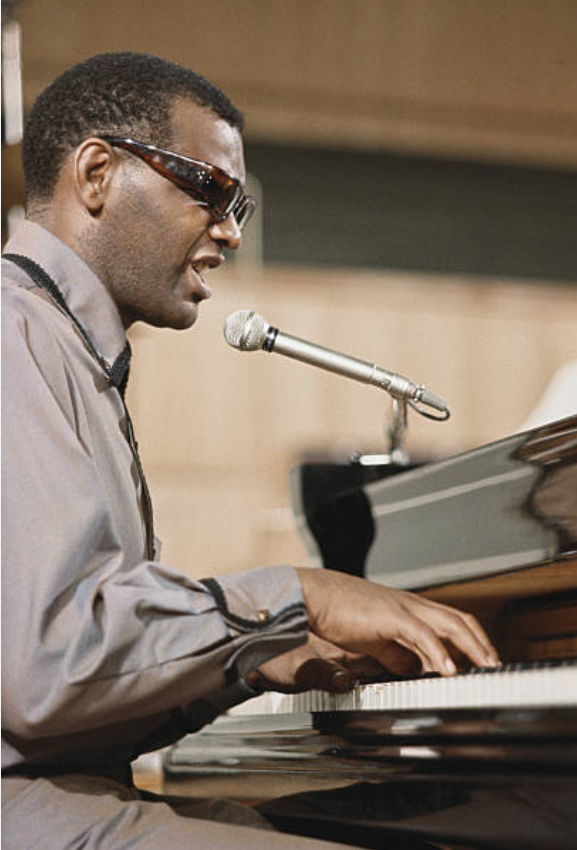
Ray Charles
|
|
This month I have a very special new transcription - a Ray Charles instrumental piano gem from 1953 that was stored in the vaults, unreleased for 52 years, until 2005.
Thank goodness for the 7-CD comprehensive Rhino set,
Pure Genius: The Complete Atlantic Recordings (1952 - 1959), which contained Ray's piano-only performance of "Heartbreaker", one of his best solo-piano recordings - no band, no voice, just piano.
Also new this month is an exercise to strengthen and increase control of the thumb when it pivots between other notes, a common blues technique.
BTW, to make sure that my email doesn't end up in your Spam folder, please add me to your Contact list and/or mark my email as "Not Spam".
Note that every Title Heading is clickable.
Elmo Peeler
|
|
|
ALL of the Sheet Music listed on my website has been personally transcribed by me, and guaranteed to be note-for-note perfect.
Whether you:
-
have a cover band and want to get your keyboard parts exactly correct,
-
are a professional who wants to study the styles of rock's greatest keyboard players, or
-
are a hobbyist that wants to learn how to play pop/rock and great piano music,
...these note-for-note transcriptions will prove extremely helpful.
And as always, if you ever need any help, just drop me a note at: elmo@manymidi.com
|
In the News!
- Ray Charles - "Heartbreaker" Instrumental
R&B/Jazz Genius
|
|
|
Ray Charles - 'Pure Genius'
|
|
Born in 1930 Ray Charles was blind by the age of seven; one of the last things he saw was his younger brother drown in his mother's laundry tub. His destitute, grieving mother sent young Ray to the Florida School for the Deaf and the Blind in St. Augustine from 1937 to 1945
Gifted with perfect pitch, he was taught to play the classical piano music of Bach, Mozart and Beethoven using braille music.
While Charles was happy to play classics, he was more interested in the jazz, blues, and country music he heard on the radio. On Fridays, the South Campus Literary Society held assemblies at which Charles would play piano and sing popular songs. On both Halloween and on George Washington's birthday, the black department of the school held socials at which Charles would play. It was here he established "RC Robinson and the Shop Boys" and sang his own arrangement of "Jingle Bell Boogie". During this time, he performed on WFOY radio in St. Augustine.
Ray Charles' mother died in the Spring of 1944, when Ray was 14. Her death came as a shock to him; he later said the deaths of his brother and mother were "the two great tragedies" of his life. Charles returned to school after the funeral but was expelled in October for playing a prank on his teacher.
After leaving school, Charles moved to Jacksonville, Orlando and Tampa, and then at 17 bought a one-way bus ticket to Seattle, Washington. After getting a regular 1-to-5-AM club gig, he recorded "Confession Blues", which became his first national hit, soaring to the second spot on the Billboard R&B chart. While in Seattle, he met 'Bumps' Blackwell and Quincy Jones, who encouraged him to move to Los Angeles, which he did in 1950.
|
|
|
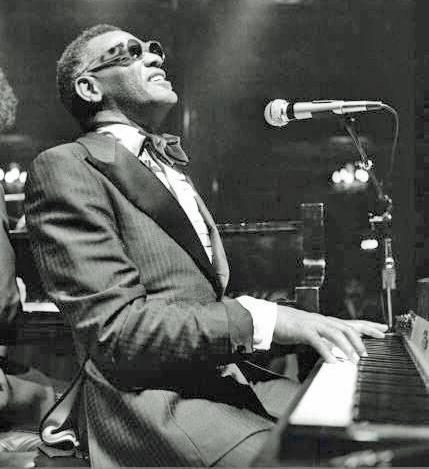
Ray Charles in concert
|
Two years later Ahmet Ertegun's Atlantic Records bought his contract for $2,500(about $25,000 in today's money), and immediately started recording him. "Mess Around" (with Ertegun's lyrics) had modest success, along with a few others, and then "I Got a Woman" reached #2 on the R&B chart in 1954.
After other modest successes, his big break-through hit came in 1959 with
"What'd I Say", followed by "Georgia" which garnered four Grammy Awards.
In 1962 his album
Modern Sounds in Country and Western Music was released, where he interpreted some of C&W's greatest songs through his own R&B prism, and the result was a stunning artistic (and commercial) success. "I Can't Stop Loving You" was the #1 Pop song for five weeks, and the #1 R&B record for ten weeks.
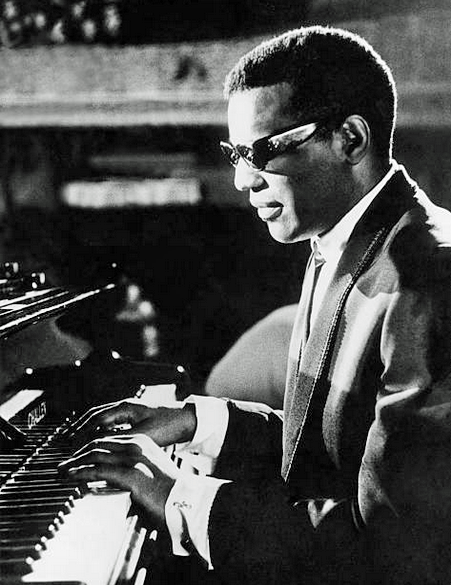
One of the 20th century's greatest musicians, Ray Charles was not only an extraordinary singer but also a master of the keyboard, capable of playing jazz on the highest levels with the most talented jazz artists.
Back in 1953 with Ahmet Ertegun standing feet away in the NYC Atlantic studio, Ray recorded an instrumental version of "Heartbreaker" (like "Mess Around", written by him with lyrics by Ertegun), using only an acoustic piano - no other instruments, no vocals whatsoever - just young 22-year-old Ray Charles revealing his genius to the world through his piano.
Here are my transcriptions of Ray Charles recordings:
If you haven't heard "Sweet Sixteen Bars" and you like blues or gospel piano, you owe it to your self to
listen to it here - an amazing recording.
Also, Dr. John liked to play what he called the
'Ray Charles Ending', a cool walk-down progression that can sometimes be tacked onto the end of a piece.
BTW, since it's October and Halloween is inexorably approaching, you might want to prepare for the Halloween parties by learning Leon Russell's classic piano part in
"The Monster Mash". If you haven't heard it in awhile,
click here to listen.
|
October's New Transcription
- Ray Charles: "Heartbreaker"
This month I have a new transcription that is one of the most historically important that I've done.
In 1953 Ahmet Ertegün put 22-year-old Ray into the studio and recorded "Heartbreaker", which was the B-side to "Feelin' Sad", his fourth single for Atlantic Records.
Gifted with perfect pitch, Ray Charles was a spectacular improviser, as comfortable in jazz as in R&B. During that session Ray recorded an instrumental piano solo version of "Heartbreaker" that would not be released until 52 years later, on a 2005 compilation,
Pure Genius: The Complete Atlantic Recordings (1952 - 1959).
Ray's piano improvisation is about 2:08 long, a total of seven amazing 12-bar-blues verses of nothing but Ray on piano - no vocals, no other instruments. During those seven verses Ray plays in a gospel-infused R&B style with some jazz-influenced chords and runs thrown into the bluesy mix.
This is a note-for-note transcription of the entire recording - all 84 bars, complete with Performance Notes explaining some of the nuances.
Every 2-bar phrase is a classic Ray Charles piano riff - an R&B piano seminar, demonstrated in 37 licks. If you like Ray Charles, it's hard to do better than this classic, hidden for 52 years.
|
October's New Exercise - Thumb-Pivots
Strengthen & Loosen-up the Thumb
This exercise will help develop strength in the Right Hand thumb during "thumb pivots", when the hand is pivoting between the right side (fingers 2- 5) and the left side (the thumb).
This exercise contains two parts, the second one a little more difficult than the first. They should be practiced without stopping, i.e., looping, until the hand begins to tire. Stop, rest, and repeat a few times every day. Over a few days/weeks, one should notice an increase in the number of repetitions possible before fatigue sets in.
Besides increasing strength in the Right Hand, it will also improve one's control in general.
|
'Crowdfund' a Transcription - What Do You Want To Play?
Submit Your Own Suggestion
'Custom' (to-order) transcriptions can be expensive because of the time required. And when a recording is particularly long and/or complex, the expense can be too much for one person.
if you'd like to suggest a transcription - a complete song, or perhaps just a keyboard solo.
My 'CrowdFunded' transcriptions to-date:
|
So you think you don't have a ghost of a chance to significantly improve your piano playing? If so, you'd be making a grave error indeed. There's no trick to becoming an excellent, accomplished pianist, so just treat yourself to a phone call to me (323-650-6602) and let's talk about it on the phone for a few minutes. (There'll be no charge.)
I've
toured the world playing keyboards and arranging/conducting for these Rock and Roll Hall of Fame Artists:
- The Beach Boys
- Ricky Nelson - Stone Canyon Band
- Rod Stewart - All 'Unplugged' concerts
I've also won classical piano competitions performing Beethoven, Rubinstein and Saint-Saens' Piano Concerti. See me playing here. "Josie's Boogie" is quite the virtuoso dramatic minor-key showpiece; check out the ascending double-octave run at the ending... :)
Thanks to the internet, I can help you play piano better - rock or classical, by ear or by note.
Perhaps all you need is just an hour or two on Skype discussing rock keyboards.
If you're serious about wanting to improve, drop me a note at info@manymidi.com. Tell me three things:
1) Your musical background
2) Where you are currently, musically-speaking
3) Your musical goals
My students include members of:
- Weezer (Rivers & Brian)
- Vampire Weekend (Ezra & new addition, Greta)
- Incubus (Mike)
- The Strokes (Nick)
- Rooney (Robert)
- Jason Schwartzman ("Mozart in the Jungle")
- Courteney Cox
- Sasha Spielberg
|
|
|
|
|