|
Remember the movie The Wizard of OZ?
One of my favorite scenes comes near the end of the movie right after the Wizard loses control of the balloon and leaves Dorothy and Toto behind. Just when she thinks that she’ll never get home, enter Glenda, the good witch.
Dorothy: “Will you help me? Can you help me?”
Glenda: “You don’t need to be helped any longer. You’ve always had the power to go back to Kansas.”
Dorothy: “I have?”
Scarecrow: “Why didn’t you tell her before?”
Glenda: “Because she wouldn’t have believed me. She had to learn it for herself.”
Tin Man: “What have you learned, Dorothy?”
Dorothy: “Well, if I ever go looking for my heart’s desire again, I won’t look any further than my own back yard…is that right?”
Glenda: “That’s all it is.”
Scarecrow: “But that’s so easy. I should have thought of it for you.”
Tin Man: “I should have felt it in my heart.”
Glenda: “No, she had to find it out for herself.”
When it comes to the spiritual life, many of us are in the same boat as Dorothy. Whether we’re conscious of it or not, we believe that finding our heart’s desire — or realizing God’s desire for us — is beyond our grasp. It’s unattainable. It’s somewhere over the rainbow.
| | |
Recall the words of Moses in a reading from the Book of Deuteronomy:
“For this command that I enjoin on you today is not too mysterious and remote for you. It is not up in the sky, it is not across the sea…that you should ask who will get it for you; it is something very near to you, already in your mouths and in your hearts; you have only to carry it out.” (Deuteronomy 30:11-14)
Opportunities to use our power to love aren’t somewhere over the rainbow. We don’t need to look in faraway places to make it happen; we can start by looking in our own back yards. Take a good look at the people with whom we interact day in and day out along the road of life. Who are the people in our lives who are hungry? Who are the people in our lives who are hurting? Who are the people in our lives who need healing? Who are the people in our lives who need hope?
We already have the power to love. It’s who we are. It’s how we’re built. Notwithstanding the Scarecrow’s opinion, though, making use of that power is not always easy. To try our level best day in and day out to love of neighbors — to meet people where they are and to treat those around us with empathy, mercy and compassion is probably the toughest thing we could ever commit ourselves to doing, especially when helping someone else requires us to place the other person’s needs ahead of our own.
We’ve always had the power to love the Lord, our God, with all our heart, with all our being, with all our strength, and with all our mind. We’ve always had the power to love our neighbor as ourselves.
Today — just today — let’s carry it out…together.
| | |
Celebrating St. Francis of Assisi
by Elizabeth Connell Wright
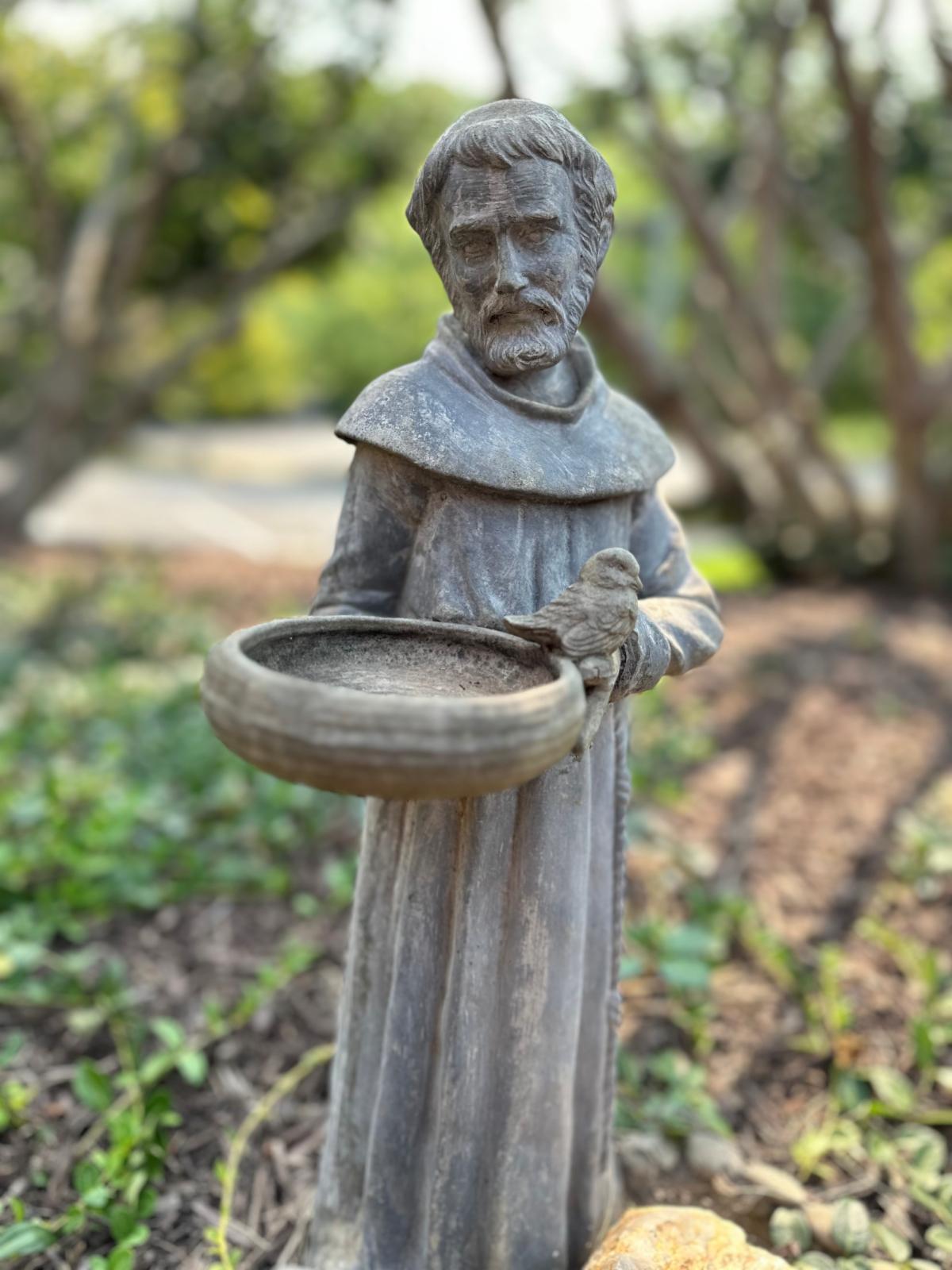
Each October, churches throughout the world celebrate St. Francis of Assisi, and it isn't just Catholic churches. Many Christians are known to embrace the spiritual devotion of this famously humble saint and admire his deep connection to creation. As the patron saint of ecology, a statue of St. Francis can be found in the gardens of Catholics and non-Catholics alike. He is also the patron saint of animals, and this weekend, Christian churches throughout the world will bestow a special blessing on pets. This October is particularly special as we recognize the 800th anniversary of the death of St. Francis of Assisi. (In recognition of St. Francis, Pope Leo XIV declared this year, running from January 10, 2026, through January 10, 2027, an extraordinary Jubilee Year.)
As one of the “popular” saints, you are probably familiar with his riches to rags story. Born in 1181 the son of a prosperous silk merchant, St. Francis aspired for knighthood. After imprisonment during a military campaign against the city-state Perugia, Francis was ransomed by his father and suffered a subsequent illness for the next year. Upon his recovery, he departed to join a crusade, but along the way he had a vision instructing him to turn back. Concerned that his retreat would appear as cowardice, he hesitated to return directly to Assisi and wandered the countryside praying in churches along a circuitous route.
| |
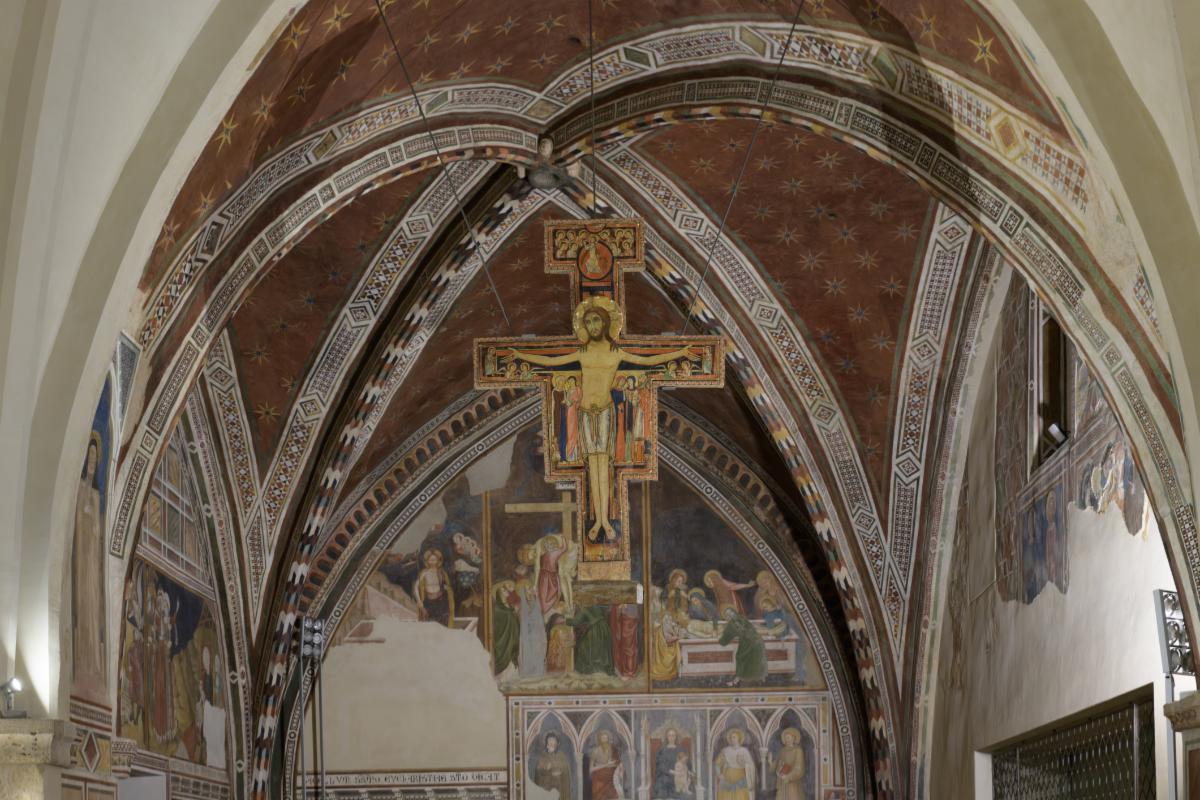
As he was praying before an icon in San Damiano Church, the crucified Christ gave him an exhortation:“Go and repair my house, which as you see is falling completely into ruin.” Seeing the neglected building in which he knelt, he assumed Christ’s words were literal: fix this church! In an effort to obey the Lord, Francis sold a cart of his father’s rich cloth and gave the proceeds to the priest of San Damiano to repair the decrepit structure. His enraged father, however, was not amused. Frustrated and angry with his son, he sought an audience with the bishop to reconcile the matter of the fine cloth Francis had taken from him. In response, Francis stripped off all his clothes and declared his only father to be God the Father. One of the bishop’s aids cloaked Francis with a simple robe, and this became his first habit.
| |
Tau Cross
After this, Francis took up his cross and devoted himself to a life of poverty, simple peace, and serving the poor. By 1210, he had several dedicated followers, and Pope Innocent III gave the Church’s authorization for the Franciscan Order. In 1215, Pope Innocent III convened the Fourth Lateran Council in Rome, and St. Francis was one of the estimated 2000 in attendance. During the Council, the pope referenced the Tau cross as the symbol Ezekiel is thought to have marked upon the forehead of believers in Ezekiel 9:4, and the Franciscans came to embrace this as their own symbol. Francis was known to mark it on walls and doors where he stayed, chalk it on his brown habit, and even use it as his signature. Yet today, it is worn by men seeking to join the Franciscan Order throughout the months of their postulancy.
| | |
Friend of Creation
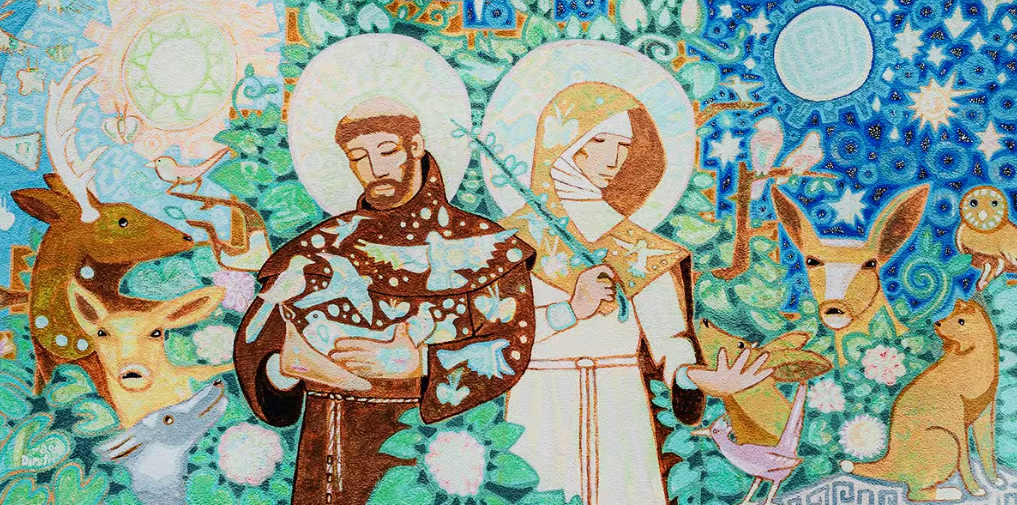
St. Francis travel wide and far with his brothers, depending upon the generosity and hospitality of others and spreading the Gospel to all. Along the way, there are many stories of St. Francis' astounding and honestly, peculiar, interactions with animals. From birds who quietly obeyed when he blessed them and asked them to cease twittering while he preached to fish and rabbits who he counseled on being more alert in order to avoid being trapped. Once on the road to market, he is reported to have encountered a man with two lambs. Moved by their desperate bleating, he bought them from the man. Later, he gave one of the lambs to his friend, Lady Jacoba, and the lamb followed her to Mass every day. Possibly the most extraordinary story of Francis' animal encounters is the wolf of Gubbio. Francis heard that the town of Gubbio was being terrorized by a wolf who was preying on animals and people alike, and he resolved to confront the wolf and settle the matter. Of course, when he approached the creature, it charged at him with bared teeth. St. Francis made the Sign of the Cross and the wolf composed itself and listened as St. Francis ordered the “Brother Wolf,” in the name of Christ, to refrain from harming people. Legend is that Francis brokered a pact between the people of Gubbio and the wolf, and the creature lived peacefully among the townspeople from that point forward — after shaking his paw with Francis.
In December 1223, St. Francis gathered animals and people in Greccio to re-enact the story of Christ's birth. He is credited with popularizing the tradition of the nativity scene as part of Christmas celebrations.
In the year before his death, St. Francis wrote his famous poetic prayer, “The Canticle of the Creatures,” also known as “The Canticle of the Sun.” Just before his death in 1226, he added the final section welcoming “Sister Bodily Death.” The enduring poem has guided many believers in understanding, respecting, and celebrating their place in relationship with all of God's creation. In 2015, Pope Francis released the encyclical Laudato Si' (Praise be to you), instructing the faithful in care for our common home, which was inspired by "The Canticles of the Creatures."
| |
Friendship with St. Clare of Assisi
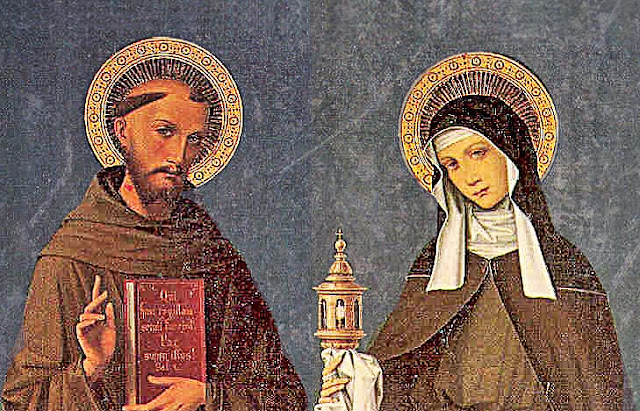
Early in his preaching as a Franciscan, St. Clare of Assisi heard him sharing the Gospel and felt a calling to a similar sacrificial life devoted to Christ. Born into a noble family, Clare and her sisters were taught Christianity by their mother (Later, both her mother and two sisters — one of whom is St. Agnes of Assisi — joined the order started by St. Clare.) When she heard St. Francis preach, she was drawn to the simple life he demonstrated as a path to grow closer to Christ, and she desired learning this way of life from him. At 19 years old, she secretly sold her dowry, donated the money to the poor, and met Francis and his followers at St. Mary of the Angels in Assisi. There her hair was cut as an outward sign of her devotion to God. Clare moved to the Church of San Damiano where with the guidance of Francis, she established the Second Order of St. Francis (known today as the Poor Clares). As Abbess, Clare instructed her sisters in austere poverty with a contemplative devotion to prayer. Francis and Clare remained close through the remainder of his life. Inspired by Francis, St. Clare was and is an example of the clarity of faith, prayer, and service that women offer the Church.
(Today the crucifix which spoke to St. Francis, known as the San Damiano Cross, hangs above the altar of the Basilica of Saint Clare in Assisi; a copy of the icon is at the restored Church of San Damiano, which stands yet today.)
| |
Lady Jacoba and Almond Cookies
On the feast of the Exaltation of the Cross in 1224, while in a state of contemplation on the mountain La Verna, Francis received the wounds of stigmata (the first recorded stigmatic). Two years later, as death approached, he called his friend Lady Jacoba, who he was known to call Brother Jacoba. Widow of a Roman nobleman, Lady Jacoba offered hospitality to Francis and his brothers as they traveled. St. Francis counseled her on serving God through her position in life. As Francis lay on his deathbed at San Damiano, being care for by Clare of Assisi and her sisters, Lady Jacoba is summoned to his bedside. She brought a burial shroud, said to be woven from the wool of the lamb he gave her, and almond cookies. The cookies, which were a favorite of his, are said to be the last thing he ate before a peaceful death on October 3, 1226. Yet today, almond cookies are baked and eaten on his feast day.
As we celebrate the feast of St. Francis on October 4 and continue in the extraordinary Jubilee Year until January 10, 2027, there are many ways to honor and celebrate St. Francis' contributions to our Church. Participating in a pet blessing (SJN's is at 1 p.m. on October 4.), going for a walk in nature, preparing your garden for the coming winter, watching birds, or just spending a moment in prayer contemplating the magnificent creation that surrounds us. You could choose to hang a San Damiano cross in your home, or you could make and enjoy delicious St. Francis Almond and Spice Cookies.* Happy feast of St. Francis to you and all our Christian brothers and sisters who celebrate this extraordinary saint!
*Recipe by Bro. Andrew Corriente, a Capuchin Franciscan friar and winner of the fifth season of ABC's "The Great American Baking Show: Holiday Edition."
| | |
Sowing the Seeds of Faith
by Phil Prinzivalli
A new Faith Formation year has started and once again our classrooms are filled with children and volunteers exploring our shared faith. Because of our amazing catechists, our church can provide opportunities, tools, and a space for our youth to learn and grow. With that in mind, everything we do serves the Domestic Church: the families and the children's primary catechists, their parents.
In addition to teaching the children about our faith, it is important to help parents engage with them after class so that they can grow in what they have learned. During our opening session, I was able to speak with our families about how to strengthen the Domestic Church and build upon the lessons from class at home.
Step 1: Hearing the Call
The first step is opening our hearts to hear God's call to share the faith. As you are reading this, take a moment and ask yourself: Why is my faith important to me? Keep in mind that all answers are valid; it is about your personal relationship with God. Now a follow-up question: Do my children know my answer? If you have a clear response to both questions, that is amazing! It is okay, though, if you cannot pinpoint an exact reason why. Faith is not purely about knowing; it is about learning, growing, and the desire to share what we have learned with others. Like a tree, it is alive; it weathers the seasons of life with us, and when it receives what it needs, in return, it bears abundant fruit, full of seeds.
If we think of our faith in this way, as a tree: we must recognize that at some point in our lives, someone who cared about us gifted a seed. They watered it, gave it sunshine, and as the seed grew into a sapling, taught us how to tend to it ourselves so that in turn it could yield fruit of its own.
That is the call God asks us to answer: to give our children the seed, the sunshine, the rainfall, and the room to grow.
| |
Step 2: Tending Our Trees
If we are to give of ourselves as Jesus asks us to do, we must first have what we are called to give. That is why it is so important to make sure that our own spiritual needs are being met. What can we do to tend to our tree so that it can bear fruit?
We may hear that the answer is simple: go to Mass, receive Communion, and pray. In a world full of distractions, though, that is easier said than done. It is important that we go to Mass and encounter Christ through the Eucharist but competing schedules can make getting there difficult. When we are there, it is easy to get distracted, especially with little ones, or to feel like we're just going through the motions. Yes, going to Mass is key to a fruitful spiritual life, but our faith needs more than an hour each week to thrive. So, what can we do outside of Mass, then, to tend to our trees? We must nurture our faith in our everyday lives.
Prayer: When we go to Mass, we are given the opportunity to pray together as a community. We are also called to encounter God one on one on a more personal level. If we can take the time, even the small moments, to talk to God, that can help us care for our trees. God wants to hear from us; He wants a relationship with us. Find what form of prayer works best for you. We are blessed to have so many prayer traditions like the Rosary, Taizé, and Adoration, but much of our prayer is just a discussion with God, sometimes just contemplative time to hear God. Even if you are just taking a moment on your commute to work, in the shower, or while brushing your teeth, God hears you then, too.
Community: We are social creatures by nature. Even the most introverted among us needs community. It can be hard to make new friends as adults, but it is still important to try. We can further tend to our tree by surrounding ourselves with people who help it grow. When we find people who we can openly discuss our faith with, we find freedom and the courage to be that person for other people.
| |
Works: “So faith by itself, if it has no works, is dead.” (James 2:17) We are all called to serve others as Jesus taught us, not just to share the Good News with our words but with our actions. When we receive the Eucharist, we take Christ into ourselves and then we are called to go out and be Christ to others, to do His works and to be His hands in doing so. In serving, we not only enrich the lives of others but also our own. By taking the time to make Christ a part of our everyday lives, we are able to keep a healthy tree of faith; one whose fruit can be shared without fear of withering.
Step 3: Sharing with Joy
We have heard the call to sow the seeds of our faith. We have taken the time to grow our tree to be healthy and bear fruit. Now, it is time to share what we have and the best way to do so is with joy! What did our parents share with us that they were passionate about? Maybe it was love of a sport or music or movie franchise. Maybe it was gardening or working out or making art. Whatever it was, they invited us into it with enthusiasm. It was important to them, and we saw it, even if we did not fully know why. Sharing our faith is no different. It is a part of who we are.
Give your children the gift of faith as a seed, shower them with love, and invite them to see how you tend to your own tree. Include them in times of prayer and show them how to talk to God. Build community with them. Be a person they can ask questions, and if you don't know the answer, tell them you'll find out together. Serve others alongside them and teach them the goodness found in serving.
Within the Domestic Church, we share the faith with our children and give their seeds the nourishment to grow. While the weight of continuing a tradition that goes back centuries may seem heavy, we can draw strength from those who came before us and hope from those who will come after. We live here, in this season of life, part of a cycle of seeds and trees, tended through the generations by those who prayed, built community, served others, and shared their joy. What a gift it is then to have something so wonderful to give to the ones we love most.
|
| |
The First Marian Apparition
by Elizabeth Connell Wright
Did you know that the first recognize Marian apparition occurred prior to Mary's assumption into Heaven?
Before exploring this mystical occurrence of “bilocation,” it is important to understand that Marian apparitions are not regarded equally by the Church. The Marian apparitions that most Catholics are familiar with, including Our Lady of Guadalupe, Our Lady of Lourdes, Our Lady of Fatima, Our Lady of the Miraculous Medal, and Our Lady of Knock, are apparitions that are approved by the Catholic Church for “widespread veneration endorsed by the Holy See.” Recognition by the Church or “Vatican-approved” can be deceiving, however, because throughout the history of the Church, the criteria for investigating and approving a reported appearance of Mary has changed. As one can imagine, an occurrence in the first ten years of the Church underwent very different investigative inquiry than an apparition like Our Lady of Fatima, occurring nearly two millennia later in 1917. Like the Church, the benchmarks continue to evolve. As recently as 2024, Pope Francis replaced the 1978 Norms Regarding the Manner of Proceeding in the Discernment of Presumed Apparitions or Revelations with Norms for Proceeding in the Discernment of Alleged Supernatural Phenomena.
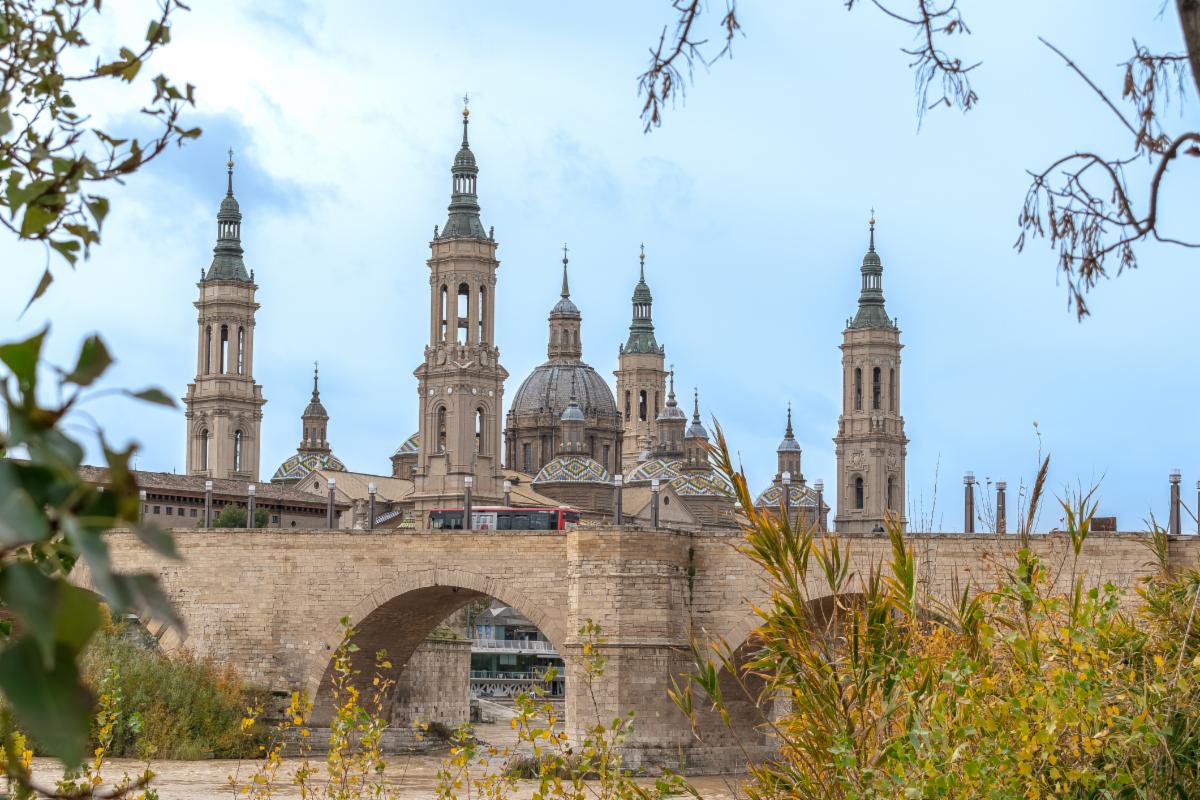
Our Lady of the Pillar (Nuestra Señora del Pilar), recognized by the Church as the first apparition, is an approved public veneration. The apparition was approved for liturgical veneration by Pope Innocent XIII in 1723 and inserted in the lessons of the Sacred Congregation of Rites, a department of the Roman Curia which had liturgical oversight at the time. It was assigned the feast day of October 12.
| |
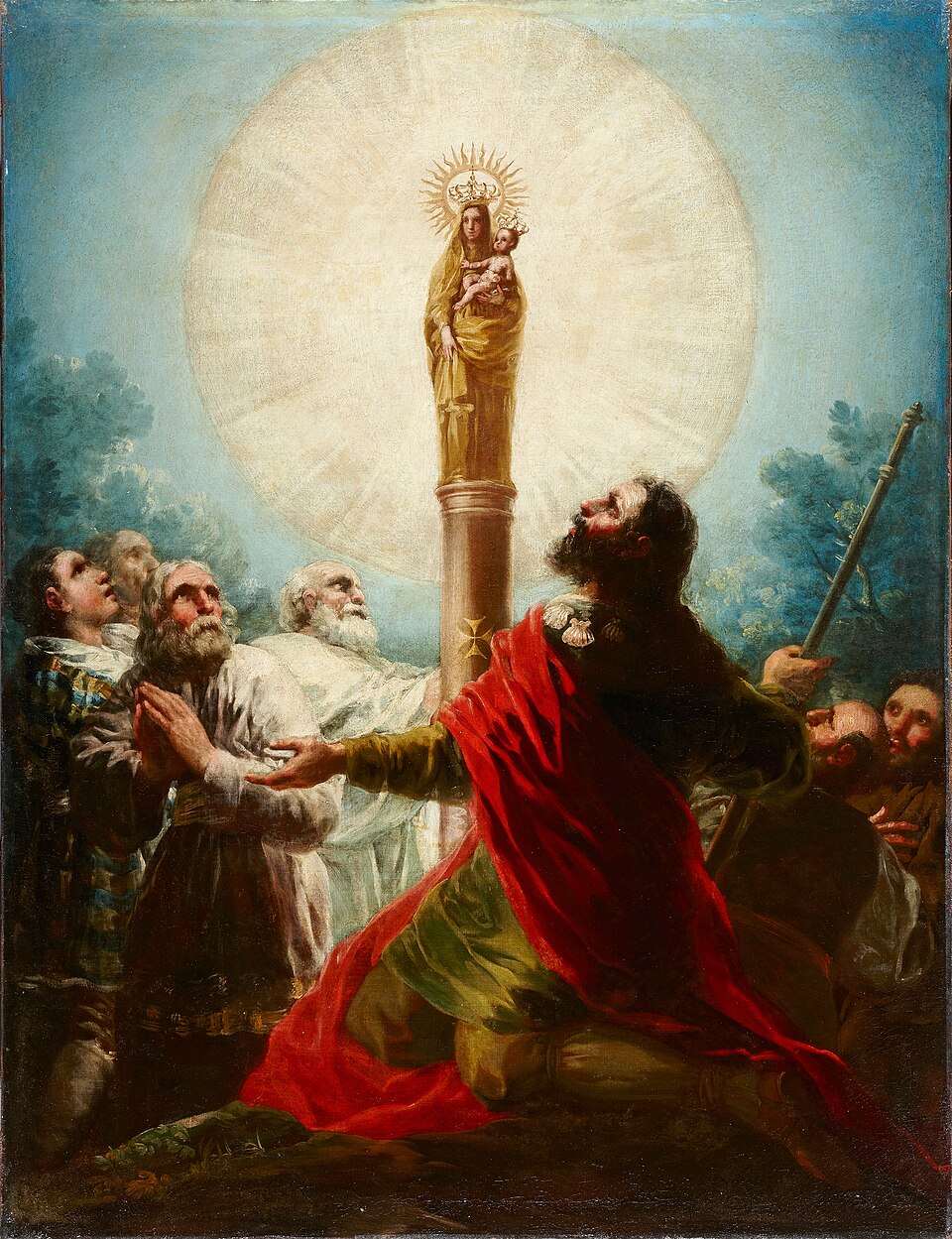
| |  | After the Resurrection and Ascension of Christ, his Apostles, as instructed, scattered throughout the known world to share the promise of the Gospel message. James the Greater arrived in Spain through the port of Cartegena, establishing the first diocese on the Iberian Peninsula. He traveled throughout the region spreading the Good News and recruiting new disciples. With the area under Roman rule, they met significant resistance from the people. One night, in the year 40, in despair, James and his companions stopped to pray at the edge of the Ebro River in Caesar Augusta. (Today it is Zaragoza, Spain.) According to tradition, they soon heard the voices of angels singing and Mary, who was living in Jerusalem, was delivered by angels standing upon a pillar on a cloud. She consoled James and encouraged him to continue his mission by building a church upon that site. She told him, “It [the church] will stand from that moment until the end of time in order that God may work miracles and wonders through my intercession for all those who place themselves under my patronage.” The jasper pillar was to be a symbol of his steadfast faith and fortitude. Within the year, James and his followers built a small chapel dedicated to Mary, which is considered to be the first church built and named for Mary.
James returned to Jerusalem soon after, and in 44 AD, he became the first apostle to be martyred when Herod Agrippa ordered him beheaded. Nonetheless, the seed of Christianity he planted in the Iberian peninsula continued to grow and flourish over time. Upon the site of the apparition, many churches were built over the centuries. The Baroque-style Basilica of Our Lady of the Pillar that towers over the Ebro River today was completed in 1686. As Our Lady promised, the church has endured for centuries, even surviving unscathed when three bombs were dropped on the Basilica on August 3, 1936, during the Spanish Civil War. None of the bombs exploded, and they are displayed at the Basilica as proof of Our Lady's intercession and promise of protection.
| | |
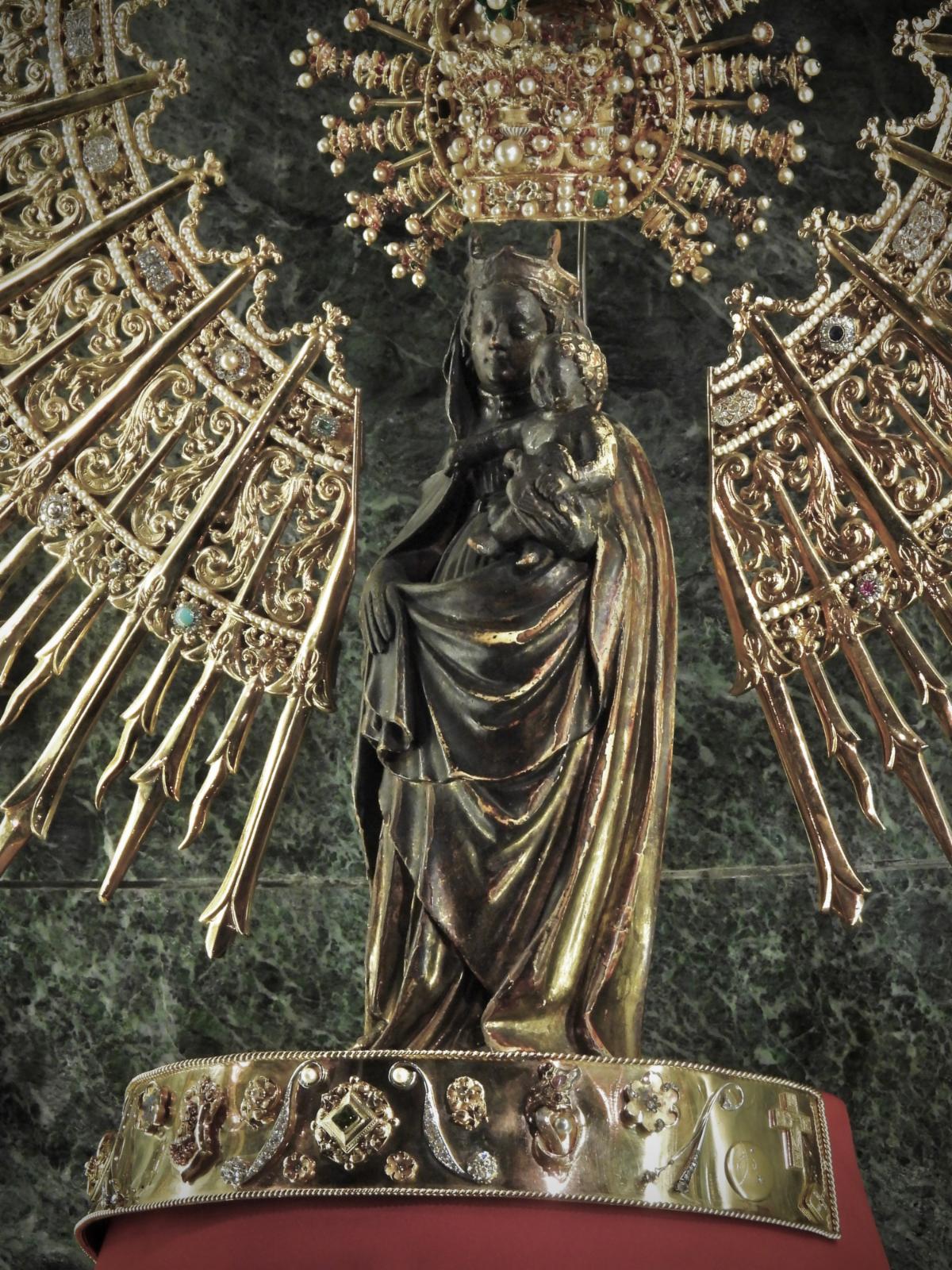
The small wooden statue Mary gave to St. James at the encounter stands 15 inches high and is positioned upon the 5-foot 9-inch jasper pillar she is said to have appeared upon when she appeared. Enshrined in the Holy Chapel (Santa Capilla) inside the main nave of the Basilica, the Marian image was canonically crowned under Pope Pius X in 1905. The jeweled sun-like crown behind the statue is valued at nearly $3 million, containing 2,836 diamonds with accents of emeralds, sapphires, rubies, and pearls. Today, Our Lady of the Pillar, the patroness of Spain and all Hispanic people, is one of the most-visited apparition sites, with over four million visitors each year and a growing worldwide devotion. While the jasper is encased in bronze and silver and skirted with a mantle, on the 2nd, 12th, and 20th of each month the mantle is removed, and pilgrims can kiss or touch the jasper in a small opening on the back.
Pope John Paul II, who venerated and kissed the pillar upon his visits to the Basilica called Our Lady of the Pillar the “Mother of the Hispanic Peoples.” He said during a visit in 1984: “From this sacred place, Mary gives strength to the messengers of the Gospel, comforts their families and accompanies our journey toward the Father, with Christ, in the Holy Spirit. Amen.”
| | |
Celebrating St. John Paul II
by Patty Kwapniewski
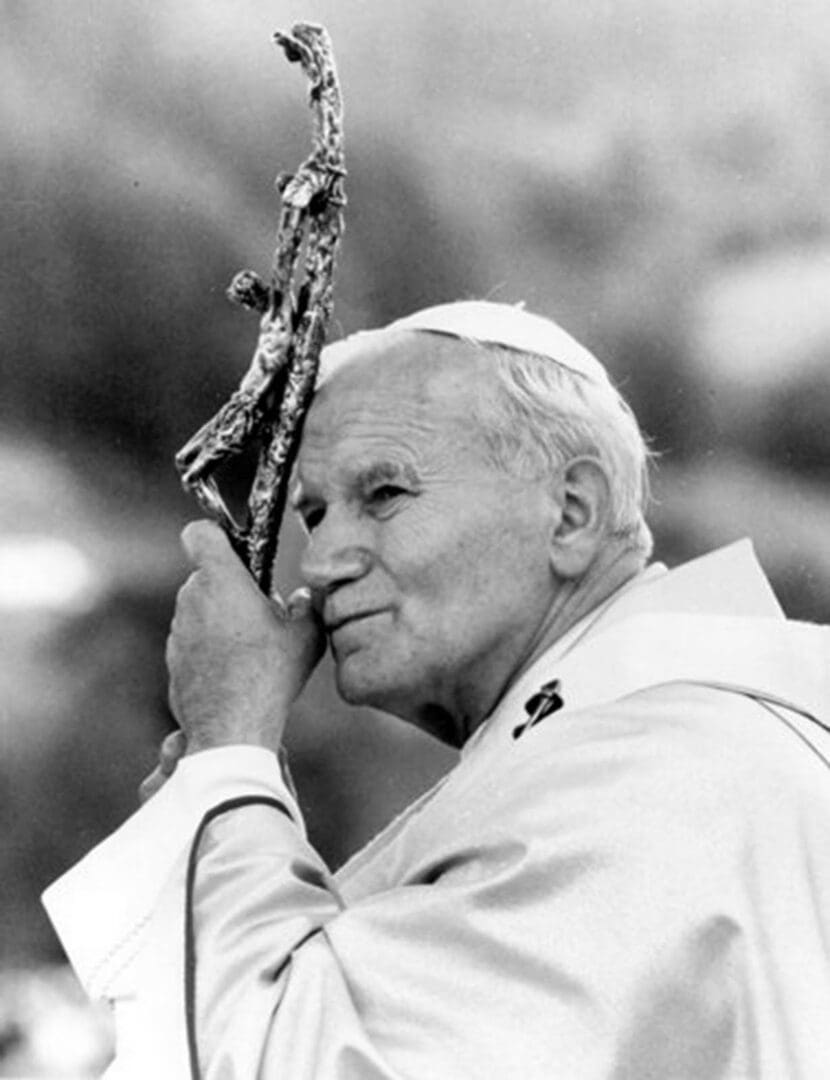
Pope John Paul II was born Jozef Wojtyla in Wadowice, Poland, in 1920. Tragically, by the age of 21, he had lost all his immediate family members. He answered his call to serve God — he attended seminary in Kraków and was ordained a priest in 1946. After studying in Rome and Poland, he earned doctorates in both theology and in philosophy.
Fr. Wojtyla was appointed auxiliary bishop of Kraków in 1958 and archbishop six years later. He attended all four Vatican II sessions between 1962-1965 and was named a cardinal 1967. He was appointed the first non-Italian pope in 455 years in 1978.
During his 27 years of papal ministry, Pope John Paul II wrote 14 encyclicals and five books, canonized 482 saints, beatified 1,338 people, and visited over 120 countries. He encouraged the solidarity movement in Poland during his visit in the late 70s and was instrumental in the fall of communism in eastern Europe in 1989. He was an avid skier and athlete and was said to steal away from the Vatican for outdoor adventures.
He welcomed the youth of the world to Rome for Palm Sunday in 1985, coinciding with the United Nation’s International Year of the Youth. The attendance far exceeded the expected 60,000 so much so that the following year Buenos Aires hosted the first official World Youth Day.
Pope John Paul II died in 2005 at the age of 84, was beatified in 2011 by Pope Benedict XVI and canonized by Pope Francis in 2014.
| |
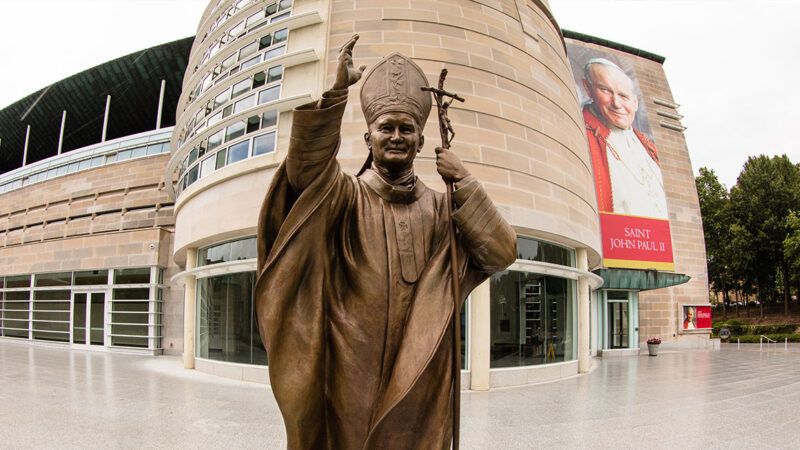
The Knights of Columbus are credited with initiating the Saint John Paul II National Shrine in Washington, DC. Why not plan a visit to the Shrine this month to celebrate his October 22 feast day? Participate in daily Mass or Confession and take in the many permanent exhibits. There are also temporary displays like St. Carlo Acutis’ Eucharistic Miracles and Pope John Paul II’s reflections on the Declaration of Independence on display to celebrate the 250th anniversary of the declaration’s signing. You could even register for special events like a discussion with the author of a book on the friendship between John Paul II and Mother Theresa on October 10 or the annual pilgrimage to the shrine on October 17.
"Darkness can only be scattered by light. Hatred can only be conquered by love."
Pope John Paul II
Address to the Diplomatic Corps, January 10, 2002
| | |
Enduring Love & Mercy: The Inspiration of St. Dymphna
by Elizabeth Connell Wright
In complete honesty, I am writing about St. Dymphna because I felt the tug of the Holy Spirit. On the first of every month, the Pope’s Worldwide Prayer Network “drops” the video of Pope Leo praying the month's intention; October's is for mental health ministry. As the video opened with a beautiful image of St. Dymphna, patron saint of those suffering from a mental illness, I felt called to reflect further. I don't think there is a person alive who hasn't witnessed a loved one or community member struggling with mental illness or experienced themselves the insidious tentacles. Mental illness can shackle minds, impact behaviors, control emotions, and deteriorate quality of life, and in our society, it is accompanied by a stigma that often degrades one's human dignity. According to The National Institute of Mental Health, 23.1% of adults in the U.S., or one in five, live with a mental illness (2022). It is a hard statistic in an uncertain world.
| | |
Like many saints, the story of St. Dymphna is not a pretty one. According to oral tradition, Dymphna was born in Ireland in the 7th century to a pagan father, who was king, and a Christian mother. Baptized and educated in Christianity, she developed a strong devotion to her faith and made a vow of chastity. Tragically, when Dymphna was 15, her mother died, and her father became obsessed with her. Seeing his wife's resemblance in his daughter, he relentlessly pursued her for an incestuous marriage.
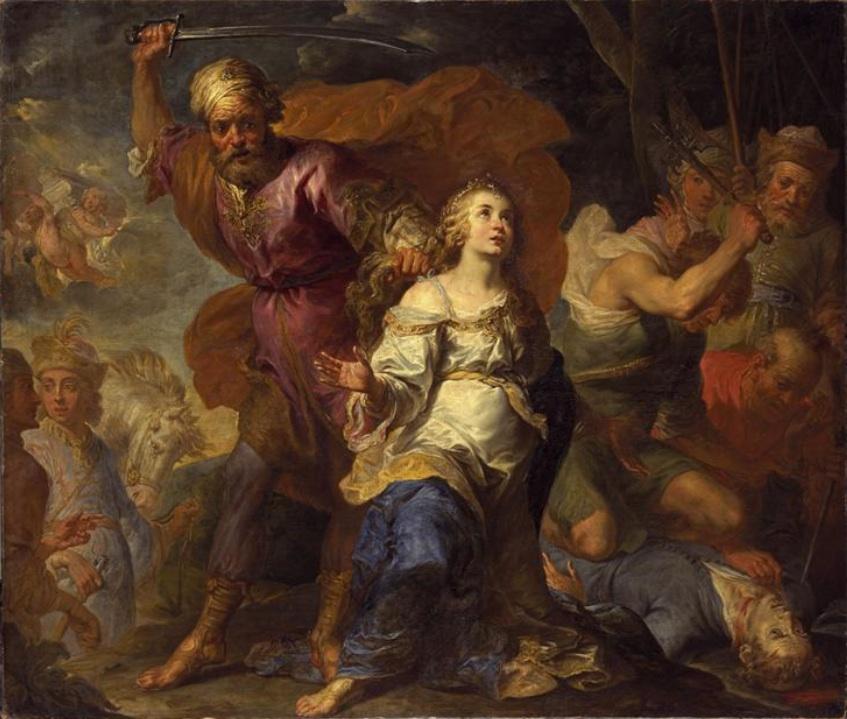
Dymphna fled to Geel, Belgium, seeking safety outside of Ireland, but the pagan king sent courtiers to find her. When they found her in Geel, the king sailed to Belgium and continued to demand she marry him. When she persistently defended her chastity, denying his pursuit, he used his sword to behead her. The legend says that later that night, five men suffering from mental illness and living on the streets, lay down to sleep on the place where Dymphna was killed. When they awoke, they were cured. Tale of the miracles spread, and others seeking healing from their personal torment traveled to Geel. Subsequent miracles established Geel as a pilgrimage site for anyone seeking relief from their own mental anguish, and in 1247 Dymphna was canonized.
| |
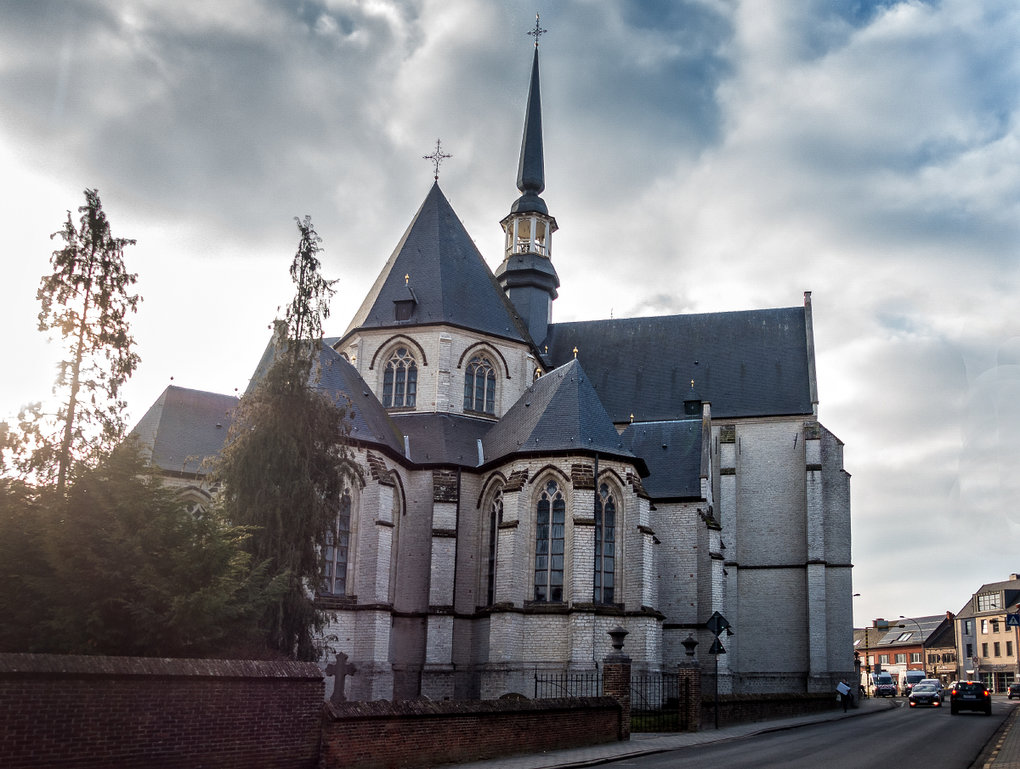
| | | Geel, Belgium, even today, centuries later, prides itself as a sanctuary for those suffering from mental illness. Perhaps it is the only place in the world where the stigma of mental illness doesn't further impede the lives of those already suffering. Geel is revolutionary in its approach to care for people with mental illnesses. For generations, host families have welcomed and cared for “guests” with mental illnesses, practicing compassion and using creative approaches to helping them navigate life. They have approached mental illness with an unconventional method based on acceptance, dignity, and normalization rather than rejection or isolation. The tradition and practice of care for people with mental illnesses in Geel has had enduring success. Though the numbers are dwindling, today, there are about 200 guests in Geel living and thriving within a community that continues to embrace them. The Church of St. Dymphna, standing in place where she was martyred and is buried, is a reminder of the unique legacy of this city.
This month, as we recognize both Mental Health Awareness and Respect Life months, it is important to remember that we have a role in the narrative. The stigma of mental illness in the Middle Ages persists yet today among those unhoused in the United States — many neighbors in our community. According to the Cicero Institute, an estimated 67% of people who are experiencing homelessness are suffering some form of mental illness, which should not be a surprise. According to the Center for Disease Control, mental health concerns are on the rise for U.S. adolescents ages 14-18, with suicide being the third leading cause of death for youth in this age group. Nearly 30% of high school students reported their mental health as “not good most of the time or always,” and in the same study, 21% of youth ages 12-17 reported feelings of anxiety in the last 30 days. (Mental Health and Suicide Risk Among High School Students and Protective Factors — Youth Risk Behavior Survey, United States, 2023) While people who are unhoused and youth certainly are not the only ones inflicted with mental illness, they are certain a vulnerable population.
| One in five adults, according to the National Institute for Mental Health. The reality of that statistic is not only stark and heart wrenching but a call to action for those of us seeking to faithfully live the Gospel. This month let us accompany Pope Leo and the faithful in prayer “for mental health ministry to be established throughout the Church, helping to overcome the stigma and discrimination of persons with mental illnesses.” Let us reflect on the residents of Geel, who in devotion to St. Dymphna, continue a centuries-long tradition of upholding dignity, compassion, and hope for all suffering from mental illness. Let us aspire to see the mentally ill through their devotion, to offer comfort, and accompany them with love and mercy. | | |
The Pope's Intention for
Prayer and Action for October:
For mental health ministry.
Let us pray that the mental health ministry be established throughout the Church, helping to overcome the stigma and discrimination of persons with mental illnesses.
| | | |
Current Mass Times
Saturday: 5 p.m.
Sunday: 7:30 a.m., 9:30 a.m., 11:30 a.m., 2 p.m. (Spanish), 5 p.m.
Monday-Friday: 9 a.m.
Wednesday and Friday: 12:10 p.m.
Watch a livestreamed or recorded Mass
Confession
Saturday: 10 a.m.-10:30 a.m. (English)
Sunday: 3 p.m.- 4 p.m. (Spanish)
| | | Elizabeth Connell Wright, Communications Director, is the editor of SJN's monthly newsletter. If you are interested in submitting an article to the newsletter or have a topic that you would love to see an article written about, please email ewright@saintjn.org. Thank you for reading our monthly newsletter! | | | | |