RESOURCES
Maternal health refers to the physical, psychological, and emotional well-being of a woman before, during, and after pregnancy. It spans from understanding how diseases and conditions (such as lupus or diabetes) affect maternal health outcomes to addressing health disparities across diverse populations.
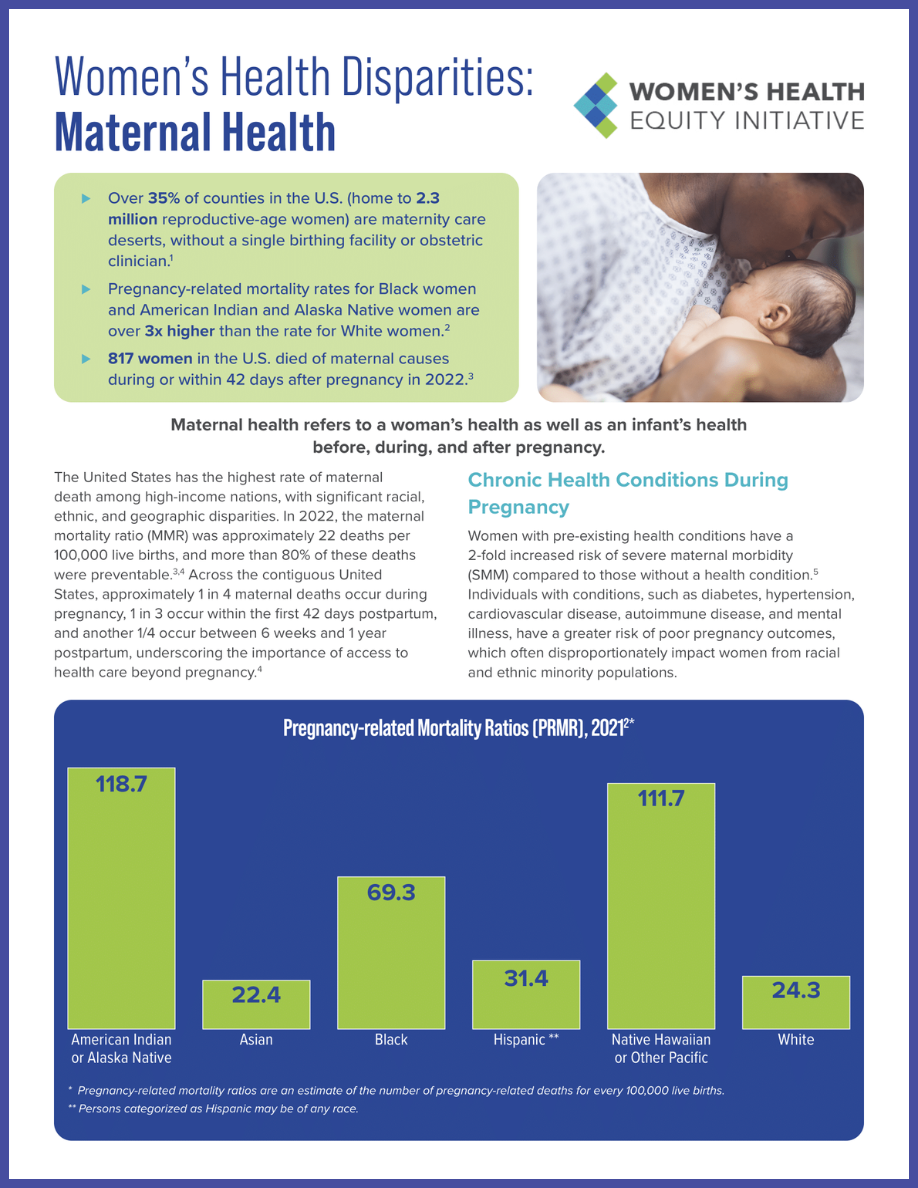
Approximately 700 women die each year in the United States because of pregnancy or delivery complications, and more than 50,000 women survive pregnancy and delivery but are left with significant adverse health consequences. These statistics are even worse for women of color in the United States.
It is crucial for women to receive appropriate care throughout their perinatal experience to decrease the risk and rate of maternal mortality and morbidity in the United States.
During Black Maternal Health Week on April 11-17, the Society for Women's Health Research is spotlighting the many facets of maternal health.
| | |
Check Out the Maternal Health Guide
Whether you plan your pregnancy or not, there are ways you can be prepared to have a positive maternal health journey.
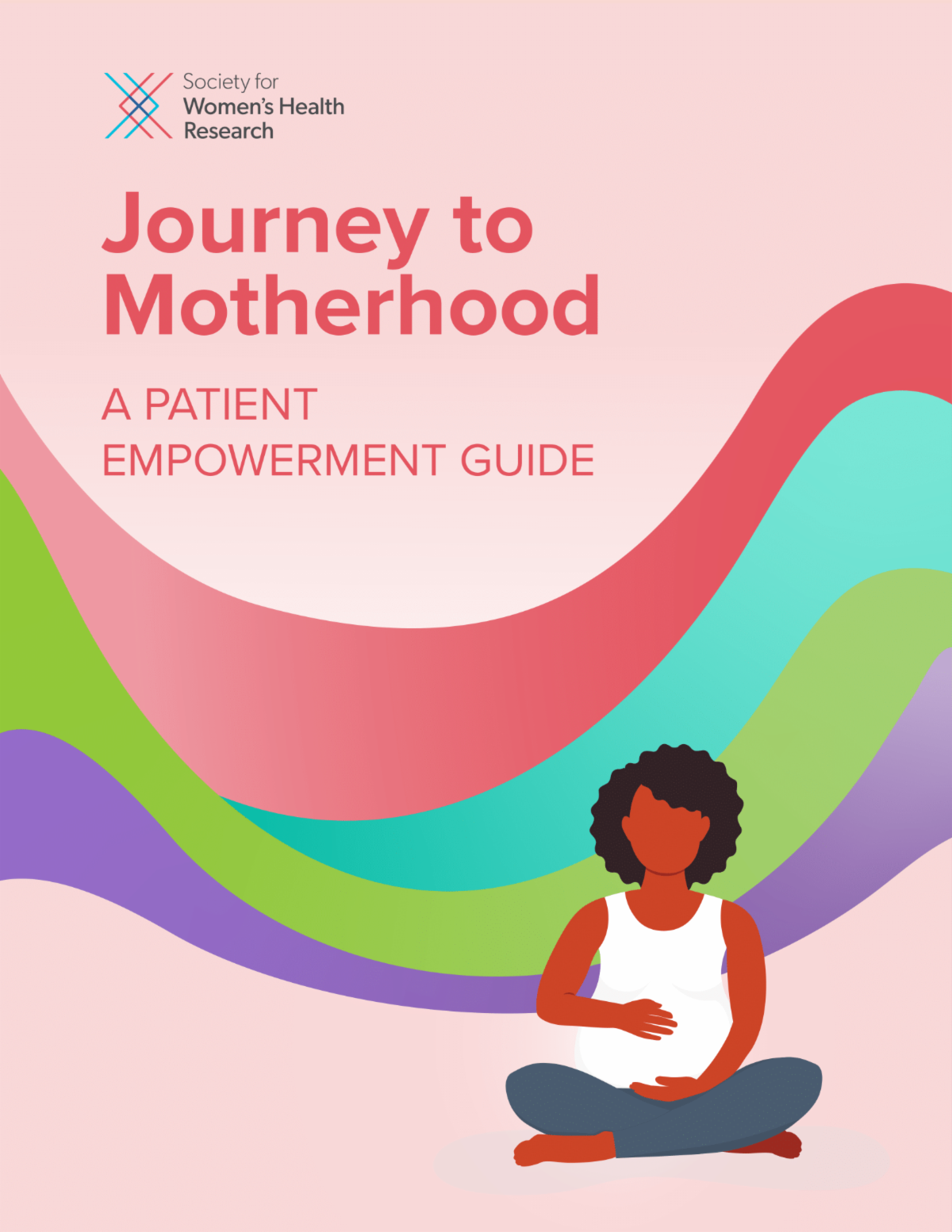
To support women and providers with proven strategies to improve maternal health, SWHR published the Journey to Motherhood: A Patient Empowerment Guide, featuring information about the three major phases of the motherhood journey—pre-pregnancy, pregnancy, and postpartum.
| | | Read more about metabolism on our blog! | |
NEWS AND RESEARCH
SWHR Working Group members have produced and shared the following news, research, and resources related to maternal health:
News and Research
| | |
Events and Resources
-
Resource: Accelerating the Development and Adoption of Biomarkers (for Preeclampsia), submitted by Danielle Babcock Sapienza, Education & Support Manager. Preeclampsia Foundation
-
Resource: Addressing the Maternal Mortality Rate in Black and Brown Communities, submitted by Davina Fankhauser, Fertility Within Reach
-
Resource: From Evidence to Action: Introducing the Low Dose Aspirin for Preeclampsia Prevention Implementation, submitted by Alicia Lee, MHA, Director, MCH Collective Impact, March of Dimes
-
Resource: Gestational Carrier Policy in the United States, submitted by Rebecca W. O’Connor, JD, American Society for Reproductive Medicine, Center for Policy & Leadership
-
Resource: How do you test for preeclampsia?, submitted by Danielle Babcock Sapienza, Education & Support Manager. Preeclampsia Foundation
-
Resource: Just the Facts: “Restorative Reproductive Medicine” and “Ethical IVF” are Misleading Terms That Threaten Access, submitted by Rebecca W. O’Connor, JD, American Society for Reproductive Medicine, Center for Policy & Leadership
-
Resource: Just the Facts: The Safety of In Vitro Fertilization (IVF), submitted by Rebecca W. O’Connor, JD, American Society for Reproductive Medicine, Center for Policy & Leadership
-
Resource: Low-Dose Aspirin for Preeclampsia Prevention: Implementation Guide for Clinical Teams, submitted by Alicia Lee, MHA, Director, MCH Collective Impact, March of Dimes
-
Resource: Low dose aspirin during pregnancy: What you need to know, submitted by Alicia Lee, MHA, Director, MCH Collective Impact, March of Dimes
-
Resource: Preeclampsia: Beyond Pregnancy, submitted by Danielle Babcock Sapienza, Education & Support Manager. Preeclampsia Foundation
-
Resource: Preeclampsia Foundation Announces Major Maternal Health Initiative at HHS National Conference on Women’s Health, submitted by Danielle Babcock Sapienza, Education & Support Manager. Preeclampsia Foundation
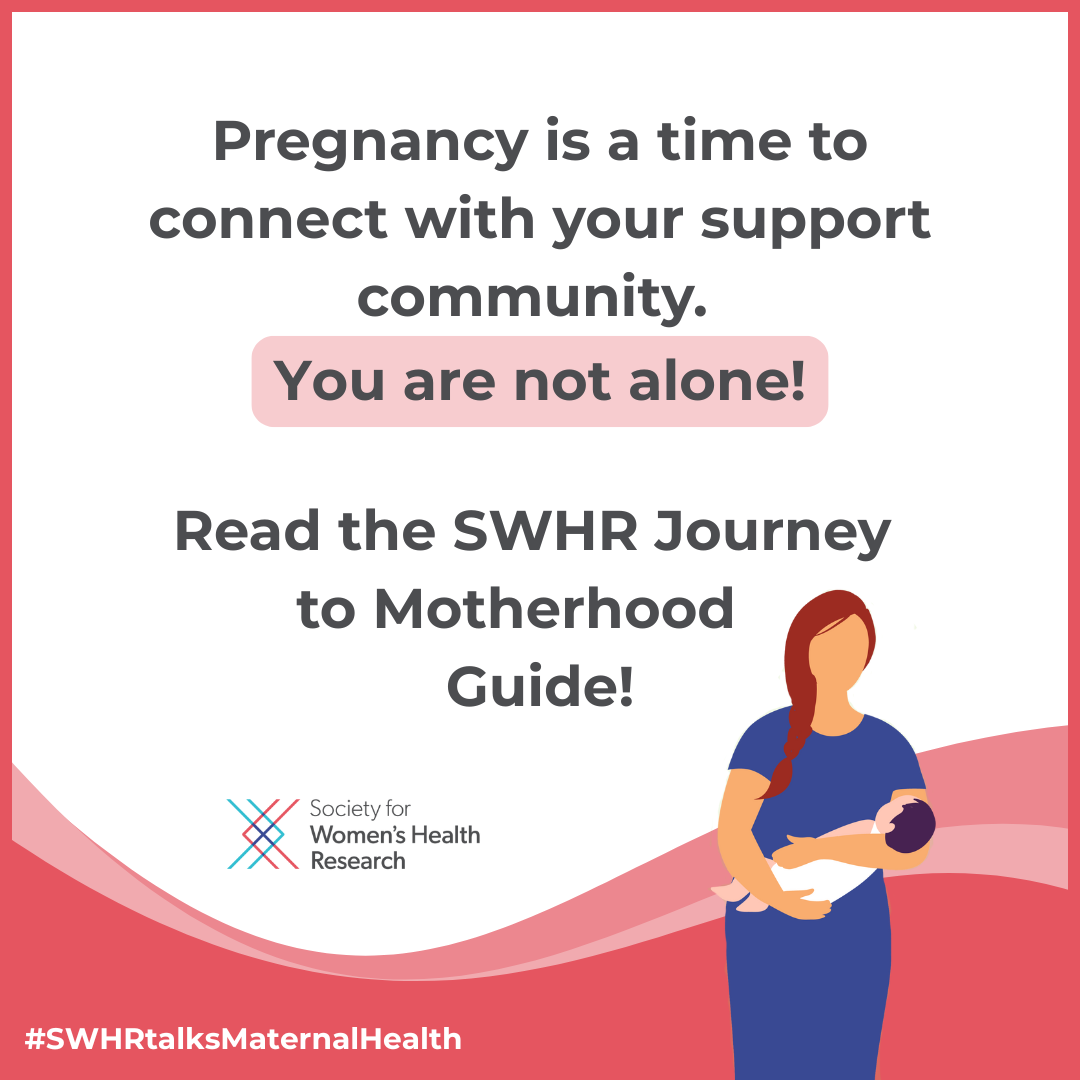
| | Pregnancy is a time to connect with your support community. You are not alone! In addition to the @SocietyforWomen’sHealthResearch Journey to Motherhood Guide, checkout resources from [TAG] the 4th trimester Project, NICHD, National Partnership for Women & Families, Black Women’s Health Imperative, Black Mamas Matter Alliance, Expecting Health, March of Dimes, Preeclampsia Foundation, and Sister Song. | | |
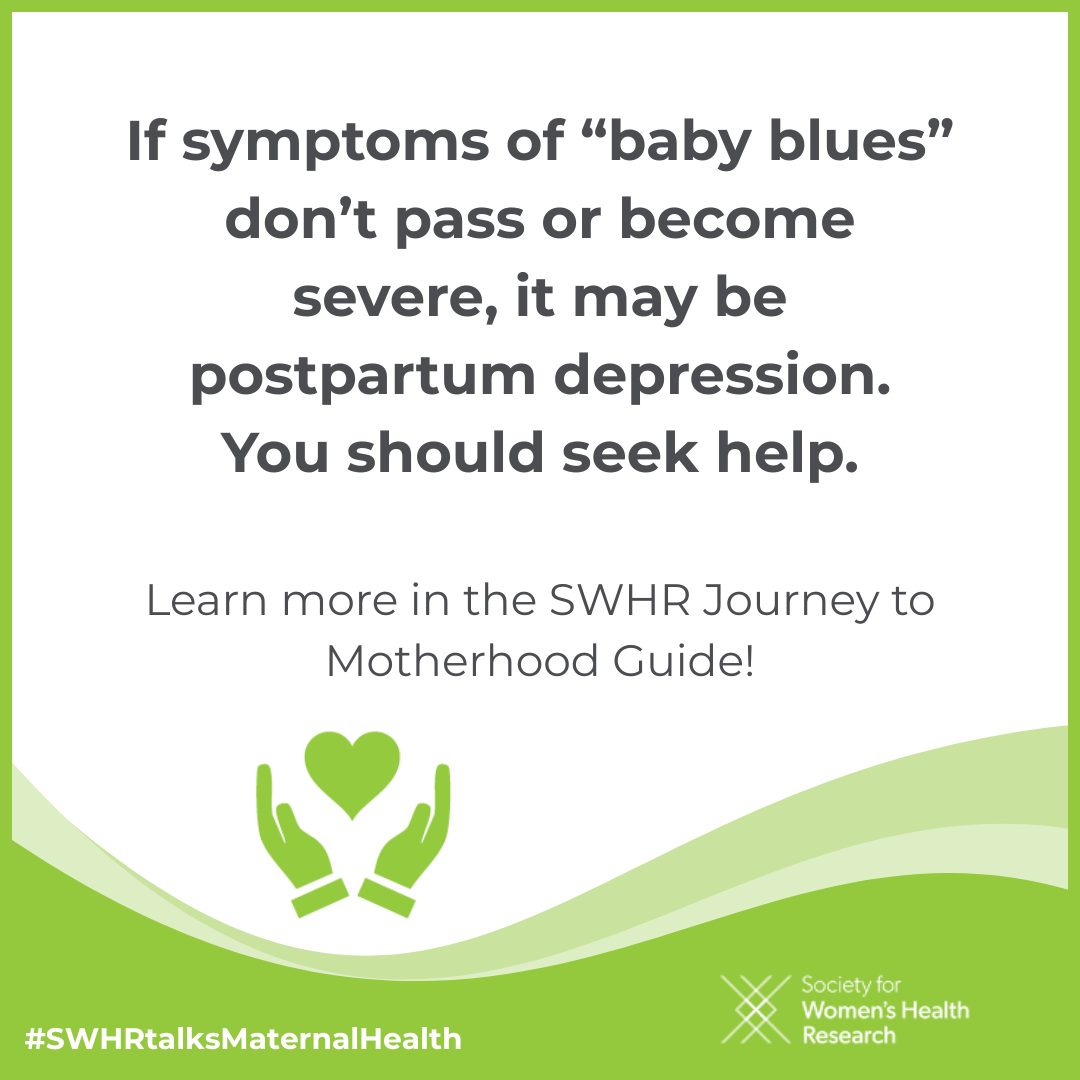
Moms can often feel overwhelmed by the physical and emotional demands of birth and
motherhood. About 50-75% of women experience postpartum blues or “baby blues” soon after birth. These feelings will usually pass within 1-3 weeks after
delivery. If symptoms persist or become more severe, it may be a sign of postpartum
depression, and you should seek help:
https://swhr.org/resources/journey-tomotherhood-
a-patient-empowerment-guide
#SWHRtalksMaternalHealth
| | |
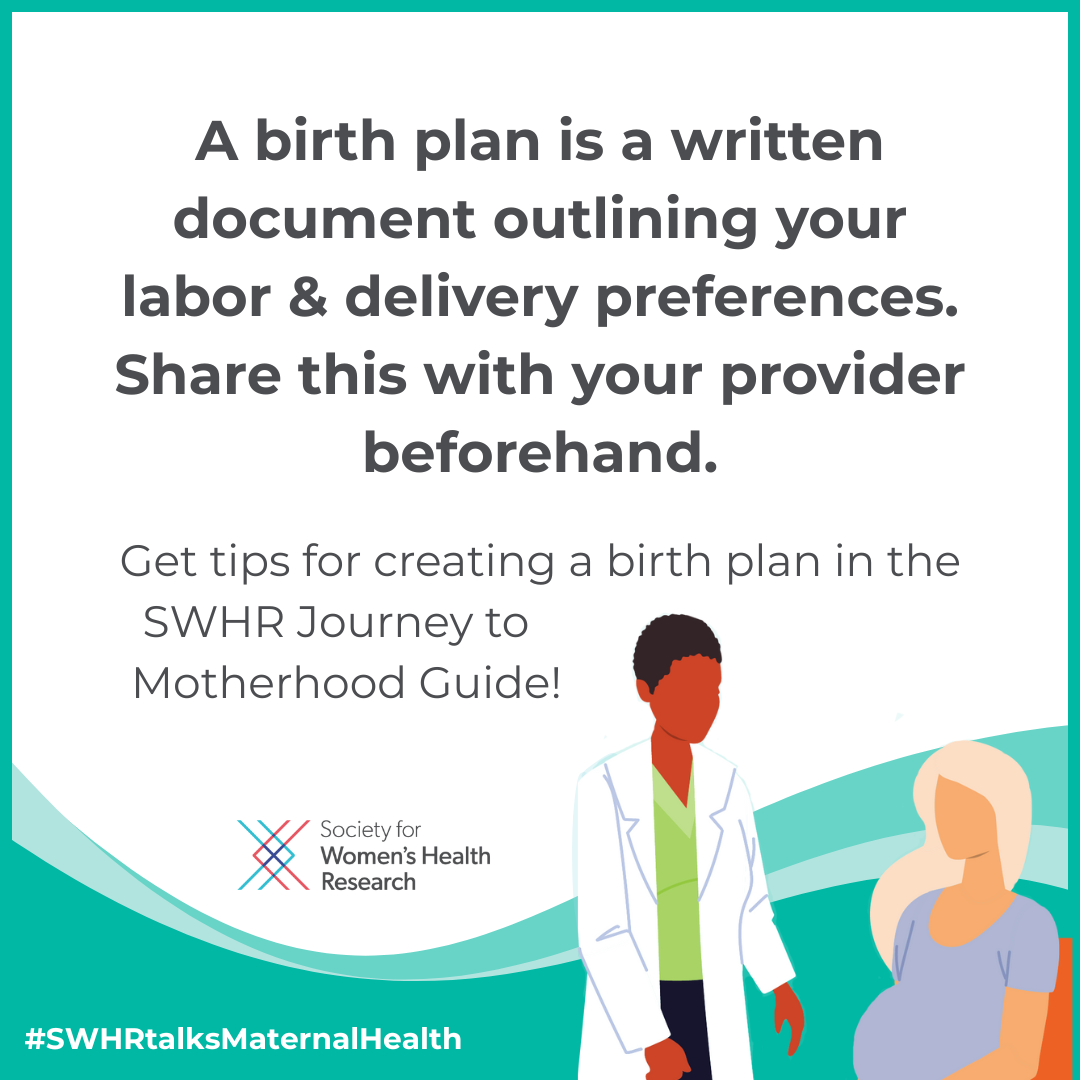
Creating a birth plan can be a helpful part of your pregnancy journey. This written document outlines what you would like to happen during your labor and delivery experience.
Share these preferences with your provider beforehand, so together you can make decisions about your birth that prioritize both your health and safety!
Check out birth plan tips in @SocietyforWomen’sHealthResearch's Journey to Motherhood Guide: https://swhr.org/resources/journey-to-motherhood-a-patient-empowerment-guide #SWHRtalksMaternalHealth
| |
PARTNER SPOTLIGHT
Our work is only possible with the help of great partners. Check out a leading maternal health organization here!
| |
Black Mamas Matter Alliance
Black Mamas Matter Alliance (BMMA, Inc.) is a network of Black-led and Black women-led organizations and multi-disciplinary professionals who work to ensure that all Black Mamas have the rights, respect, and resources to thrive before, during, and after pregnancy.
BMMA, Inc. honors the work and historical contributions of Black women’s leadership within their communities and values the need to amplify this work on a national scale. This year marks the 10th anniversary of BMMA, Inc.
| | |
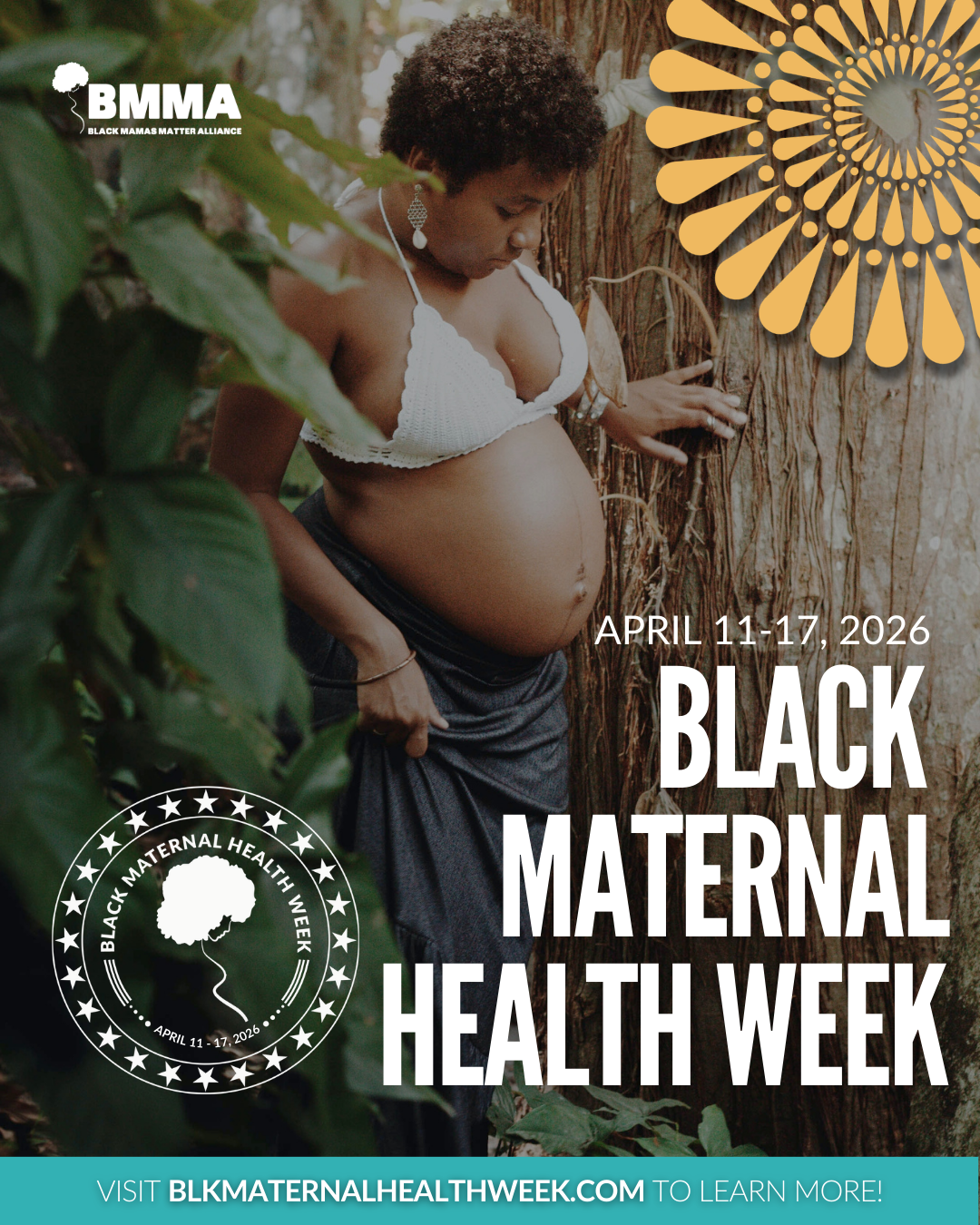
Held annually on April 11-17, Black Maternal Health Week is a week-long campaign founded and led by BMMA, Inc. to build awareness; foster activism and community-building; and amplify the voices, perspectives, and lived experiences of Black Mamas and birthing people. This year's theme is “Rooted in Justice & Joy," marking the 9th annual Black Material Health Week.
Join the conversation on social media using #BMHW26 and learn more at https://blkmaternalhealthweek.com/
| | All SWHR resources are free to view and share. Here's why: 10% of births in the US occur in counties with limited access to maternity care. | | | Did someone forward you this email? Looking for more news on women's health research? | | | | | |