|
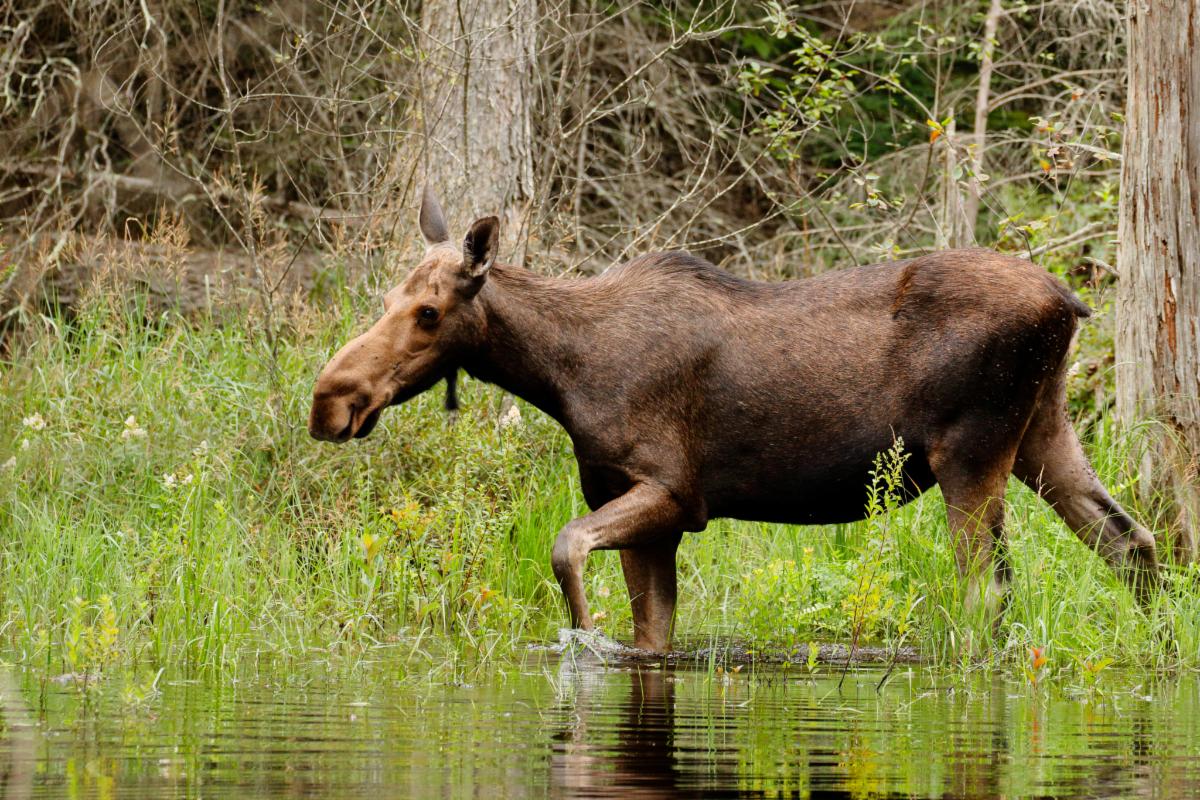
The wildlife darling of Great Mountain Forest is not the cute white-tailed rabbit or the plump black-capped chickadee. It's not even the Bambi-esque fawn taking its first shaky steps on new legs. Instead, it's a barrel-chested, heavy-headed, spindly-legged, bulbous-nosed Alces-alces, a.k.a, the moose.
New Calves on the Block
Yet, it wasn't always that way. According to Forester Emeritus Jody Bronson, a 48-year fixture in these woods, it wasn't until 2002 that moose began making an appearance in the Forest's 6,000-plus acres. These ungainly and lumbering creatures descended on the Forest from the north and snuck up on foresters--literally. Despite their large size, they are surprisingly stealthy and don't crash through the undergrowth, providing little warning of their approach.
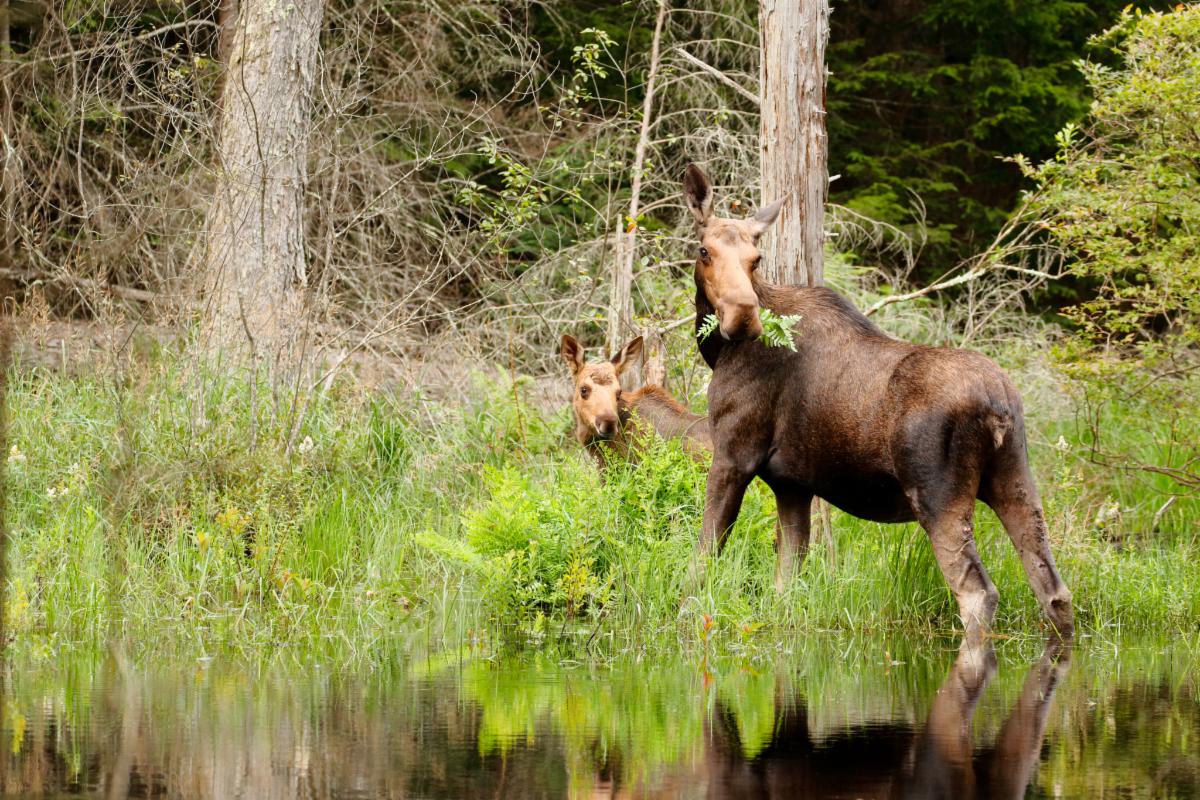
A November 2020 GMF intern-driven moose census derived from moose cams stationed in likely moose habitats yielded 21 moose: 11 mature bulls, two adolescent bulls, five cows, and three calves. Today, while the moose are breeding, their numbers in GMF have decreased, with moose moving to other areas. This is due to decreased moose-friendly habitat and a lack of harvested areas currently in GMF.
Bend and Snap
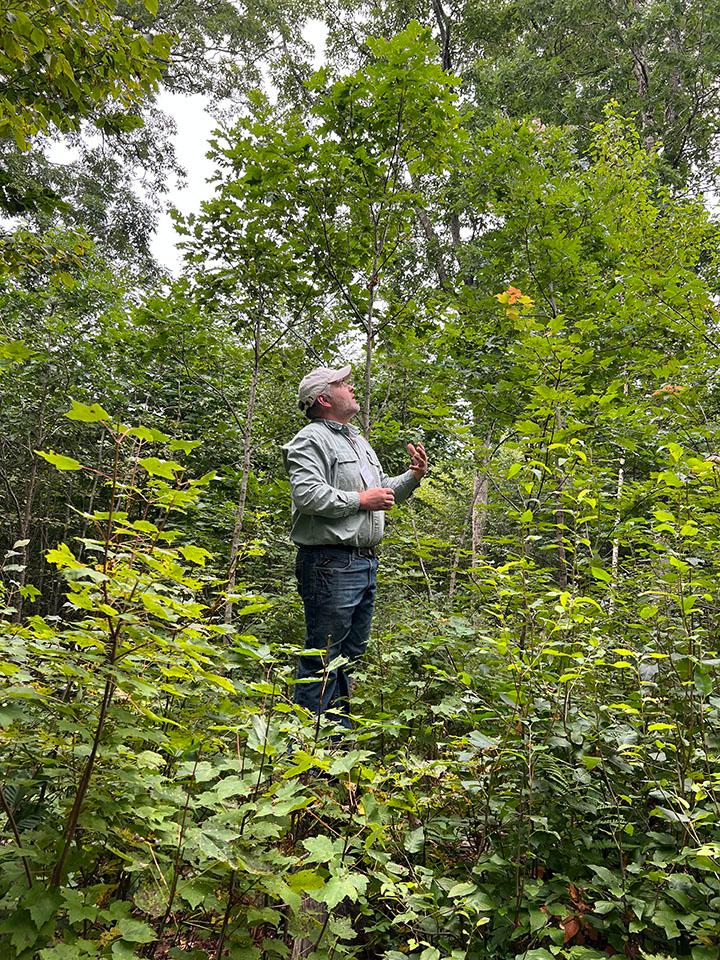
Moose are drawn to areas of GMF where tree harvesting has been done, and younger trees have grown. Moose prefer trees in their pole stage, roughly four to eight inches in diameter. This size trunk allows the moose to walk over the young tree, bending the trunk beneath it.
It feeds on the now horizontal treetop as it keeps walking, enabling it to feed with its heavy head at shoulder height. After its meal, it walks forward and releases the tree, sending the trunk vertically snapping, minus the foliage that once adorned its crown.
Tall Browsing
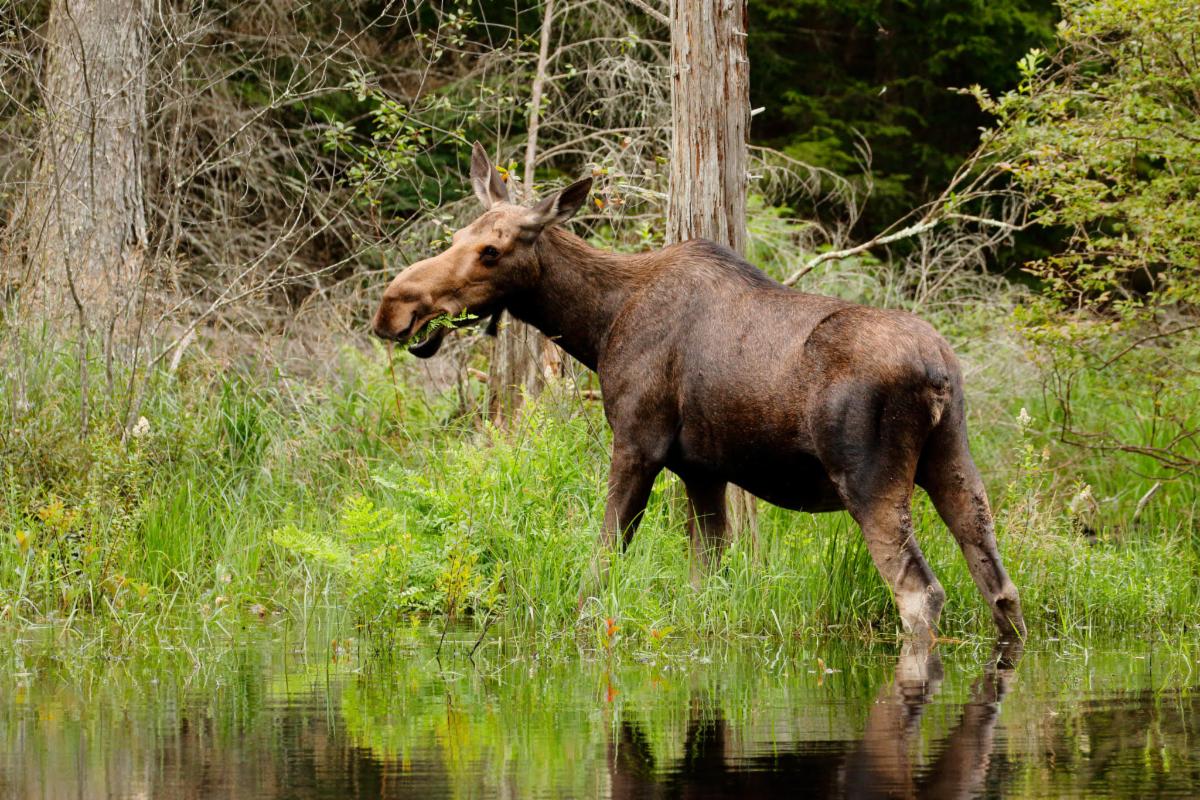
Moose browse for food at head height to avoid lowering their heavy heads to the forest floor. They can consume 40 to 60 pounds of food a day. A deer eats about 12 pounds of food in the same period.
In the winter, moose rely on stripping the bark off trees that use their bark for photosynthesis, such as striped and red maple. They perform this task with their eight lower incisors. Moose do not have upper front teeth; they have a stiff dental pad to protect that area.
In summer, moose stay cool in GMF's deep ravines and hemlock stands. They wade into ponds, feed on aquatic plant life, and avoid biting insects.
Antlers Away
Moose are considered "charismatic megafauna," a larger-than-human animal with broad popular appeal. That's certainly the case at GMF. Forest visitors love to spot moose, and while male bull moose seem alike, their antlers help distinguish them. When breeding is over, these antlers are shed each season around March, when testosterone levels drop.
The antlers don't both fall off at once. One side of the antler rack falls off first, leaving the bull moose with an awkward situation–-a lopsided head. A moose does what it can to shed the remaining antler, such as banging its head on tree trunks.
In early summer, the moose antlers grow back at an alarming pace–-up to a pound a day in weight and an inch a day in length. Antlers are bones, and the velvety coating on them is also an organ. It possesses blood vessels, capillaries, and nerve endings that, along with daylight, promote antler growth.
In a Rut
This antler growth culminates in the rutting season in the fall. During this time, moose are mating and can get testy. This is the time to give moose A LOT of space, stay on GMF's marked trails, and keep your dog on a lead. To a moose, a dog equals a wolf, putting a moose on offense.
See the end of the newsletter for tips on safe enjoyment of the Forest during rutting season.
|