Request to Deb Haaland: Use the Built Environment for Renewable Energy, Not Public Lands

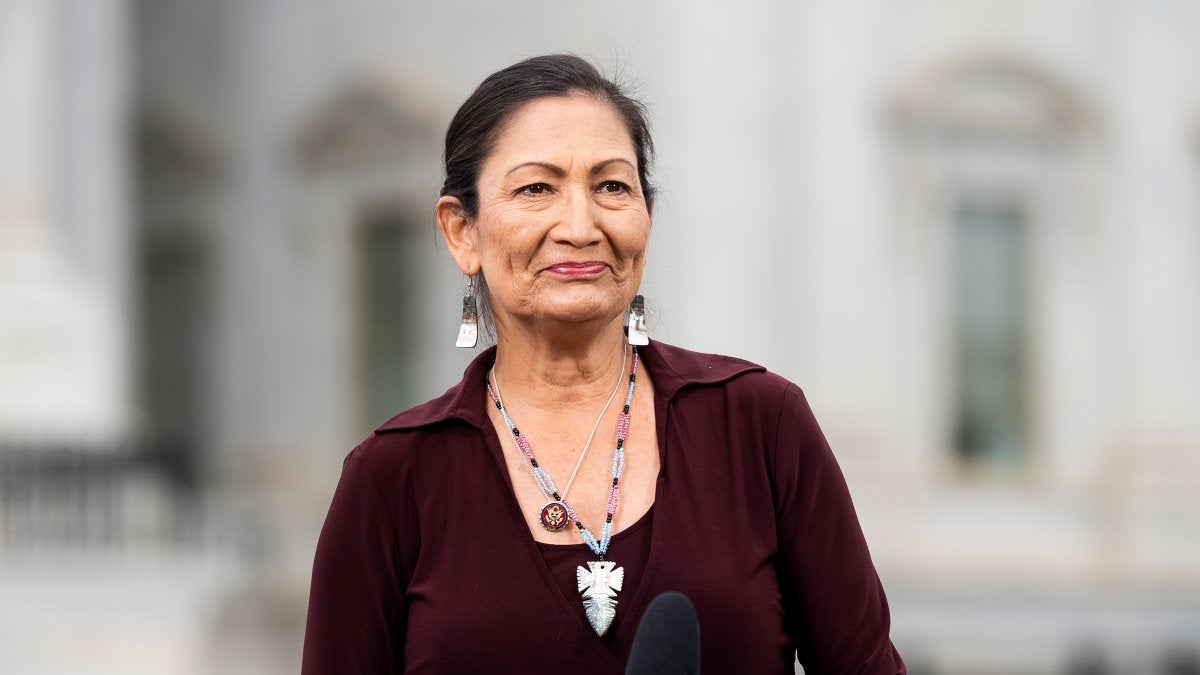
We are happy to report that Deb Haaland, who is a member of New Mexico's Laguna Pueblo, has been appointed as the first Native American Interior Secretary in U.S. history.

Deb Haaland is committed to stopping climate change and has supported some very encouraging conservation proposals.

As a Congresswoman, she introduced a goal of protecting 30 percent of the land and oceans of the US by 2030. She also introduced the updated ANTIQUITIES Act, a bill that would greatly expand National Monuments of great ecological and cultural value. 

While we are pleased, we encourage her and the Biden Administration to move away from their agenda to use public lands for energy production.

In her confirmation hearing, Haaland said that "The department has a role in harnessing the clean energy potential of our public lands to create jobs and new economic opportunities. The president's agenda demonstrates that America's public lands can and should be engines for clean energy production." Yet we believe that protecting our most valued public lands must be given priority over the construction of large-scale, remote energy projects. Distributed energy is the better avenue for addressing climate change.”

In the past 11 years, we have seen major, unresolved environmental impacts from the utility-scale renewable energy projects that were streamlined for approval on public lands under the Obama and Trump Administrations. These impacts are well documented on our website but can be summarized here:

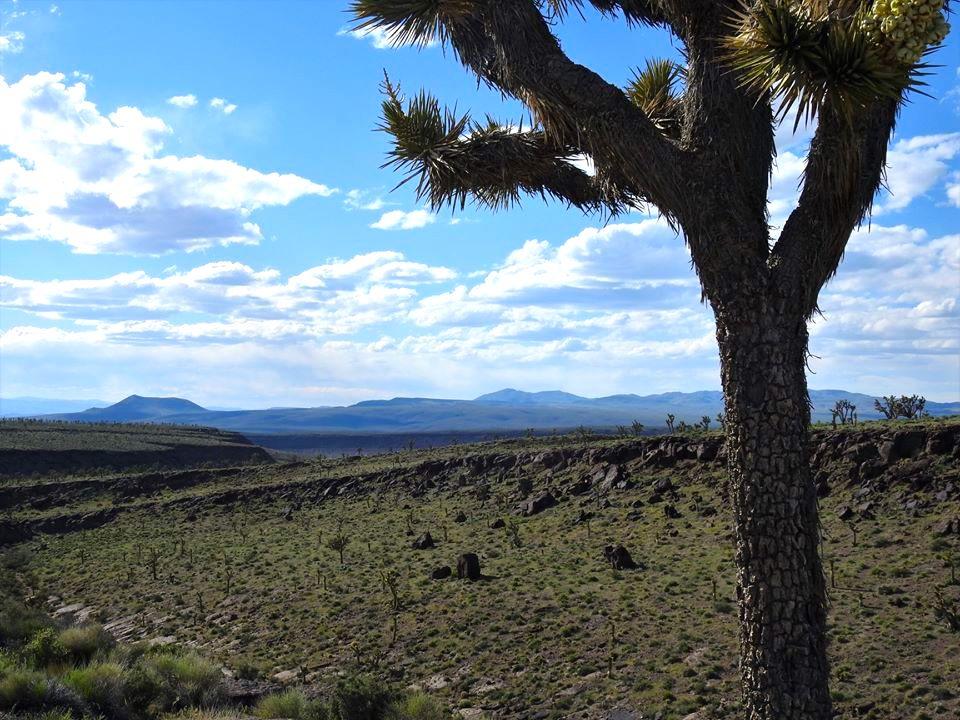
Utility-scale solar and wind projects require thousands of acres to be productive and have cut off major access to public lands.

Utility-scale solar projects have eliminated habitat for diverse species of plants and animals – many of which are rare and endangered. These projects have impacted close to 70,000 acres of habitat for the Threatened desert tortoise. An entire population of rare plants can be impacted by just one 5,000-acre utility-scale solar project.

Both large-scale wind and solar projects have caused great avian mortality. Birds collide with fast moving wind turbine blades, and solar projects mimic large bodies of water causing collision with panels. Thermal solar power tower facilities incinerate birds in flight.

Large utility-scale projects have destroyed Native American cultural sites and landscapes near Blythe, California. The Genesis Solar Project destroyed an entire archeological village and burial sites.

Many of these projects have been built next to important and valued National Parks. The projects are so large that the view is often degraded from the conservation areas. This can have negative impacts on the tourism economy in smaller communities by the parks.

Energy is more equitable when it is locally owned and locally generated. Using the energy on a smaller distributed scale reduces the need to bulldoze remote wildlands. Distributed energy also lessens the need for the build-out of high-voltage transmission infrastructure. Many of the tragic California mega-fires that have claimed hundreds of lives were started by failing transmission lines. Rooftops of both private homes and business provide great potential to utilize solar energy. The energy can go directly to the user while excess peak generation can be stored in batteries to be sold back to local microgrids with improved net-metering programs. A study by the National Renewable Energy Laboratory has determined that California alone could generate 74 percent of its energy from rooftop solar. In 2020, the country of Vietnam installed 9 gigawatts of solar on rooftops. 

Below is a letter we urge you to send to Secretary Haaland. The official email address of the office of the Interior Secretary is: scheduling_sio@ios.doi.gov Printed letters can be sent to: Secretary Deb Haaland, U.S. Department of the Interior, 1849 C Street NW, Washington, DC 20240

Dear Secretary Haaland,

A big congratulations on your recent appointment as Interior Secretary! Thank you for your efforts to combat climate change and to protect 30 percent of U.S. land and oceans by 2030.

In your confirmation hearing, you said that America’s public lands should be used for clean energy production. Please consider the huge impacts that large-scale renewable energy has had on public lands. Just one solar project can require the use of up to 10,000 acres of land. Imperiled species like the desert tortoise are losing thousands of acres of habitat to large-scale solar energy. Entire populations of rare plants are threatened by these projects. Both solar and wind projects have caused great mortality impacts for avian fauna. Many large-scale renewable projects have impacted archeology sites, burial sites and cultural landscapes and have been greatly opposed by Native American tribes along the Colorado River. Many of these projects are built directly adjacent to cherished National Parks and have had negative visual impacts on these areas. People have lost their access to public lands, small communities have lost tourist revenue and property values have been minimized due to being so close to these projects.

We need to take advantage of the vast opportunities to utilize the built environment as well as brownfields for renewable energy. The Environmental Protection Agency has identified 150,000 acres of previously disturbed brownfields that would be suitable for renewable energy. A study by the National Renewable Energy Laboratory has determined that California alone could generate 74 percent of its energy from rooftop solar. In 2020, the country of Vietnam installed 9 gigawatts of solar on rooftops.

Public lands should be viewed as lands with great conservation and recreational opportunities, not as engines for green industry. Public lands should remain in public hands for multiple generations.


Thank you

(Your name and contact info here)
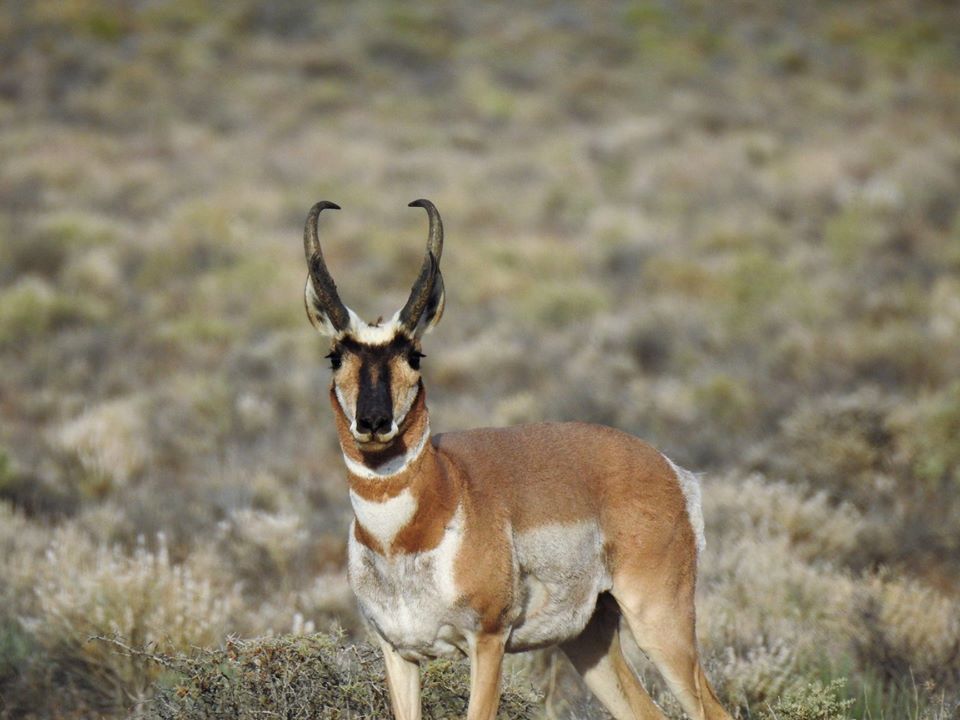
^Pronghorn on Sacrobatus Flat, Nevada - proposed location for the Green Link West transmission project for large-scale green energy.