EMBARK: THE HANDLER'S HERALD | | |
As summer settles in and the days grow longer, we hope you and your guide dog are making the most of the season and finding time for the routines, outings, and everyday moments that make these months special. Whether you're taking early morning walks before the heat arrives, exploring familiar routes, traveling out of town, or spending quiet time at home, this season often brings new experiences for working teams.
Warmer weather can bring opportunities to get out and about, but it can also come with a few extra considerations. Rising temperatures, summer storms, and changes to daily routines can affect both you and your guide dog. We encourage everyone to take a little extra care during the warmer months, paying attention to weather conditions and making adjustments as needed to stay safe and comfortable.
In this issue, you'll find information on our Harness Up virtual meeting series, helpful insights about guide dogs and thunder phobia, weight management resources, veterinary updates, and a few opportunities to connect with fellow graduates and the broader blindness community through upcoming conventions. We're also excited to introduce members of our training staff and share a few class favorite recipes from Chef Rob that are perfect for seasonal gatherings.
One of the things we value at Guiding Eyes is maintaining contact with our graduates long after class ends. Whether your partnership is brand new or your guide has been by your side for many years, you remain an important part of the Guiding Eyes community. We always enjoy hearing the stories, milestones, and everyday moments in the life of a guide dog team.
As always, thank you for allowing us to be part of your journey. We hope this newsletter offers useful information, a few new ideas, and a reminder that there are people who understand and share many of the same experiences.
We hope you and your guide dog have a wonderful summer, and we look forward to keeping in touch in the months ahead.
Meka White and the Embark Team
| | |
Pat W. Browne, Jr. Memorial Blind Golf Tournament & Golf Class Fundraiser
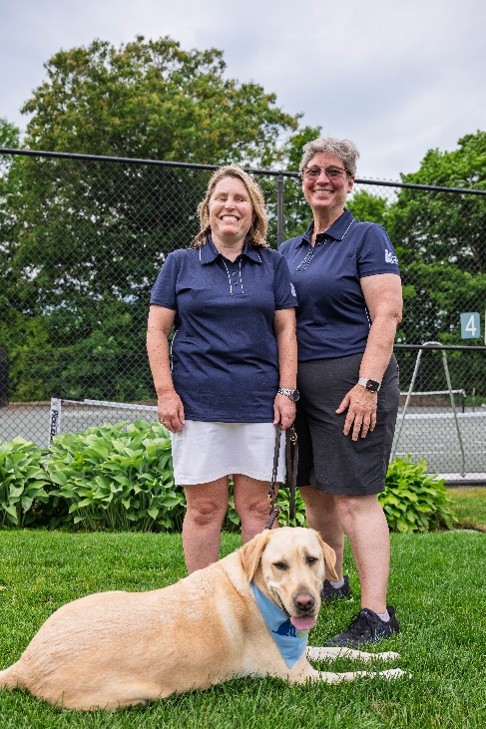
Graduate Megan Dean participated in the Pat W. Browne, Jr. Memorial Blind Golf Tournament on Sunday, June 14th (pictured here with guide dog Woodstock) and her golf coach, Ann McDermott, who is also Woodstock’s puppy raiser!
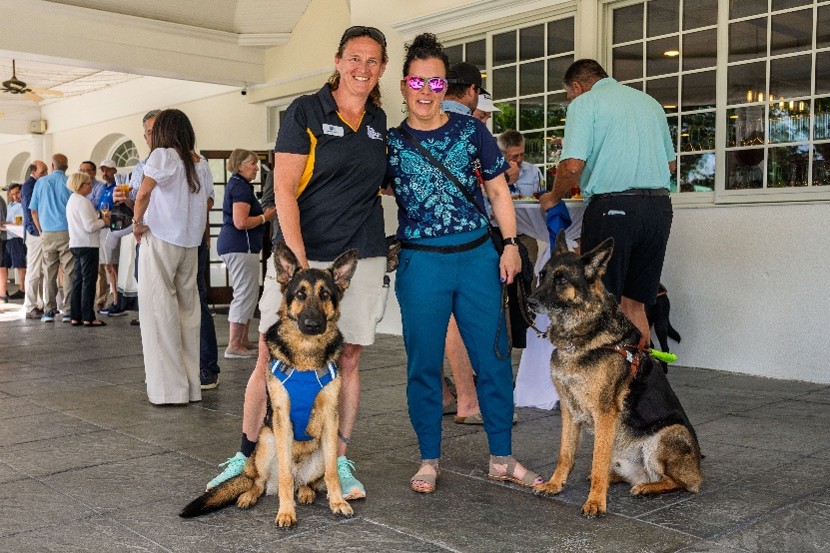
Our annual Golf Classic Fundraiser was then held the next day on Monday, June 15th. Graduate Shawn Cheshire was the featured graduate speaker, with her guide dog Nick. Please enjoy this video of her speech. https://youtu.be/po62eddmbZs?si=WPw8dU6grVe5WBZF
These events were made possible with the help of our generous donors, staff, graduates and volunteers!
| | |
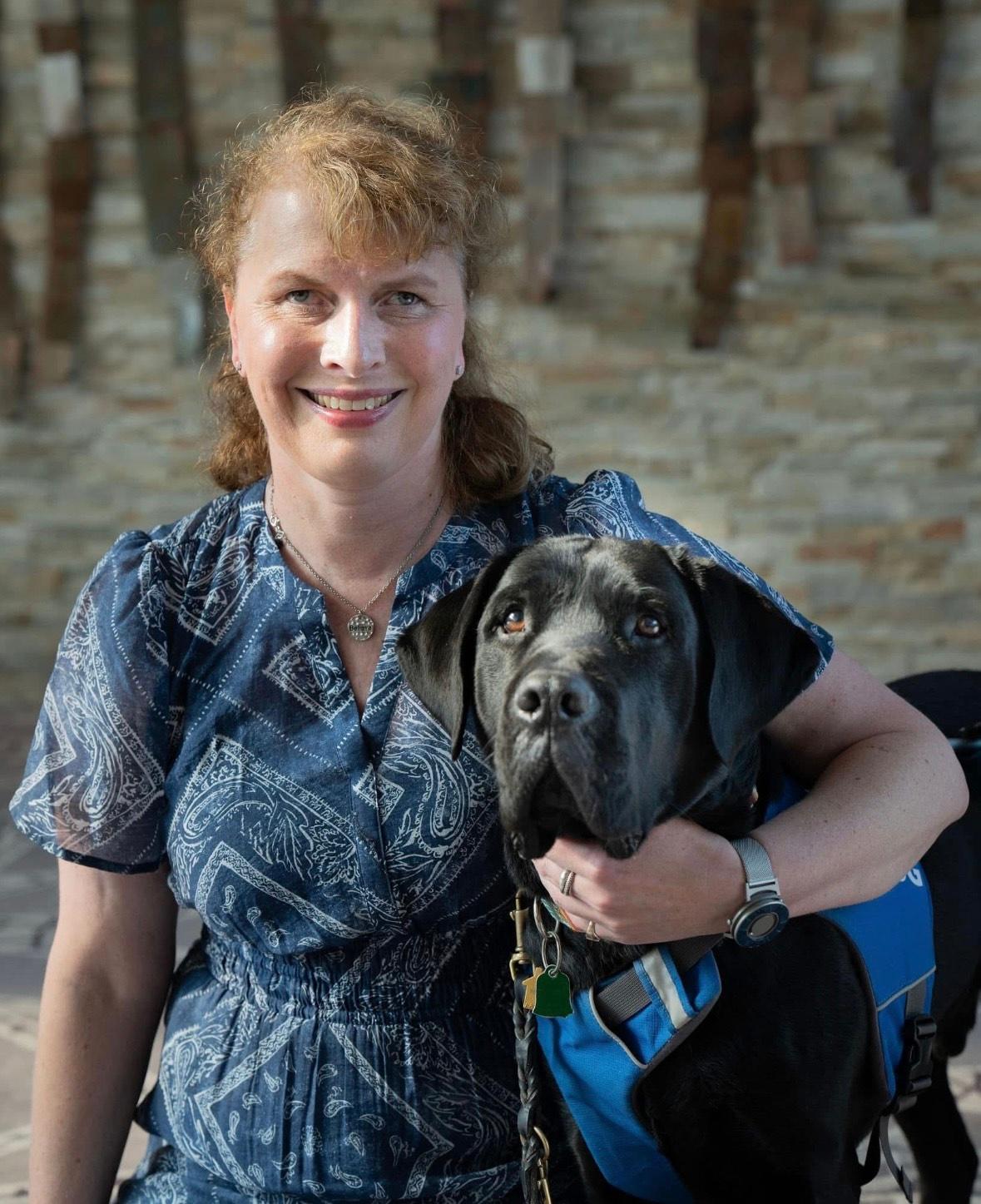
Graduate Deni Elliott is an accomplished author and scholar who has written more than 200 articles and book chapters for academic, professional, and general audiences, along with publishing 11 books throughout her career.
In her latest book, Catching Sight: How a Guide Dog Helped Me See Myself, Deni shares a personal and inspiring account of her journey with vision loss and the life-changing partnership she developed with her guide dog. Through heartfelt stories and reflections, she explores how that bond helped shape her confidence, independence, and sense of self.
Her book can be purchased here: Catching Sight: How a Guide Dog Helped me See Myself
| | |
Congratulations to Guiding Eyes graduate Kathy Nimmer, the 2026 Helen Keller Achievement Award recipient from the American Foundation for the Blind.
Since 1994, the Helen Keller Achievement Award has honored thought leaders, change‑makers, and artists who are shaping a more inclusive world for people with disabilities. Kathy embodies that legacy in every way!
A motivational speaker, writer, teacher, and mentor, Kathy spent 29 years teaching English at Harrison High School in West Lafayette, Indiana. She was named Indiana’s 2015 Teacher of the Year, founded SEEDS, a mentoring program for new educators, and earned the state’s Excellence in Leading & Learning Award in 2024.
We’re so incredibly proud to celebrate Kathy and her impact on education, mentorship, and inclusion.
| | |
Call for Video Submissions for “GuideDance” Film
“As I See It” is an independent film series providing a unique and creative perspective on vision loss. “GuideDance” is the latest edition to a series and, fellow graduate Hillary Honig Ensminger is inviting submissions of performance art or choreography by anyone who self describes as having a visual impairment and works with a guide dog. Selected footage will be edited into the final film. The call is open. The creative boundaries limitless. Have fun. Be wild. Tell your story. Application Deadline: August 31, 2026.
To apply, go to: https://tinyurl.com/guidedance
Please reach out with any questions to Hillary Honig Ensminger, hbeans@frontier.com.
| | |
The Client Experience Team has been hard at work adding comprehensive information to our resource guide library to assist all guide dog handlers with common challenges. Please check out our Graduate Center's Resource Guide Library, where you will find new resources on accessing follow up services, service animal education for businesses, and guide dog weight management support. As always, if you have any ideas for potential resource guides that benefit our community, please email mcarney@guidingeyes.org.
https://www.guidingeyes.org/resource-guide-library/
| | Harness Up - Virtual Meeting Series | | |
In case you missed it, we are excited to announce the launch of a new virtual meeting series designed specifically for Guiding Eyes graduates. The purpose of these meetings is to provide ongoing education around training, advocacy, and safety throughout your guide dog journey. We strive to continually enhance the resources and support available to our community and look forward to engaging with everyone in a new way.
Our first meeting was held in May, where we discussed strategies to prepare for and respond to a variety of distractions as guide dog handlers. To view the recording, please visit this link.
We look forward to sharing more informational topics with you soon!
| | By: Melissa Carney, Community Outreach and Graduate Support Manager | | |
Summer is officially upon us, along with two of the most widely attended conferences of the year for individuals who are blind or visually impaired. Guiding Eyes for the Blind representatives will be traveling to both the National Federation of the Blind and American Council of the Blind conventions. Melissa Carney, Mike Goehring, Miranda Beckmann, Lexi Neckritz, and Kerry Lemerise will be in Austin at NFB, and Nikki Wentz and Meka White will be in St. Louis at ACB.
We plan to hold a graduate meet up in both cities with light refreshments provided. If you are interested in participating, stopping by our booth in the exhibit hall, or just giving us a heads and paws up that you’ll be there to say hello, please email Melissa Carney at mcarney@guidingeyes.org. Keep an eye out in your inbox for further details. We look forward to seeing many of you in July and getting to know more of our graduate community!
For tips on how to have a safe and enjoyable convention as a guide dog team, please check out our conference resource guide.
For a refresher on how to fill out and submit your Department of Transportation (DOT) Form with the airline of your choosing, please check out our guide to airline travel.
Happy travels!
| | Guide Dogs and Thunder Phobia | | By: Jim Gardner, Regional Guide Dog Mobility Instructor | | |
Thunder Phobia is not uncommon in dogs. When it does occur, it often manifests around 2-3 years of age. The exact cause is unknown, but one theory is underexposure to thunderstorms during their early development. Some dogs also may be more predisposed to becoming thunder phobic. It is a complex issue having physical and psychological aspects.
Basically, it is a conditioned response to a fear-inducing event, like dogs that have made a negative association to vet visits and shake and tremble during an exam. This conditioned response is involuntary, and once the brain has made a negative association to the event, the dog has no control over its response (in the dog's mind) to the same or, a similar event.
This response can be thought of as an automatic protection mechanism; the brain's way of saying “this event is potentially dangerous or life threatening.” The dog’s response can vary from very mild clinginess to its owner during a storm to more extreme behaviors such as heavy panting, restlessness, drooling, trembling; they may also seek out tight, confined spaces to hide in (often in basements and closets) to get away from the sound or even exhibit destructive behavior such as attempting to dig into a wall or corner in an attempt to get away from the fear producing sound.
All dogs are different with respect to their tolerance for noise. Some dogs are extremely tolerant of thunder and other sudden, loud sounds; others may make the above-described negative association after only one noise event.
Unfortunately, in many cases, thunder phobia does not get better and may get worse as the dog ages. Some dogs may also begin to connect this fear response to thunder to other sudden loud environmental sounds such as loud trucks, motorcycles, fireworks, etc. For the guide dog user, it is important to keep in mind that dogs are not bullet proof. Yes, some dogs are unfazed by loud noises, but dogs can be very stoic, and we don’t know how they feel internally; guide dog users must give thought to the environment they may put themselves and their guide dog in with respect to potential loud noise. Though we can’t control everything that occurs around us, some common sense guidelines can help reduce the possibility of creating noise sensitivity in our dogs.
-
Avoid attending 4th of July firework displays with your guide dog. Besides the sudden noise of the fireworks, it’s not uncommon to also encounter people tossing firecrackers around.
-
Pay attention to events in your neighborhood in the days leading up to the 4th of July as it is common for some neighbors to shoot off fireworks and firecrackers. Early activity usually becomes more likely after sunset.
- New Year's Eve is also a time to expect fireworks in your neighborhood as midnight approaches.
- Movie theatres can be very loud and explosions and gunfire on-screen can be much louder than actual thunder a dog might experience when in the home.
- Try to avoid working your dog near very loud construction areas.
What can we do to help our dogs during thunderstorms, 4th of July celebrations, or New Year’s Eve events? Start by reducing noise indoors: close windows and doors, and use a TV, music, or other background sound to help mask loud noises. You can also engage your dog with a favorite toy, a game of fetch, or simple obedience exercises with generous food rewards. These activities may distract the dog and help create a more positive association with the noise event.
Dogs are indeed sensitive to changes in atmospheric pressure which may bring on the conditioned fear response long before a storm arrives. They may also be able to hear distant thunder long before we can. Some dogs may even exhibit fear response to thunder or fireworks heard on TV.
Although it is natural to comfort a dog that seems fearful, it is important for handlers to remain calm and avoid reacting in a way that may increase the dog's anxiety. Dogs are often sensitive to their handler's emotional state and may take cues from our behavior. In more severe cases, veterinary intervention may be needed to help highly anxious dogs cope with thunderstorms or other loud noise events. If your dog experiences significant anxiety during storms, fireworks, or other noise-related events, consult your veterinarian to discuss management strategies and treatment options that may be appropriate for your dog. If medication is prescribed, allow your dog adequate time to recover from its effects before attempting to work him or her.
There are a variety of over-the-counter supplements, pheromone products, and other calming aids that may be helpful for some dogs. In addition, snug-fitting anxiety wraps, such as ThunderShirt, may provide comfort for certain dogs. These options may be worth trying as part of a broader approach to helping dogs cope with fear and anxiety during storms. Watch for early signs of anxiety, such as clinginess, pacing, panting, drooling, or restlessness during a thunderstorm, and employ some of the strategies mentioned above in an attempt to prevent your dog's anxiety from escalating.
| | Weight Management Guidelines & Support | | |
Every Guiding Eyes dog is assigned a target weight during training, which functions as a guideline to maintain the dog’s overall health throughout their working career. Certain seasons, lower activity levels, household dynamics, or other life circumstances can pose challenges to proper weight management. Our guide dogs can easily put on a few pounds if daily exercise and work are reduced, or they receive a few too many treats. Given the importance of physical fitness in a working guide, we recommend taking a proactive approach to maintaining your guide dogs at their target weights. Here are some tips for proper weight management:
- Know your dog’s target weight! If you are unsure, review your guide dog’s Health & Rabies Certificate, or reach out to us to inquire. It is also a good idea to familiarize yourself with the Body Condition Score (BCS) rating scale. It is used to evaluate and set your guide’s target weight. When at ideal weight, their body score will be a 4 or 5.
- Only use treats for training and working purposes.
- Use a small handful of kibble from your dog’s morning meal as treats throughout the day or a lower calorie treat, like Charlee Bears.
- Avoid feeding your guide dog table scraps or anything besides their food and recommended treats.
- Consider reducing your dog’s daily feeding amount by about 20%, typically about ½ to 1 cup per day depending on current feeding amount, if you anticipate an extended reduction in their daily activity (e.g. long winter with lots of snow and ice, illness, injury, etc.).
-
Remember that calories vary if you change your guide’s diet or treats. Charlee Bears are only 3 kcals per treat, compared to the following popular pet dog treats:
- Large Milk-Bone, 125 kcals per treat
- Large Greenies Dental Treat, 147 kcals per treat
- Pup-Peroni, 29 kcals per treat
- Old Mother Hubbard Minis, average 12 kcals per treat
- Here are some other lower calorie treat and dental chew suggestions as well:
- Cloud Star Tricky Trainers, 3 kcal
- Zuke’s Mini Training Treats, 2 kcal
- Freeze Dried Salmon, 1 kcal
- Healthy Bud, 1 kcal
- C.E.T. Enzymatic Dental Chews, 110 kcal
- Whimzees Dental Chews, 70 kcal
We recommend monitoring your guide dog’s weight by weighing them monthly, if possible. If you do not have easy access to a pet scale, here are some suggestions to monitor weight:
- By touch: Ideally, you should be able to feel your dog’s ribs and waist. These areas should be apparent without being prominent. The ribs should have a thin layer of fat over them. Overweight dogs have increased amounts of fat over the ribs, along the spine, and around the tail.
- By the harness belly strap: Think of the belly strap as your dog’s belt. If you need to let it out because it is too tight, that is a very good indication that your dog has gained weight. If you need to take it in, that could indicate your dog is losing weight.
Additionally, please refer to these guidelines regarding your guide’s weight, compared to the target weight set by Guiding Eyes:
-
Within 3 lbs above or below target weight - just right! Continue with routine monitoring and refer to the guidelines below if your guide’s weight or activity level changes.
- 5 to 8 lbs above or below target weight - adjust daily feeding amount by 20% (on average ½ to 1 cup) and recheck weight in 2 to 4 weeks. If no changes are seen, daily feeding amount may need to be further adjusted, or veterinary support may be required. A higher or lower calorie diet may be recommended depending on if your dog is above or below their target weight.
- 10 to 20 lbs or more above or below target weight - seek local veterinary support and contact Guiding Eyes for additional guidance. Additional testing may be recommended to ensure there are no underlying health conditions resulting in significant weight loss or gain. If your guide is overweight, a prescription weight loss dog food will likely be recommended.
*Keep in mind that your guide dog’s daily feeding amount should not be less than 2 cups total per day, unless otherwise advised by a veterinary professional.
For more details on the importance of maintaining your guide at an appropriate weight for their overall health, you can review the Veterinary Services lecture on the Grad Center under Class Lectures. And these additional resources:
Guiding Eyes is committed to working with you to ensure that your dog is healthy and maintains an appropriate target weight, which in turn contributes to a long, successful working career. Your local veterinarian is a great resource since they are most familiar with your dog’s care at home, but do not hesitate to reach out to your Regional Guide Dog Mobility Instructor or the Client Experience Team at clientexperience@guidingeyes.org for further support and information!
| | Training Staff Highlights | | |
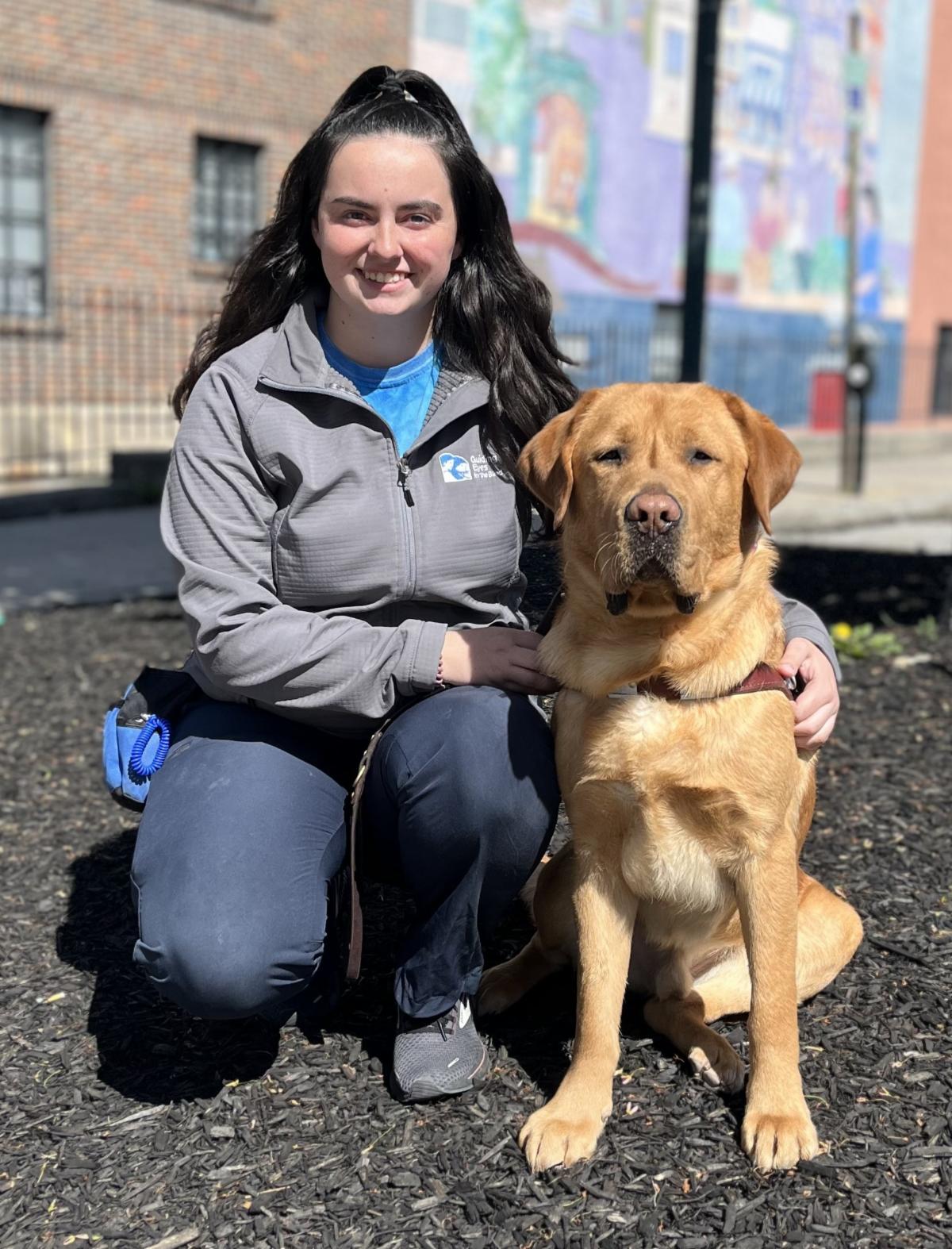
Erin Murphy, Guide Dog Trainer
Erin Murphy has worked at Guiding Eyes for the Blind for just over 3 years. She first started working as a Kennel Technician at the Training School and gained valuable experience. After her time in the kennel, she was promoted to Trainee Guide Dog Trainer in June of 2022. Prior to Guiding Eyes, Erin attended the University of New England studying Animal Behavior and minoring in Special Education. While at school, she worked as a private pet dog trainer as well as at a doggy day care facility. Growing up, Erin always knew she wanted to work with animals and especially loved training dogs. Working at Guiding Eyes has been a dream come true for her! In her free time, Erin loves to spend time with her many pets at home. She also enjoys being creative and learning new skills such as watercolor/painting, crocheting, and making dog collars and bandanas.
A note to the graduate community; getting to see the class journey with your new guides has been one of Erin's favorite parts of her job. The connection that so many share with their dogs is what keeps Erin inspired to train the best dogs she can. Erin wishes the graduates success with their guides and if she is lucky to meet you, Erin looks forward to hearing about the many journeys you've experienced with your guides!
| | |
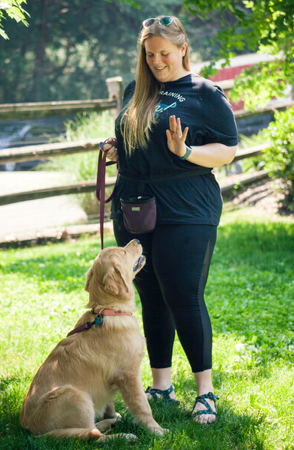
Catherine Gilmartin, Trainee Guide Dog Trainer
Catherine Gilmartin recently started as a Trainee Guide Dog Trainer in October 2024. After attending Drew University for psychology, she changed course and decided to pursue her passion and work with dogs for a living, hoping to eventually work with assistance dogs. She built up her experience by working in kennels while apprenticing with a local trainer. In 2023 she became a kennel technician at Guiding Eyes with the hope of moving into the training department, and after a year and a half she got her wish! She is so excited to learn how to train these wonderful dogs to become guides and companions for such a lovely community of graduates. In her free time, Catherine loves attending concerts and live theater, hiking, and gardening.
| | Chef's Cupboard - Chicken Quesadillas and Black Bean Dip | |
Training days on our New York campus are chock full of skills building, on-the-go training and lectures. They’re also about the moments in between. At Rosie's Café, mealtimes have become a highlight: a chance to recharge, relax with fellow classmates, and enjoy the kind of hospitality that makes the campus feel like home. Chef Rob, along with his caring team, bring warmth and flavor to every plate. And Chef Rob never misses an opportunity to pass along a culinary tip or two.
Chicken Quesadilla Recipe:
Ingredients:
Boneless, skinless chicken thighs
Shredded cheddar cheese
½ cup chicken stock
12” flour tortillas
2 avocados
2 large tomatoes (diced)
½ red onion (diced finely)
1 jalapeno diced finely, or more depending on spice preference
2-3 limes (juiced)
1 bunch fresh cilantro (chopped)
Chicken Preparation:
- Preheat oven to 425 degrees.
- Gently coat chicken thighs in extra virgin olive oil, salt, and pepper.
- Roast chicken for 15 minutes in a pan until light crust forms on chicken.
- Lower oven heat to 350 degrees.
- Transfer chicken into separate pan, draining any excess oil.
- Add chicken stock to the pan, making sure the liquid coats the bottom of the pan. You can add more stock if necessary.
- Cover pan with aluminum foil and continue to cook the chicken for 45-60 minutes (or until chicken reaches an internal temperature of 165 degrees).
- Let the chicken cool down, and with 2 forks, shred the chicken and set aside.
Quesadilla Preparation:
- Using a nonstick griddle pan, bring the stove’s temperature to medium low heat.
- Gently coat tortilla in pan spray and place on griddle.
- Place the shredded cheese and chicken generously on the tortilla. Chicken should be placed on top of the cheese on the bottom half of the tortilla.
- After cooking for 60 seconds, fold the tortilla top and gently press on the tortilla so the cheese can melt evenly.
- After approximately 60 seconds of cooking the quesadilla, if the cheese is melted, remove the quesadilla from the pan.
Guacamole/Pico De Gallo Preparation:
- Mix together tomatoes, onions, cilantro, jalapeno, onions, and lime juice.
- Add salt and pepper to taste.
- Remove the pulp from the avocados and mash in a separate bowl.
- Place half the tomato mixture into the bowl with the mashed avocados.
- The mixture with the avocado is guacamole and the mixture without is pico de gallo.
- Serve with sour cream and enjoy!
| | |
Black Bean Dip Recipe:
Ingredients:
1 small can black beans, drained
1 small can cannellini beans, drained
2 cloves fresh garlic (chopped)
2 tsp salt
1 tbsp cumin
1 tsp black pepper
1 fresh lime (juiced)
Directions:
- Sautee the chopped garlic in olive oil until slightly browned, approximately one minute, and set aside.
- In a food processor, combine all ingredients and puree until they reach a smooth consistency.
- If not smooth enough, add more lime juice.
| | Vet Corner - Graduate Veterinary Assistance Fund Reimbursement | | Just a reminder, we offer ACH (automatic clearing house) reimbursement as a new option for processing veterinary expenses. This is designed to provide a faster, more convenient, and secure method of reimbursement. By enrolling in ACH, payments/reimbursements can be deposited directly into your bank account, reducing processing times and eliminating the need to wait for a paper check. Graduates interested in participating should send an email to our Finance Team at expenses@guidingeyes.org and request an ACH Docusign. Please ensure your banking information is current and accurate. Invoices should still be emailed to vetadmin@guidingeyes.org for processing; be sure the invoices or email has your full name and address. If you have any questions, please contact us. We appreciate your partnership in helping us make reimbursement more efficient and accessible. | | American Humane Hero Dog Awards | | |
Nominations Now Open: 16th Annual American Humane Hero Dog Awards
The Hero Dog Awards is an annual, nationwide competition that recognizes heroic dogs making a lasting impact across five categories, including Service & Guide/Hearing Dogs.
Every year, dogs across the country serve, protect, heal and inspire. The Hero Dog Awards exist to make sure those stories are told and celebrated.
This year's awards will be held in Washington, D.C., coinciding with America's 250th anniversary. Last year's winner, Sgt. Bo, a therapy dog with the Metro Nashville Police Department, was announced on NBC's TODAY Show.
The nomination deadline is June 30, 2026. Submissions can be made at https://americanhumane.jotform.com/251315713586054
| | |
Happy birthday to the guide dogs that celebrated birthdays in April and May! You should have already received their Annual Health Survey request.
Happy Birthday to all June guide dogs, as well. Your surveys will arrive later this month, if you have not already received the request. Please check your email to help provide us with this very important health information.
*You will receive annual survey requests during your guide dog’s birth month! We also recently updated the survey for enhanced accessibility - please reach out if you encounter any issues!
| | If you have an idea or story to share for a future issue, we’d love to hear from you. While space is limited, we welcome submissions and may make edits as needed. Send your ideas to gradnewsletter@guidingeyes.org, and we’ll be in touch if we’re able to feature your piece. Thank you for being part of this journey. We can’t wait to share more with you in the seasons ahead! | | Life Changing Connections | | Guiding Eyes for the Blind provides guide dogs to people with vision loss. We are passionate about connecting exceptional dogs with individuals for greater independence. | | |
Headquarters and Training School, 611 Granite Springs Road,
Yorktown Heights, NY 10598
Canine Development Center, 361 Route 164,
Patterson, NY 12563
| |
| | | |