|
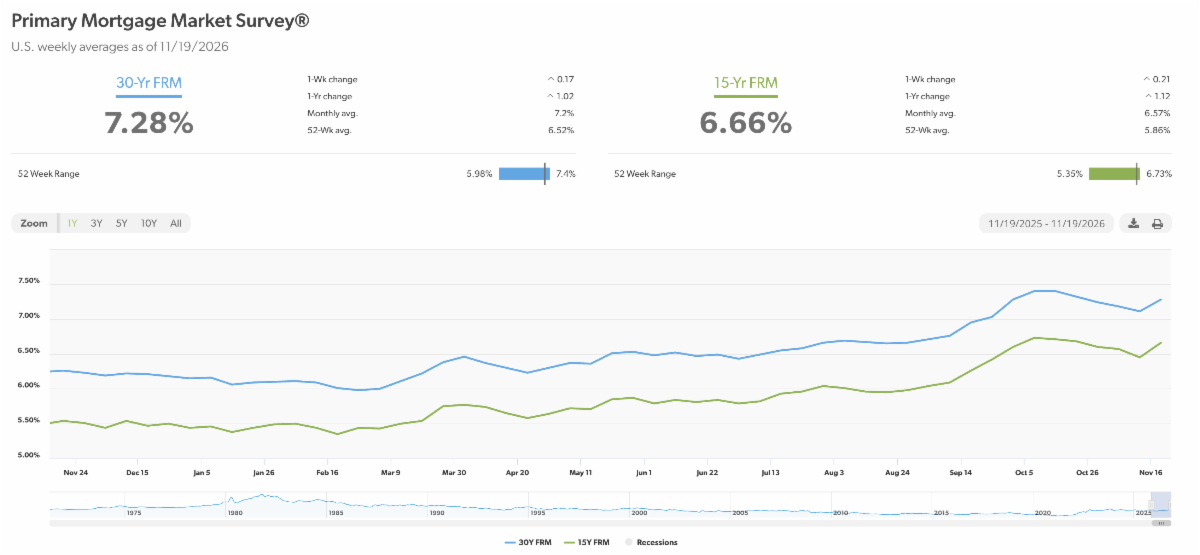
It was an absolutely devastating week on Wall Street, with the Dow Jones Industrial Average, S&P 500, and Nasdaq suffering their worst weekly declines since April 2025. The selloff was led by technology stocks, particularly companies associated with artificial intelligence, as investors grew increasingly concerned about excessive valuations and whether the hundreds of billions of dollars being invested in AI infrastructure would generate sufficient profits to justify the spending. Persistent inflation, concerns about higher interest rates, and uncertainty about the direction of the economy added to the selling pressure. The sharp decline in stocks caused investors to move money into the relative safety of US Treasury bonds, pushing bond prices higher and yields lower. The 10-year Treasury yield dropped below 5% on Friday, a welcome development for the housing market. Because mortgage rates generally follow the direction of long-term Treasury yields, this decline should put downward pressure on mortgage rates in the coming days if yields remain lower. While the stock market experienced one of its most difficult weeks in recent years, lower bond yields could provide some much-needed relief to homebuyers and help stimulate housing activity.
The Dow Jones Industrial Average closed the week at 48,147.33, down 8% from 52,347.55 last week. It is up 0.2% year-to-date from 48,063.29 on December 31, 2025.
The S&P 500 closed the week at 6,910.39, down 8.6% from 7,561.67 last week. The S&P is up 0.9% year-to-date from 6,845.50 on December 31, 2025.
The Nasdaq closed the week at 22,617.73, down 10% from 25,136.27 last week. It is down 2.7% year-to-date from 23,241.99 on December 31, 2025.
US Treasury Bonds - The 10-year treasury bond closed the week yielding 4.92%, down from 5.15% last week. The 30-year treasury bond yield ended the week at 5.3%, down from 5.47% last week. We watch bond yields because mortgage rates follow bond yields.
|