|
Compared to What? Assessing Drought in a Changing Climate
A recent NIDIS literature review identified challenges in how we identify drought by comparing dry periods to past conditions amid a changing climate.
| |
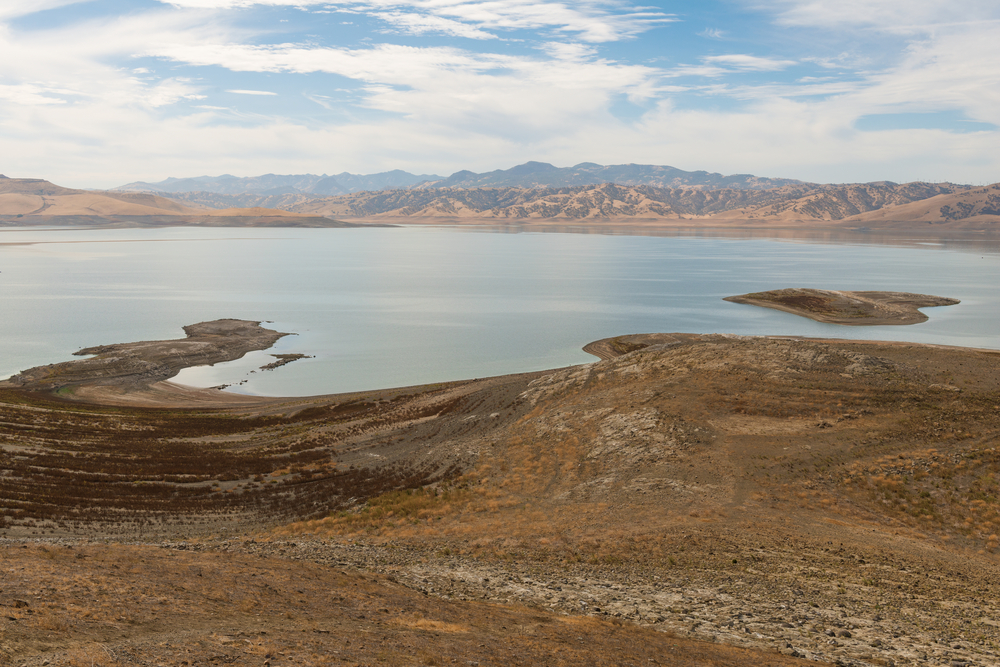 | |
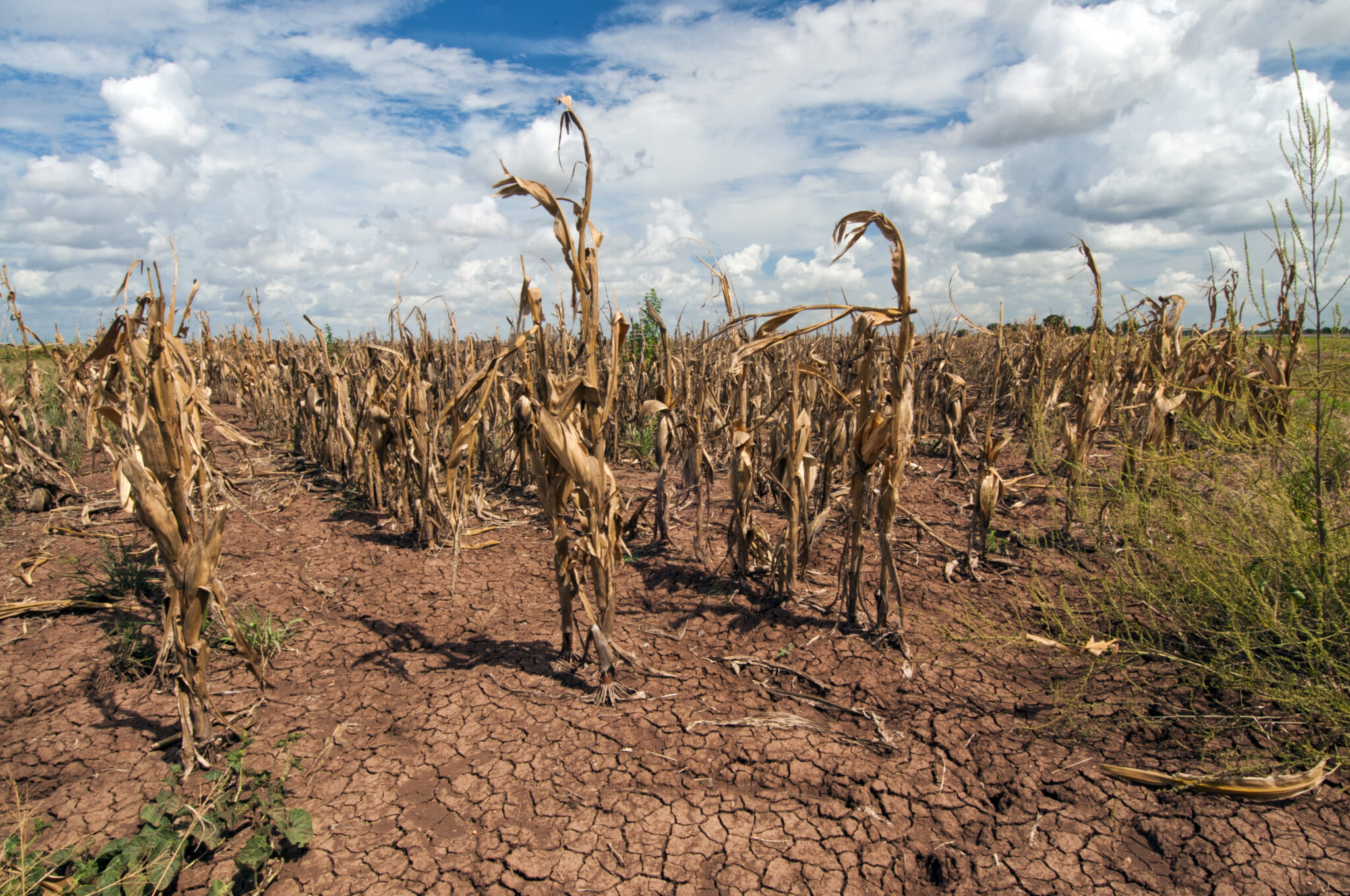
What is drought? In simplest terms, it is a period of drier than normal weather. But what is normal? When determining if a dry period is a drought, scientists typically compare that dry period to past climate, but in a climate where some locations are now hotter and drier on average than they were 100 years ago, using the entire period of record, often 100+ years, may not accurately capture drought. Often a more recent 30-year reference period is used to represent the contemporary climate.
Should drought be considered an extreme dry period based on the entire record of available data, which may not represent today’s climate, or should it be considered a dry period in the context of a present climate, which excludes extreme events in the past (like the Dust Bowl drought of the 1930s)? These are important questions for drought researchers and those working to improve drought monitoring because they can alter the very definition of drought.
A recent literature review led by NIDIS considered these questions, and found that no single answer can address all drought assessments. The “correct” period of record used to assess drought should be tailored to the reason for the drought assessment and should be clearly communicated for replicable research. A full period of record is more suitable when considering climatological extremes, while a more recent reference period is likely more helpful when considering drought in today’s climate, such as when considering drought impacts on a farm.
| |
Warming Temperatures Intensify Flash Droughts Worldwide | |
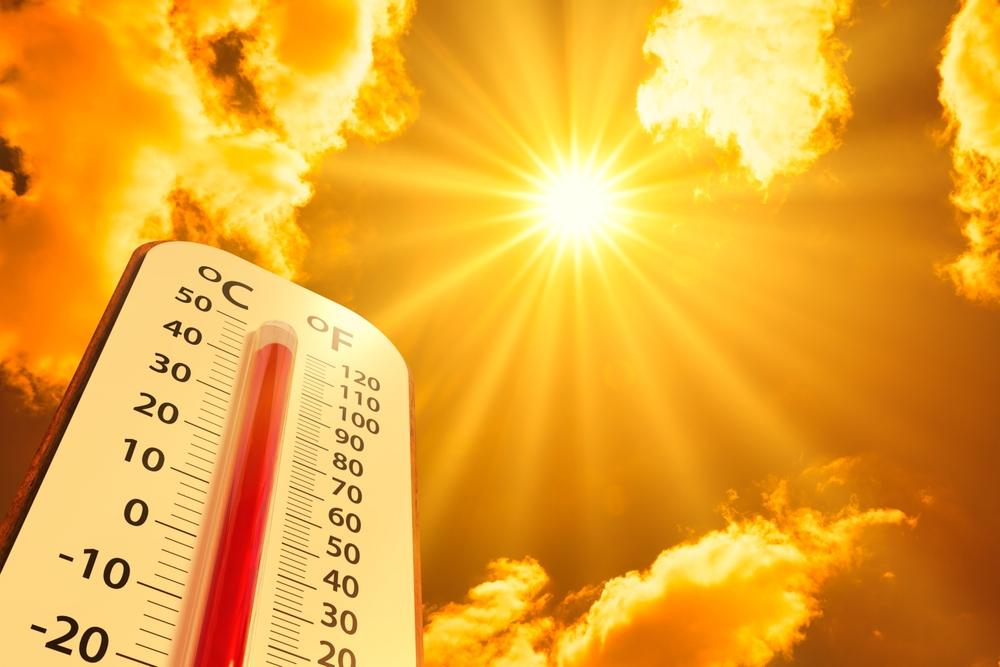
Sudden, severe dry spells known as flash droughts are rising in intensity around the world, according to new research. Heat and changes to precipitation patterns caused by a warming climate are driving these trends, the study found. Flash droughts arrive suddenly, within weeks, hitting communities that are often not prepared and causing lasting impact. They are an emerging concern for water and food security. The new study applied a systematic, quantitative approach to the global incidence of flash drought, mapping hotspots and regions of rapid increases in recent decades.
Learn more >
| |
After Snow Drought, Summer Drought to Expand, Intensify in Parts of the West | |
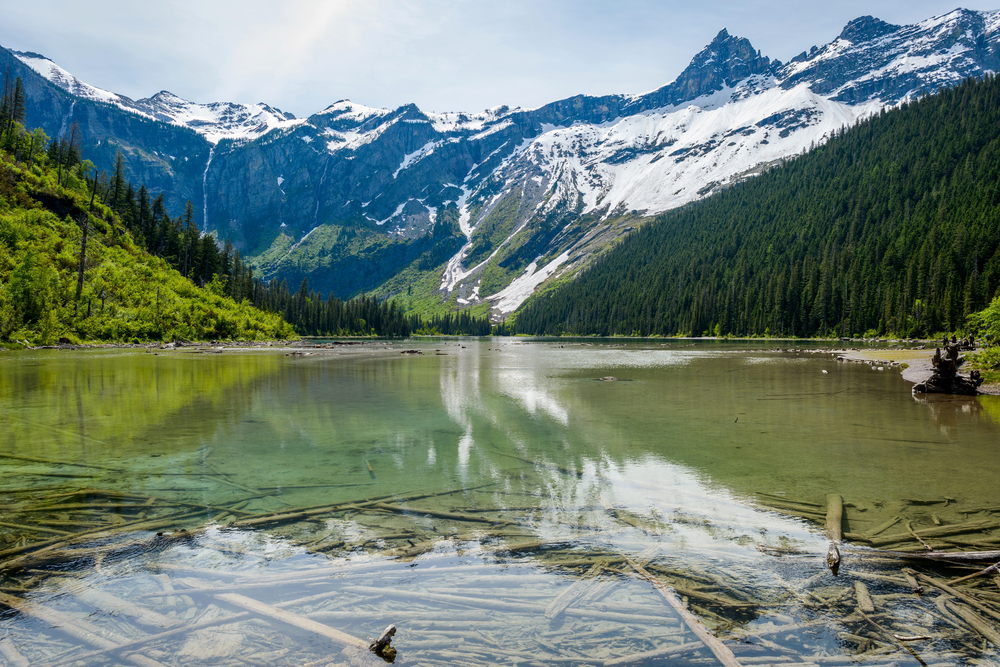
Snow drought conditions developed over much of the western U.S. in the first few months of Water Year 2024 due to above-normal temperatures and lack of precipitation. Some regions improved throughout the winter season (e.g., Sierra Nevada, Great Basin). Others (e.g., northern Rocky Mountains) saw snow drought persist, and outlooks predict further drought development or intensification this summer.
Learn more >
| |
Health Outlook Identifies Drought and Health Risk Across the U.S. | |
Several regions of the U.S. are expected to see drought, heat, and wildfire and associated health impacts this summer. The June 2024 Climate and Health Outlook explores the climate-related health hazards of extreme heat, wildfire, and drought. These monthly outlooks are produced by the Department of Health and Human Services (HHS) Office of Climate Change and Health Equity (OCCHE), with input from NIDIS and other partners.
Learn more >
| |
|
FEATURED MAPS + DATA
Summer Fire Risk: Above Normal in Parts of the West
| |
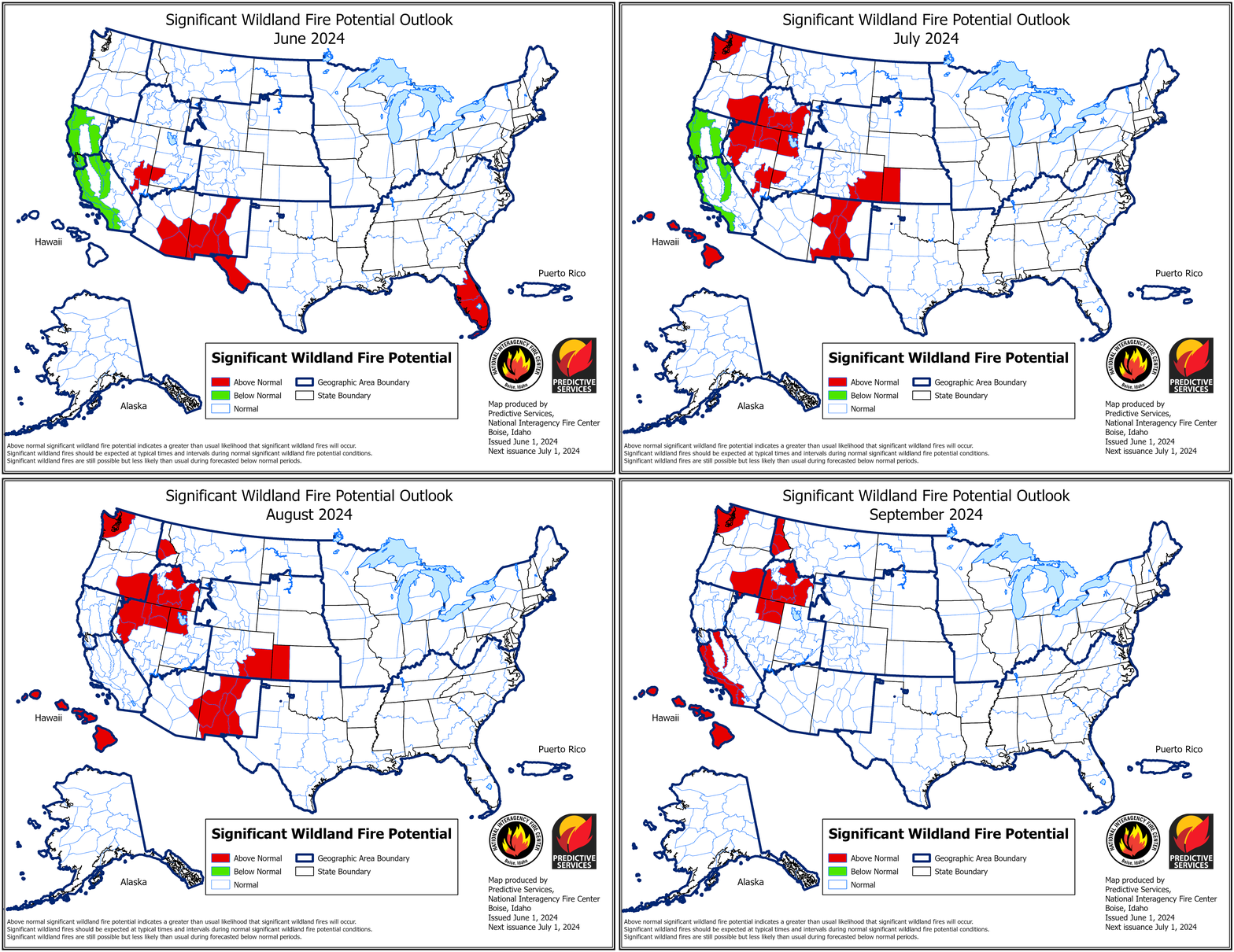
The National Significant Wildland Fire Potential Outlooks predict an above-average risk of significant wildland fire potential for parts of the Four Corners states, the Great Basin, and Hawaii in July and August. A wet winter reduced fire risk to below-normal for significant wildland fires in California in June and July. Other wildfire forecasts, including weekly and monthly forecasts, forecast narratives, and a seasonal outlook video podcast are available from the National Interagency Coordination Center. Learn more > | |
Drought Alert Emails: Local Drought Outlooks, Conditions in Your Inbox | Stay up to date on drought in your region with regional drought updates and drought alerts from NIDIS. Receive an email alert when U.S. Drought Monitor conditions change for your location, or when NOAA’s Climate Prediction Center releases a new drought outlook predicting how drought will change in your region.
Sign up > | |
Stay Ahead of the Heat: Sign Up for the NIHHIS Heat Beat Newsletter | |
The Heat Beat Newsletter, by NOAA's National Integrated Heat Health Information System (NIHHIS), provides information about extreme heat. Subscribers will get information about funding opportunities, events, jobs, and current news related to heat, as well as updates on urban heat island mapping campaigns.
Sign up >
| |
|
UPCOMING
Events & Webinars
| |
|
About NIDIS
The National Oceanic and Atmospheric Administration’s (NOAA) National Integrated Drought Information System (NIDIS) was authorized by Congress in 2006 (Public Law 109-430) with an interagency mandate to develop and provide a national drought early warning information system, by coordinating and integrating drought research, and building upon existing federal, tribal, state, and local partnerships.
| | | | |