|
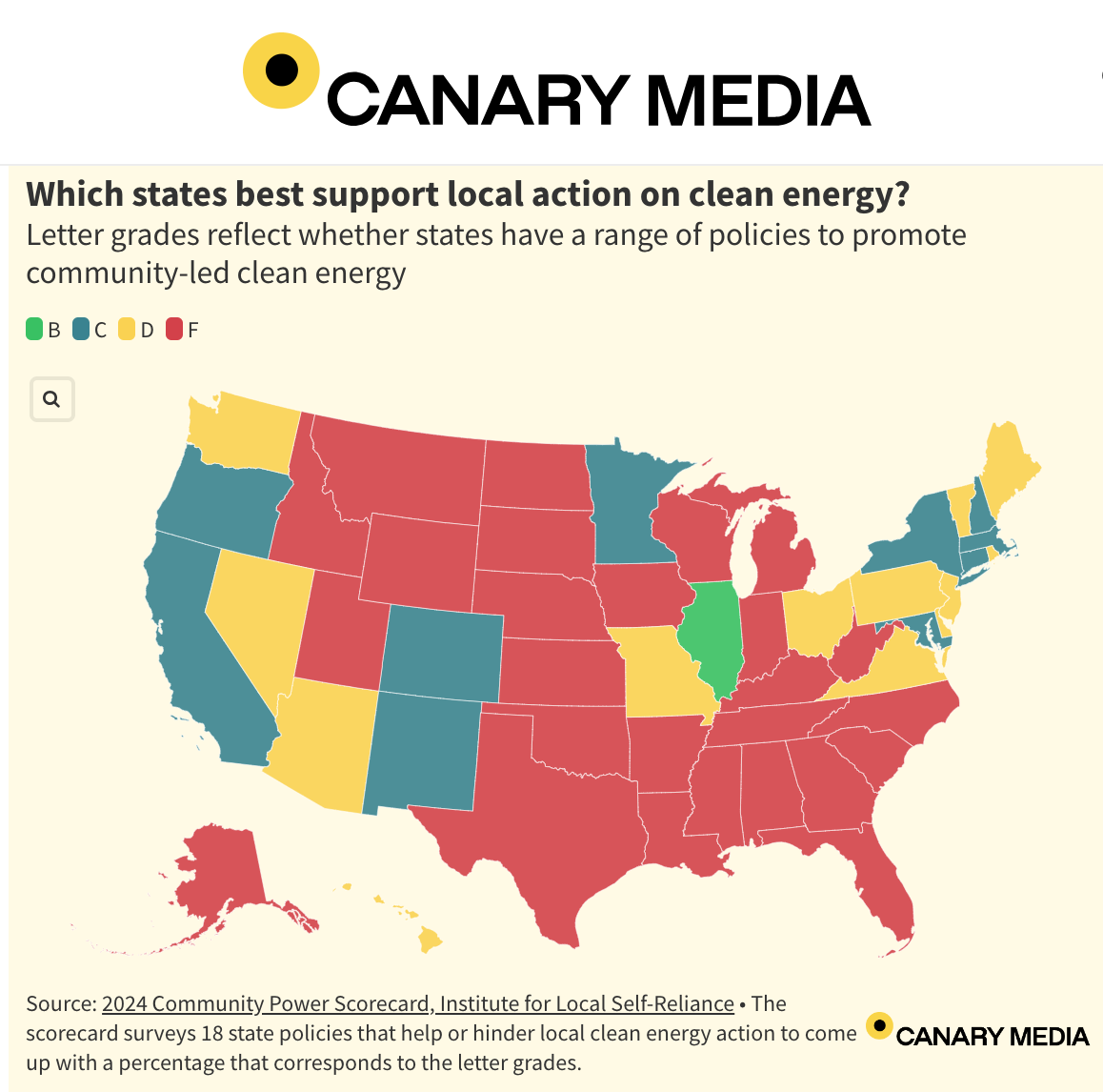
Illinois was ranked #1 among 50 states and the District of Columbia for energy democracy and utility accountability, according to the Institute for Local Self Reliance. The study scored state policies on clean energy action, holding utility companies accountable, protecting ratepayers, and other measures that support locally owned clean energy.
The study goes beyond measurements of clean energy output and deployment to examine who owns and controls clean energy production in each state. The Institute for Local Self Reliance identified Illinois’s net-metering and community solar policies as major initiatives that set the state apart.
The Climate and Equitable Jobs Act (CEJA), signed in 2021, set a December 31, 2024 cutoff for net metering customers to receive retail electricity rates and expanded systems eligible for net metering to include energy storage systems co-located with solar. CEJA also provides $180 million annually for workforce and community energy transition programming, which includes establishing 13 regional workforce hubs, providing pre-apprenticeship training and barrier reduction services to increase access, grants to communities undergoing energy transitions, programs to bolster underrepresented contractors in the clean energy industry and much more. All of CEJA’s grant programs are targeted to support historically marginalized communities and communities undergoing energy transitions.
The Climate and Equitable Jobs Act and other laws have also strengthened community power initiatives, a major factor in Illinois’ first place finish. Illinois palegislation in 2021 to eliminate red tape for businesses and homeowners looking to install solar. In 2023, Illinois legislation prohibiting counties from placing moratoriums on solar or wind development and standardizing permit review for sustainable energy projects.
|