|
MEHER SPIRITUAL CENTER
Meher Baba's Home in the West
| | |
"I want every lover of mine to repeat my name with every breath. The repetition should be continuous and such that even in sound sleep it should continue like your breathing. Then there is some possibility of experiencing a glimpse of me. Never worry about thoughts while repeating my name. Don't check them because when you repeat my name, the thoughts will not create binding for you — good or bad."
-Meher Baba
Lord Meher, Online Edition, by Bhau Kalchuri, pg. 3874
| | | |
Dear Meher Center Friends and Family,
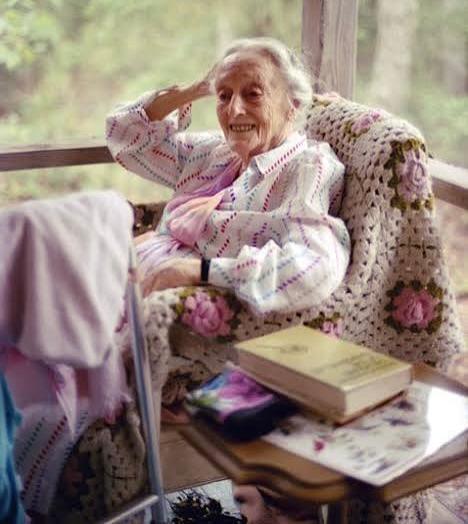
Today is Kitty Davy's birthday, which brings back beautiful memories for those who were lucky enough to celebrate with her for many years. Kitty's joyful and childlike personality brought many together on Center, especially during her birthdays.
In honor of what would be Kitty's 135th birthday, we had a special chai at the Original Kitchen with high tea-style snacks for all to enjoy. Tomorrow, Saturday, at 2pm, Buz and Wendy Connor will talk about Kitty Davy at the Dilruba Reading Room.
The vignette below demonstrates Kitty's sense of duty and love.
When she went to live in India, Baba had given Kitty duties in the kitchen. While she tried to teach Naja English, Naja was teaching her cooking. The work was difficult for Kitty, as Indian meals vary greatly from Western fare and much is involved in preparing them. Kitty had to sit for hours by the smoking kerosene stove learning to make chapattis. One day Kitty was thinking sadly: “I haven’t come to India for this! I can do such work at home. I’ve come to be with Baba, but I hardly see Him.”
Once in the evening, while conversing with the women, Baba remarked, as if for Kitty, “Whatever work I ask you to do is My work and she who does it according to My wish is performing the greatest penance! Compared to it, meditation, seclusion, fasts and austerities are nothing!”
Kitty took Baba’s words to heart and proved most useful for His work. The strenuous work she did for Him, while remaining with Him in India for years, and then at a distance in America for many years, is an example of her unflinching sense of duty and obedience.*
Happy Birthday, Kitty!
In Meher Baba’s love and service,
Buz Connor
For Meher Center board and staff
*https://trustmeher.org/meher-baba-close-disciples/women/kitty-davy
| | |
The Center's Grand Ladies
Elizabeth, Kitty & Margaret
| | |
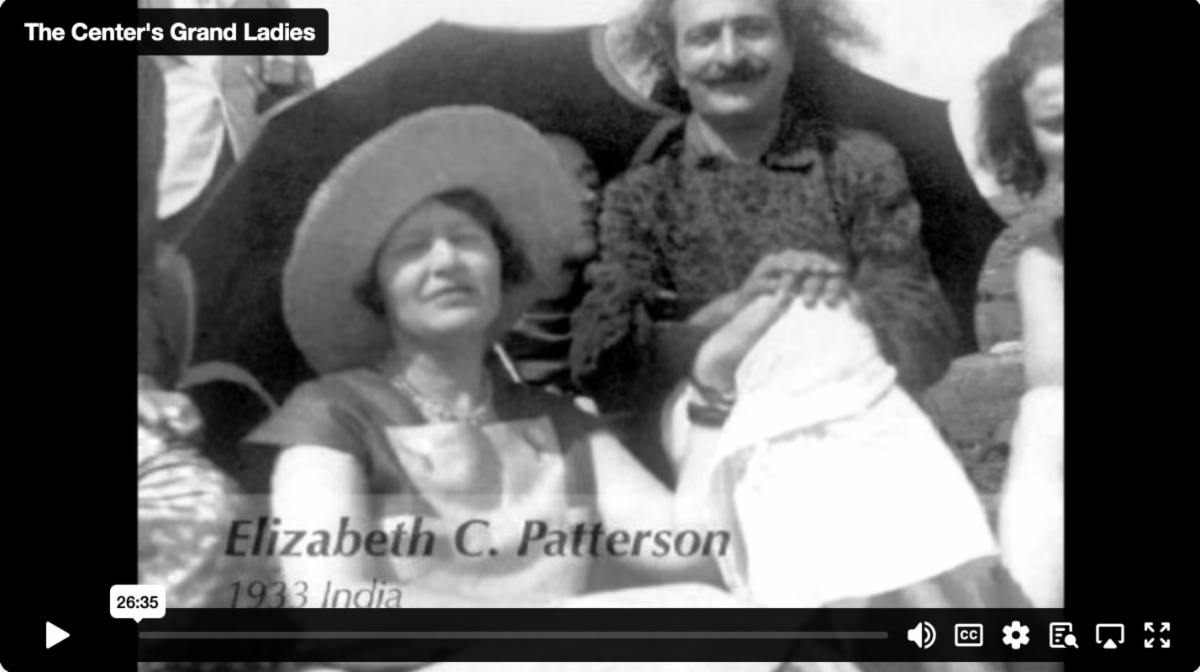
In this invaluable collection of video clips, three of the Center's original guiding lights talk about the founding of the Center as well as their lives with Meher Baba. Co-founder Elizabeth Patterson notes that "everything at the Center was given with love" and talks about its "plus quality." Kitty Davy, who lived and worked at the Center from 1952 until her death in 1991, focuses on how to serve God with selfless love and active service. And Margaret Craske, known as "Baba's Dancer," tells several delightful anecdotes about her early life with Baba. The clips were compiled by the Center's Executive Director Buz Connor for his talk to the 60th Diamond Jubilee Anniversary of the Glow International on May 31, 2026. (The talk is excerpted below.)
Video, 26:35
Meher Spiritual Center and New York City
Dates Unknown
Courtesy of Meher Baba Film Archive and Sufism Reoriented, Meher Center Archives, and Edward and Irwin Luck
| | |
Ballet (and Baba) Lessons with Miss Craske
by Melinda Buckwalter
| | Photo courtesy of Win Coates | | |
In the early 1980s after college, I moved to New York City to study ballet with Margaret Craske. Baba lovers often asked what it was like to study ballet with her, so, years later, I got the idea of offering a “Miss Craske-style” ballet class at the Northeast Gathering for Meher Baba. I sent in a proposal and received the reply, “What does a ballet class have to do with Meher Baba?” The connection seemed obvious to those of us who were Baba Lovers and studied with her, but it was also true that Miss Craske never spoke about Baba in dance class. I saw an opportunity to fashion a dance class that offered a taste of how Miss Craske transmitted, through her daily ballet classes, certain lessons pertinent to her experience of living with Baba as an early Western disciple. I got the go ahead for the class and came up with three themes: ego bruising, obedience, and presence. With Edward Henkel, a former Craske student playing the Perfect Boy and ballet demonstrator, the class was a hit. Here, I offer my reflections on the three themes.
Baba’s methods for grinding down the ego are legendary. My favorite story of Miss Craske’s on this topic happened in Devon on Baba’s first trip to England in 1931. The group was seated on a steep, rocky hillside, and Baba asked Margaret to dance. Her pride had “its first battering from Baba.” She describes the dance as “rather like being a goat” with “a few flappy arm movements.” 1
The process of learning to dance—coordinating the body in complex movement patterns, making them flow, and bringing them to life—is an ego bruising process in and of itself. A dancer has to be willing to look awkward before learning the grace and flow of the dance. During class, dancers are asked to change how they do a movement, which means risking looking like a duck out of water in front of everyone. Miss Craske was a master of ego bruising. From her director’s chair at the front of the room, she could zing you with a word or a look. One of my most memorable zings came after I had been promoted to stand in the second line of her advanced ballet class (the first line was for professional dancers). She said archly, “In your next life, dear, start dancing at eleven.” I was elated (my ability was recognized!) and crushed (I started too late!) at the same time, but knew, somehow, that I was on the right path.
Regarding obedience, the discipline of ballet training precedes itself. Dancers train to have split-second control over their bodily movements, making a fairly obvious, if physical, connection to Baba’s requirement for implicit obedience. Margaret Craske was able to put her dance training to good use when she received her first order from Meher Baba via telephone through Herbert Davy, Kitty’s brother. She was to close every door in the Davy house where she awaited Baba’s arrival, then answer the front door herself. Easy enough, except that the Davys were home—it made it quite awkward to shut them into their own rooms! Still, she succeeded in her task and answered the door where she had her first glimpse of Meher Baba.
In ballet class, the teacher gave the steps and corrected their execution. Miss Craske's high expectations around obedience to instructions came as a shock to students whose habit was to study around town, going from teacher to teacher, following various ballet trends. Miss Craske’s expectations were at a level of precision that required a commitment to more than occasional study with her. Ballet students would be dancing full throttle, piano music soaring, and suddenly, The Clap. Everyone and the pianist would stop dead in their tracks, wondering who would be the “lucky” object of Craske’s forensic ballet analysis. Many years later, I realized that Miss Craske’s clap was so effective because she had learned the tone from the Master Clapper, Meher Baba Himself. Baba clapped in His silence to attract the attention of His Mandali, who learned to stop on a dime and obey the Master’s call immediately.
My obedience test came in a cab ride from the dance studio uptown to Miss Craske’s apartment at the Wellington Hotel in New York City. I had the enviable job of riding up with her after class to make sure she got into the building safely (she was in her nineties at this time). This duty also meant I could request as many Baba stories as traffic would allow. On this particular trip, Miss Craske was having trouble getting out of the car. The cabbie urged me to get out and help her, but as I was on the street side not the curb side, Miss Craske said, “No, don’t get out.” The cabbie did not let up prodding me to help her. Held in the predicament’s crossfire, I quickly considered my options and said to the cabbie, “Always listen to your teacher!” I waited till Miss Craske coordinated her exit. She didn’t say anything, but I felt she was pleased with my choice.
Presence is difficult to teach but something the best dancers possess. I had learned about presence through Miss Craske’s choice of teaching style, the Cecchetti method. It didn’t emphasize the lickety-split speed and virtuosity of Balanchine’s method, which was all the rage. Cecchetti exercises were demanding in a different way: the class choreographies were repeated on certain days of the week, which allowed for deep refining. Cecchetti technique often seemed plain in comparison to the grand flourishes practiced at the barre and in center work by other styles. Its port de bras were minimal, requiring transparency rather than personality from the dancer. In Miss Craske’s class, dancers learned to fill out the movement with their presence rather than with flowery, self-expressive arm movements.
My favorite Craske story that touches on presence is of the time she gave Meher Baba a dancing lesson in Santa Magherita, Italy in 1932.2 [Link at 7:05.] Margaret and Delia were resting in the garden after lunch, when who showed up but Chanji, Baba’s secretary, and a mischievous Baba. Margaret, picking up on His mood, suggested “Let’s forget the Universe and have some fun!” Baba signaled that he would like a dancing lesson. Miss Craske taught him a simple 1-2-3 hop and away they “flew around the garden path … with joy, freedom, and rhythm.”3 Miss Craske comments in her talk, “If your mind isn’t there—your ego—movement comes through.”
This reminds me of an observation that Tex Hightower, a student of Craske’s, made about the dancers. During Baba’s visit to the Myrtle Beach Spiritual Center in 1958, when the dancers were called in for their meetings with Baba, laughter would often be heard wafting from the Lagoon Cabin, to the surprise of the other Baba followers. Tex called these meetings with the dancers “comic relief” for Baba. Perhaps they functioned somewhat like Baba’s sister Mani’s skits and plays did, taking Baba’s mind off His grueling work. The dancers had an ability to drop into the present moment through their metier. It’s nice to imagine that they afforded some lighter, more spacious moments for Baba, too.
In Miss Craske’s retirement years at Happy House at the Meher Spiritual Center, dancers would come down for a lesson on her porch. She would put us through our paces and comment on our technique. Eventually, even this activity became too much for her. I remember during one visit, I sat with her for a long time on her porch while she dozed in and out. I was happy to have these simple moments together with her. As I left later that afternoon, her caregiver mentioned how lovely it was that I could be with her in this simple way and not need her active attention. In being present with her on her porch, I practiced another type of skill that she had imparted to us in her ballet classes over the years. Beyond battements and frappés, it was a way of remaining available, of attending and listening to the need of the moment. I like to imagine that Miss Craske honed this ability in the presence of Meher Baba Himself. Perhaps she passed along some small part of her experience to us dancers through her patience as we grappled with our bodies and egos and learned to let go in the dance.
1.The Dance of Love, by Margaret Craske, p.8
2.Margaret Craske - The Oral History Radio Hour - His Arrival, https://youtu.be/H2CiF-0_ykA?si=y3c1ZqV1lV6Can0O
3.The Dance of Love, p. 49
| | Life on Center: The Orchard | | |
Have you ever wondered about the orchard just beyond the parking lot at the Center?
It actually began in response to a problem, according to Lee McBride, the Center’s Maintenance and Grounds Coordinator. “In the 1970s we had to clear that area out because of a pine beetle infestation, and we decided to plant some pear trees.”
Thus began an experiment to find out, for the future, what kind of edible plants would do well in the Center’s sandy soil.
Michael McConkey, a dedicated Baba lover and edible plant specialist, is currently helping to choose the types of plants with the best success rates in the Southern maritime soil. He calls it a kind of "hit or miss" game.
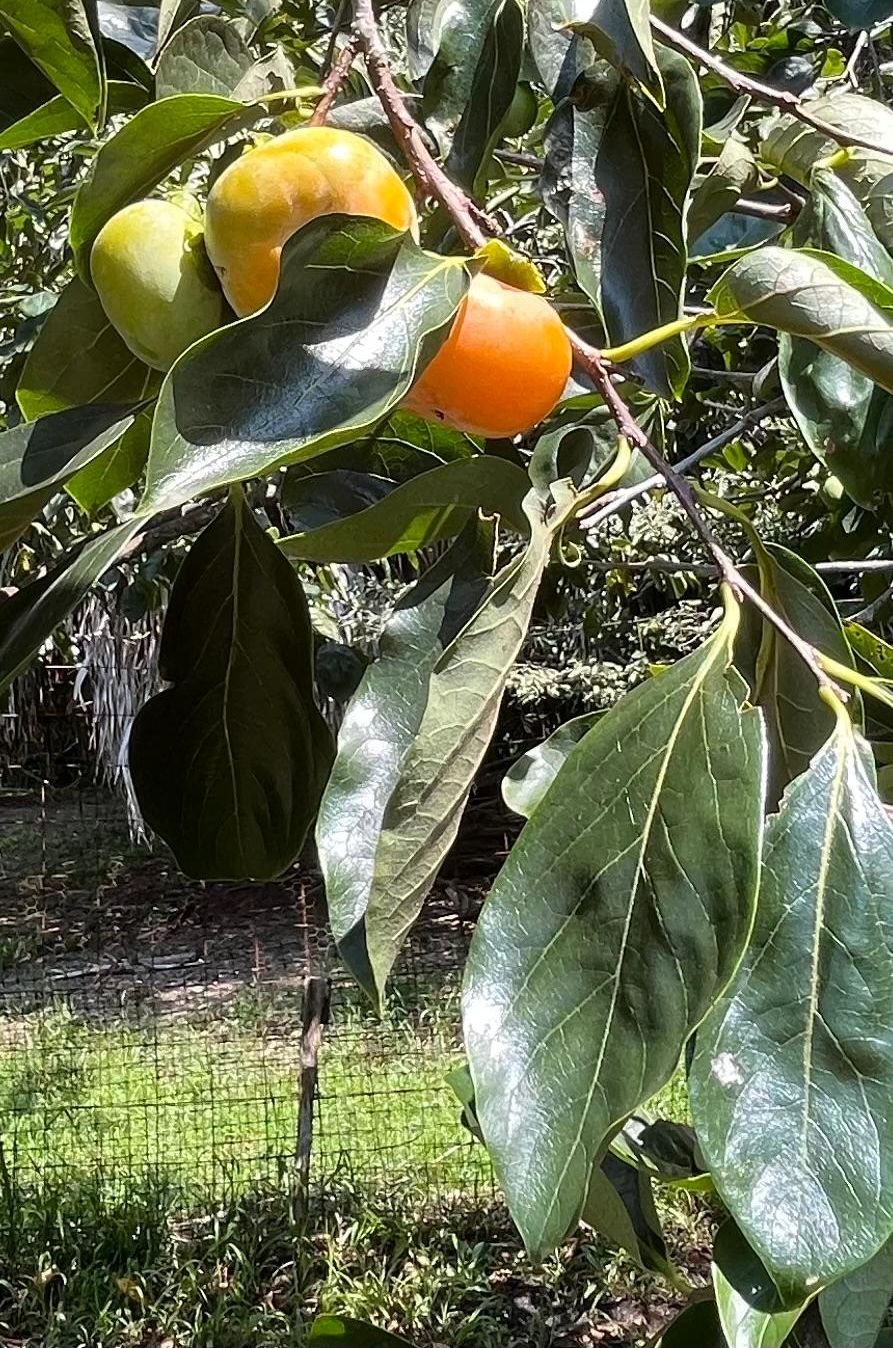
| | An Asian Persimmon in the orchard | | |
"Basically, my main concern is to find really good tasting varieties that take hardly any care and that are dependable every year," says Michael.
There are now pear trees, grapes, figs, Asian persimmons, mulberries, paw paws and blueberries growing in the orchard. These beautiful trees and bushes provide delightful treats for the many fortunate birds flying through Baba’s home, and occasionally, a lucky pilgrim as well!
| | |
Baba Stirs Us Up!
By Buz Connor
| | Photo Courtesy Meher Nazar | | |
The following is an edited excerpt from a talk given at the 60th Diamond Jubilee Anniversary of the Glow International on May 31, 2026
For those who follow Meher Baba the renewal of the spiritual life, more than anything else, focuses on the development of an active inner life.
I remember saying to Elizabeth Patterson, “Well, you met Him, so you had Him physically. What are we supposed to do? How do we follow Him now?” And she would say, “Baba works in the same way now as He did then.”
And what I think she meant is, once His love is awakened in the heart, He wants us to constantly remember Him, to keep Him company. I'd be hard pressed to find anything else that He said more than that, except perhaps love.
I would then add to that the desire to please Him, which we heard from the mandali so often. The desire to please Him is the effort that we make to recognize His will within, because it's there. And then we have to make the effort to make His will our will.
Kitty Davy, toward the end of her life, was a great student of Baba's. She wrote something called the Consciousness Talk. And she did several versions, because she wanted to come to terms with what happened to her. She went to India, she fell in love with Him, she lived with Him from 1937 to 1952, then He had her stay at the Center, where she lived to 100. So, she was trying to make sense of “what happened to me spiritually?”
In that effort, she wrote a talk about what she called the shift of consciousness away from the ego or maya as the focus of integration in life, to Baba, where Baba becomes the focus of integration. And that's where this thing comes in about trying to please Him instead of trying to please the world or our desires. If our thoughts are about trying to please Him and find that voice within, then that shift takes place. All of this leads to the final thing, which is self-effacement. Focusing on Him seems to be a key, at least as I understand from what I heard from the mandali. If we focus on Him, through remembrance and seeking His pleasure, then He's able to efface the things that get in the way of Him.
He said His only job is to take us from where we are to where He is. That's all He's doing.
So again, what does this have to do with Meher Center? The Center reminds people of that process of remembering Him, of trying to please Him, and of self-effacement. But it's not like, “Oh, I should be humble and self-effacing and pious.” It's not that attitude. The mandali were never like that. Self-effacement happens as a result of these other things: remembrance and seeking His pleasure. Also, self-effacement often kind of hurts and comes from suffering more than anything else.
One of the big things about life at the Center and life with Meher Baba, which Kitty and Margaret Craske used to talk about, is that things have to come up and out. Baba stirs us up so they will come out. This is the other feature that I would add to the list of things that Baba is doing. All the crap comes to the surface, and it's supposed to, and it's supposed to be messy.
One of the things that He talked about is harmony. He said harmony cannot be created by God. We have to do harmony. I didn't understand this when I first heard it.
I’ve often thought about the statement that Baba made that only we can create harmony. But since He is everywhere and does everything, that doesn't make any sense to me. What’s really going on, I feel, is that He is the creator of disharmony. He loves to create disharmony, and then we have to make the effort to solve it. There's ample evidence of this on the Blue Bus tours, or in the New Life, where He would talk to the mandali, like, “Why are you being this way, why are you acting in this way? What's the matter with you? You're here with me, don't you know how precious it is?” I feel behind the scenes He's stirring things up.
There's the famous sugar cane story I want to tell, because it really illustrates this aspect of the spiritual life with Meher Baba. That story is such a famous one and I'm going to paraphrase it.
Eruch was acting sort of down and moody. Baba had noticed it and asked him what's going on. He said, “Nothing, Baba, it’s all right.” He kept asking Eruch and finally Baba got it out of him. Eruch said, "Baba, you know, before I came to live with you, I was such a simple person and honest. Since I've been with you, I find myself well, upset, and have these negative thoughts, and even lying to people sometimes.”
And Baba said, “Yeah, that's how it is.”
And then He said, “Do you know how sugar cane juice is produced?” Yes, Eruch said, the sugar cane maker cuts the stalks, and puts them in a vat and boils them, and then the scum rises to the surface, and he scoops off the top, right? And he boils it some more, and some more of it rises to the surface, and then the sugar cane guy scoops it off the top.
And Baba said, “That's what I do with my lovers, bring all this to the surface, and it has to be faced, you can't not face it.”
Not facing things is this term transpersonal psychologists call spiritual bypassing. You can't bypass that. It's nice to think that we're special and loved by God and One with God, but we have to also face the crap. Self-effacement is not possible without that step.
The Center reminds us that as our master, Meher Baba’s guiding presence is always available in our hearts. Without a doubt, the most common currents, and the most common currency, at the Center are people talking about their experiences with Meher Baba, experiences in their lives, what Baba is doing, what He's prompting, what He's stirring up.
| | | | |