July 2024

 
Prepared and Distributed by The Midwest Hardware Association, Inc.


Wisconsin Workers' Compensation Rates Drop Again for 9th Year in a Row

By Misha Lee, MHA Wisconsin Lobbyist

Good news for Wisconsin Midwest Hardware Association (MHA) members. Once again, state Workers' Compensation rates are dropping and this time it is a significant 10.5% decrease, according to information recently released by the Wisconsin Compensation Rating Bureau (WCRB). This decline generally means insurance companies are paying out less overall, so they can afford to lower their workers’ compensation rates on businesses.


Lower workers' compensation rates are a positive development for Wisconsin retailers. It allows them to save money, potentially improve customer experience, and invest in the future of their business. Effective October 1, 2024, rates will see the largest reduction in over a decade. This marks the 9th consecutive year of savings for Wisconsin businesses, making our state an even more attractive place to operate.


Wisconsin workers' compensation rates have been dropping consecutively for nine years in a row and there are a couple of key reasons behind this trend:


  • Safer workplaces: The good news is that Wisconsin workplaces seem to be getting safer. This could be due to factors like increased employer investment in safety training, improved work practices, and better ergonomic design. Fewer workplace injuries translate to fewer claims, which keeps insurance costs down for everyone.


  • Faster recovery times: Wisconsin boasts strong healthcare provider networks and effective return-to-work programs. This means injured employees can get the treatment they need and get back on the job faster, reducing the overall cost of claims for employers and insurers.


  • Collaborative approach: The Wisconsin Department of Workforce Development (DWD) emphasizes collaboration between employers, workers, and healthcare providers. This focus on communication and shared goals likely contributes to a more efficient workers' compensation system.


It's important to note that these are just some of the possible explanations and the specific factors affecting workers’ compensation rates can be complex. However, the continual overall trend is positive, indicating a safer and more efficient workers' compensation system in the state.


Safer workplaces and more affordable insurance - that's a win-win for Wisconsin MHA members.


Illinois End of Session Report is a Mixed Bag for Hardware Retailers

By Alec Laird, MHA Illinois Lobbyist and Vice President, Government Relations for the Illinois Retail Merchants Association

The spring session came to end in with the passage of a state budget for fiscal year 2025 (July 1, 2024-June 30, 2025). Totaling over $53 billion in spending and over $800 million in new revenues, the budget met the Governor's goal of being balanced making it the sixth consecutive balanced budget. Included in the new revenues were capping the retail discount extending the sunset on the net operating loss deduction cap, increases to the sports and video gaming terminal taxes, as well as various fund shifts. There are various tax credit increases for child care, local journalism, live theater, music and musicians, and student loan payments to name a few as well as incentives for things like quantum computing.


Budget Specifics— The Fiscal Year 2025 General Funds budget plan reflects projected revenues of $53.281 billion and expenditures of $53.070 billion. The budget raises $526 million by extending a cap on tax-deductible business losses at $500,000; $101 million by instituting a cap of $1,000 per month on the amount retail stores may keep for their expenses in holding back state sale taxes; and $235 million more from increased sports wagering taxes and on video gambling on a sliding scale from 20% to 40%.


Economic Development monies includes but is not limited to the following:


  • $30 million for the Fast-Track Workforce program to provide employee screening, recruitment, and job training development to employers;


  • $25 million for competitive business development capital grants to expand, rehabilitate, or relocate private business to Illinois;


  • $20 million in capital funding to continue the Illinois Works Construction Pre-apprenticeship Program;


  • $10 million for the Illinois Grocery Initiative to address food insecurity faced by millions of Illinoisans living in food deserts;


  • $10 million in continued funding for Clean Energy Career and Technical Education pilot initiative to assist high schools with developing curriculum and programming that supports electric vehicle manufacturing technical education;


  • $5 million for retail workforce development;


  • $2.5 million in continued funding for the Office of Outdoor Recreation to promote tourism at destinations around the state and grow the outdoor recreation economy of Illinois; and


  • $2 million in continued funding for rural economic development, intended to connect communities and improve access to state and federal aid through outreach or technical assistance from rural navigators.


Capital and Transportation Funding includes but is not limited to the following:


Read the full article here.


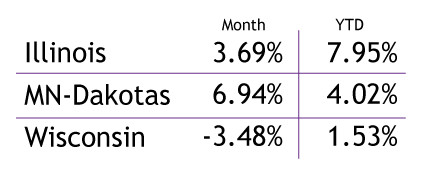
Sales Trends March 2024

Here are the most recent Illinois, Minnesota-Dakotas, and Wisconsin hardware store sales trends, gathered from association members using the MHA's monthly accounting services. The figures derived for each region include sales data from the following number of stores:


Illinois - 13 stores

Minn.-Dakotas - 10 stores

Wisconsin - 40 stores