|
|  |
|
|
Affordability Crisis Deepens: Home Sales Drop as Buyers Stay on the Sidelines
The U.S. housing market kicked off 2025 on uncertain footing, with pending home sales plunging to record lows and new home sales declining sharply. High mortgage rates, affordability constraints, and seasonal factors are creating headwinds for buyers, sellers, and investors alike.
Pending Home Sales Hit Record Lows
According to the National Association of Realtors (NAR), pending home sales dropped 4.6% in January, following a 4.2% decline in December. Year over year, pending sales are down 5.2%, highlighting persistent affordability challenges and weak buyer demand.
The South, the nation’s largest housing market, saw the biggest drop, with contract signings falling 9.2%, marking the steepest decline since the start of the pandemic. While extreme winter weather may have played a role, rising home prices remain a significant barrier. The median sale price of a previously owned home hit $396,900 in January, up 49% from five years ago, making it more difficult for first-time homebuyers.
New Home Sales Decline Amid Rising Inventory
Meanwhile, new home sales fell 10.5% in January to a seasonally adjusted annual rate (SAAR) of 657,000 units, marking a 1.1% drop from January 2024, according to the Census Bureau. The slowdown reflects shifting market dynamics as mortgage rates stay high and affordability concerns persist.
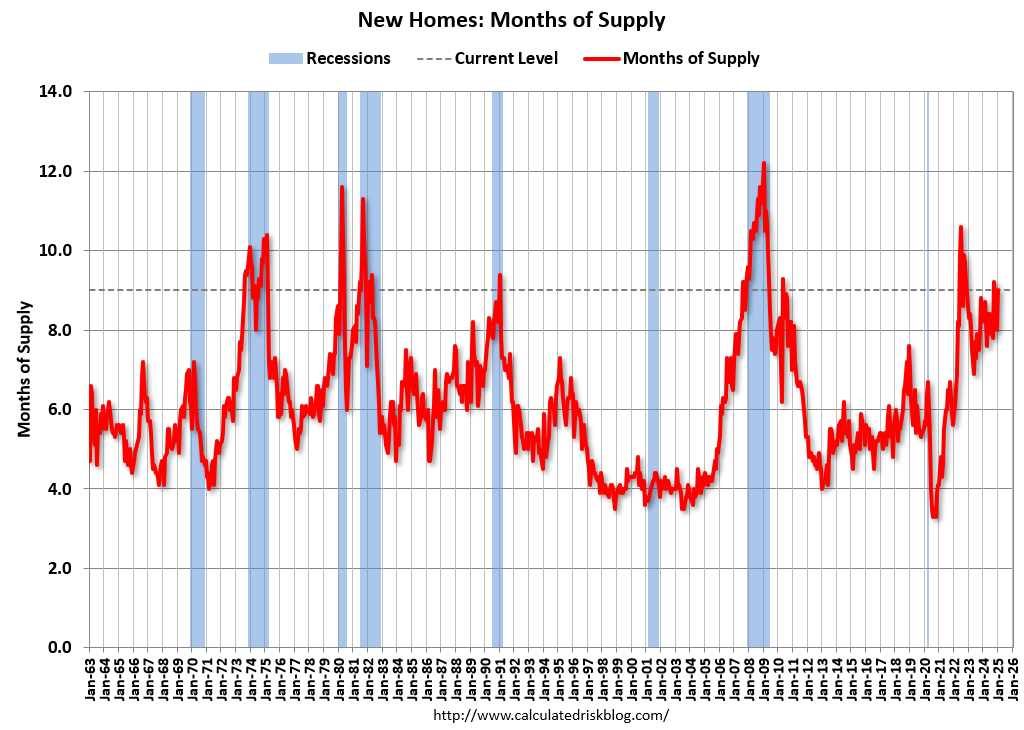
Inventory levels have also climbed, with new home supply increasing to 9.0 months’ worth of homes, well above the typical range of 4 to 6 months. Builders are responding by offering more incentives, including rate buy-downs and closing cost assistance, to attract buyers. Housing affordability remains a critical issue. Mortgage rates are still hovering around 7%, keeping many potential buyers on the sidelines.
| |
|
As a result, multifamily and rental housing continue to benefit. More buyers are delaying homeownership, pushing up rental demand and occupancy rates. Investors in multifamily properties, like CALCAP, stand to gain from this extended trend, especially in high-growth markets where affordability challenges are most pronounced.
| |
|
Edward M. Aloe
President and CEO
626-229-9057
| |
|
|
|
Welcome to the Real Estate Wealth Podcast, where we explore real estate as the most proven way to financial freedom. Join us for insights with leading experts and discover how vibrant health and an abundance mindset are keys to true wealth. | | | |
|
Housing Starts Shift Favors Multifamily and Build-to-Rent Owners
The number of starts in 2024 was the 11th year in a row topping one million.
In 2024, there were 588,000 multifamily units completed, the highest figure since 1974. Single-family home completions have been roughly even since 2022. Both types have been down since 2021.
Last year, there were 1.37 million housing starts, according to Aaron Jodka, research director for U.S. capital markets at Colliers. That’s the 11th consecutive year with at least 1 million starts. The shift is the balance between multifamily (properties with at least five units) and single-family homes.
Single-family and multifamily starts have fallen for a few years. There were 337,000 multifamily starts in 2024, down 36% from a 2022 peak. That should take pressure off inventory growth and help lower vacancy rates, allowing owners to regain some pricing power they had lost with an oversupply of new units.
View Article Here
| | | |
|
These Major Western Cities Trail Average Multifamily Rents
The one with the lowest rent has been $300 under the U.S. rate for the last decade.
Five out of a list of 14 major markets in the West have multifamily rents below the U.S. average, according to an analysis by RealPage.
What makes the lower-priced areas in the West notable is the region-wide monthly January rents of $2,209, which is 21.5% higher than the national average. However, that is boosted by areas like San Francisco and San Jose, with average rents topping $3,000 a month.
The metro with the lowest average rent in the West is Las Vegas, at $1,439. That is in the same virtual price neighborhood of Jacksonville ($1,436) and Austin ($1,460). During the last 10 years, the rent in Las Vegas has been $328 cheaper than the national average, though rates have made progress. In January 2015, they were $789.
Up until 2021, Phoenix also lagged behind national rents, with prices in January 2015 of $814. Since the pandemic, the area has seen a rental roller coaster. In 2021 and 2022, when so many metros saw significant rent growth, Phoenix came close to the U.S. average. Recently, rent cuts brought them down again to $1,504.
Salt Lake City had rents of $1,514, similar to Dallas. Like Phoenix, rents increased in 2021 and 2022 and then fell, though they are still ahead of the $888 a month in January 2015.
View Article Here
| | | |
|
Only Two Metros Where Buying Is Cheaper Than Renting
The market as a whole has moved in a more renter-friendly direction.
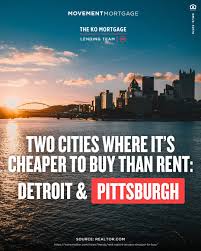
In January 2024, there were six metros where buying was less expensive than renting. This year, the number fell to just two: Detroit and Pittsburgh, with monthly mortgage payments of $1,119 and $1,252 respectively.
“The consistent retreat of rental prices and the persistence of high mortgage rates over the past year have moved the market as a whole in a more renter-friendly direction,” the report stated. It noted that in metros where incomes have risen, home affordability may have improved – a trend that may be offset by rising interest rates even with higher incomes and falling home listing prices.
In 18 markets, the share of household income needed to buy a home has risen compared to last year. In 15 metros, the percentage of income spent on rent fell while the percentage spent on buying rose year-over-year. Most markets fell into a group where the amount of income needed for rent or to buy a house was falling.
View Article Here
| | | |
|
About CALCAP
California Capital Real Estate Advisors, Inc., and its affiliate entities (CALCAP Asset Management, CALCAP Properties, CALCAP Lending, CALCAP Senior Healthcare, and CALCAP Strategic Opportunities, collectively known as “CALCAP”), is a California-based investment company founded in 2008 and headquartered in Pasadena, California. The Company sponsors alternative real estate investment opportunities focused on demographically driven housing. CALCAP has been able to consistently provide both individual and institutional investors with outstanding returns over the last 14 years. The Company uses a highly selective and disciplined investment approach, focused on delivering superior risk-adjusted returns. CALCAP currently has over $650mm in Assets Under Management. To learn more visit www.calcap.com.
Social Mission
CALCAP CARES is a 501(c)(3) private foundation organized to encourage employees to find a way to give back to the neighborhoods where we invest. CALCAP has created "GiveTime4Autism" as its initial program which gives employees the opportunity to donate unused vacation and sick days for a very worthy cause.
| |
|
LOS ANGELES
The Sanborn House
65 N. Catalina Avenue
Pasadena, CA 91106
SAN DIEGO
12626 High Bluff Drive, Suite 360
San Diego, CA 92130
PHOENIX
740 N. 52nd Street
Phoenix, AZ 85008
SANTA BARBARA
1309 State Street, Suite A
Santa Barbara, CA 93101
| |
|
Edward M. Aloe, Founder & CEO
(626) 229-9057
ed.aloe@calcap.com
Patrick A. Wakeman, Principal
(858) 764-4890
pat.wakeman@calcap.com
Drew Buccino, Principal and COO
(602) 419-3381
drew.buccino@calcap.com
Greg Blix,Dir. of Investor Relations
(805) 896-8500
greg.blix@calcap.com
| |
Mark A. Mozilo, Principal
(626) 229-9056
| | | | |