Weekly Digest Number #13 - March 29, 2022 |
|
Welcome to the RWU Rail & Labor News! This news bulletin is produced and emailed out each Tuesday morning. We hope you find each week's news and information useful. If so, please share with co-workers, friends, and colleagues. If you like, you can sign them up to get all the news from RWU HERE. Or forward them the link. Note: If you read over this news bulletin each week, you will be sure to never miss the important news of what is going on in the railroad world from a worker's perspective!
|
|
(Editor's Note: The damage done by the operating farce known as "Precision Scheduled Railroading" proceeds apace. How much longer can the feds refrain from doing something to reign in the Class One carriers? The big railroads are helping to destroy supply chains and the industry of the country.) |
|
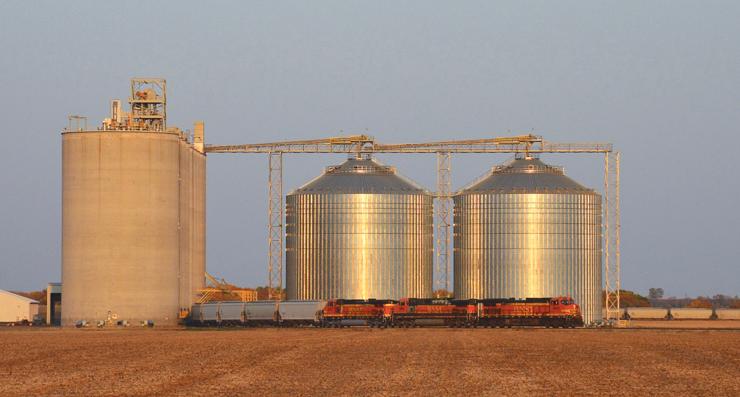
Grain Shippers Complain About Delays on BNSF, NS, and UP
National Grain and Feed Association blames delays on crew shortages and Precision Scheduled Railroading
|
|
WASHINGTON – The trade group representing grain producers says severe delays on BNSF Railway, Norfolk Southern, and Union Pacific have forced its members to shut down flour mills as well as feed mills that produce food for livestock.
“At rail origins, NGFA members are unable to purchase grain from farmers because they are full while awaiting loaded trains to be moved out by the railroad,” the group’s CEO, Michael Seyfert, wrote to federal regulators. “Conversely, at rail destinations, NGFA members have run out of grain and have been forced to shut down flour mills and feed mills and cut off sales to customers while awaiting grain deliveries.”
In some cases, livestock producers lack alternatives to rail-hauled grain shipments.
“In an effort to continue service for customers during the rail service disruptions, NGFA members have done as much as possible to keep animals fed, but the ability to stretch resources is exhausted and growing more tenuous with each additional day of service delays,” Seyfert wrote.
An NGFA member ran out of feed while awaiting a train that sat at origin for seven days due to lack of train crews. Another spent $3 million on alternative transportation to try to keep animals fed over the past month.
“NGFA understands that a variety of circumstances have contributed to the rail service disruptions, but we believe the impact is much more drastic and prolonged due to rail carrier decisions to overly adopt certain principles of precision scheduled railroading and due to significant reductions in crew numbers,” Seyfert wrote.
Grain trains spent an average of 18.4 hours dwelling at origin on BNSF, according to the latest data reported to the STB for the week ending March 18. An average of 11.2 grain trains were held per day for lack of power, crews, or other reasons. Some 965 loaded and 811 empty grain hoppers had not moved in 48 hours or more. The delays appeared to be most severe in North Dakota, where 6,092 grain car orders were 11 or more days past due.
|
|
(Editor's Note: This is an extremely important case for railroad workers, especially those in the operating crafts. It is hard to believe, but the rail carriers have been able to foist the notion on lower court judges that a locomotive - under the Locomotive Inspection Act - is not "in use" when it is not moving. So, if you get hurt on that locomotive and it is not moving, it is not "in use" and therefore, rights and protections to your safety may not apply. You can't make this stuff up! Let's hope that the Supreme Court is not likewise fooled.) |
|
Supreme Court Set to Hear Arguments in Case Involving UP Employee’s Injury |
|
WASHINGTON — The U.S. Supreme Court is set to hear arguments today (Monday, March 28) on a case hinging on whether a locomotive is “in use” when it is not actually in motion.
The SCOTUS Blog reports the case, LeDure vs. Union Pacific, involves former UP engineer Bradley LeDure, who suffered injuries when he fell on a locomotive at a yard in Salem, Ill. Inspection after LeDure was injured found a small amount of oil where LeDure slipped. The locomotive was not attached to a train at the time.
LeDure sued under a federal regulation regarding injuries resulting from a railroad’s safety and inspection violations, specifically regarding the Locomotive Inspection Act. But the safety and inspection requirements of that act only to locomotives that are “in use” or “allowed to be used.”
LeDure argues the statute covers locomotives whenever they are available for use; Union Pacific argues it only covers stationary locomotives when they are part of an assembled train ready to move immediately.
A lower court ruled that the law in question does not apply to stationary locomotives; the Supreme Court took the case in recognition of conflicting rulings in other courts.
|
|
(Editor's Note: Support for expanded and improved passenger rail is one of the few bi-partisan issues left. We need to push hard to translate this public support into a modern, expansive passenger train network staffed by union workers with good pay and benefits.) |
|
New RPA Poll: Bipartisan Support for More Rail Spending |
|
By Jim Mathews / President & CEO
Our new national poll proves something most of you already knew: passenger trains are popular among both Republican and Democratic voters, who want more and better trains and are willing to spend more Federal dollars to get them.
Your Association worked with Change Research – a professional public-issues polling firm in California – to commission a nationwide survey of attitudes toward spending on passenger rail in the wake of passage of the Bipartisan Infrastructure Law. As of today, all of you advocating for trains in your communities now have one more arrow in your quiver, and we hope you’ll use it!
In brief, we found:
78% of Americans support passenger rail investment, including 95% of Democrats and 61% of Republicans
60% of those surveyed would have supported spending $100 billion for passenger rail in the infrastructure plan – one-third more than the $66 billion guaranteed in the Bipartisan Infrastructure Law. And nearly half – 42% -- would have gone even higher!
Two thirds of those surveyed think there should be a “National” railroad plan. In addition, 66% of Americans also think there should be a National High Speed Rail plan.
Some 64% of Americans support the idea of using tax dollars to pay for upkeep on tracks and trainsets – roughly similar to the number of Americans who support using Federal dollars to fund the U.S. air traffic control system, and much higher than the 47% who think Federal dollars should be used to maintain airports.
And then there’s my personal favorite: only 27% think Amtrak should be expected to make a profit for the government; 61% think it should not.
|
|
Worker Killed on Los Angeles Subway Project |
|
LOS ANGELES — A construction worker was killed Wednesday at the site of a future LA Metro subway station when he was struck and killed by a work train.
KCBS-TV reports the accident occurred at the site of the Wilshire and La Brea station. Firefighters were called just after 4:50 p.m. to a report of a person stuck under the train. The victim was pronounced dead at the scene. A Metro spokesman said the agency is working with regulatory agencies to determine what happened.
“This is a tragedy beyond words and the entire LA Metro family and Metro Board of Directors offers its deepest condolences to the worker’s family, friends and colleagues,” Metro CEO Stephanie Wiggins said in a statement.
|
|
Unions Turn to Arbitration in Effort to Strike Down BNSF Attendance Policies |
|
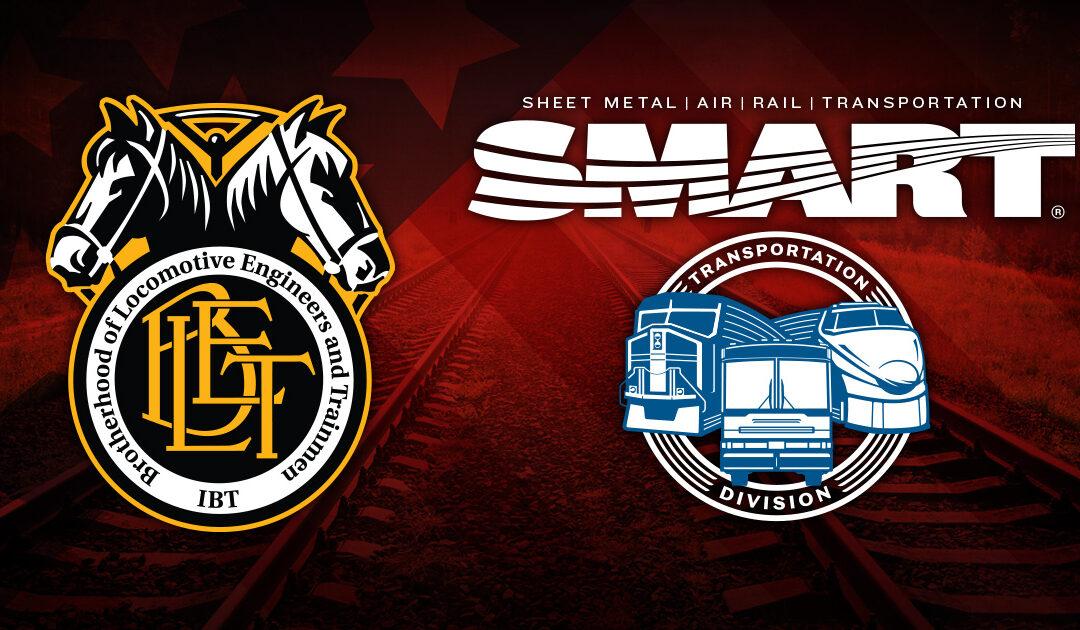
CLEVELAND — The two unions who were blocked from striking over new BNSF Railway attendance policies imposed by BNSF Railway seek to overturn those rules through arbitration.
In a statement Wednesday, the Brotherhood of Locomotive Engineers and Trainmen and International Association of Sheet Metal, Air, Rail and Transportation Workers-Transportation Division said they would “proceed as expeditiously as possible to arbitration.” The unions said they would forgo an appeal of a decision of the court ruling barring a strike — because it ruled the dispute was “minor” under the terms of the Railway Labor Act — because it “would not be the quickest or most effective way to stop the BNSF policy.” The time frame for arbitration will “months as opposed to years,” the statement said.
The unions represent 17,000 BNSF employees. They have objected to the “Hi-Viz” rules enacted by the railroad on Feb. 1, saying they penalize employees any time they take time off work for almost any reason, while the railroad says it “must improve crew availability to remain competitive.” [see “BNSF unions threaten strike …,” Trains News Wire, Jan. 13, 2022].
The Associated Press reports the unions say new rules cut the number of days workers can be off, for fatigue concerns or other issues, from 84 days per year to 22, while the railroad says it believes the policy allows “ample time for obligations outside of work, including planned vacations, personal leave days, and unplanned absences.”
|
|
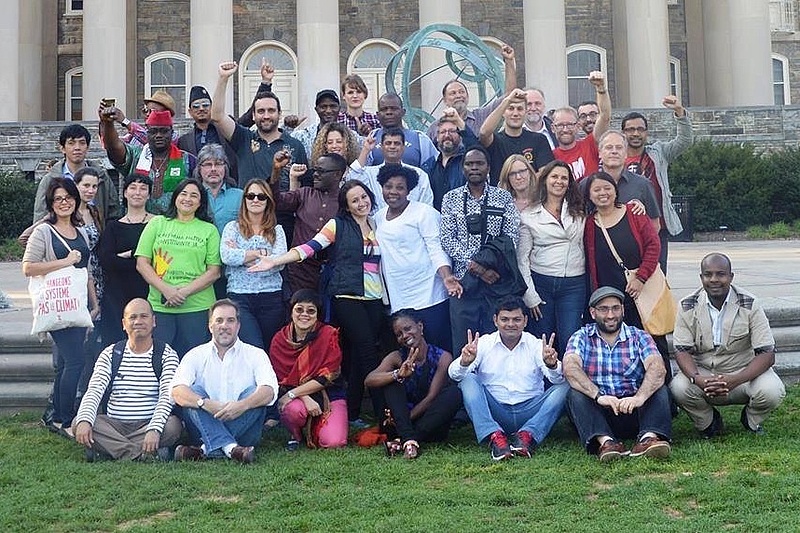
15th Global Labor University Conference, March 30-April 1, April 4-5, 2022 |
|
The Covid-19 pandemic, digitalization, climate change, right-wing populism, and rising authoritarianism have changed the world of work.
In this 2022 edition of the GLU-Conference hosted by Penn State University, AFL-CIO, ICDD and FES, we analyze these developments and ask how we build anew our workplaces and societies based on social justice.
In GLU’s unique blend of academic work and trade union activism, we offer discussions in 7 tracks on: inclusive social protection; ending gender-based violence and racism at work; worker organizing for a just transition; organizing workers in and across the platform economy; empowering migrant workers; workers' rights under rising authoritarianism; global supply chains and joint collaboration of academics and trade unionists.
|
|
Two Years After COVID: Amtrak Lags, VIA Rail Hopes |
|
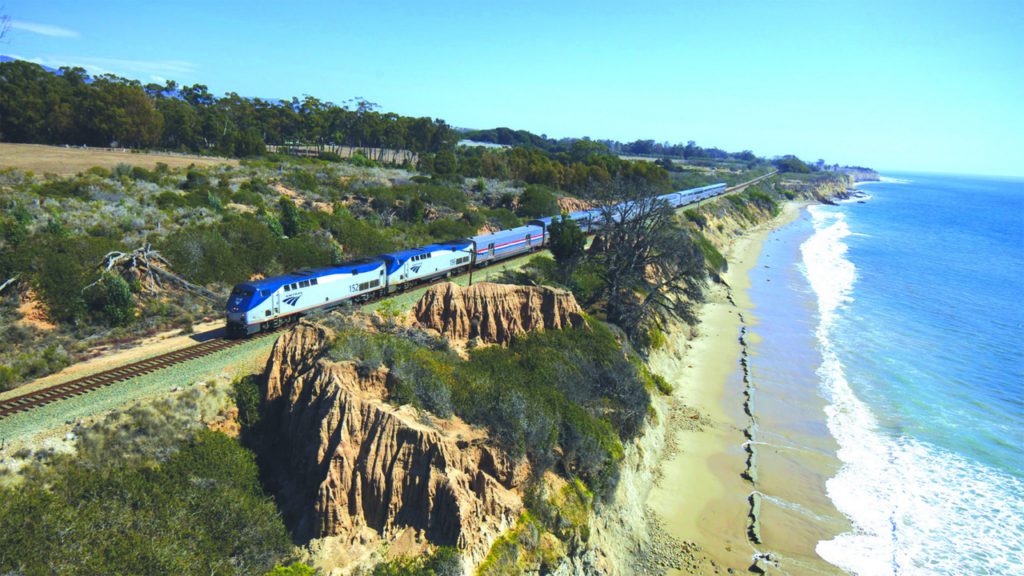
Amtrak and VIA Rail Canada took major hits in the two years since COVID-19 pushed much of the world into lockdown mode. Today, Amtrak’s service recovery has stalled, while VIA Rail is looking forward to something of a comeback under difficult circumstances later this spring; a comeback that has already begun in part.
Railway Age recently reported on how rail transit is faring in the U.S. and Canada. It certainly spelled misfortune for transit in the two countries, although most local rail transit—subway and elevated lines, light rail and streetcars—has recovered to pre-COVID levels of service without recovering to similar levels of ridership or revenue. Regional railroads, still often called “commuter” railroads, have not generally fared as well; although, as we reported, some are doing better than others. In addition, some have shifted to providing more evenly spaced service throughout the day; others have restored their old “commuting peak” schedules in an effort to bring back on board former commuters; and some have abandoned “off-peak” service on certain lines that used to run at those times.
Editors and reporters at Railway Age and its sibling publications, Railway Track & Structures and International Railway Journal, joined to provide team coverage of the rail-related progress of the virus, which stopped much of passenger and freight railroading in its tracks. Since then, we have reported every six months on the slow recovery of the industry, particularly on events surrounding rail transit as well as Amtrak and VIA Rail, providers of rail corridors and long-distance trains. Amtrak was hard-hit, but a look at VIA Rail’s schedules during the period shows that it was almost obliterated.
|
|
Wabtec Lands NS Power-Upgrade Order |
|
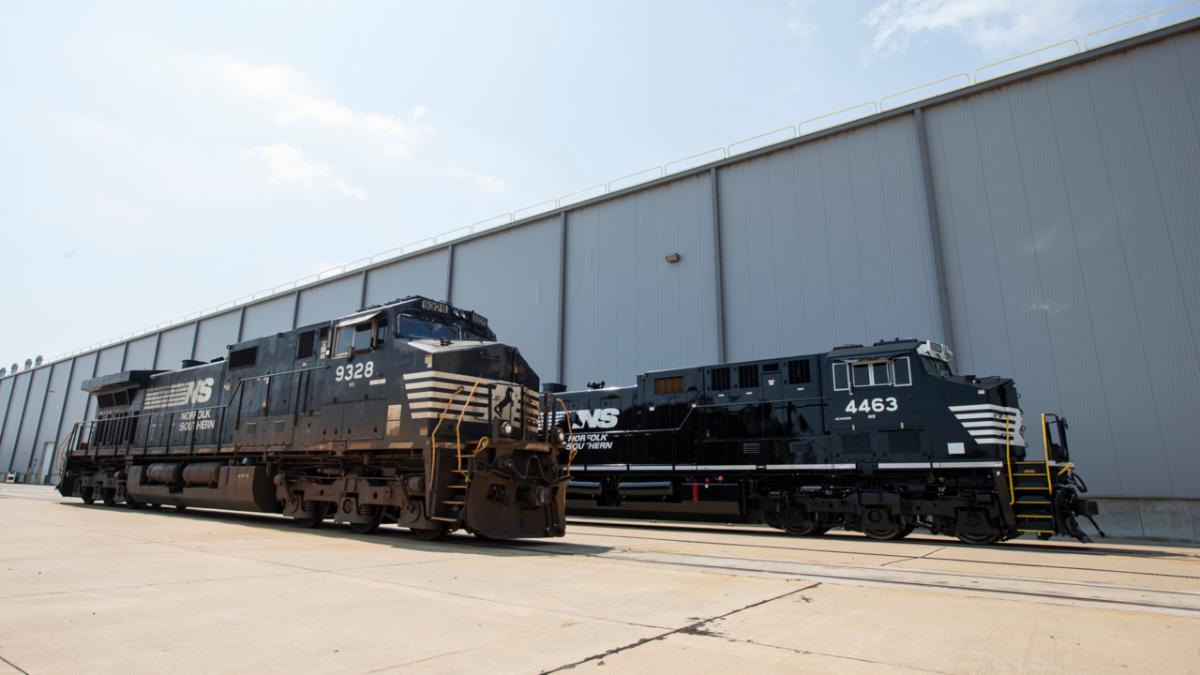
Wabtec has been selected to modernize 330 GE Dash 9-44CW units for Norfolk Southern (NS). The new order will bring Wabtec’s total number of power upgrades for the Class I railroad to more than 950 upon completion of work in 2025.
The most recent NS order will have Wabtec transforming locomotives that are more than 20 years old into AC44C6Ms. For each unit, this will add another 20 years of incremental life, plus improve fuel efficiency by as much as 25%; increase reliability by more than 40%; boost haulage ability by up to 55%; and reduce maintenance, repair and overhaul expenses by 20%, Wabtec said during the March 23 announcement.
The AC44C6Ms will feature Wabtec’s FDL Advantage engine upgrade and include Trip Optimizer, SmartHPT and Distributed Power.
|
|
(Editor's Note: Every load that a dirty truck hauls is one more load that could be on the rail. In effect, they are being subsidized by society, externalizing the cost of the air pollution that we all have to deal with.) |
|
Tell the Environmental Protection Agency to Clean Up Dirty Diesel Trucks |
|
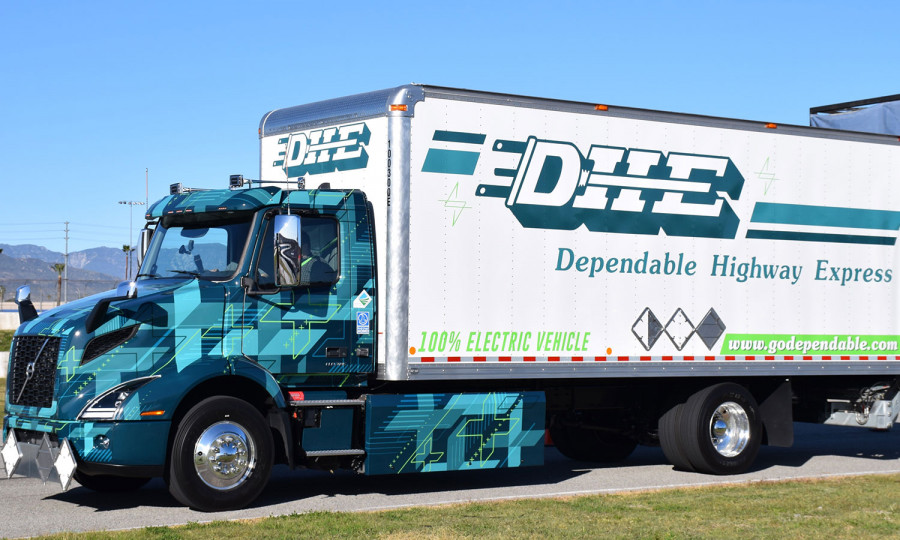
The EPA just proposed a rule for curbing emissions from heavy duty trucks, a significant source of dangerous air pollution, that allows polluting fossil fuel trucks to be sold for years. Demand they do better!
The Environmental Protection Agency just proposed a rule for curbing emissions from heavy duty trucks, a significant source of dangerous air pollution nationwide that disproportionately impacts communities of color. The transportation sector is also our nation's largest source of climate pollution, making a bold federal rule for cleaning up dirty diesel trucks essential for the Biden administration to deliver on its environmental justice and climate commitments.
Unfortunately, the current EPA proposal falls short of the urgency of the situation, allowing polluting fossil fuel trucks to continue to be sold for years longer than necessary. Loopholes and giveaways are just another way for multi-billion dollar companies to get a pass on poisoning frontline communities in favor of increased profits.
We must make heavy-duty vehicles as clean as possible. That is why
|
|
(Editor's Note: Yet another derailment at the location where a number have occurred in the past 3 years.) |
|
Union Pacific Train Derails in Colton, California |
|
Three locomotives and 12 cars of a Union Pacific train derailed Monday morning, leading to a brief fire and a spill of diesel fuel from the locomotives.
The derailment occurred near the Colton Flyover, where UP’s tracks cross those of BNSF Railway. The San Bernardino Sun reports the derailment occurred shortly after 7 a.m. one car of lumber caught fire but was quickly extinguished, Union Pacific’s Robynn Tysver told the newspaper. Tysver also said a contractor helping clean up the derailment suffered a minor injury.
About 300 gallons of diesel fuel were spilled as a result of the derailment.
|
|
Track Defect Went Unrepaired Before CN Derailment, Investigation Finds |
|
GATINEAU, Quebec — A “near-urgent” track defect was detected but not repaired several days prior to the June 2021 derailment of a Canadian National train at a remote location on the railroad’s Chetwynd Subdivision in British Columbia, the Transportation Safety Board of Canada said in an investigation report released Monday.
Thirty-eight cars of a two-engine, 71-car train bound from Chetwynd to Prince George, B.C., derailed at 9:15 a.m. on June 3, 2021. The derailed cars included one of hydrogen peroxide and one with residue of sodium hydroxide. There were no injuries and no release of hazardous material.
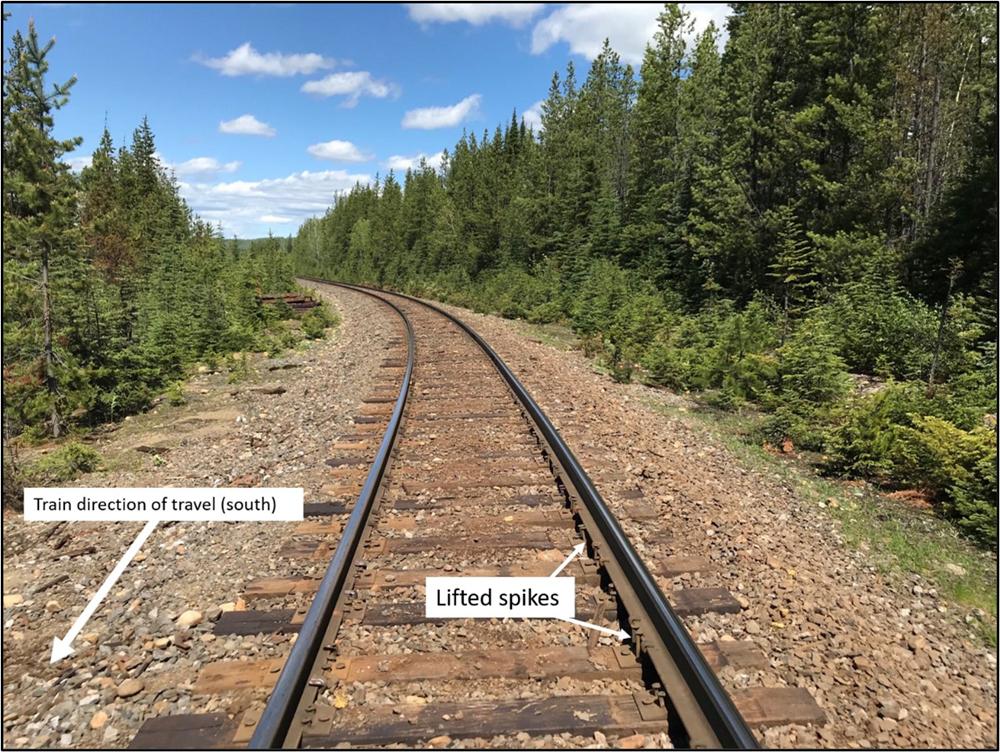
The derailment occurred some 85 miles north of Prince George, as the train negotiated an 8-degree curve into a bridge across the Parsnip River. Spikes on the high rail of the curve were found to have lifted out of the tie plates, allowing the gauge to increase and causing the cars to derail.
More than a week before the derailment, on May 25, a track geometry test car had recorded 30 feet of near-urgent outward rail cant on the low rail of the curve, which the report says is a sign of damaged ties, over-or under-elevated curves, spike issues (raised, missing, or broken), or excessive tie-plate cutting. No defects were recorded on an inspection the next day, the report notes, but adds “it is likely that signs of gauge widening (such as sliding tie plates, bent spikes, or plate cutting) were present, but not observed.” No repairs were made or other restrictions were put in place.
The safety message concluding the board’s report notes that during track inspections in curves, “it is important to pay particular attention to both rails for signs of instability, so that repairs or operating restrictions can be put in place.”
|
|
Sluggish Intermodal Traffic Continues to Keep Weekly U.S. Rail Traffic Down |
|
WASHINGTON — Continuing the trend that has continued for most of 2022, weekly U.S. rail traffic remains below 2021 levels, mostly because of intermodal traffic.
For the week ending March 19, 2022, the overall volume of 499,362 carloads and intermodal units represented a 2.7% decrease from the same week a year earlier, according to statistics from the Association of American Railroads. That included 232,770 carloads, up 1.1%, and 266,592 containers and trailers, down 5.7%. The weekly total remained ahead of the weekly average for 2022, currently at 486,366 carloads and intermodal units.
Half of the 10 carload commodities tracked by the AAR showed increases for the week, led by chemicals, up 8.4%. The biggest loss among the commodities showing decreases was in petroleum and petroleum products, down 21.1%.
For the first 11 weeks of 2022, overall traffic is down 2.6%, with carloads up 3% and intermodal down 7.1%.
|
|
|
|
|
|
|