The RNA Transcript, August 30, 2021 |
|
Join over 150 faculty in RNA sciences:
The University of Michigan has three tenure-track positions for RNA scientists
Application deadline: September 15, 2021
The University of Michigan (U-M) Center for RNA Biomedicine welcomes applications from outstanding scientists in any area of RNA research, with particular emphasis on RNA drug targeting or as medicine, structural biology of RNA nanomachines, RNA structural in vivo profiling, RNA protein interaction profiling, and in-vivo analysis of long non-coding RNA function.
At the Center for RNA Biomedicine, we are committed to Diversity, Equity and Inclusion and expect our members and partners to share these values. Women and underrepresented minorities are strongly encouraged to apply. The University of Michigan is supportive of dual-careers and is an equal opportunity/affirmative action employer.
|
|
Congratulations to the 2022 American Society for Biochemistry and Molecular Biology (ABSBBM) Annual Award winners: |
|
Mildred Cohn Award in Biological Chemistry
Janet Smith, the Center for RNA Biomedicine's Strategic Advisory Board member, a professor at the University of Michigan Medical School, associate director of the UM Life Sciences Institute and scientific director of the GM/CA beamlines at the Argonne synchrotron, won the 2022 Mildred Cohn Award in Biological Chemistry, which honors scientists at all stages of their careers who have made substantial advances in understanding biological chemistry using innovative physical approaches. Smith’s research group studies protein structure using X-ray crystallography. The award is named for the first woman president of the ASBMB.
|
|
Ruth Kirschstein Diversity in Science Award
Tracy Johnson, our 2021 RNA Sympoisum Keynote Speaker, dean of life sciences and a professor at UCLA and a Howard Hughes Medical Institute professor, won the 2022 Ruth Kirschstein Diversity in Science Award, which the ASBMB Minority Affairs Committee gives to an outstanding scientist who has shown a strong commitment to the encouragement of underrepresented minorities to enter the scientific enterprise and/or to the effective mentorship of those within it. Her lab studies the mechanisms of co-transcriptional pre-mRNA splicing in yeast. Johnson previously served as associate dean for inclusive excellence at UCLA. She currently leads UCLA’s HHMI Pathways to Success Program, which offers an early opportunity for undergraduate summer research and extensive mentoring.
|
|
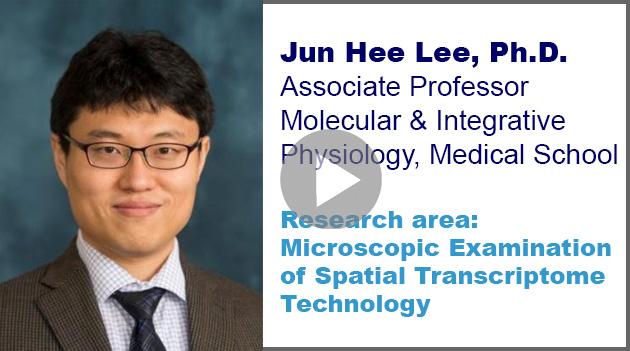
Introducing Jun Hee Lee, Ph.D.,
Associate Professor, Molecular & Integrative Physiology, Medical School,
a new member of the Center for RNA Biomedicine
|
|
In this video (5m 33s), Dr. Lee from the Department of Molecular and Integrative Physiology of the Medical School, presents his research interests in stress granules, and the development of a new high-resolution transcriptome imaging technology called Seq-Scope.
|
|
Coming soon, our RNA Innovation Seminar Series!
Bimonthly, on Mondays at 4:00 ET (virtual)
This fall, our RNA Innovation Seminar Series will feature RNA scientists from the U-M and rising scholars from around the world. We also look forward to having seminars with our potential candidates for our tenure-track positions.
The series will start mid-September. Visit our event calendar for up-coming details.
|
|
Thursday, September 2, 10:00 am EST | U-M Human Genetics, Medical School
Dissertation defense: "The Role of H3.3 in Cortical Development"
Owen Funk, Ph.D. Candidate
Faculty: Kenneth Kwan, Ph.D.
|
|
Thursday, September 2, 2:00 pm EST | U-M Molecular, Cellular, and Developmental Biology
Dissertation defense: "Dual roles for Nuclear RNAi in C. elegans Dosage Compensation"
Michael Davis, Ph.D. Candidate
Faculty: Gyorgyi Csankovszki, Ph.D.
|
|
Fday, September 3, 9:00 am EST | U-M Cancer Biology, Medical School
Dissertation defense: "2B or not 2B:Wnt-high Activity Maintains Adrenal xG Cell Identity and Function"
Donald Little III, Ph.D. Candidate
Faculty: Gary Hammer, Ph.D.
|
|
Tuesday–Friday, September 7–10 | EMBL Conference "Protein Synthesis and Translational Control"
Keynote speakers:
- John Hershey, University of California, Davis, USA
- Ulrike Kutay, ETH Zurich, Switzerland
- Julia Mahamid, EMBL, Heidelberg, Germany
|
|
Wednesday, September 8, 4:00 pm |
|
"DALRD3 targets specific arginine-tRNAs for 3-methylcytosine modification"
“Using conservation to determine RNA secondary structure”
|
|
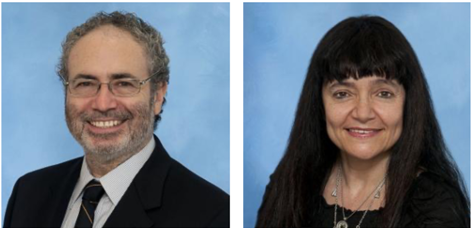
Friday, September 10, 4:00 pm ET | Bioinnovations in Brain Cancer (BIBC) Hybrid Seminar
Pedro Lowenstein and Maria Castro will be presenting their novel work studying glioma invasion, migration, growth, and the immune tumor microenvironment.
|
|
|
Monday–Wednesday, September 20–22, RiboClub Meeting "Transcriptomics and cancer biology" (Registration deadline is September 1, 2021)
Keynote speakers:
- Jody Puglisi, Stanford University
- Tom Cech, University of Colorado Boulder
|
|
For press releases and blog articles about your upcoming top journal publications, please
|
|
Our members' publications are available through Altmetrics. Five queries are currently available: "RNA," "microRNA," "Transcriptome," "Translation," and "Molecule." Please make sure to have at least one of these key words in your title or abstract. Below are recent highlights.
|
|
Molecular mechanisms underlying nucleotide repeat expansion disorders, Indranil Malik, Chase P. Kelley, Eric T. Wang & Peter K. Todd, Nature Reviews Molecular Cell Biology volume 22, pages 589–607 (2021) https://doi.org/10.1038/s41580-021-00382-6
Abstract: .... In this Review, we discuss the four major mechanisms by which expansion of short tandem repeats causes disease: loss of function through transcription repression, RNA-mediated gain of function through gelation and sequestration of RNA-binding proteins, gain of function of canonically translated repeat-harbouring proteins, and repeat associated non-AUG translation of toxic repeat peptides. ... Lastly, we propose that lynchpins tying these disease mechanisms and native functions together offer promising therapeutic targets with potential shared applications across this class of human disorders.
|
|
High-throughput splicing assays identify missense and silent splice-disruptive POU1F1 variants underlying pituitary hormone deficiency, Peter Gergics, Cathy Smith, Hironori Bando, Alexander A.L. Jorge, Denise Rockstroh-Lippold, Sebastian A. Vishnopolska, Frederic Castinetti, Mariam Maksutova, Luciani Renata Silveira Carvalho, Julia Hoppmann, Julián Martínez Mayer, Frédérique Albarel, Debora Braslavsky, Ana Keselman, Ignacio Bergadá, Marcelo A. Martí, Alexandru Saveanu, Anne Barlier, Rami Abou Jamra, Michael H. Guo, Andrew Dauber, Marilena Nakaguma, Berenice B. Mendonca, Sajini N. Jayakody, A. Bilge Ozel, Qing Fang, Qianyi Ma, Jun Z. Li, Thierry Brue, María Ines Pérez Millán, Ivo J.P. Arnhold, Roland Pfaeffle, Jacob O. Kitzman, Sally A. Camper, The American Journal of Human Genetics (2021), https://doi.org/10.1016/j.ajhg.2021.06.013.
Often overlooked because they might not alter the amino acid production, splicing defects can play an important role in rare genetic pituitary gland diseases.
|
|
The Department of Biological Chemistry at the University of Michigan Medical School invites applications for tenure-track or tenured faculty positions at the Assistant, Associate, Full Professor level. We seek outstanding colleagues whose research addresses cutting-edge questions in any area of biochemistry to join an inclusive and supportive community that prioritizes transformative science along with training the next generation of scientific leaders. Successful candidates will be part of an interactive and interdisciplinary environment with interests that span a wide range of molecular, cellular, and organismal systems. Please share PDF and Science ad.
Deadline Nov 1, 2021
The Department of Biophysics and Biophysical Chemistry at the Johns Hopkins University School of Medicine invites applications for a tenure-track faculty position at the rank of Assistant Professor. Scientists in the Department work in a collaborative, interdisciplinary environment fostered by interactions among the nine basic science departments in the Institute for Basic Biomedical Sciences and with colleagues in clinical departments. Current faculty have expertise in areas including cryo EM, x-ray crystallography, NMR, computation, single molecule biophysics, and protein biochemistry. We seek outstanding scientists who are addressing fundamental biological problems at a mechanistic level and whose research either complements or expands existing strengths in the department. Diversity and inclusion are core values at the Johns Hopkins University School of Medicine and in the Department of Biophysics and Biophysical Chemistry at all levels, including faculty, postdoctoral fellows, graduate students and staff. For more information about the department, please visit our web site at http://biophysics.med.jhmi.edu.
Deadline Oct 13, 2021
Three postdoc positions available in Furqan Fazal’s lab, Department of Biochemistry and Molecular Biology at Baylor College of Medicine (BCM) to study the organization of RNAs within cells. The Fazal lab focuses on systematically interrogating the subcellular transcriptomes of mammalian cells and characterizing the scope, regulation, and function of subcellular localization, particularly at the systems and organismal level. Visit the BCM website (https://www.bcm.edu/people-search/furqan-fazal-72901) for more information about our lab. Interested applicants may send an email to furqan.fazal@bcm.edu for more information about the position, or apply directly at the BCM website. Click here for more information.
|
|
Share your news
and comments,
|
|
|
|
|
|
|
|