e-Newsletter | May 12, 2023 | |
Here are just a few of the gardens on the 44th Annual Garden Tour, June 10 & 11. The event features 12 gardens and occurs from 10am-4pm, rain or shine both days. Buy your garden tour tickets today! | |
|
Julia Ward Howe, William Lloyd Garrison, and the 1869 Newburyport Suffrage Convention
By Bethany Groff Dorau
On Friday, July 9th, 1869, the following announcement was made in the pages of the Newburyport Daily Herald. “An equal suffrage convention will be held in this city on the 28th of this month. Prominent advocates of equality of all, without regard to physical distinctions, will be present. An interesting meeting is expected.”
| |
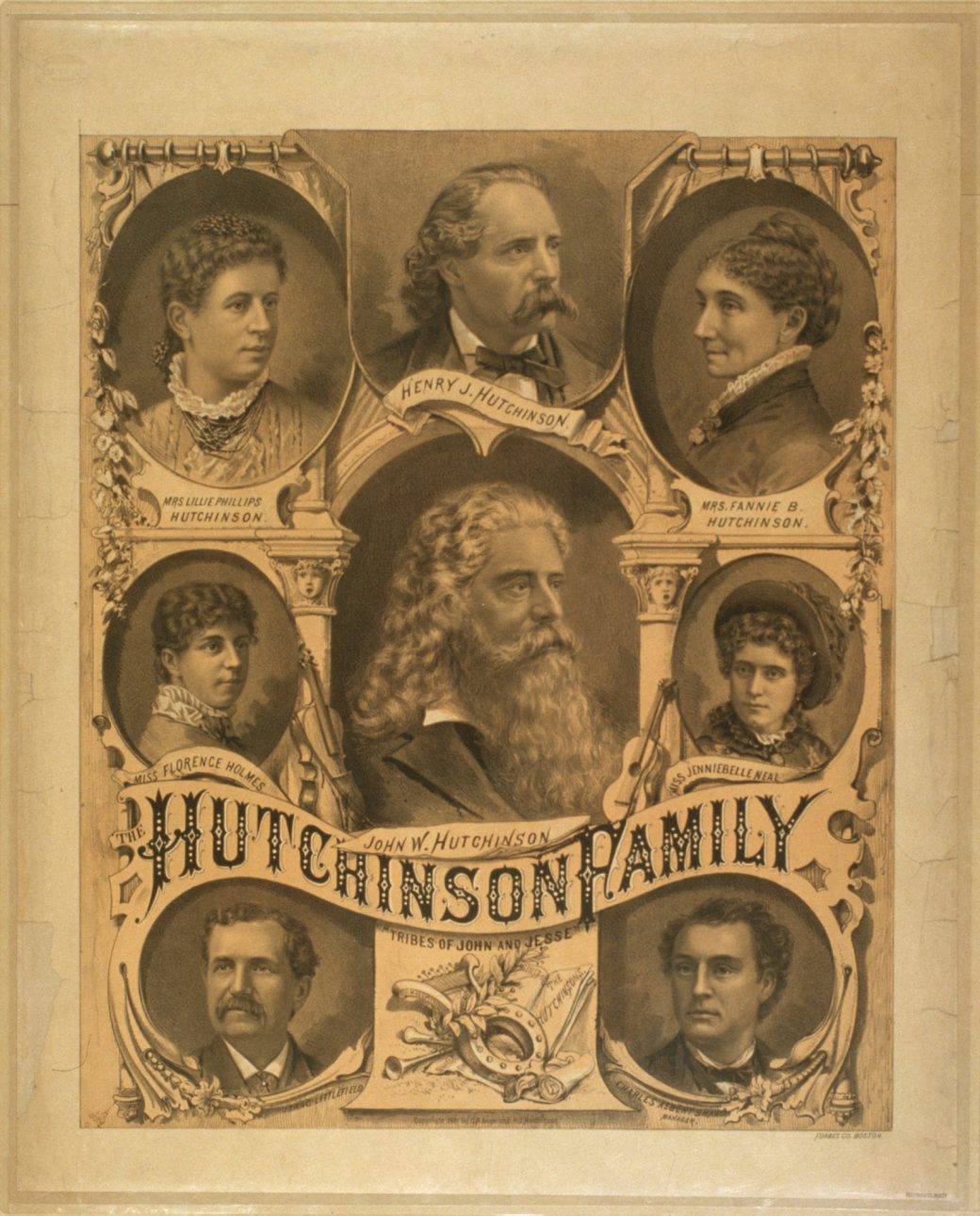 | |
The Hutchinson Family Singers were one of the most popular musical acts of the day, and were expected to help draw a large crowd to Newburyport City Hall.
Just a few items down the column is another item - a sort of rebuttal. “The best woman's rights man is he who would see a woman in her right place. Yes, and that place is tending her babies at home.”
The next day, the old argument was made that most women, at least the “best” women, were not suffragists. “When the best men in the country are satisfied that the best women in the country desire to vote, we may see great changes. At present there is plenty of scolding by a very few women, but there doesn't seem to be much else.”
The day before the Essex County Women’s Suffrage Association welcomed their delegates and guests to Newburyport City Hall, a lengthy editorial laid out the publisher’s objections to women’s rights, a stance shared with many members of the community.
“We believe that woman is created for marriage, and that her highest destiny and greatest happiness are in bearing children and rearing the family. When this is possible to her and neglected, we regard her as a sinner against the laws that God has given and as failing in her duty to mankind. When married, the woman is lost, or should be, in the man, to be controlled by him as far as he shows himself (to be) a man…”
| 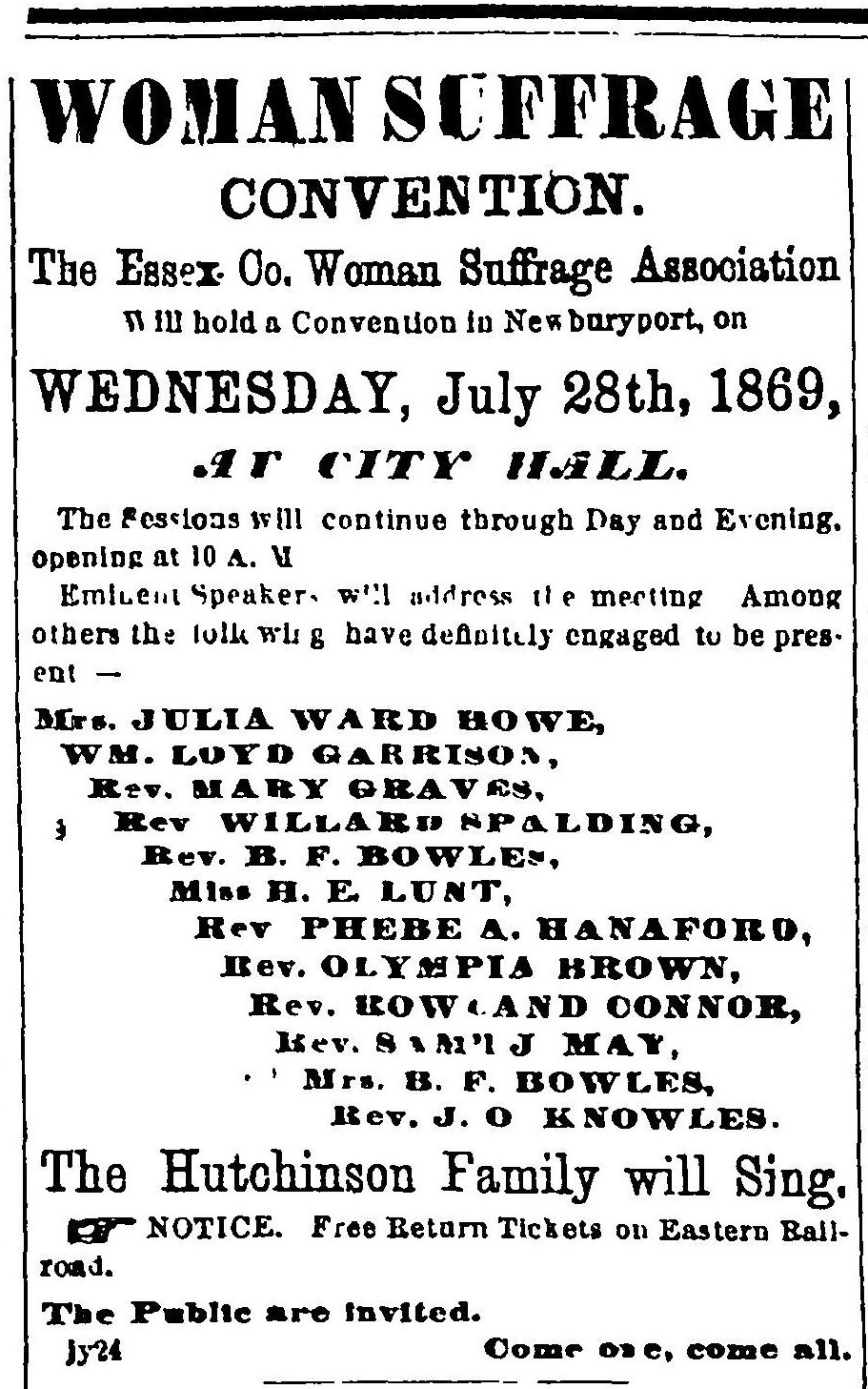 | |
Across from this screed is an advertisement for the convention, featuring the Hutchinson Family singers, and offering free round-trip train tickets for attendees. And at the top of the bill are Julia Ward Howe, best known today for penning "Battle Hymn of the Republic" and her role establishing Mother’s Day, and William Lloyd Garrison, publisher of The Liberator and passionate abolitionist. | |
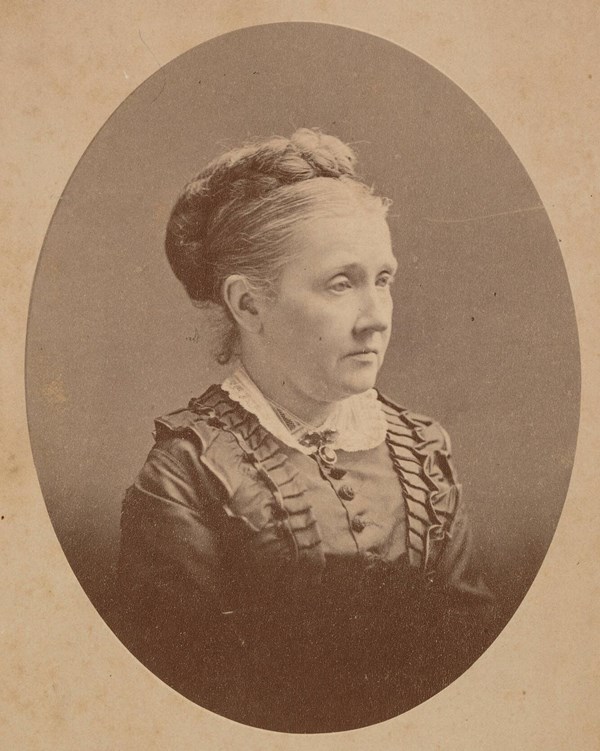
Julia Ward Howe, headliner of the Newburyport Suffrage Convention. Though Garrison said “Mrs. Howe read chiefly from a manuscript,” her remarks were greeted with enthusiasm, particularly when she argued that it was up to the opponents of women’s suffrage to prove their case, not the other way around. | The newspaper also reported from the First Religious Society on Pleasant Street, where minister Rev. Joseph May argued that women must be given equal rights before a judgement can be made about whether they are fit for public life. After all, he argued that until all people were able to grow to their potential, “we cannot possibly form a correct judgment even of the existing powers, still less of the capabilities, of a human being. If we crush the caterpillar, we shall never see the butterfly…” | |
The suffragists of Newburyport in 1869, and their sisters across the nation, were ready for a fight. The first national women’s rights convention was held in 1848 in Seneca Falls, New York, and a resolution was passed, passionately supported by Frederick Douglass among others, that advocated for women’s right to vote. Throughout the 1850s, abolitionists and women's rights advocates, at least in the North, were often the same people. During the Civil War, many reformers focused their considerable energy on war work and assisting formerly enslaved people. In 1866, eager to take up the suffrage cause once again, Susan B. Anthony and Elizabeth Cady Stanton founded the American Equal Rights Association to advocate for voting rights for Black and white Americans of all genders. In 1868, however, when the Fourteenth Amendment to the U.S. Constitution was ratified, giving Black men the right to vote, it specifically excluded women, employing the word “male” for the very first time.
Though many women’s rights advocates had also been abolitionists, the extension of the franchise to Black men before white women was seen by some as an insult and a betrayal. Just two months before the Newburyport Suffrage Convention, Stanton and Anthony founded the National Woman Suffrage Association, accusing former abolitionist colleagues of betraying their shared cause of equality. Opposing them were those who eschewed this conflict and worked for women’s rights at the state level, led by Lucy Stone, Julia Ward Howe, and former Newburyport minister Thomas Wentworth Higginson.
The Essex County Women’s Suffrage Association sided with the latter group, which would formally split off in November of that year to found the American Woman Suffrage Association, led by Julia Ward Howe. Her prominence at the July 28 Newburyport convention confirmed this alliance.
| |
|
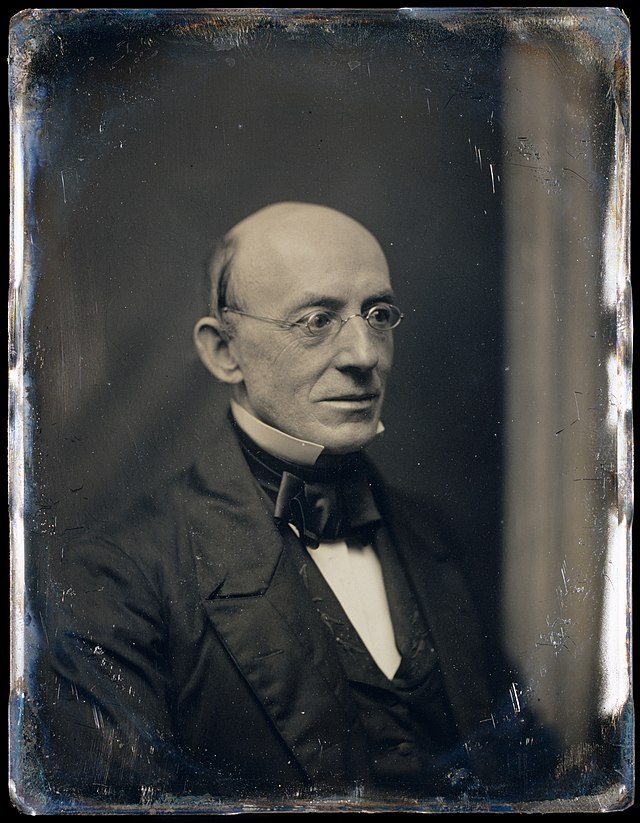
William Lloyd Garrison, a sought-after speaker in reform circles, was squarely on the side of Howe and the other suffragists who continued to fight for women’s rights without undermining the newly won rights of Black men. He would write for their publications and send speeches to their conventions for the remainder of his life.
Garrison’s letter to his wife, written the following day, gives a delightful glimpse into the convention and a rather sentimental homecoming for the 64-year-old Garrison.
“In the same car with me in coming to my native place yesterday were Mrs. Julia Ward Howe and Miss Elizabeth Peabody…A number of persons got into the cars at Lynn, Salem, etc., bound for the women's suffrage convention…
The convention had been sufficiently well advertised by large placards, and all the necessary arrangements made for it. Still, I expected rather a thin attendance. The morning session, however, brought together a very good audience. In the afternoon, the spacious hall was filled, and in the evening, there were more present than could find seats. Three quarters were women, representing some of the most respectable families of the town, and all evincing a deep interest in the proceedings. Everything passed off very satisfactorily, notwithstanding the weather was extremely sultry, and each session long protracted…. the evening sessions did not close till 10:30 o'clock, (but) the interest was unbroken to the end. I spoke in the forenoon and evening…
The Herald, of course, anticipated the convention by derogatory remarks concerning its object, but it did us no harm…It is still very warm today, though tempered by a good breeze. The Herald makes too meager a report of our proceedings to make it worthwhile to send it to you…Everything looks pleasant here, but the dullness and quietude are almost oppressive. I have wandered a little about the streets, recalling boyhood scenes, and awakening old remembrances.”
| |
The Newburyport Herald, where Garrison had learned the publishing trade, downplayed the success of the event, reporting that “the hall was over half filled, and the audience was composed mostly of women, in the proportion of about one man to eight women,” but they did report on the arguments made by the speakers, as did the New York Times and numerous other publications.
The Newburyport Suffrage Convention was overshadowed somewhat by the official split between suffrage organizations that came later in the year, but it offers insight into the fight for women’s right to vote which was yet, sadly, fifty years from bearing fruit.
Meanwhile in California, two Newburyport women were also working hard to win the vote. Learn about them in the next newsletter.
| |
|
The Heirloom Gardner - Traditional Plants and Skills with John Forti, May 18, 6:30 pm.
St. Paul's Episcopal Church, 166 High St., Newburyport.
363,000 Facebook followers can't be wrong! Join us for a refreshing look at traditional plants and skills for the modern world with garden historian and ethnobotanist John Forti. It's also a great lead-in to the upcoming Garden Tour on June 10 & 11. He will be selling and signing his book. $10 members, $20 non-members.
| |
|
The 44th Annual Newburyport Garden Tour
June 10 & 11, 10am -4pm
Enjoy exclusive access over two days to a selection of 12 gardens in Newburyport, Amesbury, Newbury, and Rowley. (Above is a sneak peak from the Rowley garden.) Early bird pricing through May 31: $20 members, $35 non-members. One ticket is good both days. Get your tickets today.
| |
|
Woman on the MOON
...a blog by Bethany Groff Dorau, Executive Director
| |
|
Let's Call it October
For the past nine years, on the last weekend in April, I belong to the Newburyport Literary Festival, body and soul. Ghlee Woodworth and I were brought onto the steering committee for this event in 2014, after local history was spotlighted and we were identified as two purveyors of such heady material. Also, between Ghlee’s boundless energy and my passable tech skills, we make a good team.
| 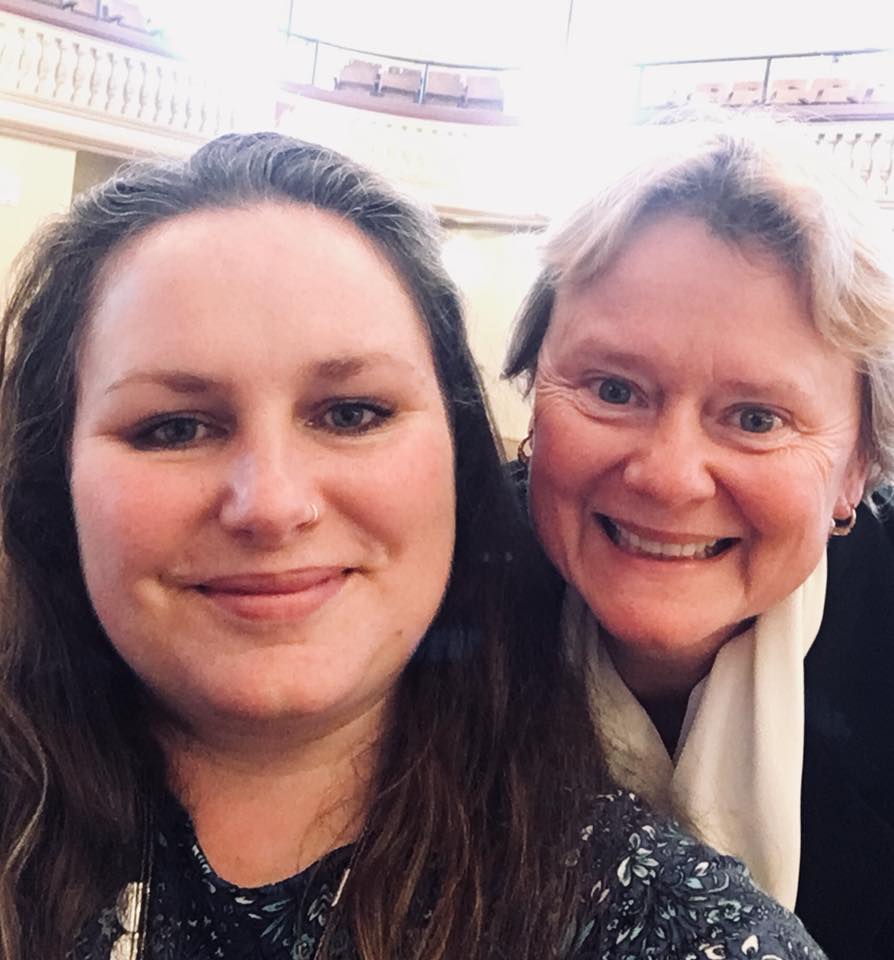 | |
Ghlee and I, local historians and Lit Fest buddies at Newburyport City Hall.
And so, after months of meeting, spreadsheeting, cajoling, arranging, and preparing, on the Literary Festival weekend, with a limited degree of success, I run a projector at City Hall, or a Zoom webinar in my guest bedroom. I try to remember to hydrate, to speak slowly, to pronounce names correctly. And, blessed beyond measure, I am immersed in the world of writers and readers. We float through the rare air of downtown Newburyport, thinking big thoughts and seeing everything anew. At least, that is my experience.
I am brought to tears every year at least twice – in the best way. And I am given a gift – some idea or turn of phrase or interaction that remains with me. This year, our first year back together in person since the beginning of the pandemic, the first gift came quickly. It was Friday night, and we were at the opening event at the Firehouse. Our own Andre Dubus was on stage talking with his friend Peter Orner. Orner read a short story from his new book, a memory of his mother at the sink washing dishes as Nixon takes off in a helicopter.
“I don’t know what month of 1974 Nixon called it quits. I could check. It’s exhausting being able to check anything and everything. Let’s say it was spring, late spring, when Nixon resigned.”
I instinctively bristled a bit. “Let’s say…” is not a way to go about writing about something that really happened, says the historian in me. Nixon resigned in August, 1974. But, of course, that was not the point.
|  | |
Peter Orner (above) and Andre Dubus opened the Newburyport Literary Festival this year; Peter spoke about his new book, "Still No Word From You."
Memory is slippery and subject to change as we remember the last time we remembered, an endless loop that, without a certain amount of anchorage, can spin off in all kinds of directions. But an essential element of memory is its changeability – its willingness to be informed by later experiences, to adapt to new information. Of course I want to know a true thing, but the true thing may be that the day Peter Orner watched his mother at the sink, it FELT like late spring.
And so, I did a little experiment with a memory of my own.
Let’s call it October. I am sitting at the kitchen table with my great-aunt Emily and my grandmother, who is in a wheelchair, and their brother, George, who is talking in gasping grunts about going to the hospital to have shrapnel removed. I ask Aunt Emily what that looks like. It’s terrible, she says. Like bits of metal and machine parts and things, always working themselves out of his legs. She says she once saw them remove a spring, part of a hand grenade that blew up behind him. He is missing a finger and most of one foot. He has a glass eye, but he has taken it out, and the hollow socket is red. His hair is shaggy, longer than any of his brothers, and he likes to look at me with his one milky eye, take off his cap, and thunk thunk on the metal plate on the back of his head with his knuckles. “Guam”, he says. He points to his eye socket. “Okinawa”. I say something and he cups his hand around his ear. “What?”, he shouts, then points to his deaf ear. “Midway,” he says, and laughs, his toothless mouth another socket in his wide, grey face. He is shifting his considerable weight in his chair, the sturdiest chair in the house, and over the years, his large, flat thumb has rubbed the end of the chair arm until a spoon has formed. He drinks, though there is no alcohol allowed in the Poore house, so he arrives drunk from his apartment in Newburyport. He dozes off, and he smells of mildew and cigarettes and liquor. I am scared of Uncle George, and I feel sorry for him, and I leave the room as soon as I can.
George Allen Poore’s military hospital record validates my memory of him.
Diagnosis: Wound(s), penetrating (point of entrance only: includes incised, puncture or stab wound) with nerve or artery involvement;
Location: Eyeball, generally;
Location: Metacarpal bones, generally;
Causative Agent: Artillery Shell, Fragments, Afoot or unspecified;
Diagnosis: Fracture, compound;
Diagnosis: Wound(s), penetrating (point of entrance only: includes incised, puncture or stab wound)
Type of Injury: Battle casualty
Medical Treatment: Enucleation with implantation; Amputation open, upper extremity, (includes amputation, unqualified, for traumatism)
Disposition: Discharged or Retired for Disability, Line of Duty, Yes
But there was another gift that I was given because of the Newburyport Literary Festival.
| |
|
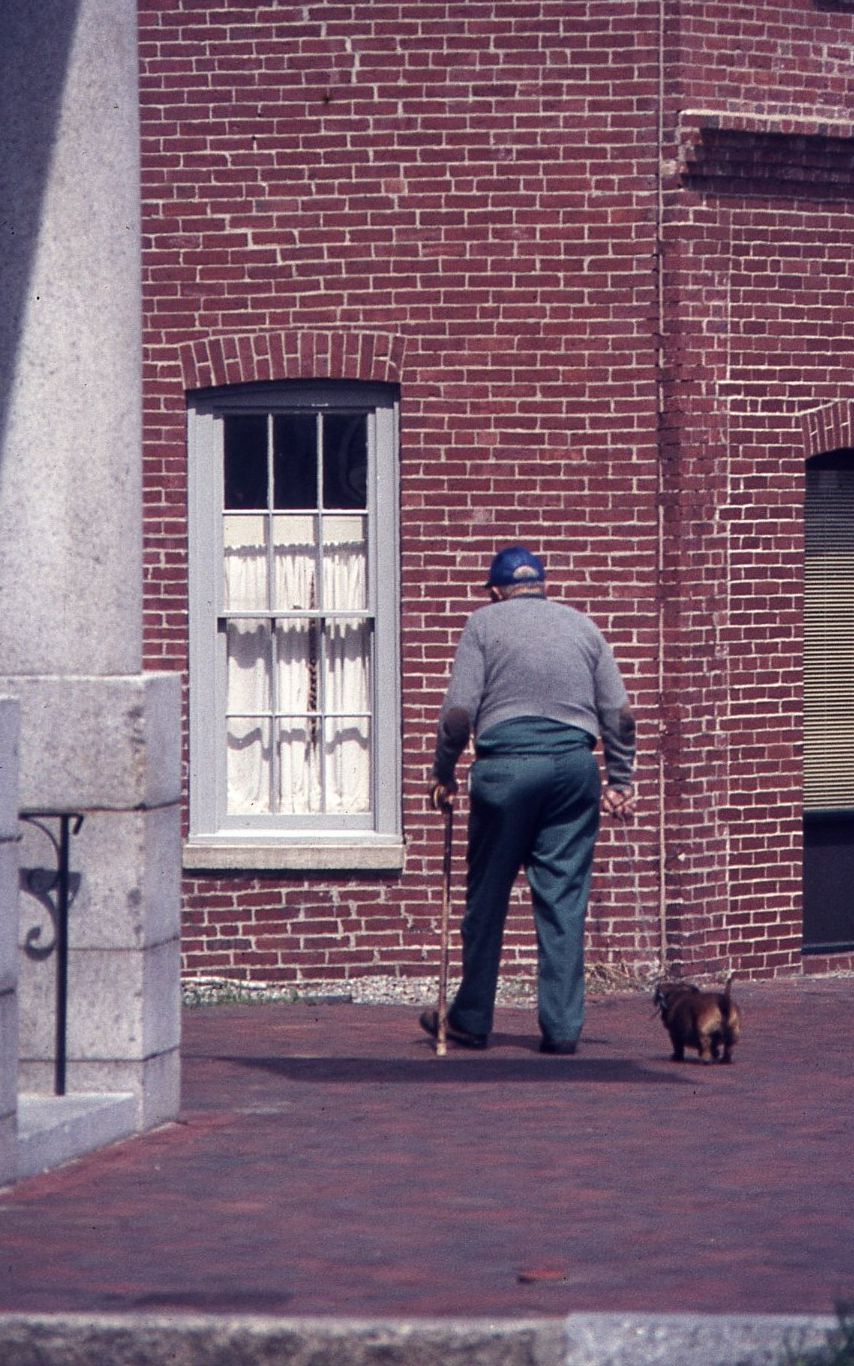
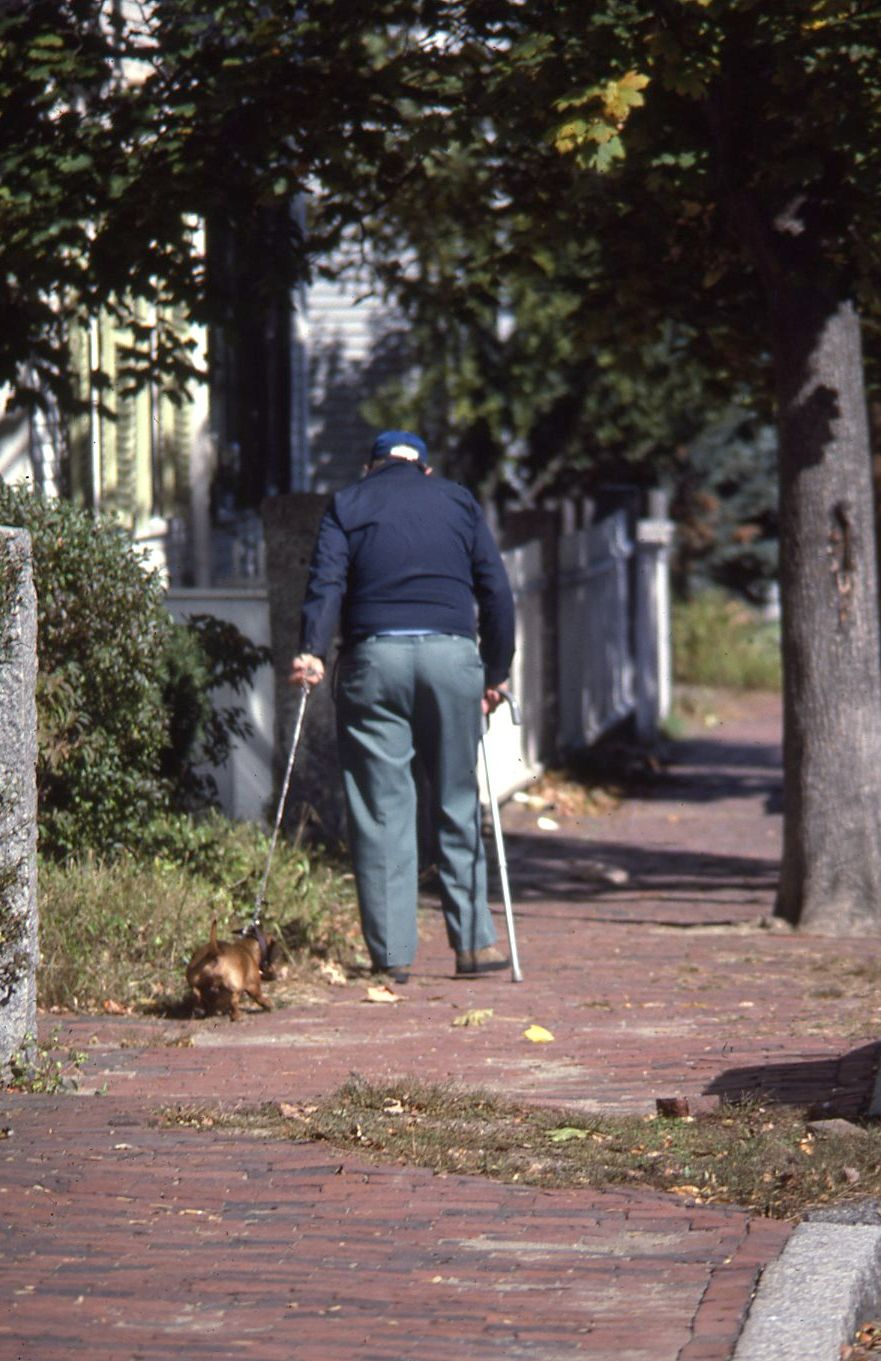
George Poore. Photos by Fran Dalton.
Colleen and Frank Stiriti, whose new book Images of Life, Change & Beauty: Photographs, Poetry & Art - Selections from the works of Fran Dalton was the focus of one of the sessions at the festival, gave me these pictures of Uncle George, found in two envelopes marked “Mr. George Poore” in Fran’s distinctive hand. Uncle George, who I remember with such trepidation, was photographed with a palpable tenderness by Fran Dalton, whose experiences as a trans woman certainly informed her appreciation for outsiders and loners. She had endless empathy for the wounded.
There are almost no family photos with Uncle George in them after 1970. To many of us, he had become unlovely. But through Fran’s eye, through Colleen and Frank’s gift, a changed memory.
Let’s call it October, and a wounded veteran is walking his dog down State Street. Soon he will catch a ride to West Newbury to visit his sisters and try to befriend his great-niece…
| |
Something Is Always Cooking... | |
|
Grammy Leighton's Ice Box Cookies
Long after "store bought" desserts became available, Grammy Leighton continued to bake wonderful treats. She lived in Lowell, ten minutes away from us in Andover. These cookies were an absolute favorite. Dough can be stored in the “ice box” for several days. Ice box cookies were the original "slice and bake cookie," first popular in the 1920s. - Cynthia Laffie
1 c light brown sugar
1/2 c melted butter
1 egg (beaten)
1/4 t salt
1/2 t vanilla
1/2 t soda sifted into...
1 1/4 c flour
Mix all together and add...
1/2 c chopped walnuts
Pat the mixture into a bread pan lined with wax paper. Chill over night.
Slice thin and bake at 350 for about 12 minutes.
Should be thin and crispy!
| |
|
Click the image to do the puzzle
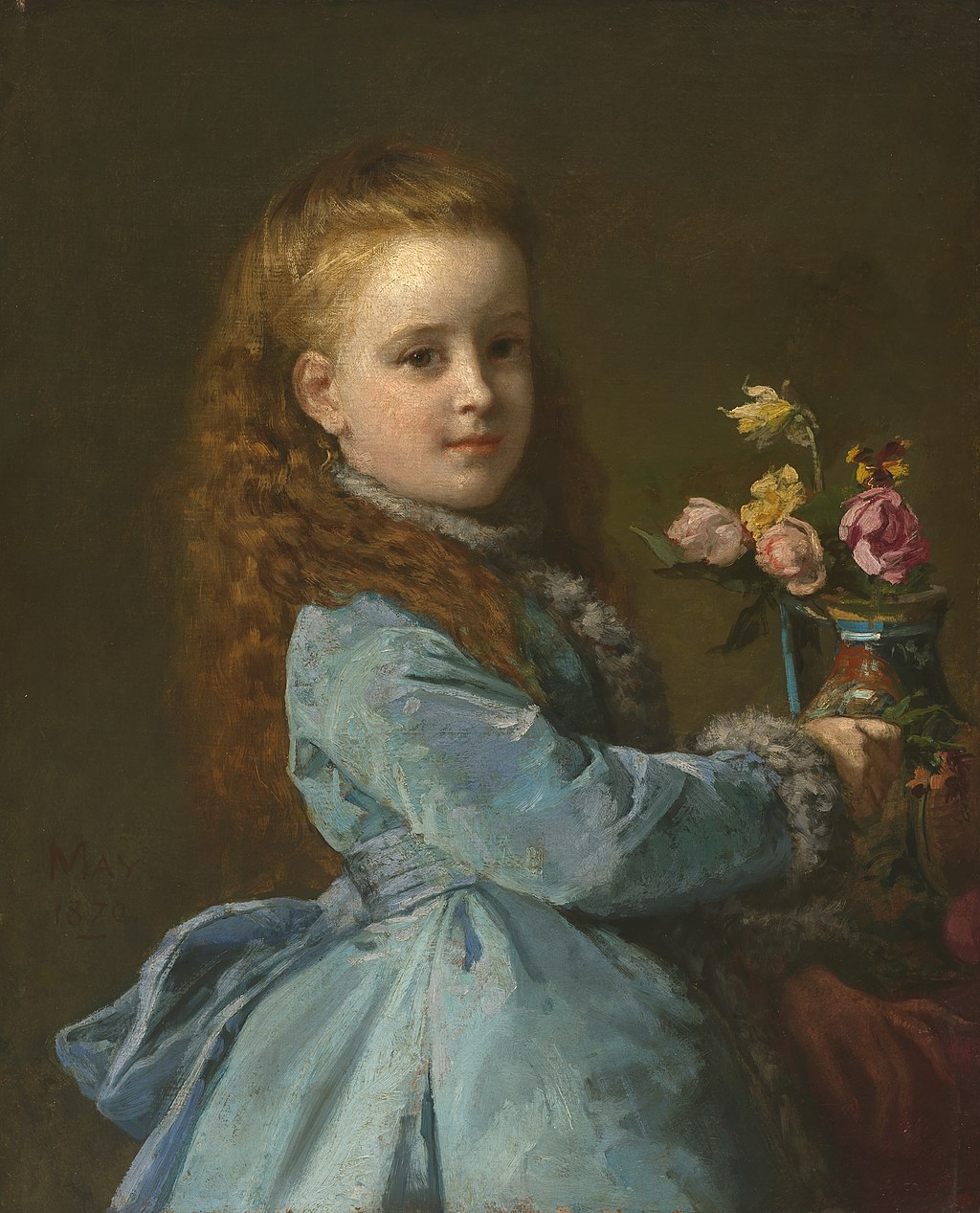
"Edith Wharton" (1870) by Edward Harrison May. This image was made shortly after the Newburyport Suffrage Conference of 1869. Famous for her writing, including "The Age of Innocence" (1920), Wharton grew up privileged, travelling Europe and sitting for this portrait in Paris.
| | |
Museum e-Newsletter made possible through the
generosity of our sponsors:
| |
|
Museum of Old Newbury
98 High Street
Newburyport, MA 01950
978-462-2681
| | | | | |