|
Youth Service America celebrates America 250 by launching a new national plan to double youth participation in American civic life - through volunteering and service; voting and civic engagement; youth voice and leadership; and joining and philanthropy - over the next 10 years on the way to universal youth participation.
As we celebrate America’s Semiquincentennial on July 4, 2026, we know that only 1 in 4 young people are regularly involved in the civic life of their communities. That means 64 million young Americans are left out of participating in our democracy.
Youth Service America (YSA) is leading a national alliance of organizations working to build A New Era of Youth Service in America. Launching during America250, the New Era of Youth Service National Strategy leverages the opportunities of this once-in-a-lifetime civic moment to focus the Nation’s K-12 schools and higher education institutions, afterschool and youth development programs, community-based and faith-based organizations, and state and local governments on creating a civic culture that builds on the progress of the last 250 years and strengthens our democracy for the next 250 years.
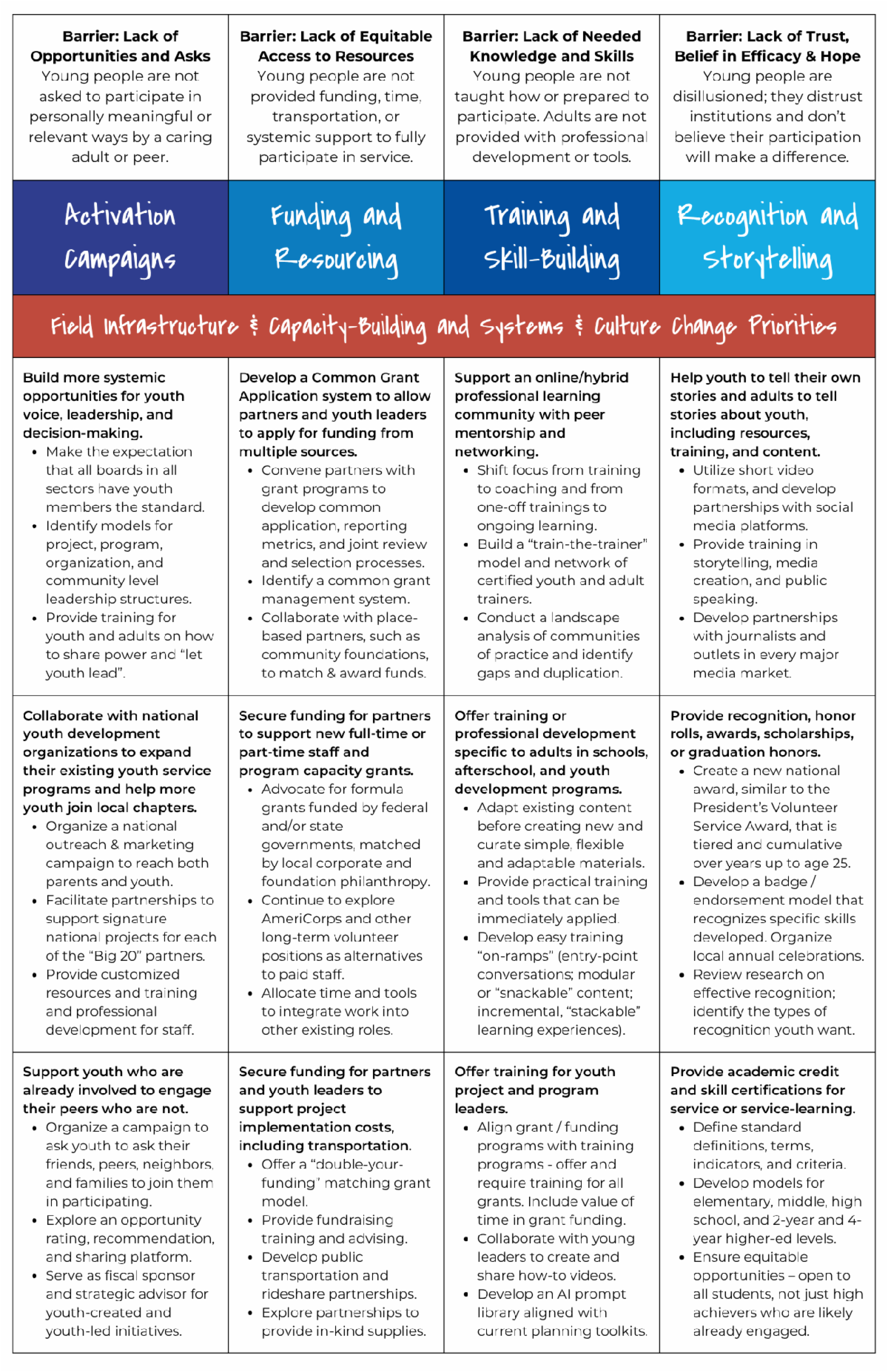
This strategy is the result of a year-long national listening tour and collaborative strategic planning process that gathered input from over 3,000 people and organizations across the country. With a focus on addressing the four most common barriers to youth participation (lack of opportunities and expectation, lack of knowledge and skills, lack of equitable access and resources, and lack of trust in the efficacy of participation), the strategy focuses on 12 activation, funding, training, and recognition priorities:
Activation Campaigns
1. Build more systemic opportunities for youth voice, leadership, and decision-making.
2. Collaborate with national youth development organizations to expand their existing youth service programs and help more youth join local chapters.
3. Support youth who are already involved to engage their peers who are not.
Funding and Resourcing
4. Develop a Common Grant Application system to allow partners and youth leaders to apply for funding from multiple sources.
5. Secure funding for partners to support new full-time or part-time staff and program capacity grants.
6. Secure funding for partners and youth leaders to support project implementation costs, including transportation.
Training and Skill Building
7. Support an online/hybrid professional learning community with peer mentorship and networking.
8. Offer training or professional development specific to adults in schools, afterschool, and youth development programs.
9. Offer training for youth project and program leaders.
Recognition and Storytelling
10. Help youth to tell their own stories and adults to tell stories about youth.
11. Provide recognition, honor rolls, awards, scholarships, or graduation honors.
12. Provide academic credit and skill certifications for service or service-learning.
|