November 19, 2025

Good morning, and welcome to The Ship Show!


Thanksgiving is next week, which means it's officially time for the most stressful logistical challenge of Q4: The Mandatory Extended Family Gathering.


They're called "extended family" because that’s exactly how far apart I prefer to keep the relationships - a safe buffer of 50 to 500 miles, maintained through highly selective communication.


It's not that I don't love them. It's that my brain is a strictly budgeted database, and I simply don't have the bandwidth to onboard 12 months of new familial lore in a single 45-minute window.


I walk in and immediately get hit with a tidal wave of new information:


  • Another baby
  • A new boyfriend/girlfriend
  • New political convictions (or worse: the same political convictions)
  • A "surprise" divorce


My brain operates on a need-to-know basis, and I did not need to know all that.


I would love to develop a deep, meaningful relationship with my third cousin twice-removed, but I don't have the operating capital to upgrade them from "acquaintance I share a family member with" to "person I need to remember specific details about."


I'll likely be spending the day near the TV watching the Cowboys lose, nodding vaguely at any statement that sounds like a question, and striving to maintain the delicate, low-effort bonds that keep these relationships perfectly "extended."


- Greyson Harris

The Headlines:

The Steaks Are Lower: Trump Reverses Stance on Tariffs for Imported Foods

Welcome back to the funhouse mirror known as the global economy!


In what feels like an abrupt U-turn, the Trump administration is calling off the dogs on a whole host of breakfast staples, including things like coffee, tropical fruits, and, most importantly to your grilling budget (and my bulking season), beef.


The admission we never expected


Turns out, when you slap a punitive tax on the world's biggest exporters, prices go up:


  • Beef prices had shot up 50% year-over-year. Cattle shortages in the U.S. were the main culprit, but a 76% tariff rate on cow meat from major exporter Brazil certainly didn't help.


  • Coffee was up 19% in the same period. While adverse weather played a role, a 50% tariff on Brazil's exports (which supply a third of our coffee) meant your morning dark roast came with a surcharge.


  • Even the reliably dirt-cheap banana was up 7%. In the words of Gwen Stefani: "Bananas!"


After months of claiming the import taxes weren't a major factor in inflation, the President provided a rare public admission: those tariffs “may, in some cases” have the effect of increasing consumer prices.


It’s the closest we’ve gotten to an "Oops! Our bad."


We can only assume someone finally pointed out that, logistically speaking, taxing a banana does not encourage an American to go out and plant a banana tree. That would be considered manual labor, and we don't do that here.


What's the tea?


We’re talking about a full tariff retreat on grocery items that your mother swears are better at Whole Foods:


  • Tea
  • Fruit juice
  • Cocoa
  • Bananas
  • Oranges


And here’s the kicker: many of these products, like coffee and bananas, aren't even mass-produced in the United States. So, tariffs meant to spur domestic production had little effect except making your morning smoothie more expensive.


With this tariff reduction, prices for those key imports will likely come down for consumers. This matters because inflation, despite certain claims, remains elevated.


"PIVOT!"


So, what’s the official mechanism for this sudden act of generosity? The administration is pointing to new trade framework agreements they’ve been hammering out with partners such as:


  • Argentina
  • Ecuador
  • El Salvador
  • Guatemala


These new deals are designed to streamline market access (good news for exporters) and, as a bonus, allow for the reduction of reciprocal tariffs (good news for importers).


For example, our friends in Argentina are expected to get their beef exempted from that 10% duty. We’ll take that as a win for supply chain sanity and a huge step towards me reaching a new benchpress PR by the end of the month (there isn't enough beef in the world for that, let's be honest).


The Food Industry Association, which represents basically everyone from producers to retailers, applauded the "swift tariff relief," noting that these import taxes were a huge factor in the "complex mix" of supply chain issues.


The $2,000 question


Despite rolling back tariffs, President Trump couldn’t help but revisit a financial fantasy that we've all been dreaming of since receiving stimulus checks during the pandemic: using the tariff revenue collected by the federal government to fund $2,000 checks for many Americans.


While he insists this is "money earned as opposed to money that was made up," the logistics of funding both a debt reduction and a massive government payout are definitely complicated, but that wouldn't stop me from immediately spending that money on VIP tickets to see Skrillex at Bonnaroo next year.


He suggested these checks could come sometime in 2026, but the details are vaguer than the Tennessee Titan's plans for a new head coach. Good luck squaring that circle...

Court Hits Brakes on FMCSA's CDL Rule

If you thought getting a CDL was complicated before, just wait.


The regulatory waters just got muddier thanks to a federal appeals court stepping in to freeze a brand-new, controversial rule from the Federal Motor Carrier Safety Administration (FMCSA).


What was the original rule?


The FMCSA’s interim final rule, which dropped back in September, was supposed to sharply restrict states' ability to issue or renew non-domiciled CDLs. These are the licenses held by drivers who live and work here but technically maintain their legal domicile (home base) abroad.


The rule basically narrowed eligibility to only a few specific visa classes (H-2A, H-2B, E-2), booting a lot of long-time drivers out of the market.


Hold your horses


In a win for the petitioners (which included truckers and labor organizations), the U.S. Court of Appeals for the D.C. Circuit granted an emergency stay, effectively pausing the rule nationwide while the legal challenge moves forward.


The judges had some major problems with the FMCSA's homework:


  • The court pointed out that the law requires the FMCSA to consult with states before setting CDL standards. The agency tried to wave this off, saying consultation was "not practicable" and the compliance costs were "insubstantial." The court's response was blunt: The law “contains no exceptions for insubstantial costs or impracticability.” Ouch.


  • The FMCSA tried to use an "emergency safety concern" to justify issuing the rule without public notice-and-comment. But the judges weren't buying it. They highlighted the agency’s own data, which showed non-domiciled CDL holders account for about 0.2% of fatal crashes, despite making up 5% of all CDL drivers.


  • The court ultimately suggested the rule was "arbitrary and capricious," a legal term meaning the agency basically acted without a proper justification. They also failed to account for the "serious reliance interests" of drivers who have built their entire careers around this license type.


Basically, the court told the FMCSA, "You want to remove experienced drivers and replace them with less-experienced ones, and you think that's a 'net safety benefit?' Show your work."


So, what now?


The stay is in place while the legal process plays out. This means that, for now, states can go back to issuing and renewing non-domiciled CDLs under the old rules.


For the logistics industry, this is temporary good news: capacity won’t be hit by an immediate, arbitrary driver purge.

Transportation Trends:

🏗️ Trans-Pacific Imports Fall Off a Cliff


Remember how earlier this year we talked about front-loaded inventory? Well, we’re now watching the hangover from that party.


U.S. container imports from our 10 biggest buddies in Asia decided to take a much-needed break in October, falling 8.4% year-over-year to 1.79 million TEUs. Overall, U.S. imports dropped 6.6% in October to 2.31 million TEUs.


The only good news: We barely held onto the year-to-date gains, up a microscopic 0.7% for the first ten months.


Most of Asia is sending us mixed signals, which makes capacity planning feel like trying to fold a fitted sheet:


  • China is bucking the trend in a big way, with imports up 13.5% to over 914,000 TEUs.


  • Vietnam also went full send, surging 21.6%.


  • South Korea kept it chill with a modest 4.4% dip.


  • The rest of the field saw massive declines: Singapore fell 25.1% and India dropped 21.3%.


  • Meanwhile, Japan was a total enigma. Down 13.2% year-over-year, but then decided to suddenly slam the gas in September, rocketing up 44.2% month-over-month.


With the exception of a few bright spots, the stuff inside the boxes is also contracting:


  • Furniture (HS 94) fell 7.2%.
  • Toys and Sporting Goods (HS 95) took a painful dive, down 17.4%.
  • Machinery and Electronics both saw drops in the 3% to 4% range.


The only things that saw constant growth were plastics and rubber products. So, while we aren't buying beds to sleep on or toys for our children to play with, we are apparently investing heavily in the future of plastic. Priorities!

✈️ Air Travel Breathes Sigh of Relief as FAA Reduces Flight Groundings


Turns out, when you stop paying air traffic controllers, they stop controlling air traffic. Who knew?


The aftermath of the government shutdown was a total mess for air travel, forcing the US Federal Aviation Administration (FAA) to announce painful flight cuts. They initially slashed flights at 40 airports by 6%, with plans to push that reduction up to a crippling 10%.


Last Friday, the two agencies announced a major rollback: the reduction is now narrowed to just 3%. The government reopened, the paychecks are flowing again, and controllers are actually showing up to work. Go figure.


So, while we're not quite back to 100% yet (the 3% cut remains while the FAA watches system performance), it’s a massive improvement. For now, air cargo is officially out of the emergency room and has moved to the slightly less stressful waiting room.

🚂 Union Pacific and Norfolk Southern Approve Rail Merger in Landslide Vote


While we were busy counting TEUs and arguing about tariffs, the railroad giants were busy making history (and a lot of money).


Union Pacific and Norfolk Southern just cleared the first, and perhaps most expensive, hurdle in their planned $85 billion mega-merger to create the very first transcontinental railroad in U.S. history. This means a single rail line could theoretically carry your cargo from the ports of LA all the way to the ports of Virginia without interlining or switching ownership.


In separate votes, the deal was approved with the kind of overwhelming consensus you only see in totalitarian regimes or when free money is involved:


  • 99% of NS shareholders said "Yes."
  • 99.5% of UP shareholders said "Absolutely."


NS CEO Mark George called it a "key milestone" that will "unlock a multiplier effect for benefits to all stakeholders" by combining "complementary networks." That’s corporate-speak for: "We’re about to make so much freakin' money."


While the shareholders have signed off, the real fun (and the true test of regulatory patience) is still ahead. The railroads plan to file their formal merger application with the Surface Transportation Board (STB) in early December.


The STB is the final gatekeeper here, and they'll be tasked with ensuring this giant new coast-to-coast network doesn't choke competition or negatively impact shippers.

In Other News:

New Survey Shows Most People Can't Identify Music Made by AI


According to a new global survey, we’ve crossed a terrifying cultural threshold: the vast majority of people can no longer distinguish between music created by a human artist and music generated entirely by artificial intelligence.


Thanks a lot, Tate McRae.


AI killed the radio star


According to a poll by Ipsos for the streaming platform Deezer, 97% of people (across eight entire countries, no less) could not tell the difference between human-made music and the noise spat out by an algorithm.


And the best part? More than half of respondents said they felt “uncomfortable” about not being able to tell the difference. You’re uncomfortable? We are uncomfortable.


51% of respondents also agreed that AI will lead to more low-quality music on streaming platforms. In other words, they know it’s coming, they know it’ll be garbage, and they still couldn't tell the difference.


This is the equivalent of a shady broker trying to convince someone that a dry van is a refrigerated unit, and the customer just shrugging and saying, “Looks cold enough.”


We can’t even identify the basic product anymore.


The garbage flood has arrived


The data from Deezer shows this isn't a future problem:


  • In January, 1 in 10 daily streams on their platform were completely AI-generated.
  • Ten months later, that figure has exploded to nearly 1 in 3.


I've never used (or heard of) Deezer, but this is a good enough reason for me to avoid it.


This flood of garbage even generated its own viral sensation in June when a band named The Velvet Sundown blew up, only for them to reveal later that they were AI. Their most popular song was streamed over three million times.


The label plea


Unsurprisingly, 80% of respondents want fully AI-generated music to be clearly labeled. They want to know if they're listening to a person or a spreadsheet.


Only Deezer is currently committing to systematically labeling this content. Meanwhile, Spotify is "encouraging" artists to sign a voluntary disclosure code.


This is a business model that understands its customers don't want to buy fake art, but is unwilling to inconvenience the robots producing it.

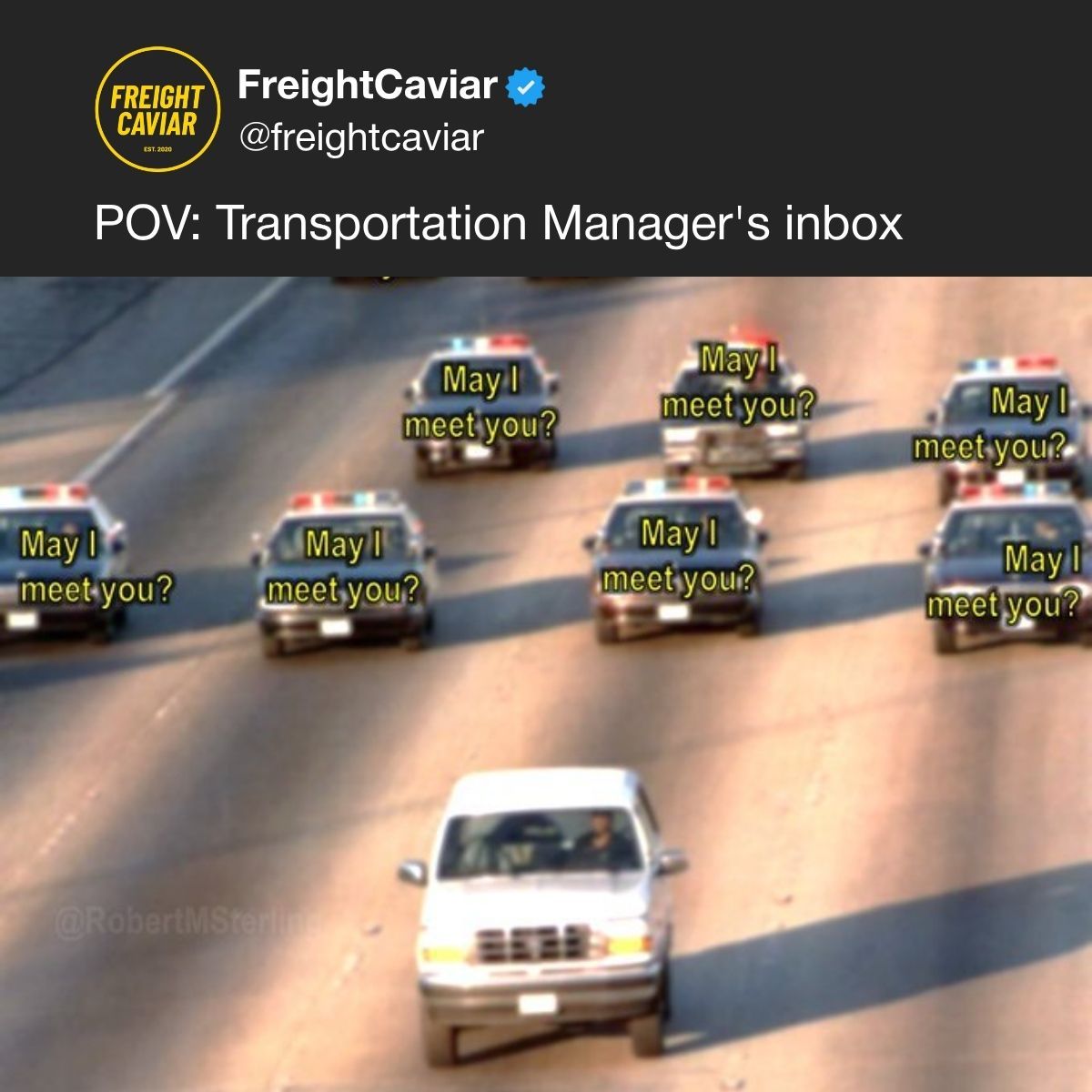
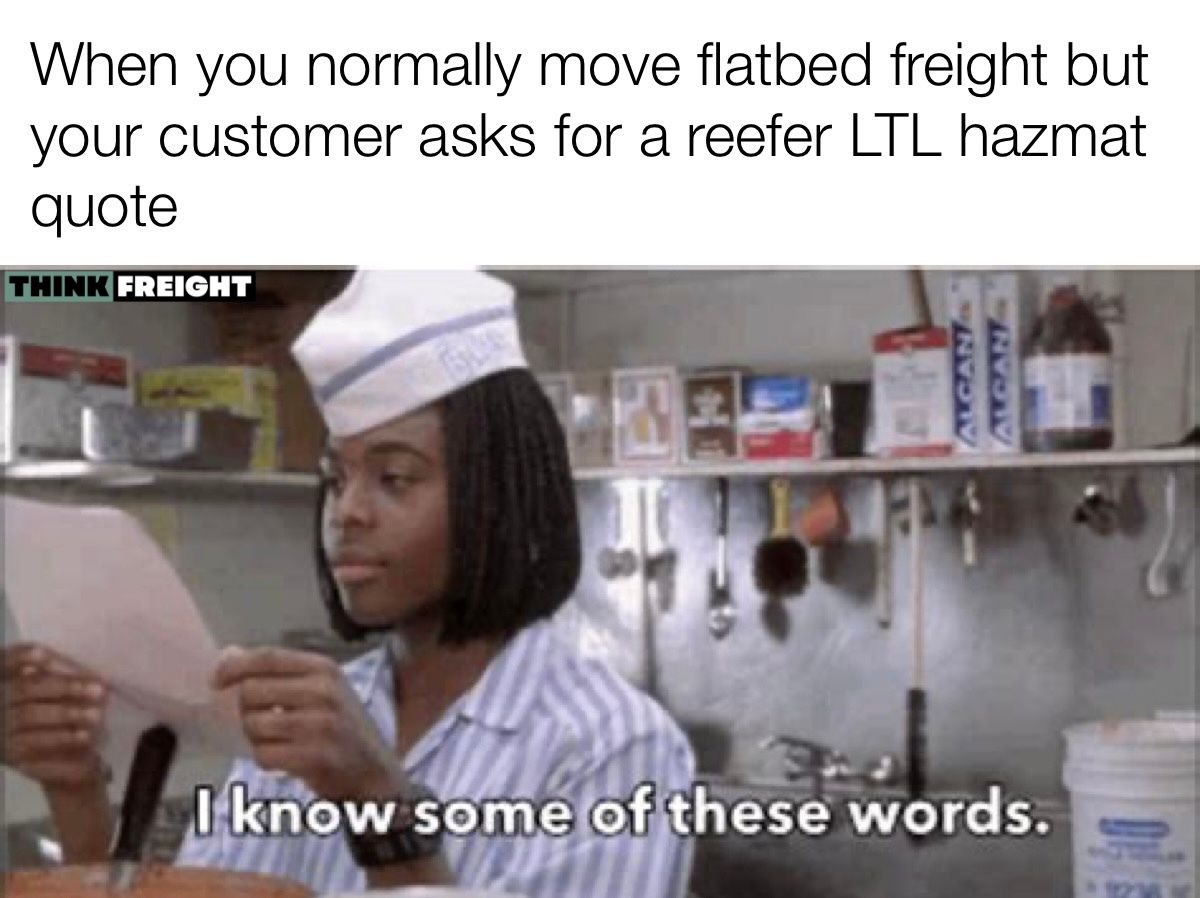
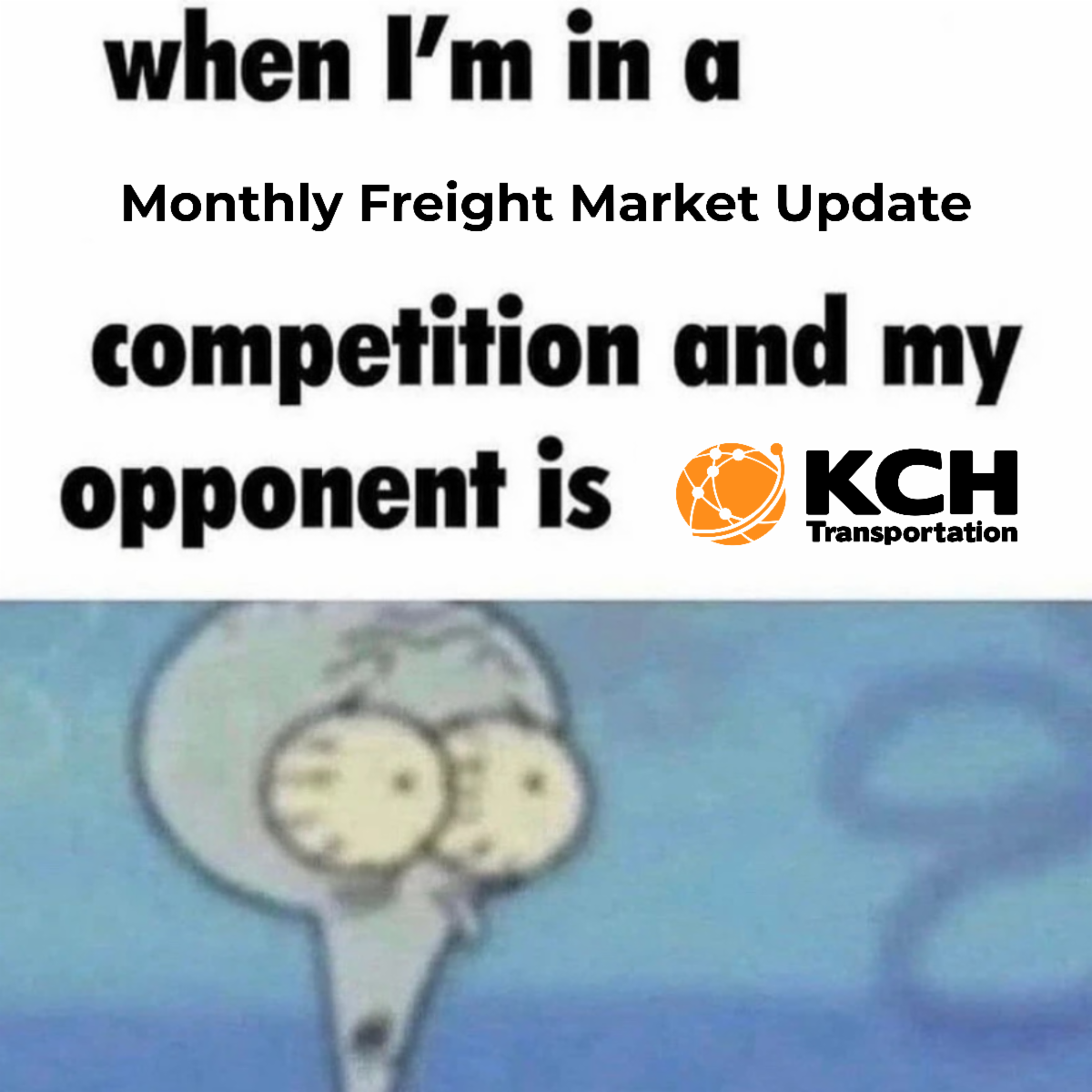
Memes of the Week:

KCH Corner:

Book Our Loads on Highway's TFX

We’re now posting freight on the Trusted Freight Exchange (TFX), a secure, Highway-powered network made for verified carriers like you.


It’s built right into Highway, free to use, and designed to connect you with quality freight fast.


Every KCH load on TFX is:


  • Verified: posted by trusted shippers and brokers.
  • Ready to roll: book it instantly and get moving.


With TFX, you skip the back-and-forth and get straight to hauling.

Truck parking sucks. Let's fix that.


The U.S. has 23 million truck parking spots. You should be able to find one without feeling like you're on a wild goose chase.


We’re teaming up with Truck Parking Club to make that happen.


Use code KCH25 for $25 off your next reservation.


Less wandering. More rest.

The Frog


Comfort Colors Garment-Dyed Heavyweight T-Shirt


$39.95


LinkedIn  Instagram  Facebook  TikTok