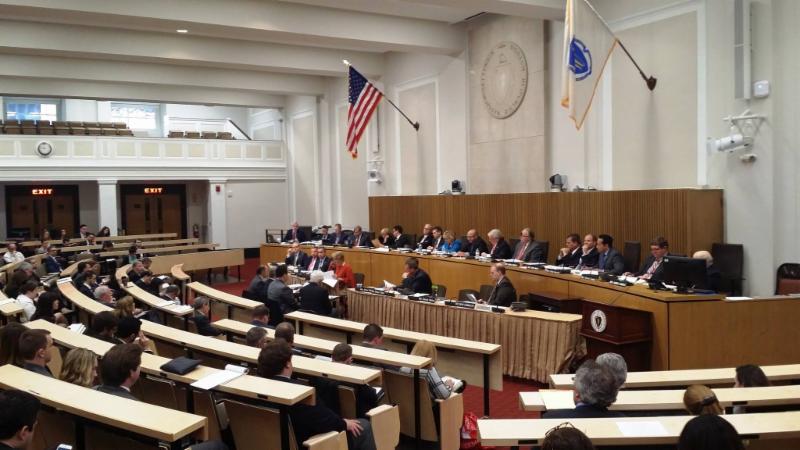
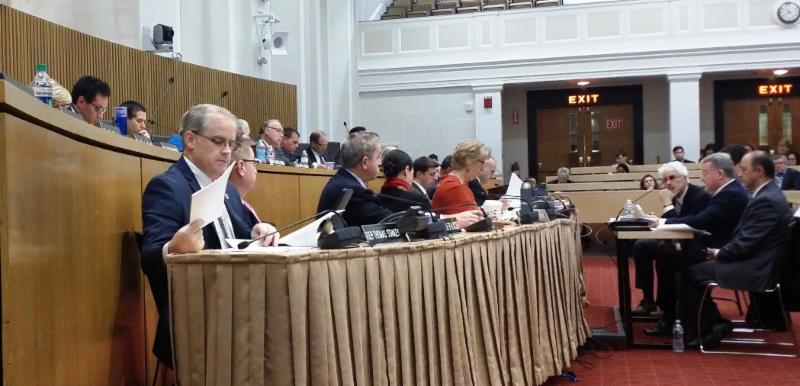
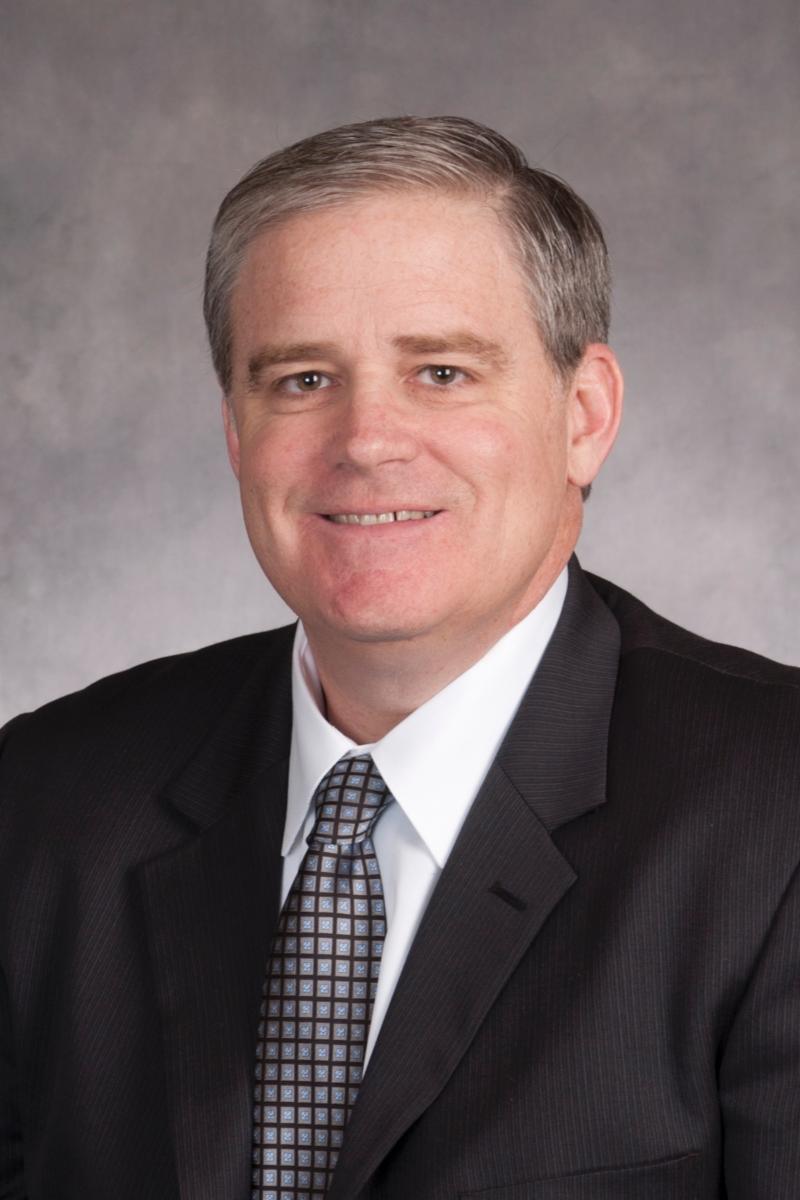
Rep. Stanley testifies on two bills and a resolution supporting recreational wild striped bass fishery
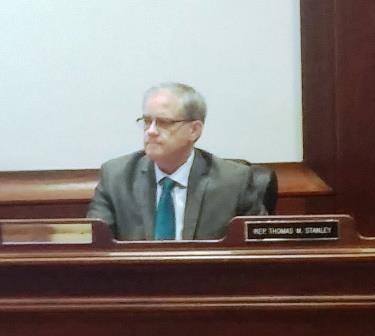
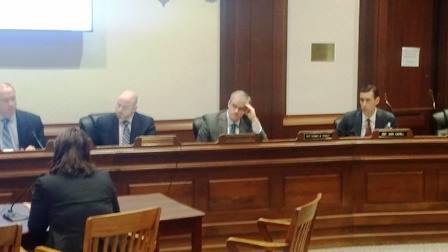
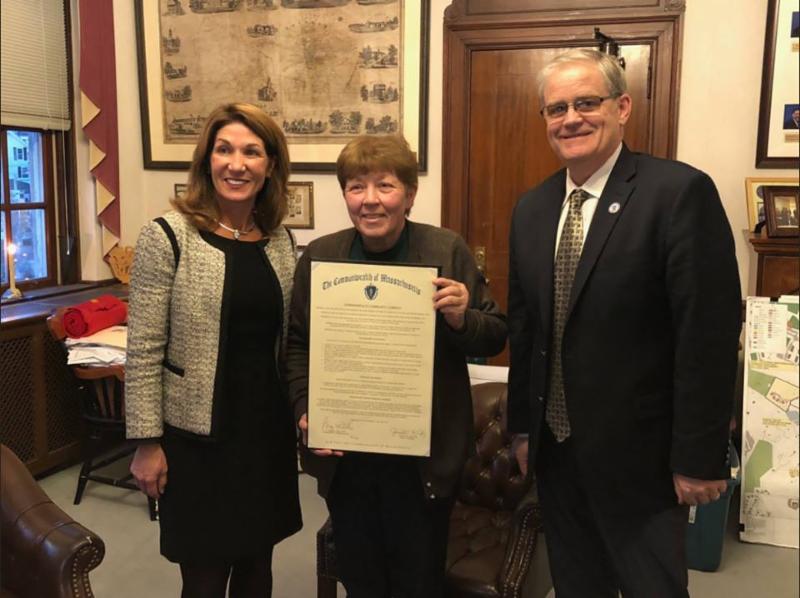
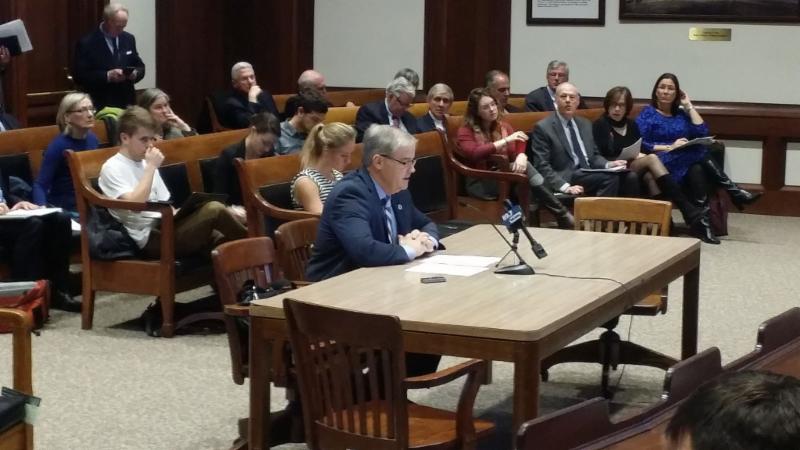
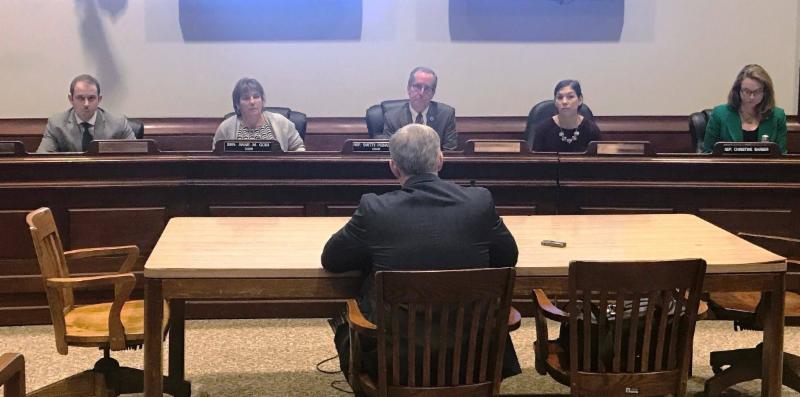
Rep. Stanley recently testified at a Joint Committee on Environment, Natural Resources and Agriculture public hearing in favor of two bills (H.465 & H.466) and a Resolve (H.467). Rep. Stanley filed the legislation and the resolve earlier this legislative session to support the Commonwealth's recreational wild striped bass fishery and its economic impact to the state.
H.465 would create a commission to examine and assess the impact that commercial and recreational fishing have on the striped bass population and the viability of wild striped bass in the Commonwealth. H.466 seeks to put in place the proper commercial license requirements to adequately preserve the Commonwealth's striped bass population. Lastly, H.467 advocates for the MA Marine Fisheries Commission to work with the MA Director of Marine Fisheries on adopting the recommendations made by the Interstate Watershed Task Force and the Atlantic States Marine Fishery Commission Law Enforcement Committee to implement a striped bass commercial tagging program at the point of harvest.
In 2002, the National Oceanic and Atmospheric Administration (NOAA) recorded 2,633,000 fishing trips in MA where striped bass was the primary target. In 2016, this number had decreased to 1,134,000, representing a 57 percent decline.
Rep. Stanley testifies on behalf of bill to protect health care workforce and protect patients.
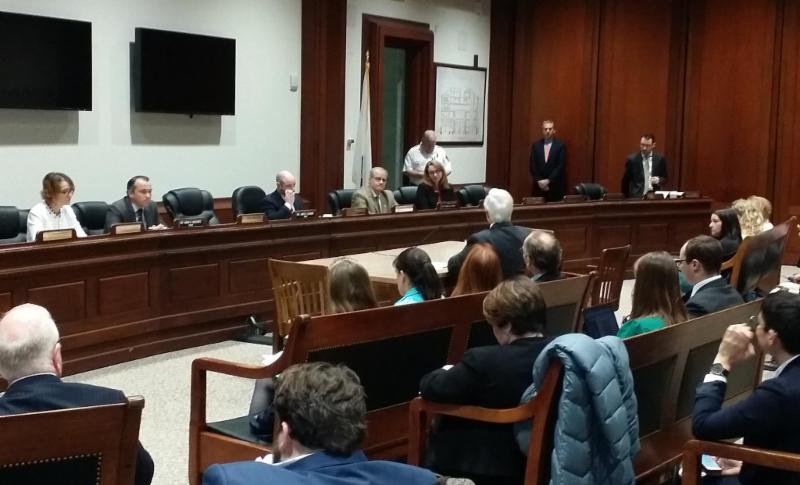
In advance of a public hearing, Rep. Stanley signed onto a letter of support for a bill he cosponsored relative to safe patient handling in certain healthcare facilities. Rep. Stanley and his colleagues distributed the letter to the Chairs of the Public Health Committee at the hearing. The bill will reduce costly and painful work related injuries, and decrease unsafe handling variability across health care facilities by requiring healthcare facilities to assess their safe patient handling practices and address deficiencies. Implementing safe patient handling practices will reduce work related injuries, decrease unsafe handling variability across health care facilities, create standards for measuring outcomes and protect patients.
Rep. Stanley supports bill requiring mental health parity for disability policies
Rep. Stanley sponsored legislation to prohibit insurance companies from imposing time limitations on short-term and long-term disability benefits paid out as the result of a behavioral health disorder where no similar time limitations exist on benefits paid as the result of a physical disorder. He also signed onto testimony to the Joint Committee on Financial Services in support of the bill. Federal and state laws already require mental health parity in health insurance. This bill would extend that principle to disability insurance.
Mental health parity in health insurance ensures that those with mental illness receive the treatment they need comparable to those with physical illnesses. Mental health parity in disability insurance will ensure that an insured who is disabled as the result of a behavioral health disorder is still able to afford food, shelter, and other necessities by replacing lost wages due to the disability, just as is someone who is disabled as the result of a physical health disorder. Currently, private short- and long-term disability policies contain inequitable limitations. Either no benefits are paid or the payout period is shorter for those with mental health disabilities. The current benefit limits are based on stigmatization of persons with mental disabilities - not on hard evidence that covering persons with mental disabilities costs more than covering persons with physical disabilities.
Commonwealth's Search for Lease Space in Waltham
The Division of Capital Asset Management and Maintenance (DCAMM) has issued a Request for Proposals (RFP) seeking to office lease space in Waltham. DCAMM is looking for approximately 3,600 square feet of usable area to be used by the Massachusetts Parole Board. The deadline for submission of proposals is January 10, 2018 at 2:00 p.m. The RFP can be viewed at www.commbuys.com under "Contract & Bid Search." Please see the attached instructions to locate the RFP. You may also email leasing.dcamm@state.ma.us or call 857-204-1355 to request a copy of the RFP, referencing the agency name and project number in your request.
Governor Baker Signs Bipartisan Contraceptive Coverage Legislation
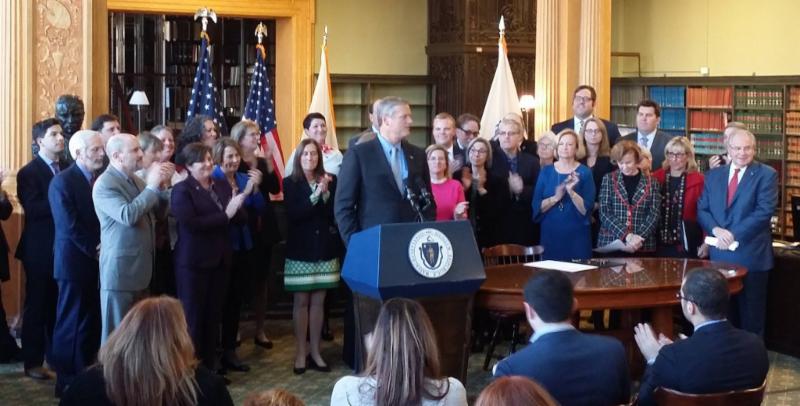
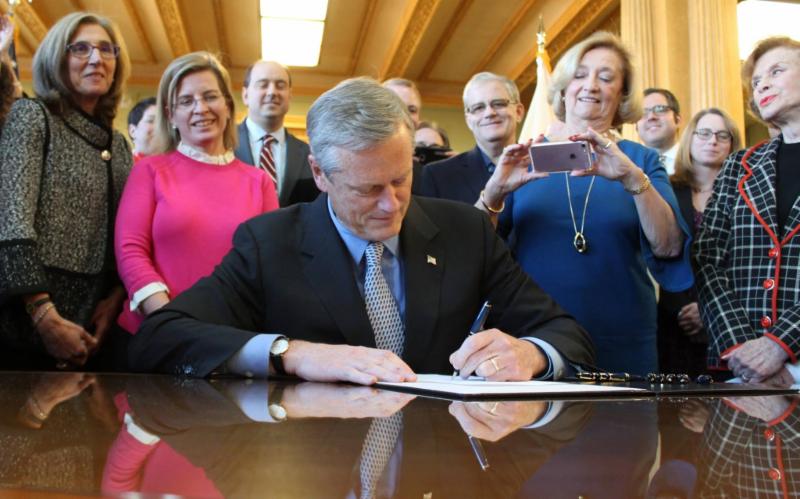
Governor Baker signed legislation, An Act Relative to Advancing Contraceptive Coverage and Economic Security in our State (ACCESS), at the State House to protect access to contraception coverage without co-pays for many women across the Commonwealth. The new law requires health insurers to cover at least one form of each type of FDA-approved birth control and will protect Massachusetts' residents from any changes to this specific provision of the federal Affordable Care Act.
State Launches New Housing Choice Initiative
A comprehensive new initiative will substantially increase housing production across the Commonwealth. The Housing Choice Initiative creates a new system of incentives and rewards for municipalities that deliver sustainable housing growth; creates a new technical assistance toolbox, to empower cities and towns to plan for new housing production; and proposes legislative changes, through An Act to Promote Housing Choices, to deliver smart, effective zoning at the local level.
Massachusetts home prices have increased at the fastest rate in the nation, and metropolitan Boston rent prices rank among the highest in the country. In order to address the challenges facing Massachusetts, the Housing Choice Initiative will deliver more than $10 million in incentives, grant funding and technical assistance per year, and enable Massachusetts to realize a new goal of creating 135,000 new housing units by 2025.
Baker Administration Awards $20 Million for Energy Storage Projects
The Baker Administration awarded $20 million in grants to 26 projects that will develop the Commonwealth's energy storage market and deliver benefits to Massachusetts ratepayers and the electrical grid. Recognizing the potential benefits energy storage holds for the Commonwealth, paired with the strength of submitted projects, the Administration doubled the available funding from the initial $10 million commitment. The awarded projects will benefit 25 communities and draw in $32 million in matching funds, helping to grow the Commonwealth's energy storage economy.
The grants were awarded as part of the Administration's Energy Storage Initiative (ESI) Advancing Commonwealth Energy Storage (ACES) program, funded by the Department of Energy Resources (DOER) through Alternative Compliance Payments (ACP) and administered by the Massachusetts Clean Energy Center (MassCEC). The critical care facility will use funding received under the grant program to integrate a 400kw solar canopy and energy storage system, reduce energy use and costs, shave its peak demand and increase its overall resilience.
Governor Baker Signs Legislation Increasing Penalties for Handicap Parking Fraud and Abuse
Governor Baker joined by members of the Senate and House and Registrar of Motor Vehicles Erin Deveney at a ceremonial bill signing for An Act Relative to Handicapped Parking, legislation which increases the current penalties for the fraudulent use of disability parking credentials. The new law also provides the Registrar of Motor Vehicles with additional statutory authority that can be used in the process of reviewing applications and investigating fraudulent claims for handicap placards and motor vehicle license plates.
The MassDOT Registry of Motor Vehicles continues to make progress towards curbing placard abuse through the establishment of the Massachusetts Disability Placard Abuse Task Force, and the creation of an online site for the public to report suspected fraud.
Governor Baker Signs Bipartisan Legislation to Provide Flexibility to School Districts Teaching English Language Learners
Governor Baker signed An Act Relative to Language Opportunity for Our Kids (LOOK) at the State House, giving school districts more flexibility in how they teach students who are English language learners, while maintaining accountability for timely and effective English acquisition.
The new law does not overturn the existing requirement that schools teach all students in English as rapidly as possible. Rather, it gives school districts flexibility to choose a research-based teaching method other than Sheltered English Immersion to help them develop their English language skills, after review and approval by the Department of Elementary and Secondary Education. The review is not intended to restrict districts' prerogatives, but to enable the state to fulfill its legal obligations to ensure English Language Learners receive services to which they are entitled to under state and federal law.
The new law also raises expectations for data collection and program evaluations, to ensure greater transparency and accountability, while providing a stronger basis for improvement. It creates parent advisory committees at schools with a high concentration of English language learners, and gives parents input into their children's program.
The Special Commission on Behavioral Health Promotion and Upstream Prevention (PromotePrevent Commission) will hold a special public hearing on Friday, December 15th, 10am, at the Education Development Center, 43 Foundry Avenue in Waltham. As you know, behavioral health issues like opiate addiction, mental illness, and violence deeply affect our communities. The Commission is tasked with identifying policies, practices, and programs to strengthen evidence-based prevention and social, emotional and behavioral health in the state. Click
here for complete details on how folks from Waltham can sign up to testify. You can also visit
PromotePrevent.com to learn more and see the 24 state leaders who serve on the Commission.